
The Sound and the Fury, A Norton Critical Edition
by David Minter (Editor), William Faulkner (Author)
On This Page
Description
Presents the original text and a critical examination of William Faulker's "The Sound and The Fury" with end notes designed to assist the reader with obscure language and allusions. Contains appendix with background information and historical context.Tags
Recommendations
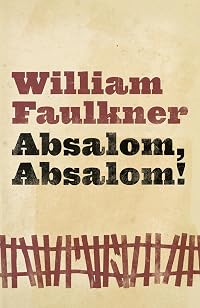
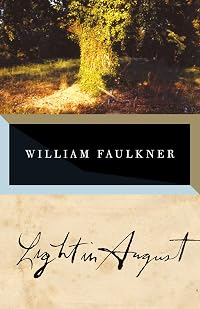

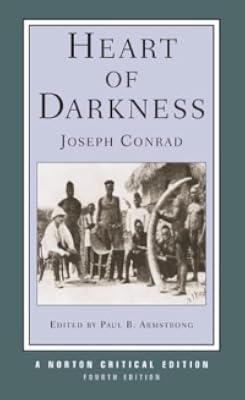
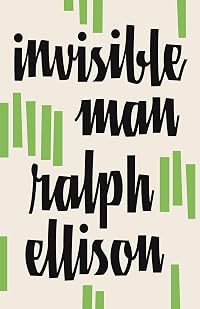




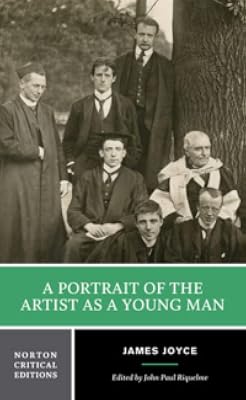
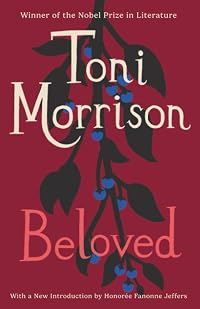
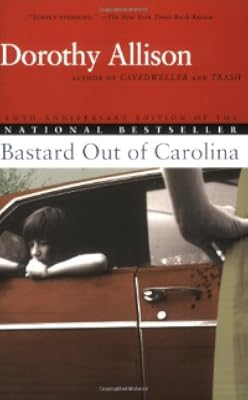
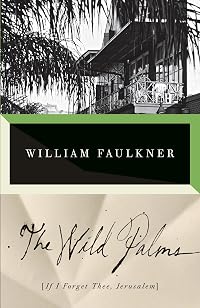
Member Recommendations
CGlanovsky Story from multiple perspectives told out of chronological sequence and partially from the point of view of someone mentally deficient
Member Reviews
Faulkner is the best. There might not be another way to put it, he's the best. His words, his characters, his place in time and his choice of story are second to none. His authenticity is second to none.
I love southern literature; I've read a ton of it. I think that Cormac McCarthy and William Faulkner are the only two writers who have been able to truly and purely capture the south. Faulkner just slightly better. It's easy to create a realistic setting, but it is hard to create real people, and Faulkner does. My biggest gripe with the works of Twain is that it is all so fake, such a fake rendition of poor southern people written by a rich southern person. The Compson family is the realest southern family ever put to writing. That is show more the most I can say to do this book justice.
This work should be required reading for every college student in the south, regardless of field of study. The best American work I've read all year. show less
I love southern literature; I've read a ton of it. I think that Cormac McCarthy and William Faulkner are the only two writers who have been able to truly and purely capture the south. Faulkner just slightly better. It's easy to create a realistic setting, but it is hard to create real people, and Faulkner does. My biggest gripe with the works of Twain is that it is all so fake, such a fake rendition of poor southern people written by a rich southern person. The Compson family is the realest southern family ever put to writing. That is show more the most I can say to do this book justice.
This work should be required reading for every college student in the south, regardless of field of study. The best American work I've read all year. show less
How is this not one of the most reviewed, most discussed, most beloved books in all of GoodReads? It’s got a list of killer ingredients, that should make it a slam-dunk GR darling:
BROTHER/SISTER INCEST? (did they or didn‘t they?) !!!!
BROTHER/SISTER LOVERS’ SUICIDE PACT!!! (kind of)
THE OTHER BROTHER IS A SOCIOPATH!!!
…and THE THIRD BROTHER GETS CASTRATED!?!!1!?!
throw in a cynical alcoholic father, a self-absorbed hypochondriac mother, and some good ole’ boy Southern ambiance, and I must ask: What are you waiting for? Go get it!! This could make a great movie: it’s one part [book:Gone With the Wind|18405], two parts Cruel Intentions, and three parts Blue Velvet. Why hasn’t anybody done that yet?
I should stop writing right show more now, and that should be all the review you need. But… if you’re into the whole plot/character/images scene, this really is a good book, so I suppose it deserves a more respectable review. But just one more thing before I get all serious:
Okay, okay, let’s all settle down. Has anybody here seen Rashomon? That’s a 1950’s Japanese movie directed by Akira Kirosawa, In it, four different witnesses give an account of a robbery/kidnapping/rape, and none of their stories agree. The movie plays out each version, but they all lead to the exact same closing scene, so you never really know which account is true (if any). It’s a great film for exploring the storytelling possibilities of unreliable narrators. Please, please see it. It’s one of my favorite movies of all-time, and you will love it too. That is 100% guaranteed. William Faulkner does something similar with the narrators in The Sound and the Fury (TSAF). The book is divided into four parts, each retelling the sordid history of the Compton family in Jackson, MS, from 1898-1928. The narrators don’t outright disagree, but each person brings a very different perspective, which informs the reader’s overall impression of what actually happened. The order of narrators is as follows:
Benji
A little bit of exposition at the beginning of the book explains that Benji is the youngest of the Compton kids. It doesn’t take more than a few sentences into his monologue to figure out that something ain’t quite right with him. The proffered explanation is that he is an “idiot manchild”, which, strictly speaking, is not an approved DSM-IV diagnosis, but that’s fiction for you. Interesting aside: Benji was originally christened with the name Maury, after his uncle, but after his brain disorder became apparent, Mrs. Compton has him re-christened as Benji. That's the Compton parents for you: more concerned with honoring the family's past glory than accepting their kids. So, anyhow... I’m not sure what exactly is wrong with Benji’s brain, but he skips around in time a lot as he‘s speaking, without clueing us in on the shifts. One minute he’s telling you about how he went swimming with his older brother Quentin the day his grandmother died (1898). Then, as if it happened the same day, he’s telling you how he put on his clothes to get ready for his sister Caddie’s (short for Candice) wedding, and you’re like "What? The sister got married at age 5, on the same day her grandmother died?" but no, that happened twelve years later. Honestly, Benji doesn’t know what the hell is going on. All he can do is describe the comings and goings of characters around him, and retell fragments of conversations he overheard. Since he has no idea how to appropriately weight the importance of different events, he wastes a lot of time talking about what the fresh laundry smelled like, and then throws in "...oh yeah, and my parents had a big fight about Caddie laying with a boy. Now let me tell you about this bee I saw." - and you’re like "Forget about that! Go back to the part about your sister laying with the guy!" But no luck. He’s onto the bee, and he ain’t coming back. Trying to reconstruct a coherent family history from Benji strikes me as akin to having George W. Bush instruct me over the telephone in the assembly of a highly complex piece of machinery, which has some pieces missing, and whose function is unknown. What the reader can gather from Benji, is that he sees Caddie as a surrogate mother, since his own mother is perpetually bedridden. He doesn’t know it, but Mom Compton doesn‘t care much for him, or any of her kids, except psychopath son Jason Compton IV. For her part, Caddie takes to the Mother role, and dotes on Ben. That’s about all I got from Benji. It’s pretty clear this part of the story was intended to be confusing. To further confound the reader, Faulkner neglects to adequately punctuate what Benji tells us, presumably because he is unaware how the words he hears are intended, so the reader must be too. One incident I found particularly confusing in this section happened when Ben was eleven or twelve… he chased some girl down the road as she was walking to school. Everybody freaked out about it, which seems like an exaggerated response. I can see why everybody might be nervous about the mentally handicapped teenager running after little kids he doesn’t know, but the reaction is still a bit overblown. Following that incident, something happened we aren't immediately privy to, but after that Benji can’t bear to see himself in a mirror anymore. It takes a bit of clarification from subsequent chapters to fill in the knowledge gap, but Holy Shit when it hits you:the family thought he wanted to molest the girl (which he totally didn’t) SO THEY CASTRATED HIM! I‘m sure that sort of thing was more normal eighty years ago, but still… The take-away message from that little incident should be dawning on you at this point: that the Compton family is profoundly fucked up, and if you keep reading, it gets much worse.
I was glad when I finished this part. Benji must weed out a lot of readers who would otherwise enjoy TSAF. He’s like the giant idiot manchild bouncer to Faulkner’s hip new nightclub. Next comes:
Quentin
Quentin is, I think, the oldest Compton child. He is bright and observant, so obviously more articulate than Benji. Unfortunately, his state of mind is questionable, because his narration all takes place on the final day of his life, right before he commits suicide. He’s overwhelmed by emotions that take a little time for the reader bring into focus. He speaks to us from 1911, when, at 18, he is finishing his freshman year at Harvard. His flashbacks to childhood start off innocently enough, with stories about the sweet smell of honeysuckle, running through the woods with his friends, and skipping rocks on the river near his home. He makes frequent references to Caddie, and it’s clear he’s close to her. They are united in common cause against their cruel younger brother Jason.So Quentin loves his sister. That’s sweet. But as the narration goes on, there’s just a little too much detail about what her body looks like, and how beautiful she is. At first I was thinking to myself "Am I overreacting, or is this getting creepy?" From Quentin’s description, I’m picturing Kimberly Davis in the role of Caddie. And granted, that’s pretty smokin’ hot, but I’m guessing if Kimberly Davis has a brother, he probably doesn’t want to fuck her. Quentin, on the other hand, does want to fuck Caddie. Once she hits puberty, his childhood love for her morphs into incestuous desire. He becomes jealous of her boyfriends, which is a bad situation to be in, because there‘s a bunch of ‘em, and she‘s having sex with every one. I’d say she’s promiscuous by 2011 standards, so in 1929 she would have to be completely off the slutometer. Now consider Quentin’s obsessive feelings of inferiority over his virginity. He’s pissed off at Caddie, because he’s been “[book:left behind|27523]”, so to speak, and he wants Caddie to "fix it"! Messed up, right? Now get this: Caddie knows what he wants, and she’s game! Talk about kids with poor boundaries! All this point, one has to wonder what all this sexual acting out is about. Is it Caddie's desperate bid to get the attention of her unengaged and uninterested parents? That may be understandable on some level, but there’s a right way and a wrong way to be a rebellious teen:
Wasn’t there a Brady Bunch episode like that?
I could be remembering it wrong.
Aaaanyhow… Teens. What’re you gonna do with ‘em? Before you get too excited about all this juicy dysfunction, I’ve got to let you down lightly for a little bit of disappointment. This book was written in 1929, so it tiptoes around incest and sex in general. Those subjects are delt with in a very shadowy and implied manner. In fact, it’s not 100% certain whether Quentin and Caddy did the deed or not, but there’s dialogue and, er… brother/sister situations that transcend the description “awkward”. I’ll leave a little bit of mystery here, but this book must have blown people’s minds when it first came out!
Oh, I almost forgot aboutthe brother/sister lovers’ suicide pact! When Quentin is going out of his mind with jealousy, he suggests this. Sounds reasonable, right? Caddie thinks so; she’s like “I’m in! Mom and Pop will totally flip!” (again, “How not to do teen rebeliousness“) She guides Quentin’s knife-brandishing hand to her jugular. Do it! I’m begging you! But he can’t, because he loves her too much. Later, he drowns himself when Caddie gets pregnant by one guy and engaged to another. Heartbroken, Caddie names the unborn child Quentin (Awwwwwww), which becomes awkward when Quentin Jr turns out to be a girl. As you might imagine, having two main characters named Quentin - one male, one female- plays havoc with Benji’s narration.
Jason
The craziness continues. Fast forward to April 1928. Jason Compton IV is Caddie’s younger brother, and a total dick. He hates everybody, but most of all his niece Quentin (now seventeen), whose care he’s been entrusted with after Caddie divorced and was run out of town. He only tolerates Quentin to get his hands on the support money Caddie sends. Quentin’s not dumb, though. She knows what’s going on, so she finds out where Jason hides his cash. Then, one night, she takes off with it all. That’s all the important information you need to know from Jason. Everything else in this chapter is his general douchebaggery and money-love. He’s defrauding his mother, he was behind Benji’s castration, and he’s arranged to have Benji committed to an insane asylum as soon as his morther dies. Jason’s constant bile gets old even faster than Benji’s nonsense.
Dilsey Gibson
Technically, the final part isn’t narrated by Dilsey. The narrator is omniscient, but focuses on Dilsey- the old servant who has been with the Comptons for at least thirty years. [book:Infinite Jest|6759] fans will know what I mean when I say that Dilsey is the Mario Incandenza of TSAF. She’s sweet, and benevolent, and can’t understand why so much grief has befallen this family. While Jason is chasing Quentin around in a murderous rage, Dilsey takes Benji to church, and cries at the wickeness of the world. She’s a good character to end with, because she wonders the same thing a reader is likely to wonder. What was all this for? (hint: “…signifying nothing.“) What was this book about? Passions ruining people, for sure. Dissolution, and a fall from greatness- for the Compton family, and for the Old South in general, I suppose. Dilsey mourns Caddie as a tragic figure- an energetic girl who, deprived of proper nurturing parents, becomes a “fallen women”. She is the key character for a lot of the book’s themes: love, loyalty, hope, forgiveness- but she will always be shrouded in mystery, because we never actually hear her side of things. That’s a bit of genius on Faulkner’s part, because the real fun of this book is wondering why Caddie made some of the choices she did, what she really thought about her family (especially her brother Quentin), and what she did all those years between 1911 and 1929. The other big question is why the Compton family fell from greatness so far, so fast. The family’s high water mark was just after the Civil War. By 1898, they were beginning their final, tragic generation. Sure, Jason Compton III and Caroline Bascombe Compton were responsible for messing up their kids so badly… but why? Why did Jason III become a raging alcoholic, and why did Caroline become a neurotic hypochondriac? This book will leave you asking those questions, and caring about the answers, which is one of the hallmarks of a five-star read. show less
BROTHER/SISTER LOVERS’ SUICIDE PACT!!! (kind of)
THE OTHER BROTHER IS A SOCIOPATH!!!
…and THE THIRD BROTHER GETS CASTRATED!?!!1!?!
throw in a cynical alcoholic father, a self-absorbed hypochondriac mother, and some good ole’ boy Southern ambiance, and I must ask: What are you waiting for? Go get it!! This could make a great movie: it’s one part [book:Gone With the Wind|18405], two parts Cruel Intentions, and three parts Blue Velvet. Why hasn’t anybody done that yet?
I should stop writing right show more now, and that should be all the review you need. But… if you’re into the whole plot/character/images scene, this really is a good book, so I suppose it deserves a more respectable review. But just one more thing before I get all serious:
Okay, okay, let’s all settle down. Has anybody here seen Rashomon? That’s a 1950’s Japanese movie directed by Akira Kirosawa, In it, four different witnesses give an account of a robbery/kidnapping/rape, and none of their stories agree. The movie plays out each version, but they all lead to the exact same closing scene, so you never really know which account is true (if any). It’s a great film for exploring the storytelling possibilities of unreliable narrators. Please, please see it. It’s one of my favorite movies of all-time, and you will love it too. That is 100% guaranteed. William Faulkner does something similar with the narrators in The Sound and the Fury (TSAF). The book is divided into four parts, each retelling the sordid history of the Compton family in Jackson, MS, from 1898-1928. The narrators don’t outright disagree, but each person brings a very different perspective, which informs the reader’s overall impression of what actually happened. The order of narrators is as follows:
Benji
A little bit of exposition at the beginning of the book explains that Benji is the youngest of the Compton kids. It doesn’t take more than a few sentences into his monologue to figure out that something ain’t quite right with him. The proffered explanation is that he is an “idiot manchild”, which, strictly speaking, is not an approved DSM-IV diagnosis, but that’s fiction for you. Interesting aside: Benji was originally christened with the name Maury, after his uncle, but after his brain disorder became apparent, Mrs. Compton has him re-christened as Benji. That's the Compton parents for you: more concerned with honoring the family's past glory than accepting their kids. So, anyhow... I’m not sure what exactly is wrong with Benji’s brain, but he skips around in time a lot as he‘s speaking, without clueing us in on the shifts. One minute he’s telling you about how he went swimming with his older brother Quentin the day his grandmother died (1898). Then, as if it happened the same day, he’s telling you how he put on his clothes to get ready for his sister Caddie’s (short for Candice) wedding, and you’re like "What? The sister got married at age 5, on the same day her grandmother died?" but no, that happened twelve years later. Honestly, Benji doesn’t know what the hell is going on. All he can do is describe the comings and goings of characters around him, and retell fragments of conversations he overheard. Since he has no idea how to appropriately weight the importance of different events, he wastes a lot of time talking about what the fresh laundry smelled like, and then throws in "...oh yeah, and my parents had a big fight about Caddie laying with a boy. Now let me tell you about this bee I saw." - and you’re like "Forget about that! Go back to the part about your sister laying with the guy!" But no luck. He’s onto the bee, and he ain’t coming back. Trying to reconstruct a coherent family history from Benji strikes me as akin to having George W. Bush instruct me over the telephone in the assembly of a highly complex piece of machinery, which has some pieces missing, and whose function is unknown. What the reader can gather from Benji, is that he sees Caddie as a surrogate mother, since his own mother is perpetually bedridden. He doesn’t know it, but Mom Compton doesn‘t care much for him, or any of her kids, except psychopath son Jason Compton IV. For her part, Caddie takes to the Mother role, and dotes on Ben. That’s about all I got from Benji. It’s pretty clear this part of the story was intended to be confusing. To further confound the reader, Faulkner neglects to adequately punctuate what Benji tells us, presumably because he is unaware how the words he hears are intended, so the reader must be too. One incident I found particularly confusing in this section happened when Ben was eleven or twelve… he chased some girl down the road as she was walking to school. Everybody freaked out about it, which seems like an exaggerated response. I can see why everybody might be nervous about the mentally handicapped teenager running after little kids he doesn’t know, but the reaction is still a bit overblown. Following that incident, something happened we aren't immediately privy to, but after that Benji can’t bear to see himself in a mirror anymore. It takes a bit of clarification from subsequent chapters to fill in the knowledge gap, but Holy Shit when it hits you:
I was glad when I finished this part. Benji must weed out a lot of readers who would otherwise enjoy TSAF. He’s like the giant idiot manchild bouncer to Faulkner’s hip new nightclub. Next comes:
Quentin
Quentin is, I think, the oldest Compton child. He is bright and observant, so obviously more articulate than Benji. Unfortunately, his state of mind is questionable, because his narration all takes place on the final day of his life, right before he commits suicide. He’s overwhelmed by emotions that take a little time for the reader bring into focus. He speaks to us from 1911, when, at 18, he is finishing his freshman year at Harvard. His flashbacks to childhood start off innocently enough, with stories about the sweet smell of honeysuckle, running through the woods with his friends, and skipping rocks on the river near his home. He makes frequent references to Caddie, and it’s clear he’s close to her. They are united in common cause against their cruel younger brother Jason.
Like This: “Mom and Dad don’t love me? I’m going to get into minor trouble with authorities, to embarrass them and make them pay attention to me!”
Not Like This: “Mom and Dad don’t love me? I’ll show them! I’ll have sexual intercourse with my brother!”
Wasn’t there a Brady Bunch episode like that?
I could be remembering it wrong.
Aaaanyhow… Teens. What’re you gonna do with ‘em? Before you get too excited about all this juicy dysfunction, I’ve got to let you down lightly for a little bit of disappointment. This book was written in 1929, so it tiptoes around incest and sex in general. Those subjects are delt with in a very shadowy and implied manner. In fact, it’s not 100% certain whether Quentin and Caddy did the deed or not, but there’s dialogue and, er… brother/sister situations that transcend the description “awkward”.
Oh, I almost forgot about
Jason
The craziness continues. Fast forward to April 1928. Jason Compton IV is Caddie’s younger brother, and a total dick. He hates everybody, but most of all his niece Quentin (now seventeen), whose care he’s been entrusted with after Caddie divorced and was run out of town. He only tolerates Quentin to get his hands on the support money Caddie sends. Quentin’s not dumb, though. She knows what’s going on, so she finds out where Jason hides his cash. Then, one night, she takes off with it all. That’s all the important information you need to know from Jason. Everything else in this chapter is his general douchebaggery and money-love. He’s defrauding his mother, he was behind Benji’s castration, and he’s arranged to have Benji committed to an insane asylum as soon as his morther dies. Jason’s constant bile gets old even faster than Benji’s nonsense.
Dilsey Gibson
Technically, the final part isn’t narrated by Dilsey. The narrator is omniscient, but focuses on Dilsey- the old servant who has been with the Comptons for at least thirty years. [book:Infinite Jest|6759] fans will know what I mean when I say that Dilsey is the Mario Incandenza of TSAF. She’s sweet, and benevolent, and can’t understand why so much grief has befallen this family. While Jason is chasing Quentin around in a murderous rage, Dilsey takes Benji to church, and cries at the wickeness of the world. She’s a good character to end with, because she wonders the same thing a reader is likely to wonder. What was all this for? (hint: “…signifying nothing.“) What was this book about? Passions ruining people, for sure. Dissolution, and a fall from greatness- for the Compton family, and for the Old South in general, I suppose. Dilsey mourns Caddie as a tragic figure- an energetic girl who, deprived of proper nurturing parents, becomes a “fallen women”. She is the key character for a lot of the book’s themes: love, loyalty, hope, forgiveness- but she will always be shrouded in mystery, because we never actually hear her side of things. That’s a bit of genius on Faulkner’s part, because the real fun of this book is wondering why Caddie made some of the choices she did, what she really thought about her family (especially her brother Quentin), and what she did all those years between 1911 and 1929. The other big question is why the Compton family fell from greatness so far, so fast. The family’s high water mark was just after the Civil War. By 1898, they were beginning their final, tragic generation. Sure, Jason Compton III and Caroline Bascombe Compton were responsible for messing up their kids so badly… but why? Why did Jason III become a raging alcoholic, and why did Caroline become a neurotic hypochondriac? This book will leave you asking those questions, and caring about the answers, which is one of the hallmarks of a five-star read. show less
The first time I read The Sound and the Fury I was killing time in the University of Pittsburgh Bookstore before class. I randomly picked it off the shelf and sat down in the aisle and started reading. By the time I looked up at the clock my class had already been in session an hour so I blew it off and kept reading. Being that I was broke at the time, and my library borrowing privileges at Carnegie were suspended since I owed a gazillion dollars in fines, I heisted the book. There was just no way I wasn't going to finish it, no matter how puzzling it was. Years later, before the Catholic guilt left me, I purchased a copy elsewhere and went back to the bookstore and placed in on the shelf.
I finished another reread earlier this month and show more think I could read it 100 times and still be baffled by parts of Quentin's section. In fact, I now find that Benjy's section is a breeze since I'm so familiar with the story after four readings. And I feel so much contempt for Jason that I was glad to have my heart strings pulled by Dilsey in the end. One of the most endearing characters I've ever come across. Oh yes, she endured. show less
I finished another reread earlier this month and show more think I could read it 100 times and still be baffled by parts of Quentin's section. In fact, I now find that Benjy's section is a breeze since I'm so familiar with the story after four readings. And I feel so much contempt for Jason that I was glad to have my heart strings pulled by Dilsey in the end. One of the most endearing characters I've ever come across. Oh yes, she endured. show less
Here's what I wrote after reading in 1989: "So MGA meets Faulkner's Compsons, a pathetic collection of demented, decaying individuals. Poor Benjy, lamenting for years the loss of his Caddy. Poor Quentin, growing up without her mother and with her Uncle Jason. Poor all of them. Was Faulkner correct in portaying these people as representative of decaying Southern families. Was it this extreme? Did it truly seem so to him?"
Wow. I don't even know what to say. People far more erudite than I have written extensively about The Sound and the Fury, and I am going to leave it to them. I will posit a question though. Was Faulkner, at the end of the day, a hopeful man? The ending of this book was pure genius, tawdry and hateful war with repressed and hateful all throughout the narrative with only Dilsey standing up for goodness. Does that goodness win? No question that the hatefulness loses. I swear I haven't a clue what happened. I will be thinking about this book for a long time to come.
I don't even know what to say. People far more erudite than I have written extensively about The Sound and the Fury, and I am going to leave it to them. I will posit a question though. Was Faulkner, at the end of the day, a hopeful man? The ending of this book was pure genius, tawdry and hateful rather than the repressed and hateful theme all throughout the narrative. Only Dilsey stood up for goodness. Does that goodness win? No question that the hatefulness loses. I swear I haven't a clue what happened. I will be thinking about this book for a long time to come
This book is unlike anything I have read before. Faulkner does not disappoint; his writing style is captivating and beautiful. The tragic story, though certainly challenging, is insightful and reveals the social, psychological, racial, and sexual issues each brother faces. While each brother's perspective can be perceived as either despicable or insane, I believe we have more Compson in us than we realize.
Members
- Recently Added By
Lists

Literature About Social Class
134 works; 19 members

20th Century Literature
1,161 works; 55 members

Dishonourable Mentions of 2013
189 works; 62 members

Stream of Consciousness
87 works; 8 members

Oprah's Book Club (original and 2.0)
91 works; 21 members

American Lit for Eng 11 Research Project
368 works; 6 members

Blue Pyramid 1,276 Best Books of All Time
1,248 works; 32 members

Experimental Literature
141 works; 18 members

Great American Novels
158 works; 42 members
Author Information

Born in an old Mississippi family, William Faulkner made his home in Oxford, seat of the University of Mississippi. After the fifth grade he went to school only off and on-lived, read, and wrote much as he pleased. In 1918, refusing to enlist with the "Yankees," he joined the Canadian Air Force, and was transferred to the British Royal Air Force. show more After the war he studied a little at the University, did house painting, worked as a night superintendent at a power plant, went to New Orleans and became a friend of Sherwood Anderson, then to Europe and back home to Oxford. By this time he had written two novels. The Sound and the Fury followed in 1929. Financial success came with Sanctuary in 1931, which he assisted in filming. Faulkner 's novels are intense in their character portrayals of disintegrating Southern aristocrats, poor whites, and African Americans. A complex stream-of-consciousness rhetoric often involves Faulkner in lengthy sentences of anguished power. Most of his tales are set in the mythical Yoknapatawpha County, Mississippi, and are characterized by the use of many recurring characters from families of different social levels spanning more than a century. His best subjects are the old, dying South and the newer materialistic South. As I Lay Dying (1930), is a grotesquely tragicomic story about a family of poor southern whites. With Absalom, Absalom! (1936); the difficult parts of his famous short novel "The Bear" (published in Go Down, Moses, 1942); and the allegorical A Fable (1954), a non-Yoknapatawpha novel set in France during World War I; Faulkner returned to an innovative and difficult style that most readers have trouble with. Yet, interspersed among such works are collections of easily read stories originally published in popular magazines. There seems to be a growing sentiment among critics that the Snopes trilogy-The Hamlet (1940), The Town (1957), and The Mansion (1959)-for the most part an example of Faulkner's "moderate" style, could well be among his most important works. Faulkner was awarded the 1949 Nobel Prize for literature "for his powerful and artistically independent contribution to the new American novel," but it would appear now that he also deserved to win that honor for his contribution to world literature. When reporting his death, the Boston Globe quoted Faulkner's having once told an interviewer: "Since man is mortal, the only immortality for him is to leave something behind him that is immortal since it will always move. That is the artist's way of scribbling "Kilroy was here" on the wall of the final and irrevocable oblivion through which he must some day pass." In addition to the Nobel Prize, Faulkner received the Howells Medal of the American Academy of Arts and Letters in 1950, and in 1951 he was given the National Book Award for his Collected Stories Collected Stories. For his novel A Fable he received the National Book Award for the second time, as well as the Pulitzer Prize in 1955. The Reivers (1962) was awarded the Pulitzer Prize in 1963. In 1957 and 1958, he was the University of Virginia's first writer-in-residence, and in January 1959 he accepted an appointment as consultant on contemporary literature to the Alderman Library of that university. Although Faulkner was not without honors in his lifetime and has received world recognition since then, it is surprising to learn that, when Malcolm Cowley edited The Portable Faulkner in 1946, he found that almost all of Faulkner's books were out of print. By arranging selections from the works to form a continuous chronicle, Cowley deserves much of the credit for making readers aware of the way in which Faulkner was creating a fictive world on a scale grander than that of any novelist since Balzac. William Faulkner died in Oxford, Mississippi, in 1962. (Bowker Author Biography) show less
Some Editions
Series
Belongs to Publisher Series
Work Relationships
Contains
Reference guide/companion to
Common Knowledge
- Canonical title
- The Sound and the Fury, A Norton Critical Edition
- Original title
- The Sound and the Fury (Norton Critical Edition) (Norton Critical Edition)
- Original publication date
- 1929
- People/Characters
- Benjy; Quentin; Caddy; Jason
- Important places
- Yoknapatawpha County, Mississippi, USA
- First words
- Through the fence, between the curling flowers, I could see them hitting.
- Last words
- (Click to show. Warning: May contain spoilers.)They endured.
- Disambiguation notice
- Do Not Combine: This is a "Norton Critical Edition", it is a unique work with significant added material, including essays and background materials. Do not combine with other editions of the work.
Please maintai... (show all)n the phrase "Norton Critical Edition" in the Canonical Title and Publisher Series fields.
Classifications
Statistics
- Members
- 2,056
- Popularity
- 10,103
- Reviews
- 22
- Rating
- (4.09)
- Languages
- English, Spanish
- Media
- Paper, Ebook
- ISBNs
- 5
- ASINs
- 4
