On This Page
Description
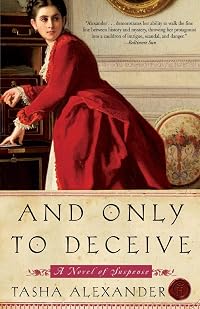
For Emily, accepting the proposal of Philip, the Viscount Ashton, was an easy way to escape her overbearing mother, who was set on a grand society match. So when Emily's dashing husband died on safari soon after their wedding, she felt little grief. After all, she barely knew him. Now, nearly two years later, she discovers that Philip was a far different man from the one she had married so cavalierly. His journals reveal him to have been a gentleman scholar and antiquities collector who, to show more her surprise, was deeply in love with his wife. Emily's intellectual pursuits and her desire to learn more about Philip take her to the quiet corridors of the British Museum, one of her husband's favorite places. There, she uncovers a dark and dangerous secret; involving stolen artifacts from the Greco-Roman galleries. And to complicate matters, she's juggling two very prominent and wealthy suitors, one of whose intentions may go beyond the marrying kind. As she sets out to solve the crime, her search leads to more surprises about Philip and causes her to question the role in Victorian society to which she, as a woman, is relegated. show lessTags
Recommendations




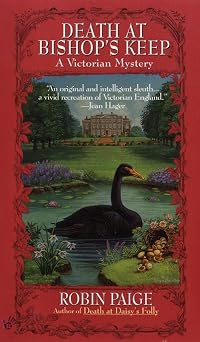
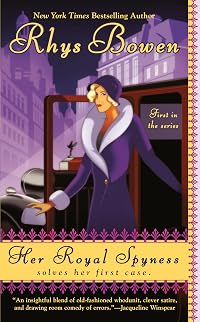
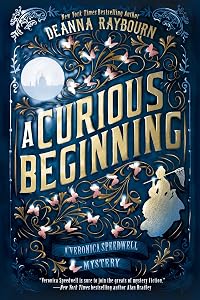
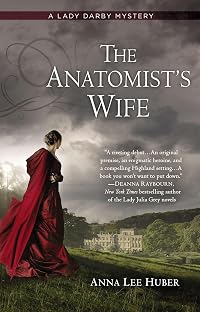





Member Recommendations
francescadefreitas Similar themes, set in a similar time period.
110
Caramellunacy Unconventional heroines rebel against Victorian mores to pursue their intellectual interests. The Elizabeth Peters novels are sillier (including prodding people with parasols) and is set against a backdrop of Egyptian archaeology. The Tasha Alexander mysteries are less openly subversive of Victorian morals, and And Only to Deceive draws on Homer's Iliad.
40
nancyK18 In her debut book the author propvides readers with a Victorian mystery featuring a likeable character.
Member Reviews
When Lady Emily Ashton gets the news that her husband Philip has died in Africa, she feels little more than relief. After all, she hardly knew the man. She agreed to marry him in order to escape her domineering mother, and he left on safari only a few months after they were wed. Now, as a wealthy widow, she looks for ways to fill her days, and is drawn to her husband's collection of antiquities. As she learns more about ancient Greece, she uncovers an uncomfortable fact: some of the items in her husband's collection belong in the British Museum . . . and some of the items in the British Museum are clever forgeries. Was her husband involved in committing crimes?
This all sounds like it should appeal to me: mystery, Victorian setting, a show more strong-willed heroine, a focus on Ancient Greece . . . but I found it lacking focus and drive. It felt repetitive and meandering, and it absolutely dragged to a close. I couldn't bring myself to care much about the mystery (things were stolen from the British Museum, an institution absolutely packed with stolen artifacts? Oh noes!) or the main love interest, whom Emily decides must be the bad guy because reasons, despite the fact that the other obvious bad guy is so obviously bad.
Caveat: I read this while suffering from a nasty cold, so I may not have been in the best mood for it. You might find it absolutely charming. show less
This all sounds like it should appeal to me: mystery, Victorian setting, a show more strong-willed heroine, a focus on Ancient Greece . . . but I found it lacking focus and drive. It felt repetitive and meandering, and it absolutely dragged to a close. I couldn't bring myself to care much about the mystery (things were stolen from the British Museum, an institution absolutely packed with stolen artifacts? Oh noes!) or the main love interest, whom Emily decides must be the bad guy because reasons, despite the fact that the other obvious bad guy is so obviously bad.
Caveat: I read this while suffering from a nasty cold, so I may not have been in the best mood for it. You might find it absolutely charming. show less
This book had a lot going for it - a great time period, a missing husband mystery, ancient antiquities, a strong heroine. But about the heroine...I'm pretty sure the author didn't set OUT to create a main character that was so obnoxious and unlikable that I wanted to reach into the pages of the book and choke her. But I disliked Lady Emily so much that I couldn't work up much of an interest in the story, which honestly didn't live up to the promise. I think the book was free on Kindle, but I wouldn't read Lady Emily #2 if they paid me.
I received the ARC of the eighth book in this series and due to my compulsions which include having to eventually finish every book I have started I also have trouble starting a series without having read the previous installments. I forced my self through book eight but I knew I wanted to know more of Lady Emily's earlier adventures and this book does not disappoint.
Lady Emily comes upon her detective skills quite accidentally. After a brief courtship she marries Lord Ashton mainly to get away from her overbearing mother. Promptly after the marriage Emily's new husband travels to Africa for a hunting trip and dies of what is assumed to be an illness. Emily finds herself a widow before she even had a chance to know her husband. After show more Lord Ashton's death there is a lot on interest in his personal papers. As Emily attempts to discern the nature of this interest she begins to learn about her former husband and to her surprise he really loved her. He even had a romantic nickname for her that other people knew but to which she was oblivious. As Emily learns more about Lord Ashton she becomes more interested in finding out what he was up to in the days before his death. She is not the only one, his best friend Colin has made it a habit to start visiting Emily. Is he involved somehow in what was going on with Lord Ashton? Lady Emily's discoveries lead her to the British Museum and a world of forgeries as well as the fact that her husband's death may not have been as random as she first thought.
I found myself thoroughly enjoying the first installment of the Lady Emily mystery series. Probably the only thing I didn't like was the endless descriptions of all of the poor animals that Lord Ashton murdered. His pursuit of killing an elephant was so disturbing to me that I didn't find the idea that someone might have done in him distasteful at all. I guess killing was the fashion of the time which is why I am glad I live in the time of conservation. Aside from that I loved Lady Emily and her spunk. Fans of Downton Abbey and the cozy mystery will find themselves satisfied here and I look forward to Emily's next adventure and progression in her love life. show less
Lady Emily comes upon her detective skills quite accidentally. After a brief courtship she marries Lord Ashton mainly to get away from her overbearing mother. Promptly after the marriage Emily's new husband travels to Africa for a hunting trip and dies of what is assumed to be an illness. Emily finds herself a widow before she even had a chance to know her husband. After show more Lord Ashton's death there is a lot on interest in his personal papers. As Emily attempts to discern the nature of this interest she begins to learn about her former husband and to her surprise he really loved her. He even had a romantic nickname for her that other people knew but to which she was oblivious. As Emily learns more about Lord Ashton she becomes more interested in finding out what he was up to in the days before his death. She is not the only one, his best friend Colin has made it a habit to start visiting Emily. Is he involved somehow in what was going on with Lord Ashton? Lady Emily's discoveries lead her to the British Museum and a world of forgeries as well as the fact that her husband's death may not have been as random as she first thought.
I found myself thoroughly enjoying the first installment of the Lady Emily mystery series. Probably the only thing I didn't like was the endless descriptions of all of the poor animals that Lord Ashton murdered. His pursuit of killing an elephant was so disturbing to me that I didn't find the idea that someone might have done in him distasteful at all. I guess killing was the fashion of the time which is why I am glad I live in the time of conservation. Aside from that I loved Lady Emily and her spunk. Fans of Downton Abbey and the cozy mystery will find themselves satisfied here and I look forward to Emily's next adventure and progression in her love life. show less
This felt so very much like … well, several books I've read before, but especially Silent in the Grave: Both were in the first person. In both, a Victorian lady is widowed, doesn't mind very much, finds out much later poor old hubby, Philip, Viscount Ashton, was murdered, and conducts investigation alongside husband's friend (with whom there are sparks) while stressing constantly about what to wear and when can I get out of mourning for heaven's sake it's not like I loved him. In both, I wound up with a deep impatience for, if not outright dislike of, the heroine.
Emily's first reaction to news of her husband's death is relief. He wasn't a bad fellow, but she only married him to get away from her mother's constant nagging, and hey – show more a couple of years wearing ugly mourning colours, and now she's free and clear and can do what she wants. Yay. Unfortunately, as time goes by, Emily succumbs to her husband's friends' opinions of him, and begins to fall morbidly in love with his memory, the ideal image of the man she never bothered to get to know. He genuinely loved her; that's enough to start her falling. Too late.
In her fervor of self-flagellation for being unable to face Philip's friends and family, she begins to throw herself into his passions. Well, two of them; she still can't abide his beloved hunting (which would have been quite a can of worms if he had lived), but she plunges into the study of ancient Greek and the appreciation of ancient Greek art. In about five minutes she begins to uncover what must be a forgery ring, and, fearing her husband might have been involved, investigates.
She is shaken, trying very hard to reconcile this criminal activity with her green worship of him. Then the book catches up to my prediction (based on the classic soap opera warning "did you see the body?") and she is told Ashton might still be alive, despite his best friend's insistence that he was there and watched the man die. She is thrilled, determined to move heaven and earth to find him and nurse him lovingly back to health. A little ways into that process, I had an intuition that he couldn't be alive after all – and I was right. I've said it before: if I can predict how your book is going to turn out, you've done something wrong. And so he is revealed to yes, be dead, and in fact, have been murdered, and she basically shrugs her shoulders and swans off to revel some more in her romantic ideal of the widow who, see? Really did love her husband after all (if too late).
Excerpts from Ashton's journal never really pull their own weight; they are mostly inconsequential, unrelated to the chapters they proceed, and never echo what Emily thinks about them. Though I suppose I should be happy the author spared me the long and boring passages about hunting, still, on the flip side there was remarkably little about the wedding night. Which isn't said out of prurience, but just because Emily was sort of looking forward to what he wrote.
And the ending … the wrapup of the story was satisfying enough, but once everything was explained away there were still far too many pages left. And it just kept going. All through the book Ashton's friend (whatsit) had been encouraging Emily to go to Greece, to the villa in Santorini Ashton had prepared for her. I had rather expected that to be the next book – it would be perfect, I thought, to build it up, maybe have her planning the trip as this book ended, and then set the second book in the series on the island.
Nope.
The book was quite readable, which is why I did read it through. But it was disjointed. As a friend pointed out in her review, there was a great deal attempted, and not really succeeded at. And one major thing keeping this book from a higher rating was the completely incomprehensible handling of the forger. He is stunningly gifted, and has no problem selling copies of ancient work: he makes no pretense that they are the real thing, after all, and what his buyer does with the work once it's his isn't the artist's problem. Which … is a nice way to look at it, if you can manage it, but isn't very realistic. Up to that point it reminded me very strongly of the case of the artist Alceo Dossena and his buyer, his dealer, Alfredo Fasoli. Dossena claimed ignorance of the ultimate dispositions of his work, too, but he wasn't quite so cheerful about the fact that while he got a pittance for the art his dealer would sell it on, as original, for thousands. He sued. This guy? He has absolutely no problem with the fact that his name is still unknown, that the scores of hours of work and talent invested in every piece is being attributed to others, and – least likely – has no problem with living on the edge of poverty while his dealer is raking it in. Worst, though, is the fact that this one forger handles several different media, no problem. Sculpture? Got it. Black figure urn? No problem. And so on. I went to art school; I’ve always been interested in art forgery and I’ve read a bit about it. I know full well that artists are more than capable of great things in more than one medium – but the likelihood that a man would be so very, very good at pottery AND sculpture as to have his work pass for the best of the best among the ancients, including Praxiteles, is incredibly small. For him to be so gifted and still not be able to make a living for himself without being completely unscrupulous… maybe it's not unrealistic, but it seemed so.
Suddenly, about three quarters of the way through the book, Emily develops a very lawyerly turn of mind, knowing instinctively finer points of what is and is not strictly legal and what will and will not convict a man. The reformation of a female main character from fluffy-headed clotheshorse at the beginning to strong and capable independent woman by the end is no new thing in fiction, but (or maybe "and so") it has to be handled well to be really believable. I'm not so sure about Emily. show less
Emily's first reaction to news of her husband's death is relief. He wasn't a bad fellow, but she only married him to get away from her mother's constant nagging, and hey – show more a couple of years wearing ugly mourning colours, and now she's free and clear and can do what she wants. Yay. Unfortunately, as time goes by, Emily succumbs to her husband's friends' opinions of him, and begins to fall morbidly in love with his memory, the ideal image of the man she never bothered to get to know. He genuinely loved her; that's enough to start her falling. Too late.
In her fervor of self-flagellation for being unable to face Philip's friends and family, she begins to throw herself into his passions. Well, two of them; she still can't abide his beloved hunting (which would have been quite a can of worms if he had lived), but she plunges into the study of ancient Greek and the appreciation of ancient Greek art. In about five minutes she begins to uncover what must be a forgery ring, and, fearing her husband might have been involved, investigates.
She is shaken, trying very hard to reconcile this criminal activity with her green worship of him. Then the book catches up to my prediction (based on the classic soap opera warning "did you see the body?") and she is told Ashton might still be alive, despite his best friend's insistence that he was there and watched the man die. She is thrilled, determined to move heaven and earth to find him and nurse him lovingly back to health. A little ways into that process, I had an intuition that he couldn't be alive after all – and I was right. I've said it before: if I can predict how your book is going to turn out, you've done something wrong. And so he is revealed to yes, be dead, and in fact, have been murdered, and she basically shrugs her shoulders and swans off to revel some more in her romantic ideal of the widow who, see? Really did love her husband after all (if too late).
Excerpts from Ashton's journal never really pull their own weight; they are mostly inconsequential, unrelated to the chapters they proceed, and never echo what Emily thinks about them. Though I suppose I should be happy the author spared me the long and boring passages about hunting, still, on the flip side there was remarkably little about the wedding night. Which isn't said out of prurience, but just because Emily was sort of looking forward to what he wrote.
And the ending … the wrapup of the story was satisfying enough, but once everything was explained away there were still far too many pages left. And it just kept going. All through the book Ashton's friend (whatsit) had been encouraging Emily to go to Greece, to the villa in Santorini Ashton had prepared for her. I had rather expected that to be the next book – it would be perfect, I thought, to build it up, maybe have her planning the trip as this book ended, and then set the second book in the series on the island.
Nope.
The book was quite readable, which is why I did read it through. But it was disjointed. As a friend pointed out in her review, there was a great deal attempted, and not really succeeded at. And one major thing keeping this book from a higher rating was the completely incomprehensible handling of the forger. He is stunningly gifted, and has no problem selling copies of ancient work: he makes no pretense that they are the real thing, after all, and what his buyer does with the work once it's his isn't the artist's problem. Which … is a nice way to look at it, if you can manage it, but isn't very realistic. Up to that point it reminded me very strongly of the case of the artist Alceo Dossena and his buyer, his dealer, Alfredo Fasoli. Dossena claimed ignorance of the ultimate dispositions of his work, too, but he wasn't quite so cheerful about the fact that while he got a pittance for the art his dealer would sell it on, as original, for thousands. He sued. This guy? He has absolutely no problem with the fact that his name is still unknown, that the scores of hours of work and talent invested in every piece is being attributed to others, and – least likely – has no problem with living on the edge of poverty while his dealer is raking it in. Worst, though, is the fact that this one forger handles several different media, no problem. Sculpture? Got it. Black figure urn? No problem. And so on. I went to art school; I’ve always been interested in art forgery and I’ve read a bit about it. I know full well that artists are more than capable of great things in more than one medium – but the likelihood that a man would be so very, very good at pottery AND sculpture as to have his work pass for the best of the best among the ancients, including Praxiteles, is incredibly small. For him to be so gifted and still not be able to make a living for himself without being completely unscrupulous… maybe it's not unrealistic, but it seemed so.
Suddenly, about three quarters of the way through the book, Emily develops a very lawyerly turn of mind, knowing instinctively finer points of what is and is not strictly legal and what will and will not convict a man. The reformation of a female main character from fluffy-headed clotheshorse at the beginning to strong and capable independent woman by the end is no new thing in fiction, but (or maybe "and so") it has to be handled well to be really believable. I'm not so sure about Emily. show less
I've known about Tasha Alexander's mysteries for quite some time now, and I finally made the time to read the first one in her Lady Emily series. It added a great deal of poignancy to the story to have Emily slowly fall in love with her husband after his death, but what I enjoyed even more was how Emily fought for what was best for her despite the machinations of her mother and of Victorian society. Emily was not the first wealthy woman to realize that-- in that day and age-- it's often better to be a widow than a wife.
The mystery about stolen artifacts was an interesting one even though I did find the villain easy to identify. (But then, I've had more experience in deduction than young Lady Emily.) All in all, And Only to Deceive show more reminded me of the books of romantic suspense I read when I was in my teens-- books written by authors like Victoria Holt, Mary Stewart, and Dorothy Eden. However, even though this book is well-written and has an admirable main character, the story as a whole lacked any spark that would induce me to continue reading. Since the series now contains ten books, it's obvious that there are many readers who've had a much more positive reaction. Ah well. It happens sometimes! show less
The mystery about stolen artifacts was an interesting one even though I did find the villain easy to identify. (But then, I've had more experience in deduction than young Lady Emily.) All in all, And Only to Deceive show more reminded me of the books of romantic suspense I read when I was in my teens-- books written by authors like Victoria Holt, Mary Stewart, and Dorothy Eden. However, even though this book is well-written and has an admirable main character, the story as a whole lacked any spark that would induce me to continue reading. Since the series now contains ten books, it's obvious that there are many readers who've had a much more positive reaction. Ah well. It happens sometimes! show less
The fascinating world of nineteenth century Victorian high society is combined with the historical mystery novel in “And Only to Deceive”, the first book in Tasha Alexander’s Lady Emily Mystery series. When Viscount Philip Ashton unexpectedly dies in an African hunting expedition, his young and beautiful wife, Lady Emily Ashton, finds herself a widow after only a few short months of marriage. Eager to discover the sort of man her late husband was, Emily pursues his interests in classical antiquity and finds a man much more interesting and mysterious than she had initially thought. More than that, however, she finds evidence to suggest that her husband may not have been as honest as she thought, uncovering a complicated plot of art show more forgeries involving some of the best artifacts exhibited in the British Museum.
Lady Emily Ashton finds herself acting as amateur detective in a mystery that takes her to the British Museum, where she uncovers an art forgery plot involving artifacts from the Greek galleries. With the help of a colorful mix of female friends Emily sets out to get to the bottom of the forgeries as well as exploring the possibility that her late husband’s death may not have been accidental.
I thought the author did a great job in her historical portrayals of societal roles in late Victorian England. She gave us a range of charismatic, intelligent females who are fully-formed and varied. Plus it was just plain entertaining and engaging. Some of its plot twists are predictable but that didn't take away from my enjoyment of this new series. There are now nine books in this series and I definitely plan to read them all. Next up.....A Poisoned Season. show less
Lady Emily Ashton finds herself acting as amateur detective in a mystery that takes her to the British Museum, where she uncovers an art forgery plot involving artifacts from the Greek galleries. With the help of a colorful mix of female friends Emily sets out to get to the bottom of the forgeries as well as exploring the possibility that her late husband’s death may not have been accidental.
I thought the author did a great job in her historical portrayals of societal roles in late Victorian England. She gave us a range of charismatic, intelligent females who are fully-formed and varied. Plus it was just plain entertaining and engaging. Some of its plot twists are predictable but that didn't take away from my enjoyment of this new series. There are now nine books in this series and I definitely plan to read them all. Next up.....A Poisoned Season. show less
This book was the first I have read by Tasha Alexander, and I am impressed. I will be promptly seeing to adding more of her works to my TBR pile. She weaves an amazing story of a widow who is coming to terms with the loss of a husband she barely knew, with intrigue of what he possibly could have done. Lady Emily Ashton is a carefree character who was ever happy in a typical woman’s role. Agreeing to marry her husband purely to get away from her Mother, when he dies only months into their marriage away in Africa she finds herself able to be more as she wishes to be. This does not agree with society.
We meet a loveable bunch of characters in this novel, from Margaret the brash American socialite to Cecile, the eccentric French widow. The show more story unfolds in a plethora of twists and turns, and in the background there is just a hit of romance from the many suitors Emily finds at her door. Some are earnest and don’t fully appear so, and some are not earnest at all. You will find yourself surprised at just how things all unfold and turn out to be sure. I would recommend this book to anyone who enjoys historical fiction, and some mystery. And if you’re a woman who likes to see ladies going against society’s rules, well pull up a glass of port and enjoy some time with Lady Ashton. show less
We meet a loveable bunch of characters in this novel, from Margaret the brash American socialite to Cecile, the eccentric French widow. The show more story unfolds in a plethora of twists and turns, and in the background there is just a hit of romance from the many suitors Emily finds at her door. Some are earnest and don’t fully appear so, and some are not earnest at all. You will find yourself surprised at just how things all unfold and turn out to be sure. I would recommend this book to anyone who enjoys historical fiction, and some mystery. And if you’re a woman who likes to see ladies going against society’s rules, well pull up a glass of port and enjoy some time with Lady Ashton. show less
1
Members
- Recently Added By
Lists

Historical Fiction
889 works; 89 members

Favorite Series
238 works; 94 members

Detective/Mystery Fiction set in the Gilded Age
12 works; 6 members

Best Historical Fiction authors
41 works; 9 members

Books Read in 2012 (Numbered)
168 works; 6 members

Gaslamp Mysteries
78 works; 4 members

Best Mysteries With a Historical Setting
292 works; 160 members
Author Information

29+ Works 8,600 Members
Tasha Alexander is a graduate of Notre Dame. Following graduation, she traveled for several years, eventually settling with her family in Tennessee. When not reading, she can be found hard at work writing. She is the author of the bestselling Emily Ashton Series. She also wrote the novelization for Elizabeth: The Golden Age. (Bowker Author show more Biography) show less

Tasha Alexander is a LibraryThing Author, an author who lists their personal library on LibraryThing.
Awards and Honors
Notable Lists
Series

Work Relationships
Common Knowledge
- Canonical title
- And Only to Deceive
- Original publication date
- 2006-10-10
- People/Characters
- Emily Ashton; Colin Hargreaves; Margaret Seward; Andrew Palmer; Cecile du Lac; Ivy Brandon
- Important places
- London, England, UK; Paris, France; Santorini, Greece
- Epigraph
- On first looking into Chapman's Homer
Much have I travell'd in the realms of gold,
And many goodly states and kingdoms seen;
Round many western islands have I been
Which bards in fealty to Apollo hold.
Oft ... (show all)of one wide expanse had I been told
That deep-brow'd Homer ruled as his demesne;
Yet did I never breathe its pure serene
Till I heard Chapman speak out loud and bold:
Then felt I like some watcher of the skies
When a new planet swims into his ken;
Or like stout Cortez, when with eagle eyes
He star'd at the Pacific - and all his men
Look'd at each other with a wild surmise -
Silent, upon a peak in Darien.
- John Keats - Dedication
- FOR MATT
"my soul's far better part..." - First words
- Few people would look kindly on my reasons for marrying Philip; neither love nor money nor his title induced me to accept his proposal.
- Last words
- (Click to show. Warning: May contain spoilers.)"No promises, Colin," I said, and kissed him very sweetly before returning to my bed.
- Blurbers
- McInerny, Ralph; O'Connor, Martha
- Original language*
- English
*Some information comes from Common Knowledge in other languages. Click "Edit" for more information.
Classifications
Statistics
- Members
- 1,916
- Popularity
- 11,156
- Reviews
- 90
- Rating
- (3.58)
- Languages
- English
- Media
- Paper, Audiobook, Ebook
- ISBNs
- 15
- ASINs
- 12