On This Page
Description
The land of Terre d'Ange is a place of unsurpassing beauty and grace. It is said that angels found the land and saw it was the ensuing race that rose from the seed of angels and men live by one simple rule: Love as thou wilt.Phèdre nó Delaunay is a young woman who was born with a scarlet mote in her left eye. Sold into indentured servitude as a child, her bond is purchased by Anafiel Delaunay, a nobleman with very a special the first one to recognize who and what she is: one pricked by show more Kushiel's Dart, chosen to forever experience pain and pleasure as one.Phèdre is trained equally in the courtly arts and the talents of the bedchamber but, above all, the ability to observe, remember, and analyze. Almost as talented a spy as she is courtesan, Phèdre stumbles upon a plot that threatens the very foundations of her homeland. Treachery sets her on her path; love and honor goad her further. And in the doing, it will take her to the edge of beyond. Hateful friend, loving enemy, beloved assassin; they can all wear the same glittering mask in this world, and Phèdre will get but one chance to save all that she holds dear.Set in a world of cunning poets, deadly courtiers, heroic traitors, and a truly Machiavellian villainess, this is a novel of grandeur, luxuriance, sacrifice, betrayal, and deeply laid conspiracies. Not since Dune has there been an epic on the scale of Kushiel's Dart-a massive tale about the violent death of an old age and the birth of a new. show lessTags
Recommendations
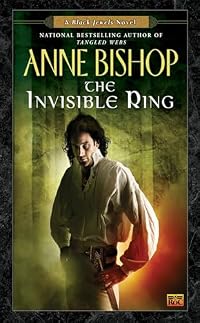
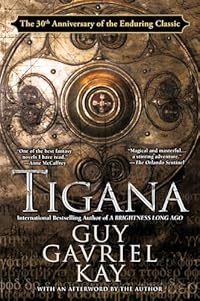
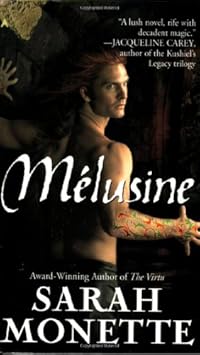
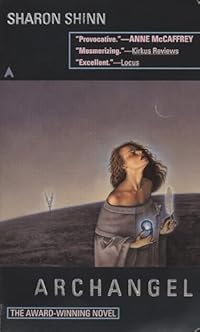



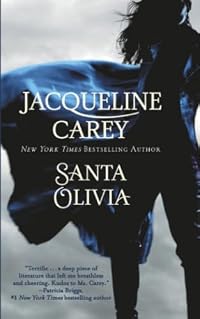
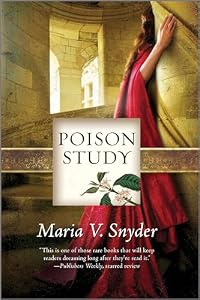
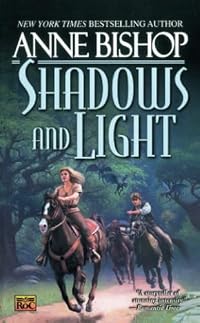
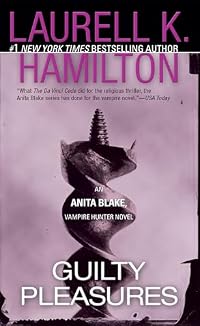

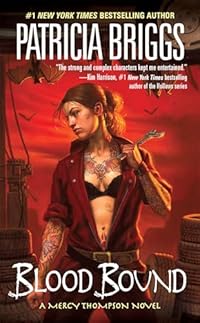
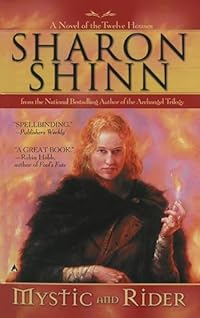
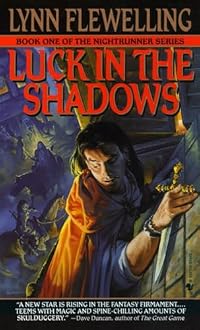
Member Recommendations
avalon_today Both about a young girl faced with adventures and obstacles.
60
ryvre Black Ships has the same fantasy-meets-mythology feel as the Kushiel series, though without the sexual themes.
23
MyriadBooks Because of the vivid sexual descriptions and political underpinnings.
04

MyriadBooks For the reinterpretation of Christianity, although they are very different books.

hoddybook Even the Wingless is less erotica than Kushiel's Dart. Both deal with somewhat extreme sexual practices however. The former set in an alien environment whereas the latter is in an alternate universe.

Member Reviews
Knowledge of the BDSM aspect made me really uncomfortable in the beginning, primarily because of Phèdre's age (hint: she grows up!), but later on, I never felt that the SM was the focus of the story, it was just a facet of Phèdre's personality. The sex scenes, as apart from the SM scenes, were all pretty tame. A couple of the SM scenes rated pretty high on the squick-scale for my own tastes, but I didn't think they were there merely for titillation and actually served a purpose within the story. When Phèdre is in Skaldia and is being held by her rapists, how the fact that she gets off on humiliation compounded her feelings of non-sexy shame was eye-opening. And how her pain-fetish plays into her relationship with Melisande, just show more whoa.
Despite the fact that the story is about a courtesan who is also a god-touched masochist, I'd class this as Fantasy-plus as opposed to Erotica-Fantasy. It's like all my favorite things in one book: fantasy, magic, sexy-funtimes, a little romance, political intrigue, super character development, and a believable, logical world. It's also like, a million pages long, so it took a little effort to read, which I appreciate. show less
Despite the fact that the story is about a courtesan who is also a god-touched masochist, I'd class this as Fantasy-plus as opposed to Erotica-Fantasy. It's like all my favorite things in one book: fantasy, magic, sexy-funtimes, a little romance, political intrigue, super character development, and a believable, logical world. It's also like, a million pages long, so it took a little effort to read, which I appreciate. show less
Set in an alternate fantasy world which looks much like perhaps 17th century Europe, Phedre no Delaunay is an indentured servant trained in the arts of the bedchamber as well as espionage. These dual talents, along with her abundant curiosity, will lead her into the depths of a traitorous plot that threatens the nation.
I’ve read this book many, many times and listened to the audiobook a few more times. Recently, I engaged in a read along of this book with several other bloggers (which was magnificent) and I figured it was high time I write a proper review of this most beloved book.
Over the years, I have recommended this book to many people. Some have shied away from it because they believe it to be a romance novel first and foremost. show more That could not be further from the truth. The story is rich and complex, the characters deep and conflicted, and the setting is full of grace. There’s love & betrayal, for sure, but also sword fights, brilliant escapes, brutal warlords, torture, a good deal of kindness unlooked for, poetry, royalty teetering on the brink of collapse, and so much more. In short, this book is not for the faint of heart.
The culture of Terre D’Ange is one of ‘Love as thou wilt’. Courtesans are not looked upon as scum but rather are cultured, highly trained, educated persons who have goals and lives beyond the bedroom. Phedre’s training started as a young child with simple things, such as learning to serve unobtrusively. As she ages, her training becomes more complex and more adult themes are introduced. Once her indenture is sold to Anafiel Delaunay, her training in espionage, languages, politics, and history begins. Truly, Phedre is often hard pressed to say which she enjoyed more, or which served her better in the trials that were to come.
The world building is simply magnificent in this book. The setting is nearly a character unto itself, affecting the plot and the shaping of our main characters. A whole religion is contained within this fantasy world. Elua walked the world, loving all. His closest followers reflect the various faces of love. Serving Naamah is not a simple exchange of money for sex. It is a sacred calling first and foremost with full consent and deep pleasure for all being the goal. Indeed, the theme of consent runs strong throughout this novel.
Phedre herself is fascinating and she is surrounded by most interesting characters. Once she goes to Anafiel’s house, she is raised side by side with another orphan, Alcuin. Together, they learn the arts of espionage eventually being set to small tasks. However, Anafiel plays his cards close to this chest, not wanting to put his two young charges in danger. Yet betrayal eventually strikes and Phedre finds herself a slave to a foreign warlord. Her only companion during this harrowing time is Joscelin Verreuil. He is trained as a protector in the Cassiline style. Not only is he a magnificent fighter, but he is also a bit of a prude. There is much that Phedre and Joscelin have to learn from each other.
While this book has a fair amount of politics and a large cast, the key players are always set front and center. And don’t be intimidated by the politics. When you truly need to understand some key point, some character will explain it. Primarily, this is Phedre’s story and her role in things. It is through her eyes that we see and understand the higher machinations of rulers and officials.
One can not talk about this book justly without talking about the sex. There are some scenes that are erotic. Some of these scenes are BDSM. Jacqueline Carey doesn’t flinch from describing these scenes in as much detail as she does the politics, or the beauty of a masked ball, or a swift fight scene. She does do a magnificent job of including the emotions, the reasons for engaging in such activities or relationships, and the aftermath. These scenes are small but important windows into the characters. They add to, instead of distract from, the plot. Indeed, there are times when the sex happens off stage because it would not have added to character building or the plot.
When I first read this book, probably in 2002, I thought I had a pretty open mind about relationships and sex. However, this book challenged some of those beliefs, just as the characters themselves are challenged in their beliefs. Reading this book was like holding up a magnifying mirror and taking a good hard look at what I saw there and why I believed certain things were good or bad. In short, this book, and the series, did me the service of pushing my boundaries, as any great novel should do.
The Narration: Anne Flosnik is great for Phedre. She has a cultured voice that ranges in emotion and a little in age. Phedre does a lot of growing in this book. She also has quite a range of voices for the other characters, both male and female. In addition, there are several French and Gaelic words and phrases in this book and Flosnik pulls them off excellently. show less
I’ve read this book many, many times and listened to the audiobook a few more times. Recently, I engaged in a read along of this book with several other bloggers (which was magnificent) and I figured it was high time I write a proper review of this most beloved book.
Over the years, I have recommended this book to many people. Some have shied away from it because they believe it to be a romance novel first and foremost. show more That could not be further from the truth. The story is rich and complex, the characters deep and conflicted, and the setting is full of grace. There’s love & betrayal, for sure, but also sword fights, brilliant escapes, brutal warlords, torture, a good deal of kindness unlooked for, poetry, royalty teetering on the brink of collapse, and so much more. In short, this book is not for the faint of heart.
The culture of Terre D’Ange is one of ‘Love as thou wilt’. Courtesans are not looked upon as scum but rather are cultured, highly trained, educated persons who have goals and lives beyond the bedroom. Phedre’s training started as a young child with simple things, such as learning to serve unobtrusively. As she ages, her training becomes more complex and more adult themes are introduced. Once her indenture is sold to Anafiel Delaunay, her training in espionage, languages, politics, and history begins. Truly, Phedre is often hard pressed to say which she enjoyed more, or which served her better in the trials that were to come.
The world building is simply magnificent in this book. The setting is nearly a character unto itself, affecting the plot and the shaping of our main characters. A whole religion is contained within this fantasy world. Elua walked the world, loving all. His closest followers reflect the various faces of love. Serving Naamah is not a simple exchange of money for sex. It is a sacred calling first and foremost with full consent and deep pleasure for all being the goal. Indeed, the theme of consent runs strong throughout this novel.
Phedre herself is fascinating and she is surrounded by most interesting characters. Once she goes to Anafiel’s house, she is raised side by side with another orphan, Alcuin. Together, they learn the arts of espionage eventually being set to small tasks. However, Anafiel plays his cards close to this chest, not wanting to put his two young charges in danger. Yet betrayal eventually strikes and Phedre finds herself a slave to a foreign warlord. Her only companion during this harrowing time is Joscelin Verreuil. He is trained as a protector in the Cassiline style. Not only is he a magnificent fighter, but he is also a bit of a prude. There is much that Phedre and Joscelin have to learn from each other.
While this book has a fair amount of politics and a large cast, the key players are always set front and center. And don’t be intimidated by the politics. When you truly need to understand some key point, some character will explain it. Primarily, this is Phedre’s story and her role in things. It is through her eyes that we see and understand the higher machinations of rulers and officials.
One can not talk about this book justly without talking about the sex. There are some scenes that are erotic. Some of these scenes are BDSM. Jacqueline Carey doesn’t flinch from describing these scenes in as much detail as she does the politics, or the beauty of a masked ball, or a swift fight scene. She does do a magnificent job of including the emotions, the reasons for engaging in such activities or relationships, and the aftermath. These scenes are small but important windows into the characters. They add to, instead of distract from, the plot. Indeed, there are times when the sex happens off stage because it would not have added to character building or the plot.
When I first read this book, probably in 2002, I thought I had a pretty open mind about relationships and sex. However, this book challenged some of those beliefs, just as the characters themselves are challenged in their beliefs. Reading this book was like holding up a magnifying mirror and taking a good hard look at what I saw there and why I believed certain things were good or bad. In short, this book, and the series, did me the service of pushing my boundaries, as any great novel should do.
The Narration: Anne Flosnik is great for Phedre. She has a cultured voice that ranges in emotion and a little in age. Phedre does a lot of growing in this book. She also has quite a range of voices for the other characters, both male and female. In addition, there are several French and Gaelic words and phrases in this book and Flosnik pulls them off excellently. show less
Prefacing this all with: I’m not going to get into the morality of this book here, that’s something each reader needs to decide personally. The briefest summary I can give is that Phedre, our singular protagonist, is a religiously blessed, masochistic prostitute who gets frequently embroiled in political schemes. This book is half politics, half BDSM, and parts of it read like a rape fantasy. Read some warnings before you start, and put it down if you get uncomfortable.
I built a running list of critiques while I read, which is not something I often do. Ultimately, I think this book was just too long. Repetitive prose was its main flaw, but the length of the book itself meant that since I spent so much time with it, I had that much show more extra time to accumulate grievances.
Far too many scenes began with phrases like “I’ll not bore you with the details”, “the less said, the better”, or “I do not need to tell it; all the world knows that story”. This works fine when used sparingly, but this book is too long for its own good. These phrases just kept coming, and coming, and coming.
The D’Angeline supremacy complex gets increasingly annoying once you’ve had to read hundreds of pages of it. Maybe they are truly as beautiful as Phedre feels the need to constantly point out, but being reminded of it in every single scene was unnecessary.
Suspension of disbelief is needed to get the most out of this book, but there’s only so much I could gloss over, and again, the length of the story dragged it beyond the point I felt was acceptable. Some ending scenes were particularly ridiculous; Joscelin and Phedre’s escape from Selig into the castle was chief among them, the positioning that would require isn’t feasible.
The Christianity parallels were an odd choice. I don’t think it added enough to offset how much it removed me from the world whenever I read a new reference to an actual historical group.
All that being said, this was by no means a bad book. Aside from the grating repetition, the prose is nice and the story is engaging. I can't say if I actually liked it or not, but it earned a borderline 4/5. show less
I built a running list of critiques while I read, which is not something I often do. Ultimately, I think this book was just too long. Repetitive prose was its main flaw, but the length of the book itself meant that since I spent so much time with it, I had that much show more extra time to accumulate grievances.
Far too many scenes began with phrases like “I’ll not bore you with the details”, “the less said, the better”, or “I do not need to tell it; all the world knows that story”. This works fine when used sparingly, but this book is too long for its own good. These phrases just kept coming, and coming, and coming.
The D’Angeline supremacy complex gets increasingly annoying once you’ve had to read hundreds of pages of it. Maybe they are truly as beautiful as Phedre feels the need to constantly point out, but being reminded of it in every single scene was unnecessary.
Suspension of disbelief is needed to get the most out of this book, but there’s only so much I could gloss over, and again, the length of the story dragged it beyond the point I felt was acceptable. Some ending scenes were particularly ridiculous;
The Christianity parallels were an odd choice. I don’t think it added enough to offset how much it removed me from the world whenever I read a new reference to an actual historical group.
All that being said, this was by no means a bad book. Aside from the grating repetition, the prose is nice and the story is engaging. I can't say if I actually liked it or not, but it earned a borderline 4/5. show less
This review is also featured at Behind the Pages: Kushiel's Dart
Kushiel’s Dart is an intricate and complex high fantasy filled with politics and desire. Phedre carries a red smote in her eye, declaring for all to see that she is chosen by the God Kushiel. She is an anguissette, a woman who can find pleasure in pain. Castaway as a child for being different, she is sold into the Night Court to become a member of a pleasure house. Until Delaunay discovers what she is and buys her mark. Raised in Delaunay’s household she is treated with respect and educated. While she will still be a servant of Naamah and provided bedroom services to clients, there is more to it than simply money. She is Delaunay’s eyes and ears. Listening to what her show more clients give up in moments of passion.
I was hesitant to start this book. I lost count how many times I picked it up in the bookstore and put it back down again. Anyone who follows my reviews knows my opinion of sex in books. I prefer to not read it at all. By chance, this was suggested at my book club and I figured I would give it a try. Jacqueline Cary is a magnificent writer. She does not focus on the physical actions when Phedre is with a client, instead, she focuses on what Phedre learns and her emotions. Sure, you know what is happening, but it’s more so in the background to everything else going on.
However, I must confess that I couldn’t keep the politics straight. There were too many names and factions to follow. I was more interested in Phedre and her reactions to the world around her. When the politics started to fall into the background, and the story was more focused on Phedre’s survival, I was much more interested because Phedre is almost as complex as the politics she indulged in for Delaunay.
This is also the first high fantasy I have read that featured a non-combative character at the forefront of battle. And Phedre doesn’t run away when the fighting begins. She uses all her skills of espionage to weasel her way into places that no one else can. Her determination to survive in the worst of situations is what made me continue reading this book despite its politics. Phedre is an extremely intelligent woman, who recognizes her downfalls and does what she can to be a better person. She never gives up. There are plenty of times she wants to, but she knows other people depend on her for her survival and she will not let them down.
A surprising find, and I am looking forward to the next book in the series. show less
Kushiel’s Dart is an intricate and complex high fantasy filled with politics and desire. Phedre carries a red smote in her eye, declaring for all to see that she is chosen by the God Kushiel. She is an anguissette, a woman who can find pleasure in pain. Castaway as a child for being different, she is sold into the Night Court to become a member of a pleasure house. Until Delaunay discovers what she is and buys her mark. Raised in Delaunay’s household she is treated with respect and educated. While she will still be a servant of Naamah and provided bedroom services to clients, there is more to it than simply money. She is Delaunay’s eyes and ears. Listening to what her show more clients give up in moments of passion.
I was hesitant to start this book. I lost count how many times I picked it up in the bookstore and put it back down again. Anyone who follows my reviews knows my opinion of sex in books. I prefer to not read it at all. By chance, this was suggested at my book club and I figured I would give it a try. Jacqueline Cary is a magnificent writer. She does not focus on the physical actions when Phedre is with a client, instead, she focuses on what Phedre learns and her emotions. Sure, you know what is happening, but it’s more so in the background to everything else going on.
However, I must confess that I couldn’t keep the politics straight. There were too many names and factions to follow. I was more interested in Phedre and her reactions to the world around her. When the politics started to fall into the background, and the story was more focused on Phedre’s survival, I was much more interested because Phedre is almost as complex as the politics she indulged in for Delaunay.
This is also the first high fantasy I have read that featured a non-combative character at the forefront of battle. And Phedre doesn’t run away when the fighting begins. She uses all her skills of espionage to weasel her way into places that no one else can. Her determination to survive in the worst of situations is what made me continue reading this book despite its politics. Phedre is an extremely intelligent woman, who recognizes her downfalls and does what she can to be a better person. She never gives up. There are plenty of times she wants to, but she knows other people depend on her for her survival and she will not let them down.
A surprising find, and I am looking forward to the next book in the series. show less
This book is the most welcome surprise that I can remember.
I've resisted this book for years because 500+ pages of sadomasochism thinly glued together with a romance plot didn't have the slightest appeal for me. I mean, come on, when the publisher's blurb tells you that the main character is "trained equally in the courtly arts and the talents of the bed-chamber" and the synopsis of the story is that she experiences pleasure when tortured, what do you expect? So, I ignored the rave reviews and bought something else.
But, you have those moments when you're standing in the small five-and-dime in another city, out of reading material, and the only thing in front of you really are romances, or astrology books, or books you've read, or show more Kushiel's Dart, you remember the rave reviews and say, "What the heck..." A good decision.
Put quite simply, Ms. Carey is one of the better story-tellers of our day. She's put together a fascinating story line, full of plot within plot, intrigue upon intrigue, along with a set of extremely well-realized characters. Throw in some grand battles, great loves and few heroic sword fights and...well, you get the idea. The author even managed to gracefully semi-retire the main characters, Phèdre and Joscelin, after Book #3 and take up with the next generation for a second trilogy...something I usually find totally disconcerting and which often causes me to stop reading a series.
Don't get me wrong. There is no denying that there's a lot of sex, sometimes graphic sex, usually fairly sadomasochistic sex in this book. It's definitely not for children! If that disturbs you or isn't generally acceptable, then I'd really recommend you don't read this book. If you're not sure, get a copy from the library or buy a cheap copy second-hand to try it out. If you hate it, not much harm done. If you don't, she's a very good writer and you've got thousands of pages of enjoyment out there with another installment due this summer. show less
I've resisted this book for years because 500+ pages of sadomasochism thinly glued together with a romance plot didn't have the slightest appeal for me. I mean, come on, when the publisher's blurb tells you that the main character is "trained equally in the courtly arts and the talents of the bed-chamber" and the synopsis of the story is that she experiences pleasure when tortured, what do you expect? So, I ignored the rave reviews and bought something else.
But, you have those moments when you're standing in the small five-and-dime in another city, out of reading material, and the only thing in front of you really are romances, or astrology books, or books you've read, or show more Kushiel's Dart, you remember the rave reviews and say, "What the heck..." A good decision.
Put quite simply, Ms. Carey is one of the better story-tellers of our day. She's put together a fascinating story line, full of plot within plot, intrigue upon intrigue, along with a set of extremely well-realized characters. Throw in some grand battles, great loves and few heroic sword fights and...well, you get the idea. The author even managed to gracefully semi-retire the main characters, Phèdre and Joscelin, after Book #3 and take up with the next generation for a second trilogy...something I usually find totally disconcerting and which often causes me to stop reading a series.
Don't get me wrong. There is no denying that there's a lot of sex, sometimes graphic sex, usually fairly sadomasochistic sex in this book. It's definitely not for children! If that disturbs you or isn't generally acceptable, then I'd really recommend you don't read this book. If you're not sure, get a copy from the library or buy a cheap copy second-hand to try it out. If you hate it, not much harm done. If you don't, she's a very good writer and you've got thousands of pages of enjoyment out there with another installment due this summer. show less
Yeah, I don't know. I've been struggling with what to say about this one because I've had such mixed feelings. Usually, I start with what I liked about a book, but I simply think that the problematic aspects of Kushiel's Dart are so problematic that they have to be discussed up front before the book can be analyzed in any depth.
When this book was recommended to me it was just as an "epic fantasy that makes epic fantasies interesting again" so any trepidation I had coming in was that it was over 900 pages long, with a map inside the front cover followed by a list of characters with High Fantasy names longer than my arm -- in short, the sort of fantasy that I haven't read in a decade. So to be confronted with the core plot of the One True show more Masochist was jarring. Good heavens people, don't fail to warn people about the BDSM. I see why it could happen -- the back two-thirds are a completely different book -- but there's 300 pages of a tonally very different book first. And the tone. So, I mean, I try to be a "your kink is not my kink and that's OK" sort of person. And, as one of my friends commented, it is kind of fascinating to get inside someone else's psychosexual identity, but it's not my kink, which made it, honestly, kind of boring. But also, beyond the kink, one has to deal with the really problematic pieces: bond slavery, grooming of children, children slaves, a relationship between a teenage bond slave cum foster child and his owner/guardian, classically conditioning children into masochism -- I mean really problematic stuff that has all of its extreme implications glossed over in the book.
And I'm really concerned about the glorification of submission and masochism in women and the way in which this is broadcast for public consumption, both in the book but also in the fantasy subcultures. It's not super consensual for bystanders and I think it sets up a gendered culture that can be borderline abusive to young women trying to fit in. I think it's not actually OK to not think about the real world implications of the culture that you're starting (I was really disturbed to see the fan tattoos on the author's website.)
Finally, you're allowed to do an alternative history of Europe. Alt histories are fun and amazing. You're allowed to do such a transparent alt history that Scandinavia is actually named a Norse word, and Rome is named after a Roman empire. You're also allowed in fantasy to have highly stereotyped races; we side-eye it these days, but dwarves and elves and goblins are all still kosher. What you're not allowed to do is have a very transparent alt history AND stereotype races. Not OK to say that only alt-history Western Europeans and specifically the French are super blessed/pretty people and alt-history Scandinavians are all ugly and alt-history Romani are super stereotypical fortune tellers and alt-history Jews believe in Jesus.
So why did I read a thousand pages of this? Because it actually is a gorgeous Epic fantasy. I found the initial setup of a religion that is to Christianity the way that Christianity is to Judaism fascinating. I really thought that the setting was a well-developed world with some unique implications (although the more I dwell on it, the more I think the mores of Terre d'Ange fit whatever Carey was into at the moment rather than being consistent.) But mostly, after the first super problematic one third, the entire premise was dropped and it became an actual epic story about someone who went from being kind of self-absorbed and shallow to deeply invested in the survival of a country and a lifestyle. I found Phedre's (and Joscelin's) personal development really intriguing and I thought that they were depicted well as sympathetic characters who still had a lot of room for growth over the course of the story, which is really unusual.
The political intrigue was decently well-done, and I found the setting both big enough that the intrigue was convoluted, but small enough that I could follow what was happening. When the book was good, it reminded me of the The Goblin Emperor
Ultimately what kept me in it was that I really liked Joscelin's character arc. It's really rare that a fantasy novel lets a character break a vow. Usually the fantasy convention is that vows are inviolate, it's one of the most fantastical elements of fantasy. And in traditional fantasy, characters that break vows are either irredeemable or their core story is a quest for redemption. On the other hand, Joscelin simply realized that the vows he took as a teen were naive. An exploration of how to be true to oneself and be a moral person while also loosening up on a black-and-white world view is something rare in fantasy and rare in literature in general, and that's a pity. show less
When this book was recommended to me it was just as an "epic fantasy that makes epic fantasies interesting again" so any trepidation I had coming in was that it was over 900 pages long, with a map inside the front cover followed by a list of characters with High Fantasy names longer than my arm -- in short, the sort of fantasy that I haven't read in a decade. So to be confronted with the core plot of the One True show more Masochist was jarring. Good heavens people, don't fail to warn people about the BDSM. I see why it could happen -- the back two-thirds are a completely different book -- but there's 300 pages of a tonally very different book first. And the tone. So, I mean, I try to be a "your kink is not my kink and that's OK" sort of person. And, as one of my friends commented, it is kind of fascinating to get inside someone else's psychosexual identity, but it's not my kink, which made it, honestly, kind of boring. But also, beyond the kink, one has to deal with the really problematic pieces: bond slavery, grooming of children, children slaves, a relationship between a teenage bond slave cum foster child and his owner/guardian, classically conditioning children into masochism -- I mean really problematic stuff that has all of its extreme implications glossed over in the book.
And I'm really concerned about the glorification of submission and masochism in women and the way in which this is broadcast for public consumption, both in the book but also in the fantasy subcultures. It's not super consensual for bystanders and I think it sets up a gendered culture that can be borderline abusive to young women trying to fit in. I think it's not actually OK to not think about the real world implications of the culture that you're starting (I was really disturbed to see the fan tattoos on the author's website.)
Finally, you're allowed to do an alternative history of Europe. Alt histories are fun and amazing. You're allowed to do such a transparent alt history that Scandinavia is actually named a Norse word, and Rome is named after a Roman empire. You're also allowed in fantasy to have highly stereotyped races; we side-eye it these days, but dwarves and elves and goblins are all still kosher. What you're not allowed to do is have a very transparent alt history AND stereotype races. Not OK to say that only alt-history Western Europeans and specifically the French are super blessed/pretty people and alt-history Scandinavians are all ugly and alt-history Romani are super stereotypical fortune tellers and alt-history Jews believe in Jesus.
So why did I read a thousand pages of this? Because it actually is a gorgeous Epic fantasy. I found the initial setup of a religion that is to Christianity the way that Christianity is to Judaism fascinating. I really thought that the setting was a well-developed world with some unique implications (although the more I dwell on it, the more I think the mores of Terre d'Ange fit whatever Carey was into at the moment rather than being consistent.) But mostly, after the first super problematic one third, the entire premise was dropped and it became an actual epic story about someone who went from being kind of self-absorbed and shallow to deeply invested in the survival of a country and a lifestyle. I found Phedre's (and Joscelin's) personal development really intriguing and I thought that they were depicted well as sympathetic characters who still had a lot of room for growth over the course of the story, which is really unusual.
The political intrigue was decently well-done, and I found the setting both big enough that the intrigue was convoluted, but small enough that I could follow what was happening. When the book was good, it reminded me of the The Goblin Emperor
Ultimately what kept me in it was that I really liked Joscelin's character arc. It's really rare that a fantasy novel lets a character break a vow. Usually the fantasy convention is that vows are inviolate, it's one of the most fantastical elements of fantasy. And in traditional fantasy, characters that break vows are either irredeemable or their core story is a quest for redemption. On the other hand, Joscelin simply realized that the vows he took as a teen were naive. An exploration of how to be true to oneself and be a moral person while also loosening up on a black-and-white world view is something rare in fantasy and rare in literature in general, and that's a pity. show less
Kushiel's Dart is melodramatic trash-epic fantasy, shifting without a pause between overwrought sex scenes and Machiavellian maneuverings. The novel's excesses save it: the purple prose, overblown characters, and giddy absurdity overwhelm the banal plot, repetitious epiphanies, and desperate attempts to be "edgy." The novel submerges its simple-minded core beneath sumptuous diversions; it is like a rat drowned in cherry cordial. I suspect this makes Kushiel's Dart one of the paragons of trash-epic fantasy. (In other news, the Kushiel's Dart drinking game must include the words "susurrus," "beauty," and "weal.")
Members
- Recently Added By
Published Reviews
Overall, though, this is a really superior debut, integrating original themes, intelligent world-building, and skillful writing to an extent all too rare in today's fantasy market. It should immediately establish Carey as one of the most interesting and talented of the current crop of rising fantasy stars.
added by g33kgrrl
Lists

Best Fantasy Novels
821 works; 357 members

NPRs your picks: top 100 Sci-Fi/Fantasy books
297 works; 78 members

Best Alternate History
111 works; 60 members

Female Protagonist
1,056 works; 56 members

Favorite Literary Love Stories
182 works; 101 members

Recommend the 20 best books you've read in the last five years
2,167 works; 605 members

Fantasy novels with a female protagonist
76 works; 15 members

Bookriot's 100 Must-Read Sci-Fi Fantasy Novels By Female Authors
100 works; 9 members

Amazon's 100 Science Fiction & Fantasy Books to Read in a Lifetime
87 works; 23 members

BDSM Erotica
4 works; 3 members

LGBTQ+ Speculative Fiction
817 works; 50 members

Books With Characters I'd Like to Date
18 works; 9 members

My top 10 Fantasy Novels
9 works; 2 members

Princess Tales
130 works; 4 members
Speculative Fiction to Read
706 works; 32 members
Books We'd Want on a Desert Island
203 works; 131 members
Book Worlds We'd Like To Visit
322 works; 158 members

Unread books
1,063 works; 87 members

Slavefic
31 works; 3 members

Alphabetical Books
211 works; 3 members

Overdue Podcast
803 works; 9 members

Guilty Pleasures
223 works; 86 members
Author Information

52+ Works 33,969 Members
Jacqueline Carey was born in 1964 in Highland Park, Illinois. After receiving B.A. degrees in psychology and English literature from Lake Forest College, she spent six months working in a bookstore in London. Upon returning to the U.S., she began her writing career while working at a local college. Her debut novel, Kushiel's Dart, was published in show more 2001 and won the 2002 Locus Award for Best First Novel. Her other works include the Kushiel's Legacy series, the Naamah series, the Sundering series, and Santa Olivia series. (Bowker Author Biography) show less
Some Editions
Awards and Honors
Awards
Series
Belongs to Publisher Series
Gallimard, Folio SF (709)
Work Relationships
Common Knowledge
- Canonical title*
- Kushiëls Pijl
- Original title
- Kushiëls Dart
- Original publication date
- 2001-06-23
- People/Characters
- Phèdre nó Delaunay; Joscelin Verreuil; Anafiel Delaunay; Hyacinthe; Melisande Shahrizai; Ysandre de la Courcel (show all 15); Drustan mab Necthana; Waldemar Selig; Alcuin nó Delaunay; Isidore D’Aiglemort; Barquiel L’Envers; Remy; Ti-Philippe; Fortun; Master of the Straits
- Important places
- Terre D'Ange; Alba; Skaldia
- Important events
- The Battle of Troyes-Le-Mont
- Dedication
- Thank you to my parents, Marty and Rob, for a lifetime of love and encouragement, and to Julie, whose belief never wavered. To my great aunt Harriett, a very special mahalo for all her stalwart support.
- First words
- Lest anyone should suppose that I am a cuckoo's child, got on the wrong side of the blanket by lusty peasant stock and sold into indenture in a shortfallen season, I may say that I am House-born and reared in the Night Court ... (show all)proper, for all the good it did me.
- Quotations
- Love as thou wilt.
- Last words
- (Click to show. Warning: May contain spoilers.)"I'll tell you," I said, "Tomorrow."
- Blurbers
- Anthony, Piers ; Sherman, Delia; Bull, Emma; Marillier, Juliet; Douglass, Sara; Edgehill, Rosemary
- Original language
- English
- Canonical DDC/MDS
- 813.6
- Canonical LCC
- PS3603.A74
- Disambiguation notice
- First of three parts of the first German translation of "Kushiel's Dart".
Second part is called "In den Händen der Feinde".
The third part has never been published.
The new translation of "Kushiel's Dart" is cal... (show all)led "Das Zeichen". It contains the whole book.
Second of three parts of the first German translation of "Kushiel's Dart".
First part is called "Die Geheimniss des Nachtpalais".
The third part has never been published.
The new translation of "Kushiel's Dart" is called "Das Zeichen". It contains the whole book.
*Some information comes from Common Knowledge in other languages. Click "Edit" for more information.
Classifications
Statistics
- Members
- 7,531
- Popularity
- 1,521
- Reviews
- 245
- Rating
- (4.09)
- Languages
- 8 — Czech, Dutch, English, French, German, Hungarian, Italian, Polish
- Media
- Paper, Audiobook, Ebook
- ISBNs
- 35
- ASINs
- 14