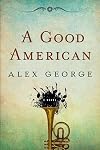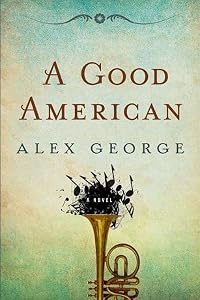
A Good American
by Alex George 
On This Page
Description
The Meisenheimer family struggles to find their place among the colorful residents of their new American hometown, including a giant teenage boy, a pretty schoolteacher whose lessons consist of more than music, and a spiteful, bicycle-riding dwarf.Tags
Recommendations









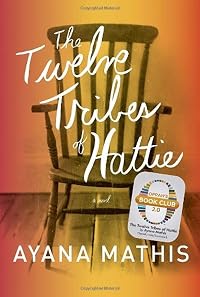
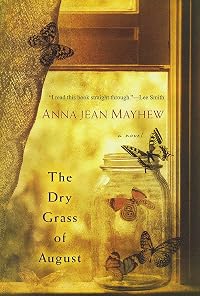
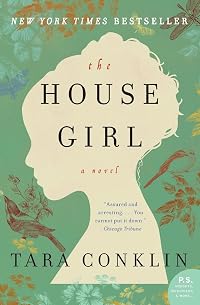



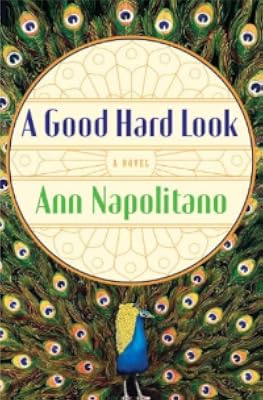










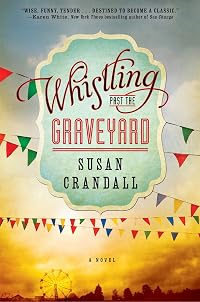
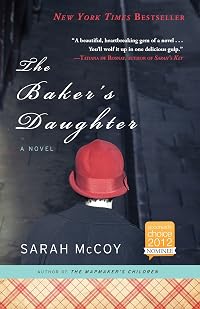
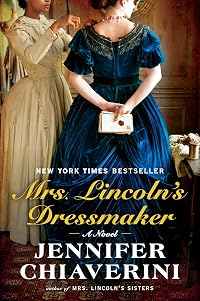

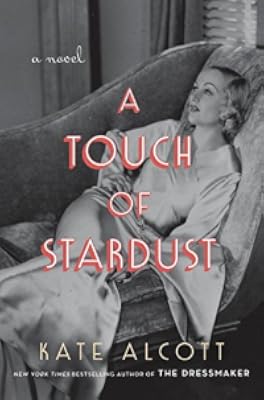




Member Recommendations

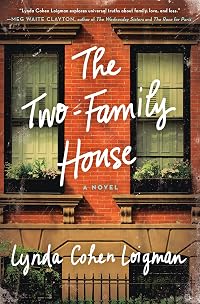
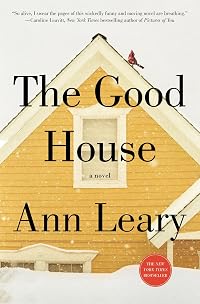
arielfl Both novels are sweeping multi generational stories of immigrants who experience equal doses of tragedy and success.
Member Reviews
Book on CD performed by Gibson Frazier
5***** and a ❤
This is a family saga, covering four generations of the Meisenheimer family over a century. It begins in 1904 Hanover Germany when Frederick and Jette meet, fall in love and decide to sail for America, ultimately settling in Beatrice, Missouri, a relatively small town on the banks of the Missouri River. We watch them taken advantage of due to their lack of English, but also helped by the kindness of strangers. One of the first to help them refuses any money but asks that they “become good Americans,” a request they take seriously.
The story is told by Frederick and Jette’s grandson, James, as he looks back at his family’s history. As happens in real life, the family show more intersects with many of the residents of Beatrice: the doctor, pharmacist, bartender, preacher, banker, funeral director, teachers, farmers, those who are prosperous and those down on their luck. We view history through the lens of one family’s experiences – World Wars I and II, the great depression, floods, the assassination of JFK, etc. The one constant for Frederick and his descendants is music. From opera to jazz to barbershop quartets, music accompanies the events of their lives.
In summary, this is a story of immigrants, a story of quintessential Americans, a story of struggle and triumph and defeat and unabashed joy. I absolutely loved it and as soon as I had finished it I wanted to read it again.
Gibson Frazier does a marvelous job of narrating the audiobook. I only wish that some of the operatic arias could have been sung. But that doesn’t really diminish Frazier’s performance. show less
5***** and a ❤
This is a family saga, covering four generations of the Meisenheimer family over a century. It begins in 1904 Hanover Germany when Frederick and Jette meet, fall in love and decide to sail for America, ultimately settling in Beatrice, Missouri, a relatively small town on the banks of the Missouri River. We watch them taken advantage of due to their lack of English, but also helped by the kindness of strangers. One of the first to help them refuses any money but asks that they “become good Americans,” a request they take seriously.
The story is told by Frederick and Jette’s grandson, James, as he looks back at his family’s history. As happens in real life, the family show more intersects with many of the residents of Beatrice: the doctor, pharmacist, bartender, preacher, banker, funeral director, teachers, farmers, those who are prosperous and those down on their luck. We view history through the lens of one family’s experiences – World Wars I and II, the great depression, floods, the assassination of JFK, etc. The one constant for Frederick and his descendants is music. From opera to jazz to barbershop quartets, music accompanies the events of their lives.
In summary, this is a story of immigrants, a story of quintessential Americans, a story of struggle and triumph and defeat and unabashed joy. I absolutely loved it and as soon as I had finished it I wanted to read it again.
Gibson Frazier does a marvelous job of narrating the audiobook. I only wish that some of the operatic arias could have been sung. But that doesn’t really diminish Frazier’s performance. show less
A Good American is a superlative rendering of the immigrant experience of Henriette and Frederick Meisenheimer in Beatrice, Missouri in the early 1900's. The novel is narrated by their grandson James and embraces the stories of four generations of Meisenheimers and their acquaintances. The integral role of music and cooking are intertwined throughout the years and into the lives of the characters. Alex George provides an extraordinary glimpse into the growing pains and tumultuous times of 20th century America. This story was intelligently conceived, and the characters are beautifully depicted. I cannot give this book any higher praise than to keep it in my library to revisit again and again. Auf Wiedersehen to the Meisenheiheimers. I show more will miss them dearly. show less
 This review was written for LibraryThing Early Reviewers.
I finished "A Good American", but I neither loved it nor even liked it very much.
On the bright side, I enjoyed the story's hopeful tone. I found the story compelling and occasionally surprising (in an interesting way).
That said, the prose is, well, wooden and prosaic. The narrator's voice lacks authenticity and passion. Why does he choose to talk about his father in the third person and call him by his first name rather than as "Dad"? How many Americans would say "randy" in place of "horny"?
In addition to not speaking in an authentic voice, the author also chokes his narrative with scores of tiny set pieces which send the narrative in weird directions. The book is filled with goofy vignettes which, I suppose, the author figured that show more readers would find funny or charming; for example the back-to-back funerals of a dwarf and a giant, and a minister's witness to Christ's resurrection on the Missouri. Now it is certainly possible to write a great book composed of short, perceptive vignettes -- see, for instance, the brilliant "Mr. Bridge" and "Mrs. Bridge" by Evan Connell -- but this novel fell well short of that mark. Instead, at least for me, these episodes stitched the story together in a haphazard way that prevented me from feeling invested and interested in the characters and the challenges they faced.
In the end, I never felt that I got into the heads of any of the main characters, or really got to know them -- which is what draws me to pick up this kind of book in the first place. The book was like reading an in-depth project proposal for a made-for-TV movie. show less
On the bright side, I enjoyed the story's hopeful tone. I found the story compelling and occasionally surprising (in an interesting way).
That said, the prose is, well, wooden and prosaic. The narrator's voice lacks authenticity and passion. Why does he choose to talk about his father in the third person and call him by his first name rather than as "Dad"? How many Americans would say "randy" in place of "horny"?
In addition to not speaking in an authentic voice, the author also chokes his narrative with scores of tiny set pieces which send the narrative in weird directions. The book is filled with goofy vignettes which, I suppose, the author figured that show more readers would find funny or charming; for example the back-to-back funerals of a dwarf and a giant, and a minister's witness to Christ's resurrection on the Missouri. Now it is certainly possible to write a great book composed of short, perceptive vignettes -- see, for instance, the brilliant "Mr. Bridge" and "Mrs. Bridge" by Evan Connell -- but this novel fell well short of that mark. Instead, at least for me, these episodes stitched the story together in a haphazard way that prevented me from feeling invested and interested in the characters and the challenges they faced.
In the end, I never felt that I got into the heads of any of the main characters, or really got to know them -- which is what draws me to pick up this kind of book in the first place. The book was like reading an in-depth project proposal for a made-for-TV movie. show less
I have a hard time figuring out where to begin in my review of this book. I sped through this over the span of two days where I read giant chunks on my train commute. I loved it, but when I started thinking of how I would review the book, I didn't know where to start. I find it very hard to do this book justice without including some gigantic spoilers.
George tells the story of the American experience by following the lives of one family through the generations. And like any good family saga, there are moments of supreme joy, heartbreaking tragedy, and everything in between.
In 1894, a pregnant Jette and Frederick leave Germany for America to escape her disapproving mother and settle in the small town of Beatrice, Missouri. There, they show more set down roots. The family's story is told by their grandson, James. Four generations of Meisenheimers revolve around a restaurant, which changes over time symbolically with America. And along with this restaurant is the music, which intentionally or not, is also a symbol of the United States.
A Good American doesn't shy away from some of the darker sides of America. George's characters have to deal with World War Two and the soldiers who do not come home, racism, Prohibition, and the Great Depression, to name a few. There are also smaller, closer to home tragedies that pepper the book - but this is not a dark book. Nor is it a happy book. It is a book that captures the heart of American history for the past century or so, where there are good times and bad, but we as a country keep moving forward.
Review copy courtesy of the publisher via Goodreads First Reads program show less
George tells the story of the American experience by following the lives of one family through the generations. And like any good family saga, there are moments of supreme joy, heartbreaking tragedy, and everything in between.
In 1894, a pregnant Jette and Frederick leave Germany for America to escape her disapproving mother and settle in the small town of Beatrice, Missouri. There, they show more set down roots. The family's story is told by their grandson, James. Four generations of Meisenheimers revolve around a restaurant, which changes over time symbolically with America. And along with this restaurant is the music, which intentionally or not, is also a symbol of the United States.
A Good American doesn't shy away from some of the darker sides of America. George's characters have to deal with World War Two and the soldiers who do not come home, racism, Prohibition, and the Great Depression, to name a few. There are also smaller, closer to home tragedies that pepper the book - but this is not a dark book. Nor is it a happy book. It is a book that captures the heart of American history for the past century or so, where there are good times and bad, but we as a country keep moving forward.
Review copy courtesy of the publisher via Goodreads First Reads program show less
Thank you to Library Thing and G.P. Putnam's Sons for providing me with an advance copy of this book to review.
Wow! I don't know that I would have rushed out to pick this up if I hadn't won a copy but that's what makes the early reviewer's program so great for me. I get exposed to books I wouldn't normally gravitate to and sometimes the result is an absolute treat like reading A Good American. Once I started reading I was so hooked into the story that I could not put it down.
The story begins with Jette and Frederick in 1904 Germany. They get in some hot water and they are forced to flee and wind up in America not speaking a word of English. In short order they find themselves in Missouri where there is a large German population. Through show more the years they establish their family as they join their community and work to become "a Good American". The book is populated with a large cast of fascinating characters. Many times someone will enter the story just when the family needs their help the most. A particular favorite was Lomax. The family is witness to a lot of pivotal moments in history as well as lot of wonderful and heartbreaking events in their lives. Through it all the Meisenheimer's hold tight through the bonds of love, family, and music.
I don't want to give too much away. I went into this book not really knowing more than the bare bones of the plot and I loved how the book unfolded for me. The story is an excellent one and I highly recommend it. The characters come alive and you genuinely root for them to succeed. I especially loved the character of Jette, particularly in the beginning of the novel. She was the foundation rock of her entire family. I am amazed at how much story the author got in in only 400 pages. This a charming family saga that is a joy to read. show less
Wow! I don't know that I would have rushed out to pick this up if I hadn't won a copy but that's what makes the early reviewer's program so great for me. I get exposed to books I wouldn't normally gravitate to and sometimes the result is an absolute treat like reading A Good American. Once I started reading I was so hooked into the story that I could not put it down.
The story begins with Jette and Frederick in 1904 Germany. They get in some hot water and they are forced to flee and wind up in America not speaking a word of English. In short order they find themselves in Missouri where there is a large German population. Through show more the years they establish their family as they join their community and work to become "a Good American". The book is populated with a large cast of fascinating characters. Many times someone will enter the story just when the family needs their help the most. A particular favorite was Lomax. The family is witness to a lot of pivotal moments in history as well as lot of wonderful and heartbreaking events in their lives. Through it all the Meisenheimer's hold tight through the bonds of love, family, and music.
I don't want to give too much away. I went into this book not really knowing more than the bare bones of the plot and I loved how the book unfolded for me. The story is an excellent one and I highly recommend it. The characters come alive and you genuinely root for them to succeed. I especially loved the character of Jette, particularly in the beginning of the novel. She was the foundation rock of her entire family. I am amazed at how much story the author got in in only 400 pages. This a charming family saga that is a joy to read. show less
This review was written for LibraryThing Early Reviewers.This book has one of the best first lines EVER. I was struck so much by it, that upon reading it, I had to stop, just to take a quick snapshot.
"Always, there was music."
L.o.v.e.
A Good American is the story of a German immigrant, his family, and their story. The story spans through 4 generations, and covers nearly a century. Although told as one continuous story, the book is definitely separated into parts, and I found I liked the bookends (the first and last parts of the book) better than its middle. While the story kept my interest, I felt that the writing was better in the beginning. As the novel went on, especially as it moved into the experiences of 4 teenage boys, it got a little too hormonal for my liking, but then in the end, show more things wrapped up neatly with some pretty surprising twists. I did like the music motif that ran throughout the book, and I liked how everything was connected in its own way. It was almost an epic, considering how the author wove parts of American history right into the novel and showed how even a family of German descent in small town American still has its brushes with important historical moments. 3.5 of 5 stars. show less
"Always, there was music."
L.o.v.e.
A Good American is the story of a German immigrant, his family, and their story. The story spans through 4 generations, and covers nearly a century. Although told as one continuous story, the book is definitely separated into parts, and I found I liked the bookends (the first and last parts of the book) better than its middle. While the story kept my interest, I felt that the writing was better in the beginning. As the novel went on, especially as it moved into the experiences of 4 teenage boys, it got a little too hormonal for my liking, but then in the end, show more things wrapped up neatly with some pretty surprising twists. I did like the music motif that ran throughout the book, and I liked how everything was connected in its own way. It was almost an epic, considering how the author wove parts of American history right into the novel and showed how even a family of German descent in small town American still has its brushes with important historical moments. 3.5 of 5 stars. show less
The story had a promising beginning: two outsized young Germans meet in a public garden at the turn of the 20th century. He wins her heart by singing opera songs in foreign languages. When she becomes pregnant, they escape her disapproving mother on a boat bound for New Orleans, settling in a small Missouri town with a predominantly German population.
But this story isn't just about the emigrant couple, Frederick and Jette. It's also about their two children, four grandsons, countless great-grandchildren, and a multitude of townsfolk and strangers that pass through their lives. The narrator of the story is one of those four grandsons, James. The events that occur before his birth, he describes in too much detail for his limited show more perspective. There's no way that his relatives would (or could) have told him that much. Some of the events within his lifetime are beyond his realm of knowledge, so we can only assume that he's supposed to be making them up. I think it would have been more effective to either use a third-person omniscient p.o.v. or to let various characters tell their own stories.
The themes and plot became too diluted and convoluted along the way. In the beginning, music is a strong theme in the novel, a source of inspiration and unifying force. Although the narrator claims that music is important in his life, that really isn't shown. Instead, literature and chess become just as important. Within James' lifetime, too many characters dance in and out of the story, introduced just to die, it seems. In one rather elaborate set-up,a gentle giant (victim of an overactive pituitary gland) and a cuckolded dwarf have funerals on the same day . Seriously? With many of the main (actually important) characters, it felt like the author was trying to figure out what to do with them. The results were mostly interesting, but not always plausible. For example, Frank's fling with Teddy's girlfriend, which resulted in an actual shotgun wedding after she became pregnant, was hilarious, but not really believable. The young minister thinking that Teddy was the second coming of Christ was just flat-out ridiculous, and not something that the narrator could ever have known about. Also, the foreshadowing one-liners sprinkled through the novel got on my nerves after a while.
Even with all of this, the novel would still have earned three stars from me, if the author hadn't felt the need to throw in the g.d. twist ending. Out of nowhere, he smacks the reader witha change of parentage for James . I went back and reread the earlier parts of the book and I can't honestly believe that the author intended to put that twist in when he wrote the original events. The only indication was one tacked-on sentence: "Although it turned out that Stefan did leave one thing behind." Seriously? So I looked at some dates: Lomax was killed in 1927 and Rosa started teaching that same year. Stefan's father killed himself in 1932 and he begins working at the diner. Cora announced she was pregnant in 1935, and apparently Stefan's jealousy is what leads him to seduce Rosa. (That's me reading into it.) He takes off sometime in early 1936, "a few months" after Freddy is born, apparently not knowing that Rosa was pregnant, because she couldn't have been very far along. How did Rosa hide her pregnancy when she was teaching? More importantly, why the hell would she ever have gotten involved with the person who killed her beloved raccoon and wasn't even remorseful about it? And why would Stefan have participated in Lomax's murder? He would have been maybe 21 or 22 at the time, so perhaps he was one of Lomax's moonshine customers, but we're given absolutely no connection or reason why he would have participated. Throwing that ending in just felt cheap and lazy to me, and obviously, it pissed me off. So, sorry Mr. George, but two stars for you.
I do enjoy Mr. George's writing style, which manages to be both descriptive and straight forward, with very specific word choice. I think he was overly ambitious with this first novel, so perhaps his next one will have a more focused plot to match the language. show less
But this story isn't just about the emigrant couple, Frederick and Jette. It's also about their two children, four grandsons, countless great-grandchildren, and a multitude of townsfolk and strangers that pass through their lives. The narrator of the story is one of those four grandsons, James. The events that occur before his birth, he describes in too much detail for his limited show more perspective. There's no way that his relatives would (or could) have told him that much. Some of the events within his lifetime are beyond his realm of knowledge, so we can only assume that he's supposed to be making them up. I think it would have been more effective to either use a third-person omniscient p.o.v. or to let various characters tell their own stories.
The themes and plot became too diluted and convoluted along the way. In the beginning, music is a strong theme in the novel, a source of inspiration and unifying force. Although the narrator claims that music is important in his life, that really isn't shown. Instead, literature and chess become just as important. Within James' lifetime, too many characters dance in and out of the story, introduced just to die, it seems. In one rather elaborate set-up,
Even with all of this, the novel would still have earned three stars from me, if the author hadn't felt the need to throw in the g.d. twist ending. Out of nowhere, he smacks the reader with
I do enjoy Mr. George's writing style, which manages to be both descriptive and straight forward, with very specific word choice. I think he was overly ambitious with this first novel, so perhaps his next one will have a more focused plot to match the language. show less
Members
- Recently Added By
Published Reviews
ThingScore 50
Despite some dark moments, the book's overall tone is warm and nostalgic as the couple's grandson tells his family's story. George's narrator is bland when compared with his more colorful relatives, and this causes the novel to lose steam once the focus is on his own experiences rather than those of his parents and grandparents. Nonetheless, this memorable and well-written exploration of one show more family's search for acceptance in America should strongly appeal to readers who enjoy family sagas and historical fiction. show less
added by Christa_Josh
Lists

New Books I Can't Wait to read...
55 works; 14 members

Books Set in Missouri
29 works; 4 members

Indie Next Picks
196 works; 4 members
Talk Discussions
Past Discussions
A Good American by Alex George -- Nov 2011 Bonus Batch LTER in Reviews of Early Reviewers Books (February 2012)
Author Information
3 Works 41 Members
Alex George is a LibraryThing Author, an author who lists their personal library on LibraryThing.
Awards and Honors
Awards
Distinctions
Common Knowledge
- Original publication date
- 2012-02-07
- Dedication
- For Catherine
- First words
- Always, there was music.
- Last words
- (Click to show. Warning: May contain spoilers.)This story will do.
- Blurbers
- Hoffman, Beth
Classifications
Statistics
- Members
- 629
- Popularity
- 46,210
- Reviews
- 62
- Rating
- (3.75)
- Languages
- English, French, Korean, Spanish
- Media
- Paper, Audiobook, Ebook
- ISBNs
- 16
- ASINs
- 4