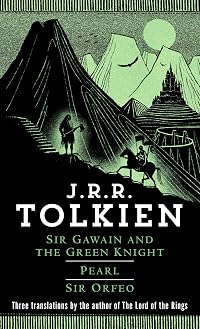
Sir Gawain and the Green Knight / Pearl / Sir Orfeo
by Gawain Poet (Author), J. R. R. Tolkien
Anthologies Containing Sir Orfeo (Middle English and Translations) (Anthology containing a Modern English translation from the Auchinlek MS. — Modern English Translations based on the Auchinleck Text)
On This Page
Description
This elegant deluxe slipcased edition of three medieval English poems, translated by Tolkien for the modern-day reader and containing romance, tragedy, love, sex and honour, features a beautifully decorated text and includes as a bonus the complete text of Tolkien's acclaimed lecture on Sir Gawain. Sir Gawain and the Green Knight and Pearl are two poems by an unknown author written in about 1400. Sir Gawain is a romance, a fairy-tale for adults, full of life and colour; but it is also much show more more than this, being at the same time a powerful moral tale which examines religious and social values. Pearl is apparently an elegy on the death of a child, a poem pervaded with a sense of great personal loss: but, like Gawain it is also a sophisticated and moving debate on much less tangible matters. Sir Orfeo is a slighter romance, belonging to an earlier and different tradition. It was a special favourite of Tolkien's. The three translations represent the complete rhyme and alliterative schemes of the originals, and are uniquely accompanied in this special deluxe slipcased edition with the complete text of Tolkien's acclaimed 1953 W.P. Ker Memorial Lecture that he delivered on Sir Gawain. show lessTags
Recommendations
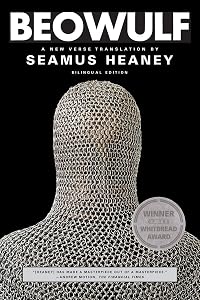
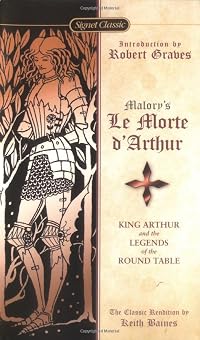
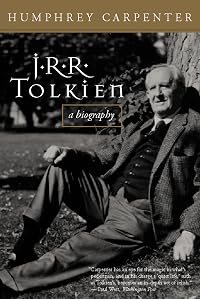
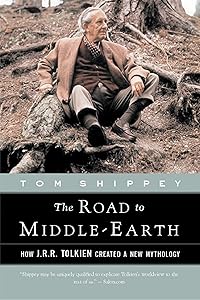
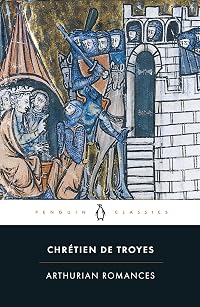
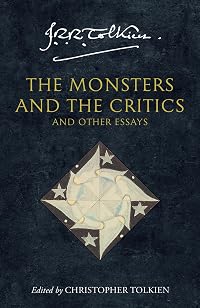
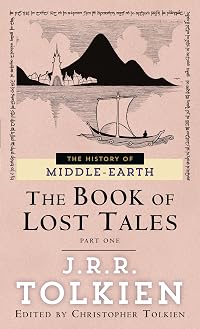
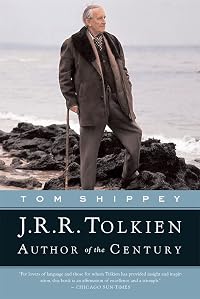
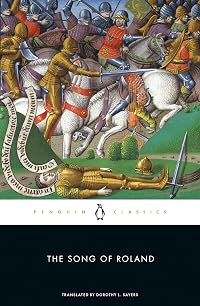
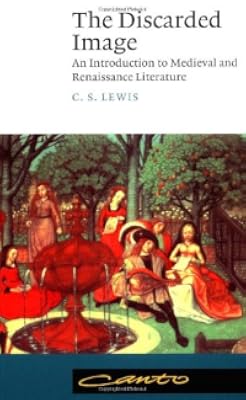

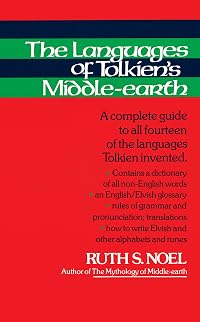
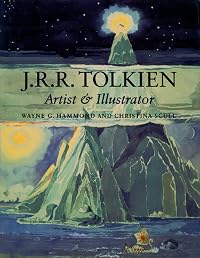
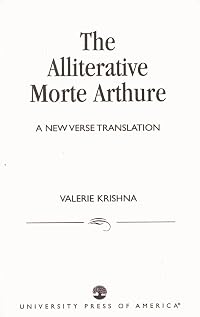

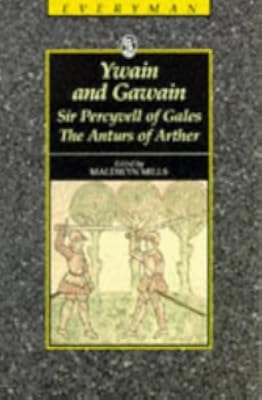
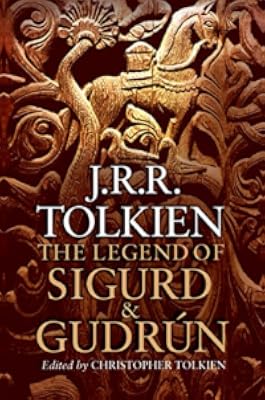




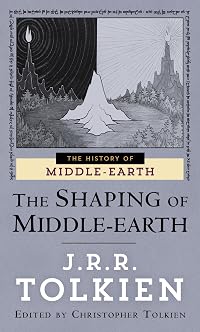
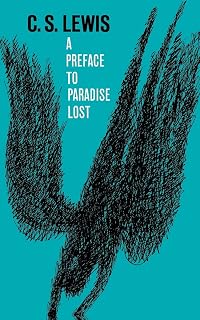
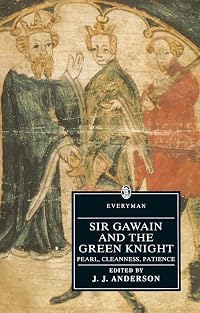
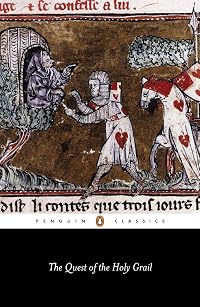
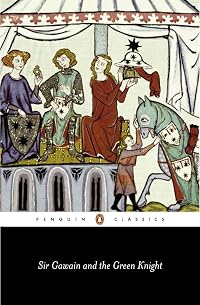

Member Recommendations
MissBrangwen This is the text in Middle English, complete with glossary, so it's well worth a try if you would like to sample the original.
02
Member Reviews
The last time that I tried to read a proper collection of stories about King Arthur and the Knights of the Round Table it did not go exactly as planned; the stories themselves were full of adventure and information about the Middle Ages, but I could not for the life of me tolerate Mallory’s dry style of storytelling, so I quit reading to focus on the lovely accompanying illustrations by Aubrey Beardsley. Sir Gawain and the Green Knight was a considerably shorter tome (coming in at less than 150 pages), and it’s J.R.R. Tolkien translating from the original Middle English text, so I figured that I was in safer hands this time around. I’ve previously read the story of Sir Gawain and his travails with the Green Knight previously show more during a medieval studies course in university, but it’s been so long that besides the basic plot points I had largely forgotten the story. Tolkien chose to keep the poem in a narrative structure that imitated the original middle English as much as possible, while making the poem far more readable to modern audiences through a basic linguistic update, so I had no trouble getting into the story. The form of the poem is fully narrative in structure, so it reads like a rollicking adventure throughout, even though Tolkien retains the alliteration and rhythms that would have made the poem auditorily interesting to medieval audiences and does little to smooth out some of the stranger story elements. If I had to recommend a translation of Sir Gawain, this one would definitely it, since Tolkien has struck a good balance between the original form of the piece while making it palatable to modern readers.
Editor Christopher Tolkien also includes two other poems in this collection, neither of which quite live up to Sir Gawain, but which are interesting none the less. I fully admit to having skipped over “Pearl” because I have very little tolerance for stories which spend the majority of their time whining about their woes, but “Sir Orfeo” was a great little fairytale to discover! I’m surprised that this story isn’t more widely known, because its plotline is equally as entertaining as Sir Gawain, even if it doesn’t have the moral messages that seem to have kept writings of this era “in print.” The poem is short, but contains some wonderful examples of the mixing of Greek and English folklore elements and almost begins to explore deeper characterizations before its conclusion - all features which would lend wonderfully to a modern retelling! show less
Editor Christopher Tolkien also includes two other poems in this collection, neither of which quite live up to Sir Gawain, but which are interesting none the less. I fully admit to having skipped over “Pearl” because I have very little tolerance for stories which spend the majority of their time whining about their woes, but “Sir Orfeo” was a great little fairytale to discover! I’m surprised that this story isn’t more widely known, because its plotline is equally as entertaining as Sir Gawain, even if it doesn’t have the moral messages that seem to have kept writings of this era “in print.” The poem is short, but contains some wonderful examples of the mixing of Greek and English folklore elements and almost begins to explore deeper characterizations before its conclusion - all features which would lend wonderfully to a modern retelling! show less
Well, it is a Christmas story.
Young Gawain wants fame. No one's asking him to lop off a head, but violence is how a knight earns respect, right? And how else to prove your bravery than by killing your enemy on your free shot so he can't retaliate? Except then he can. Ooops.
Gawain is certainly a rich story, more than I'd expected being familiar with just the Lowery film (which I now retroactively like a bit less). He kills ogres and dragons and trolls offscreen, because we already know Arthurian knights can do that and who cares. Instead we spend entire stanzas on his clothes and what they signify, what he thinks he stands for versus what his actions actually accomplish. We never get a pure hero here; just a guy trying to figure exactly show more what this "bravery" and "chivalry" thing actually means. And it might be bullshit.
Man, the rhythm of this thing. Regardless of translation, that weird structure - free-form alliteration, then slamming on the breaks at the end of each stanza and shifting time signatures like the Feature just stepped in to drop a chorus. But not just the rhythm of the poetry (Armitage calls alliteration the "warp and wheft" of the story, I like that), there's the way the author uses it to tell the story; the introduction of the Green Knight, that magnificent Fitt 3 where they throw us back and forth between the hunting and seduction scenes... Also, yeah, Tolkien calls Gawain "gay" nineteen times and I refuse to believe he didn't know what he was doing because, yeah.
Ah yes, translations. Out of the two I've tried, I think I slightly prefer Armitage over Tolkien. Where Tolkien does... well, Tolkien, and everything ends up sounding like something out of the Silmarillion; stately, eternally ancient, full of ivied Oxford brick walls. It doesn't ever not work unless you already hate Tolkien (and this will never be anyone's first exposure to Tolkien). Armitage's take on it is both more straight to the point and takes more chances. Yes, there are bits where his contemporizin' make you go "Yeah, this is a 2007 translation"
and in the other hand held the mother of all axes,
a cruel piece of kit I kid you not:
while never committing completely to the bit like Maria Dahvana Hedley did with Beowulf. But seriously, the sheer percussive way it hits.
Tolkien:
The pentangle painted new
He on shield and coat did wear
As one of word most true
And knight of bearing fair.
Armitage:
So bore that badge on both
His shawl and shield alike.
A prince who talked the truth.
A notable. A knight.
I guess it's two takes on the old authenticity question; Tolkien wants to present a 500 year old poem that was already about the Long-Ago Age of Myth, and so presents it in (what seems to this ESL speaker) faux-Tudor; old, but still perfectly readable. Whereas Armitage argues that the poet wrote for the readers of their day, and so tries to square the circle of an early medieval plot with a 21st centuy readership. Both with slightly mixed results. One thing I do miss in Armitage is how he plays down the Fair Folk angle and Tolkien plays it up; as far as I can tell both the original text and Tolkien have the Green Knight as "elvish" where Armitage calls him an "ogre". On the other hand, of course Tolkien keeps referring to "middle Earth" where the original has nothing like it.
The Tolkien also has The Pearl by (probably) the same author, and the unrelated Sir Orfeo, neither of which grab me much.
Merry Christmas, and try not to lop off strangers' heads. It never helps. show less
Young Gawain wants fame. No one's asking him to lop off a head, but violence is how a knight earns respect, right? And how else to prove your bravery than by killing your enemy on your free shot so he can't retaliate? Except then he can. Ooops.
Gawain is certainly a rich story, more than I'd expected being familiar with just the Lowery film (which I now retroactively like a bit less). He kills ogres and dragons and trolls offscreen, because we already know Arthurian knights can do that and who cares. Instead we spend entire stanzas on his clothes and what they signify, what he thinks he stands for versus what his actions actually accomplish. We never get a pure hero here; just a guy trying to figure exactly show more what this "bravery" and "chivalry" thing actually means. And it might be bullshit.
Man, the rhythm of this thing. Regardless of translation, that weird structure - free-form alliteration, then slamming on the breaks at the end of each stanza and shifting time signatures like the Feature just stepped in to drop a chorus. But not just the rhythm of the poetry (Armitage calls alliteration the "warp and wheft" of the story, I like that), there's the way the author uses it to tell the story; the introduction of the Green Knight, that magnificent Fitt 3 where they throw us back and forth between the hunting and seduction scenes... Also, yeah, Tolkien calls Gawain "gay" nineteen times and I refuse to believe he didn't know what he was doing because, yeah.
Ah yes, translations. Out of the two I've tried, I think I slightly prefer Armitage over Tolkien. Where Tolkien does... well, Tolkien, and everything ends up sounding like something out of the Silmarillion; stately, eternally ancient, full of ivied Oxford brick walls. It doesn't ever not work unless you already hate Tolkien (and this will never be anyone's first exposure to Tolkien). Armitage's take on it is both more straight to the point and takes more chances. Yes, there are bits where his contemporizin' make you go "Yeah, this is a 2007 translation"
and in the other hand held the mother of all axes,
a cruel piece of kit I kid you not:
while never committing completely to the bit like Maria Dahvana Hedley did with Beowulf. But seriously, the sheer percussive way it hits.
Tolkien:
The pentangle painted new
He on shield and coat did wear
As one of word most true
And knight of bearing fair.
Armitage:
So bore that badge on both
His shawl and shield alike.
A prince who talked the truth.
A notable. A knight.
I guess it's two takes on the old authenticity question; Tolkien wants to present a 500 year old poem that was already about the Long-Ago Age of Myth, and so presents it in (what seems to this ESL speaker) faux-Tudor; old, but still perfectly readable. Whereas Armitage argues that the poet wrote for the readers of their day, and so tries to square the circle of an early medieval plot with a 21st centuy readership. Both with slightly mixed results. One thing I do miss in Armitage is how he plays down the Fair Folk angle and Tolkien plays it up; as far as I can tell both the original text and Tolkien have the Green Knight as "elvish" where Armitage calls him an "ogre". On the other hand, of course Tolkien keeps referring to "middle Earth" where the original has nothing like it.
The Tolkien also has The Pearl by (probably) the same author, and the unrelated Sir Orfeo, neither of which grab me much.
Merry Christmas, and try not to lop off strangers' heads. It never helps. show less
Sir Gawain and the Green Knight is one of the most famous Arthurian legends, written by an unknown author in the 14th century. One Christmas Eve, King Arthur and his court are visited by the Green Knight who challenges them to cut off his head, on the condition he can return the blow. None among the court is brave enough to step forth, save young Sir Gawain! Gawain embarks on a journey to the green chapel to face the Green Knight that will challenge his honor and virtue. In his struggles to keep his bargain, Gawain demonstrates chivalry and loyalty until his honor is called into question by a test involving the lord and the lady of the castle where he is a guest.
Now the lord proposes a bargain: he goes hunting every day, and he will show more give Gawain whatever he catches on the condition that Gawain give him whatever he may gain during the day. Gawain accepts. After he leaves, his wife visits Gawain's bedroom and behaves seductively, but despite her best efforts he allows her nothing but a single kiss in his unwillingness to offend her. When the lord returns and gives Gawain the deer he has killed, Gawain gives a kiss to him without divulging its source. The next day the lady comes again, Gawain again courteously foils her advances, and later that day there is a similar exchange of a hunted boar for two kisses. She comes once more on the third morning, but once her advances are denied, she offers Gawain a gold ring as a keepsake. He gently but steadfastly refuses but she pleads that he at least take her sash, a girdle of green and gold silk. The sash, the lady assures him, is charmed and will keep him from all physical harm. Tempted, as he may otherwise die the next day, Gawain accepts it, and they exchange three kisses. The lady has Gawain swear that he will keep the gift secret from her husband. That evening, the lord returns with a fox, which he exchanges with Gawain for the three kisses – but Gawain says nothing of the sash.
The next day, Gawain binds the sash around his waist. At the so-called Green Chapel, only an earthen mound, he finds the Green Knight sharpening an axe. As promised, Gawain bends his bared neck to receive his blow. At the first swing, Gawain flinches slightly and the Green Knight belittles him for it. Ashamed of himself, Gawain doesn't flinch with the second swing; but again the Green Knight withholds the full force of his blow. The knight explains he was testing Gawain's nerve. Angrily Gawain tells him to deliver his blow and so the knight does, causing only a slight wound on Gawain's neck ("It's merely a flesh wound" hehehe.). The game is over. Gawain seizes his sword, helmet and shield, but the Green Knight, laughing, reveals himself to be none other than the lord of the castle, Bertilak de Hautdesert, transformed by magic. He explains that the entire adventure was a trick of the "elderly lady" Gawain saw at his castle, who is actually the sorceress Morgan le Fay, Arthur's step-sister, who intended to test Arthur's knights and frighten Guinevere to death.
This is a poem to revisit again and again as it has many lessons it can teach us about honor, loyalty, virtue, ambition, temptation, and life/death. And the poem does not lend itself simply to one interpretation. There are feminist, homoerotic, postcolonial interpretations. J.R.R. Tolkien, himself being a devout Catholic, probably went with the chivalric romance/Christian interpretation of the poem. In the Christian interpretation, to some, the Green Knight is Christ, who overcomes death, while Gawain is the Every Christian, who in his struggles to follow Christ faithfully, chooses the easier path. In Sir Gawain, the easier choice is the girdle, which promises what Gawain most desires. Faith in God, alternatively, requires one's acceptance that what one most desires does not always coincide with what God has planned. It is arguably best to view the sash not as an either–or situation, but as a complex, multi-faceted symbol that acts to test Gawain in more ways than one.
This is something like the fourth or fifth time I've read this poem and I always find something illuminating within its verses. It would be interesting to read other translations as well.
P.S.- If you haven't seen the David Lowery adaptation yet. Do yourself a favor and rush out to the cinema. show less
Now the lord proposes a bargain: he goes hunting every day, and he will show more give Gawain whatever he catches on the condition that Gawain give him whatever he may gain during the day. Gawain accepts. After he leaves, his wife visits Gawain's bedroom and behaves seductively, but despite her best efforts he allows her nothing but a single kiss in his unwillingness to offend her. When the lord returns and gives Gawain the deer he has killed, Gawain gives a kiss to him without divulging its source. The next day the lady comes again, Gawain again courteously foils her advances, and later that day there is a similar exchange of a hunted boar for two kisses. She comes once more on the third morning, but once her advances are denied, she offers Gawain a gold ring as a keepsake. He gently but steadfastly refuses but she pleads that he at least take her sash, a girdle of green and gold silk. The sash, the lady assures him, is charmed and will keep him from all physical harm. Tempted, as he may otherwise die the next day, Gawain accepts it, and they exchange three kisses. The lady has Gawain swear that he will keep the gift secret from her husband. That evening, the lord returns with a fox, which he exchanges with Gawain for the three kisses – but Gawain says nothing of the sash.
The next day, Gawain binds the sash around his waist. At the so-called Green Chapel, only an earthen mound, he finds the Green Knight sharpening an axe. As promised, Gawain bends his bared neck to receive his blow. At the first swing, Gawain flinches slightly and the Green Knight belittles him for it. Ashamed of himself, Gawain doesn't flinch with the second swing; but again the Green Knight withholds the full force of his blow. The knight explains he was testing Gawain's nerve. Angrily Gawain tells him to deliver his blow and so the knight does, causing only a slight wound on Gawain's neck ("It's merely a flesh wound" hehehe.). The game is over. Gawain seizes his sword, helmet and shield, but the Green Knight, laughing, reveals himself to be none other than the lord of the castle, Bertilak de Hautdesert, transformed by magic. He explains that the entire adventure was a trick of the "elderly lady" Gawain saw at his castle, who is actually the sorceress Morgan le Fay, Arthur's step-sister, who intended to test Arthur's knights and frighten Guinevere to death.
This is a poem to revisit again and again as it has many lessons it can teach us about honor, loyalty, virtue, ambition, temptation, and life/death. And the poem does not lend itself simply to one interpretation. There are feminist, homoerotic, postcolonial interpretations. J.R.R. Tolkien, himself being a devout Catholic, probably went with the chivalric romance/Christian interpretation of the poem. In the Christian interpretation, to some, the Green Knight is Christ, who overcomes death, while Gawain is the Every Christian, who in his struggles to follow Christ faithfully, chooses the easier path. In Sir Gawain, the easier choice is the girdle, which promises what Gawain most desires. Faith in God, alternatively, requires one's acceptance that what one most desires does not always coincide with what God has planned. It is arguably best to view the sash not as an either–or situation, but as a complex, multi-faceted symbol that acts to test Gawain in more ways than one.
This is something like the fourth or fifth time I've read this poem and I always find something illuminating within its verses. It would be interesting to read other translations as well.
P.S.- If you haven't seen the David Lowery adaptation yet. Do yourself a favor and rush out to the cinema. show less
Summary: Tolkien’s translation of three 14th century poems, retaining rhyme, meter and alliterative schema.
You may not realize it, but the various stories of Middle Earth were not the only works of J.R.R. Tolkien. He also translated into modern English three fourteenth century poems, including an edition of the Arthurian poem, Sir Gawain and the Green Knight. He initially collaborated with E.V. Gordon on an edition in 1925. Tolkien also worked on translations of Pearl and Sir Orfeo. However, these were unpublished at his death, and the first to be published with the editorial work of Christopher Tolkien. This is a new edition of that work.
Sir Gawain is probably the most familiar. A Green Knight appears before the round table issuing a show more challenge, which Arthur accepts but then Gawain accepts to spare his king. The challenge is to strike a blow at the knight’s neck. But Gawain must then seek out the knight, appearing the following New Year’s Day, and allow the knight to do the same. Gawain beheads the knight, who then picks up his head, walks off, holding Gawain to his pledge. Most of the poem is Gawain’s quest to find the knight. By Christmas Eve, he still hasn’t found the knight but arrives at a castle where he can attend mass and stay over Christmas, since the Green Knight lives just two miles away. Gawain’s encounter with the Knight is a kind of anti-climax, the real trial is with the lady of the castle.
Pearl represents an allegory of the loss of what is precious, a young man’s quest, which reminds one of Pilgrim’s Progress where the quest for the Pearl, personified as a maiden takes on a spiritual character of repentance and salvation.
Sir Orfeo is another quest poem in which Sir Orfeo loses his wife Heurodis to a fairy king. He seeks her for many years in the forest where she was last seen. Finally, he spots her and by disguise, finds his way to the king’s court. But to win her and then to be restored to his own throne!
One of the distinctions of Tolkien’s translations is that he retains the meter, rhyme, and alliterative scheme of the original. An appendix on verse forms explains this. I have not read any other edition of these works so I cannot assess how successful Tolkien was. However, I can say that the translation flows and never bogs down the stories of these poems.
This edition also includes the text of the “W.P. Ker Memorial Lecture on Sir Gawain.” The lecture is helpful in appreciating the tension between courtly manners and the perfection of character with which Sir Gawain struggles.
All three poems concern quests. A common theme is that the formation of the character of the questor through the decisions he makes is perhaps even more significant than the object of the quest. We may think we are shaping our life quest when in fact it is shaping us.
The three poems are all treasures I am glad to have found. The translation and editing of the Tolkiens, father and son, is a bonus! show less
You may not realize it, but the various stories of Middle Earth were not the only works of J.R.R. Tolkien. He also translated into modern English three fourteenth century poems, including an edition of the Arthurian poem, Sir Gawain and the Green Knight. He initially collaborated with E.V. Gordon on an edition in 1925. Tolkien also worked on translations of Pearl and Sir Orfeo. However, these were unpublished at his death, and the first to be published with the editorial work of Christopher Tolkien. This is a new edition of that work.
Sir Gawain is probably the most familiar. A Green Knight appears before the round table issuing a show more challenge, which Arthur accepts but then Gawain accepts to spare his king. The challenge is to strike a blow at the knight’s neck. But Gawain must then seek out the knight, appearing the following New Year’s Day, and allow the knight to do the same. Gawain beheads the knight, who then picks up his head, walks off, holding Gawain to his pledge. Most of the poem is Gawain’s quest to find the knight. By Christmas Eve, he still hasn’t found the knight but arrives at a castle where he can attend mass and stay over Christmas, since the Green Knight lives just two miles away. Gawain’s encounter with the Knight is a kind of anti-climax, the real trial is with the lady of the castle.
Pearl represents an allegory of the loss of what is precious, a young man’s quest, which reminds one of Pilgrim’s Progress where the quest for the Pearl, personified as a maiden takes on a spiritual character of repentance and salvation.
Sir Orfeo is another quest poem in which Sir Orfeo loses his wife Heurodis to a fairy king. He seeks her for many years in the forest where she was last seen. Finally, he spots her and by disguise, finds his way to the king’s court. But to win her and then to be restored to his own throne!
One of the distinctions of Tolkien’s translations is that he retains the meter, rhyme, and alliterative scheme of the original. An appendix on verse forms explains this. I have not read any other edition of these works so I cannot assess how successful Tolkien was. However, I can say that the translation flows and never bogs down the stories of these poems.
This edition also includes the text of the “W.P. Ker Memorial Lecture on Sir Gawain.” The lecture is helpful in appreciating the tension between courtly manners and the perfection of character with which Sir Gawain struggles.
All three poems concern quests. A common theme is that the formation of the character of the questor through the decisions he makes is perhaps even more significant than the object of the quest. We may think we are shaping our life quest when in fact it is shaping us.
The three poems are all treasures I am glad to have found. The translation and editing of the Tolkiens, father and son, is a bonus! show less
This is probably the best translation I've read of this wonderful poem. Tolkien's keen understanding of Middle English allows him to capture the original author's movement from the spare, clipped language used in the winter sections to the flowing, languid language of the summer. He translates the poetry with the music of the original but never allows it to be overdone or "too poetic".
The Oxford don J.R.R. Tolkien is mostly known for composing the Lord of the Rings trilogy. However, before this trilogy, he built his academic career as an acclaimed expert on Anglo-Saxon culture, language, and literature. In his work, he translates three works from the Middle English into modern idiom. The quality of the translation demonstrates the vastness of Tolkien’s literary brilliance.
Beowulf and The Canterbury Tales are the two most-read works from the Old English and Middle English tongues. As suggested by Tolkien, these three tales deserve to have a prominent place in this literary canon as well. As with Beowulf, their original author or authors is/are unknown. They were probably passed down orally (think stories by the fire show more at night) before being inscribed at some point. Nonetheless, they share interesting tales that illustrate the quality of life during medieval England and represent an early triumph of the expanding English tongue.
Sir Gawain makes great use of alliteration in Tolkien’s translation. Many lines repeat words starting with one letter. In addition, this work encodes a story of love, honor, duty, and courage. It describes a sacred quest by a knight from King Arthur’s time. Humanistic qualities in addition to literary quality place it among the great works of Old and Middle English.
Pearl describes holy beauty, symbolized by a pearl and a child, in the midst of a profane, ugly world. It is marked by a complex rhyming structure. Indeed, this lyrical frame probably aided in memorization at some point in history. This poem contains much Christian theology and deals with quintessentially medieval, Augustinian views on God and life.
Sir Orfeo is a comparatively short poem, also rhymed, of a king’s quest for redemption and inner nobility. It lauds a servant – a medieval everyman – who dutifully honors his lord and is rewarded in the end.
These translations are entertaining and masterful. They contain words that are not common to American usage – words like “gramercy” and “bayed.” Diction like these expands our imagination into medieval Britain and the language of Middle English. Through this translation, we see Tolkien’s scholarly mastery of the ancient Anglo-Saxon world and are enriched by its gifts. show less
Beowulf and The Canterbury Tales are the two most-read works from the Old English and Middle English tongues. As suggested by Tolkien, these three tales deserve to have a prominent place in this literary canon as well. As with Beowulf, their original author or authors is/are unknown. They were probably passed down orally (think stories by the fire show more at night) before being inscribed at some point. Nonetheless, they share interesting tales that illustrate the quality of life during medieval England and represent an early triumph of the expanding English tongue.
Sir Gawain makes great use of alliteration in Tolkien’s translation. Many lines repeat words starting with one letter. In addition, this work encodes a story of love, honor, duty, and courage. It describes a sacred quest by a knight from King Arthur’s time. Humanistic qualities in addition to literary quality place it among the great works of Old and Middle English.
Pearl describes holy beauty, symbolized by a pearl and a child, in the midst of a profane, ugly world. It is marked by a complex rhyming structure. Indeed, this lyrical frame probably aided in memorization at some point in history. This poem contains much Christian theology and deals with quintessentially medieval, Augustinian views on God and life.
Sir Orfeo is a comparatively short poem, also rhymed, of a king’s quest for redemption and inner nobility. It lauds a servant – a medieval everyman – who dutifully honors his lord and is rewarded in the end.
These translations are entertaining and masterful. They contain words that are not common to American usage – words like “gramercy” and “bayed.” Diction like these expands our imagination into medieval Britain and the language of Middle English. Through this translation, we see Tolkien’s scholarly mastery of the ancient Anglo-Saxon world and are enriched by its gifts. show less
Três poemas medievais traduzidos por Tolkien, o primeiro dos quais é interessante, muito embora de desfecho absolutamente improvável ou ao menos um pouco inconsistente, apresentando o cavaleiro verde, que pede pateticamente que Gaiwain lhe corte a cabeça com seu enorme machado. O segundo entretanto, sofre de confiar muito no maravilhamento pressuposto em todo cristão perante as invocações do sagrado e é bastante chato. O terceiro parece um conto pela metade, onde como em histórias de fato antigas e como nas fábulas, os elementos são construídos por adição de blocos, sem muita costura.
Members
- Recently Added By
Lists

Epic Fiction
42 works; 12 members

Top Five Books of 2022
736 works; 272 members

Ambleside Books
459 works; 18 members

Books You Read For University
184 works; 3 members

el
1,139 works; 1 member
Author Information


610+ Works 519,544 Members
A writer of fantasies, Tolkien, a professor of language and literature at Oxford University, was always intrigued by early English and the imaginative use of language. In his greatest story, the trilogy The Lord of the Rings (1954--56), Tolkien invented a language with vocabulary, grammar, syntax, even poetry of its own. Though readers have show more created various possible allegorical interpretations, Tolkien has said: "It is not about anything but itself. (Certainly it has no allegorical intentions, general, particular or topical, moral, religious or political.)" In The Adventures of Tom Bombadil (1962), Tolkien tells the story of the "master of wood, water, and hill," a jolly teller of tales and singer of songs, one of the multitude of characters in his romance, saga, epic, or fairy tales about his country of the Hobbits. Tolkien was also a formidable medieval scholar, as evidenced by his work, Beowulf: The Monster and the Critics (1936) and his edition of Anciene Wisse: English Text of the Anciene Riwle. Among his works published posthumously, are The Legend of Sigurd and Gudrún and The Fall of Arthur, which was edited by his son, Christopher. In 2013, his title, TheHobbit (Movie Tie-In) made The New York Times Best Seller List. (Bowker Author Biography) show less
Some Editions
Series

Belongs to Publisher Series
Work Relationships
Is contained in
Contains
Common Knowledge
- Canonical title
- Sir Gawain and the Green Knight / Pearl / Sir Orfeo
- Original publication date
- ca. 1360 - 1400 (Sir Gawain and the Green Knight & Pearl) (Sir Gawain and the Green Knight & Pearl); ca. 1330 (Sir Orfeo) (Sir Orfeo); 1975 (English: J.R.R. Tolkien) (English: J.R.R. Tolkien)
- People/Characters
- Sir Gawain; Green Knight; King Arthur; Orpheus (Sir Orfeo); Bertilak de Hautdesert; Lady Bertilak (show all 11); Morgan le Fay; Eurydice (Heurodis); fairy king; Margaret, Pearl-Poet's daughter; Sir Orfeo
- Important places
- Camelot; Green Chapel; Thrace; Astolat
- Important events
- New Year
- First words
- When the siege and the assault had ceased at Troy, and the fortress fell in flame to firebrands and ashes, the traitor who the contrivance of treason there fashioned was tried for his treachery, the most true upon earth—it ... (show all)was Aeneas the noble and his renowned kindred who then laid under them lands, and lords became of well-nigh all the wealth in the Western Isles.
- Last words
- (Click to show. Warning: May contain spoilers.)God grant that well we all may fare!
- Original language
- Middle English
- Disambiguation notice
- Please do not combine with Sir Gawain and the Green Knight. This work contains three poems: the title poem plus Pearl and Sir Orfeo.
Classifications
Statistics
- Members
- 4,214
- Popularity
- 3,639
- Reviews
- 24
- Rating
- (3.88)
- Languages
- 5 — English, Italian, Korean, Polish, Ukrainian
- Media
- Paper, Audiobook, Ebook
- ISBNs
- 21
- ASINs
- 15