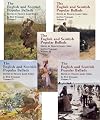
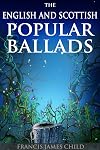
The English and Scottish Popular Ballads, Volumes 1 through 5
by Francis James Child
English and Scottish Popular Ballads (Collections and Selections — omnibus 1-5)
On This Page
Description
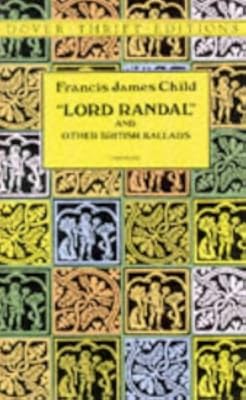
The rich field of English balladry was virgin territory before Francis James Child entered it. The few published ballad editions that existed were unreliable, filled with unacknowledged editorial changes and distortions of the original manuscripts. Professor Child compiled all the extant ballads with all known variants, and made them available for the first time--together with his invaluable commentary that prefaces each work--in a single source that maintained absolute fidelity to the show more original texts. Published between 1882 and 1898, the original ten-part study became the definitive collection of popular ballads in the English language, never to be superceded. To this day, scholars and devotees speak of "The Child Ballads" with the awe and respect generated by few other literary works. Unabridged republication of the works originally published by Houghton, Mifflin and Company, Boston, between 1882 and 1898. Indices. Appendix. show lessTags
Recommendations
















Member Reviews
A fantastic piece of scholarship, although it did take a bit of effort to understand how to "read" the various types of entries--but well worth it. Reading new ballads gets better and better, and when I am in the the mood to relax and be delighted, these are the books I pick up.
In the 19th century, Child collected every ballad (it appears) known in Scotland and England and compared the different versions that had been remembered or published, with astute and fascinating analysis of how they changed or were "combined" in people's memories. He also comments on the more than 30 languages in which he found some of them.
One of my favorite finds was the verse used by Simon and Garfunkel for their recording of "Canticle/Parsley, Sage, Rosemary show more and Thyme.". By listening to their recording, and following the information Child provides, you can hear the canticle sung "against" the main ballad, and can more clearly distinguish the lyrics of the third melody that S&G added, an anti-gun protest. Anachronistic, since guns were in the future, but then there IS artistic license.
I also love reading the Early Modern English or the Scots lyrics--glossary provided, although using a website for Scots is more easily accessible and more comprehensive.
One commentator states that these ballads are the most true-to-life descriptions available of what life really was like in earlier centuries. show less
In the 19th century, Child collected every ballad (it appears) known in Scotland and England and compared the different versions that had been remembered or published, with astute and fascinating analysis of how they changed or were "combined" in people's memories. He also comments on the more than 30 languages in which he found some of them.
One of my favorite finds was the verse used by Simon and Garfunkel for their recording of "Canticle/Parsley, Sage, Rosemary show more and Thyme.". By listening to their recording, and following the information Child provides, you can hear the canticle sung "against" the main ballad, and can more clearly distinguish the lyrics of the third melody that S&G added, an anti-gun protest. Anachronistic, since guns were in the future, but then there IS artistic license.
I also love reading the Early Modern English or the Scots lyrics--glossary provided, although using a website for Scots is more easily accessible and more comprehensive.
One commentator states that these ballads are the most true-to-life descriptions available of what life really was like in earlier centuries. show less
A classic collection which I have yet to read all the way through...
Reprint. Orig. published Boston : Houghton Mifflin, 1882-1898 5 v.
Ratings
Members
- Recently Added By
Lists

What are your favourite books?
121 works; 10 members

Books We Love to Reread
688 works; 296 members
Author Information

42+ Works 742 Members
American scholar, folklorist, and collector of ballads, Francis Child was born in Boston, Massachusetts, and educated at Harvard University. After graduating from Harvard, he studied for a time in Europe and then returned to the United States to teach at Harvard, eventually becoming professor of English there. Motivated by an interest in folklore, show more Child put together at the Harvard Library one of the largest folklore collections in existence at the time. Though a scholar of the British poets, notably Edmund Spenser and Geoffrey Chaucer , Child is best known for his systematic study, collecting, and cataloging of folk ballads, particularly those of Scotland and England. He is noted for studying manuscript rather than printed versions of old ballads from these countries although he studied and investigated ballads and stories in other languages that were related to the Scottish and English ballads. Child's first important work was Four Old Plays (1848). A subsequent eight-volume collection called English and Scottish Ballads (1857-1858) eventually grew into his final and most ambitious collection, The English and Scottish Popular Ballads (1882-1898). The work contains 305 ballads, many of which come from manuscript sources, and with all known versions of each ballad. It remains the most authoritative work on old English and Scottish ballads and folk songs. Child's teaching and collecting provided an important impetus for other scholars to gather ballads in the United States and elsewhere. (Bowker Author Biography) show less
Series

Belongs to Publisher Series
Work Relationships
Contains
Common Knowledge
- Canonical title
- The English and Scottish Popular Ballads, Volumes 1 through 5
- People/Characters
- Barbara Allen; Allison Gross; Kinmont Willie; Sir Patrick Spens; Mary Hamilton of the Four Maries; Tam Lin (show all 24); King Estmere; Robin Hood; Adam Bell; Clym of the Clough; William of Cloudesly; Willie MacIntosh; Bonnie George Campbell; Lizie Wan; Katharine Jaffray; Bonnie Jeanie o' Bethelnie; Kemp Owyne; King Cornwall; Lady Isabel, ballad heroine; Henry Martin, pirate in the song of the same name; King Horn; Eppie Morrie; Young Hunting; Lamkin
Classifications
- Genres
- Fiction and Literature, Poetry, Music
- DDC/MDS
- 821.04 — Literature & rhetoric English & Old English literatures British Poetry English poetry {by more than one author} Lyric and balladic poetry
- LCC
- PR1181 .C5 — Language and Literature English English Literature Collections of English literature
- BISAC
Statistics
- Members
- 157
- Popularity
- 207,989
- Reviews
- 3
- Rating
- (4.35)
- Languages
- English
- Media
- Paper, Ebook
- ISBNs
- 8
- UPCs
- 1
- ASINs
- 5