On This Page
Description
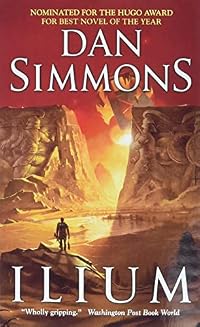
The Trojan War rages at the foot of Olympos Mons on Mars -- observed and influenced from on high by Zeus and his immortal family -- and twenty-first-century professor Thomas Hockenberry is there to play a role in the insidious private wars of vengeful gods and goddesses. On Earth, a small band of the few remaining humans pursues a lost past and devastating truth -- as four sentient machines depart from Jovian space to investigate, perhaps terminate, the potentially catastrophic emissions show more emanating from a mountaintop miles above the terraformed surface of the Red Planet. show lessTags
Recommendations



Member Recommendations
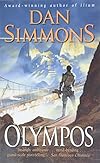
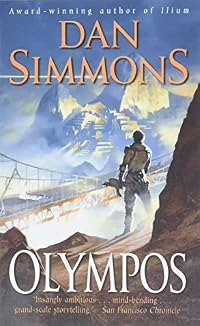
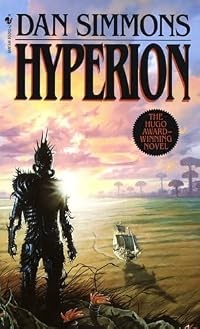
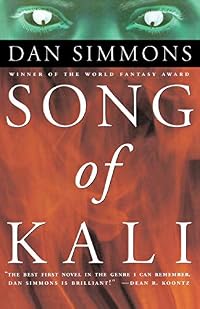
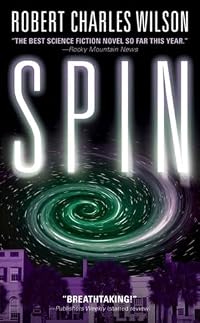
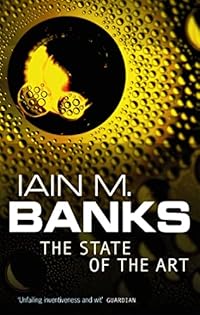
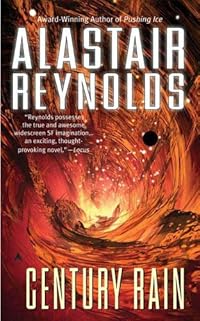
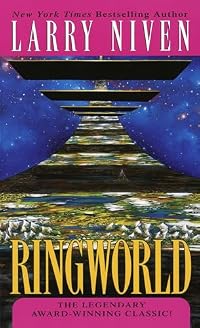
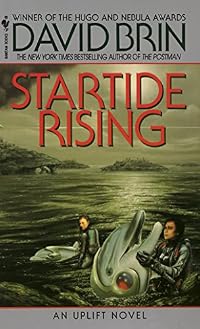
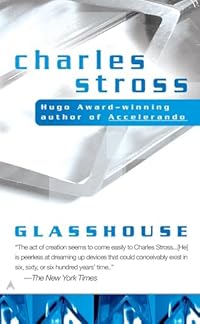
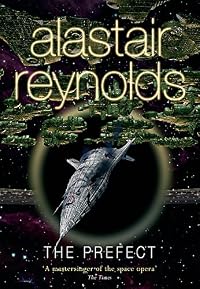
AlanPoulter Both books are part of a series involving the gods of the Ancient World, one is fantasy set in the past, the other science fiction in the far future. Each has an unusual viewpoint character.
Member Reviews
This is possibly the first science fiction book I've come across that rewards its readers for being ridiculously well-read. Allusions to Proust, Shakespeare's sonnets, "The Iliad", "The Time Machine," "The Tempest," "One Day in the Life of Ivan Denisovich," and Judeo-Christian mythology are all woven into the tapestry of this novel. There are probably many more that I simply did not catch.
"Ilium" is intelligent, earnest, and funny, leading the reader on a deliriously intricate ride between far-flung plots which seem impossible to fit into one single novel. However, Simmons managed this feat with ease. As the plot kept getting weirder, the author increasingly imbued the characters with more humanity and empathy, so that I truly cared show more about their fates through the climax of the story. Even better, the development of the characters occurred naturally and believably because of the events of the plot, not out of convenience or necessity as a plot device. Simmons ably made it a joy for the reader to try and put all the pieces together. Overall, the effect was like mashing up a traditional science fiction novel with a sudoku puzzle. It was a great ride, but it was also an active read.
Be ready to have the sequel standing by on your shelf, however, because he definitely leaves the reader hanging at the end of the book. I've never so enjoyed being in the dark. show less
"Ilium" is intelligent, earnest, and funny, leading the reader on a deliriously intricate ride between far-flung plots which seem impossible to fit into one single novel. However, Simmons managed this feat with ease. As the plot kept getting weirder, the author increasingly imbued the characters with more humanity and empathy, so that I truly cared show more about their fates through the climax of the story. Even better, the development of the characters occurred naturally and believably because of the events of the plot, not out of convenience or necessity as a plot device. Simmons ably made it a joy for the reader to try and put all the pieces together. Overall, the effect was like mashing up a traditional science fiction novel with a sudoku puzzle. It was a great ride, but it was also an active read.
Be ready to have the sequel standing by on your shelf, however, because he definitely leaves the reader hanging at the end of the book. I've never so enjoyed being in the dark. show less
Having fairly recently reread the Iliad of Homer this book is a good follow-up both as a change, in genre, and as renewing my knowledge of the Iliad helps in understanding Simmons' novel. For in his novel Homer's relevance is more than an opening prop or gimmick. It is the Iliad that initially provides a bearing, a compass for the reader upon which the rest of the narrative depends, and without which, it could be argued, the rest, at least during the first third or so of the book, would unravel. This is a complicated novel with regard to plot and it is the familiarity of the Iliad story line that initially binds the work together, serving as a sturdy foundation while the other two strands, at first seeming unrelated, gradually come show more together.
Part humor, part literary space opera (and perhaps part mind game for intellectuals), Ilium is fascinating in its grand scope as well as the way it reinterprets earlier works to conform to an entirely new epic type. Within it references abound, not only to literature but popular culture, current events, philosophy and recent concepts of physics. It can be difficult to keep one's bearings as the author's vision is so expansive that the scale of events, characters and themes so often touched upon or merely suggested, only to be later viewed from different circumstance or perspective. Much of what occurs throughout the novel is driven by anticipation of how the author will ultimately resolve and integrate all of his various plotlines, cast and speculation. Intriguing hints are laid, sometimes in opposition: Proust's exploration of time, memory and perception or the secret paths to the puzzle of life; the moravec Mahnmut's interpretation of Shakespeare's Sonnets as a dramatic construct; the interaction and influence of will, represented by Zeus, the Fates, and chaos, upon events taking place upon the plains of Ilium; the fulcrum Hockenberry is urged to find in order to change the outcome of Homer; or the identity of "'A bitter heart that bides its time and bites.'" Cosmologies and ontologies, as well as metaphors, are borrowed, their identities and purposes remaining unclear or unexplained, as is so much else by novel's end, though suspicions are delectably stirred.
This is a novel that provides a wealth of ideas and action which successfully entice the reader to continue the saga in the sequel, Olympos. show less
Part humor, part literary space opera (and perhaps part mind game for intellectuals), Ilium is fascinating in its grand scope as well as the way it reinterprets earlier works to conform to an entirely new epic type. Within it references abound, not only to literature but popular culture, current events, philosophy and recent concepts of physics. It can be difficult to keep one's bearings as the author's vision is so expansive that the scale of events, characters and themes so often touched upon or merely suggested, only to be later viewed from different circumstance or perspective. Much of what occurs throughout the novel is driven by anticipation of how the author will ultimately resolve and integrate all of his various plotlines, cast and speculation. Intriguing hints are laid, sometimes in opposition: Proust's exploration of time, memory and perception or the secret paths to the puzzle of life; the moravec Mahnmut's interpretation of Shakespeare's Sonnets as a dramatic construct; the interaction and influence of will, represented by Zeus, the Fates, and chaos, upon events taking place upon the plains of Ilium; the fulcrum Hockenberry is urged to find in order to change the outcome of Homer; or the identity of "'A bitter heart that bides its time and bites.'" Cosmologies and ontologies, as well as metaphors, are borrowed, their identities and purposes remaining unclear or unexplained, as is so much else by novel's end, though suspicions are delectably stirred.
This is a novel that provides a wealth of ideas and action which successfully entice the reader to continue the saga in the sequel, Olympos. show less
Simmons seems to have tried to recreate the magic of Hyperion here, with subplots from different genres yolked together by a grand plot inspired by elements from famous literature. The result is three totally separate plots with some really good writing, and too much space opera and transhumanist SF stuff that has been done better before. The backstory mostly exists to justify a recreation of the siege of Troy, link it to the other unrelated plots, and finally arrange a climax that was so contrived that it lost all impact for me.
In my opinion, the sections on Troy were the highlights - Simmons depicts Homer's characters and their world so perfectly that I wished that he had written a whole book on this. I thoroughly enjoyed the Moravecs show more and their literary discussions as well. As a bonus, towards the end of the book we have a well crafted horror story of Caliban and the explorers that could also have stood on it's own. show less
In my opinion, the sections on Troy were the highlights - Simmons depicts Homer's characters and their world so perfectly that I wished that he had written a whole book on this. I thoroughly enjoyed the Moravecs show more and their literary discussions as well. As a bonus, towards the end of the book we have a well crafted horror story of Caliban and the explorers that could also have stood on it's own. show less
After the tedious Quicksilver, Ilium was a welcome change. It's a wonderful blend of science fiction and Greek myth.
As Simmons' Hyperion was infused with Chaucer's Canterbury Tales, so Ilium works from Homer's Iliad. One of the central events of the book is the siege of Troy. In Ilium, however, the gods are more science fiction than fantasy--they accomplish their majestic feats via nanotechnology and quantum manipulation. And the events in the Iliad are only a rough third of the events in Ilium.
The book opens with the words of a twentieth-century Homeric scholar, in a very deliberate reference to the opening of the Iliad. That scholar has been resurrected by the gods and sent to observe the unfolding of events that shaped the Iliad. The show more following chapter introduces humans living on Earth several thousand years past the 20th century, in a world largely abandoned--the "post-humans" meddled with the planet, cleaned up some of their mess, and left it to the old-style humans, whose lives they continue to regulate. The third chapter sets the stage for the third storyline, involving sentient organic/inorganic machines that live and work among the moons of Jupiter.
Into all three storylines, the reader is dropped without much backstory; the shape of the world in which the characters live must be gleaned from details in the story's telling. And the threads don't tie themselves together until a distance into the book.
The single best thing about the book, however, is the writing. Simmons does a very good job of taking these disparate threads, blending them together while painting the backdrop for the story, and weaving a thoroughly engaging tale.
Ilium certainly deserves its Hugo nomination. I can't speak to whether it should win, since I haven't read most of its competitors, but if it does, I'll not be disappointed. show less
As Simmons' Hyperion was infused with Chaucer's Canterbury Tales, so Ilium works from Homer's Iliad. One of the central events of the book is the siege of Troy. In Ilium, however, the gods are more science fiction than fantasy--they accomplish their majestic feats via nanotechnology and quantum manipulation. And the events in the Iliad are only a rough third of the events in Ilium.
The book opens with the words of a twentieth-century Homeric scholar, in a very deliberate reference to the opening of the Iliad. That scholar has been resurrected by the gods and sent to observe the unfolding of events that shaped the Iliad. The show more following chapter introduces humans living on Earth several thousand years past the 20th century, in a world largely abandoned--the "post-humans" meddled with the planet, cleaned up some of their mess, and left it to the old-style humans, whose lives they continue to regulate. The third chapter sets the stage for the third storyline, involving sentient organic/inorganic machines that live and work among the moons of Jupiter.
Into all three storylines, the reader is dropped without much backstory; the shape of the world in which the characters live must be gleaned from details in the story's telling. And the threads don't tie themselves together until a distance into the book.
The single best thing about the book, however, is the writing. Simmons does a very good job of taking these disparate threads, blending them together while painting the backdrop for the story, and weaving a thoroughly engaging tale.
Ilium certainly deserves its Hugo nomination. I can't speak to whether it should win, since I haven't read most of its competitors, but if it does, I'll not be disappointed. show less
Ilium is one of the more ambitious books I've read. It's got just about everything: A retelling of the Iliad set in the far future on Mars, observed by a 21st century scholar. Humans, still on Earth, live for 100 years of ignorant bliss before ascending to the "rings" in Earth orbit to live in paradise, which ends up actually being a dead city full of horrors, ruled by characters from Shakespeare's The Tempest. Sentient AI robots from Jupiter play a role, as do little green aliens (literally called Little Green Men).
It's a complex behemoth of a novel that rewards being well-read and knowing your history. It mixes together bits of mythology with science fiction, with a plot that contains several levels but is never too hard to figure show more out. The chapters alternate between 3 POV characters: Daeman, an 'old-style' Earth human; Hockenberry, the 21st century scholar recreated from bits of DNA to observe this future reenacted Trojan War; and Mahnmut, a sentient AI robot on a mission to discover what's really going on on Mars.
Ilium was a really rewarding novel that took me quite a while to work through. It's very readable, but also very long and can be a little bit of a slog in some parts. The Hockenberry chapters were by far the most engaging, with Daeman's chapters being a bit underwhelming, at least until the end.
I definitely want to read the sequel, Olympos, but I need a bit of a break before diving in. show less
It's a complex behemoth of a novel that rewards being well-read and knowing your history. It mixes together bits of mythology with science fiction, with a plot that contains several levels but is never too hard to figure show more out. The chapters alternate between 3 POV characters: Daeman, an 'old-style' Earth human; Hockenberry, the 21st century scholar recreated from bits of DNA to observe this future reenacted Trojan War; and Mahnmut, a sentient AI robot on a mission to discover what's really going on on Mars.
Ilium was a really rewarding novel that took me quite a while to work through. It's very readable, but also very long and can be a little bit of a slog in some parts. The Hockenberry chapters were by far the most engaging, with Daeman's chapters being a bit underwhelming, at least until the end.
I definitely want to read the sequel, Olympos, but I need a bit of a break before diving in. show less
A book club pick :)
Very interesting, very cool; a mess at times
This is a very ambitious book. I think this works against it. Yet, it was a fascinating read.
First, there are Greek gods living on Olympus Mons on terraformed Mars. (Yes, I know!) They are assholes, just like in Greek myths. They are busy re-enacting the Iliad using real humans. Second, there are intelligent biomechanical beings called moravecs on the moons of Jupiter and other places in the Solar system. They were sent out long ago, by “post-humans”. They have their own civilization. Some of them are obsessed with Shakespeare. Or Proust. (Yay!) The moravecs notice that something weird is happening on Mars and mount an expedition. Third, there are humans on Earth. Robot show more servants tend to their every need. These humans are hedonistic. They travel, eat, have parties, and lots of sex. Not much else is happening to them, until some of them decide to go on an adventure. All these things will come together, somehow.
I decided that this book was a very good reason to re-read the Iliad! So, I read Ilium along with the Iliad, making sure to keep pace with the Trojan war in both. It turned into an awesome and immersive reading project! (At the time of writing, I was on Book XII of the Iliad, so that review shall have to wait, he he.) I was having a great time. Then we veered off from the Iliad – as expected… and the whole edifice started tottering. It’s possible that this says more about Homer’s epic that this particular sci-fi epic. However, for me it felt as if the book was standing very nicely on the shoulders of giants and couldn’t quite make it when it jumped off. I did like that badass women of Troy got some page time!
The closer we got to the end, the messier things got. I said “eh?” and “huh?” a lot. There were so many loose ends! So many unanswered questions! And then the door-stopper of 700+ pages had to end on a cliffhanger, with the sequel of 800+ pages crooning “read me, read me”. Oh dear, oh dear.
3.5 or 3.7 stars? To round up or not to round up? That is the question :D show less
Very interesting, very cool; a mess at times
This is a very ambitious book. I think this works against it. Yet, it was a fascinating read.
First, there are Greek gods living on Olympus Mons on terraformed Mars. (Yes, I know!) They are assholes, just like in Greek myths. They are busy re-enacting the Iliad using real humans. Second, there are intelligent biomechanical beings called moravecs on the moons of Jupiter and other places in the Solar system. They were sent out long ago, by “post-humans”. They have their own civilization. Some of them are obsessed with Shakespeare. Or Proust. (Yay!) The moravecs notice that something weird is happening on Mars and mount an expedition. Third, there are humans on Earth. Robot show more servants tend to their every need. These humans are hedonistic. They travel, eat, have parties, and lots of sex. Not much else is happening to them, until some of them decide to go on an adventure. All these things will come together, somehow.
I decided that this book was a very good reason to re-read the Iliad! So, I read Ilium along with the Iliad, making sure to keep pace with the Trojan war in both. It turned into an awesome and immersive reading project! (At the time of writing, I was on Book XII of the Iliad, so that review shall have to wait, he he.) I was having a great time. Then we veered off from the Iliad – as expected… and the whole edifice started tottering. It’s possible that this says more about Homer’s epic that this particular sci-fi epic. However, for me it felt as if the book was standing very nicely on the shoulders of giants and couldn’t quite make it when it jumped off. I did like that badass women of Troy got some page time!
The closer we got to the end, the messier things got. I said “eh?” and “huh?” a lot. There were so many loose ends! So many unanswered questions! And then the door-stopper of 700+ pages had to end on a cliffhanger, with the sequel of 800+ pages crooning “read me, read me”. Oh dear, oh dear.
3.5 or 3.7 stars? To round up or not to round up? That is the question :D show less
Ilium is another name for the ancient city of Troy, whence the name of Homer's Iliad. But it's also part of the intestine, so it'd be appropriate if Dan Simmons' Ilium was full of crap. But no, that's the sequel, Olympos. Very inconsiderately, Ilium is actually really good.
Don't get me wrong, it's a mess. A glorious, wobbly mess. But perhaps that's what you'd expect from a novel best summed up as “a science-fiction version of the Iliad”. That's only one of the sub-plots, but it's a major one, with nanomachine-enhanced Greeks and Trojans battling under the gaze of quantum-technology-wielding “gods”. (Cue that quote by Arthur C. Clarke.)
There are other sub-plots, although not all of them are created equally. There's the story of show more the post-post-humans left behind on Earth after the singularity. Simmons' version of the Eloi are unlikeable, shallow humans who live in a state of perpetual youth for a hundred years. During their century they hop around the planet via a floo network, never exchanging ideas but regularly exchanging bodily fluids. The characters in this sub-plot are not really meant to be likeable, and so the storyline, for all its twists and action, is perforce not that fun.
Much more fun, oddly, is the sub-plot about two bionic robots trekking across the solar system then Mars's surface, all the while critiquing the sonnets and Proust's À la recherche du temps perdu. Given the size of the novel this sounds like needless filler, but the two characters are far more human and likeable than the actual human characters, be they in Troy or future-Earth.
Then there's the super-plot: the overarching story that, about eight-hundred pages after the end of this book, ties up all the storylines. There are reasons why the Greek gods are actually at Troy, why characters from The Tempest are popping up all over the place, why the Earth is full of deadly yet benevolent robots, and reasons for all the other mysteries that Dan Simmons drops over the pages like a popular drum and bass musician drops beats (or a clumsy greengrocer drops beets (or a talkative sheep drops bleats)). I reached the end of Ilium rather content with it, and not – as is often the case with series – frantic to read the next part in order to resolve these mysteries. More's the pity, then, that the sequel just didn't live up to this rather wonderful beginning. show less
Don't get me wrong, it's a mess. A glorious, wobbly mess. But perhaps that's what you'd expect from a novel best summed up as “a science-fiction version of the Iliad”. That's only one of the sub-plots, but it's a major one, with nanomachine-enhanced Greeks and Trojans battling under the gaze of quantum-technology-wielding “gods”. (Cue that quote by Arthur C. Clarke.)
There are other sub-plots, although not all of them are created equally. There's the story of show more the post-post-humans left behind on Earth after the singularity. Simmons' version of the Eloi are unlikeable, shallow humans who live in a state of perpetual youth for a hundred years. During their century they hop around the planet via a floo network, never exchanging ideas but regularly exchanging bodily fluids. The characters in this sub-plot are not really meant to be likeable, and so the storyline, for all its twists and action, is perforce not that fun.
Much more fun, oddly, is the sub-plot about two bionic robots trekking across the solar system then Mars's surface, all the while critiquing the sonnets and Proust's À la recherche du temps perdu. Given the size of the novel this sounds like needless filler, but the two characters are far more human and likeable than the actual human characters, be they in Troy or future-Earth.
Then there's the super-plot: the overarching story that, about eight-hundred pages after the end of this book, ties up all the storylines. There are reasons why the Greek gods are actually at Troy, why characters from The Tempest are popping up all over the place, why the Earth is full of deadly yet benevolent robots, and reasons for all the other mysteries that Dan Simmons drops over the pages like a popular drum and bass musician drops beats (or a clumsy greengrocer drops beets (or a talkative sheep drops bleats)). I reached the end of Ilium rather content with it, and not – as is often the case with series – frantic to read the next part in order to resolve these mysteries. More's the pity, then, that the sequel just didn't live up to this rather wonderful beginning. show less
Members
- Recently Added By
Lists

Sword & Planet / Futuristic Fantasy
16 works; 5 members

Speculative Fiction to Read
706 works; 32 members

The Trojan War
109 works; 13 members

Unread books
1,063 works; 82 members

Myth (Reuse and Retelling)
188 works; 24 members

Books Read in 2016
4,666 works; 197 members

Locus Award for Best Novel/SF Novel
53 works; 6 members

Good (mostly) modern science fiction
40 works; 4 members

el
1,139 works; 1 member

Favorite Science Fiction
452 works; 216 members
Author Information

133+ Works 69,491 Members
Science fiction writer Dan Simmons was born in East Peoria, Illinois in 1948. He graduated from Wabash College in 1970 and received an M. A. from Washington University the following year. Simmons was an elementary school teacher and worked in the education field for a decade, including working to develop a gifted education program. His first show more successful short story was won a contest and was published in 1982. His first novel, Song of Kali, won a World Fantasy Award, and Simmons has also won a Theodore Sturgeon Award for short fiction, four Bram Stoker Awards, and eight Locus Awards. He is also the author of the Hyperion series, and Simmons and his work have been compared to Herbert's Dune and Asimov's Foundation series. (Bowker Author Biography) show less
Some Editions
Awards and Honors
Awards
Distinctions
Notable Lists
Series

Belongs to Publisher Series
Artefakty (32)
Heyne Allgemeine Reihe (87898)
Work Relationships
Contains
Was inspired by
Common Knowledge
- Canonical title*
- Ilium
- Original title
- Ilium
- Original publication date
- 2003-07
- People/Characters
- Thomas Hockenberry; Achilles; Agamemnon; Harman; Daeman; Orphu (show all 13); Mahnmut; Zeus; Hector; Ada; Hannah; Savi; Prospero
- Important places
- Greece; Troy; Mt. Olympos, Mars; Mars
- Important events
- Trojan War
- Epigraph
- Terwijl de geest, moe van de strijd,
zich verliest in gelukzaligheid:
de Geest, die grote Oceaan
waar al wat mogelijk is kan bestaan;
en waar, oneindig groot of klein,
ook andere landen, zeeën zijn,
en ... (show all)waar de schepping wordt herleid
tot een groene twijg van tijdelijkheid.
- Andrew Marvell, 'The Garden'
Vee kan men zich roven
en vetgemeste schapen,
ketels en roodbruine paarden,
maar het leven van de mens
keert nooit terug,
door roof nog koop,
als het eenmaal aan de
haag der tanden is ontsnapt.
... (show all)> - Achilles, in de Ilias van
Homerus, boek IX, 405 - 409
Een bitter hart dat zijn tijd verbeidt en bijt,
- Caliban, in Robert Browning, 'Caliban upon Setebos' - Dedication
- This novel is dedicated to Wabash College—its men, its faculty, and its legacy
- First words
- Rage.
- Last words
- (Click to show. Warning: May contain spoilers.)I twist the QT medallion and disappear.
- Blurbers
- Hamilton, Peter F.
*Some information comes from Common Knowledge in other languages. Click "Edit" for more information.
Classifications
Statistics
- Members
- 4,521
- Popularity
- 3,235
- Reviews
- 74
- Rating
- (3.92)
- Languages
- 11 — Czech, Dutch, English, French, German, Hungarian, Polish, Romanian, Russian, Croatian, Spanish
- Media
- Paper, Audiobook, Ebook
- ISBNs
- 33
- ASINs
- 15