On This Page
Description
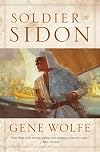
"Latro forgets everything when he sleeps. Writing down his experiences every day and reading his journal anew each morning gives him a poignantly tenuous hold on himself, but his story's hold on readers is powerful indeed. The two previous novels, combined in Latro in the Mist (Soldier of the Mist and Soldier of Arete), are generally considered classics of contemporary fantasy. At last we have a new book." "Latro now finds himself in Egypt, a land of singing girls, of spiteful and conniving show more deities, of mysterious dangers. Without his memory, he is unsure of everything, except for his desire to be free of the curse that causes him to forget." "The visions Gene Wolfe conjures of the wonders of Egypt and of the adventures of Latro as he and his companions journey south up the great Nile into unknown and legendary territory are truly unique and compelling."--Jacket. show lessTags
Recommendations



















Member Recommendations
Ilium by Dan Simmons
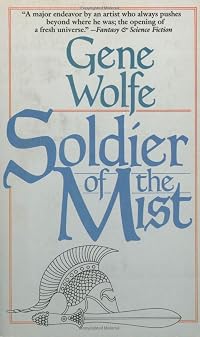
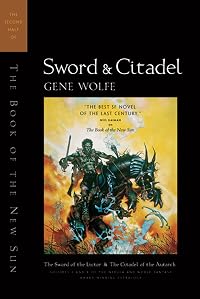
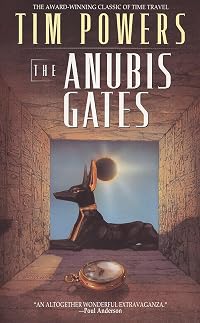
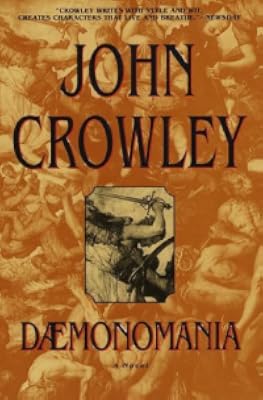
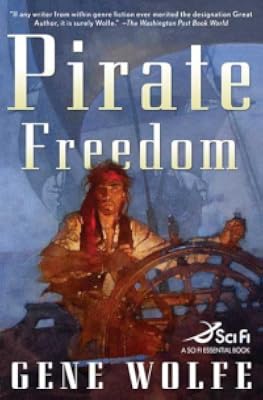
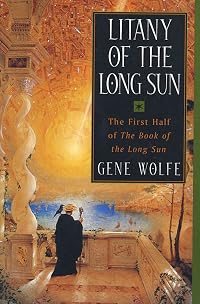
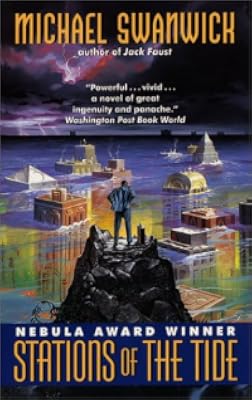
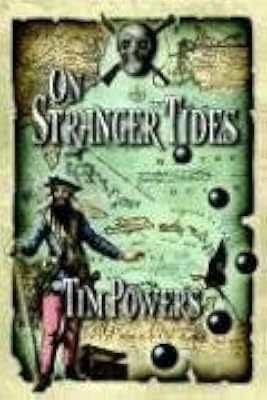
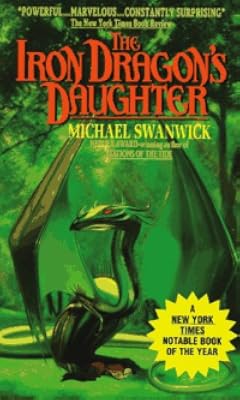
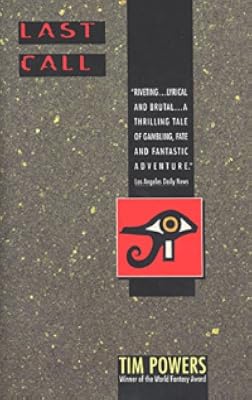
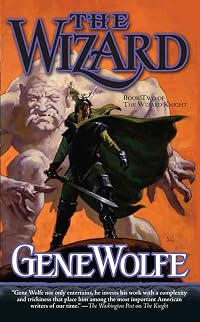
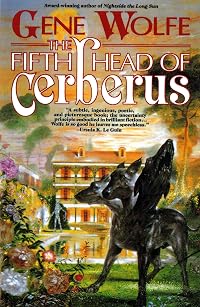
AlanPoulter Both books are part of a series involving the gods of the Ancient World, one is fantasy set in the past, the other science fiction in the far future. Each has an unusual viewpoint character.
Member Reviews
This is the continuing story of Latro, a Greek warrior who fought for the Romans and is blessed (or cursed?) by the gods. A head injury took from him his ability to make new memories (yes, like Memento) and so he must write down everything that happens to remember anything. At the same time, he is able to see the gods and demons that others follow on blind faith: although he does not know who they are, since he cannot remember their names.
One other element of the story is that the author claims that this is a translation of an ancient scroll written in broken Latin, full of mysterious abbreviations and illegible words... So a translation of a partially unreadable story written by someone with a severe brain injury. This conceit piles show more layer upon layer of mystery, creating the ultimate expression of one of Wolfe's favorite devices: the unreliable narrator. Here we can never be sure what is "really happening," and what's more, neither can the protagonist. There are, in fact, times when we as readers know more of what is happening than the MC since we can remember, but he cannot.
It's a fascinating story, but even without the convoluted depth, it's also just interesting. Soldier of Sidon takes Latro into Africa, through Egypt of the Ptolemies and south into Kush/Nubia (the borders are unclear, and the names change like water).
It's complex, and maddening, and fun, and exciting, and endlessly explorable. Just like the lands Latro stumbles through. show less
One other element of the story is that the author claims that this is a translation of an ancient scroll written in broken Latin, full of mysterious abbreviations and illegible words... So a translation of a partially unreadable story written by someone with a severe brain injury. This conceit piles show more layer upon layer of mystery, creating the ultimate expression of one of Wolfe's favorite devices: the unreliable narrator. Here we can never be sure what is "really happening," and what's more, neither can the protagonist. There are, in fact, times when we as readers know more of what is happening than the MC since we can remember, but he cannot.
It's a fascinating story, but even without the convoluted depth, it's also just interesting. Soldier of Sidon takes Latro into Africa, through Egypt of the Ptolemies and south into Kush/Nubia (the borders are unclear, and the names change like water).
It's complex, and maddening, and fun, and exciting, and endlessly explorable. Just like the lands Latro stumbles through. show less
Wow. After getting bogged down a couple times in the Book of the Short Sun, I was worried that Wolfe, one of my all-time favorite authors, had lost his touch. But this has that old magic! Taking place 20 or so years after [b:Soldier of the Mist|322067|Soldier of the Mist|Gene Wolfe|https://d.gr-assets.com/books/1387717495s/322067.jpg|1408393] and [b:Soldier of Arete|630402|Soldier of Arete|Gene Wolfe|https://d.gr-assets.com/books/1176493516s/630402.jpg|19201593], this is a beautiful resurrection of one of Wolfe's most interesting characters and worlds.
For those who don't know them, these books are the "translated" journal (sort of) of a soldier, originally from ancient Rome. In the first two books he is in the service of the city show more Thought (Athens) , fighting against Rope (Sparta). In this book, he now finds himself on a mission ordered by the Persian satrap ruling Egypt, traveling down the Nile into the depths of Africa. This is fantasy of the highest order - not wizards and warriors, but gods, who appear to the narrator - although not to ordinary men - since he has been touched by a god himself. And this touch has given Latro - the narrator - a terrible gift: he cannot remember events from one day to the next, and some things even fade during a long day. So he writes in a scroll to remind himself who he is, and who his friends and enemies are.
I won't provide any spoilers here, but I will say that the ending of the book leaves open the possibility of a fourth novel, which I really hope to see. This is probably the best book I've read so far this year. show less
For those who don't know them, these books are the "translated" journal (sort of) of a soldier, originally from ancient Rome. In the first two books he is in the service of the city show more Thought (Athens) , fighting against Rope (Sparta). In this book, he now finds himself on a mission ordered by the Persian satrap ruling Egypt, traveling down the Nile into the depths of Africa. This is fantasy of the highest order - not wizards and warriors, but gods, who appear to the narrator - although not to ordinary men - since he has been touched by a god himself. And this touch has given Latro - the narrator - a terrible gift: he cannot remember events from one day to the next, and some things even fade during a long day. So he writes in a scroll to remind himself who he is, and who his friends and enemies are.
I won't provide any spoilers here, but I will say that the ending of the book leaves open the possibility of a fourth novel, which I really hope to see. This is probably the best book I've read so far this year. show less
The third in a trilogy, follows a 4th-century BCE Greek mercenary who cannot form long-term memories, but can see and interact with gods. He records each day's events in a journal and re-reads what he can each morning, so the you have to try to infer what he knows or doesn't know on a given day. Since he’s the only narrator, that disconnect creates little puzzles that keep you on your toes. In this volume, his journey takes him to Egypt and central Africa.
Gene Wolfe’s third volume of the Soldier series is divorced from the first two in several ways. The most obvious is the fact that it was written 17 years after the last volume, leaving quite a cliffhanger for contemporary readers (and actually no indication that there would even be a sequel). The other is the fact that even in-story the events occur at a significant remove from those that transpired in [b:Soldier of the Mist|322067|Soldier of the Mist|Gene Wolfe|http://d.gr-assets.com/books/1173746321s/322067.jpg|1408393] and [b:Soldier of Arete|630402|Soldier of Arete|Gene Wolfe|http://d.gr-assets.com/books/1176493516s/630402.jpg|19201593]. As Sidon opens we find that Latro has been living back at home, apparently with his wife, for show more some time (though given that this is a Gene Wolfe book I’m not sure if I quite believe that everything is exactly as it appears) though his condition is no better than when last we saw him and he tends to sit despondently in front of his door where the word “Riverland” (aka Egypt) is written (apparently he believes that going to this distant country will enable him to heal himself…we’ve heard something similar before I think). Latro is visited by an old friend, the Persian ship captain Muslak who is one of the few remaining links to the previous two volumes, and his friend promptly decides to bring Latro with him as he just so happens to be taking a shipment of goods to the Nile delta.
What follows is an adventure similar to what we have already seen Latro undertake, though this time the setting is ancient Egypt and Nubia and the secondary cast of characters is different. In a nutshell Muslak’s ship is commandeered by the Persian satrap of Egypt to cruise down the Nile and discover anything that may be of use to him from the countries to the south. Travelling in this band are a Persian magi and his Egyptian priest-scribe, an Egyptian sorcerer-priest, two “singing girls” (aka temple prostitutes who become the “river wives” of Latro and Muslak), an Athenian wine-merchant, several eldritch familiars, and various sailors and soldiers. As before Latro is pulled in several directions by the machinations of the various gods and supernatural creatures he is able to see, as well as by the all-too human people who want to make use of him for their own ends. Aside from the new locale I have to admit that I didn’t notice a lot of difference between this volume and the others and little, if any, final resolution is forthcoming from Wolfe. Still, I enjoy being in Latro’s company and seeing the ancient world (both natural and supernatural) through his eyes.
I like the way, throughout the Soldier series, that Wolfe is able to make the gods into a real living and breathing element of the civilizations that spawned them. They don’t come across merely as archetypes or placeholders (though they do indeed serve those purposes, at least partially), but they are also not just humans with superpowers. There is something distinctly ‘other’ about them that seems equally tied to their roles as both stewards of particular elements of creation and embodiments of basic aspects of the human psyche. Within this ‘god-as-archetype’ role, however, they still retain distinct personalities that elevate them beyond being mere ciphers. The gods of Egypt seem different from those of Greece not only in their physical forms, but also in that they seem to have a less vested interest in Latro. I got the sense from the first two volumes that the Greek pantheon had a specific purpose in mind when they ‘recruited’ Latro as a pawn to their internecine fighting, but while the Egyptian gods are more than willing to make use of him, they seem to be doing so for much less personal reasons. Of course I still have no idea what exactly those reasons were for the Greek pantheon, so the jury’s still out on that one.
As in the other volumes Latro is once again led by prophecy to visit various temples along his path, this time following the Nile river to its source. Various gods and powers meet him along the way and help or hinder him as they see fit. He overcomes a variety of vicissitudes including enslavement, betrayal, and abandonment; he also meets an unexpected old friend in a time of great need, but ultimately ends this phase of his adventures perhaps worse off than he was when he started and on the verge of yet another seemingly hopeless quest. One hopes that this cliffhanger will be resolved in a subsequent volume and that the wait won’t be another 17 years. show less
What follows is an adventure similar to what we have already seen Latro undertake, though this time the setting is ancient Egypt and Nubia and the secondary cast of characters is different. In a nutshell Muslak’s ship is commandeered by the Persian satrap of Egypt to cruise down the Nile and discover anything that may be of use to him from the countries to the south. Travelling in this band are a Persian magi and his Egyptian priest-scribe, an Egyptian sorcerer-priest, two “singing girls” (aka temple prostitutes who become the “river wives” of Latro and Muslak), an Athenian wine-merchant, several eldritch familiars, and various sailors and soldiers. As before Latro is pulled in several directions by the machinations of the various gods and supernatural creatures he is able to see, as well as by the all-too human people who want to make use of him for their own ends. Aside from the new locale I have to admit that I didn’t notice a lot of difference between this volume and the others and little, if any, final resolution is forthcoming from Wolfe. Still, I enjoy being in Latro’s company and seeing the ancient world (both natural and supernatural) through his eyes.
I like the way, throughout the Soldier series, that Wolfe is able to make the gods into a real living and breathing element of the civilizations that spawned them. They don’t come across merely as archetypes or placeholders (though they do indeed serve those purposes, at least partially), but they are also not just humans with superpowers. There is something distinctly ‘other’ about them that seems equally tied to their roles as both stewards of particular elements of creation and embodiments of basic aspects of the human psyche. Within this ‘god-as-archetype’ role, however, they still retain distinct personalities that elevate them beyond being mere ciphers. The gods of Egypt seem different from those of Greece not only in their physical forms, but also in that they seem to have a less vested interest in Latro. I got the sense from the first two volumes that the Greek pantheon had a specific purpose in mind when they ‘recruited’ Latro as a pawn to their internecine fighting, but while the Egyptian gods are more than willing to make use of him, they seem to be doing so for much less personal reasons. Of course I still have no idea what exactly those reasons were for the Greek pantheon, so the jury’s still out on that one.
As in the other volumes Latro is once again led by prophecy to visit various temples along his path, this time following the Nile river to its source. Various gods and powers meet him along the way and help or hinder him as they see fit. He overcomes a variety of vicissitudes including enslavement, betrayal, and abandonment; he also meets an unexpected old friend in a time of great need, but ultimately ends this phase of his adventures perhaps worse off than he was when he started and on the verge of yet another seemingly hopeless quest. One hopes that this cliffhanger will be resolved in a subsequent volume and that the wait won’t be another 17 years. show less
A mock introduction tells of a manuscript found during excavations when building the Aswan Dam. This book is supposedly a translation of that manuscript, the earlier two books, Soldier of the Mist and Soldier of Arete, being transations of manuscripts from the British Museum.
This manuscript, like the other two, is written by Latro, who is a veteran Roman mercenary. Latro though has been cursed by a god: as a result he loses his memory each night. Thus the manuscript/book is not just a diary but an aide-memoire, which Latro has to be reminded to read each morning. As a consolation for the curse, Latro can see and talk with the gods and their servants.
In this book Latro journeys down the the Nile, searching for a cure for his curse. show more Being a veteran, he is given command of a sqaud guarding a boat captained by his friend Muslak, on a mission to investigate rumours of gold mines far to the south. Also on the boat are the expedition commander, two priests and two 'river wives' for Latro and Muslak, hired for the voyage from a temple.
Things soon start to get strange. One of the priests seems to temporarily lift Latro's memory loss. A large cat and a strange woman are seen on the boat at night sometimes. An experience at a temple gives Latro a servant who has powers over snakes. Later, Latro makes friends with a monkey no one else can see and wrestles and defeats an evil spirit inhabiting a child, again which others cannot see.
The device of the manuscript works extremely well. It shows Latro to be honest and a good judge of character. It serves to make the supernatural ordinary, since Latro records the fantastic in his usual manner. It also makes certain story elements more shocking, as the record suddenly becomes terse and the narrative jumps. The book itself finishes as Latro runs out of space on the manuscript. The hook into the next book is a quest for Latro to recover something treasured he has lost.
This book/series stands out as a unique example of a realistic fantasy, where gods and mortals fit together naturally. The ancient world is brought to life, rather than some fake fantasy realm. The attention is to realism: for example, language. Latro writes his manuscript, in Latin which some other characters cannot read. On their journey all have problems communicating wiith locals as languages change. Latro understands enough Greek to talk to a Greek merchant they meet.
This series is highly recommended and well on its way to becoming a classic. If you have not read any of the previous books, the final advantage of the manuscript-as-memory device is that there is no back story to assimilate. show less
This manuscript, like the other two, is written by Latro, who is a veteran Roman mercenary. Latro though has been cursed by a god: as a result he loses his memory each night. Thus the manuscript/book is not just a diary but an aide-memoire, which Latro has to be reminded to read each morning. As a consolation for the curse, Latro can see and talk with the gods and their servants.
In this book Latro journeys down the the Nile, searching for a cure for his curse. show more Being a veteran, he is given command of a sqaud guarding a boat captained by his friend Muslak, on a mission to investigate rumours of gold mines far to the south. Also on the boat are the expedition commander, two priests and two 'river wives' for Latro and Muslak, hired for the voyage from a temple.
Things soon start to get strange. One of the priests seems to temporarily lift Latro's memory loss. A large cat and a strange woman are seen on the boat at night sometimes. An experience at a temple gives Latro a servant who has powers over snakes. Later, Latro makes friends with a monkey no one else can see and wrestles and defeats an evil spirit inhabiting a child, again which others cannot see.
The device of the manuscript works extremely well. It shows Latro to be honest and a good judge of character. It serves to make the supernatural ordinary, since Latro records the fantastic in his usual manner. It also makes certain story elements more shocking, as the record suddenly becomes terse and the narrative jumps. The book itself finishes as Latro runs out of space on the manuscript. The hook into the next book is a quest for Latro to recover something treasured he has lost.
This book/series stands out as a unique example of a realistic fantasy, where gods and mortals fit together naturally. The ancient world is brought to life, rather than some fake fantasy realm. The attention is to realism: for example, language. Latro writes his manuscript, in Latin which some other characters cannot read. On their journey all have problems communicating wiith locals as languages change. Latro understands enough Greek to talk to a Greek merchant they meet.
This series is highly recommended and well on its way to becoming a classic. If you have not read any of the previous books, the final advantage of the manuscript-as-memory device is that there is no back story to assimilate. show less
This is a continuation of a series of books about Latro, a soldier in ancient times. The premise of this book is that Latro forgets everything except language every morning, and must write down notes every day. This makes the book somewhat a diary, and somewhat a narrative, giving is a very sparse style. It is also a bit confusing. Latro not only forgets, but he can also see spirits and gods, where others can't. Latro and others set out on a quest to recovery his memory and serve the Great King and travel far down the Nile. Since he can't remember from day to day, it becomes questionable who is a friend and who isn't, and the story skips a bit at times. Interesting, though not great. Definitely read the previous books first!
Latro heads down the Nile, through Egypt and Ethiopia, meeting Gods and Ghosts, friends and foes, remembering nothing. Wolfe is a genius. I love these books.
Members
- Recently Added By
Author Information

316+ Works 43,745 Members
Gene Wolfe was born in New York City on May 7, 1931. He dropped out of Texas A&M University during his junior year and was drafted into the Army to fight in the Korean War. After the war, he received a degree in mechanical engineering from the University of Houston. He worked as an industrial engineer for Procter and Gamble, where he developed the show more machine that cooks the dough used to make Pringles potato chips. He was an editor of the trade journal Plant Engineering from 1972 to 1984 before retiring to become a full-time writer. He wrote more than 30 books during his lifetime including The Fifth Head of Cerberus, Peace, The Book of the New Sun, and The Land Across. He received the Campbell Memorial Award, the Edward E. Smith Memorial Award, the Locus Award four times, and the Nebula Award and the World Fantasy Award two times each. In 1996, he was given the World Fantasy Award for Lifetime Achievement. He was inducted into the Science Fiction Hall of Fame in 2007 and was named a Grand Master by the Science Fiction and Fantasy Writers of America in 2012. He died after a long battle with heart disease on April 14, 2019 at the age of 87. (Bowker Author Biography) show less
Some Editions
Awards and Honors
Awards
Series

Common Knowledge
- Original title
- Soldier of Sidon
- Original publication date
- 2006
- People/Characters
- Latro; Myt-ser'eu
- Important places
- Sidon, Lebanon; Egypt
- Epigraph
- The Aethiopians were clothed in the skins of leopards and lions, and had long bows made of the stem of the palm-leaf, not less than four cubits in length. On these they laid short arrows made of reed, and armed at the tip, n... (show all)ot with iron, but with a piece of stone, sharpened to a point, of the kind used in engraving seals. They carried likewise spears, the head of which was the sharpened horn of an antelope; and in addition they had knotted clubs. When they went into battle they painted their bodies, half with chalk and half with vermilion.
- Herodotus - Dedication
- To Richard Francis Burton.
- First words
- I am to write everything that takes place on this scroll, as concisely as I can.
- Last words
- (Click to show. Warning: May contain spoilers.)[These are the final words on the scroll from Lake Nasser.]
- Blurbers
- Bradshaw, Gillian
- Original language
- English
Classifications
- Genres
- Fiction and Literature, Fantasy, General Fiction, Historical Fiction
- DDC/MDS
- 813.54 — Literature & rhetoric American literature in English American fiction in English 1900-1999 1945-1999
- LCC
- PS3573 .O52 .S645 — Language and Literature American literature American literature Individual authors 1961-
- BISAC
Statistics
- Members
- 596
- Popularity
- 49,314
- Reviews
- 14
- Rating
- (4.02)
- Languages
- English, French, Spanish
- Media
- Paper, Audiobook, Ebook
- ISBNs
- 6
- ASINs
- 6