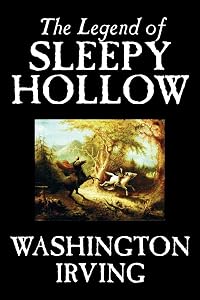
The Legend of Sleepy Hollow [short story]
by Washington Irving
On This Page
Description
In a secluded Dutch settlement in New York, two men vie for the hand of a wealthy farmer's daughter. Ichabod Crane, the superstitious schoolmaster is one of those men. One night, when walking home from the farmer's house, Ichabod is chased by the Headless Horseman, who "rides forth to the scene of battle in nightly quest of his head".Irving's short story The Legend of Sleepy Hollow is one of the earliest examples of American literature still read today.
.
Tags
Recommendations
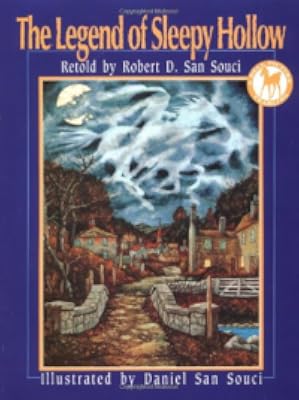






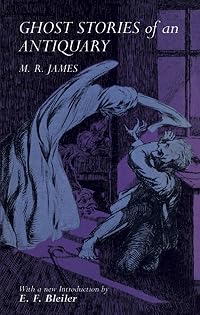
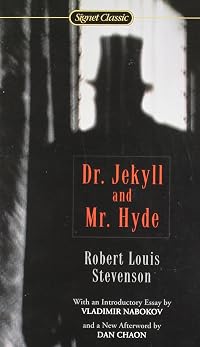

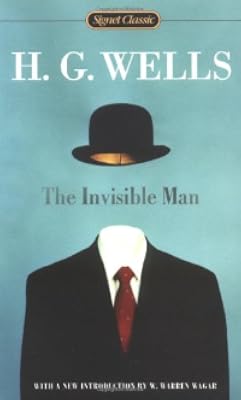








Member Recommendations


Member Reviews
I just absolutely loved this jolly, charming, humorous tale. Ichabod Crane is an unforgettable comic character. Irving’s writing is lovely, vivid, delicious. He pokes gentle fun at Ichabod, the old Dutch wives, their ghost stories. He draws a heartwarming, idyllic yet amusing picture of country life, sumptuous food, parties, landscapes, and mostly, superstitions. A great, fun short story.
There is absolutely nothing scary about this. I have no idea why it has that reputation. Yes, there is a Headless Horseman. Sort of. But it is not the point.
I listened on audio then I had to read it, too. How can you not love something that contains this paragraph:
There is absolutely nothing scary about this. I have no idea why it has that reputation. Yes, there is a Headless Horseman. Sort of. But it is not the point.
I listened on audio then I had to read it, too. How can you not love something that contains this paragraph:
“The pedagogue's mouth watered as he looked upon this sumptuous promise of luxuriousshow more
winter fare. In his devouring mind's eye, he pictured to himself every roasting-pig running about with a pudding in his belly, and an apple in his mouth; the pigeons were snugly put to bed in a comfortable pie, and tucked in with a coverlet of crust; the geese were swimming in their own gravy; and the ducks pairing cosily in dishes, like snug married couples, with a decent competency of onion sauce. In the porkers he saw carved out the future sleek side of bacon, and juicy relishing ham; not a turkey but he beheld daintily trussed up, with its gizzard under its wing, and, peradventure, a necklace of savory sausages; and even bright chanticleer himself lay sprawling on his back, in a side dish, with uplifted claws, as if craving that quarter which his chivalrous spirit disdained to ask while living.”show less
Audible tells me that the audiobook version of this short story lasted only seventy-five minutes but it felt like soooo much longer than that.
I listened politely to the entire thing, waiting attentively for something that would make this two-hundred-year-old story worth listening to. I waited in vain.
If humour is in the ear of the listener, then all I heard was smug disdain, delivered in over-worked prose that had neither comic timing nor dramatic pacing.
This was a story that seemed to be saying to the reader, 'Look how quaint and odd these country folk are! Look particularly at this poorly favoured teacher and join me in laughing at his greed for food, his delusional assessment of his marital prospects, his absurd physical appearance, show more and his gullibility.'
I'll pass, thanks.
The main thing I'll take away from reading this short story is the image of American Lit courses as ventilators keeping fiction alive that ought to have been allowed to die a dignified natural death long ago. show less
This is an absolutely delightful classic, the first (1820) significant contribution to the American short story, albeit written while Washington Irving was settled in England at a time when English literature was the mother and American literature was the fast growing child.
A great deal of the charm lies in its gentle satirical humour but also in Irving's leisurely mastery of description. He loves words but he deploys them with grammatical simplicity so that scene after scene is laid out as a rather rich feast precisely to the taste of its audience.
The comical hero Ichabod Crane owes a little to Don Quixote with Gunpowder as his Rocinante and the tale also prefigures a particular trope of American popular culture - the nerd, the jock show more and the girl - even if the outcome does not quite fit our modern conception of the right ending.
This is a more rumbunctious society than our own. Lurking in the margins is Irving's perception (without any sense of loss) that Sleepy Hollow is an anomaly in a restless society of constant westward movement and that the sort of settled life it represents is a survival, a throw-back.
Sleepy Hollow is not quite American and not quite European. It is of settled Dutch-origin farming stock (a society that often fascinated East Coast urbanites and sophisticates) but it is also a community proud of its role in the American War of Independence against the British.
And, of course, the tale has the air of being one of America's first horror stories (though it is anything but), perhaps a lead-in to a later idea that would emerge that the rural back areas of the East Coast were the natural home for the true horrors epitomised a century later by Lovecraft.
Washington Irving is a very fine writer and this is a very fine story that manages not in any way to ape or mimic English forms but which offers a distinctively American atmosphere that might be regarded as an ur-text for later American humorous, horrific and small town tropes. show less
A great deal of the charm lies in its gentle satirical humour but also in Irving's leisurely mastery of description. He loves words but he deploys them with grammatical simplicity so that scene after scene is laid out as a rather rich feast precisely to the taste of its audience.
The comical hero Ichabod Crane owes a little to Don Quixote with Gunpowder as his Rocinante and the tale also prefigures a particular trope of American popular culture - the nerd, the jock show more and the girl - even if the outcome does not quite fit our modern conception of the right ending.
This is a more rumbunctious society than our own. Lurking in the margins is Irving's perception (without any sense of loss) that Sleepy Hollow is an anomaly in a restless society of constant westward movement and that the sort of settled life it represents is a survival, a throw-back.
Sleepy Hollow is not quite American and not quite European. It is of settled Dutch-origin farming stock (a society that often fascinated East Coast urbanites and sophisticates) but it is also a community proud of its role in the American War of Independence against the British.
And, of course, the tale has the air of being one of America's first horror stories (though it is anything but), perhaps a lead-in to a later idea that would emerge that the rural back areas of the East Coast were the natural home for the true horrors epitomised a century later by Lovecraft.
Washington Irving is a very fine writer and this is a very fine story that manages not in any way to ape or mimic English forms but which offers a distinctively American atmosphere that might be regarded as an ur-text for later American humorous, horrific and small town tropes. show less
Old books are like old people. A little fragile, a little faded, and perhaps about to fall apart, and yet having stories within which can still captivate, stories which have been poured out to others before you’ve come along to hold the very same pages, and which may pour out to others when you’re gone.
Perhaps it’s only when one feels one’s own mortality that one feels this way, but is there any better symbol of the best of humanity passing down its history, knowledge, and culture from generation to generation, than a book? And of all books, any better representative of this than one which is old, having been in the library of unknown others before coming into one’s own?
I found a connection not only to Northeastern America in show more the 18th century while reading ‘The Legend of Sleepy Hollow’, but also to the fellow book lover who clipped the poem “Life or Death” by feminist/anarchist writer Voltairne de Cleyre out of the newspaper and included it in these pages for me to find decades later. With a front and back cover in this 1885 edition that appears to be alligator leather beginning to crack in places, and with the silk strings that bind the book together having been mostly snapped with age, it needed to be handled very carefully.
Inside, however, I found Irving’s language beautiful, his characters iconic, and his story memorable. It’s really no wonder it’s been adapted in so many forms since 1820, and is a favorite at Halloween time. It’s the perfect short story, absolutely brilliant. The illustrations provided nice touches, particularly of the lovely Katrina van Tassel. ‘The Spectre Bridegroom’ was also included here and a teeny little less successful, but quite enjoyable nonetheless, featuring an ancient castle on the Rhine and love at first sight. Ah youth. Who can’t empathize? The mores might have been different (Katrina’s “provokingly short petticoat” displaying “the prettiest foot and ankle in the country round”), and life may have been simpler, but the feelings of love, jealousy, and fear of noises in the dark are the same.
Am I reviewing the book or this edition? Or the beauty of books and humanity in general, having been swept up in some form of mystic reverie? Perhaps all of the above.
Oh, and connection discovered to the last book I read, which was “Good Omens” by Neil Gaiman and Terry Pratchett: Ichabod Crane’s love and mastery of Cotton Mather’s history of New England witchcraft. show less
Perhaps it’s only when one feels one’s own mortality that one feels this way, but is there any better symbol of the best of humanity passing down its history, knowledge, and culture from generation to generation, than a book? And of all books, any better representative of this than one which is old, having been in the library of unknown others before coming into one’s own?
I found a connection not only to Northeastern America in show more the 18th century while reading ‘The Legend of Sleepy Hollow’, but also to the fellow book lover who clipped the poem “Life or Death” by feminist/anarchist writer Voltairne de Cleyre out of the newspaper and included it in these pages for me to find decades later. With a front and back cover in this 1885 edition that appears to be alligator leather beginning to crack in places, and with the silk strings that bind the book together having been mostly snapped with age, it needed to be handled very carefully.
Inside, however, I found Irving’s language beautiful, his characters iconic, and his story memorable. It’s really no wonder it’s been adapted in so many forms since 1820, and is a favorite at Halloween time. It’s the perfect short story, absolutely brilliant. The illustrations provided nice touches, particularly of the lovely Katrina van Tassel. ‘The Spectre Bridegroom’ was also included here and a teeny little less successful, but quite enjoyable nonetheless, featuring an ancient castle on the Rhine and love at first sight. Ah youth. Who can’t empathize? The mores might have been different (Katrina’s “provokingly short petticoat” displaying “the prettiest foot and ankle in the country round”), and life may have been simpler, but the feelings of love, jealousy, and fear of noises in the dark are the same.
Am I reviewing the book or this edition? Or the beauty of books and humanity in general, having been swept up in some form of mystic reverie? Perhaps all of the above.
Oh, and connection discovered to the last book I read, which was “Good Omens” by Neil Gaiman and Terry Pratchett: Ichabod Crane’s love and mastery of Cotton Mather’s history of New England witchcraft. show less
Listened to audiobook performance of this classic spooky tale while driving through the Hudson Valley. The Legend of Sleepy Hollow has always been a favorite of mine, partly due to growing up within an hours drive of Tarrytown and visiting the sites of the story several times as a child. Revisiting it now, even though I know it's 200 years old, it struck me as old-fashioned, especially on gender and race issues. But it's also a funny satire of country folk in the Hudson Valley with Irving's vivid descriptions of people and places. And the last segment where Ichabod Crane is pursued by the Headless Horseman - or is it Brom Bones? - is truly spooky.
I have to say that re-reading this as an adult is a much different and more wonderful experience than as a snot-nosed kid of 15. I was able to appreciate the nuances much more, enjoying just how established Mr. Crane could be as a realistic and sympathetic character, even if he was slightly foolish.
In other words, he felt real, I felt invested, and as any lover of horror knows, we must also feel superior to our victims before their inevitable and somewhat moralistic demise by supernatural or nefarious deeds.
Now, whether this was a mortal practical joke played on a lover of the fantastic and the horrible or whether this was actually a real-life ghost story, as the Dutch Wives would insist, is a matter for debate.
Either way, it was nice show more and ghoulish and ramped up perfectly to a thrown screaming head. :)
Quick tale, fascinating, and expertly described. :) And an eternal Halloween Treat. :) show less
In other words, he felt real, I felt invested, and as any lover of horror knows, we must also feel superior to our victims before their inevitable and somewhat moralistic demise by supernatural or nefarious deeds.
Now, whether this was a mortal practical joke played on a lover of the fantastic and the horrible or whether this was actually a real-life ghost story, as the Dutch Wives would insist, is a matter for debate.
Either way, it was nice show more and ghoulish and ramped up perfectly to a thrown screaming head. :)
Quick tale, fascinating, and expertly described. :) And an eternal Halloween Treat. :) show less
For most classics that I read it is easy to discern how they have stood the test of time and attain their classic status. However, a few titles, like [b:Moby-Dick; or, The Whale|153747|Moby-Dick; or, The Whale|Herman Melville|https://d202m5krfqbpi5.cloudfront.net/books/1327940656s/153747.jpg|2409320] and [b:Three Men in a Boat|4921|Three Men in a Boat|Jerome K. Jerome|https://d202m5krfqbpi5.cloudfront.net/books/1347518006s/4921.jpg|4476508] hold little or no appeal to me at all, and why would anybody want to read them is beyond me. I am consigning The Legend of Sleepy Hollow to the “not for me” pile (though I am careful not disrespect any classics because they are still being read more than a hundred years after first publication, show more just because I don’t like them doesn't mean they are not any good).
I was expecting a quick and creepy Halloween read but found the story to be lyrical and jocular in tone but entirely devoid of any “fear factor”. The prose style is indeed a pleasure to read. I like how Ichabod Crane is characterized and described as looking like a “scarecrow eloped from a cornfield”. Crane’s predilection for fanciful tales also resonates with me and beautifully described:
It's ironic that in today’s popular culture Icabod Crane is usually depicted as a heroic figure. The original Crane as featured in this story is very much an anti-hero, he is not brave, decent, honest or even good looking. The Headless Horseman in Irving’s story eventually turns out to be something is a lame duck (I hope this is sufficiently vague not to be a spoiler). Both the 1999 Tim Burton movie and the new Sleepy Hollow TV series (2013) have taken the image of the Horseman from this story and upgraded him into a much more frightening and supernatural antagonist.
As a general rule, movie and TV adaptations are always inferior to the literary source material. Here is an exception that proves the rule, I find both the movie and TV show much more entertaining, dark and intense than Irving’s original story. So I suppose I do have something to be grateful to Washington Irving for after all. show less
I was expecting a quick and creepy Halloween read but found the story to be lyrical and jocular in tone but entirely devoid of any “fear factor”. The prose style is indeed a pleasure to read. I like how Ichabod Crane is characterized and described as looking like a “scarecrow eloped from a cornfield”. Crane’s predilection for fanciful tales also resonates with me and beautifully described:
"His appetite for the marvellous, and his powers of digesting it, were equally extraordinary; and both had been increased by his residence in this spell-bound region. No tale was too gross or monstrous for his capacious swallow."Unfortunately after the half-way point has passed by with nothing very interesting happening the author’s breezy style begins to outstay its welcome. I find myself losing interest in Irving’s prolonged descriptions of inconsequential things like birds and trees and such, and the complete absence of any dialogue does not help. To cap it all off the “horrific” climax turns out to be very much an anti-climax for me, and the epilogue renders the entire story rather pointless.
It's ironic that in today’s popular culture Icabod Crane is usually depicted as a heroic figure. The original Crane as featured in this story is very much an anti-hero, he is not brave, decent, honest or even good looking. The Headless Horseman in Irving’s story eventually turns out to be something is a lame duck (I hope this is sufficiently vague not to be a spoiler). Both the 1999 Tim Burton movie and the new Sleepy Hollow TV series (2013) have taken the image of the Horseman from this story and upgraded him into a much more frightening and supernatural antagonist.
As a general rule, movie and TV adaptations are always inferior to the literary source material. Here is an exception that proves the rule, I find both the movie and TV show much more entertaining, dark and intense than Irving’s original story. So I suppose I do have something to be grateful to Washington Irving for after all. show less
Members
- Recently Added By
Lists

Favourite 19th century fiction
257 works; 62 members

A Reading List
100 works; 3 members

Out of Copyright
244 works; 14 members

Mensa for Kids Excellence in Reading Award Program (Grades 7-8)
62 works; 1 member

Books Read in 2020
4,379 works; 124 members

New York
8 works; 2 members

Stories for Halloween
11 works; 1 member

mstrust's scary list
34 works; 1 member

Haunted Places and Ghost Stories Reading List
99 works; 4 members

Favourite Short Stories
153 works; 9 members

Books Read in 2022
5,166 works; 112 members

1970s
657 works; 23 members
Works in the game of Authors
44 works; 2 members

Books Read in 2024
4,623 works; 126 members

Recommended Reading : 600 Classics Reviewed, Editors of Salem Press, 2015
634 works; 6 members

Ambleside Online Year 4
46 works; 1 member

Mensa for Kids Excellence in Reading Award Program (Grades 7-8)
62 works; 3 members

Authors from the United States
245 works; 3 members

Least favourite books of 2013
10 works; 2 members

Blue Pyramid 1,276 Best Books of All Time
1,248 works; 32 members

Ambleside Books
459 works; 18 members
Best Horror Books
281 works; 84 members
Honey For a Child's Heart
1,152 works; 25 members

Books I Own But Haven't Read
144 works; 2 members
Halloween Stories
31 works; 5 members

To Read - Horror
137 works; 14 members

Works That Inspired Disney Movies
119 works; 13 members

Books Read in 2016
4,666 works; 197 members
Ghosts
278 works; 17 members

Western World's Greatest Books - Project Gutenberg
295 works; 15 members

Best Gothic Fiction
110 works; 31 members

Books Featured on Readers' Review of the Diane Rehm Show
161 works; 8 members
Books Read in 2015
3,299 works; 129 members

Books Read in 2014
2,343 works; 86 members

Overdue Podcast
806 works; 9 members

Ghost Stories That Thrill Us
256 works; 115 members
Talk Discussions
Past Discussions
Mystery storys book? in Name that Book (November 2023)
Author Information

783+ Works 27,039 Members
Washington Irving, one of the first Americans to achieve international recognition as an author, was born in New York City in 1783. His A History of New York, published in 1809 under the name of Diedrich Knickerbocker, was a satirical history of New York that spanned the years from 1609 to 1664. Under another pseudonym, Geoffrey Crayon, he wrote show more The Sketch-book, which included essays about English folk customs, essays about the American Indian, and the two American stories for which he is most renowned--"The Legend of Sleepy Hollow" and "Rip Van Winkle." Irving served as a member of the U.S. legation in Spain from 1826 to 1829 and as minister to Spain from 1842 to 1846. Following his return to the U.S. in 1846, he began work on a five-volume biography of Washington that was published from 1855-1859. Washington Irving died in 1859 in New York. show less
Some Editions
Awards and Honors
Distinctions
Notable Lists
Series
Belongs to Publisher Series
Work Relationships
Is contained in
The sketch-book of Geoffrey Crayon,: Gent. [pseud.] together with Abbotsford and other selections from the writings of Washington Irving by Washington Irving (indirect)
The Works of Washington Irving: (Vol. 5) The voyages of the companions of Columbus/Sketch Book (New Hudson Ed.) by Washington Irving (indirect)
The Complete Works of Washington Irving Sketch Book Crayon Papers No 65 of 1000 copies by Washington Irving (indirect)
The works of Washington Irving containing The sketch book, Knickerbocker's history of New York, Bracebridge Hall, Tales of a traveller, A chronicle of the conquest of Granada, The Alhambra by Washington Irving (indirect)
Washington Irving: A Treasury: Rip Van Winkle, The Legend of Sleepy Hollow, Old Christmas by Washington Irving
The Tavern Lamps Are Burning: Literary Journeys through Six Regions and Four Centuries of New York State by Carl Carmer
Penny Dreadful Multipack Volume 7 – The Americans: The Legend of Sleepy Hollow, The Murders in the Rue Morgue, Mosses From An Old Manse, Owl Creek Bridge, The King In Yellow and 26 more (Illustrated) by CreateSpace Multipack
The Legend of Sleepy Hollow and Other Stories: The Sketch Book of Geoffrey Crayon, Gent. by Washington Irving
90 Masterpieces You Must Read (Vol.1): Novels, Poetry, Plays, Short Stories, Essays, Psychology & Philosophy by Various
La Leyenda De Sleepy Hollow / Little Britain (COLECCIÓN LIBROS BILINGÜES CLARÍN) by Washington Irving
Three Stories By Washington Irving, Vols. I - III: Rip Van Winkle; The Legend of Sleepy Hollow; The Great Mississippi Bubble by Washington Irving
Is retold in
Has the adaptation
Is abridged in
The legend of Sleepy Hollow / La leyenda de Sleppy Hollow - Little Britain / Little Britain by Washington Irving
One hundred best novels condensed: 3 of 4 see note: Adam Bede; Tess of the D'Urbervilles; Don Quixote; East Lynne; Count of Monte Cristo; Paul and Virginia; Tom Brown's School Days; Waverley; Dombey and Son; Romola; Legend of Sleepy Hollow; Last of the Mohicans; Wreck of the "Grosvenor"; Right of Way; Coniston; Far from the Madding Crowd; Woman in White; Deemster; Waterloo; Hypatia; Kidnapped; Oliver Twist; Gil Blas; Peg Woffington; Virginians by Edwin Atkins Grozier
Inspired
Common Knowledge
- Canonical title
- The Legend of Sleepy Hollow [short story]
- Original title
- The Legend of Sleepy Hollow
- Alternate titles
- The Legend of Sleepy Hollow: Found Among the Papers of the Late Diedrich Knickerbocker; The Headless Horseman; The Headless Horseman of Sleepy Hollow; Ichabod Crane (or The Legend of Sleepy Hollow) (or The Legend of Sleepy Hollow)
- Original publication date
- 1819
- People/Characters
- Ichabod Crane; Abraham “Brom Bones” Van Brunt; Katrina Van Tassel; Baltus Van Tassel; Headless Horseman
- Important places
- Sleepy Hollow, New York, USA; New York, USA
- Important events
- Halloween
- Related movies
- The Headless Horseman (1922 | IMDb); The Adventures of Ichabod and Mr. Toad (1949 | IMDb); The Legend of Sleepy Hollow (1949 | IMDb); The Legend of Sleepy Hollow (1980 | IMDb); The Legend of Sleepy Hollow (1999 | IMDb); Sleepy Hollow (1999 | IMDb) (show all 8); Wishbone" Halloween Hound: The Legend of Creepy Collars (IMDb); CBS Library: Once Upon a Midnight Dreary (1979 | IMDb)
- Epigraph*
- Era una terra amabile di teste al sonno arrendevoli,
di sogni fluttuanti dinnanzi alle ciglia abbassate;
di allegri castelli arroccati nelle nubi fuggevoli,
che senza sosta s'involano nel cielo d'estate.
CA... (show all)STLE OF INDOLENCE - First words
- In the bosom of one of those spacious coves which indent the eastern shore of the Hudson, at the broad expansion of the river denominated by the ancient Dutch navigators the Tappan Zee, and where they always prudently shorten... (show all)ed sail, and implored the protection of St. Nicholas when they crossed, there lies a small market town or rural port, which by some is called Greensburgh, but which is more generally and properly known by the name of Tarry Town.
- Last words
- (Click to show. Warning: May contain spoilers.)The school-house, being deserted, soon fell to decay, and was reported to be haunted by the ghost of the unfortunate pedagogue; and the ploughboy, loitering homeward of a still summer evening, has often fancied his voice at a distance, chanting a melancholy psalm-tune among the tranquil solitudes of Sleepy Hollow.
(Click to show. Warning: May contain spoilers.)"Faith, sir," replied the story-teller, "as to that matter, I don't believe one-half of it myself."
[Postscript] - Original language
- English
- Disambiguation notice
- This is the main work for The Legend of Sleepy Hollow by Washington Irving. It should not be combined with any larger collection, adaptation, etc.
*Some information comes from Common Knowledge in other languages. Click "Edit" for more information.
Classifications
Statistics
- Members
- 5,046
- Popularity
- 2,749
- Reviews
- 144
- Rating
- (3.63)
- Languages
- 59 — Afrikaans, Albanian, Amharic, Arabic, Armenian, Basque, Belarusian, Bulgarian, Catalan, Czech, Danish, Dutch, English, Esperanto, Estonian, Finnish, French, Georgian, German, Irish, Galician, Greek, Hebrew, Hindi, Hungarian, Icelandic, Indonesian, Italian, Japanese, Korean, Latin, Latvian, Lithuanian, Macedonian, Malay, Norwegian (Bokmål), Norwegian, Nyanja, Farsi/Persian, Polish, Romanian, Russian, Serbian, Croatian, Slovak, Slovenian, Spanish, Swahili, Swedish, Tagalog, Turkish, Urdu, Welsh, Yiddish, Portuguese (Portugal), Portuguese (Brazil), Chinese, traditional, Chinese, simplified, English (UK)
- Media
- Paper, Audiobook, Ebook
- ISBNs
- 432
- UPCs
- 8
- ASINs
- 149