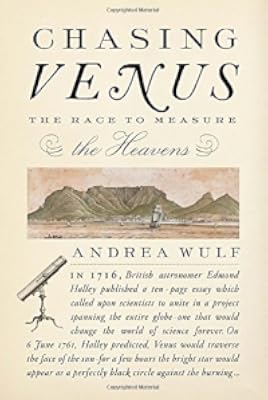
Chasing Venus: The Race to Measure the Heavens
by Andrea Wulf
On This Page
Description
"The author of the highly acclaimed Founding Gardeners now gives us an enlightening chronicle of the first truly international scientific endeavor--the eighteenth-century quest to observe the transit of Venus and measure the solar system. On June 6, 1761, the world paused to observe a momentous occasion: the first transit of Venus between the earth and the sun in more than a century. Through that observation, astronomers could calculate the size of the solar system--but only if the transit show more could be viewed at the same time from many locations. Overcoming incredible odds and political strife, astronomers from Britain, France, Russia, Germany, Sweden, and the American colonies set up observatories in remote corners of the world only to have their efforts thwarted by unpredictable weather and warring armies. Fortunately, transits of Venus occur in pairs: eight years later, the scientists were given a second chance to get it right. Chasing Venus brings to life this extraordinary endeavor: the personalities of eighteenth-century astronomy, the collaborations, discoveries, personal rivalries, volatile international politics, and the race to be first to measure the distances between the planets"--Provided by publisher. "On June 6, 1761, the world paused to observe a momentous occasion: the first transit of Venus between the Earth and the sun in more than a century. Through that observation, astronomers could calculate the size of the solar system--but only if the transit could be viewed at the same time from many locations. Overcoming incredible odds and political strife, astronomers from Britain, France, Russia, Germany, Sweden, and the American colonies set up observatories in remote corners of the world only to have their efforts thwarted by unpredictable weather and warring armies. Fortunately, transits of Venus occur in pairs: eight years later, the scientists were given a second chance to get it right. Chasing Venus brings to life this extraordinary endeavor: the personalities of eighteenth-century astronomy, the collaborations, discoveries, personal rivalries, volatile international politics, and the race to be first to measure the distances between the planets"--Provided by publisher. show lessTags
Recommendations









Member Recommendations

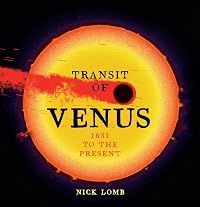
themulhern The two books complement each other. "Chasing Venus" reads like a novel, with little mathematical or scientific detail. "Venus in Transit" has more math and discusses the observation of subsequent transits, as the activity gradually became less and less scientifically valuable but better known to the populace.
themulhern Both books stick to the science adventure, and go rather light on the actual science. "Chasing Venus" is about the decade long effort to calculate the value of the astronomical unit; Bryson's book is more shallow and broad.
themulhern "Chasing Venus" is about expeditions to observe the Transit of Venus which were partially funded by the Royal Society.
themulhern Same narrative style on a technical subject, many of the same characters in both.
Member Reviews
Before starting this book, I'd read two of Wulf's books. The first was about Alexander von Humboldt, and natural history, so I was inclined going in to love it. The second one was about the birth of Romanticism; a subject I'm less interested in, but it included von Humboldt and Goethe, so again, I was inclined to really enjoy it.
Chasing Venus was the acid test of Wulf's writing for me, because space bores me silly. Yes, the stars are pretty to look at, and I urge everyone to find access to some dark corner of the world in which to view the Milky Way, because ... wow. And the Auroras are definite bucket list musts. But beyond that, the planets, constellations, black holes, etc ... eh, don't care.
I hadn't even intended to read this one, show more but it showed up as available in audio at one of my libraries and I gave in to curiosity - could Wulf make the race to watch the transit of Venus in the 1700's interesting to someone like me?
Turns out she can ... sort of. Did I care about will they/won't they question of success at getting the measurements? No, not really. But Wulf totally sucked me in to the drama and adventures of those men who rushed to the far corners of the globe ('rush' being a highly relative term in the 1700's) in the often vain hope of seeing the transit of Venus, and not dying in the process from disease, war, or boredom.
I listed to this on audio and I thought the narrator did a terrific job, BUT, my American tin-ear for accents made some of the names really difficult to comprehend, coming from an British accented narrator and many of the names being French. This got better as the book progressed, but I do think I'd have probably gotten a bit more out of this book had I read the print version. show less
Chasing Venus was the acid test of Wulf's writing for me, because space bores me silly. Yes, the stars are pretty to look at, and I urge everyone to find access to some dark corner of the world in which to view the Milky Way, because ... wow. And the Auroras are definite bucket list musts. But beyond that, the planets, constellations, black holes, etc ... eh, don't care.
I hadn't even intended to read this one, show more but it showed up as available in audio at one of my libraries and I gave in to curiosity - could Wulf make the race to watch the transit of Venus in the 1700's interesting to someone like me?
Turns out she can ... sort of. Did I care about will they/won't they question of success at getting the measurements? No, not really. But Wulf totally sucked me in to the drama and adventures of those men who rushed to the far corners of the globe ('rush' being a highly relative term in the 1700's) in the often vain hope of seeing the transit of Venus, and not dying in the process from disease, war, or boredom.
I listed to this on audio and I thought the narrator did a terrific job, BUT, my American tin-ear for accents made some of the names really difficult to comprehend, coming from an British accented narrator and many of the names being French. This got better as the book progressed, but I do think I'd have probably gotten a bit more out of this book had I read the print version. show less
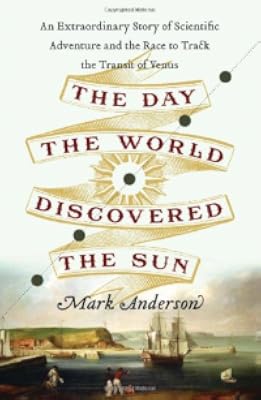
I don't think I've ever written a joint book review here, but since the two under discussion came out right around the same time and cover pretty much the same ground, I'm going to make an exception. Mark Anderson's The Day the World Discovered the Sun: An Extraordinary Story of Scientific Adventure and the Race to Track the Transit of Venus (Da Capo Press, 2012) and Andrea Wulf's Chasing Venus: The Race to Measure the Heavens (Knopf, 2012) both take as their subject what Wulf calls "the most ambitious scientific project that had ever been planned" (xxv): the international efforts to observe the 1761 and 1769 transits of Venus.
Both books are written with a popular audience in mind, and both succeed at explaining the importance of the show more transit observations and profiling some of the many observers who made the attempts. Both cover a great deal of ground in not a lot of space, so they tend to get a bit choppy in parts. That said, both also make for pleasurable reading, but in the end I found myself preferring Wulf's narrative to Anderson's.
Wulf's book is structured a bit more clearly, and she manages to profile a few more observers than Anderson, including those in what would become the United States and Canada (her anecdote about David Rittenhouse getting so excited just as the 1769 transit started that he fainted may be the best one of all of them). Anderson has a bit more on the French expedition to Baja California and Maxmilian Hell's trek to the far north of Norway, on the other hand. Both do quite well on Cook's journey to Tahiti, and in general on the organizational efforts that went into planning the various expeditions.
Wulf integrates illustrations into the text, which is a nice touch (though the reproduced maps are printed a bit too small and some of the illustrations are fairly tangential). She also provies good overview maps of the various observation points, comprehensive lists of the observers, and a very extensive bibliography/notes section. She recommends (and I've just spent way too much time enjoying) Rob van Gent's amazing bibliographic list of known original reports of the 1761 and 1769 transits (often with links out to the texts themselves).
I read Anderson's book last weekend, but knowing that I was going to spend yesterday afternoon (5 June 2012) on a train from New York to Charlottesville, during which the last transit of Venus would occur, I reserved Wulf's book to read then, and was really glad that I had. Sadly, the transit was obscured by clouds for me, so I've missed my chance now to see the spectacle (barring any fantastical medical advances which would keep me around until 2117, which seems an unpleasant idea). But as I watched the clouds, hoping they'd break briefly, I was reading of the French observer Le Gentil. In 1761 he never made it to a stable observation point and watched the transit from the deck of a ship in the Indian Ocean, unable to get reliable data. Spending the next eight years making preparations, in 1769 he was in Pondicherry, India ... where the transit was completely obscured by clouds.
I'd recommend either book without reservation to anyone interested in the topic. Wulf's came out a bit higher on my own reading scale, but your mileage may vary. Both tell a fascinating story well worth reading and exploring further.
http://philobiblos.blogspot.com/2012/06/books-review-wulf-and-anderson-on.html show less
Both books are written with a popular audience in mind, and both succeed at explaining the importance of the show more transit observations and profiling some of the many observers who made the attempts. Both cover a great deal of ground in not a lot of space, so they tend to get a bit choppy in parts. That said, both also make for pleasurable reading, but in the end I found myself preferring Wulf's narrative to Anderson's.
Wulf's book is structured a bit more clearly, and she manages to profile a few more observers than Anderson, including those in what would become the United States and Canada (her anecdote about David Rittenhouse getting so excited just as the 1769 transit started that he fainted may be the best one of all of them). Anderson has a bit more on the French expedition to Baja California and Maxmilian Hell's trek to the far north of Norway, on the other hand. Both do quite well on Cook's journey to Tahiti, and in general on the organizational efforts that went into planning the various expeditions.
Wulf integrates illustrations into the text, which is a nice touch (though the reproduced maps are printed a bit too small and some of the illustrations are fairly tangential). She also provies good overview maps of the various observation points, comprehensive lists of the observers, and a very extensive bibliography/notes section. She recommends (and I've just spent way too much time enjoying) Rob van Gent's amazing bibliographic list of known original reports of the 1761 and 1769 transits (often with links out to the texts themselves).
I read Anderson's book last weekend, but knowing that I was going to spend yesterday afternoon (5 June 2012) on a train from New York to Charlottesville, during which the last transit of Venus would occur, I reserved Wulf's book to read then, and was really glad that I had. Sadly, the transit was obscured by clouds for me, so I've missed my chance now to see the spectacle (barring any fantastical medical advances which would keep me around until 2117, which seems an unpleasant idea). But as I watched the clouds, hoping they'd break briefly, I was reading of the French observer Le Gentil. In 1761 he never made it to a stable observation point and watched the transit from the deck of a ship in the Indian Ocean, unable to get reliable data. Spending the next eight years making preparations, in 1769 he was in Pondicherry, India ... where the transit was completely obscured by clouds.
I'd recommend either book without reservation to anyone interested in the topic. Wulf's came out a bit higher on my own reading scale, but your mileage may vary. Both tell a fascinating story well worth reading and exploring further.
http://philobiblos.blogspot.com/2012/06/books-review-wulf-and-anderson-on.html show less
A fascinating tale told w/ occasional humour, but with such a large cast of characters that it's hard to follow them all. Was listening to this on audio, the physical book brings excellent maps and useful illustrations to the table.
One drawback to the book is that it introduces some technical conflicts between the astronomers, without giving any idea what the substance of the dispute was.
In the end this book reads like a novel. Full of excitement, funny in parts, very sad in parts, replete with warfare and disaster, triumphs, and finally, a lot of work for very little.
The epilogue discusses the contributions that this one endeavor made to the idea of science as a more or less international enterprise.
All the events described in this show more book happened during or just after the Seven Years War, known as the French and Indian war in the colonies.
This book is also a reminder that warfare spanned the world long before WWI. It was just less organized and less pervasive back then. show less
One drawback to the book is that it introduces some technical conflicts between the astronomers, without giving any idea what the substance of the dispute was.
In the end this book reads like a novel. Full of excitement, funny in parts, very sad in parts, replete with warfare and disaster, triumphs, and finally, a lot of work for very little.
The epilogue discusses the contributions that this one endeavor made to the idea of science as a more or less international enterprise.
All the events described in this show more book happened during or just after the Seven Years War, known as the French and Indian war in the colonies.
This book is also a reminder that warfare spanned the world long before WWI. It was just less organized and less pervasive back then. show less
wish they had half stars. I enjoyed this a lot, surprisingly so, since I only have a mild interest in astronomy. It has some tales of adventure- though if you are only going to read one book about a scientific expedition in the 1700's going awry- I reccomend The Mapmaker's Wife.
One of the best history of science books I've read in a while. It's amazing how in the 18th century, this was the first international scientific collaboration. And how for the first time we learned how big our solar system was.
Durante dos días en 1761 y 1769, cientos de científicos de países europeos y de las colonias norteamericanas apuntaron su telescopio hacia el cielo para observar un raro acontecimiento astronómico: el tránsito de venus por delante de la superficie del sol que permitiría calcular el tamaño del sistema solar
Jun 17, 2021Spanish
Ratings
Members
- Recently Added By
Published Reviews
ThingScore 100
So the story zips along. Of its 300 pages, 100 are notes, as well as complete lists of all the observers in 1761 and 1769. It is right that these are honoured. The rest is like an astonishing pre-Verne Around the World in Eighty Days. The science is grounded at the start of the book professionally enough to satisfy the reviewers of Nature and New Scientist; the rest is adventure story, against show more the clock. show less
added by nvblue
Lists

Club Read's Recommended Nonfiction Written by Women
618 works; 30 members

In Our Time books
4,934 works; 2 members
Author Information

Andrea Wulf is an English historian and writer, born in New Delhi, India in 1972. She studied design at the Royal College of Art. She is a public speaker and has lectured in the UK and USA. Her books include This Other Eden: Seven Great Gardens and 300 Years of English History; Founding Gardeners: The Revolutionary Generation, Nature, and the show more Shaping of the American Nation; and Chasing Venus: The Race to Measure the Heavens. Her award winning book, The Brother Gardeners, received a CBHL Annual Literature Award in 2010. The Invention of Nature: How Alexander Von Humboldt Revolutionized Our World, received the 2015 Costa Book Award in the biography category, and the 2016 Royal Society Science Book Prize for 'outstanding popular science books' written for a non-specialist audience. (Bowker Author Biography) show less
Some Editions
Common Knowledge
- Canonical title*
- Il passaggio di Venere. La nascita della comunità scientifica internazionale attraverso una straordinaria avventura astronomica
- Original title
- Chasing Venus: The Race to Measure the Heavens
- Original publication date
- 2012
- People/Characters
- Edmond Halley; Joseph-Nicolas Delisle; Captain James Cook, RN, FRS; Joseph Banks
- Important places*
- Venus
- Important events
- Transit of Venus, 1761; Transit of Venus, 1769
- Epigraph
- 'The planet Venus drawn from her seclusion, modestly delineating on the sun, without disguise, her real magnitude, whilst her disc, at other times SO lovely, is here obscured in melancholy gloom'. - Jeremiah Horrocks
'We must show that we are better, and that science has done more to humankind than divine or sufficient grace'. - Denis Diderot - Dedication
- To Regan
*Some information comes from Common Knowledge in other languages. Click "Edit" for more information.
Classifications
Statistics
- Members
- 357
- Popularity
- 88,686
- Reviews
- 6
- Rating
- (3.81)
- Languages
- 7 — Dutch, English, German, Italian, Portuguese, Spanish, Swedish
- Media
- Paper, Audiobook, Ebook
- ISBNs
- 22
- ASINs
- 5