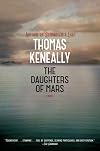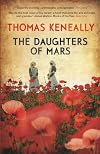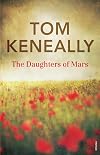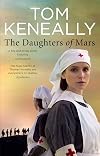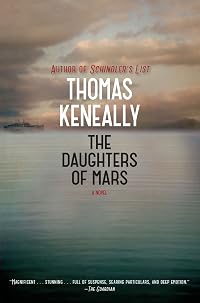
The Daughters of Mars
by Thomas Keneally
On This Page
Description
"From the acclaimed author of Schindlers List comes the epic, unforgettable story of two sisters whose lives are transformed by the cataclysm of the First World War. In 1915, Naomi and Sally Durance, two spirited Australian sisters, join the war effort as nurses, escaping the confines of their fathers farm and carrying a guilty secret with them. Though they are used to tending the sick, nothing could have prepared them for what they confront, first on a hospital ship near Gallipoli, then on show more the Western Front. Yet amid the carnage, the sisters become the friends they never were at home and find themselves courageous in the face of extreme danger and also the hostility from some on their own side. There is great bravery, humor, and compassion, too, and the inspiring example of the remarkable women they serve alongside. In France, where Naomi nurses in a hospital set up by the eccentric Lady Tarlton while Sally works in a casualty clearing station, each meets an exceptional man: the kind of men for whom they might give up some of their newfound independence if only they all survive. At once vast in scope and extraordinarily intimate, The Daughters of Mars brings World War I vividly to life from an uncommon perspective. Thomas Keneally has written a remarkable novel about suffering and transcendence, despair and triumph, and the simple acts of decency that make us human even in a world gone mad"-- "From the beloved author of Schindler's List, a magnificent, epic novel of two sisters, both nurses during World War I, that has been hailed as perhaps "the best novel of Keneally's career" (The Spectator)"-- show lessTags
Recommendations














Member Recommendations
Member Reviews
This year marks the centennial of the start of WWI -- a global collapse into brutality as horrific as Mars, the ancient Roman god of war, could have possibly devised. We have often been treated in novels and non-fiction to the male perspective. For Australian soldiers like those in this narrative), their participation has rightly been viewed as heroic. Thomas Keneally has chosen instead to portray this conflict from the view of Australian volunteer nurses, particularly the two Durance sisters, Sally and Naomi. Through them, we are dropped into Gallipoli, Lemnos, the sinking of the Archimedes and the Western Front.
This is a gripping tale which kept me rapt from first to last. The tensions between the sisters, their sense of alienation show more from their home and family, mirror in some respects the tensions between the warring nations. Keneally's choice of dialogue sans quotation marks has distressed some. It wasn't an issue for me -- the pace continued to race along. I found the choice of alternate endings to be more offputting. It does have the fortunate result of giving something for everyone. I intend to search out more books from this author. show less
This is a gripping tale which kept me rapt from first to last. The tensions between the sisters, their sense of alienation show more from their home and family, mirror in some respects the tensions between the warring nations. Keneally's choice of dialogue sans quotation marks has distressed some. It wasn't an issue for me -- the pace continued to race along. I found the choice of alternate endings to be more offputting. It does have the fortunate result of giving something for everyone. I intend to search out more books from this author. show less
This is the first book I've read by this prolific author, but it won't be the last.
Two Australian sisters have signed up as nurses during the early days of WWI, and get into the thick of things quickly. The author does not hold back on the horrors of war, and while I think this book very well written and while it had an impact on me, I would not recommend it for those already on anti-depressants. If you are not, you might want some close at hand. This is a novel of almost unrelenting brutality and despair.
The author's style of writing challenged me. There are no quotation marks in the dialogue, and some of the phrasing is not entirely straightforward. It took me a while to get into the rhythm of his writing, but it got easier as the show more book went on. Given that, it was very well written, quite beautiful. I don't mind being challenged as a reader.
The author had notes at the beginning of the book informing what was fictionalized. There is still much well-researched history in the novel. I very much appreciated that, along with the map in the covers.
The novel covers much moral ground without being judgmental. The dismissive, disrespectful, degrading, and sometimes violent treatment of the nurses doing the best they can to save lives. A conscientious objector who enlisted to save lives. The way animals are always called in to fight human wars, through no choice of their own, and suffer and die for it.
And, of course, the extreme brutality and humanity doing its best to cope.
The only thing that didn't ring quite true to me is the angst over a “crime” committed early in the novel. The characterization was complex and wonderful. The people who disappeared from the story only to appear again later.
No spoiler, but the ending, the last few pages, was unexpected and will probably cause some comment, but I very much liked it.
So, this is not a light, fun summer read but is very much worth the effort and emotional cost it takes to read it.
I was given a finished copy of the book for review, for which I am grateful. show less
Two Australian sisters have signed up as nurses during the early days of WWI, and get into the thick of things quickly. The author does not hold back on the horrors of war, and while I think this book very well written and while it had an impact on me, I would not recommend it for those already on anti-depressants. If you are not, you might want some close at hand. This is a novel of almost unrelenting brutality and despair.
The author's style of writing challenged me. There are no quotation marks in the dialogue, and some of the phrasing is not entirely straightforward. It took me a while to get into the rhythm of his writing, but it got easier as the show more book went on. Given that, it was very well written, quite beautiful. I don't mind being challenged as a reader.
The author had notes at the beginning of the book informing what was fictionalized. There is still much well-researched history in the novel. I very much appreciated that, along with the map in the covers.
The novel covers much moral ground without being judgmental. The dismissive, disrespectful, degrading, and sometimes violent treatment of the nurses doing the best they can to save lives. A conscientious objector who enlisted to save lives. The way animals are always called in to fight human wars, through no choice of their own, and suffer and die for it.
And, of course, the extreme brutality and humanity doing its best to cope.
The only thing that didn't ring quite true to me is the angst over a “crime” committed early in the novel. The characterization was complex and wonderful. The people who disappeared from the story only to appear again later.
No spoiler, but the ending, the last few pages, was unexpected and will probably cause some comment, but I very much liked it.
So, this is not a light, fun summer read but is very much worth the effort and emotional cost it takes to read it.
I was given a finished copy of the book for review, for which I am grateful. show less
An extraordinary story of Australian sisters serving as nurses during World War I, and the ways that the war transformed a relationship that was cordial but distant into a loving embrace of family and sisterhood. It is filled with warmth and heartbreak, and finely drawn characters who assert themselves in the reader's imagination with quiet authority. The horrors of war never lessen no matter how many books I read about it, and Keneally's setting the novel at various removes from the front does nothing to blunt the impact. The ending is heartbreakingly satisfying, and it will stay with me for a very long time.
Australia, 1915: the sisters Naomi and Sally Durance volunteer to serve as nurses in the First World War; from Alexandria, Egypt, they are first shipped to Gallipoli, and later serve near the front line in France.
As short as the synopsis is, the novel with its 500+ pages subjects the reader to the whole gamut of emotions, and I felt an immense solidarity with those two brave and spirited women, maybe not least because I used to work as a nurse myself – though of course in rather less harrowing circumstances. Naomi and Sally are complex figures, and I warmed to them the more the novel progressed as they, by their own admission, used to come across as 'aloof' before the war changed them. Supporting characters are also well drawn and I show more became invested in all of their fates, shedding the odd tear here and there when someone or other didn't make it to the end of the novel. What impressed me most about the book were the numerous depictions of individual acts of true heroism away from the front line – front line action doesn't feature at all except for reports by the soldiers – that to me were incredibly moving; these are the unsung heroes of the war.
As well as portraying the horrors of war in quite graphic and often terrifying detail, but often beautiful prose, the novel also depicts how as a result of the fighting gender and class divisions were loosened if not completely broken down at times in those involved in caring for the soldiers, allowing women in particular a certain freedom of speech and action they didn't otherwise possess. In addition, the book holds up a magnifying glass to society and examines issues of politics such as the question of conscription and the women's suffrage movement that was entirely unexpected but received with interest and gratitude. The reason it doesn't quite get the full five stars is that I felt the pace was dropped a little too much in places after the tension-filled action sequences; others may argue that this is just what is needed to balance the two.
In short, the novel shows the best and worst humanity is capable of and it will stay with you for a long time once the last page has been turned; as such it is a book to be savoured, treasured and re-read. show less
As short as the synopsis is, the novel with its 500+ pages subjects the reader to the whole gamut of emotions, and I felt an immense solidarity with those two brave and spirited women, maybe not least because I used to work as a nurse myself – though of course in rather less harrowing circumstances. Naomi and Sally are complex figures, and I warmed to them the more the novel progressed as they, by their own admission, used to come across as 'aloof' before the war changed them. Supporting characters are also well drawn and I show more became invested in all of their fates, shedding the odd tear here and there when someone or other didn't make it to the end of the novel. What impressed me most about the book were the numerous depictions of individual acts of true heroism away from the front line – front line action doesn't feature at all except for reports by the soldiers – that to me were incredibly moving; these are the unsung heroes of the war.
As well as portraying the horrors of war in quite graphic and often terrifying detail, but often beautiful prose, the novel also depicts how as a result of the fighting gender and class divisions were loosened if not completely broken down at times in those involved in caring for the soldiers, allowing women in particular a certain freedom of speech and action they didn't otherwise possess. In addition, the book holds up a magnifying glass to society and examines issues of politics such as the question of conscription and the women's suffrage movement that was entirely unexpected but received with interest and gratitude. The reason it doesn't quite get the full five stars is that I felt the pace was dropped a little too much in places after the tension-filled action sequences; others may argue that this is just what is needed to balance the two.
In short, the novel shows the best and worst humanity is capable of and it will stay with you for a long time once the last page has been turned; as such it is a book to be savoured, treasured and re-read. show less
This turned out to be one of the best works of fiction that I have read this year, and one that was impossible to put down until it was over.
At the heart of the book are the two Durance girls (yes, the name is clearly well chosen, and the near-pun nodded at early on in the narrative and then discarded), both of whom are nurses and both of whom volunteer to go off to war, first to Gallipoli and Alexandria, and then the Western Front. The Durance girls are ill at ease with each other, with tensions of various kinds underpinning their relationship, but in extremis they form new and to the reader very moving bonds. None of this is sentimentalized or easy, any more than are their relationships with those around them. The Durance girls, it is show more said of them, are cool and aloof, and whether it's shyness, reserve or something else, forming close ties with others simply isn't something they do readily. War brings them to life by bringing to them a sense of purpose even as it creates in them a sense of despair. "Young men were smashed for obscure purposes and repaired and smashed again," Naomi Durance muses.
Overall, this is probably one of the most impressive novels I have read about war that isn't about conflict itself, but rather life on the fringes of war and dealing with its detritus. "There's no rest for anyone until it's all over," one character points out testily later in the novel. "Unless it's the sort of final rest they dish out in Flanders and on the Somme." That's the tone throughout: even dealing with events and topics that would lead a lesser writer to bog down in sentimental claptrap, Keneally's tone remains wry, replete with this kind of very real, vivid and ironic humor. When the Durance girls and their fellow nurses form romantic relationships, that isn't a cue for hearts and flowers or tragic melodrama; courtship is understated and formal and all the more convincing for that. There is a sense that these people have been brought by the horrors of war to understand what it is that is important and what is peripheral.
Keneally's writing is pitch perfect, and so often exactly the kind of deadpan pragmatism that I tend to associate with Australians. "There are only two choices, you know," Naomi tells her sister Sally at one point. "Either die or live well. We live on behalf of thousands who don't. Millions. So let's not mope about it, eh?" That kind of relentless unsentimentality, coupled with the author's ability to capture so vividly the realities of warfare and wartime nursing a century ago, is awe-inspiring in a book of this kind.
A must-read. Every year I find a very, very small handful of books that I want to jump up and down and celebrate and insist that everyone else read. This is one of 'em for 2013. If you're remotely interested in the topic, the author or the type of narrative, miss it at your peril. show less
At the heart of the book are the two Durance girls (yes, the name is clearly well chosen, and the near-pun nodded at early on in the narrative and then discarded), both of whom are nurses and both of whom volunteer to go off to war, first to Gallipoli and Alexandria, and then the Western Front. The Durance girls are ill at ease with each other, with tensions of various kinds underpinning their relationship, but in extremis they form new and to the reader very moving bonds. None of this is sentimentalized or easy, any more than are their relationships with those around them. The Durance girls, it is show more said of them, are cool and aloof, and whether it's shyness, reserve or something else, forming close ties with others simply isn't something they do readily. War brings them to life by bringing to them a sense of purpose even as it creates in them a sense of despair. "Young men were smashed for obscure purposes and repaired and smashed again," Naomi Durance muses.
Overall, this is probably one of the most impressive novels I have read about war that isn't about conflict itself, but rather life on the fringes of war and dealing with its detritus. "There's no rest for anyone until it's all over," one character points out testily later in the novel. "Unless it's the sort of final rest they dish out in Flanders and on the Somme." That's the tone throughout: even dealing with events and topics that would lead a lesser writer to bog down in sentimental claptrap, Keneally's tone remains wry, replete with this kind of very real, vivid and ironic humor. When the Durance girls and their fellow nurses form romantic relationships, that isn't a cue for hearts and flowers or tragic melodrama; courtship is understated and formal and all the more convincing for that. There is a sense that these people have been brought by the horrors of war to understand what it is that is important and what is peripheral.
Keneally's writing is pitch perfect, and so often exactly the kind of deadpan pragmatism that I tend to associate with Australians. "There are only two choices, you know," Naomi tells her sister Sally at one point. "Either die or live well. We live on behalf of thousands who don't. Millions. So let's not mope about it, eh?" That kind of relentless unsentimentality, coupled with the author's ability to capture so vividly the realities of warfare and wartime nursing a century ago, is awe-inspiring in a book of this kind.
A must-read. Every year I find a very, very small handful of books that I want to jump up and down and celebrate and insist that everyone else read. This is one of 'em for 2013. If you're remotely interested in the topic, the author or the type of narrative, miss it at your peril. show less
”She could hear the bombers now, in amongst the background thunder of guns, the Archies close by and the seamless rage of the barrage at the front. She waited a second and then placed her head in a groove between two stone moldings and began to shudder at the awful perversion of things---of sky not permitted to be sky, of air not permitted to be air.” (Page 465)
I’ve been doing a lot of WWI reading this year, both fiction and non-fiction, and Thomas Keneally’s powerful novel has come close to being the perfect vehicle for making me feel as though I am actually among the war participants. Keneally chose to focus his attention on the story of two Australians, the Durrance sisters, who volunteer as nurses in first, Gallipoli and show more Lemnos and later in the bloodbath known as the Western Front, like thousands of other Australian women who served in hospital ships and triage stations very near the front. The fact that Sally and Naomi carry an uneasy secret that has served to keep them at odds adds another element of narrative conflict that only serves to heighten the interest.
Keneally maintains a steadily increasing sense of horror as the chapters tick by, and the bodies pile up. His descriptions of the sinking of the hospital ship, Archimedes, by a German U-boat, had me holding my breath as his evocative powers enthralled. The man has an astute sense of pacing. And as the ship’s occupants gamely try to escape the ship, Keneally gives us this:
”Sally’s boat---descending by its hausers---now picked up too much downward speed. Looking over the gunwales she saw that because of the growing steepness of the deck her sister’s boat had swung in part below hers and had stuck in place, dipping unevenly. A mere instant later it dropped hectically and splashed into the sea. The ship was nose down and Sally saw that her boat would slam the stern of her sister’s and Mitchie’s unless it could be detached from its hawsers and rowed clear. Still attached to the Archimedes by its thick cables, the boat below them---with her sister in it---now turned crazily beam on and crosswise.” (Page 135)
At the same time, the strained relationship between the sisters seems to improve amid the chaos until they face up to the demon that’s between them and find resolution and that long sought commodity, love.
There’s so much going on in this very powerful look at WWI through the eyes of those not directly at the front, but within a stone’s throw of the carnage that all I can do is urge you to look for it sooner rather than later. Not everyone is going to be thrilled with the very cryptic ending but for me it was brilliant. Very highly recommended. show less
I’ve been doing a lot of WWI reading this year, both fiction and non-fiction, and Thomas Keneally’s powerful novel has come close to being the perfect vehicle for making me feel as though I am actually among the war participants. Keneally chose to focus his attention on the story of two Australians, the Durrance sisters, who volunteer as nurses in first, Gallipoli and show more Lemnos and later in the bloodbath known as the Western Front, like thousands of other Australian women who served in hospital ships and triage stations very near the front. The fact that Sally and Naomi carry an uneasy secret that has served to keep them at odds adds another element of narrative conflict that only serves to heighten the interest.
Keneally maintains a steadily increasing sense of horror as the chapters tick by, and the bodies pile up. His descriptions of the sinking of the hospital ship, Archimedes, by a German U-boat, had me holding my breath as his evocative powers enthralled. The man has an astute sense of pacing. And as the ship’s occupants gamely try to escape the ship, Keneally gives us this:
”Sally’s boat---descending by its hausers---now picked up too much downward speed. Looking over the gunwales she saw that because of the growing steepness of the deck her sister’s boat had swung in part below hers and had stuck in place, dipping unevenly. A mere instant later it dropped hectically and splashed into the sea. The ship was nose down and Sally saw that her boat would slam the stern of her sister’s and Mitchie’s unless it could be detached from its hawsers and rowed clear. Still attached to the Archimedes by its thick cables, the boat below them---with her sister in it---now turned crazily beam on and crosswise.” (Page 135)
At the same time, the strained relationship between the sisters seems to improve amid the chaos until they face up to the demon that’s between them and find resolution and that long sought commodity, love.
There’s so much going on in this very powerful look at WWI through the eyes of those not directly at the front, but within a stone’s throw of the carnage that all I can do is urge you to look for it sooner rather than later. Not everyone is going to be thrilled with the very cryptic ending but for me it was brilliant. Very highly recommended. show less
The Daughters of Mars is a blockbuster of a historic novel on the order of those written by Ken Follett. The author, Mr. Keneally, has given us a most unique viewpoint on a lesser written about conflict, World War I. His novel is the story of two young sisters, both nurses, from Australia who become volunteers with the medical corp and spend the war following after their forces from Australia to Egypt, Greece, and eventually France. He has written a story that is totally believable and authentic to the point that I found myself forgetting that it was actually fiction at times. Seeing the war through the eyes of these girls and their fellow nurses gave Mr. Keneally a chance to create something different in the telling of a war story. He show more is obviously a fine researcher and does a remarkably job of describing the medical treatments and conditions as well as the places. I found the first half of the book to be exciting and fast moving.
The second half of the book reads a bit slower. The women have moved with the forces to France, and it is here that the war really becomes grim business. Again, this is reminiscent of an actual historic accounting by those who were there. At times it is a little tedious and long in the telling, but there is a real correlation between the way he tells the story and the actual events taking place. This was not a glamourous war and the effects of infection, poison gases, and the flu epidemic make for some dreary telling. The real treasure here is the relationships and bonds that form between the characters. The sisters, Naomi and Sally, begin as somewhat distant in their feelings towards each other. An event early in the book sets this up, and they continue to show reserve to one another even as they head off together. Eventually their relationship heals and deepens as well as their feelings toward the other nurses. There are expected bits of romance, but they are not the focus, rather almost a incidental happiness in the midst of chaos and an inevitable result of shared experiences.
The ending was a disappointment for me which you can choose to agree or disagree with if you read the book. The story was so well told and believable, and I felt the ending was a real departure from that. A clear ending would have satisfied me so much more, but I can appreciate the author's choice as well, to not clearly define a loss. The characters of the two sisters were so central to the book and making a choice about how to finish each of their stories might have been hard. Still, I would have liked a clear conclusion, even if it would have been sad.
I think this is a book that any fan of in-depth and well-written historic fiction would appreciate. With the exception of the ending and a bit of excessive detailing in the second half of the book, I found it to be an exceptional story of women in war and a unique history of both World War I and medical development during that time. It is also rich in character study. I am very thankful for the chance to read and review this book prior to publication. show less
The second half of the book reads a bit slower. The women have moved with the forces to France, and it is here that the war really becomes grim business. Again, this is reminiscent of an actual historic accounting by those who were there. At times it is a little tedious and long in the telling, but there is a real correlation between the way he tells the story and the actual events taking place. This was not a glamourous war and the effects of infection, poison gases, and the flu epidemic make for some dreary telling. The real treasure here is the relationships and bonds that form between the characters. The sisters, Naomi and Sally, begin as somewhat distant in their feelings towards each other. An event early in the book sets this up, and they continue to show reserve to one another even as they head off together. Eventually their relationship heals and deepens as well as their feelings toward the other nurses. There are expected bits of romance, but they are not the focus, rather almost a incidental happiness in the midst of chaos and an inevitable result of shared experiences.
The ending was a disappointment for me which you can choose to agree or disagree with if you read the book. The story was so well told and believable, and I felt the ending was a real departure from that. A clear ending would have satisfied me so much more, but I can appreciate the author's choice as well, to not clearly define a loss. The characters of the two sisters were so central to the book and making a choice about how to finish each of their stories might have been hard. Still, I would have liked a clear conclusion, even if it would have been sad.
I think this is a book that any fan of in-depth and well-written historic fiction would appreciate. With the exception of the ending and a bit of excessive detailing in the second half of the book, I found it to be an exceptional story of women in war and a unique history of both World War I and medical development during that time. It is also rich in character study. I am very thankful for the chance to read and review this book prior to publication. show less
Members
- Recently Added By
Lists

Top Five Books of 2013
1,562 works; 715 members

Women in War
148 works; 30 members

Women's Stories
88 works; 13 members

Top Five Books of 2016
795 works; 229 members

World War I Fiction
94 works; 15 members

Books Read in 2014
2,343 works; 87 members

tell me where it hurts
36 works; 7 members

Books Read in 2016
4,666 works; 199 members

IMPAC Dublin Literary Award 2014 longlist
150 works; 3 members

Tagged Doctors
15 works; 5 members
Walter Scott Prize Winners and Shortlist
66 works; 6 members

Fiction : Australia
17 works; 1 member
THE WAR ROOM
813 works; 24 members
Author Information

83+ Works 19,938 Members
Thomas Keneally was born in Sydney, Australia on October 7, 1935. Although he initially studied for the Catholic priesthood, he abandoned that idea in 1960, turning to teaching and clerical work before writing and publishing his first novel, The Place at Whitton, in 1964. Since that time he has been a full-time writer, aside from the occasional show more stint as a lecturer or writer-in-residence. He won the Booker Prize in 1982 for Schindler's Ark, which Stephen Spielberg adapted into the film Schindler's List. He won the Miles Franklin Award twice with Bring Larks and Heroes and Three Cheers for the Paraclete. His other fiction books include The Chant of Jimmy Blacksmith, Gossip from the Forest, Confederates, The People's Train, Bettany's Book, An Angel in Australia, The Widow and Her Hero, and The Daughters of Mars. His nonfiction works include Searching for Schindler, Three Famines, The Commonwealth of Thieves, The Great Shame, and American Scoundrel. In 1983, he was awarded the order of Australia for his services to Australian Literature. Thomas Keneally is the recipient of the 2015 Australia Council Award for Lifetime Achievement in Literature. The award, formerly known as the Writers' Emeritus Award, recognises 'the achievements of eminent literary writers over the age of 60 who have made an outstanding and lifelong contribution to Australian literature. (Bowker Author Biography) show less
Awards and Honors
Awards
Common Knowledge
- Canonical title
- The Daughters of Mars
- Original title
- The Daughters of Mars
- Original publication date
- 2012-10-25
- People/Characters
- Naomi Durance; Sally Durance
- Important places
- Australia; France; Gallipoli, Turkey; Egypt
- Important events
- World War I (1914 | 1918)
- Dedication
- To the two nurses,
Judith and Jane - First words
- It was said around the valley that the two Durance girls went off but just the one bothered to come back.
- Last words
- (Click to show. Warning: May contain spoilers.)The three of them waited for her in unuttered agreement on the incapacity of things to provide the essential Sally.
- Blurbers
- Kidd, James; Taylor, Catherine; Wilson, A.N.; Parini, Jay; Kerridge, Jake
- Original language
- English
Classifications
- Genres
- Fiction and Literature, General Fiction, Historical Fiction
- DDC/MDS
- 823.914 — Literature & rhetoric English & Old English literatures English fiction 1900- 1901-1999 1945-1999
- LCC
- PR9619.3 .K46 .D38 — Language and Literature English English Literature English literature: Provincial, local, etc.
- BISAC
Statistics
- Members
- 755
- Popularity
- 37,221
- Reviews
- 38
- Rating
- (3.95)
- Languages
- English
- Media
- Paper, Audiobook, Ebook
- ISBNs
- 29
- ASINs
- 4