
On This Page
Description
""If you cannot speak truth at a beheading, when can you speak it?" England, May 1536. Anne Boleyn is dead, decapitated in the space of a heartbeat by a hired French executioner. As her remains are bundled into oblivion, Thomas Cromwell breakfasts with the victors. The blacksmith's son from Putney emerges from the spring's bloodbath to continue his climb to power and wealth, while his formidable master, Henry VIII, settles to short-lived happiness with his third queen before Jane dies giving show more birth to the male heir he most craves. Cromwell is a man with only his wits to rely on; he has no great family to back him, no private army. Despite rebellion at home, traitors plotting abroad and the threat of invasion testing Henry's regime to the breaking point, Cromwell's robust imagination sees a new country in the mirror of the future. But can a nation, or a person, shed the past like a skin? Do the dead continually unbury themselves? What will you do, the Spanish ambassador asks Cromwell, when the king turns on you, as sooner or later he turns on everyone close to him? With The Mirror & the Light, Hilary Mantel brings to a triumphant close the trilogy she began with Wolf Hall and Bring Up the Bodies. She traces the final years of Thomas Cromwell, the boy from nowhere who climbs to the heights of power, offering a defining portrait of predator and prey, of a ferocious contest between present and past, between royal will and a common man's vision: of a modern nation making itself through conflict, passion, and courage"-- show lessTags
Recommendations


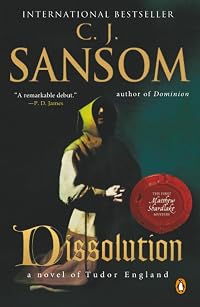
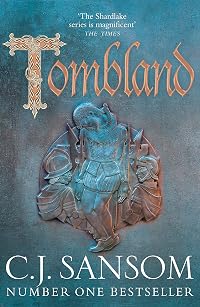
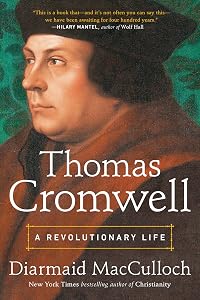






Member Recommendations
Member Reviews
Weighing in at 740 pages, 4 1/2 pounds (in the Folio Society edition), this chunkster was a challenge to read on more than a literary level. The third installment of Mantel's treatment of Thomas Cromwell's life takes us right up to the moment of his execution---a denouement neither he nor the reader could fail to anticipate. Beginning in the moments after Anne Boleyn's beheading, we wade hip deep through the intrigues of Henry's quest for another wife who could finally produce a viable, legitimate male heir (preferably three or four), against the background of medieval Europe's power struggles. This book, dare I say, was not nearly as much "fun" to read as Wolf Hall or Bring Up the Bodies. There's no lack of wit, and the machinations of show more Cromwell & Co. are fascinating, if sometimes a bit hard to fathom. The recurring speculations about Henry's reproductive abilities or lack thereof are appropriately ribald. But comparisons between Henry's blame-seeking vengeful transactional style and current personalities on the world stage are impossible to ignore, difficult to contemplate. It ain't ancient history anymore, is it? Still, if you've read 1 and 2, there's no way you should pass this one up. Mantel's ability to transform mountains of mouldering documents (I'm making an assumption, reasonable to my mind) into living breathing actors in a complex drama was a gift that probably would have got her burned at the stake in the 16th century. The Folio edition is exquisite, as expected, with illustrations scattered throughout. show less
Third in Hilary Mantel’s brilliant series on the life of Thomas Cromwell and the court of Henry VIII. This book portrays Cromwell’s slow climb to the height of his powers and his precipitous fall, leading to his ultimate fate. Cromwell loses some of his more admirable traits that were in evidence in the first two volumes. He gains power and influence, and his hubris allows him to ignore warning signs.
Mantel is skilled in both character and plot development. Mantel drops subtle hints that the reader will pick up on, but Cromwell glosses over. Her writing is superb. I felt totally immersed in the period. The language rings true. The dialogue is especially well-developed. It seems like we are “in the room” with the speakers, which show more is particularly effective in audio format. Reader Ben Miles does a masterful job of voicing the characters, switching back and forth among them during the same conversation. It is truly an impressive job and added to my enjoyment.
If I have to nitpick, it seems like there is a bit of padding in the form of flashbacks, but it does serve a purpose. It enables this volume to be read as a standalone, catching the reader up on key elements covered in the previous two books of the trilogy. The ending packs a punch. The entire series is outstanding. show less
Mantel is skilled in both character and plot development. Mantel drops subtle hints that the reader will pick up on, but Cromwell glosses over. Her writing is superb. I felt totally immersed in the period. The language rings true. The dialogue is especially well-developed. It seems like we are “in the room” with the speakers, which show more is particularly effective in audio format. Reader Ben Miles does a masterful job of voicing the characters, switching back and forth among them during the same conversation. It is truly an impressive job and added to my enjoyment.
If I have to nitpick, it seems like there is a bit of padding in the form of flashbacks, but it does serve a purpose. It enables this volume to be read as a standalone, catching the reader up on key elements covered in the previous two books of the trilogy. The ending packs a punch. The entire series is outstanding. show less
The Trilogy Keeps Getting Better
This third and last installment in the novelized life of Thomas Cromwell is the only one of the trilogy that did not win the Man Booker Prize. In my view, though, it is even better than the first two books. Since I have not yet read [b:Shuggie Bain|52741293|Shuggie Bain|Douglas Stuart|https://i.gr-assets.com/images/S/compressed.photo.goodreads.com/books/1602094778l/52741293._SY75_.jpg|72463055], the actual winner for 2020, I cannot say whether the failure to award the prize again to Hilary Mantel was an error.
Awards aside, Mantel's virtuoso writing style is such a pleasure! She shifts in this final volume to a more internal narrative by the protagonist, often lapsing into reverie on past days or the show more fantasies of sleep and dream. As one might expect of an older Cromwell, he reflects on his life, his choices, and his mistakes in a way that is both natural and that serves as a vehicle for summing up this complex and polarizing figure in British history.
This novel convinced me that there is no difference between excellent historical fiction and excellent history. It is well worth the time spent in reading. show less
This third and last installment in the novelized life of Thomas Cromwell is the only one of the trilogy that did not win the Man Booker Prize. In my view, though, it is even better than the first two books. Since I have not yet read [b:Shuggie Bain|52741293|Shuggie Bain|Douglas Stuart|https://i.gr-assets.com/images/S/compressed.photo.goodreads.com/books/1602094778l/52741293._SY75_.jpg|72463055], the actual winner for 2020, I cannot say whether the failure to award the prize again to Hilary Mantel was an error.
Awards aside, Mantel's virtuoso writing style is such a pleasure! She shifts in this final volume to a more internal narrative by the protagonist, often lapsing into reverie on past days or the show more fantasies of sleep and dream. As one might expect of an older Cromwell, he reflects on his life, his choices, and his mistakes in a way that is both natural and that serves as a vehicle for summing up this complex and polarizing figure in British history.
This novel convinced me that there is no difference between excellent historical fiction and excellent history. It is well worth the time spent in reading. show less
I managed to finish the trilogy.
The final volume leads to a logical conclusion of this historical epic. Or should we say pseudo-historical. No, I should not be too harsh. It is entertaining, it is mostly true to the facts, the dialogs are exquisitely written. The epic exhibits a somewhat strange fascination even obsession of the writer with her protagonist and his Machiavellian ways. Everything, or nearly everything T.C. does is explained by a just motive or a visionary insight. The book would not come out as well as it did without this fascinating but not entirely accurate portrayal. Yet, this loss of objectivity, this alternative kind of truth appears especially dangerous in our times.
The final volume leads to a logical conclusion of this historical epic. Or should we say pseudo-historical. No, I should not be too harsh. It is entertaining, it is mostly true to the facts, the dialogs are exquisitely written. The epic exhibits a somewhat strange fascination even obsession of the writer with her protagonist and his Machiavellian ways. Everything, or nearly everything T.C. does is explained by a just motive or a visionary insight. The book would not come out as well as it did without this fascinating but not entirely accurate portrayal. Yet, this loss of objectivity, this alternative kind of truth appears especially dangerous in our times.
Henry’s eyes are on his portrait of himself, massive, on the wall of the chamber. His own eyes consult the image of his master. “What should I want with the Emperor, were he emperor of all the world? Your Majesty is the only prince. The mirror and the light of other kings.”
When I received my pre-ordered copy of The Mirror and the Light on the day it was released, I dropped pretty much everything to read it. I’m so glad I did; it was totally worth the 8-year wait (the previous book, Bring up the Bodies, was published in 2012). Set during the reign of King Henry VIII, Bring up the Bodies ends with the execution of Anne Boleyn in 1536. This third and final book in Mantel’s Thomas Cromwell trilogy begins immediately after, and I show more do mean immediately. This rather gruesome start is very effective at dropping the reader right into the middle of the story so you don’t miss a beat.
At this point in history, Thomas Cromwell was at the height of his career, serving as Master Secretary to the King and Lord Privy Seal -- not bad for a commoner from Putney. But what do those titles mean, in practical terms?
Somewhere--or Nowhere, perhaps--there is a society ruled by philosophers. They have clean hands and pure hearts. But even in the metropolis of light there are maddens and manure-heaps, swarming with flies. Even in the republic of virtue you need a man who will shove up the shit, and somewhere it is written that Cromwell is his name..
Cromwell is a busy man, managing the dissolution of the monasteries and quelling the uprisings that followed, fending off potential threats from France and the Roman Empire, and -- most significantly for this novel -- engineering Henry’s next marriage, to Anne of Cleves. This strategic and initially promising match turned disastrous the moment Henry set eyes on Anne, and he held Cromwell responsible. This was just the opening his political opponents needed, and thus began Cromwell’s downfall.
This book is much longer than its predecessors, but so well written that I couldn’t put it down. Despite a very large cast of characters, it was fairly easy to keep track of who’s who (and Mantel includes a helpful reference). The characters are richly detailed, and the reader gets to know them so well they can actually spot the tiny details foreshadowing the betrayal of Cromwell. And those same tiny details are used to brilliant effect in showing Cromwell’s internal failings. A man formerly on top of his game would suddenly lose focus in a meeting, or forget to handle some small but strategically important matter. The final pages are, like the rest of the novel, told from Cromwell’s perspective which, given the outcome, is a literary feat unto itself.
To fully appreciate this book you have to have read the first two in the trilogy. So please, go do that and then immediately read The Mirror and the Light. show less
When I received my pre-ordered copy of The Mirror and the Light on the day it was released, I dropped pretty much everything to read it. I’m so glad I did; it was totally worth the 8-year wait (the previous book, Bring up the Bodies, was published in 2012). Set during the reign of King Henry VIII, Bring up the Bodies ends with the execution of Anne Boleyn in 1536. This third and final book in Mantel’s Thomas Cromwell trilogy begins immediately after, and I show more do mean immediately. This rather gruesome start is very effective at dropping the reader right into the middle of the story so you don’t miss a beat.
At this point in history, Thomas Cromwell was at the height of his career, serving as Master Secretary to the King and Lord Privy Seal -- not bad for a commoner from Putney. But what do those titles mean, in practical terms?
Somewhere--or Nowhere, perhaps--there is a society ruled by philosophers. They have clean hands and pure hearts. But even in the metropolis of light there are maddens and manure-heaps, swarming with flies. Even in the republic of virtue you need a man who will shove up the shit, and somewhere it is written that Cromwell is his name..
Cromwell is a busy man, managing the dissolution of the monasteries and quelling the uprisings that followed, fending off potential threats from France and the Roman Empire, and -- most significantly for this novel -- engineering Henry’s next marriage, to Anne of Cleves. This strategic and initially promising match turned disastrous the moment Henry set eyes on Anne, and he held Cromwell responsible. This was just the opening his political opponents needed, and thus began Cromwell’s downfall.
This book is much longer than its predecessors, but so well written that I couldn’t put it down. Despite a very large cast of characters, it was fairly easy to keep track of who’s who (and Mantel includes a helpful reference). The characters are richly detailed, and the reader gets to know them so well they can actually spot the tiny details foreshadowing the betrayal of Cromwell. And those same tiny details are used to brilliant effect in showing Cromwell’s internal failings. A man formerly on top of his game would suddenly lose focus in a meeting, or forget to handle some small but strategically important matter. The final pages are, like the rest of the novel, told from Cromwell’s perspective which, given the outcome, is a literary feat unto itself.
To fully appreciate this book you have to have read the first two in the trilogy. So please, go do that and then immediately read The Mirror and the Light. show less
Genre fiction is often praised dismissively. “This is a good book, for a (detective/science fiction/romance) story.” Historical fiction is another of those discounted genres. One characteristic of great imaginative literature is a book’s ability to invent characters who remain vivid in our minds decades after we’ve read it. Historical fiction, it seems, starts out with the characters given; few are invented. We’re not sure if that’s a handicap or an advantage. Gore Vidal, among recent writers, appears to have been docked a notch in critical estimation because most of his novels center on historical personages and events.
After taking home two Booker prizes and being seriously considered for an unprecedented third, it’s show more clear that Hilary Mantel seems to have overcome this prejudice. Justly so. The novels of the Wolf Hall trilogy are excellent imaginative literature. Period. This not despite being almost exclusively populated by historical personages, but because of how Mantel richly imagines a panoply of figures: Henry VIII and all six of his wives, Wolsey, Norfolk, More, Gardiner, Cranmer, and others.
And above all, the central character, Thomas Cromwell. The Mirror and the Light, like the previous two volumes, is told from his perspective. Without resorting to first-person narrative, Mantel takes us inside Cromwell. His consciousness flits from present business to past episodes of his unlikely life and, occasionally, to his hopes for the future. Alas, Tudor politics only offered one retirement path for leading figures once their time was up.
The notable achievement of Mantel’s portrait is that it adheres to the facts of what can be known of Cromwell yet reinterprets his motivations in a fresh yet convincing way. Without spoiling your own discovery, I’ll just say that Mantel presents a flawed man, but one whose failings are not those usually ascribed to him.
Along with presenting this and several other memorable personal portraits, Mantel does an excellent job of showing, not telling, that Cromwell was a man of his times. His conflicts were not only based on personal enmities (well, that too). He embodied a new order of society, informed by humanism. In retrospect, we can see that his opponents represented the late middle ages, organized according to a feudal system of inherited privilege in both church and state. Cromwell’s rise marked the coming ascendancy of capital, merit, and religious self-determination. It’s fascinating that Cromwell seems more devoted to the monarchy, which in a sense was simply the pinnacle of the old order, than his rivals do. His conviction was that a mercantile, religiously literate society would offer stronger support for a strong monarchy than the landed gentry could.
It seems timely to read this trilogy now, when the order embodied by Cromwell appears to be passing. We won’t live to see what replaces it. For now, we label it “postmodern,” whatever it is that follows “modern.” Perhaps our continued fascination with the sixteenth century includes the hope it will prepare us for the similarly wild ride that might await us. show less
After taking home two Booker prizes and being seriously considered for an unprecedented third, it’s show more clear that Hilary Mantel seems to have overcome this prejudice. Justly so. The novels of the Wolf Hall trilogy are excellent imaginative literature. Period. This not despite being almost exclusively populated by historical personages, but because of how Mantel richly imagines a panoply of figures: Henry VIII and all six of his wives, Wolsey, Norfolk, More, Gardiner, Cranmer, and others.
And above all, the central character, Thomas Cromwell. The Mirror and the Light, like the previous two volumes, is told from his perspective. Without resorting to first-person narrative, Mantel takes us inside Cromwell. His consciousness flits from present business to past episodes of his unlikely life and, occasionally, to his hopes for the future. Alas, Tudor politics only offered one retirement path for leading figures once their time was up.
The notable achievement of Mantel’s portrait is that it adheres to the facts of what can be known of Cromwell yet reinterprets his motivations in a fresh yet convincing way. Without spoiling your own discovery, I’ll just say that Mantel presents a flawed man, but one whose failings are not those usually ascribed to him.
Along with presenting this and several other memorable personal portraits, Mantel does an excellent job of showing, not telling, that Cromwell was a man of his times. His conflicts were not only based on personal enmities (well, that too). He embodied a new order of society, informed by humanism. In retrospect, we can see that his opponents represented the late middle ages, organized according to a feudal system of inherited privilege in both church and state. Cromwell’s rise marked the coming ascendancy of capital, merit, and religious self-determination. It’s fascinating that Cromwell seems more devoted to the monarchy, which in a sense was simply the pinnacle of the old order, than his rivals do. His conviction was that a mercantile, religiously literate society would offer stronger support for a strong monarchy than the landed gentry could.
It seems timely to read this trilogy now, when the order embodied by Cromwell appears to be passing. We won’t live to see what replaces it. For now, we label it “postmodern,” whatever it is that follows “modern.” Perhaps our continued fascination with the sixteenth century includes the hope it will prepare us for the similarly wild ride that might await us. show less
Wow - what a superlative conclusion to this trilogy. I'm almost tempted to end my review there as it's hard not to repeat much of the enthusing from my reviews of the first two books, but I'll have a go.
This third instalment was much chunkier, and Mantel perhaps overindulged herself in the plot here and there where she didn't need to, but mostly once again this was tight as a drum narration that had me totally invested in the novel, beyond hooked. Of course, the fact that this is a story based around a fascinatingly gruesome period in English history could be hook enough, but in the wrong hands the numerous characters at court could easily become staid at times. Instead, 'living' it through Mantel's handling of Cromwell as narrator is show more as close as I think we can come through a book to being truly immersed in a period in history. How much more vivid it becomes in our minds, how much easier it is to remember details that would often be quickly forgotten from a non-fiction read.
Mantel has proven herself to be an author that is simply on another level with this trilogy. The historical research on its own is simply mind-blowing, but she also handles that research with such a deft hand, avoiding the temptation to include what is not pertinent to Cromwell's story yet using detail and emotion with the cleverest of brush strokes to invoke all our senses as readers.
As we have lived inside Cromwell's head for almost 2,000 pages it was difficult not to feel saddened by his demise at the end of The Mirror and the Light. That I need to think about some more. Has Mantel gone too far in invoking my sympathy for him? History often has it that Cromwell was ambitious, unscrupulous, brutal and corrupt, yet Mantel very much left me feeling of him less as a monster and more as a man who yes, was undeniably ruthlessly fixated on advancing his own position, but who was also playing a game where only dirty tactics win. He was a man also prepared to take much personal risk for the advancement of the knowledge of the gospel, and ultimately a person of great guile, which for a long time protected the interests of Henry.
My ultimate conclusion of Cromwell (thanks to Mantel) is that he was all these things: brutal when he needed to be (especially with his personal enemies), power-hungry, loyal, sympathetic and, above all else, rather brilliant in terms of how he manoeuvred himself and spun so many plates for the king.
4.5 stars - I feel almost cruel for knocking off half a star (for those moments when the plot meandered without needing to), but a fantastic end to a trilogy that has simply astounded me. show less
This third instalment was much chunkier, and Mantel perhaps overindulged herself in the plot here and there where she didn't need to, but mostly once again this was tight as a drum narration that had me totally invested in the novel, beyond hooked. Of course, the fact that this is a story based around a fascinatingly gruesome period in English history could be hook enough, but in the wrong hands the numerous characters at court could easily become staid at times. Instead, 'living' it through Mantel's handling of Cromwell as narrator is show more as close as I think we can come through a book to being truly immersed in a period in history. How much more vivid it becomes in our minds, how much easier it is to remember details that would often be quickly forgotten from a non-fiction read.
Mantel has proven herself to be an author that is simply on another level with this trilogy. The historical research on its own is simply mind-blowing, but she also handles that research with such a deft hand, avoiding the temptation to include what is not pertinent to Cromwell's story yet using detail and emotion with the cleverest of brush strokes to invoke all our senses as readers.
As we have lived inside Cromwell's head for almost 2,000 pages it was difficult not to feel saddened by his demise at the end of The Mirror and the Light. That I need to think about some more. Has Mantel gone too far in invoking my sympathy for him? History often has it that Cromwell was ambitious, unscrupulous, brutal and corrupt, yet Mantel very much left me feeling of him less as a monster and more as a man who yes, was undeniably ruthlessly fixated on advancing his own position, but who was also playing a game where only dirty tactics win. He was a man also prepared to take much personal risk for the advancement of the knowledge of the gospel, and ultimately a person of great guile, which for a long time protected the interests of Henry.
My ultimate conclusion of Cromwell (thanks to Mantel) is that he was all these things: brutal when he needed to be (especially with his personal enemies), power-hungry, loyal, sympathetic and, above all else, rather brilliant in terms of how he manoeuvred himself and spun so many plates for the king.
4.5 stars - I feel almost cruel for knocking off half a star (for those moments when the plot meandered without needing to), but a fantastic end to a trilogy that has simply astounded me. show less
Members
- Recently Added By
Published Reviews
ThingScore 100
She [Mantel] is still exuberantly rethinking what novels can do. Not since Bleak House has the present tense performed such magic. The narrative voice rides at times like a spirit or angel on thermals of vitality, catching the turning seasons, the rhythms of work and dreams, cities and kitchens and heartbeats.
added by DouglasAtEik
Lists

Top Five Books of 2020
982 works; 348 members

1001 Books You Must Read Before You Die
1,448 works; 1,134 members

Best Historical Fiction
620 works; 261 members

2020 Women's Prize for Fiction Longlist
16 works; 12 members

Booker Prize
491 works; 62 members

Top-Rated Books on LibraryThing
272 works; 117 members

Female Author
1,234 works; 67 members

Baileys Women's Prize for Fiction Winners and Shortlisted Books
61 works; 11 members
Historical Fiction
889 works; 91 members
The Guardian Books of the Year 2020
126 works; 8 members

Top Five Books of 2022
736 works; 272 members

Fiction Featuring Real People
81 works; 17 members

Books Read in 2020
4,379 works; 124 members

Top 10 books read in 2020
10 works; 1 member

Retrospective of Historical Fiction
48 works; 7 members

Morphy Pick!
24 works; 1 member

Books Read in 2021
5,361 works; 114 members

Wishlist
48 works; 1 member

Queen Camilla's Reading Room
65 works; 6 members

Books That Made Us Cry
278 works; 145 members

2024 Christmas Gifts
40 works; 10 members

Top Five Books of 2024
795 works; 264 members
Top Five Books of 2025
954 works; 303 members
Author Information

66+ Works 38,841 Members
Hilary Mantel was born in Glossop, Derbyshire, England on July 6, 1952. She studied law at the London School of Economics and Sheffield University. She worked as a social worker in Botswana for five years, followed by four years in Saudi Arabia. She returned to Britain in the mid-1980s. In 1987 she was awarded the Shiva Naipaul Memorial Prize for show more an article about Jeddah. She worked as a film critic for The Spectator from 1987 to 1991. She has written numerous books including Eight Months on Ghazzah Street, A Place of Greater Safety, A Change of Climate, The Giant, O'Brien, Giving up the Ghost: A Memoir, and Beyond Black. She has won several awards for her work including the Winifred Holtby Memorial Prize, the Cheltenham Prize and the Southern Arts Literature Prize for Fludd; the 1996 Hawthornden Prize for An Experiment in Love, the 2009 Man Booker Prize for Wolf Hall, and the 2012 Man Booker Prize for Bring up the Bodies. She made The New York Times Best Seller List with her title The Assassination of Margaret Thatcher. (Bowker Author Biography) show less
Some Editions
Awards and Honors
Awards
Distinctions
Series

Belongs to Publisher Series
Work Relationships
Common Knowledge
- Canonical title
- The Mirror and the Light
- Original title
- The Mirror and the Light
- Original publication date
- 2020-03-05
- People/Characters
- Thomas Cromwell, 1st Earl of Essex; Henry VIII, King of England; Jane Seymour, Queen Consort of Henry VIII of England; Gregory Cromwell; Mercy Prior; Rafe Sadler (show all 97); Helen Sadler; Richard Cromwell; Thomas Avery; Thurston; Dick Purser; Jenneke; Christophe; Mathew; Bastings; Edward VI, King of England; Henry FitzRoy, 1st Duke of Richmond and Somerset; Mary I, Queen of England; Elizabeth I, Queen of England; Anne of Cleves; Katherine Howard; Margaret Douglas; William Butts; Walter Cromer; John Chambers; Hans Holbein the Younger; Sexton (Patch); Edward Seymour; Margery Seymour; Thomas Seymour; Elizabeth Seymour; Thomas Wriothesley (Call-Me-Risley); Stephen Gardiner, Bishop of Winchester; Richard Riche; Thomas Audley, 1st Baron Audley of Walden; Thomas Cranmer, Archbishop of Canterbury; Robert Barnes (Martyr, ca. 1495-1540); Hugh Latimer; Richard Sampson; Cuthbert Tunstall, Bishop of Durham; John Stokesley; Edmund Bonner; John Lambert; Thomas Howard, 3rd Duke of Norfolk; Henry Howard, Earl of Surrey; Mary Howard FitzRoy, Duchess of Richmond and Somerset; Lord Thomas Howard (Tom Truth); Charles Brandon, 1st Duke of Suffolk; Sir Thomas Wyatt; Henry Wyatt; Bess Darrell; William Fitzwilliam; Nicholas Carew; Eliza Carew; Francis Bryan; Thomas Culpepper; Philip Hoby; Jane Boleyn (nee Parker, known as Lady Rochford); Thomas Boleyn, 1st Earl of Wiltshire and 1st Earl of Ormond, 1st Viscount Rochford; Mary Shelton; Mary Mounteagle; Nan Zouche; Katherine Parr; Henry Bouchier; John Shelton; Anne Shelton; Lady Bryan; Elizabeth Zouche; Dorothea Wolsey; Henry Courtenay, 1st Marquess of Exeter; Gertrude Courtenay, Marchioness of Exeter (nee Blount); Margaret Pole; Henry Lord Montague; Reginald Pole; Geoffrey Pole; Constance Pole; Eustace Chapuys; Diego Hurtado de Mendoza; Jean de Dinteville; Louis de Perreau; Antoine de Castelnau; Charles de Marillac; Hochstedan; Olisleger; Harst; Lord Lisle; Honor Lisle; Anne Bassett; John Husee; William Kingston; Edmund Walsingham; Martin; Humphrey Monmouth; Robert Packington; Stephen Vaughan; Margaret Vernon; John Bale
- Important places
- London, England, UK; England, UK
- Epigraph
- Frèrès humains qui après nous vivez
N'ayez les cuers contre nous endurciz.
Brother men, you who live after us,
Do not harden your hearts against us.
François Villon
Look up and see the wind,
... (show all)For we be ready to sail.
Noah's Flood, a miracle play. - Dedication
- To Mary Robertson, in honour of enduring friendship
- First words
- Once the queen's head is severed, he walks away.
- Quotations
- There is a cushion cover on which she was working on a design, a deer running through foliage. Whether death interrupted her or just dislike of the work, she had left her needle in the cloth. Later some other hand - her mothe... (show all)r's, or one of her daughter's - drew out the needle; but around the twin holes it left, the cloth had stiffened into brittle peaks, so that if you pass your finger over the path of her stitches - the path they would have taken - you can feel the bumps, like snags in the weave.
In Southwark, Brandon says, where his family have a great house and the glassmakers have their shops, they are at constant peril from the fires that blaze away when their kilns are opened. "Catch a wisp of straw," Brandon say... (show all)s, "and - the whole district goes up."
Well, at those temperatures, Cromwell thinks. A blacksmith's forge is dangerous, and smiths are always blackened and burned, but you don't find them pierced to the heart with their own product, or hurtling to their deaths from church towers, as glaziers do every day of the week.
Henry looks away.... "I have told you before this, how Pole's family laid a curse, after young Warwick was beheaded. My brother Arthur died at fifteen. My son Richmond at seventeen."
He writes, and he thinks no one reads; but friends of Lucifer look into his book. At dusk he locks his manuscript in a chest, but the devil has a key. Demons know every crossing-out amd every blot.His ink betrays him. The fib... (show all)res in his paper are spies.
The women prick off, on papers they keep, the days when they expect their monthly courses.
He is at the Rolls House on Chancery Lane. Richard Cromwell comes in and lays papers before him. "Verses come up from Kent." He holds the papers to his face, imagining they smell of apples.
An army must be supplied. With the king's forces go the harness-makers and blacksmiths, the armourers, ... and unless they are to go unpaid you need clerks to keep accounts, and the clerks need ink-horns and parchment and wax... (show all) for seals.
In autumn he brings in a way of counting people. Each parish must start a register to record baptisms, marriages and burials. From now on his countrymen will know who they are and where they come from ... His scheme of regist... (show all)ration in badly taken. Recording baptisms, the people say, will enable the king to tax us in our infancy. Recording weddings will allow him to impose a levy on every bride and groom. Given notice of funerals, Cromwell's commissioners will attend to pluck the pennies off the corpse's lids.
Treason can be construed from any scrap of paper, if the will is there. A syllable will do it. The power is in the hands of the reader, not the writer.
As soon as you're king, nobody tells you the truth.
He holds the paper up to the light. The watermark is a unicorn. - Last words
- (Click to show. Warning: May contain spoilers.)The dynasty which began its rule on the battlefield at Bosworth in 1485 ended in 1603; Elizabeth was the last of the Tudor line.
- Original language
- English
- Canonical DDC/MDS
- 823.914
Classifications
Statistics
- Members
- 3,706
- Popularity
- 4,347
- Reviews
- 130
- Rating
- (4.34)
- Languages
- 11 — Dutch, English, Finnish, French, German, Italian, Norwegian (Bokmål), Polish, Spanish, Swedish, Portuguese (Portugal)
- Media
- Paper, Audiobook, Ebook
- ISBNs
- 73
- ASINs
- 14