On This Page
Description
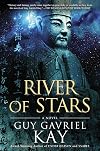
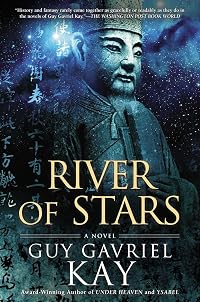
"Ren Daiyan was still just a boy when he took the lives of seven men while guarding an imperial magistrate of Kitai. That moment on a lonely road changed his life-- in entirely unexpected ways, sending him into the forests of Kitai among the outlaws. From there he emerges years later-- and his life changes again, dramatically, as he circles towards the court and emperor, while war approaches Kitai from the north. Lin Shan is the daughter of a scholar, his beloved only child. Educated by him show more in ways young women never are, gifted as a songwriter and calligrapher, she finds herself living a life suspended between two worlds. Her intelligence captivates an emperor-- and alienates women at the court. But when her father's life is endangered by the savage politics of the day, Shan must act in ways no woman ever has. In an empire divided by bitter factions circling an exquisitely cultured emperor who loves his gardens and his art far more than the burdens of governing, dramatic events on the northern steppe alter the balance of power in the world, leading to events no one could have foretold, under the river of stars" -- from publisher's web site. show lessTags
Recommendations
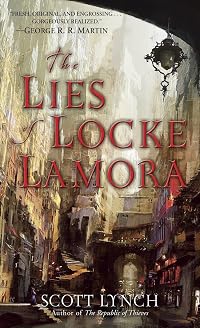
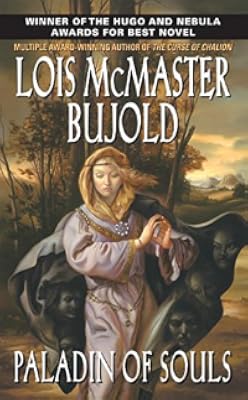
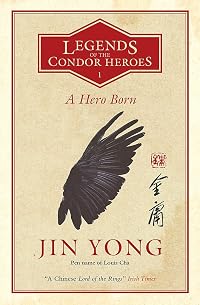

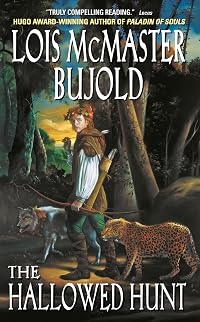
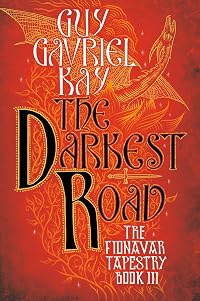
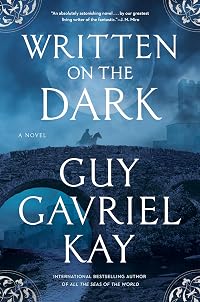
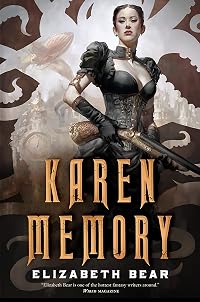
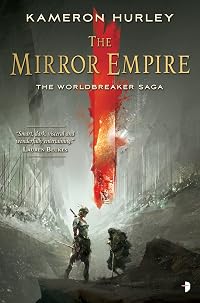

Member Recommendations

Member Reviews
Guy Gavriel Kay returns to the faux Chinese setting of his prior novel, "Under Heaven". It is now three dynasties later and Kitai is much reduced, still decadent but on a much smaller scale than its former prosperity. I found this novel better than his previous, thanks to its immediately engaging characters and quicker opening. Kitai feels like it's doomed once again, but under different enough circumstances that there's no deja vu.
Kay specializes in characters with extraordinary intelligence and sensitivity. Some of his best scenes are when these characters form alliances or are placed in opposition to one another. Their recognition of one another as equals gets milked for all the drama it's worth. Sometimes this reads artificially, show more almost as if the narrative has become stage directions, but mostly it works. Another hallmark of Kay's writing is his frequently recurring theme about the randomness of fate. He always does a credible job of balancing a structured plot with his insistence that lives do not always go according to plan, or play out as we believe they ought according to our concepts of justice and reward. It's a way of creating suspense, and of bracing us for potential tragedy.
I wish he'd not so often insist on telling me what I should feel and reflect on, rather than simply letting me feel and reflect. The justification always lies in the ending that he is preparing, not content with the abundant foreshadowing. I suspect Kay of having developed a grudge in childhood against Disney movies. show less
Kay specializes in characters with extraordinary intelligence and sensitivity. Some of his best scenes are when these characters form alliances or are placed in opposition to one another. Their recognition of one another as equals gets milked for all the drama it's worth. Sometimes this reads artificially, show more almost as if the narrative has become stage directions, but mostly it works. Another hallmark of Kay's writing is his frequently recurring theme about the randomness of fate. He always does a credible job of balancing a structured plot with his insistence that lives do not always go according to plan, or play out as we believe they ought according to our concepts of justice and reward. It's a way of creating suspense, and of bracing us for potential tragedy.
I wish he'd not so often insist on telling me what I should feel and reflect on, rather than simply letting me feel and reflect. The justification always lies in the ending that he is preparing, not content with the abundant foreshadowing. I suspect Kay of having developed a grudge in childhood against Disney movies. show less
Once again, Guy Gavriel Kay has written about a historical time period, in this case the Song Dynasty, and fictionalized it, changed names and events and timelines, but more or less giving us a vision of what that time period could have been like, but also with very rare appearance of a ghost or a fox-spirit. Like a lot of his work, it is largely tragic, but it is about change and how societies rise and fall and how the major players are involved. I found myself wanting to learn more about the real historical people and their lives and how the invading Mongol army changed their world. This novel tries to stay as authentic to that time period including all of the social mores at the time, good or bad, like how sexist the society was. But show more then he will write about people who went against the norms and how they lived their lives to find a place in such a society. He writes believable, likeable (and also unlikeable) characters. But I also feel that they are awash in the flow of the world, and are unable to change the current of events, they can only make a splash, with some ripples being larger than others, but ultimately they cannot alter their course. And that's what makes these stories tragic. You learn to love these characters and suffer when they suffer. But you also feel joy and happiness when they do too. That's one of the great qualities of Kay's writing. show less
Guy Gavriel Kay is my favorite author, so when I say River of Stars was a bit of a disappointment, it's in the context that it's still one of my favorite reads of the year. However, it's definitely still in the lower tier of his work in my opinion, never reaching the heights of Lions and the Sarantine Mosaic and brushing up against his more recent novels. Still compelling and richly evocative of the tumultuous Southern Song dynasty of China, but without the lasting impact I've come to expect from Kay.
Kay's historical fantasy never moves at a breakneck pace. The plot is woven through the novel at a steady, somewhat plodding pace, featuring all the usual Kay trappings - lots of rhetorical questions asked by characters to themselves, a bit show more of poetry, the main narrative focusing on a small core of primary characters with the point of view sometimes switching to secondary characters and sometimes, briefly, to other more minor characters (sometimes unnamed) to show how the big events at play affect the small people in the world.
The writing on display is as beautiful as ever, full of imagery and dripping with Kay's distinctive style. My main issue with the novel is with the protagonist, Ren Daiyan. He's just boring. With most of Kay's novels, the protagonists are nuanced, multifaceted characters. Sure, they generally follow a trend: intelligent, melodramatic, militarily skilled. Daiyan is all that too, but it feels unearned. He goes from being a guard as a boy, to an outlaw leader, to a commander of the army, and never truly goes through any character development. He's disappointingly flat compared to the likes of Rodrigo Belmonte or ibn Ammar.
Still a great novel, but if you are new to Kay it's not one I'd recommend to start with. show less
Kay's historical fantasy never moves at a breakneck pace. The plot is woven through the novel at a steady, somewhat plodding pace, featuring all the usual Kay trappings - lots of rhetorical questions asked by characters to themselves, a bit show more of poetry, the main narrative focusing on a small core of primary characters with the point of view sometimes switching to secondary characters and sometimes, briefly, to other more minor characters (sometimes unnamed) to show how the big events at play affect the small people in the world.
The writing on display is as beautiful as ever, full of imagery and dripping with Kay's distinctive style. My main issue with the novel is with the protagonist, Ren Daiyan. He's just boring. With most of Kay's novels, the protagonists are nuanced, multifaceted characters. Sure, they generally follow a trend: intelligent, melodramatic, militarily skilled. Daiyan is all that too, but it feels unearned. He goes from being a guard as a boy, to an outlaw leader, to a commander of the army, and never truly goes through any character development. He's disappointingly flat compared to the likes of Rodrigo Belmonte or ibn Ammar.
Still a great novel, but if you are new to Kay it's not one I'd recommend to start with. show less
Summary: In centuries past, Kitai was a mighty empire, demanding tribute from their neighbors to the north and west. But centuries after a military revolt shook the nation, Kitai is only a shadow of its former glory. It is still unsurpassed in the areas of art and culture, but it has lost most of its political influence and military superiority, and has ceded more territory than it cares to admit to the nomadic barbarian people in the North. Infighting and scheming amongst members of the court are common, and the emperor cares more about his extensive gardens than about the realities of life in his realm.
This is the Kitai in which Ren Daiyan has grown up. A clerk's son who secretly longs to be a soldier, he is still a teenager when he show more manages to kills seven bandits singlehandedly, on the day that he walks away from his old life forever. He becomes a bandit himself, working to disrupt the worst excesses of the government and their tax collectors, but he holds tight to his dream of reclaiming Kitai's lost lands and restoring the empire to its former glory.
This is also the Kitai of Lady Lin Shan. An only child, she was educated by her scholar father far beyond what is typical for women of that dynasty. She is clever as well as being educated, but in the court of the emperor of Kitai, cleverness can be a danger as well as a blessing, especially for a woman.
Ordinarily, the lives of these two would likely never intersect, but when war descends on Kitai from an unforseen enemy, they - and many others - will have to sacrifice much to preserve their homeland.
Review: I know I have said this, or things to this effect, every time I've reviewed one of Guy Gavriel Kay's books, but ye gods, he is a wonderful writer. It's not so much that he can turn a phrase (although he certainly can), but more that he can craft these beautiful perfect indelible scenes out of the most basic moments, and give them a power and a vibrancy and an immediacy that you would never expect. Scenes that would otherwise seem inconsequential take on incredible significance just from the way that Kay writes them, which dovetails perfectly with his themes about the minor moments that can change a life and alter the course of history.
Other things that I've said about Kay's books are also just as true for River of Stars. This is not an easy book, nor a particularly quick-reading one. Kay is a very subtle writer, keeping his exposition to the barest minimum, and instead letting the reactions of his characters drive the story forward. It's a style that can be devastatingly effective, but it also demands a high degree of attention from the reader, especially since Kay is fond of cutting away from the climax of a scene, and leaving readers to piece together what happened from what they know of the characters, and from the consequences of their actions. This could be a dangerous ploy for a writer to pull, but Kay manages it, in large part since his characters are so finely crafted that I typically felt as though I knew what they would do next, even when the text leaves it ambiguous.
River of Stars does not have the world's quickest moving plot, particularly in the first third or so of the book. Because Kay has to set up all of his players, and their backstory, and the history of Kitai and its neighbors, it takes a while to get to the conflict of what I would consider to be the main plot. However, I wound up minding this less than I would have expected; although the first half of the book is somewhat all over the place in terms of introducing characters and setting up multiple story lines, Kay packs it with enough of those perfect wonderful shining nuggets of story that he never lost my attention. I did have somewhat of a hard timing keeping some of those characters straight, however. That may have something to do with the fact that I'm not as used to dealing with Chinese names, and it always takes me a while to remember that the first name is the patronym. It may also have to do with the fact that I listened to the audiobook - while Simon Vance does an incredible job, I can keep unfamiliar names straight more easily if I can see them than if I only get to hear them. (Also, there are a lot of secondary and tertiary characters, and listening rather than reading means I don't get the benefit of the Dramatis Personae that Kay's books usually have.)
Overall, though, I thought this book was great. It didn't make me break down weeping, like the end of The Lions of Al-Rassan or some of Kay's other works, but it did break my heart a few times. I don't know that this book officially classifies as a tragedy, but it's got a lot of elements that make it lean that way: when things are going so badly wrong, and they could have been salvaged many times by just one or two small changes, but people acting true to their characters meant that they never were. When you're glad a book breaks your heart, because it would have been a lesser book if the author had chosen another path, that's something worth reading. 4 out of 5 stars.
Recommendation: This is set in the same Kitai as Under Heaven, but it's not really a sequel; River of Stars is set centuries later, and while it mentions the characters and events of the previous book in passing, it's not at all integral to understanding this book. This book is classified as fantasy, but apart from one encounter with the spirit world, it's basically historical fiction, and I think it would be enjoyed by fans of either genre who like complex, mature novels with beautiful, subtle writing. show less
This is the Kitai in which Ren Daiyan has grown up. A clerk's son who secretly longs to be a soldier, he is still a teenager when he show more manages to kills seven bandits singlehandedly, on the day that he walks away from his old life forever. He becomes a bandit himself, working to disrupt the worst excesses of the government and their tax collectors, but he holds tight to his dream of reclaiming Kitai's lost lands and restoring the empire to its former glory.
This is also the Kitai of Lady Lin Shan. An only child, she was educated by her scholar father far beyond what is typical for women of that dynasty. She is clever as well as being educated, but in the court of the emperor of Kitai, cleverness can be a danger as well as a blessing, especially for a woman.
Ordinarily, the lives of these two would likely never intersect, but when war descends on Kitai from an unforseen enemy, they - and many others - will have to sacrifice much to preserve their homeland.
Review: I know I have said this, or things to this effect, every time I've reviewed one of Guy Gavriel Kay's books, but ye gods, he is a wonderful writer. It's not so much that he can turn a phrase (although he certainly can), but more that he can craft these beautiful perfect indelible scenes out of the most basic moments, and give them a power and a vibrancy and an immediacy that you would never expect. Scenes that would otherwise seem inconsequential take on incredible significance just from the way that Kay writes them, which dovetails perfectly with his themes about the minor moments that can change a life and alter the course of history.
Other things that I've said about Kay's books are also just as true for River of Stars. This is not an easy book, nor a particularly quick-reading one. Kay is a very subtle writer, keeping his exposition to the barest minimum, and instead letting the reactions of his characters drive the story forward. It's a style that can be devastatingly effective, but it also demands a high degree of attention from the reader, especially since Kay is fond of cutting away from the climax of a scene, and leaving readers to piece together what happened from what they know of the characters, and from the consequences of their actions. This could be a dangerous ploy for a writer to pull, but Kay manages it, in large part since his characters are so finely crafted that I typically felt as though I knew what they would do next, even when the text leaves it ambiguous.
River of Stars does not have the world's quickest moving plot, particularly in the first third or so of the book. Because Kay has to set up all of his players, and their backstory, and the history of Kitai and its neighbors, it takes a while to get to the conflict of what I would consider to be the main plot. However, I wound up minding this less than I would have expected; although the first half of the book is somewhat all over the place in terms of introducing characters and setting up multiple story lines, Kay packs it with enough of those perfect wonderful shining nuggets of story that he never lost my attention. I did have somewhat of a hard timing keeping some of those characters straight, however. That may have something to do with the fact that I'm not as used to dealing with Chinese names, and it always takes me a while to remember that the first name is the patronym. It may also have to do with the fact that I listened to the audiobook - while Simon Vance does an incredible job, I can keep unfamiliar names straight more easily if I can see them than if I only get to hear them. (Also, there are a lot of secondary and tertiary characters, and listening rather than reading means I don't get the benefit of the Dramatis Personae that Kay's books usually have.)
Overall, though, I thought this book was great. It didn't make me break down weeping, like the end of The Lions of Al-Rassan or some of Kay's other works, but it did break my heart a few times. I don't know that this book officially classifies as a tragedy, but it's got a lot of elements that make it lean that way: when things are going so badly wrong, and they could have been salvaged many times by just one or two small changes, but people acting true to their characters meant that they never were. When you're glad a book breaks your heart, because it would have been a lesser book if the author had chosen another path, that's something worth reading. 4 out of 5 stars.
Recommendation: This is set in the same Kitai as Under Heaven, but it's not really a sequel; River of Stars is set centuries later, and while it mentions the characters and events of the previous book in passing, it's not at all integral to understanding this book. This book is classified as fantasy, but apart from one encounter with the spirit world, it's basically historical fiction, and I think it would be enjoyed by fans of either genre who like complex, mature novels with beautiful, subtle writing. show less
Returning to Kay's richly drawn worlds is like falling into poetry, extensively researched history, and the becoming one with the horrors that beset these wonderful contemporary protagonists.
I'm tempted to call this silkpunk, but I must admit there is *almost* no fantasy and definitely no SF in it. Instead, it is just an immersive look at what could be the Song Dynasty, 400 years after the original novel [b:Under Heaven|7139892|Under Heaven (Under Heaven, #1)|Guy Gavriel Kay|https://i.gr-assets.com/images/S/compressed.photo.goodreads.com/books/1327894315l/7139892._SY75_.jpg|7373286] that resembled the Tang Dynasty.
This is historical escapism at its best:
A educated woman making her way, doing the best she can in this world.
A hero show more warrior turned bandit and later becoming the spark to ravage the land in civil war.
The only thing I could do was float away in the text. :) show less
I'm tempted to call this silkpunk, but I must admit there is *almost* no fantasy and definitely no SF in it. Instead, it is just an immersive look at what could be the Song Dynasty, 400 years after the original novel [b:Under Heaven|7139892|Under Heaven (Under Heaven, #1)|Guy Gavriel Kay|https://i.gr-assets.com/images/S/compressed.photo.goodreads.com/books/1327894315l/7139892._SY75_.jpg|7373286] that resembled the Tang Dynasty.
This is historical escapism at its best:
A educated woman making her way, doing the best she can in this world.
A hero show more warrior turned bandit and later becoming the spark to ravage the land in civil war.
The only thing I could do was float away in the text. :) show less
It pains me to give only three stars to one of my favourite authors, Guy Gavriel Kay.
The story Kay relates takes up events several hundred years after the fall of the great dynasty in a China-like world Kay created in Under Heaven, revolving around, primarily, an unorthodox and intelligent woman, an unwitting and reluctant warrior/hero, and the usual cast of supporting intellectuals and likable villains.
I could not help but feel, however, Kay revisited what have become familiar and comfortable character-types and plot constructions, and thus the experience of reading River of Stars lacked lustre. His heroine is of course intelligent, an unorthodox woman in an orthodox society. His hero is caught in both political and magical nets. Both show more characters can easily be found in any of Kay's previous impressive canon. And thus, by now, one could hope for something new, something fresh from that highly literate and artistic mind of Kay's.
Certainly Kay's writing remains evocative and lyrical, with some breath-taking images and descriptions that cannot help but move the spirit. Yet even that was marred by Kay's understandable love of poetry and the poetic form, so that much of the narrative ended up lost beneath esoteric discussions that stopped all action.
Beyond that, Kay has chosen a narrative style in this novel wherein many subsidiary characters are introduced in detail, so that the reader is set up to believe this is a character which will continue throughout the novel because of the level of detail devoted to them, only to find by the close of the chapter they've been exiled, or killed, or in some manner marginalized, their complete future revealed and summarized and ended. By the second or third introduction of such a character, the reader no longer invests either attention or interest, longing to return to the main thrust of the story.
Most readers, I suspect, will enjoy River of Stars. Indeed there is much here to enjoy. But this reader, who longs to be surprised, found only the familiar, relatively well-executed tale, but without that lingering bouquet of a fine story-telling. show less
The story Kay relates takes up events several hundred years after the fall of the great dynasty in a China-like world Kay created in Under Heaven, revolving around, primarily, an unorthodox and intelligent woman, an unwitting and reluctant warrior/hero, and the usual cast of supporting intellectuals and likable villains.
I could not help but feel, however, Kay revisited what have become familiar and comfortable character-types and plot constructions, and thus the experience of reading River of Stars lacked lustre. His heroine is of course intelligent, an unorthodox woman in an orthodox society. His hero is caught in both political and magical nets. Both show more characters can easily be found in any of Kay's previous impressive canon. And thus, by now, one could hope for something new, something fresh from that highly literate and artistic mind of Kay's.
Certainly Kay's writing remains evocative and lyrical, with some breath-taking images and descriptions that cannot help but move the spirit. Yet even that was marred by Kay's understandable love of poetry and the poetic form, so that much of the narrative ended up lost beneath esoteric discussions that stopped all action.
Beyond that, Kay has chosen a narrative style in this novel wherein many subsidiary characters are introduced in detail, so that the reader is set up to believe this is a character which will continue throughout the novel because of the level of detail devoted to them, only to find by the close of the chapter they've been exiled, or killed, or in some manner marginalized, their complete future revealed and summarized and ended. By the second or third introduction of such a character, the reader no longer invests either attention or interest, longing to return to the main thrust of the story.
Most readers, I suspect, will enjoy River of Stars. Indeed there is much here to enjoy. But this reader, who longs to be surprised, found only the familiar, relatively well-executed tale, but without that lingering bouquet of a fine story-telling. show less
Full of grace and poise, of course, but rather too diffuse to be considered among Kay's finest work, for me. It's long, and quite slow, even for Kay. As always, the threads are drawn together into a heavily-weighted ending, but not quite tightly enough. The drive of the plot was never quite forceful enough, and the ending lacked the punch of some of his other work. And on the way, the story frayed out into over-explored side channels, which didn't help the pace.
Still, it was a thoughtful and beautiful and evocative journey. I find myself, at the end of it, left not so much with a strong emotional response to the stories and the characters (though both were elegantly done) but with a head full of themes and theories and discourse. Which show more is its own sort of strength, but not necessarily why one reads fiction.
Guy Gavriel Kay is an author who loves his warrior-poets. (And so do I.) But it seems to me that he has mostly, hitherto, written about societies where the warrior is first, and one of his driving themes has been "but the poetry! the words! you must have the beauty and grandeur and romance as well!" Whereas a central theme of this book, arguably, is "what about the warrior?" The balance is tipped, and he shows here a society where the soldier has been denigrated, and the thoughtful man elevated, to the point where it tips the society out of stability. It's interesting (to me, at least) to see him turn that around and show the counterpoint.
I also found myself, throughout the book, making comparisons with KJ Parker's work, which is not something I had really done previously. (Note: had I embarked upon a Masters of Creative Writing, my proposed thesis topic was on "unfantastical" fantasy, and Kay and Parker were two of the authors I proposed to use as examples. And yet still, I had not actually thought about comparisons at the writing level.) It came to me first in an early scene delivered without naming the viewpoint character at all (only "she"), which is a common thing for Parker. It made me look a little deeper. At first glance, they seem wildly different - Kay very emotional and evocative, Parker very clinical and dry and exact. And yet they both dig deeply into the individuals at the centre of huge, sweeping events, disdaining the regular conceits and focuses of epic fantasy. They are both, in their way, ruthless with the characters and the reader's emotions. Very different, but I think I love similar things about both of them. show less
Still, it was a thoughtful and beautiful and evocative journey. I find myself, at the end of it, left not so much with a strong emotional response to the stories and the characters (though both were elegantly done) but with a head full of themes and theories and discourse. Which show more is its own sort of strength, but not necessarily why one reads fiction.
Guy Gavriel Kay is an author who loves his warrior-poets. (And so do I.) But it seems to me that he has mostly, hitherto, written about societies where the warrior is first, and one of his driving themes has been "but the poetry! the words! you must have the beauty and grandeur and romance as well!" Whereas a central theme of this book, arguably, is "what about the warrior?" The balance is tipped, and he shows here a society where the soldier has been denigrated, and the thoughtful man elevated, to the point where it tips the society out of stability. It's interesting (to me, at least) to see him turn that around and show the counterpoint.
I also found myself, throughout the book, making comparisons with KJ Parker's work, which is not something I had really done previously. (Note: had I embarked upon a Masters of Creative Writing, my proposed thesis topic was on "unfantastical" fantasy, and Kay and Parker were two of the authors I proposed to use as examples. And yet still, I had not actually thought about comparisons at the writing level.) It came to me first in an early scene delivered without naming the viewpoint character at all (only "she"), which is a common thing for Parker. It made me look a little deeper. At first glance, they seem wildly different - Kay very emotional and evocative, Parker very clinical and dry and exact. And yet they both dig deeply into the individuals at the centre of huge, sweeping events, disdaining the regular conceits and focuses of epic fantasy. They are both, in their way, ruthless with the characters and the reader's emotions. Very different, but I think I love similar things about both of them. show less
Members
- Recently Added By
Published Reviews
ThingScore 100
Kay succeeds in honoring the memories of the people who existed in that vanished world by creating a deeply respectful simulacrum of the latter, in which even the most maligned, hated person is acknowledged as human, and vital to the shaping of history we now take for granted.
added by karenb
Lists

Top Five Books of 2013
1,562 works; 721 members

2014 Evergreen Nominees
10 works; 1 member

Modern Fantasy Novels based on Non-Western Mythology or Folklore
24 works; 7 members

Books Read in 2018
4,360 works; 110 members

Evergreen Award™ Winners and Nominees 2005–2024
200 works; 3 members

Canadian Jurist-Novelists
313 works; 1 member
Author Information

35+ Works 38,843 Members
Guy Gavriel Kay was born on November 7, 1954 in Weyburn, Saskatchewan, Canada. He became interested in fantasy fiction while working as an assistant to Christopher Tolkien. He assisted him with the editing of J. R. R. Tolkien's The Silmarillion. After receiving a law degree from the University of Toronto, he became principal writer and associate show more producer for the CBC radio series, The Scales of Justice. He also wrote several episodes when the series moved to television. He has written social and political commentary for several publications including the National Post, The Globe and Mail, and The Guardian. His first fantasy novels were The Summer Tree, The Wandering Fire, and The Darkest Road, which make up the Fionavar Tapestry Trilogy. His other works include A Song for Arbonne, The Lions of Al-Rassan, Beyond This Dark House, The Last Light of the Sun, and Under Heaven. He has received numerous awards including and the Aurora Award for Tigana and The Wandering Fire, the 2008 World Fantasy Award for Best Novel for Ysabel, and the International Goliardos Award for his work in the fantasy field. (Bowker Author Biography) show less
Some Editions
Awards and Honors
Awards
Distinctions
Notable Lists
Series

Belongs to Publisher Series
Work Relationships
Common Knowledge
- Original title
- River of Stars
- Original publication date
- 2013-04-02
- Dedication
- for Leonard and Alice Cohen
- First words
- Late autumn, early morning.
- Last words
- (Click to show. Warning: May contain spoilers.)Sometimes someone grinds ink, mixes it with water, arranges paper, takes up a brush to record our time, our days, and we are given another life in those words.
- Original language
- English
Classifications
- Genres
- Fantasy, Fiction and Literature, General Fiction, Historical Fiction
- DDC/MDS
- 813.54 — Literature & rhetoric American literature in English American fiction in English 1900-1999 1945-1999
- LCC
- PR9199.3 .K39 .R58 — Language and Literature English English Literature English literature: Provincial, local, etc.
- BISAC
Statistics
- Members
- 939
- Popularity
- 28,486
- Reviews
- 53
- Rating
- (4.09)
- Languages
- Chinese, English, French, German
- Media
- Paper, Audiobook, Ebook
- ISBNs
- 21
- ASINs
- 6