On This Page
Description
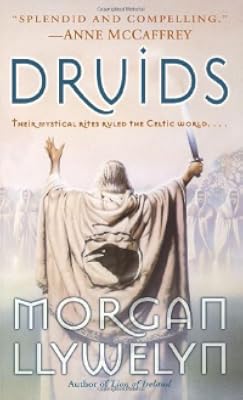
“Mine was the vast dark sky and the spaces between the stars that called out to me; mine was the promise of magic.” So spoke the young Celt Ainvar, centuries before the enchanted age of Arthur and Merlin. An orphan taken in by the chief druid of the Carnutes in Gaul, Ainvar possessed talents that would lead him to master the druid mysteries of thought, healing, magic, and battle— talents that would make him a soul friend to the Prince Vercingetorix . . . though the two youths were as show more different as fire and ice. Yet Ainvar’s destiny lay with Vercingetorix, the sun-bright warrior-king. Together they traveled through bitter winters and starlit summers in Gaul, rallying the splintered Celtic tribes against the encroaching might of Julius Caesar and the soulless legions of Rome. . . . show lessTags
Recommendations
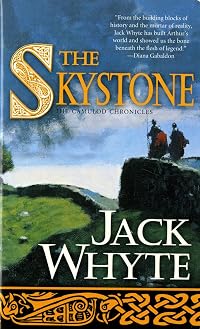
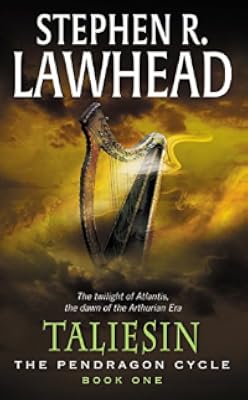
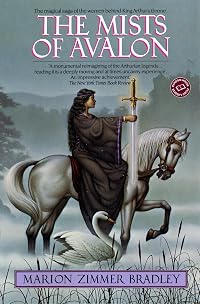

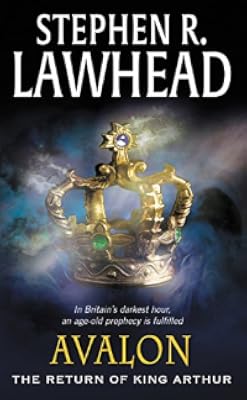










Member Recommendations
Member Reviews
Druids is an historical fiction book about the Roman conquest of Gaul (modern France) from the point of view of the Gauls. Specifically from the POV of a druid named Ainvar, who shrugs off the expectation he’ll become a warrior like his father and brothers, and instead embraces his talent for magic. Llewelyn toes the line between full fantasy magic and magical realism. It’s unclear whether actual magic is happening, or if it’s just Ainvar’s interpretation of natural events and feelings, and I love this.
This book very nearly brought me to tears, a rare feat as I am not a crier (except when the anxiety hits), and was one of the first books to make me seriously emotional. The characters just feel like such real people and when - show more spoiler alert - one of my favorites met a tragic end, it was like losing a friend.
I’m sure the author has taken some creative liberties with history and the handful of actual historical figures that make appearances, but it’s clear she’s done her research and there’s no obvious anachronisms that stood out to my casual history buff knowledge. show less
This book very nearly brought me to tears, a rare feat as I am not a crier (except when the anxiety hits), and was one of the first books to make me seriously emotional. The characters just feel like such real people and when - show more spoiler alert - one of my favorites met a tragic end, it was like losing a friend.
I’m sure the author has taken some creative liberties with history and the handful of actual historical figures that make appearances, but it’s clear she’s done her research and there’s no obvious anachronisms that stood out to my casual history buff knowledge. show less
I was gripped by the first three-quarters of ‘Druid’ but found the final quarter patchy.
The early and middle parts of the book revolve around the main character Ainvar who narrates the story. We first meet him as a fifteen-year-old fascinated by Druidry. He becomes an apprentice Druid. His learning journey, which includes interaction with other characters, makes for engaging reading.
The only criticism I have for the first 75 per cent of the story is that time’s passing isn’t as apparent as it should be. As mentioned, Ainvar is introduced as a fifteen-year-old, and at a stage where I imagined him to be eighteen or nineteen, I discovered he’s twenty-nine.
Other than that, I enjoyed Ainvar’s relationships with other characters show more and the interwoven storylines, which includes a secretive journey into Roman territory.
While the novel’s last section has some good moments, it’s largely bogged down with static descriptions of battles and people discussing future battles. Many times, it reads like a history book, not a novel. The first-person voice is lost to dry descriptions of events that Ainvar took no part in, making it sound like an out-of-place third-person narrative.
He’ll say, ‘I found out later …’ and such like, when much of the info isn’t necessary. It would’ve been more suspenseful if the author had kept it linear and therefore kept Ainvar in the dark as events unfolded. Events that were relevant to the plot could’ve been made more vivid if a scout or a messenger or a spy brought news and told Ainvar first-hand what happened.
Battles in stories can be exciting if you’re following one or more of the main characters as they take to the field. You see events transpire through their eyes as it’s happening. In this case, Ainvar tells the reader what happened in the driest terms, draining the battles of all excitement.
Without giving away any spoilers, a more personal line of conflict for Ainvar occurs in the book’s last quarter, which isn’t pursued. I kept waiting for this thread to be picked up, as it offered much more suspense and excitement than the dry textbook descriptions of battles, but nothing came of it.
In short, the first 75 per cent of the story is engaging, and at times engrossing, while the final 25 per cent is mostly a struggle to get through. I’m certainly interested in reading the sequel, plus some of the author’s other books. show less
The early and middle parts of the book revolve around the main character Ainvar who narrates the story. We first meet him as a fifteen-year-old fascinated by Druidry. He becomes an apprentice Druid. His learning journey, which includes interaction with other characters, makes for engaging reading.
The only criticism I have for the first 75 per cent of the story is that time’s passing isn’t as apparent as it should be. As mentioned, Ainvar is introduced as a fifteen-year-old, and at a stage where I imagined him to be eighteen or nineteen, I discovered he’s twenty-nine.
Other than that, I enjoyed Ainvar’s relationships with other characters show more and the interwoven storylines, which includes a secretive journey into Roman territory.
While the novel’s last section has some good moments, it’s largely bogged down with static descriptions of battles and people discussing future battles. Many times, it reads like a history book, not a novel. The first-person voice is lost to dry descriptions of events that Ainvar took no part in, making it sound like an out-of-place third-person narrative.
He’ll say, ‘I found out later …’ and such like, when much of the info isn’t necessary. It would’ve been more suspenseful if the author had kept it linear and therefore kept Ainvar in the dark as events unfolded. Events that were relevant to the plot could’ve been made more vivid if a scout or a messenger or a spy brought news and told Ainvar first-hand what happened.
Battles in stories can be exciting if you’re following one or more of the main characters as they take to the field. You see events transpire through their eyes as it’s happening. In this case, Ainvar tells the reader what happened in the driest terms, draining the battles of all excitement.
Without giving away any spoilers, a more personal line of conflict for Ainvar occurs in the book’s last quarter, which isn’t pursued. I kept waiting for this thread to be picked up, as it offered much more suspense and excitement than the dry textbook descriptions of battles, but nothing came of it.
In short, the first 75 per cent of the story is engaging, and at times engrossing, while the final 25 per cent is mostly a struggle to get through. I’m certainly interested in reading the sequel, plus some of the author’s other books. show less
As a person of Irish and Welsh descent I have always had an affinity for all things Celtic. When I read Celtic historical fiction, I usually turn to Morgan Llywelyn. This book was very interesting in that it really drives home the fact that the "victors" get to write the history that is passed along and eventually just accepted as fact. But when you peel back the onion, you start to see the biases and predjudices of the person relating the history. You realize there is a whole other side of the story. In the case of the Druids and people of Celtic Gaul, Ceasar "won" and went on to write his history of the Gallic Campaign and the peoples involved, while the Celts "lost" and also kept no written records. Therefore, their side of the story show more has to be pieced together from all sorts of different sources. I think Morgan has done admirable job of telling a credible version of the other side of the story and has definintely made it entertaining.
I really liked her portrayal of the connections the Druids had to the natural world and to the Other Side, and how they worked to try and keep their people grounded in that connection. I would recommend her work to anyone interested in Druids and Celtic Historical Fiction. show less
I really liked her portrayal of the connections the Druids had to the natural world and to the Other Side, and how they worked to try and keep their people grounded in that connection. I would recommend her work to anyone interested in Druids and Celtic Historical Fiction. show less
Druids follows Ainvar of the Carnute tribe as he is admitted as an apprentice to a druid to the time region's the druids ceased or retreated to obscurity to avoid Roman persecution. Through Ainvar, Llywelyn weaves fiction into the historical role of Vercingetorix of the Arverni tribe who eventually unites Gaul's tribes to fight Julius Caesar's campaign to conquer the region.
I haven't conducted the research to know how much of the story is fiction and how much is nonfiction, but from what I do know the book impresses me. I learned the many tribes of Gaul (basically Iron Age France), tribal cultures and wholesome Gaulish culture, relations with Latium (Italy), and principles of what is known about real world druids (not the fantasy show more deviation that has almost nothing to do with the name besides the names).
Most of the story feels like a smooth narration of actual history with fictional subplots hovering in the background. Normally I don't enjoy such books, but in this case it was done well and I kept a strong reading pace. The main character, Ainvar, is a bit of an idiot in his personal life and that was probably written that way on purpose to counter how brilliant he is to his community as a druid and to his friend, Prince then King Vercingetorix, as a war strategist that could intellectually compete with Caesar.
I appreciate that Llywelyn included women as druids. There isn't much historical evidence of this, but in the story the community act like it isnatural to occasionally have a woman who lives as a professional instead of a baby maker. Not only are there two female druids, but some women fight in battles--a few because "they are Celts" and Celts are fighters, but many and more typically there are women in the German forces, and Germans are regarded as the true brute fighters that everyone fears.
Much of the book chronicles back and forth between Caesar's campaign in Gaul and how to respond and Ainvar visiting his village, being a regular druid, and participating in the fictional subplots of his women issues and petty back stabbing from a former friend. Most people in his home town have little to do with the greater plot, so I think of everything set there as meant to be the personalizing of the story and everything beyond that location as the historical narrative. An intriguing structure, really.
I intend to read other books from this author. Some historical fiction can be over dramatic and emphasize cliches like romance triangles and petty political struggles--themes I suspect are considered to be guilty pleasures by most people--but these were besides the point in this book instead of being the main point and the history just a back drop. The history he was rich and had just enough personalized flavor to make me read fast but not displace education from the pages. show less
I haven't conducted the research to know how much of the story is fiction and how much is nonfiction, but from what I do know the book impresses me. I learned the many tribes of Gaul (basically Iron Age France), tribal cultures and wholesome Gaulish culture, relations with Latium (Italy), and principles of what is known about real world druids (not the fantasy show more deviation that has almost nothing to do with the name besides the names).
Most of the story feels like a smooth narration of actual history with fictional subplots hovering in the background. Normally I don't enjoy such books, but in this case it was done well and I kept a strong reading pace. The main character, Ainvar, is a bit of an idiot in his personal life and that was probably written that way on purpose to counter how brilliant he is to his community as a druid and to his friend, Prince then King Vercingetorix, as a war strategist that could intellectually compete with Caesar.
I appreciate that Llywelyn included women as druids. There isn't much historical evidence of this, but in the story the community act like it isnatural to occasionally have a woman who lives as a professional instead of a baby maker. Not only are there two female druids, but some women fight in battles--a few because "they are Celts" and Celts are fighters, but many and more typically there are women in the German forces, and Germans are regarded as the true brute fighters that everyone fears.
Much of the book chronicles back and forth between Caesar's campaign in Gaul and how to respond and Ainvar visiting his village, being a regular druid, and participating in the fictional subplots of his women issues and petty back stabbing from a former friend. Most people in his home town have little to do with the greater plot, so I think of everything set there as meant to be the personalizing of the story and everything beyond that location as the historical narrative. An intriguing structure, really.
I intend to read other books from this author. Some historical fiction can be over dramatic and emphasize cliches like romance triangles and petty political struggles--themes I suspect are considered to be guilty pleasures by most people--but these were besides the point in this book instead of being the main point and the history just a back drop. The history he was rich and had just enough personalized flavor to make me read fast but not displace education from the pages. show less
I had my doubts about this book, as I am with most books whose summary describes the two main characters as “different as fire and ice”, much less when one is a druid and the other is Vercingetorix. The prose is stilted at first glance without serving much purpose, but when it turns out that the book is narrated by the druid, Ainvar, it fits a little better. Still, it’s something that is never really gotten used to by the end of the book.
Half a point was deducted for both the stiff prose as well as for some questionable imagery—in one scene in particular, a bit of “sex magic” is being performed, and various bits of genitalia are singing and dancing in—presumably—a metaphorical sense. Rather than something joyous and show more extraordinary, it made me think of a teeny musical revue being put on and made me laugh more than it ought to. Similar things to that were scattered throughout the book, but that was the most outstanding.
Though I originally found this book in the fantasy section of whichever bookstore from which I acquired it, it seemed well-researched enough to be a novel more along the lines of historical fiction; more reliable, perhaps, than Neal Stephenson’s Baroque Cycle books, which deal with Europe and what will become America in the seventeenth and eighteenth centuries.
Vercingetorix’s exploits were told in loving detail by Ainvar the druid, who met him when they were both adolescents in a Gaulish tribe. The passage of time is very fluid throughout the book, in such a way that one would realize that there are significant chunks of time missing, but they’re neither missed nor obvious in their omission. Caesar’s name was given with its proper Latin pronunciation [YOO-lee-us KI-sar], which lends credit to Llywelyn’s research.
The plot, which follows Vercingetorix from the point of manhood to his eventual surrender to Caesar, is quite compelling in a story format, and is possibly more intriguing because it’s told from a standpoint other than his own, or of someone in his army. I found it absolutely fascinating to read regardless of whether or not it was well-researched. show less
Half a point was deducted for both the stiff prose as well as for some questionable imagery—in one scene in particular, a bit of “sex magic” is being performed, and various bits of genitalia are singing and dancing in—presumably—a metaphorical sense. Rather than something joyous and show more extraordinary, it made me think of a teeny musical revue being put on and made me laugh more than it ought to. Similar things to that were scattered throughout the book, but that was the most outstanding.
Though I originally found this book in the fantasy section of whichever bookstore from which I acquired it, it seemed well-researched enough to be a novel more along the lines of historical fiction; more reliable, perhaps, than Neal Stephenson’s Baroque Cycle books, which deal with Europe and what will become America in the seventeenth and eighteenth centuries.
Vercingetorix’s exploits were told in loving detail by Ainvar the druid, who met him when they were both adolescents in a Gaulish tribe. The passage of time is very fluid throughout the book, in such a way that one would realize that there are significant chunks of time missing, but they’re neither missed nor obvious in their omission. Caesar’s name was given with its proper Latin pronunciation [YOO-lee-us KI-sar], which lends credit to Llywelyn’s research.
The plot, which follows Vercingetorix from the point of manhood to his eventual surrender to Caesar, is quite compelling in a story format, and is possibly more intriguing because it’s told from a standpoint other than his own, or of someone in his army. I found it absolutely fascinating to read regardless of whether or not it was well-researched. show less
I purchased this book because of the recommendation by Anne McCaffrey on the mass mnarket cover. Morgan Llywelyn writes high quality historical fiction. Here, she weaves a rich tale of mysticism, gaelic tradition and a fight against invasion. The Druid Ainvar tells the story of how the Romans conquered Gaul, despite the efforts of his friend, and warrior, Vercingetorix. Though not as good as Grania, or Lion of Ireland, Druids is still a wonderful book.
I would have liked to have had a pronunciation guide like the one in the sequel. I sort of read out loud silently--I need to hear the names and unfamiliar words in my head, and I kept stumbling over the unfamiliar sounds of the Gallic/Gaelic names. I also have a hard time following troop movements and battles, so between that and the names, a large part of the send half of the book was lost on me.
It was a welcome change to read a positive view of the peoples that Caesar defeated. Western civilization would have taken a different turn entirely if the Nature-loving, nature-integrated Celts had defeated the mechanistic, war-loving Romans.
It was a welcome change to read a positive view of the peoples that Caesar defeated. Western civilization would have taken a different turn entirely if the Nature-loving, nature-integrated Celts had defeated the mechanistic, war-loving Romans.
Members
- Recently Added By
Lists

Celtic Fiction
26 works; 10 members

Carole's List
445 works; 13 members

al.vick-series
381 works; 2 members
Author Information

58+ Works 10,343 Members
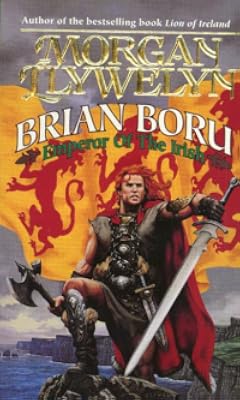
Author and historian Morgan Llywelyn was born in New York City to Irish parents. As a teenager, she moved to Texas and by the age of sixteen was showing horses at championship levels throughout the United States. She made the shortlist for the United States Olympic Team in Dressage in 1976, but did not make the team. She also modeled for show more Neiman-Marcus and was a dance instructor for Arthur Murray. She writes historical novels that deal with her Celtic roots and is recognized as an expert in early Irish history and folklore. Her first novel was The Wind from Hastings, but she is better known for her second novel Lion of Ireland: The Legend of Brian Boru, which was published in 1980 and has never been out of print. In 1990, she started writing for children and young adults. She won the 1991 Irish Children's Book Trust Bisto Award for Brian Boru and the 1993 Bisto Award in the Historical Fiction category and the 1993 Reading Association of Ireland Award for Strongbow: The Story of Richard and Aoife. She also writes short stories and has co-authored two fantasy novels with Michael Scott. She currently lives in Ireland. (Bowker Author Biography) Morgan Llywelyn is the bestselling author of Lion of Ireland, Brian Boru: Emperor of the Irish, 1916, and Druids. She lives in Dublin, Ireland. (Publisher Provided) show less
Some Editions
Series

Common Knowledge
- Original title
- The Druids
- Original publication date
- 1991
- People/Characters
- Julius Caesar; Vercingetorix; Ainvar
- Important places
- Gaul
- Epigraph
- They [druids] desire to inculcate as their leading tenet, that souls do not become extinct, but pass after death from these present to those beyond. --Gaius Julius Caesar
The druids, men of loftier intellect, and united to the intimate fraternity of the followers of Pythagoras, were absorbed by investigations into matters secret and sublime, and, unmindful of human affairs, declared souls to b... (show all)e immortal. --Ammianus Marcellinus
The druids joined to the study of nature that of moral philosophy, asserting that the human soul is indestructible. --Strabo - Dedication
- For the druids.
You know who you are. - First words
- He had been dead a long time. (Prologue)
- Last words
- (Click to show. Warning: May contain spoilers.)The great unfinished conversation goes on and on.
- Blurbers
- McCaffrey, Anne
Classifications
- Genres
- Fiction and Literature, General Fiction, Fantasy, Historical Fiction
- DDC/MDS
- 813.54 — Literature & rhetoric American literature in English American fiction in English 1900-1999 1945-1999
- LCC
- PS3562 .L94 .D7 — Language and Literature American literature American literature Individual authors 1961-
- BISAC
Statistics
- Members
- 1,140
- Popularity
- 22,238
- Reviews
- 15
- Rating
- (3.80)
- Languages
- English, Italian, Spanish
- Media
- Paper
- ISBNs
- 14
- ASINs
- 5