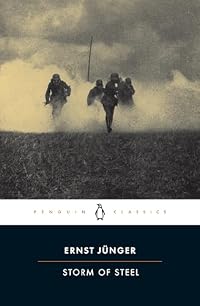
Storm of Steel
by Ernst Jünger
On This Page
Description
Storm of Steel is a gripping memoir of World War I, written by Ernst Jünger, a German officer who served on the Western Front from 1914 to 1918. Jünger recounts his experiences in vivid and unflinching detail, from the horrors of trench warfare and gas attacks, to the camaraderie and courage of his fellow soldiers. Jünger does not shy away from the brutality and ugliness of war, but he also reveals its moments of beauty and heroism. Storm of Steel is a classic of war literature, praised show more for its honesty and realism, as well as its literary style and power. This audiobook is based on the original 1929 translation by Basil Creighton, which preserves Jünger's distinctive voice and tone. Listen to Storm of Steel and immerse yourself in one of the most remarkable accounts of the First World War ever written. the text is brought to life by 3 time Emmy award winner Stephen Houk in his first audiobook narration. show lessTags
Recommendations







Member Recommendations
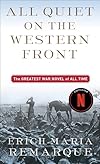
anonymous user Taken together, Jünger's memoir and Remarque's novel present a pair of radically different views concerning the German soldier's experience in World War I.
50
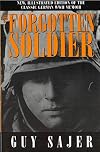
VonKar Weliswaar een andere Wereldoorlog, maar eveneens een persoonlijk relaas van de gruwelen van de oorlog. Ernst Jünger ziet er nog een heroïsche kant in; bij Sajer is er enkel harde realiteit.
10

Member Reviews
Jünger var frivillig soldat för Tyskland under första världskriget och förde kontinuerligt dagbok och dessa anteckningar sammanförde han till boken I stålstormen. I många beskrivningar och reaktioner på första världskriget så är det omänskligheten i det industriella kriget, lidandet, råheten i nationalismen och meningslösheten som framhävs med På västfronten intet nytt som mest kända exempel. I stålstormen är istället en bok från en soldats perspektiv som trots mångtaliga skador och år i kriget aldrig blir vansinnig eller tappar sin tro på sin egen plikt som soldat.
Boken beskriver kriget från en vanlig soldats perspektiv. Upplevelserna att beskjutas med artilleri, storma skyttegravar och bli sårad, blandas show more med berättelser från permissioner, utbyten med civilister på ockuperad mark och maten soldaterna fick äta. Det finns inga rättfärdiganden av kriget eller diskussioner om utvecklingen av kriget i stort. Vad som däremot genomsyrar hela boken är en uppskattning av självuppoffring och mod och viljan hos soldater som har de egenskaperna. Det gäller inte bara de tyska soldaterna utan Jünger imponeras i boken djupt av några engelsmäns våghalsiga anfall. Det är mätning i tapperhet som, till Jüngers frustration, dock den mesta av tiden var frånvarande från första världskriget genom dominansen av de opersonliga artilleribombardemangen.
Gemenskapen soldater emellan lyfter Jünger också fram. Här påminns jag om tv-serien Band of Brothers där gemenskapen som skapas mellan soldaterna under andra världskriget bevaras livet ut. Men Jünger har ett så sakligt språk att det främst kommer fram genom deras beredvillighet att offra sig för varandra. Till synes utan känslor kan han beskriva hur soldater i hans kompani dödas och lemlästas. Medan flera veteraner i Band of Brothers gråter när de berättar om vissa minnen och berättar hur de bara försökte ta sig genom kriget levande är det utifrån denna bok svårt att se Jünger gråta för fallna medsoldater eller ha mycket övers till attityden att "ta sig genom kriget med livhanken i behåll".
Jag delar inte Jüngers perspektiv. Självuppoffring och mod må vara goda egenskaper, men de övertrumfar inte allt annat. Den energi som lades på att döda andra människor under första världskriget (och i de flesta krig) kunde ha lagts på så mycket bättre saker. Med det sagt så uppskattar jag hans litterära stil och det vardagsperspektiv han ger till första världskriget. Även om jag inte delar Jüngers ståndpunkter är boken det bästa och vackraste försvar för de ståndpunkterna som jag har läst. show less
Boken beskriver kriget från en vanlig soldats perspektiv. Upplevelserna att beskjutas med artilleri, storma skyttegravar och bli sårad, blandas show more med berättelser från permissioner, utbyten med civilister på ockuperad mark och maten soldaterna fick äta. Det finns inga rättfärdiganden av kriget eller diskussioner om utvecklingen av kriget i stort. Vad som däremot genomsyrar hela boken är en uppskattning av självuppoffring och mod och viljan hos soldater som har de egenskaperna. Det gäller inte bara de tyska soldaterna utan Jünger imponeras i boken djupt av några engelsmäns våghalsiga anfall. Det är mätning i tapperhet som, till Jüngers frustration, dock den mesta av tiden var frånvarande från första världskriget genom dominansen av de opersonliga artilleribombardemangen.
Gemenskapen soldater emellan lyfter Jünger också fram. Här påminns jag om tv-serien Band of Brothers där gemenskapen som skapas mellan soldaterna under andra världskriget bevaras livet ut. Men Jünger har ett så sakligt språk att det främst kommer fram genom deras beredvillighet att offra sig för varandra. Till synes utan känslor kan han beskriva hur soldater i hans kompani dödas och lemlästas. Medan flera veteraner i Band of Brothers gråter när de berättar om vissa minnen och berättar hur de bara försökte ta sig genom kriget levande är det utifrån denna bok svårt att se Jünger gråta för fallna medsoldater eller ha mycket övers till attityden att "ta sig genom kriget med livhanken i behåll".
Jag delar inte Jüngers perspektiv. Självuppoffring och mod må vara goda egenskaper, men de övertrumfar inte allt annat. Den energi som lades på att döda andra människor under första världskriget (och i de flesta krig) kunde ha lagts på så mycket bättre saker. Med det sagt så uppskattar jag hans litterära stil och det vardagsperspektiv han ger till första världskriget. Även om jag inte delar Jüngers ståndpunkter är boken det bästa och vackraste försvar för de ståndpunkterna som jag har läst. show less
Ernst Jűnger’s World War One memoir is striking for what it doesn’t have.
Jűnger and his comrades don’t speak of why they fight.
There is no lingering while Jűnger talks of the many strange deaths, injuries, and maimings that war can bring. What little emotion there is not horror.
There is no account of Jűnger before or after the war.
There is no description of basic training.
War is a test, a skill that Jűnger doesn’t just need to master to survive. He needs to master it to become the man he wishes to be.
Jűnger was not a common soldier who endured war to protect his nation and loved ones or to fulfill a duty. He was a born warrior.
When he steps off the train at the book’s opening, the test and rapture of battle await:
Full of show more awe and incredulity, we listened to the slow grinding pulse of the front, a rhythm we were to become mightily familiar with over the years. The white ball of a shrapnel shell melted far off, suffusing the grey December sky. The breath of battle blew across to us, and we shuddered. Did we sense that almost all of us – some sooner, some later – were to be consumed by it, on days when the dark grumbling yonder would crash over our heads like an incessant thunder?
… Grown up in an age of security, we shared a yearning for danger, for the experience of the extraordinary. We were enraptured by war. … Surely the war had to supply us with what we wanted; the great, the overwhelming, the hallowed experience.
The German Army was not Jűnger’s first military experience. He so wanted to see war he had joined the French Foreign Legion in 1913 when he was 18. His father pulled strings to get him released.
Jűnger learned the science of war well. The war is still going on when the book ends with him winning Germany’s highest medal, the pour le Mérite, commonly called the Blue Max. He was the youngest soldier ever awarded it. But two bullet wounds suffered in August 1918 put him out of the war for good. They were the last of 14 wounds, not counting “trifles such as ricochets and grazes”:
five bullets, two shell splinters, one shrapnel ball, four hand-grenade splinters and two bullet splinters.
But Jűnger had a long life in front of him. He died at age 102 having not only been a man of letters including several works of magical realism and a science fiction novel called The Glass Bees which got a foreword by Bruce Sterling when re-released in 2000. He was also a distinguished entomologist, and devotee of mind expanding drugs and dropped acid with its inventor Albert Hoffmann.
Storm of Steel was a project he returned to again and again. Originally published in a different version in 1920 and privately printed for his fellow veterans, its sparse style comes from Jűnger not needing to explain all the details to a civilian audience in the manner of Henri Barbusse’s 1917 war novel Under Fire.
Its long German title translates as In Storms of Steel: from the Diary of a Shock Troop Commander, Ernst Jűnger, War Volunteer and subsequently Lieutenant in the Rifle Regiment of Prince Albrecht of Prussia (73rd Hanoverian Regiment). Those diaries, in fact, were published in 2005.
While the German soldiers in Jűnger’s book do not speak of why they fight, that may not have been true of the original version. Translator Hoffman notes the first version ended with
Though force without and barbarity within conglomerate in somber clouds, yet so long as the blade of a sword will strike a spark in the night may it be said: Germany lives and Germany shall never go under!
That tone no doubt appealed to a fellow veteran, Adolf Hitler. Jűnger, though possessing a lifelong contempt for democracy, didn’t have time for the Nazis or Hitler. Fortunately, Hitler did have time for Jűnger when the Gestapo wanted to execute him due to his personal affiliations with members of the Stauffenberg group who tried to assassinate Hitler.
There were, in fact, eight different versions of this memoir. The last was in 1961 which this version is a translation of. Hoffman spends a lot of his introduction complaining about Basil Creighton’s 1929 English translation of the 1924 version. A 1934 version, dubbed “the quiet version” by one critic, may have further reduced the nationalist flavor of the text.
Online research tells me that the first version, however poorly translated, had more details on the stormtroop tactics that Jűnger help develop. While the text gives some flavor of them, Jűnger in no way presents them in a systematic and detailed way.
Jűnger’s text is also largely free of dates though one can figure out the battles he’s talking about. He does assign a date for the chapter “The Great Battle”: March 21, 1918, the beginning of the St. Michael Offensive which pushed the Allied lines back 14 miles in one day in places, the largest movement of the war.
This chapter is the heart of the book, the revelry, ecstasy, and chaos of battle – an offensive at last for the Germans:
As we advanced, we were in the grip of a berserk rage. The overwhelming desire to kill lent wings to my stride. Raged squeezed bitter tears from my eyes.
The immense desire to destroy that overhung the battlefield precipitated a red mist in our brains. We called out sobbing and stammering fragments of sentences to one another, and an impartial observer might have concluded that we were all ecstatically happy.
Jűnger’s account of that day is swirling, restless, hyperactive, brutal:
Here I saw that any defender who continued to empty his pistol into the bodies of the attackers four or five paces away could not expect any mercy when they were upon him. The fighter, who sees a bloody mist in front of his eyes as he attacks, doesn’t want prisoners; he wants to kill..
But the book has quieter moments.
There is the cycle of the German soldier’s day in the trenches, the endless constructing and maintaining of fortifications, the thoughts that go through Jűnger’s mind as he walks sentry duty at night in the “eerie desolation” and “curious … emotional cold”, and the trapping of rats.
Jűnger expresses fondness for the French families he stays with in his time in the rear area.
There are the observations of nature “pleasantly intact” with birds singing in no-man’s land. In the land immediately to the rear
the war "had given it a suggestion of heroism and melancholy; its almost excessive blooming was even more radiant and narcotic than usual."
There is humor of a dark sort.
Jűnger talks of one soldier
festooned with weapons – apart from his rifle, from which he was inseparable, he wore numerous daggers, pistols, hand-grenades and a torch tucked into his belt. Encountering him in the trench was like suddenly coming upon an Armenian or somesuch. For a while he used to carry hand-grenades loose in his pockets as well, till that habit gave him a very nasty turn, which he related one evening. He had been digging around in his pocket, trying to pull out his pipe, when it got caught in the loop of a hand-grenade and accidentally pulled it off.
Jűnger says that cold and boredom are the soldier’s greatest enemies. One of his passing amusements, with another NCO, is to collect unexploded artillery shells, pile them up at a safe distance, and try to detonate as many as possible with rifle fire.
The book memorably evokes the closeness of the enemy trench works – at one point only 30 yards apart in a sector Jűnger was in.
Sometimes, men would become confused where they were:
At dusk, two members of a British ration party lost their way, and blundered up to the sector of the line that was held by the first platoon. They approached perfectly serenely; one of them was carrying a large round container of food, the other a longish tea kettle. They were shot down at point-blank range; one of them landing with his upper body in the defile, while his legs remained on the slope. It was hardly possible to take prisoners in this inferno, and how could we have brought them back through the barrage in any case?
He memorably conveys the experience of a trench raid on June 20, 1916:
These moments of nocturnal prowling leave an indelible impression. Eyes and ears are tensed to the maximum, the rustling approach of strange feet in the tall grass is an unutterably menacing thing. Your breath comes in shallow bursts; you have to force yourself to stifle any panting or wheezing. There is a little mechanical click as the safety-catch of your pistol is taken off; the sound cuts straight through your nerves. Your teeth are grinding on the fuse-pin of the hand-grenade. The encounter will be short and murderous. You tremble with two contradictory impulses: the heightened awareness of the huntsman, and the terror of the quarry. You are a world to yourself, saturated with the appalling aura of the savage landscape.
Junger never denigrates his enemy be it Scots, Indian, New Zealander, or English:
The sergeant practically had both legs sheared off by hand-grenade splinters; even so, with stoical calm he kept his pipe clenched between his teeth to the end. This incident, like all our other encounters with the Britishers, left us pleasantly impressed with their bravery and manliness.
The next paragraph Jűnger talks with some pride of grabbing a sentry’s rifle and shooting a British soldier in the head at 600 hundred yards.
And, later on during a different battle, Jűnger ruminates on the morality of killing:
Outside it lay my British soldier, little more than a boy, who had been hit in the temple. He lay there, looking quite relaxed. I forced myself to look closely at him. It wasn’t a case of ‘you or me’ any more. I often thought back on him; and more with the passing of the years. The state, which relieves us of our responsibility, cannot take away our remorse; and we must exercise it.
Having recently read Dennis Showalter’s Instrument of War about the German Army during World War One, I picked up on short remarks that support his narrative
.
Early in the book, he talks about the German trenches and foreshadows the effects they were to have on German morale and effectiveness:
It’s not a question of the scale of the earthworks, but of the courage and condition of the men behind them. The ever-deeper trenches might protect against the odd head wound, but it also made for a defensive and security-conscious type of thinking, which we were loath to abandon later.
For Jűnger, the worth of a soldier is in his moral spirit. Better the puny but courageous man than a strong coward. He mentions how the war grinds down the experienced soldier whatever his other qualities. On his stormtrooper raids, he preferred men under 20 not for their physical fitness but aggressive spirit.
Jűnger recognized, at the time, that the Battle of the Somme brought in a new phase of the war:
What confronted us now was a war of matériel of the most gigantic proportions. This war in turn was replaced towards the end of 1917 by mechanized warfare, though that was not given time to fully develop.
Jűnger brings to life what history books refer to as “the German Army’s retreat to the Siegfried Line”:
The villages we passed through on our way had the look of vast lunatic asylums. Whole companies were set to knocking or pulling down the walls, or sitting on rooftops, uprooting the tiles. Trees were cut down, windows smashed; wherever you looked, clouds of smoke and dust rose from vast piles of debris. We saw men dashing about wearing suits and dresses left behind by the inhabitants, with top hats on their heads. With destructive cunning, they found the roof-trees of the houses, fixed ropes to them, and, with concerted shouts, pulled till they all came tumbling down. Others were swinging pile-driving hammers, and went around smashing everything that got in their way, from the flowerpots on the window-sills to whole ornate conservatories.
As far back as the Siegfried Line, every village was reduced to rubble, every tree chopped down, every road undermined, every well poisoned, every basement blown up or booby-trapped, every rail unscrewed, every telephone wire rolled up, everything burnable burned; in a word, we were turning the country that our advancing opponents would occupy into a wasteland.
As I say, these scenes were reminiscent of a madhouse, and the effect of them was similar: half funny, half repellent. They were also, we could see right away, bad for men’s morale and honour. Here, for the first time, I witnessed wanton destruction that I was later in life to see to excess; this is something that is unhealthily bound up with the economic thinking of our age, but it does more harm than good to the destroyer, and dishonours the soldier.
Jűnger’s apotheosis came in the St. Michael Offensive:
The Great Battle was a turning-point for me, and not merely because from then on I thought it possible that we might actually lose the war.
The incredible massing of forces in the hour of destiny, to fight for a distant future, and the violence it so surprisingly, stunningly unleashed, had taken me for the first time into the depths of something that was more than mere personal experience. That was what distinguished it from what I had been through before; it was an initiation that had not only opened the red-hot chambers of dread but had also led me through them.
Through it all, Jűnger’s concern with his men, the family of the army company, comes through. In the penultimate chapter, “My Final Assault” recounting events on July 30, 1918 he says :
There wasn’t much to say in the course of the last few days, and with a kind of sweepingness that is only to be explained by the fact that an army is not only men under arms, but also men fused with a sense of a common purpose, probably every one of them had come to understand that we were on our uppers. With every attack, the enemy came onward with more powerful means; his blows were swifter and more devastating. Everyone knew we could no longer win. But we would stand firm.
There’s mention of all you would expect in this memoir – gas attacks, the unburied dead of no-man’s land, grenade duels, the tactics of defending against British tanks, and the effects of influenza on the St. Michel Offensive – and its reputation as one of the great memoirs of the war is well-deserved. show less
Jűnger and his comrades don’t speak of why they fight.
There is no lingering while Jűnger talks of the many strange deaths, injuries, and maimings that war can bring. What little emotion there is not horror.
There is no account of Jűnger before or after the war.
There is no description of basic training.
War is a test, a skill that Jűnger doesn’t just need to master to survive. He needs to master it to become the man he wishes to be.
Jűnger was not a common soldier who endured war to protect his nation and loved ones or to fulfill a duty. He was a born warrior.
When he steps off the train at the book’s opening, the test and rapture of battle await:
Full of show more awe and incredulity, we listened to the slow grinding pulse of the front, a rhythm we were to become mightily familiar with over the years. The white ball of a shrapnel shell melted far off, suffusing the grey December sky. The breath of battle blew across to us, and we shuddered. Did we sense that almost all of us – some sooner, some later – were to be consumed by it, on days when the dark grumbling yonder would crash over our heads like an incessant thunder?
… Grown up in an age of security, we shared a yearning for danger, for the experience of the extraordinary. We were enraptured by war. … Surely the war had to supply us with what we wanted; the great, the overwhelming, the hallowed experience.
The German Army was not Jűnger’s first military experience. He so wanted to see war he had joined the French Foreign Legion in 1913 when he was 18. His father pulled strings to get him released.
Jűnger learned the science of war well. The war is still going on when the book ends with him winning Germany’s highest medal, the pour le Mérite, commonly called the Blue Max. He was the youngest soldier ever awarded it. But two bullet wounds suffered in August 1918 put him out of the war for good. They were the last of 14 wounds, not counting “trifles such as ricochets and grazes”:
five bullets, two shell splinters, one shrapnel ball, four hand-grenade splinters and two bullet splinters.
But Jűnger had a long life in front of him. He died at age 102 having not only been a man of letters including several works of magical realism and a science fiction novel called The Glass Bees which got a foreword by Bruce Sterling when re-released in 2000. He was also a distinguished entomologist, and devotee of mind expanding drugs and dropped acid with its inventor Albert Hoffmann.
Storm of Steel was a project he returned to again and again. Originally published in a different version in 1920 and privately printed for his fellow veterans, its sparse style comes from Jűnger not needing to explain all the details to a civilian audience in the manner of Henri Barbusse’s 1917 war novel Under Fire.
Its long German title translates as In Storms of Steel: from the Diary of a Shock Troop Commander, Ernst Jűnger, War Volunteer and subsequently Lieutenant in the Rifle Regiment of Prince Albrecht of Prussia (73rd Hanoverian Regiment). Those diaries, in fact, were published in 2005.
While the German soldiers in Jűnger’s book do not speak of why they fight, that may not have been true of the original version. Translator Hoffman notes the first version ended with
Though force without and barbarity within conglomerate in somber clouds, yet so long as the blade of a sword will strike a spark in the night may it be said: Germany lives and Germany shall never go under!
That tone no doubt appealed to a fellow veteran, Adolf Hitler. Jűnger, though possessing a lifelong contempt for democracy, didn’t have time for the Nazis or Hitler. Fortunately, Hitler did have time for Jűnger when the Gestapo wanted to execute him due to his personal affiliations with members of the Stauffenberg group who tried to assassinate Hitler.
There were, in fact, eight different versions of this memoir. The last was in 1961 which this version is a translation of. Hoffman spends a lot of his introduction complaining about Basil Creighton’s 1929 English translation of the 1924 version. A 1934 version, dubbed “the quiet version” by one critic, may have further reduced the nationalist flavor of the text.
Online research tells me that the first version, however poorly translated, had more details on the stormtroop tactics that Jűnger help develop. While the text gives some flavor of them, Jűnger in no way presents them in a systematic and detailed way.
Jűnger’s text is also largely free of dates though one can figure out the battles he’s talking about. He does assign a date for the chapter “The Great Battle”: March 21, 1918, the beginning of the St. Michael Offensive which pushed the Allied lines back 14 miles in one day in places, the largest movement of the war.
This chapter is the heart of the book, the revelry, ecstasy, and chaos of battle – an offensive at last for the Germans:
As we advanced, we were in the grip of a berserk rage. The overwhelming desire to kill lent wings to my stride. Raged squeezed bitter tears from my eyes.
The immense desire to destroy that overhung the battlefield precipitated a red mist in our brains. We called out sobbing and stammering fragments of sentences to one another, and an impartial observer might have concluded that we were all ecstatically happy.
Jűnger’s account of that day is swirling, restless, hyperactive, brutal:
Here I saw that any defender who continued to empty his pistol into the bodies of the attackers four or five paces away could not expect any mercy when they were upon him. The fighter, who sees a bloody mist in front of his eyes as he attacks, doesn’t want prisoners; he wants to kill..
But the book has quieter moments.
There is the cycle of the German soldier’s day in the trenches, the endless constructing and maintaining of fortifications, the thoughts that go through Jűnger’s mind as he walks sentry duty at night in the “eerie desolation” and “curious … emotional cold”, and the trapping of rats.
Jűnger expresses fondness for the French families he stays with in his time in the rear area.
There are the observations of nature “pleasantly intact” with birds singing in no-man’s land. In the land immediately to the rear
the war "had given it a suggestion of heroism and melancholy; its almost excessive blooming was even more radiant and narcotic than usual."
There is humor of a dark sort.
Jűnger talks of one soldier
festooned with weapons – apart from his rifle, from which he was inseparable, he wore numerous daggers, pistols, hand-grenades and a torch tucked into his belt. Encountering him in the trench was like suddenly coming upon an Armenian or somesuch. For a while he used to carry hand-grenades loose in his pockets as well, till that habit gave him a very nasty turn, which he related one evening. He had been digging around in his pocket, trying to pull out his pipe, when it got caught in the loop of a hand-grenade and accidentally pulled it off.
Jűnger says that cold and boredom are the soldier’s greatest enemies. One of his passing amusements, with another NCO, is to collect unexploded artillery shells, pile them up at a safe distance, and try to detonate as many as possible with rifle fire.
The book memorably evokes the closeness of the enemy trench works – at one point only 30 yards apart in a sector Jűnger was in.
Sometimes, men would become confused where they were:
At dusk, two members of a British ration party lost their way, and blundered up to the sector of the line that was held by the first platoon. They approached perfectly serenely; one of them was carrying a large round container of food, the other a longish tea kettle. They were shot down at point-blank range; one of them landing with his upper body in the defile, while his legs remained on the slope. It was hardly possible to take prisoners in this inferno, and how could we have brought them back through the barrage in any case?
He memorably conveys the experience of a trench raid on June 20, 1916:
These moments of nocturnal prowling leave an indelible impression. Eyes and ears are tensed to the maximum, the rustling approach of strange feet in the tall grass is an unutterably menacing thing. Your breath comes in shallow bursts; you have to force yourself to stifle any panting or wheezing. There is a little mechanical click as the safety-catch of your pistol is taken off; the sound cuts straight through your nerves. Your teeth are grinding on the fuse-pin of the hand-grenade. The encounter will be short and murderous. You tremble with two contradictory impulses: the heightened awareness of the huntsman, and the terror of the quarry. You are a world to yourself, saturated with the appalling aura of the savage landscape.
Junger never denigrates his enemy be it Scots, Indian, New Zealander, or English:
The sergeant practically had both legs sheared off by hand-grenade splinters; even so, with stoical calm he kept his pipe clenched between his teeth to the end. This incident, like all our other encounters with the Britishers, left us pleasantly impressed with their bravery and manliness.
The next paragraph Jűnger talks with some pride of grabbing a sentry’s rifle and shooting a British soldier in the head at 600 hundred yards.
And, later on during a different battle, Jűnger ruminates on the morality of killing:
Outside it lay my British soldier, little more than a boy, who had been hit in the temple. He lay there, looking quite relaxed. I forced myself to look closely at him. It wasn’t a case of ‘you or me’ any more. I often thought back on him; and more with the passing of the years. The state, which relieves us of our responsibility, cannot take away our remorse; and we must exercise it.
Having recently read Dennis Showalter’s Instrument of War about the German Army during World War One, I picked up on short remarks that support his narrative
.
Early in the book, he talks about the German trenches and foreshadows the effects they were to have on German morale and effectiveness:
It’s not a question of the scale of the earthworks, but of the courage and condition of the men behind them. The ever-deeper trenches might protect against the odd head wound, but it also made for a defensive and security-conscious type of thinking, which we were loath to abandon later.
For Jűnger, the worth of a soldier is in his moral spirit. Better the puny but courageous man than a strong coward. He mentions how the war grinds down the experienced soldier whatever his other qualities. On his stormtrooper raids, he preferred men under 20 not for their physical fitness but aggressive spirit.
Jűnger recognized, at the time, that the Battle of the Somme brought in a new phase of the war:
What confronted us now was a war of matériel of the most gigantic proportions. This war in turn was replaced towards the end of 1917 by mechanized warfare, though that was not given time to fully develop.
Jűnger brings to life what history books refer to as “the German Army’s retreat to the Siegfried Line”:
The villages we passed through on our way had the look of vast lunatic asylums. Whole companies were set to knocking or pulling down the walls, or sitting on rooftops, uprooting the tiles. Trees were cut down, windows smashed; wherever you looked, clouds of smoke and dust rose from vast piles of debris. We saw men dashing about wearing suits and dresses left behind by the inhabitants, with top hats on their heads. With destructive cunning, they found the roof-trees of the houses, fixed ropes to them, and, with concerted shouts, pulled till they all came tumbling down. Others were swinging pile-driving hammers, and went around smashing everything that got in their way, from the flowerpots on the window-sills to whole ornate conservatories.
As far back as the Siegfried Line, every village was reduced to rubble, every tree chopped down, every road undermined, every well poisoned, every basement blown up or booby-trapped, every rail unscrewed, every telephone wire rolled up, everything burnable burned; in a word, we were turning the country that our advancing opponents would occupy into a wasteland.
As I say, these scenes were reminiscent of a madhouse, and the effect of them was similar: half funny, half repellent. They were also, we could see right away, bad for men’s morale and honour. Here, for the first time, I witnessed wanton destruction that I was later in life to see to excess; this is something that is unhealthily bound up with the economic thinking of our age, but it does more harm than good to the destroyer, and dishonours the soldier.
Jűnger’s apotheosis came in the St. Michael Offensive:
The Great Battle was a turning-point for me, and not merely because from then on I thought it possible that we might actually lose the war.
The incredible massing of forces in the hour of destiny, to fight for a distant future, and the violence it so surprisingly, stunningly unleashed, had taken me for the first time into the depths of something that was more than mere personal experience. That was what distinguished it from what I had been through before; it was an initiation that had not only opened the red-hot chambers of dread but had also led me through them.
Through it all, Jűnger’s concern with his men, the family of the army company, comes through. In the penultimate chapter, “My Final Assault” recounting events on July 30, 1918 he says :
There wasn’t much to say in the course of the last few days, and with a kind of sweepingness that is only to be explained by the fact that an army is not only men under arms, but also men fused with a sense of a common purpose, probably every one of them had come to understand that we were on our uppers. With every attack, the enemy came onward with more powerful means; his blows were swifter and more devastating. Everyone knew we could no longer win. But we would stand firm.
There’s mention of all you would expect in this memoir – gas attacks, the unburied dead of no-man’s land, grenade duels, the tactics of defending against British tanks, and the effects of influenza on the St. Michel Offensive – and its reputation as one of the great memoirs of the war is well-deserved. show less
Van olyan vélemény, ami szerint Jünger dicsőíti a háborút, más vélemények szerint az Acélzivatar a legjobb propaganda a háború ellen. Az igazság szerintem egészen más: Jünger tárgyilagos. Elmondja, hogyan viselkedik a háború, és hogyan viselkedik a háborúban az ember, de annak a kérdésnek a megválaszolása, hogy egy művelt és intelligens fiatal férfi, aki pontosan tudja, az ellenség is geológusokból, tanárokból, jó emberekből áll, miért is kezdi el ezeket az embereket lelövöldözni: nos, ez az olvasóra marad. Mindenesetre aki ettől a könyvtől kedvet kap a háborúhoz, annak csak azt tudom javasolni, hogy januárban a bajtársakkal menjen ki a kertbe, ásson egy gödröt, töltse fel vízzel, show more feküdjenek bele, aztán szóljon a szomszédnak, hogy próbálja rágyújtani az egész környéket. Kb. ugyanaz az élmény.
Adja magát a Remarque-kal való összehasonlítás is. A Nyugaton a helyzet változatlan egy idealizált jellemeket szerepeltető, szerkesztett dialógusokkal operáló kiváló pamflet arról, hogy a háború miért ROSSZ. Semmi baj nincs ezzel. Az Acélzivatar ezzel szemben egy szakértő vallomása arról, hogy a háború milyen VALÓJÁBAN*. És ez is elég. Engem lenyűgözött az a hozzáértés, ami Jünger minden sorából árad. Azt hiszem, a lövészárok-háború milyenségét senki nem tudja jobban érzékeltetni, mint ő. Az a monotonitás pedig, ami mint olvasót, néha zavart, maga a háború: az ismétlődések, a sárdagasztás, az unalom, a rothadás, a bűz, amiből szinte üdítő változatosságként emelkednek ki a rohamok és a tüzérség elemi rombolásai. Valóban nagyon fontos könyv. (Külön köszönet az alapos utószóért.)
* Az utószóból kiderül, hogy a könyvből Jünger naplójához képest kikerült a vezetőséget kritizáló passzusok, valamint az ordenáré ivászatok jó része. De akkor is. show less
Adja magát a Remarque-kal való összehasonlítás is. A Nyugaton a helyzet változatlan egy idealizált jellemeket szerepeltető, szerkesztett dialógusokkal operáló kiváló pamflet arról, hogy a háború miért ROSSZ. Semmi baj nincs ezzel. Az Acélzivatar ezzel szemben egy szakértő vallomása arról, hogy a háború milyen VALÓJÁBAN*. És ez is elég. Engem lenyűgözött az a hozzáértés, ami Jünger minden sorából árad. Azt hiszem, a lövészárok-háború milyenségét senki nem tudja jobban érzékeltetni, mint ő. Az a monotonitás pedig, ami mint olvasót, néha zavart, maga a háború: az ismétlődések, a sárdagasztás, az unalom, a rothadás, a bűz, amiből szinte üdítő változatosságként emelkednek ki a rohamok és a tüzérség elemi rombolásai. Valóban nagyon fontos könyv. (Külön köszönet az alapos utószóért.)
* Az utószóból kiderül, hogy a könyvből Jünger naplójához képest kikerült a vezetőséget kritizáló passzusok, valamint az ordenáré ivászatok jó része. De akkor is. show less
Ernst Jünger describes The Great War in small words, without much fanfare. He does not dwell on the emotions, nor dramatize the horrors, he merely describes them.
And I am truly grateful for that, since the experiences of World War One must be some of the most horrific ever to be lived through by humans. Somehow, Jünger's humble prose makes them more approachable than other first hand accounts.
A great book. So much of our modern western values are defined by the scars of the two Wars, and you can see this transition happening between the lines of this book; how pre-war idealism turns into cynicism and pragmatism. How the world is hurled into our mechanized, objectivist present.
And I am truly grateful for that, since the experiences of World War One must be some of the most horrific ever to be lived through by humans. Somehow, Jünger's humble prose makes them more approachable than other first hand accounts.
A great book. So much of our modern western values are defined by the scars of the two Wars, and you can see this transition happening between the lines of this book; how pre-war idealism turns into cynicism and pragmatism. How the world is hurled into our mechanized, objectivist present.
An oddly jaunty memoir of the Western Front, characterised by what Jünger describes somewhere as his ‘strange mood of melancholy exultation’. I am surprised so many people have found his prose ‘clean’, ‘sparse’, ‘unemotional’ – I thought the opposite, that it was rather over-literary in many places; not overwritten exactly, but with touches of a grand Romantic sensibility that I haven't found in English or French writers of the First World War:
The white ball of a shrapnel shell melted far off, suffusing the grey December sky. The breath of battle blew across to us, and we shuddered. Did we sense that almost all of us – some sooner, some later – were to be consumed by it, on days when the dark grumbling yonder show more would crash over our heads like an incessant thunder?
In the heat of battle, where Barbusse and Genevoix feel a nauseated horror, Jünger instead feels ‘an almost visionary excitement’ – even ‘a twinge of arousal’. Where Sassoon and Manning lament the loss or corruption of their entire generation, Jünger merely comments with apparent approbation that ‘over four years, the fire smelted an ever-purer, ever-bolder warriorhood’.
It's all very slightly off-putting; and the tone is quite hard to judge, despite the newness of this translation from Michael Hofmann. He (Hofmann) spends a lot of time in his introduction denigrating his predecessor Basil Creighton's version of 1929; this is not a classy move, particularly when I wouldn't call his own translation especially fluent (though I'm sure there are fewer direct errors). There are many odd word choices – like ‘grunt’ for soldier, which to my ears is very American and anyway wasn't used before the 1960s; and repeatedly using ‘splinter’ to describe a huge piece of shrapnel that can pierce a man's chest gives, I think, the wrong impression. Most of all, there is a lot of that awkward juxtaposition between high and low register that is the hallmark of ‘translationese’:
A lark ascends; its trilling gets on my wick.
Hofmann knows his subject, though, and his introductory essay has some interesting comments that contextualise Storm of Steel (what an appropriately George-RR-Martinesque title that is!). He makes the intriguing and, I think, convincing suggestion that Jünger's book has a ‘natural epic form’, as opposed to comparable accounts in English which are ‘lyrical or dramatic’. There are indeed many moments here that you might fairly call Homeric, not least in their tone of gung-ho excitement – and considering this helped me clarify what it was I disliked about the book.
Because isn't it the case that the epic form, with its tendency to revel in the ‘glory’ of war, is in some sense fundamentally dishonest – and, more to the point, isn't that precisely one of the lessons that the First World War taught us? show less
The white ball of a shrapnel shell melted far off, suffusing the grey December sky. The breath of battle blew across to us, and we shuddered. Did we sense that almost all of us – some sooner, some later – were to be consumed by it, on days when the dark grumbling yonder show more would crash over our heads like an incessant thunder?
In the heat of battle, where Barbusse and Genevoix feel a nauseated horror, Jünger instead feels ‘an almost visionary excitement’ – even ‘a twinge of arousal’. Where Sassoon and Manning lament the loss or corruption of their entire generation, Jünger merely comments with apparent approbation that ‘over four years, the fire smelted an ever-purer, ever-bolder warriorhood’.
It's all very slightly off-putting; and the tone is quite hard to judge, despite the newness of this translation from Michael Hofmann. He (Hofmann) spends a lot of time in his introduction denigrating his predecessor Basil Creighton's version of 1929; this is not a classy move, particularly when I wouldn't call his own translation especially fluent (though I'm sure there are fewer direct errors). There are many odd word choices – like ‘grunt’ for soldier, which to my ears is very American and anyway wasn't used before the 1960s; and repeatedly using ‘splinter’ to describe a huge piece of shrapnel that can pierce a man's chest gives, I think, the wrong impression. Most of all, there is a lot of that awkward juxtaposition between high and low register that is the hallmark of ‘translationese’:
A lark ascends; its trilling gets on my wick.
Hofmann knows his subject, though, and his introductory essay has some interesting comments that contextualise Storm of Steel (what an appropriately George-RR-Martinesque title that is!). He makes the intriguing and, I think, convincing suggestion that Jünger's book has a ‘natural epic form’, as opposed to comparable accounts in English which are ‘lyrical or dramatic’. There are indeed many moments here that you might fairly call Homeric, not least in their tone of gung-ho excitement – and considering this helped me clarify what it was I disliked about the book.
Because isn't it the case that the epic form, with its tendency to revel in the ‘glory’ of war, is in some sense fundamentally dishonest – and, more to the point, isn't that precisely one of the lessons that the First World War taught us? show less
This book leaves some readers apoplectic in that it seems the author does not find war to be hell. I don't think it champions war, as some critics claim. It simply doesn't condemn it, and for this reason the book has sometimes been condemned.
Reading it was far more harrowing in a way than the experience of reading All Quiet on the Western Front. It's not on any level sentimental. It doesn't preach. It just presents the facts of trench warfare.
So I'm left with a greater understanding, I think, than if I had only read the "war is a terrible pointless tragic waste" points of view that imbues Erich Maria Remarque. I'm reminded, by Jünger, that we humans are warriors. We are at war more than we are at peace. People enlist. They feel good show more about it. They "serve their country" and we consider them heroes for it. As a culture we don't often champion those who refuse to glorify OUR wars or OUR causes.
Because Storm of Steel allowed me to think these thoughts, I do feel the book, for a few moments, let me glimpse the Real, instead of being fooled by the shadows on the wall. show less
Reading it was far more harrowing in a way than the experience of reading All Quiet on the Western Front. It's not on any level sentimental. It doesn't preach. It just presents the facts of trench warfare.
So I'm left with a greater understanding, I think, than if I had only read the "war is a terrible pointless tragic waste" points of view that imbues Erich Maria Remarque. I'm reminded, by Jünger, that we humans are warriors. We are at war more than we are at peace. People enlist. They feel good show more about it. They "serve their country" and we consider them heroes for it. As a culture we don't often champion those who refuse to glorify OUR wars or OUR causes.
Because Storm of Steel allowed me to think these thoughts, I do feel the book, for a few moments, let me glimpse the Real, instead of being fooled by the shadows on the wall. show less
Nice to finish off the year as I began it with a book I’m happy to rate as ‘excellent’.
This is a remarkable book for so many reasons. Firstly, it’s the story of WW1 from the German point of view. There aren’t many of those. Secondly, Jünger enlisted right at the start of the war and saw it through to its conclusion. This means it’s a record of the entire campaign. Finally, it’s just extremely well written.
Jünger begins as a private and ends as one of the highest decorated survivors. Injured no less than 14 times, he developed a remarkable capacity for leadership. This and his ability to survive in the most extreme conditions must surely have inspired the thousands of men he fought alongside and watched fall.
One of the show more major strengths of the book is that it is told very matter of factly. Wars of this nature need no embellishment. Pure description of the torrid affair is enough to move us. Do not come to this expecting Pierre’s account of the Battle of Austerlitz in War and Peace. Nor the poetic prose of O’Brien’s The Things they Carried. This is description pure and simple and the more powerful for it.
The fact that Jünger survived two world wars is in itself amazing enough. I was astonished though to discover that he actually lived to be 102, something that most of us find impossible even in peacetime, downhill and with the wind behind us. Time and time again, he describes near misses and coincidences which prevent his demise:
"In the evening, as I gave out the password, a large shell fragment came buzzing into my stomach. Fortunately, it was almost spent, and so merely struck my belt buckle hard and fell to the ground."
or
"I knew from the increasing noise that the arc of the next projectile was heading almost exactly for me. An instant later, there was a heavy crash at my feet, and soft scraps of clay flipped into the air. It was a dud!"
He describes situations where, but for chance circumstance, he would have met his doom: the subordinate who stopped him to ask a question while he was walking back to get a wound dressed delayed him reaching a crossroads which is hit while they were in conversation; hearing incoming shells, he leaves a farmhouse to find shelter and chooses a shed because its raining. Later, when he repeats the exercise, its not raining so he stays outside. The shed takes a direct hit.
And through it all, I could not help but be impressed by the sheer determination to survive and to make the most of horrendous situations. Yes, many awful things were done by all sides in this war. But I needed a reminder that some truly great things were also done. As Jünger himself says
"In war you learn your lessons, and they stay learned, but the tuition fees are high."
This book has us benefitting from his expense. show less
This is a remarkable book for so many reasons. Firstly, it’s the story of WW1 from the German point of view. There aren’t many of those. Secondly, Jünger enlisted right at the start of the war and saw it through to its conclusion. This means it’s a record of the entire campaign. Finally, it’s just extremely well written.
Jünger begins as a private and ends as one of the highest decorated survivors. Injured no less than 14 times, he developed a remarkable capacity for leadership. This and his ability to survive in the most extreme conditions must surely have inspired the thousands of men he fought alongside and watched fall.
One of the show more major strengths of the book is that it is told very matter of factly. Wars of this nature need no embellishment. Pure description of the torrid affair is enough to move us. Do not come to this expecting Pierre’s account of the Battle of Austerlitz in War and Peace. Nor the poetic prose of O’Brien’s The Things they Carried. This is description pure and simple and the more powerful for it.
The fact that Jünger survived two world wars is in itself amazing enough. I was astonished though to discover that he actually lived to be 102, something that most of us find impossible even in peacetime, downhill and with the wind behind us. Time and time again, he describes near misses and coincidences which prevent his demise:
"In the evening, as I gave out the password, a large shell fragment came buzzing into my stomach. Fortunately, it was almost spent, and so merely struck my belt buckle hard and fell to the ground."
or
"I knew from the increasing noise that the arc of the next projectile was heading almost exactly for me. An instant later, there was a heavy crash at my feet, and soft scraps of clay flipped into the air. It was a dud!"
He describes situations where, but for chance circumstance, he would have met his doom: the subordinate who stopped him to ask a question while he was walking back to get a wound dressed delayed him reaching a crossroads which is hit while they were in conversation; hearing incoming shells, he leaves a farmhouse to find shelter and chooses a shed because its raining. Later, when he repeats the exercise, its not raining so he stays outside. The shed takes a direct hit.
And through it all, I could not help but be impressed by the sheer determination to survive and to make the most of horrendous situations. Yes, many awful things were done by all sides in this war. But I needed a reminder that some truly great things were also done. As Jünger himself says
"In war you learn your lessons, and they stay learned, but the tuition fees are high."
This book has us benefitting from his expense. show less
Members
- Recently Added By
Lists

1001 Books You Must Read Before You Die
1,448 works; 1,132 members

Best Autobiographies and Memoirs
370 works; 66 members

Best Military History Books
123 works; 21 members

Books about World War I
80 works; 12 members

Witness from the front: accounts of war, revolution, and strife
23 works; 5 members

German Literature
513 works; 55 members

Books Read in 2019
4,052 works; 108 members

1920s
141 works; 6 members

r/AskHistorians' Recommended Books
1,068 works; 17 members

THE WAR ROOM
813 works; 24 members

Elon Musk Recommended Audio Books (2024 July 1)
12 works; 1 member

Books Cited in Wasteland by W. Scott Poole
120 works; 1 member
Author Information

226+ Works 7,274 Members
Some Editions
Awards and Honors
Series
Belongs to Publisher Series
Work Relationships
Is contained in
Contains
Is a retelling of
Common Knowledge
- Canonical title
- Storm of Steel
- Original title
- In Stahlgewittern: aus dem Tagebuch eines Stoßtruppführers
- Alternate titles
- The Storm of Steel
- Original publication date
- 1920 (author's edition) (author's edition)
- People/Characters
- Ernst Jünger
- Important places
- Germany; France
- Important events
- World War I (1914 | 1918); Battle of the Somme
- Dedication
- For the fallen
- First words
- The train stopped at Bazancourt, a small town in Champagne, and we got out.
- Last words*
- (Click to show. Warning: May contain spoilers.)"Zijne Majesteit de Keizer heeft u de Orde pour le mérite toegekend. Uit naam van de hele divisie feliciteer ik u."
- Original language
- German
*Some information comes from Common Knowledge in other languages. Click "Edit" for more information.
Classifications
- Genres
- Biography & Memoir, History, Nonfiction
- DDC/MDS
- 940.4144092 — History & geography History of Europe History of Europe Military History Of World War I Operations And Units Europe Western front
- LCC
- D640 .J69313 — History of Europe, Asia, Africa and Oceania History (General) World War I (1914-1918)
- BISAC
Statistics
- Members
- 2,801
- Popularity
- 6,453
- Reviews
- 74
- Rating
- (4.06)
- Languages
- 15 — Danish, Dutch, English, Finnish, French, German, Italian, Japanese, Norwegian (Bokmål), Polish, Portuguese, Russian, Spanish, Swedish, Turkish
- Media
- Paper, Audiobook, Ebook
- ISBNs
- 75
- ASINs
- 32