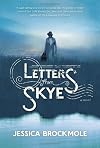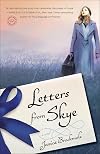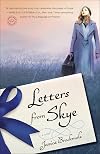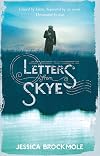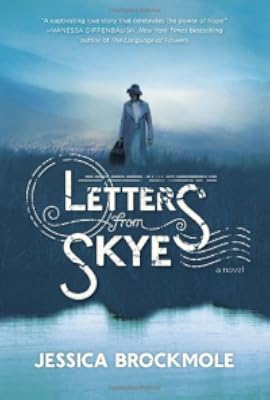
Letters from Skye
by Jessica Brockmole
On This Page
Description
NAMED ONE OF THE BEST BOOKS OF THE YEAR BY PUBLISHERS WEEKLYA sweeping story told in letters, spanning two continents and two world wars, Jessica Brockmole’s atmospheric debut novel captures the indelible ways that people fall in love, and celebrates the power of the written word to stir the heart.
March 1912: Twenty-four-year-old Elspeth Dunn, a published poet, has never seen the world beyond her home on Scotland’s remote Isle of Skye. So she is astonished when her first fan letter show more arrives, from a college student, David Graham, in far-away America. As the two strike up a correspondence—sharing their favorite books, wildest hopes, and deepest secrets—their exchanges blossom into friendship, and eventually into love. But as World War I engulfs Europe and David volunteers as an ambulance driver on the Western front, Elspeth can only wait for him on Skye, hoping he’ll survive.
June 1940: At the start of World War II, Elspeth’s daughter, Margaret, has fallen for a pilot in the Royal Air Force. Her mother warns her against seeking love in wartime, an admonition Margaret doesn’t understand. Then, after a bomb rocks Elspeth’s house, and letters that were hidden in a wall come raining down, Elspeth disappears. Only a single letter remains as a clue to Elspeth’s whereabouts. As Margaret sets out to discover where her mother has gone, she must also face the truth of what happened to her family long ago.
Sparkling with charm and full of captivating period detail, Letters from Skye is a testament to the power of love to overcome great adversity, and marks Jessica Brockmole as a stunning new literary voice.
Look for special features inside. Join the Random House Reader’s Circle for author chats and more.
Praise for Letters from Skye
“Letters from Skye is a captivating love story that celebrates the power of hope to triumph over time and circumstance.”—Vanessa Diffenbaugh, New York Times bestselling author of The Language of Flowers
“[A] remarkable story of two women, their loves, their secrets, and two world wars . . . [in which] the beauty of Scotland, the tragedy of war, the longings of the heart, and the struggles of a family torn apart by disloyalty are brilliantly drawn, leaving just enough blanks to be filled by the reader’s imagination.”—Publishers Weekly (starred review)
“Tantalizing . . . sure to please readers who enjoyed other epistolary novels like The Guernsey Literary and Potato Peel Pie Society.”—Stratford Gazette
“An absorbing and rewarding saga of loss and discovery.”—Kate Alcott, New York Times bestselling author of The Dressmaker
“A sweeping and sweet (but not saccharine) love story.”—USA Today
“[A] dazzling little jewel.”—Richmond Times-Dispatch. show less
Tags
Recommendations




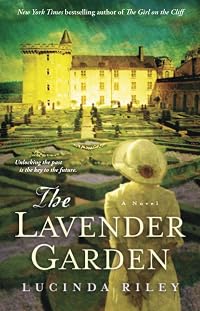
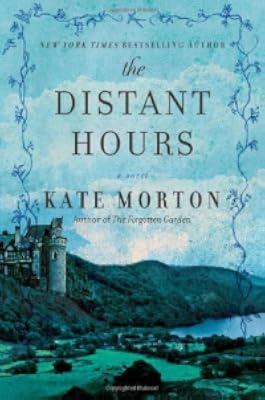
Member Recommendations
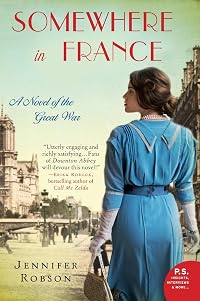
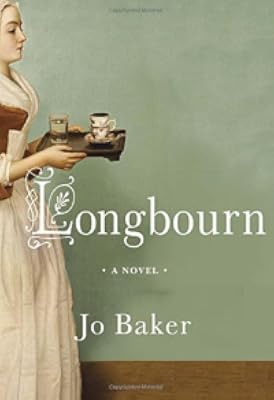
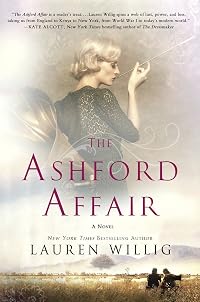
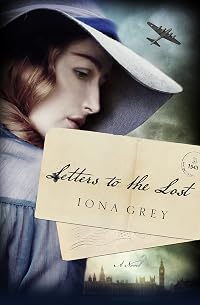
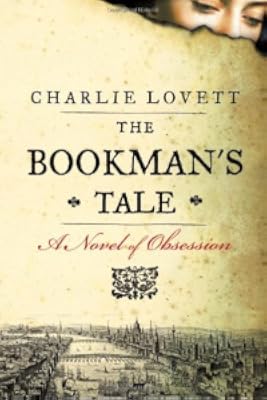
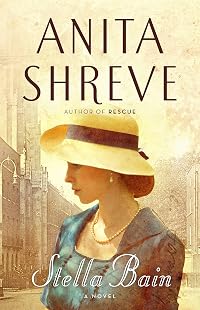
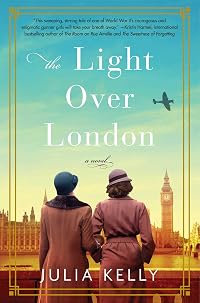
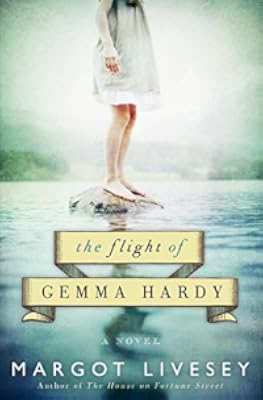
cbl_tn Both books focus on young lovers separated by war.
11
Member Reviews
It's been a long time since I read something that made me audibly catch my breath. Several times.
One of my favorite books ever is The Guernsey literary and Potato Peel Pie Society and this caught my eye because the format is similar: a story told through letters. In fact, the two stories begin almost identically: bachelor writes a witty letter of admiration to a female writer and a wartime-era correspondence begins.
[Letters from Skye] veers a slightly different direction, however; it tracks two separate correspondences: that of Elspeth Dunn, circa World War I, and that of Margaret, Elspeth's daughter, circa World War II. Margaret's determination to follow the trail of her mother's epistolary relationship leads to those breath-catching show more discoveries I mentioned earlier.
If engagingly written period pieces intrigue you, be certain your family has been properly fed and you don't need to arise to an alarm clock the morning after you start this. It's quite possible you won't want to close your eyes until you turn the last page. show less
One of my favorite books ever is The Guernsey literary and Potato Peel Pie Society and this caught my eye because the format is similar: a story told through letters. In fact, the two stories begin almost identically: bachelor writes a witty letter of admiration to a female writer and a wartime-era correspondence begins.
[Letters from Skye] veers a slightly different direction, however; it tracks two separate correspondences: that of Elspeth Dunn, circa World War I, and that of Margaret, Elspeth's daughter, circa World War II. Margaret's determination to follow the trail of her mother's epistolary relationship leads to those breath-catching show more discoveries I mentioned earlier.
If engagingly written period pieces intrigue you, be certain your family has been properly fed and you don't need to arise to an alarm clock the morning after you start this. It's quite possible you won't want to close your eyes until you turn the last page. show less
 This review was written for LibraryThing Early Reviewers.
I've always been a fan of books that have more than one timeline if they're well-written, and Letters from Skye certainly is. These timelines involving the world wars compliment each other perfectly, and Brockmole's research adds period detail that brings the stories to life. The stories unfold in a series of letters. Watching the love between Elspeth and David blossom is a wonderful thing, and what makes this book even stronger is that readers may think they know what's going to happen, but the author doesn't always oblige. Those little surprises woven into the plot make the book even stronger and more involving.
I have to be honest and admit that I have a personal reason for enjoying this book so much. When I was even younger than show more Elspeth, I began corresponding with a young man in England. We became friends, and that friendship turned to love. I was so in tune with Allen and the mail services that I always sensed when a letter would arrive, and heaven help anyone who got between me and the mailbox on those days. My story didn't have a happy ending, but Letters from Skye brought back the best of my memories and touched my heart profoundly. As Elspeth said to Margaret: I should've "taught you that a letter isn't always just a letter. Words on the page can drench the soul. If only you knew."
I do know, and I loved this story. show less
I have to be honest and admit that I have a personal reason for enjoying this book so much. When I was even younger than show more Elspeth, I began corresponding with a young man in England. We became friends, and that friendship turned to love. I was so in tune with Allen and the mail services that I always sensed when a letter would arrive, and heaven help anyone who got between me and the mailbox on those days. My story didn't have a happy ending, but Letters from Skye brought back the best of my memories and touched my heart profoundly. As Elspeth said to Margaret: I should've "taught you that a letter isn't always just a letter. Words on the page can drench the soul. If only you knew."
I do know, and I loved this story. show less
Letters From Skye was so much better than I was expecting. Told completely as a series of letters, it is an historical fiction novel that begins in 1912 and finishes up during WWII.
The story starts with young David Graham, a college student in Chicago, writing a fan letter to Elspeth Dunn, the author of a book of poetry who lives in Scotland, on the remote Island of Skye. Their frequent letter writing continues as their relationship deepens into love. It is a relationship, of course, that is complicated by geography, family, and war.
In alternating chapters, the story moves forward from 1912 to 1940. Elspeth’s daughter, Margaret, falls in love with a pilot and doesn’t understand why her mother is so against the relationship. When show more her mother disappears after a bombing, she is determined to find the answer.
Yes, it sounds like a romance novel and it is a love story, but the writing is wonderfully poignant and the book very atmospheric. I love epistolary novels for how they allow the story to unfold slowly with a little bit of mystery. I hardly wanted to put this one down.
An entertaining summer read and recommended especially for fans of The Guernsey Literary and Potato Peel Pie Society.
Received as an arc free of charge from the publisher in exchange for a fair review. show less
The story starts with young David Graham, a college student in Chicago, writing a fan letter to Elspeth Dunn, the author of a book of poetry who lives in Scotland, on the remote Island of Skye. Their frequent letter writing continues as their relationship deepens into love. It is a relationship, of course, that is complicated by geography, family, and war.
In alternating chapters, the story moves forward from 1912 to 1940. Elspeth’s daughter, Margaret, falls in love with a pilot and doesn’t understand why her mother is so against the relationship. When show more her mother disappears after a bombing, she is determined to find the answer.
Yes, it sounds like a romance novel and it is a love story, but the writing is wonderfully poignant and the book very atmospheric. I love epistolary novels for how they allow the story to unfold slowly with a little bit of mystery. I hardly wanted to put this one down.
An entertaining summer read and recommended especially for fans of The Guernsey Literary and Potato Peel Pie Society.
Received as an arc free of charge from the publisher in exchange for a fair review. show less
I love letters. That's one of the reasons I love holiday season: all of those non-bill, non-junk mail things in the mailbox. I love reading cards from friends. Even better are the letters that still sometimes trickle in during the year when I least expect them in this age of internet, making a different sort of connection between friends. And since I love getting my own letters, it probably isn't much of a surprise that I thoroughly enjoy the concept of the epistolary novel. In Jessica Brockmole's novel, Letters From Skye, there are actually two sets of letters telling the story, a sort of double epistolary novel, one set from World War I and the second during World War II, two times when letter writing was really paramount.
Elspeth show more Dunn is a poet living on the Isle of Skye. She isn't published far and wide so when she receives fan mail from a college boy, David Graham, living in America, she is surprised and a little thrilled to hear his opinion. And so she writes back to him, developing a teasing and witty dialogue between the two of them as they come to know each other through their letters. Elspeth confides the story of her days on the remote Scottish isle with her husband gone to sea and then to war and David, soon called Davey, entertains Elspeth with his madcap college boy adventures as well as admits his reluctance to fall in with his father's plan for his life. The letters between Elspeth and Davey are lovely and revealing and build a deep and abiding relationship between the two of them so that when Davey enlists in World War I, Elspeth can only hope that her very best friend, a man she's never met and of whom she fully suspects that she might feel more for than mere friendship, will survive the terrors he's off to face.
Interwoven with Elspeth and Davey's letters are letters between Elspeth's daughter Margaret and her fiancé, Paul, who has enlisted to fight in World War II. Elspeth has counseled Margaret not to let the advent of the war push her into a hasty engagement or marriage that she might regret in the end. Although Margaret and Paul started as friends, their letters lead them to a deeper intimacy with each other so that they can truly know their own hearts, an unexpected blessing of their wartime separation. But then Margaret receives a call that her mother has disappeared after their home in Edinburgh sustained some damage in a bombing. Armed only with a letter that serves to deepen the mystery of where her mother has gone, Margaret is determined to find Elspeth. To do so, she must solve the mystery of the letter by traveling back to Skye and piecing together the story of her family and her mother's long ago flight from the island.
The letters alternate mainly between those Elspeth and Davey sent each other and those that Margaret sends Paul. Each set of letters runs the gamut from happiness and joy to worry and fear. They are generally charming but set during the wars as they are, they also contain threads of the horrors and desperation in which the world was wrapped, both in the nineteen-teens and the nineteen-thirties and forties. As the letters unfold, the mystery of what happened to Elspeth in the aftermath of the bomb and where she went deepens, just as the story of what finally transpired to stop Elspeth and Davey's correspondence does. Using letters for characters to get to know each other is a wonderful technique since they show both what the letter writer wants the recipient to see but also reveal a lot more than that about a person as well. And the reader learns all about the characters at the same pace as they learn about each other. The way that the narrative was structured allowed the tension to build steadily and while at least one of the revelations was not a surprise, there was far more to the story than just this one surprise. Brockmole has done a nice job in capturing both a light-hearted teasing in the letters and a much deeper emotional connection as well. People looking for an unconventional love story or interested in life at home during both of the World Wars and the way both of those terrible events touched one family will enjoy this sweeping, enjoyable, and sweet romance. show less
Elspeth show more Dunn is a poet living on the Isle of Skye. She isn't published far and wide so when she receives fan mail from a college boy, David Graham, living in America, she is surprised and a little thrilled to hear his opinion. And so she writes back to him, developing a teasing and witty dialogue between the two of them as they come to know each other through their letters. Elspeth confides the story of her days on the remote Scottish isle with her husband gone to sea and then to war and David, soon called Davey, entertains Elspeth with his madcap college boy adventures as well as admits his reluctance to fall in with his father's plan for his life. The letters between Elspeth and Davey are lovely and revealing and build a deep and abiding relationship between the two of them so that when Davey enlists in World War I, Elspeth can only hope that her very best friend, a man she's never met and of whom she fully suspects that she might feel more for than mere friendship, will survive the terrors he's off to face.
Interwoven with Elspeth and Davey's letters are letters between Elspeth's daughter Margaret and her fiancé, Paul, who has enlisted to fight in World War II. Elspeth has counseled Margaret not to let the advent of the war push her into a hasty engagement or marriage that she might regret in the end. Although Margaret and Paul started as friends, their letters lead them to a deeper intimacy with each other so that they can truly know their own hearts, an unexpected blessing of their wartime separation. But then Margaret receives a call that her mother has disappeared after their home in Edinburgh sustained some damage in a bombing. Armed only with a letter that serves to deepen the mystery of where her mother has gone, Margaret is determined to find Elspeth. To do so, she must solve the mystery of the letter by traveling back to Skye and piecing together the story of her family and her mother's long ago flight from the island.
The letters alternate mainly between those Elspeth and Davey sent each other and those that Margaret sends Paul. Each set of letters runs the gamut from happiness and joy to worry and fear. They are generally charming but set during the wars as they are, they also contain threads of the horrors and desperation in which the world was wrapped, both in the nineteen-teens and the nineteen-thirties and forties. As the letters unfold, the mystery of what happened to Elspeth in the aftermath of the bomb and where she went deepens, just as the story of what finally transpired to stop Elspeth and Davey's correspondence does. Using letters for characters to get to know each other is a wonderful technique since they show both what the letter writer wants the recipient to see but also reveal a lot more than that about a person as well. And the reader learns all about the characters at the same pace as they learn about each other. The way that the narrative was structured allowed the tension to build steadily and while at least one of the revelations was not a surprise, there was far more to the story than just this one surprise. Brockmole has done a nice job in capturing both a light-hearted teasing in the letters and a much deeper emotional connection as well. People looking for an unconventional love story or interested in life at home during both of the World Wars and the way both of those terrible events touched one family will enjoy this sweeping, enjoyable, and sweet romance. show less
Letters from Skye might be considered historical fiction but it was a beautiful love story set during both World War I and World War II as told exclusively through letters. It was magnificent. In this current day of text, tweets, abbreviations and a general misuse of the English language, this was such a reminder of what we are missing out on by abandoning the age old communication method of handwritten letters.
My grandparents died 10 days apart in 1989 after 52 years of marriage. I was 21 at the time. Some years later, (thankfully when I was old enough to appreciate it), I found a box of their letters to each other written when they were dating and living in two different states. I ordered them chronologically and spent an entire show more Saturday afternoon reading them. It is a very special memory to me. Reading Letters from Skye reminded me of that afternoon. I was unsure at first if I would like the format of only letters but the letters were so descriptive and engaging that I quickly forgot that they were the only medium being used to tell this story. Jessica Brockmole is quite talented with the English language and is herself a poet.
There are so many emotions that we fail to show in our verbal communication but for whatever reason we are able to show in written form. Letters from Skye reminds me of this and I hope to let it cause me to leave that legacy to my own children. show less
My grandparents died 10 days apart in 1989 after 52 years of marriage. I was 21 at the time. Some years later, (thankfully when I was old enough to appreciate it), I found a box of their letters to each other written when they were dating and living in two different states. I ordered them chronologically and spent an entire show more Saturday afternoon reading them. It is a very special memory to me. Reading Letters from Skye reminded me of that afternoon. I was unsure at first if I would like the format of only letters but the letters were so descriptive and engaging that I quickly forgot that they were the only medium being used to tell this story. Jessica Brockmole is quite talented with the English language and is herself a poet.
There are so many emotions that we fail to show in our verbal communication but for whatever reason we are able to show in written form. Letters from Skye reminds me of this and I hope to let it cause me to leave that legacy to my own children. show less
First, I am thankful my library had this available through the Blio app. After finishing it up at 3 am this morning, I went out today, granted...bleary eyed, and bought the hard copy for my keeper shelf.
I couldn't put this down.
The book opens with a letter dated March 1912. The chapters continue with back and forth letters between key characters. The correspondence spanning the eras of WWI and WWII. I like the author's way of unfolding this dual storyline over letters. At first, I had to pay attention closely, as I get confused or distracted easily with dual timelines. (OOOH, LOOK! Something SHINY!). Once I paid better attention to the dates, the switching back and forth was not confusing.
We meet David "Davy" Graham, a dashing, American show more college student living in Illinois. Davy braved writing a fan letter to a young poet, author, and Isle of Skye resident, Mrs. Elspeth Dunn. The returned correspondence continued to build on a budding friendship between Davy and his poet, Elspeth. Over the months, they slowly build each others trust, share their fears, and their dreams. They each have aspirations, opinions, expectations of family of spouses or soon-to-be's, and pressures of society molding them into seemingly dullish norms. Davy speaks candidly of pressures of family and collegiate life. Elspeth's letters tell of her independent unconventional mindset for a woman living in the 1910s.
The 1940's letters add another layer to the story. Elspeth's daughter, Margaret, is living in Scotland during wartime. She writes to her mother, her fiance', and more family that she uncovers as she goes, attempting to solve the mystery of her father. Of why her mother will not speak of him.
The author, one letter at a time, unfolds a story of heartache and anxieties of being left behind while loved ones go to fight in the war efforts. There are arguments between siblings, loyalties spouses. These are tested. The war changes things, people, expectations. To carve a way for yourself in spite of what people expect of you. The careful craft of family secrets, heartache, love, and forgiveness.
I don't think I can say much more without giving away spoilers or gushing about the layers upon layers in the book will make your grey matter move. The writing was incredibly smart and engaging. I also cried my eyes out. And remember that I loved this book so much I bought it. I'm also a HEA gal.
There is an element that was a surprise to me. There was cheating. For many, many readers this is a deal breaker. I respect that. I personally *despise* cheating in books and won't read them on principle. But first, let me reiterate...
I can't emphasize enough: There is, in no way, a time that cheating is okay. This said, as a reader, I had to wrap my brain around several things. To take in the complexity of the story and see how the relationships were presented in the story. I understood why the cheating happened, not that I agreed with those choices. More importantly, that cheating was presented without justification but more as factual events...as a wrong thing to do. I don't agree with the sentiment "We can't help who we love." I still think that is a convenient way to avoid responsibility because love is a choice. Attraction however, is not. We are responsible for what we do with our attraction, to whomever that may be.
Elspeth's character was one that I related to because she went with what was expected of her. She grew up with several brothers. Her brother's best friend, Iain, we see as her husband from the first chapter. She grew up with Iain, it was easy. And regardless of her dislike for what society says she should be as a housewife, mother, accomplished woman, she does not relish the thought of what has seemingly been plotted out for her. Her protests in letters to Davy are quite forward-thinking and almost humorous.
"No innate quality makes us wives or mothers or homemakers.....Do you think the Great Almighty had the foresight to know what would be required of the housewife of the twentieth century and reserve a special part of the brain for pie-making?"
and she continues...
"You say that women, especially mothers, must be selfless. They aren't born with this, yet it is still expected of them..."
It felt like Iain and Elspeth's relationship was a convenience brought about by propinquity. Not that they couldn't be happy together but that the expectations were crippling for at least one or both. The story of Iain and Elspeth's engagement was particularly exemplary in this regard. When Iain asked her to marry him, she looked to her brother first before she gave her answer. Was it to push her along? Fortify her decision? Was it because she knew she would find an expectation there? Approval? She said yes, but I also wondered how it would have gone if Iain was simply a man she met at University or on holiday and not her brother's ever-present best friend.
The revelations toward the end of the book were heart-stopping, heart-wrenching, and full on triple coronary bypass. Keep tissues handy. Or maybe just some nitroglycerin and baby aspirin. But definitely tissue.
I've seen this story equated to The Guernsey Literary Potato Peel Society. I have not read that one so I couldn't confer. I did think this felt a bit like Kate Morton's The Secret Keeper. show less
I couldn't put this down.
The book opens with a letter dated March 1912. The chapters continue with back and forth letters between key characters. The correspondence spanning the eras of WWI and WWII. I like the author's way of unfolding this dual storyline over letters. At first, I had to pay attention closely, as I get confused or distracted easily with dual timelines. (OOOH, LOOK! Something SHINY!). Once I paid better attention to the dates, the switching back and forth was not confusing.
We meet David "Davy" Graham, a dashing, American show more college student living in Illinois. Davy braved writing a fan letter to a young poet, author, and Isle of Skye resident, Mrs. Elspeth Dunn. The returned correspondence continued to build on a budding friendship between Davy and his poet, Elspeth. Over the months, they slowly build each others trust, share their fears, and their dreams. They each have aspirations, opinions, expectations of family of spouses or soon-to-be's, and pressures of society molding them into seemingly dullish norms. Davy speaks candidly of pressures of family and collegiate life. Elspeth's letters tell of her independent unconventional mindset for a woman living in the 1910s.
The 1940's letters add another layer to the story. Elspeth's daughter, Margaret, is living in Scotland during wartime. She writes to her mother, her fiance', and more family that she uncovers as she goes, attempting to solve the mystery of her father. Of why her mother will not speak of him.
The author, one letter at a time, unfolds a story of heartache and anxieties of being left behind while loved ones go to fight in the war efforts. There are arguments between siblings, loyalties spouses. These are tested. The war changes things, people, expectations. To carve a way for yourself in spite of what people expect of you. The careful craft of family secrets, heartache, love, and forgiveness.
I don't think I can say much more without giving away spoilers or gushing about the layers upon layers in the book will make your grey matter move. The writing was incredibly smart and engaging. I also cried my eyes out. And remember that I loved this book so much I bought it. I'm also a HEA gal.
There is an element that was a surprise to me. There was cheating. For many, many readers this is a deal breaker. I respect that. I personally *despise* cheating in books and won't read them on principle. But first, let me reiterate...
I can't emphasize enough: There is, in no way, a time that cheating is okay. This said, as a reader, I had to wrap my brain around several things. To take in the complexity of the story and see how the relationships were presented in the story. I understood why the cheating happened, not that I agreed with those choices. More importantly, that cheating was presented without justification but more as factual events...as a wrong thing to do. I don't agree with the sentiment "We can't help who we love." I still think that is a convenient way to avoid responsibility because love is a choice. Attraction however, is not. We are responsible for what we do with our attraction, to whomever that may be.
Elspeth's character was one that I related to because she went with what was expected of her. She grew up with several brothers. Her brother's best friend, Iain, we see as her husband from the first chapter. She grew up with Iain, it was easy. And regardless of her dislike for what society says she should be as a housewife, mother, accomplished woman, she does not relish the thought of what has seemingly been plotted out for her. Her protests in letters to Davy are quite forward-thinking and almost humorous.
"No innate quality makes us wives or mothers or homemakers.....Do you think the Great Almighty had the foresight to know what would be required of the housewife of the twentieth century and reserve a special part of the brain for pie-making?"
and she continues...
"You say that women, especially mothers, must be selfless. They aren't born with this, yet it is still expected of them..."
It felt like Iain and Elspeth's relationship was a convenience brought about by propinquity. Not that they couldn't be happy together but that the expectations were crippling for at least one or both. The story of Iain and Elspeth's engagement was particularly exemplary in this regard. When Iain asked her to marry him, she looked to her brother first before she gave her answer. Was it to push her along? Fortify her decision? Was it because she knew she would find an expectation there? Approval? She said yes, but I also wondered how it would have gone if Iain was simply a man she met at University or on holiday and not her brother's ever-present best friend.
The revelations toward the end of the book were heart-stopping, heart-wrenching, and full on triple coronary bypass. Keep tissues handy. Or maybe just some nitroglycerin and baby aspirin. But definitely tissue.
I've seen this story equated to The Guernsey Literary Potato Peel Society. I have not read that one so I couldn't confer. I did think this felt a bit like Kate Morton's The Secret Keeper. show less
Two generations of Dunn women. Two world wars. A secret. A family torn apart.
June, 1940. When Margaret's mother Elspeth disappears without warning from their Edinburgh apartment following an air raid that rocked their neighbourhood and revealed a cache of letters Elspeth had hidden in the wall, Margaret's only clue to Elspeth's possible whereabouts is a single letter from that cache of hidden letters. A letter dated October 31, 1915 from an American named Davey to a girl named "Sue". Margaret has no idea who "Sue" is or where her mother has gone to but she is determined to learn what she can of this secret her mother has kept from her for all these years.
Focusing on the letters between Elspeth, a young married poet living in a show more crofters cottage on the Isle of Skye, and David Graham, a young American who first writes to Elspeth a fan letter after reading a slim volume of her published poems, this story was a treat to read. If you are like me and love to be swept along by a war-time love story, Brockmole's debut novel is one of captivating beauty and poignancy. For me, it's as though Brockmole channeled the sparkling epistolary style of Helene Hanff (think 84, Charing Cross Road) and the poignant lyrical story-telling of Helen Humphreys (think Coventry or The Lost Garden) and in the process has produced her own page turning war-time love story. Some may compare this to The Guernsey Literary and Potato Peel Pie Society - a story I read when it came out back in 2008 - but I think Letters from Skye is the stronger story of the two and, for me anyways, it will stay with me far longer than Guernsey did.
This is a tough one to write a review for without giving away any of the story that is to unfold so I won't bother to say anything more than that the characters are well drawn with realistic hopes, dreams and fears and that Brockmole has done a great job in capturing the emotional strength a letter can convey from sender to recipient.
Well worth reading and a perfect summer read, IMO! show less
June, 1940. When Margaret's mother Elspeth disappears without warning from their Edinburgh apartment following an air raid that rocked their neighbourhood and revealed a cache of letters Elspeth had hidden in the wall, Margaret's only clue to Elspeth's possible whereabouts is a single letter from that cache of hidden letters. A letter dated October 31, 1915 from an American named Davey to a girl named "Sue". Margaret has no idea who "Sue" is or where her mother has gone to but she is determined to learn what she can of this secret her mother has kept from her for all these years.
Focusing on the letters between Elspeth, a young married poet living in a show more crofters cottage on the Isle of Skye, and David Graham, a young American who first writes to Elspeth a fan letter after reading a slim volume of her published poems, this story was a treat to read. If you are like me and love to be swept along by a war-time love story, Brockmole's debut novel is one of captivating beauty and poignancy. For me, it's as though Brockmole channeled the sparkling epistolary style of Helene Hanff (think 84, Charing Cross Road) and the poignant lyrical story-telling of Helen Humphreys (think Coventry or The Lost Garden) and in the process has produced her own page turning war-time love story. Some may compare this to The Guernsey Literary and Potato Peel Pie Society - a story I read when it came out back in 2008 - but I think Letters from Skye is the stronger story of the two and, for me anyways, it will stay with me far longer than Guernsey did.
This is a tough one to write a review for without giving away any of the story that is to unfold so I won't bother to say anything more than that the characters are well drawn with realistic hopes, dreams and fears and that Brockmole has done a great job in capturing the emotional strength a letter can convey from sender to recipient.
Well worth reading and a perfect summer read, IMO! show less
Members
- Recently Added By
Lists

Epistolary Books
105 works; 27 members

Books Set in Scotland
21 works; 5 members

Carole's List
445 works; 13 members

Favorite Romance Fiction
247 works; 115 members

Favorite Epistolary Fiction
143 works; 144 members

Books Read in 2013
65 works; 1 member
Author Information
11+ Works 1,067 Members
Some Editions
Awards and Honors
Distinctions
Common Knowledge
- Canonical title
- Letters from Skye
- Original publication date
- 2013-07-09
- People/Characters
- Elspeth Dunn; David Graham; Margaret Dunn; Iain; Finlay
- Important places
- Skye, Highland, Scotland, UK; Edinburgh, Scotland, UK; London, England, UK
- Important events
- World War I (1914 | 1918); World War II (1939 | 1945)
- First words
- Dear Madam,
I hope you won't think me forward, but I wanted to write to express my admiration for your book, From an Eagle's Aerie. - Last words
- (Click to show. Warning: May contain spoilers.)"There you are, Davey. There you are."
- Blurbers
- Alcott, Kate; Benjamin, Melanie; Jio, Sarah
- Original language
- English
Classifications
Statistics
- Members
- 897
- Popularity
- 30,019
- Reviews
- 85
- Rating
- (3.79)
- Languages
- 8 — Dutch, English, Finnish, German, Italian, Portuguese, Spanish, Swedish
- Media
- Paper, Audiobook, Ebook
- ISBNs
- 29
- UPCs
- 1
- ASINs
- 12