On This Page
Description
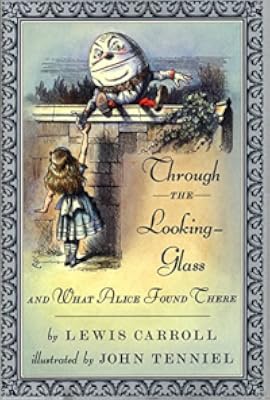
In this sequel to "Alice in Wonderland" Alice goes through the mirror to find a strange world where curious adventures await her.Tags
Recommendations



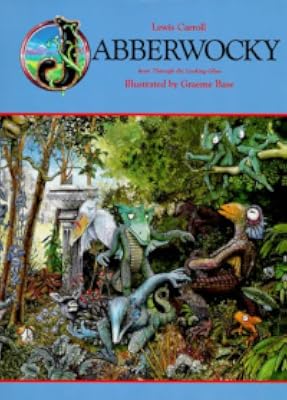






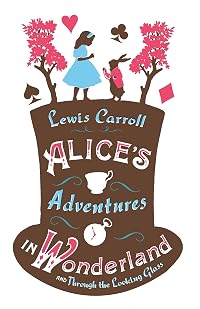

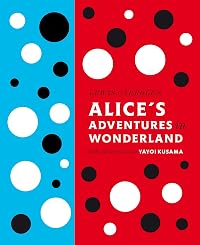

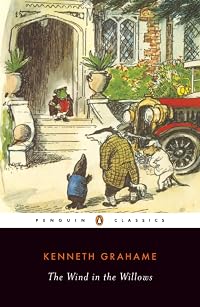
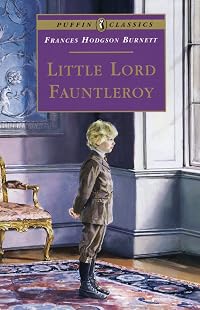
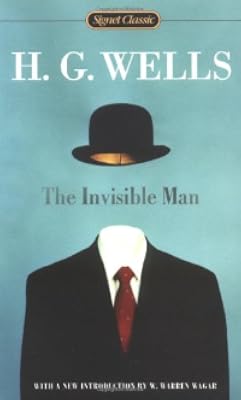
Member Recommendations
SilentInAWay Juster's witty wordplay is in the same league as Carroll's
30


ed.pendragon Both books use a mirror as a portal to another world where everyday things and ideas become reversed and distorted.
Member Reviews
Alice dreams a creative, witty mirror-world behind the looking-glass, where nursery rhymes come to life, scenes and creatures shapeshift, phrases are taken literally, mad ideas, puzzles and silly poetry abound. But. While Alice herself is charming and considerate, everyone she encounters is self-absorbed, mad, and often mean. They constantly interrupt, lecture, patronize her, put her down, correct her, talk at her. I felt like I was in a suffocating nightmare. Despite the brilliance of the word-play, I could not wait for it to end.
Instead of a rabbit-hole, this time Alice falls through a mirror in her parlor into the fantastical realm of Wonderland. She encounters Humpty Dumpty, a variety of monarchs, and has the chance to become a queen if she can venture through a countryside arranged as a chessboard. Similar to the previous novel in its nonsensical happenings, Through the Looking-Glass nevertheless dives further into questions about life, knowledge, and perception than Alice in Wonderland.
Through the Looking Glass is a bit of a disappointment after the first book. Alice's Adventures in Wonderland had plot progression and consequences for Alice's actions ('Drink Me', etc.). In this book, we just skip between scenes with no connection between them – Alice is just lifted from one and transplanted to the next by magic. (This is meant to mirror pawns moving across a chess game but the theme is rather obtuse.) In contrast to the warmly whimsical first book, Through the Looking Glass often seems to be clever for the sake of being clever, rather than clever for the sake of being entertaining and amusing. Nevertheless, this book did give us the poems 'Jabberwocky' and 'The Walrus and the Carpenter', and Carroll's is a show more pleasingly strange and interesting mind to rove in for a time. show less
Really enjoyed this return trip with Alice, and most especially struck this time by the clever, unexpected, and humorous twists that Carroll takes with unexamined everyday turns of phrase. Also forgot how eerily dreamlike (and authentically trippy) this book is.
I feel that I have already read both Alice in Wonderland and Through the Looking Glass and simply forgotten. The introduction to my Bantam Classic copy provides the background of how the books came to be written from stories told to the actual Alice and her sisters, greatly enhancing the reading experience because you can picture it in the structure of both books. It also contains the original illustrations.
Where Alice comes across primarily as a whimsical tale told in reaction to the surrounding scenery and the reactions of the girls as Carroll entertained them on a Sunday afternoon, Through the Looking Glass feels embedded with life lessons as Alice makes her way across an imaginary landscape, overcoming various tests and show more tribulations (much like growing up). The physical representations of the fording of streams within the narrative feels particularly like goals accomplished and rewards given.
Both books succeed because of the obvious interplay between two worlds, with Alice the child unintendedly displaying her limited understanding of the rules and manners of the adult world through the illogical, ironical characters she meets. The tyrannical Red Queen. The ever-late White Rabbit. Tweedledee and Tweedledum and their long tale "The Walrus and the Carpenter," who graciously take all the young oysters out for a walk and a talk; only in the poem's final sentence do we learn that the gallant heroes have actually "eaten every one" (an admonition, perhaps, not to trust seemingly helpful adults?). My favorite chapter, "The Lion and the Unicorn," relates Alice's interactions with the King as he incessantly takes Alice's words literally. When she tells him she sees nobody on the road, he is envious of her vision to see an actual Nobody who is out of the King's range. When his messenger tells him nobody is faster than he, the King contradicts him, saying that obviously Nobody is not swifter, else he would already have arrived with the message.
While the jacket blurb implies deeper meanings hidden within Alice—"a satire on language [and] political allegory"—I think the entire story is simply an educated man's amusement told to a friend's daughters, influenced and embellished by his adult awareness of the gap between his world and theirs.
* - I have posted the same review for each book, seeing how, for me at least, it is difficult to separate the two or read only one. show less
Where Alice comes across primarily as a whimsical tale told in reaction to the surrounding scenery and the reactions of the girls as Carroll entertained them on a Sunday afternoon, Through the Looking Glass feels embedded with life lessons as Alice makes her way across an imaginary landscape, overcoming various tests and show more tribulations (much like growing up). The physical representations of the fording of streams within the narrative feels particularly like goals accomplished and rewards given.
Both books succeed because of the obvious interplay between two worlds, with Alice the child unintendedly displaying her limited understanding of the rules and manners of the adult world through the illogical, ironical characters she meets. The tyrannical Red Queen. The ever-late White Rabbit. Tweedledee and Tweedledum and their long tale "The Walrus and the Carpenter," who graciously take all the young oysters out for a walk and a talk; only in the poem's final sentence do we learn that the gallant heroes have actually "eaten every one" (an admonition, perhaps, not to trust seemingly helpful adults?). My favorite chapter, "The Lion and the Unicorn," relates Alice's interactions with the King as he incessantly takes Alice's words literally. When she tells him she sees nobody on the road, he is envious of her vision to see an actual Nobody who is out of the King's range. When his messenger tells him nobody is faster than he, the King contradicts him, saying that obviously Nobody is not swifter, else he would already have arrived with the message.
While the jacket blurb implies deeper meanings hidden within Alice—"a satire on language [and] political allegory"—I think the entire story is simply an educated man's amusement told to a friend's daughters, influenced and embellished by his adult awareness of the gap between his world and theirs.
* - I have posted the same review for each book, seeing how, for me at least, it is difficult to separate the two or read only one. show less
Kids’ books: they don’t write ‘em like this anymore, if in fact they ever did.
I know that this is supposed to be a kind of mirror-image response to [b:Alice's Adventures in Wonderland|6324090|Alice's Adventures in Wonderland |Lewis Carroll|http://ecx.images-amazon.com/images/I/5115L4ICn6L._SL75_.jpg|2933712], but I found it decidedly trippier. Where Alice kept a fairly consistent tone throughout, this book constantly goes in and out of focus: one moment, things are more or less lucid (yet still absurd, of course), very much in the style of Alice. Then the next moment, the reader is plunged into the queasy uncritical miasma of the last seconds of a dream; or further yet, into slippery madness logic reminiscent of a mushroom trip. show more It's a much more extreme experience.
While constant changes in size and proportion played the most prominent role in lending Alice in Wonderland its dreamy feel, in Through the Looking-Glass the surrealism comes chiefly from manipulation of distance and movement. Any time Alice tries to go somewhere, the resulting narration takes on a blurred, unreliable feel; Alice is thinking of getting out of her present situation, or moving towards some objective, and suddenly the walls of reality melt and shift. Very much like a dream in that way, where certain images and scenes are ultra-vivid, but it’s hard to pinpoint exactly how you got from one to the next.
This was a fascinating book, one I’m sure I will read again. And having read both books recently for the first time as an adult, I'm going to say that this book is better than Alice's Adventures in Wonderland, if only by a nose. Read Alice first, then pick this up for sure. show less
I know that this is supposed to be a kind of mirror-image response to [b:Alice's Adventures in Wonderland|6324090|Alice's Adventures in Wonderland |Lewis Carroll|http://ecx.images-amazon.com/images/I/5115L4ICn6L._SL75_.jpg|2933712], but I found it decidedly trippier. Where Alice kept a fairly consistent tone throughout, this book constantly goes in and out of focus: one moment, things are more or less lucid (yet still absurd, of course), very much in the style of Alice. Then the next moment, the reader is plunged into the queasy uncritical miasma of the last seconds of a dream; or further yet, into slippery madness logic reminiscent of a mushroom trip. show more It's a much more extreme experience.
While constant changes in size and proportion played the most prominent role in lending Alice in Wonderland its dreamy feel, in Through the Looking-Glass the surrealism comes chiefly from manipulation of distance and movement. Any time Alice tries to go somewhere, the resulting narration takes on a blurred, unreliable feel; Alice is thinking of getting out of her present situation, or moving towards some objective, and suddenly the walls of reality melt and shift. Very much like a dream in that way, where certain images and scenes are ultra-vivid, but it’s hard to pinpoint exactly how you got from one to the next.
This was a fascinating book, one I’m sure I will read again. And having read both books recently for the first time as an adult, I'm going to say that this book is better than Alice's Adventures in Wonderland, if only by a nose. Read Alice first, then pick this up for sure. show less
O frabjous day! Callooh! Callay!
I really enjoyed this...nonsensical and lyrical, it's almost better than Wonderland. There are many funny moments in the book and my favorite bits are those where Alice keeps trying to avoid having poetry recited to her and failing miserably. She's always rather sad at having to listen to yet another poem, particularly when they don't make a lot of sense to her. And I was rather horrified (spoiler) by the Walrus and the Carpenter verses when I got to the end...what villainous behavior. Still, I like this bit very much:
"The time has come," the Walrus said,
"To talk of many things:
Of shoes--and ships--and sealing-wax--
Of cabbages--and kings--
And why the sea is boiling hot--
And whether pigs have wings."
I really enjoyed this...nonsensical and lyrical, it's almost better than Wonderland. There are many funny moments in the book and my favorite bits are those where Alice keeps trying to avoid having poetry recited to her and failing miserably. She's always rather sad at having to listen to yet another poem, particularly when they don't make a lot of sense to her. And I was rather horrified (spoiler) by the Walrus and the Carpenter verses when I got to the end...what villainous behavior. Still, I like this bit very much:
"The time has come," the Walrus said,
"To talk of many things:
Of shoes--and ships--and sealing-wax--
Of cabbages--and kings--
And why the sea is boiling hot--
And whether pigs have wings."
Members
- Recently Added By
Published Reviews
ThingScore 75
A continuation of a book that has proved very popular seldom is successful, and we cannot say that we think that Alice's last adventures by any means equal to her previous ones. Making every allowance for the lack of novelty, and our own more highly raised expectations, it seems to us that the paradies are slightly less delightfully absurd, the nonsense not so quaint, the transitions rather show more more forced. There is not that air of verisimilitude which somehow made the wildest improbabilities seem perfectly natural. Still with all this, in "Through the Looking-glass" the author has surpassed all modern writers of children's books except himself. To seek for a rival equally as deserving of the veneration of the nursery we must go back to the unknown genius that produced "Puss in Boots." show less
added by Cynfelyn
Lists

1001 Books You Must Read Before You Die
1,448 works; 1,134 members

The Guardian's 1000 Novels Everyone Must Read
1,005 works; 551 members

Favorite Childhood Books
1,651 works; 515 members

Best Fantasy Novels
821 works; 361 members

Best Children's Books You've Read
197 works; 74 members

Read the book and saw the movie
1,170 works; 195 members
1001 Children's Books You Must Read Before You Grow Up
774 works; 101 members

Books with "Living Chess"
17 works; 12 members

Weird and Weirder Fiction
270 works; 35 members

Favourite 19th century fiction
257 works; 60 members

Favourite Books
1,819 works; 316 members

Works That Inspired Disney Movies
119 works; 13 members
The 100 Best Fantasy Books of All Time
100 works; 15 members

Cawthorn and Moorcock's Fantasy: The 100 Best Books
110 works; 7 members

Toy Stories: Living Dolls, Bears and Other Toys
129 works; 7 members
Ambleside Books
459 works; 18 members
Folio Society
831 works; 53 members
Survey of Fantasy Classics
111 works; 23 members

Fantasy: The 100 Best Books
11 works; 3 members

Blue Pyramid 1,276 Best Books of All Time
1,248 works; 32 members

CCE 1000 Good Books List
1,033 works; 12 members

1970s
657 works; 23 members

Necessary & Exquisite
30 works; 4 members
One Book, Many Authors
441 works; 40 members
Travel from real to fantasy world -- children's/young adult fiction
125 works; 11 members

19th Century
190 works; 16 members

4th Grade Books
312 works; 5 members
Puffin Books 70th anniversary handbook recommendations
537 works; 10 members

Books Mentioned in The Wedding Planner's Daughter series
107 works; 2 members

Greatest Books, allegedly
484 works; 9 members

Ambleside Y3
36 works; 1 member

One Day
27 works; 2 members

Before Austen Comes Aesop
318 works; 9 members
Reading LIst
648 works; 1 member

Mustich's 1000 Books to Read Before You Die: A Life Changing List
1,001 works; 20 members

ClubLeabhar: Leabhar na Míosa
121 works; 1 member

Books Read in 2022
5,226 works; 112 members
Recommended Reading : 600 Classics Reviewed, Editors of Salem Press, 2015
634 works; 6 members

Ambleside Year 3
47 works; 1 member

DigitalDreamDoor top 300
300 works; 4 members

Books We Loved As Children
603 works; 252 members
New Lifetime Reading Plan by Fadiman and Major
225 works; 5 members

A Novel Cure
742 works; 23 members
Literature which inspired Pop songs
85 works; 9 members
Novels/Poems/Short Stories/Anything Storytelling Related
112 works; 2 members

Books Read in 2021
5,361 works; 114 members
Five star books
1,767 works; 110 members

Books I read in high school
52 works; 1 member

A's favorite novels
100 works; 3 members

1870s
15 works; 2 members
1,001 BYMRBYD Concensus
723 works; 27 members

Books on my Kindle
162 works; 3 members

Stories Featuring Games or Contests
28 works; 9 members

Western World's Greatest Books - Project Gutenberg
295 works; 15 members
Works Referenced in The League of Extraordinary Gentlemen
122 works; 6 members

Read
293 works; 4 members

Les Vases communicants
23 works; 1 member

Books Cited in Blueprint by Nicholas Christakis
261 works; 1 member

Female Protagonist
1,056 works; 57 members
Talk Discussions
Past Discussions
Book Discussion: Alice in Wonderland & Through the Looking-Glass CONTAINS SPOILERS in The Green Dragon (October 2008)
Book Discussion: Alice in Wonderland & Through the Looking-Glass SPOILER FREE in The Green Dragon (June 2008)
Author Information

1,413+ Works 108,696 Members
Charles Luthwidge Dodgson was born in Daresbury, England on January 27, 1832. He became a minister of the Church of England and a lecturer in mathematics at Christ Church College, Oxford. He was the author, under his own name, of An Elementary Treatise on Determinants, Symbolic Logic, and other scholarly treatises. He is better known by his pen show more name of Lewis Carroll. Using this name, he wrote Alice in Wonderland and Through the Looking Glass. He was also a pioneering photographer, and he took many pictures of young children, especially girls, with whom he seemed to empathize. He died on January 14, 1898. (Bowker Author Biography) show less

Lewis Carroll has a Legacy Library. Legacy libraries are the personal libraries of famous readers, entered by LibraryThing members from the Legacy Libraries group.
Some Editions
Awards and Honors
Awards
Distinctions
Notable Lists
Series

Belongs to Publisher Series
Quaderns (5)
Livro B (7)
Mínima minor (17)
Kaiseisha bunko (2065)
Puffin Story Books (44)
L&PM Pocket (378)
insel taschenbuch (0097)
Work Relationships
Is contained in
More Annotated Alice: Alice's Adventures in Wonderland & Through the Looking Glass by Lewis Carroll (indirect)
Companion Library: Five Little Peppers and How They Grew / Alice In Wonderland by Companion Library (indirect)
Alice's Adventures in Wonderland and Through the Looking-Glass (with Alice's Adventures Under Ground) by Lewis Carroll (indirect)
The Philosopher's Alice: Alice's Adventures in Wonderland and Through the Looking-Glass by Peter Laughlan Heath
Alice's Adventures in Wonderland / Through the Looking Glass / The Hunting of the Snark by Lewis Carroll
Alice's Adventures in Wonderland, Through the Looking-Glass, The Hunting of the Snark, Phantasmagoria and Other Poems by Lewis Carroll
The Annotated Alice: 150th Anniversary Deluxe Edition (150th Deluxe Anniversary Edition) (The Annotated Books) by Lewis Carroll
The Collected Stories of Lewis Carroll: Alice in Wonderland/Through the Looking Glass/Phantasmagoria by Lewis Carroll
Alicia a traves del espejo & La caza del snark/ Through The Looking Glass & The Hunting of the Snark (Clasicos Juveniles/ Juvenile Classics) (Spanish Edition) by Lewis Carroll
Has the (non-series) sequel
Has the adaptation
Alice in Wonderland; a dramatization of Lewis Carroll's "Alice's adventures in Wonderland" and "Through the looking glass," by Alice Gerstenberg
Alice au pays des merveilles - De l'autre côté du miroir [Version adaptée, Recueils universels, Auzou] by Claude Carré
The Graphic Canon, Vol. 2: From "Kubla Khan" to the Brontë Sisters to The Picture of Dorian Gray by Russ Kick
Is abridged in
Is parodied in
Inspired
Has as a reference guide/companion
Has as a student's study guide
Has as a teacher's guide
Common Knowledge
- Canonical title
- Through the Looking-Glass
- Original title
- Through the Looking-Glass, and What Alice Found There
- Alternate titles
- Alice Through the Looking-Glass
- Original publication date
- 1871-12-27
- People/Characters
- Alice in Wonderland; White Queen; Red Queen; Tweedledum; Tweedledee; Alice's Sister (show all 17); Red King; Snowdrop; Humpty Dumpty; Mad Hatter; March Hare; White King; White Knight; Lion; Unicorn; Jabberwocky; Jubjub bird
- Important places
- London, England, UK; England, UK; Looking-Glass Land; Behind the Mirror; Briny Beach
- Important events
- Victorian Era; 19th century
- Related movies
- Alice Through a Looking Glass (1928 | IMDb); Alice Through the Looking Glass (2016); Alice in Wonderland (1933 | IMDb); Jabberwocky (1977); Alice (1946 | IMDb); Alice in Wonderland (2010) (show all 12); Alice in Wonderland (1951 | IMDb); Disneyland: Alice in Wonderland (1954 | s1e2 | IMDb); Hallmark Hall of Fame: Alice in Wonderland (1955 | s5e1 | IMDb); Alice Through the Looking Glass (1966 | IMDb); Jackanory: Alice Through the Looking-Glass (1970 | s9e66-70 | IMDb); Fairy Tales on Ice: Alice Through the Looking Glass (1996 | IMDb)
- Epigraph*
- Blentyn y talcen glân, di-loes
A'r drem freuddwydiol, dyner!
Ni waeth bod rhyngom hanner oes,
Ac er cyflymed amser,
Diau daw serchus wên i'th bryd
O dderbyn rhodd o stori hud.
Ni chlywais dinc dy chwer... (show all)thin ffri [&c. &c.] - Dedication*
- [Dim]
- First words
- One thing was certain, that the white kitten had had nothing to do with it: -- it was the black kitten's fault entirely.
One thing was certain, that the white kitten had nothing to do with it—it was the black kitten’s fault entirely. - Quotations
- One can’t believe impossible things.
I dare say you haven’t had much practice. When I was your age, I always did it for half an hour a day. Why sometimes I’ve believed as many as six impossible things before brea... (show all)kfast.
‘Better say nothing at all. Language is worth a thousand pounds a word!’ - Last words
- (Click to show. Warning: May contain spoilers.)Which do you think it was?
(Click to show. Warning: May contain spoilers.)Ever drifting down the stream—
Lingering in the golden gleam—
Life, what is it but a dream?
THE END - Original language
- English
- Disambiguation notice
- This is an edition of "Through the looking-glass and what Alice found there" only; please don't combine with copies that include other works.
*Some information comes from Common Knowledge in other languages. Click "Edit" for more information.
Classifications
Statistics
- Members
- 8,827
- Popularity
- 1,231
- Reviews
- 141
- Rating
- (3.96)
- Languages
- 32 — Basque, Catalan, Chinese, Czech, Danish, Dutch, English, Esperanto, Estonian, Finnish, French, German, Irish, Greek, Hawaiian, Hebrew, Hungarian, Italian, Japanese, Macedonian, Norwegian (Bokmål), Polish, Romanian, Russian, Spanish, Swedish, Telugu, Thai, Ukrainian, Urdu, Welsh, Portuguese (Portugal)
- Media
- Paper, Audiobook, Ebook
- ISBNs
- 650
- UPCs
- 5
- ASINs
- 213