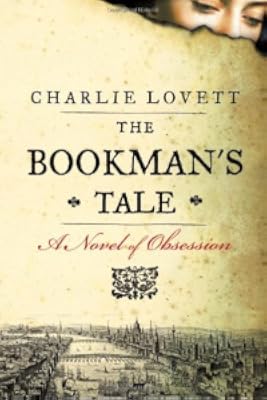
The Bookman's Tale
by Charlie Lovett
On This Page
Description
After the death of his wife, Peter Byerly, a young antiquarian bookseller, relocates from the States to the English countryside, where he hopes to rediscover the joys of life through his passion for collecting and restoring rare books. But when he opens an eighteenth-century study on Shakespeare forgeries, he is shocked to find a Victorian portrait strikingly similar to his wife tumble out of its pages, and becomes obsessed with tracking down its origins. As he follows the trail back to the show more nineteenth century and then to Shakespeare's time, Peter learns the truth about his own past and unearths a book that might prove that Shakespeare was indeed the author of all his plays. show lessTags
Recommendations



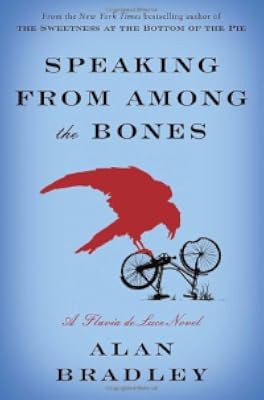
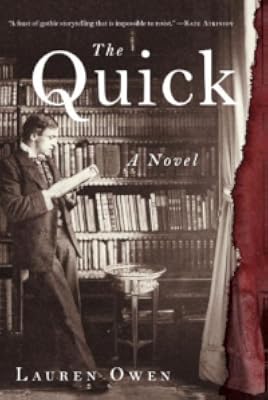
Member Recommendations
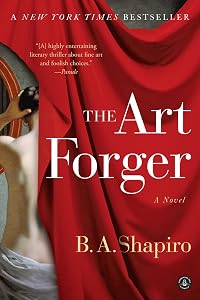
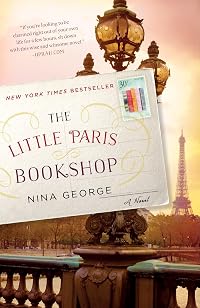
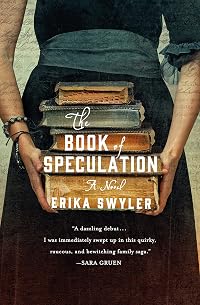
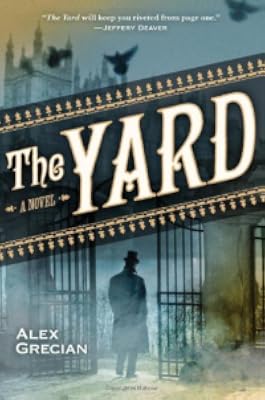
VenusofUrbino Much better story for those interested in book conservation.
30
Member Reviews
There’s a fine line between write what you know and write a wish-fulfillment vehicle that encapsulates your every fantasy and Lovett doesn’t know where it is. He tripped over it big time and it was kind of funny how laid-bare things got to be. I wonder how his wife feels about the sex-loving, brilliant, rich and gorgeous women that pervade this book. The perfect sex scene involving two virgins was the height of hilarity. What two virgins have EVER had good sex? And Lovett is clearly a tit man. At about page 10 I’d had it with the sainted Amanda already and by page 20 I was very glad she was dead.
Peter has no real identity of his own. His every waking thought and nearly every utterance is Amanda this and and Amanda that. Upon show more entering a stranger’s house he reflects that the decor wouldn’t have pleased Amanda. Who the fuck cares? She’s dead. Grow a spine. Grow a set of opinions on your own. Grow the fuck up. Oy. He is good at treating grown women like children though and again, I cringe for Lovett’s wife.
The mystery brought every tired, shopworn cliche and trope into harness, right down to the gloating and monologuing villain. So eye-rolling I just had to laugh. I did read the whole thing though, and so I suppose that’s a mark in its favor, but it’s hitting the Kicked to the Curb collection pronto. show less
Peter has no real identity of his own. His every waking thought and nearly every utterance is Amanda this and and Amanda that. Upon show more entering a stranger’s house he reflects that the decor wouldn’t have pleased Amanda. Who the fuck cares? She’s dead. Grow a spine. Grow a set of opinions on your own. Grow the fuck up. Oy. He is good at treating grown women like children though and again, I cringe for Lovett’s wife.
The mystery brought every tired, shopworn cliche and trope into harness, right down to the gloating and monologuing villain. So eye-rolling I just had to laugh. I did read the whole thing though, and so I suppose that’s a mark in its favor, but it’s hitting the Kicked to the Curb collection pronto. show less
This is a book-lover’s book. It contains a mystery about a book that may have inspired Shakespeare’s A Winter's Tale and a love story between Peter, the bookseller/librarian/curator who discovers it, and his wife, Amanda. It takes the reader back to Shakespeare’s times as well as into the world of antiquarian books. The narrative tension is driven by multiple threads of mystery. The storyline alternates between the provenance of the book that allegedly contains Shakespeare’s notes and Peter’s story of meeting his wife during their college years. Peter becomes obsessed with figuring out if this book is one of the most significant finds in literary history, which leads to threats to his own safety. After the initial slow show more build-up that introduces the characters, the book, and the background for each, it becomes a page-turning thriller. It is full of historical details, and it is obvious that the author knows a thing or two about book restorations, antiquarian books, and the detection of forgeries. It is a bit melodramatic in places, but I found it quite entertaining. It will appeal to those who enjoy books about books, scholarly mysteries, or historical fiction set in the 16th to 19th centuries. show less
Okay, let me make a confession before we go any further: I hate Shakespeare. Sorry - I'm just not a fan. I was >this
Why in the heck did I, then, rate it at 4 stars? Because this book took a subject I hate, and made it interesting. I was hooked from the beginning, and loved every page of the work. It was fairly clean and fluid, with a few hiccups, and 'who was that character again?' moments, which I gladly overlooked.
The work centers on a lot of historical musing as to the authorship of all of Shakespeare's works (something that I've been aware of, even given my disdain for the stuff.) It takes a fanciful and - hell - even plausible idea, weaves a narrative around it, and gives you a bibliohistory lesson to boot.
If you are not a show more bibliophile, or a Shakesperian Cult member, this is still a great read. The down side is that I'd kajigger my rating to a three for you folks. Still, a well-told work by an author that I will now keep a hard eye on. show less
Why in the heck did I, then, rate it at 4 stars? Because this book took a subject I hate, and made it interesting. I was hooked from the beginning, and loved every page of the work. It was fairly clean and fluid, with a few hiccups, and 'who was that character again?' moments, which I gladly overlooked.
The work centers on a lot of historical musing as to the authorship of all of Shakespeare's works (something that I've been aware of, even given my disdain for the stuff.) It takes a fanciful and - hell - even plausible idea, weaves a narrative around it, and gives you a bibliohistory lesson to boot.
If you are not a show more bibliophile, or a Shakesperian Cult member, this is still a great read. The down side is that I'd kajigger my rating to a three for you folks. Still, a well-told work by an author that I will now keep a hard eye on. show less
A book about antiquarian books and forgery, actually written by someone who knows about such things and can write about them coherently? Needless to say, I wasn't about to miss this one! Charlie Lovett's The Bookman's Tale (Viking, 2013) is just such a book, and it's also an engaging and enjoyable read.
Peter Bylerly is an American rare book dealer living in the English countryside, still recovering from the tragic death of his wife, Amanda. When, in leafing through a copy of Edmond Malone's Inquiry into the authenticity of certain miscellaneous papers... he stumbles upon a 19th-century watercolor of a woman bearing an uncanny resemblance to Amanda, Peter feels compelled to learn more about the artist and his subject, and that leads him show more into quite a tangled web of forgery, deceit, and long-running family feuds.
Lovett intersperses Peter's narrative with flashbacks, both to ten years prior when Peter first got interested in rare books (and Amanda) during his college years, and to earlier scenes where the important rare book at the centerpiece of the plot passed from hand to hand through generations of readers (by means both fair and foul). It's filled with good details about Shakespeare scholarship, forgery, and the world of bookselling, and there's even a scene involving a Hinman Collator (if there are other novels in which a collator is featured, I don't know of them but would very much like to).
Now, there are a few particularly amazing coincidences throughout the book, a detail is off here and there, I could have done without some of the trysting in the rare book room (really?!), and I figured out the final twist fairly early on. But on the whole, I really liked this book, and recommend it highly. show less
Peter Bylerly is an American rare book dealer living in the English countryside, still recovering from the tragic death of his wife, Amanda. When, in leafing through a copy of Edmond Malone's Inquiry into the authenticity of certain miscellaneous papers... he stumbles upon a 19th-century watercolor of a woman bearing an uncanny resemblance to Amanda, Peter feels compelled to learn more about the artist and his subject, and that leads him show more into quite a tangled web of forgery, deceit, and long-running family feuds.
Lovett intersperses Peter's narrative with flashbacks, both to ten years prior when Peter first got interested in rare books (and Amanda) during his college years, and to earlier scenes where the important rare book at the centerpiece of the plot passed from hand to hand through generations of readers (by means both fair and foul). It's filled with good details about Shakespeare scholarship, forgery, and the world of bookselling, and there's even a scene involving a Hinman Collator (if there are other novels in which a collator is featured, I don't know of them but would very much like to).
Now, there are a few particularly amazing coincidences throughout the book, a detail is off here and there, I could have done without some of the trysting in the rare book room (really?!), and I figured out the final twist fairly early on. But on the whole, I really liked this book, and recommend it highly. show less
What bibliophile could resist the allure of a title such as The Bookman’s Tale? And what lover of Elizabethan literature, or history, or whodunits, or ghost stories, or romance, could fail to be intrigued by a novel that promises to combine all these genres? Certainly not this reader, and I’m glad to report that — even with one or two caveats — I was not disappointed. In addition, we’re informed that the author is both writer and successful playwright, a former antiquarian bookseller and an ‘avid’ book collector who, with his wife, splits his time between North Carolina and Oxfordshire; so, with a novel that involves all these elements we naturally expect a novel that fully convinces us in terms of supporting details.
Peter show more Byerly is the antiquarian bookseller from North Carolina who retreats to his cottage in Kingham, Oxfordshire after the tragic death of his wife Amanda in the mid-nineties of the last century. When he finally emerges from his seclusion to visit his other love in a bookshop in Hay-on-Wye on the Welsh Marches, he is shocked to discover a 19th-century watercolour of what appears to be his dead wife flutter from a classic tome on Shakespearean forgeries. Thus it is that the present collides, not just with his own past, but with that of his wife, a Victorian family feud, an 18th-century literary disaster and Shakespeare’s own times. Along the way there is murder most foul and deeds of darkness, a touching romance and a basic background to bookbinding. The whole centres around a first edition of Richard Greene’s 1588 novel Pandosto: the Triumph of Time which may or may not feature Shakespeare’s own marginal notes but which certainly inspired The Winter’s Tale (probably around 1611, though not published till 1623).
Pandosto and The Winter’s Tale both include elements that are reflected in The Bookman’s Tale: the lost wife, the long period of mourning by the widower, the artefact that imitates life so well that it may well be the original. But do not expect exact parallels; the modern novel’s best epitaph may be from the title page of Pandosto itself: “although by the meanes of sinister fortune Truth may be concealed, yet by Time in spight of fortune it is most manifestly revealed”.
I did enjoy this out-of-the-ordinary whodunit, the twists and turns, the interweave of episodes from the history of this first edition copy of Greene’s play. Peter’s inordinate shyness, perhaps an indication of him being on the autistic spectrum, is largely believable, his growing confidence and resourcefulness a sign of his emergence from the depression brought about by Amanda’s untimely death. Like most cozy mysteries — and, make no mistake, The Bookman’s Tale is in this tradition, despite its learning — the wrap-up of the denouement is neatly and satisfyingly done, even if lacking the messy resolution of real-life crime.
Only two little niggles blotted Lovett’s otherwise workmanlike plotting. I was not particularly convinced with the late 16th- and early 17th-century dialogue that greeted us in the earlier part of the novel (sample: “The glove-maker’s son is writing sonnets! Sonnets, can you imagine …”) nor by the ‘Elizabethan’ missive that appeared towards the end. But I suppose such treatment is preferable given the possible derision that might greet an attempt to reproduce the nuances of past speech, given the anachronistic mock-archaic language that has been produced by some popular writers of historical romance.
The other niggle concerns the differences between American and British English. Familiar with the linguistic environment of both milieus Lovett largely avoids the obvious faux amis such as drapes/curtains, motorway/highway and pants/trousers, but in allowing Peter’s English fellow sleuth Liz to happily dump the expected ‘torch’ in favour of ‘flashlight’ he briefly lets slip the mask of realism.
But you’ll be glad to know that such quibbles are swept aside by a hugely enjoyable tale, with primary characters in whom I was happy to invest sympathy and detail enough to evoke time and place. You can do worse than spare some hours immersing yourself in this, what the publishers call a ‘novel of obsession’ — for once, without much chance of contradiction.
http://wp.me/s2oNj1-bookman show less
Peter show more Byerly is the antiquarian bookseller from North Carolina who retreats to his cottage in Kingham, Oxfordshire after the tragic death of his wife Amanda in the mid-nineties of the last century. When he finally emerges from his seclusion to visit his other love in a bookshop in Hay-on-Wye on the Welsh Marches, he is shocked to discover a 19th-century watercolour of what appears to be his dead wife flutter from a classic tome on Shakespearean forgeries. Thus it is that the present collides, not just with his own past, but with that of his wife, a Victorian family feud, an 18th-century literary disaster and Shakespeare’s own times. Along the way there is murder most foul and deeds of darkness, a touching romance and a basic background to bookbinding. The whole centres around a first edition of Richard Greene’s 1588 novel Pandosto: the Triumph of Time which may or may not feature Shakespeare’s own marginal notes but which certainly inspired The Winter’s Tale (probably around 1611, though not published till 1623).
Pandosto and The Winter’s Tale both include elements that are reflected in The Bookman’s Tale: the lost wife, the long period of mourning by the widower, the artefact that imitates life so well that it may well be the original. But do not expect exact parallels; the modern novel’s best epitaph may be from the title page of Pandosto itself: “although by the meanes of sinister fortune Truth may be concealed, yet by Time in spight of fortune it is most manifestly revealed”.
I did enjoy this out-of-the-ordinary whodunit, the twists and turns, the interweave of episodes from the history of this first edition copy of Greene’s play. Peter’s inordinate shyness, perhaps an indication of him being on the autistic spectrum, is largely believable, his growing confidence and resourcefulness a sign of his emergence from the depression brought about by Amanda’s untimely death. Like most cozy mysteries — and, make no mistake, The Bookman’s Tale is in this tradition, despite its learning — the wrap-up of the denouement is neatly and satisfyingly done, even if lacking the messy resolution of real-life crime.
Only two little niggles blotted Lovett’s otherwise workmanlike plotting. I was not particularly convinced with the late 16th- and early 17th-century dialogue that greeted us in the earlier part of the novel (sample: “The glove-maker’s son is writing sonnets! Sonnets, can you imagine …”) nor by the ‘Elizabethan’ missive that appeared towards the end. But I suppose such treatment is preferable given the possible derision that might greet an attempt to reproduce the nuances of past speech, given the anachronistic mock-archaic language that has been produced by some popular writers of historical romance.
The other niggle concerns the differences between American and British English. Familiar with the linguistic environment of both milieus Lovett largely avoids the obvious faux amis such as drapes/curtains, motorway/highway and pants/trousers, but in allowing Peter’s English fellow sleuth Liz to happily dump the expected ‘torch’ in favour of ‘flashlight’ he briefly lets slip the mask of realism.
But you’ll be glad to know that such quibbles are swept aside by a hugely enjoyable tale, with primary characters in whom I was happy to invest sympathy and detail enough to evoke time and place. You can do worse than spare some hours immersing yourself in this, what the publishers call a ‘novel of obsession’ — for once, without much chance of contradiction.
http://wp.me/s2oNj1-bookman show less
The Bookman's Tale by Charlie Lovett.
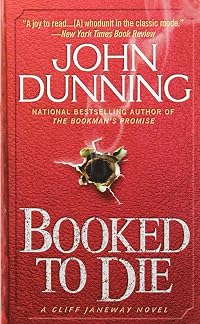
I haven't been as thrilled by a bibliomystery since John Dunning's Booked to Die.
This is a delicious literary mystery surrounding a book that was the inspiration of A Winter's Tale that had notes written in Shakespeare's own hand which is wrapped up in a touching love story of Peter Byerly, the bookseller who discovers this literary treasure, and his wife Amanda. It has all the anxiety of a taut thriller, and the pull of the antiquarian book world to a book-lover as well as tantalising glimpses into the Elizabethan world of writers and the Victorian world of forgers.
I simply couldn't put this book down. Lovett slowly builds the tension by switching between Byerly's story of meeting his true love at show more college to his contemporary sleuthing into what becomes a dangerous game of discovering what is perhaps the most significant literary discovery of all time. In between this we have glimpses into history and the background that lead us into the present where forgery, greed and lust combine to conspire to destroy Peter Byerly.
I loved every minute of it of course, as a book-lover can't help but salivate over all this tale of old books and the spell they cast on a bookseller. It is perfect for any book person just as Dunning's wonderful series was like drugs to a junkie so this is as well. show less
I haven't been as thrilled by a bibliomystery since John Dunning's Booked to Die.
This is a delicious literary mystery surrounding a book that was the inspiration of A Winter's Tale that had notes written in Shakespeare's own hand which is wrapped up in a touching love story of Peter Byerly, the bookseller who discovers this literary treasure, and his wife Amanda. It has all the anxiety of a taut thriller, and the pull of the antiquarian book world to a book-lover as well as tantalising glimpses into the Elizabethan world of writers and the Victorian world of forgers.
I simply couldn't put this book down. Lovett slowly builds the tension by switching between Byerly's story of meeting his true love at show more college to his contemporary sleuthing into what becomes a dangerous game of discovering what is perhaps the most significant literary discovery of all time. In between this we have glimpses into history and the background that lead us into the present where forgery, greed and lust combine to conspire to destroy Peter Byerly.
I loved every minute of it of course, as a book-lover can't help but salivate over all this tale of old books and the spell they cast on a bookseller. It is perfect for any book person just as Dunning's wonderful series was like drugs to a junkie so this is as well. show less
This was a tough book to rate. All the elements of a fantastic read are here: a bibliophile protagonist, a mystery, ancient forgeries, and a love story. The author writes from his own personal experience in the antiquarian book business which lends an authenticity to the novel.
However, the highly detailed descriptions of the authentication and restoration of old books and book forgeries, while interesting, made my eyes glaze over after a while, and it wasn’t until I was halfway through the book before the story took off for me. I think moving between two time periods, not three, would have made the book easier to read.
All in all, an enjoyable, predictable read despite a few flaws, but not on par with Shadows of the Wind by Carlos show more Ruiz, as the description from the publisher suggests. show less
However, the highly detailed descriptions of the authentication and restoration of old books and book forgeries, while interesting, made my eyes glaze over after a while, and it wasn’t until I was halfway through the book before the story took off for me. I think moving between two time periods, not three, would have made the book easier to read.
All in all, an enjoyable, predictable read despite a few flaws, but not on par with Shadows of the Wind by Carlos show more Ruiz, as the description from the publisher suggests. show less
Members
- Recently Added By
Published Reviews
ThingScore 83
The Bookman’s Tale is told in a straightforward manner quite unlike the fanciful prose of Spaniard Ruiz Zafon or the clinical narrative of Brooks. Though his narrative wends through time, the words Mr. Lovett chooses are rather plainspoken, though not without their own melody. He projects heartfelt warmth that is lacking in both Ruiz Zafon’s or Brooks’ novels.
One aspect in which this show more novel struggles is with time jumps. The bibliophile who is careful and who can get past that small failing, however, is in for a treat. show less
One aspect in which this show more novel struggles is with time jumps. The bibliophile who is careful and who can get past that small failing, however, is in for a treat. show less
added by sneuper
"Although the discussion of the provenance of Shakespeare’s plays will appeal to bibliophiles, the frequent flashbacks to bygone days interrupt the narrative flow."
added by bookfitz
"A pleasurably escapist trans-Atlantic mystery is intricately layered with plots, murders, feuds, romances, forgeries—and antiquarian book dealing."
added by bookfitz
Lists

Best books about books
209 works; 106 members

Top Five Books of 2013
1,562 works; 721 members

Books Read in 2014
2,343 works; 89 members

Summer Reads 2014
207 works; 70 members

To Read - Literature / Fiction
26 works; 1 member

Books Read in 2017
4,249 works; 130 members

Carole's List
445 works; 13 members

Literary Forgeries
212 works; 4 members

Cryptology - non-fiction and fiction
57 works; 4 members

Books Read in 2018
4,360 works; 110 members
Author Information

30+ Works 3,423 Members
Some Editions
Awards and Honors
Awards
Series
Belongs to Publisher Series
insel taschenbuch (4349)
Common Knowledge
- Canonical title
- The Bookman's Tale
- Original publication date
- 2013-05-28
- People/Characters
- Peter Byerly; Amanda Byerly; William Shakespeare
- Important places
- Hay-on-Wye, Powys, Wales, UK; North Carolina, USA; England, UK
- Epigraph
- All that glisters is not gold.
— William Shakespeare, The Merchant of Venice
Things are seldom what they seem,
Skim milk masquerades as cream;
Highlows pass as patent leathers;
Jackdaws strut in peacock's feathers.
— Gilbert and Sullivan, H.M.S. Pinafore - Dedication
- For my father, Bob Lovett
Who infected me with an incurable bibliomania. - First words
- Hay-on-Wye, Wales, Wednesday, February 15. 1995
Wales could be cold in winter. - Last words
- (Click to show. Warning: May contain spoilers.)Two minutes later he was striding toward the station, the Pandosto under his arm, and the warm summer breeze sweeping him toward the center of life.
- Blurbers
- Sloan, Robin; Carrell, Jennifer Lee; Singer, Daniel
- Original language
- English
Classifications
Statistics
- Members
- 1,832
- Popularity
- 11,882
- Reviews
- 103
- Rating
- (3.73)
- Languages
- 6 — Catalan, Czech, English, German, Portuguese, Spanish
- Media
- Paper, Audiobook, Ebook
- ISBNs
- 20
- ASINs
- 8