On This Page
Description
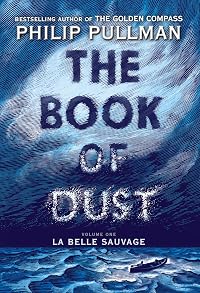
When Malcolm finds a secret message inquiring about a dangerous substance called Dust, he finds himself embroiled in a tale of intrigue featuring enforcement agents from the Magisterium, a woman with an evil monkey daemon, and a baby named Lyra.Tags
Recommendations









Member Reviews
11-year-old Malcolm Polstead, son of the keepers of the Trout Inn, along with his trusty canoe, La Belle Sauvage, and a village girl named Alice, find themselves the protectors of the baby Lyra. Unwanted by her mother (the Big Bad of both series) and kept away from her father, Lyra is being hunted and pursued by more than one group for various unsavory reasons. Malcolm and Alice rescue her during a supernatural flood and travel in La Belle Sauvage to London in search of her father, encountering all sorts of strange people (both good and bad) and places along the way.
La Belle Sauvage starts off a parallel series to His Dark Materials, and it was so wonderful to be pulled back into that world of daemons and Dust, anbaric cars and show more alethiometers. A world that's sort of like ours and still very much not, along with Pullman's amazing ability to create characters who within the length of a page become your lifelong friends, make this series - just like the first one - already one of my favorites. show less
La Belle Sauvage starts off a parallel series to His Dark Materials, and it was so wonderful to be pulled back into that world of daemons and Dust, anbaric cars and show more alethiometers. A world that's sort of like ours and still very much not, along with Pullman's amazing ability to create characters who within the length of a page become your lifelong friends, make this series - just like the first one - already one of my favorites. show less
I confess that I approached this with some trepidation. His Dark Materials are amongst my favourite books, so a return to the world of Lyra and dust and the Magisterium always held the risk of disappointment.
Spoiler: it does not disappoint.
La Belle Sauvage is a prequel, leading directly up to the prologue of Northern Lights. Our main character is young Malcolm, son of the family that run The Trout, an inn in Oxford. He is a wonderful character; a bright young boy, curious and questioning, with the desire to learn and the naivety of youth. He is a habitue of the priory across the river, helping out the nuns with chores while genuinely interested in their stories and experience, so when a baby girl is given into their care as a flood show more approaches, Malcolm is immediately fascinated and drawn into a web of intrigue.
Pullman is truly a phenomenally good writer; his prose and characterisation in particular are wonderful, and the way he pitches the tale soit can be enjoyed equally by a YA or adult audience. He continues, as well, to combine a rollicking story with deep philosophical issues; in this prequel we are seeing the Magisterium well on its rise to dominance and flexing its muscles of control, its agents openly threatening people in a way that seems a change. one of the more disturbing aspects is the introduction of the League of Saint Alexander, a Stasi-like organisation that recruits school children to spy and report on un-Christian behaviour in their pupils, teachers and families.
The novel becomes a Picaresque and a pursuit, during which Malcolm and his companions have several encounters that could almost be called supernatural - but of course magic has always been an aspect of this universe, with the Witches in the original books.
I listened to the audiobook, read magnificently by Michael Sheen who became each character in turn with skill and subtlety. I am very much looking forward to The Secret Commonwealth and the third part. show less
Spoiler: it does not disappoint.
La Belle Sauvage is a prequel, leading directly up to the prologue of Northern Lights. Our main character is young Malcolm, son of the family that run The Trout, an inn in Oxford. He is a wonderful character; a bright young boy, curious and questioning, with the desire to learn and the naivety of youth. He is a habitue of the priory across the river, helping out the nuns with chores while genuinely interested in their stories and experience, so when a baby girl is given into their care as a flood show more approaches, Malcolm is immediately fascinated and drawn into a web of intrigue.
Pullman is truly a phenomenally good writer; his prose and characterisation in particular are wonderful, and the way he pitches the tale soit can be enjoyed equally by a YA or adult audience. He continues, as well, to combine a rollicking story with deep philosophical issues; in this prequel we are seeing the Magisterium well on its rise to dominance and flexing its muscles of control, its agents openly threatening people in a way that seems a change. one of the more disturbing aspects is the introduction of the League of Saint Alexander, a Stasi-like organisation that recruits school children to spy and report on un-Christian behaviour in their pupils, teachers and families.
The novel becomes a Picaresque and a pursuit, during which Malcolm and his companions have several encounters that could almost be called supernatural - but of course magic has always been an aspect of this universe, with the Witches in the original books.
I listened to the audiobook, read magnificently by Michael Sheen who became each character in turn with skill and subtlety. I am very much looking forward to The Secret Commonwealth and the third part. show less
I loved His Dark Materials. It was my Harry Potter. When I heard Mr. Pullman was going back to this wonderful world I was both excited and nervous. Sometimes the return journey to a place you love in fiction doesn't always work out. There was nothing to worry about.
This was probably my favorite book since the Golden Compass. It was so good. Full of drama and action. Characters who felt real faced with crazy ethical choices. Pullman always makes me think. I also felt their was a touch of horror and humor mixed together. While the book is a prequel it is well with the price of admission. I loved this book and can't wait to read the next one.
This was probably my favorite book since the Golden Compass. It was so good. Full of drama and action. Characters who felt real faced with crazy ethical choices. Pullman always makes me think. I also felt their was a touch of horror and humor mixed together. While the book is a prequel it is well with the price of admission. I loved this book and can't wait to read the next one.
Seventeen years after the publication of The Amber Spyglass, Philip Pullman returned to the world of His Dark Materials with this novel, the first in a new trilogy, The Book of Dust. This book, La Belle Sauvage, is a prequel to the previous trilogy, telling the story of how Lyra Belacqua comes to Jordan College as a baby. It introduces a new character, Malcolm Polstead, who takes it upon himself to act as baby Lyra's protector as various parties swirl around Oxford in attempts to take the child, for reasons that are unclear even with our hindsight from reading the earlier trilogy.
We are introduced to other characters who we already know: Lord Asriel and Marisa Coulter. Asriel's motives are fairly clear; Mrs. Coulter's less so. And there show more are various individuals and organs of the State who seem to want to track Lyra down for their own purposes. 11-year-old Malcolm and his trusty canoe – the eponymous Belle Sauvage – intervene and adventure follows. Lest you think that an 11-year-old in a canoe is all a bit Swallows and Amazons, disabuse yourself of that notion. Malcolm, his unwilling companion Alice and baby Lyra suffer considerable discomfort and visceral threat in their escape down a River Thames gargantuanly swollen with an apocalyptic flood. We know how this will end, of course, but the cost of that final outcome is uncertain. Pullman does not allow a nominal classification of this book as 'young adult' to restrict him in a willingness to bring adult themes into the story, even if their depiction is less graphic than a fully 'adult' novel would display. The only authorial concession to 'young adult' status is in some phrasing; otherwise, only the typesetting (12-point on 18 in a fairly easy-reading typeface – New Baskerville) betrays the ostensibly intended audience. But given that any barely teen reader of His Dark Materials when it first appeared is now likely to be in their late twenties or early thirties, this is getting to be a little academic (if you'll pardon the pun).
Elsewhere, there is a lot of setting up situations we have already encountered in the earlier trilogy, for instance Coram van Texel and the gyptians. But there is also a lot of additional world-building that begins to hint at some of the differences between Pullman's Brytain and our reality. Fairly early, we are given a pointer that the action takes place in the last quarter of the Twentieth Century, yet the society is resolutely placed in a 1930s/1950s milieu, both in terms of technology and social attitudes to class and gender. This is reinforced by Malcolm sounding like Richmal Compton's William Brown, something I found mildly irritating in the earlier books but which here I rapidly came to accept.
I found it interesting to speculate on the hinge-points for Pullman's alternate reality. Electricity ('anbaric energy') and internal combustion engines are available, but not widespread; there appear to be no telephones; and heavier-than-air flight exists but has gone down a particular cul-de-sac and is extremely rare. Mass media, even along a 1930s model, is absent, and is restricted to newspapers. There is reference made to a 1933 war against Switzerland, probably over the division of powers between the Brytish state and the Magisterium, though the Government has to maintain its own secret service as a secret within its own establishment; the operatives of 'Oakley Street' (as it is known) appear to be fighting a losing battle against various arms of the Magisterium, which in themselves appear to direct a sort of 'morality police'. Pullman makes the nature of this religious governance structure completely clear in his description of the 'League of St. Alexander', a Stasi-style organisation that encourages schoolchildren to inform on their parents. The equation of organised religion intervening in civil politics with totalitarian social control is unavoidable.
The nature of this world and its stage of development suggests that in Pullman's alternate reality, there was no Reformation, leaving the Catholic Church unchallenged. It's interesting to speculate that what we see is a depiction of the Merton Hypothesis in action; the historian Robert Merton proposed that it was possible to identify different strands in societal development in Catholic and Protestant societies, and that Protestant nations went down a path of promoting scientific and technological development, whereas Catholic nations put greater emphasis on the arts and culture. Whilst this has been widely debated, and is not generally considered to represent an invariable dichotomy between different societies, nonetheless comparing and contrasting Pullman's reality with ours does suggest a society with a different developmental emphasis.
With the exception of the daemons and other fantastic creatures, the fantasy elements in His Dark Materials were restricted to excursions into other realms via the actions of Will and the Subtle Knife. Here, though, we see something different, The gyptians appear to be aware of elemental fantasy figures – Old Father Thames, for example – and in the course of their downstream odyssey, Malcolm, Alice and Lyra encounter a fantasy realm straight out of myth as well as someone from the realm of Faerie (as opposed to a witch; the witches are mentioned but hardly encountered). This blurring of the boundaries between the fantastic and the rational is something of a departure for Pullman in the telling of this story; it puts some events of His Dark Materials into a different light.
We do see Lyra's daemon, Pantalaimon, grow from juvenile forms of his different creature images, though this does rather beg the question of how daemons come into being in the first place. And Pullman asks in the text (through another character) how daemons know what forms to take – especially if they take the forms of more exotic creatures such as moles or bushbabies – when their humans have no conception of what such creatures are?
The book is exquisitely written and for the most part reads well. However, I had a few minor problems with it. By introducing Malcolm Polstead in Lyra's infancy, and telling us that Malcolm becomes besotted with the baby Lyra and vows to look after her, this then begs the question: where is Malcolm during the events of His Dark Materials? Presumably, he is still in Oxford; perhaps his future life has taken him in directions where his access to Jordan College and its young ward is limited, or perhaps the older Malcolm has realised that a ten-year difference in ages would make any sort of relationship, even if only platonic, rather suspect. Minor spoiler – Malcolm is a character in later volumes of The Book of Dust, so perhaps this will get explained in due course.
The execution of the story has a few issues; Philip Pullman obviously knows his home city well, and this shows up with occasional discontinuities in scene-setting. He refers to places and features that he automatically assumes we are familiar with, and therefore misses a few details of geographical relationships. But this is a minor issue. More concerning is the rather rushed final chapter, where Malcolm, Alice and Lyra reach London, and are suddenly caught up in a speedboat chase between the agents of the Magisterium and Lord Asriel. The change of pace is rather sudden; then when Malcolm, Alice and Lyra are rescued, they are whisked back to Oxford and the book ends with Lyra being handed into Jordan College by Lord Asriel and the other characters disappear. There is no coda showing Malcolm reunited with his parents; and the growing relationship between Malcolm and Alice, which started out as barely-disguised hostility and then grew, in fits and starts, through adversity into a deeper sort of friendship, is left hanging. Again, perhaps this will be resolved in later volumes.
Pullman does give us a couple of Easter Eggs. I said earlier that there was internal evidence that the story was set in the 1990s or early 2000s; Lyra's Oxford has its own Stephen Hawking, though it's interesting to speculate over whether he suffers the same impediments there as 'our' Hawking did. Would a Stephen Hawking unencumbered by disability have the same development of intellect that enabled him to theorise about the nature of the universe? Given that Pullman's Brytain doesn’t have such advanced technology, would a Stephen Hawking there have the same access to advanced medicine and medical technology to preserve his life long enough for him to make his contributions to science? Or are we just looking at authorial fiat, with Pullman saying “It's my universe, I'll have Stephen Hawking in it if I want.” He certainly gives us another Easter Egg reference, and that on the first page of the text. The Trout Inn, where Malcolm lives and his father is landlord, has two resident peacocks, named Norman and Barry. It's hard for any British reader of A Certain Age not to immediately think of the urbane film critic Barry Norman (1933-2017), who presented the BBC's flagship cinema magazine show from 1972 to 1998. (https://en.wikipedia.org/wiki/Barry_Norman). Surely this cannot be coincidence.
Ultimately, though, this is a satisfying return to Lyra's Oxford with a lot of material for thought, especially in the back story and world-building. It works as a story, even if some aspects can look a little odd on reflection. A number of readers were slightly misled into thinking that the next two volumes would continue Malcolm's story rather than jumping ahead to continue the story from where His Dark Materials left off, but that was then and we now have the complete trilogy to consider. But I was drawn into the story from the outset and was kept enthralled for the whole of the book.
Next up, The Secret Commonwealth. show less
We are introduced to other characters who we already know: Lord Asriel and Marisa Coulter. Asriel's motives are fairly clear; Mrs. Coulter's less so. And there show more are various individuals and organs of the State who seem to want to track Lyra down for their own purposes. 11-year-old Malcolm and his trusty canoe – the eponymous Belle Sauvage – intervene and adventure follows. Lest you think that an 11-year-old in a canoe is all a bit Swallows and Amazons, disabuse yourself of that notion. Malcolm, his unwilling companion Alice and baby Lyra suffer considerable discomfort and visceral threat in their escape down a River Thames gargantuanly swollen with an apocalyptic flood. We know how this will end, of course, but the cost of that final outcome is uncertain. Pullman does not allow a nominal classification of this book as 'young adult' to restrict him in a willingness to bring adult themes into the story, even if their depiction is less graphic than a fully 'adult' novel would display. The only authorial concession to 'young adult' status is in some phrasing; otherwise, only the typesetting (12-point on 18 in a fairly easy-reading typeface – New Baskerville) betrays the ostensibly intended audience. But given that any barely teen reader of His Dark Materials when it first appeared is now likely to be in their late twenties or early thirties, this is getting to be a little academic (if you'll pardon the pun).
Elsewhere, there is a lot of setting up situations we have already encountered in the earlier trilogy, for instance Coram van Texel and the gyptians. But there is also a lot of additional world-building that begins to hint at some of the differences between Pullman's Brytain and our reality. Fairly early, we are given a pointer that the action takes place in the last quarter of the Twentieth Century, yet the society is resolutely placed in a 1930s/1950s milieu, both in terms of technology and social attitudes to class and gender. This is reinforced by Malcolm sounding like Richmal Compton's William Brown, something I found mildly irritating in the earlier books but which here I rapidly came to accept.
I found it interesting to speculate on the hinge-points for Pullman's alternate reality. Electricity ('anbaric energy') and internal combustion engines are available, but not widespread; there appear to be no telephones; and heavier-than-air flight exists but has gone down a particular cul-de-sac and is extremely rare. Mass media, even along a 1930s model, is absent, and is restricted to newspapers. There is reference made to a 1933 war against Switzerland, probably over the division of powers between the Brytish state and the Magisterium, though the Government has to maintain its own secret service as a secret within its own establishment; the operatives of 'Oakley Street' (as it is known) appear to be fighting a losing battle against various arms of the Magisterium, which in themselves appear to direct a sort of 'morality police'. Pullman makes the nature of this religious governance structure completely clear in his description of the 'League of St. Alexander', a Stasi-style organisation that encourages schoolchildren to inform on their parents. The equation of organised religion intervening in civil politics with totalitarian social control is unavoidable.
The nature of this world and its stage of development suggests that in Pullman's alternate reality, there was no Reformation, leaving the Catholic Church unchallenged. It's interesting to speculate that what we see is a depiction of the Merton Hypothesis in action; the historian Robert Merton proposed that it was possible to identify different strands in societal development in Catholic and Protestant societies, and that Protestant nations went down a path of promoting scientific and technological development, whereas Catholic nations put greater emphasis on the arts and culture. Whilst this has been widely debated, and is not generally considered to represent an invariable dichotomy between different societies, nonetheless comparing and contrasting Pullman's reality with ours does suggest a society with a different developmental emphasis.
With the exception of the daemons and other fantastic creatures, the fantasy elements in His Dark Materials were restricted to excursions into other realms via the actions of Will and the Subtle Knife. Here, though, we see something different, The gyptians appear to be aware of elemental fantasy figures – Old Father Thames, for example – and in the course of their downstream odyssey, Malcolm, Alice and Lyra encounter a fantasy realm straight out of myth as well as someone from the realm of Faerie (as opposed to a witch; the witches are mentioned but hardly encountered). This blurring of the boundaries between the fantastic and the rational is something of a departure for Pullman in the telling of this story; it puts some events of His Dark Materials into a different light.
We do see Lyra's daemon, Pantalaimon, grow from juvenile forms of his different creature images, though this does rather beg the question of how daemons come into being in the first place. And Pullman asks in the text (through another character) how daemons know what forms to take – especially if they take the forms of more exotic creatures such as moles or bushbabies – when their humans have no conception of what such creatures are?
The book is exquisitely written and for the most part reads well. However, I had a few minor problems with it. By introducing Malcolm Polstead in Lyra's infancy, and telling us that Malcolm becomes besotted with the baby Lyra and vows to look after her, this then begs the question: where is Malcolm during the events of His Dark Materials? Presumably, he is still in Oxford; perhaps his future life has taken him in directions where his access to Jordan College and its young ward is limited, or perhaps the older Malcolm has realised that a ten-year difference in ages would make any sort of relationship, even if only platonic, rather suspect. Minor spoiler – Malcolm is a character in later volumes of The Book of Dust, so perhaps this will get explained in due course.
The execution of the story has a few issues; Philip Pullman obviously knows his home city well, and this shows up with occasional discontinuities in scene-setting. He refers to places and features that he automatically assumes we are familiar with, and therefore misses a few details of geographical relationships. But this is a minor issue. More concerning is the rather rushed final chapter, where Malcolm, Alice and Lyra reach London, and are suddenly caught up in a speedboat chase between the agents of the Magisterium and Lord Asriel. The change of pace is rather sudden; then when Malcolm, Alice and Lyra are rescued, they are whisked back to Oxford and the book ends with Lyra being handed into Jordan College by Lord Asriel and the other characters disappear. There is no coda showing Malcolm reunited with his parents; and the growing relationship between Malcolm and Alice, which started out as barely-disguised hostility and then grew, in fits and starts, through adversity into a deeper sort of friendship, is left hanging. Again, perhaps this will be resolved in later volumes.
Pullman does give us a couple of Easter Eggs. I said earlier that there was internal evidence that the story was set in the 1990s or early 2000s; Lyra's Oxford has its own Stephen Hawking, though it's interesting to speculate over whether he suffers the same impediments there as 'our' Hawking did. Would a Stephen Hawking unencumbered by disability have the same development of intellect that enabled him to theorise about the nature of the universe? Given that Pullman's Brytain doesn’t have such advanced technology, would a Stephen Hawking there have the same access to advanced medicine and medical technology to preserve his life long enough for him to make his contributions to science? Or are we just looking at authorial fiat, with Pullman saying “It's my universe, I'll have Stephen Hawking in it if I want.” He certainly gives us another Easter Egg reference, and that on the first page of the text. The Trout Inn, where Malcolm lives and his father is landlord, has two resident peacocks, named Norman and Barry. It's hard for any British reader of A Certain Age not to immediately think of the urbane film critic Barry Norman (1933-2017), who presented the BBC's flagship cinema magazine show from 1972 to 1998. (https://en.wikipedia.org/wiki/Barry_Norman). Surely this cannot be coincidence.
Ultimately, though, this is a satisfying return to Lyra's Oxford with a lot of material for thought, especially in the back story and world-building. It works as a story, even if some aspects can look a little odd on reflection. A number of readers were slightly misled into thinking that the next two volumes would continue Malcolm's story rather than jumping ahead to continue the story from where His Dark Materials left off, but that was then and we now have the complete trilogy to consider. But I was drawn into the story from the outset and was kept enthralled for the whole of the book.
Next up, The Secret Commonwealth. show less
La Belle Sauvage marks Philip Pullman's first full-length return to the world of His Dark Materials since The Amber Spyglass in 2000. The book is a prequel to The Golden Compass, filling in some of the details on how Lyra came to be raised in Oxford by a bunch of academics. Lyra herself is an infant in this story, however; the protagonist is Malcolm Polstead, the son of a tavern-keeper in Oxford, who ends up discovering a spy network operating in Oxford, and doing his part to protect Lyra against the machinations of various forces vying for her, especially the Church.
The book is enjoyable, but not ground-breaking. I maintain that the original Golden Compass is "the most well-executed YA fantasy novel I've ever read"-- this doesn't come show more close. La Belle Sauvage fills in some backstory details (it made me wish I'd read the original trilogy more recently, because I didn't always remember it well enough for new revelations to be meaningful), but doesn't really deepen the world. The Golden Compass is magical in the way it unspools a new world for your enjoyment; this is a cozy return to an old world, as Malcolm's adventures are much more contained than Lyra's.
Like I said, I enjoyed it, but it didn't challenge or grab me. Malcolm is intensely likeable, and I enjoyed his adventures in Oxford. Pullman does a good job making him clever without making all the adults around him idiots. For most of its duration, reading La Belle Sauvage is like reading one of those cozy mysteries where you know nothing bad can really happen, and though I enjoyed the experience, when you finish reading, it seems a bit of a shame, because you know Pullman can do more.
That said, when the flood comes, the book really kicks up a notch; the book captures the surreality of natural disaster, with some magic sprinkled in. I really enjoyed this part of the book, and basically read it straight through in one sitting. The magic is interesting, and the violence in intense-- having set up Malcolm as a pretty ordinary boy, Pullman is able to use that to good effect as he, the tavern's kitchen girl, and infant Lyra flee for their lives across a devastated English landscape, facing perils both magical and mundane. It does cut off a little too quickly at the end, but I enjoyed it on the whole, and I look forward to seeing where Pullman goes in the next two books, which are supposed to move beyond the original trilogy, and I hope have deeper stakes than this one. show less
The book is enjoyable, but not ground-breaking. I maintain that the original Golden Compass is "the most well-executed YA fantasy novel I've ever read"-- this doesn't come show more close. La Belle Sauvage fills in some backstory details (it made me wish I'd read the original trilogy more recently, because I didn't always remember it well enough for new revelations to be meaningful), but doesn't really deepen the world. The Golden Compass is magical in the way it unspools a new world for your enjoyment; this is a cozy return to an old world, as Malcolm's adventures are much more contained than Lyra's.
Like I said, I enjoyed it, but it didn't challenge or grab me. Malcolm is intensely likeable, and I enjoyed his adventures in Oxford. Pullman does a good job making him clever without making all the adults around him idiots. For most of its duration, reading La Belle Sauvage is like reading one of those cozy mysteries where you know nothing bad can really happen, and though I enjoyed the experience, when you finish reading, it seems a bit of a shame, because you know Pullman can do more.
That said, when the flood comes, the book really kicks up a notch; the book captures the surreality of natural disaster, with some magic sprinkled in. I really enjoyed this part of the book, and basically read it straight through in one sitting. The magic is interesting, and the violence in intense-- having set up Malcolm as a pretty ordinary boy, Pullman is able to use that to good effect as he, the tavern's kitchen girl, and infant Lyra flee for their lives across a devastated English landscape, facing perils both magical and mundane. It does cut off a little too quickly at the end, but I enjoyed it on the whole, and I look forward to seeing where Pullman goes in the next two books, which are supposed to move beyond the original trilogy, and I hope have deeper stakes than this one. show less
I wolfed this book three hundred pages nonstop at a time, just two big bites and I was left in a daze on the couch bloated but sated.
Pullman's imagination, plotting, and writing, they're as smooth as his Tokay (which I imagine is absolutely neat-o!). He captures perfectly the determination and the foolishness of youth but he never underestimates nor condescends.
The story is superficially so simple. Like the flood, it covers up so much machinations below the surface. The invisible current sweeps you along - seemingly randomly - but thanks to the exquisite control of the author, your final destination is where you're meant to be and yet it never felt forced.
As with His Dark Materials, The Book of Dust seems destined to be a perfect show more trilogy. Now I just have to find a copy of The Secret Commonwealth and eagerly await the release of the third. (Edit: it has come to my attention that TSC has some questionable content which has made me very disappointed in Pullman and not want to read it anymore.)
Aside: children rowing down a river feels like a perfect children's adventure. Reading this book reminded me so much of Eva Ibbotson's Journey to the River Sea. So much nostalgia.
Aside II: can't stop thinking what my dæmon would be, hopefully something cute and not evil. show less
Pullman's imagination, plotting, and writing, they're as smooth as his Tokay (which I imagine is absolutely neat-o!). He captures perfectly the determination and the foolishness of youth but he never underestimates nor condescends.
The story is superficially so simple. Like the flood, it covers up so much machinations below the surface. The invisible current sweeps you along - seemingly randomly - but thanks to the exquisite control of the author, your final destination is where you're meant to be and yet it never felt forced.
As with His Dark Materials, The Book of Dust seems destined to be a perfect show more trilogy. Now I just have to find a copy of The Secret Commonwealth and eagerly await the release of the third. (Edit: it has come to my attention that TSC has some questionable content which has made me very disappointed in Pullman and not want to read it anymore.)
Aside: children rowing down a river feels like a perfect children's adventure. Reading this book reminded me so much of Eva Ibbotson's Journey to the River Sea. So much nostalgia.
Aside II: can't stop thinking what my dæmon would be, hopefully something cute and not evil. show less
Malcolm Polstead is the eleven-year-old son of the owners of the Trout Inn, across the river from the Priory of St. Rosamond. He does work around the inn and and for the nuns, goes to school, and paddles around in his canoe, La Belle Sauvage. But things are changing, in Malcolm's small world and in the larger one: the Magisterium (the Church) and the Consistorial Court of Discipline (CCD) are growing more powerful and frightening, and the League of St. Alexander comes to the schools, encouraging children to sign up and inform on anyone - including friends and family - who are disloyal to the Church (reminiscent of 1930s Germany).
This swing to the political/religious right is countered by liberal forces working in secret; one of these, show more Oakley Street, has a few familiar members, including Hannah Relf the scholar and Coram van Texel the gyptian (later to become Farder Coram). Malcolm becomes somewhat involved, meeting with Hannah weekly, but his true loyalty is to six-month-old Lyra, who is in the care of the nuns at the priory. When a flood comes - as Coram warned - Malcolm and Alice Parslow (Parslow being another familiar name from The Golden Compass) take Lyra and flee in the canoe, but they are pursued by the CCD and by Gerard Bonneville, a scholar with knowledge of the Rusakov field whose daemon is a terrifying hyena.
The second half of the book takes place on the water, as Malcolm and Alice try to keep safe. First they plan to head to Jordan College in Oxford, where Malcolm thinks they could ask for sanctuary for Lyra, but the river is flowing too fast, and they head for London instead, hoping to find Lord Asriel and deliver Lyra to him. On the way they have several run-ins with scary figures, lose Lyra and get her back, and meet a fairy (a different sort of magic than any Lyra or Will encountered in His Dark Materials, but consistent with British fairy lore). In the very last pages, they do find Asriel, and he manages to get them all to Jordan, where he entrusts the Master of the college with Lyra's care.
Although the Book of Dust takes place ten years before The Golden Compass, it has much the same feel. The CCD is immediately sinister (and Mrs. Coulter is behind the League of St. Alexander, and already knows that Lyra is the subject of the witches' prophecy). Lord Asriel is much the same. Hannah is to Malcolm much as Mary is to Lyra; a scholar mentors him, though she is somewhat in the dark herself. Baby Lyra's brief time in a sort of orphanage, and Malcolm's rescue of her there, is reminiscent of Bolvangar (though they aren't separating children and their daemons, only employing a more ordinary sort of cruelty). But the most similar part, oddly enough, is Malcolm himself: he is like a blend of (older) Lyra and Will, with his ability to be unnoticed and her facility for thinking on her feet (making up false names, for example). In their steadfastness to each other, despite initial antagonism, Malcolm and Alice are a bit like Lyra and Will as well; they rely on each other because they're all they have, and that bonds them.
I can't believe I have to wait another year for the next one, and likely even longer for the third. I'm re-reading this one already.
Quotes
World is crazier and more of it than we think,
Incorrigibly plural...
-Louis McNeice, "Snow" (epigraph)
That was the trouble with his mother: she thought an instruction was an explanation. (163)
"Most things have happened before, and we're all still here, by the grace of God." (Sister Fenella to Malcolm, 213)
"I just dread putting you in danger, and I don't know whether it's more dangerous for you to know these things or not to."
"Probably more dangerous not to."
(Hannah Relf and Malcolm, 225)
As ever, the deeper she went, the more questions she saw. (Hannah, reading the alethiometer, 228)
Malcolm stopped thinking about that. He was discovering a new power in himself: he was able to stop thinking things he didn't want to think. (341) show less
This swing to the political/religious right is countered by liberal forces working in secret; one of these, show more Oakley Street, has a few familiar members, including Hannah Relf the scholar and Coram van Texel the gyptian (later to become Farder Coram). Malcolm becomes somewhat involved, meeting with Hannah weekly, but his true loyalty is to six-month-old Lyra, who is in the care of the nuns at the priory. When a flood comes - as Coram warned - Malcolm and Alice Parslow (Parslow being another familiar name from The Golden Compass) take Lyra and flee in the canoe, but they are pursued by the CCD and by Gerard Bonneville, a scholar with knowledge of the Rusakov field whose daemon is a terrifying hyena.
The second half of the book takes place on the water, as Malcolm and Alice try to keep safe. First they plan to head to Jordan College in Oxford, where Malcolm thinks they could ask for sanctuary for Lyra, but the river is flowing too fast, and they head for London instead, hoping to find Lord Asriel and deliver Lyra to him. On the way they have several run-ins with scary figures, lose Lyra and get her back, and meet a fairy (a different sort of magic than any Lyra or Will encountered in His Dark Materials, but consistent with British fairy lore). In the very last pages, they do find Asriel, and he manages to get them all to Jordan, where he entrusts the Master of the college with Lyra's care.
Although the Book of Dust takes place ten years before The Golden Compass, it has much the same feel. The CCD is immediately sinister (and Mrs. Coulter is behind the League of St. Alexander, and already knows that Lyra is the subject of the witches' prophecy). Lord Asriel is much the same. Hannah is to Malcolm much as Mary is to Lyra; a scholar mentors him, though she is somewhat in the dark herself. Baby Lyra's brief time in a sort of orphanage, and Malcolm's rescue of her there, is reminiscent of Bolvangar (though they aren't separating children and their daemons, only employing a more ordinary sort of cruelty). But the most similar part, oddly enough, is Malcolm himself: he is like a blend of (older) Lyra and Will, with his ability to be unnoticed and her facility for thinking on her feet (making up false names, for example). In their steadfastness to each other, despite initial antagonism, Malcolm and Alice are a bit like Lyra and Will as well; they rely on each other because they're all they have, and that bonds them.
I can't believe I have to wait another year for the next one, and likely even longer for the third. I'm re-reading this one already.
Quotes
World is crazier and more of it than we think,
Incorrigibly plural...
-Louis McNeice, "Snow" (epigraph)
That was the trouble with his mother: she thought an instruction was an explanation. (163)
"Most things have happened before, and we're all still here, by the grace of God." (Sister Fenella to Malcolm, 213)
"I just dread putting you in danger, and I don't know whether it's more dangerous for you to know these things or not to."
"Probably more dangerous not to."
(Hannah Relf and Malcolm, 225)
As ever, the deeper she went, the more questions she saw. (Hannah, reading the alethiometer, 228)
Malcolm stopped thinking about that. He was discovering a new power in himself: he was able to stop thinking things he didn't want to think. (341) show less
Members
- Recently Added By
Published Reviews
ThingScore 88
I recognize that my expectations are impossibly high and that, in literature as well as in romance, you cannot return to the exact feeling you had before. I’d like to think that Pullman is biding his time, laying down the groundwork for what is yet to come.
And even with its longueurs, the book is full of wonder. [...] It’s a stunning achievement, the universe Pullman has created and show more continues to build on. All that remains is to sit tight and wait for the next installment. show less
And even with its longueurs, the book is full of wonder. [...] It’s a stunning achievement, the universe Pullman has created and show more continues to build on. All that remains is to sit tight and wait for the next installment. show less
added by melmore
The Greeks permeate his writing. Like Odysseus, his new hero, Malcolm, is on a self-appointed quest, fighting off enemies from his boat. (He’s also very unlike Odysseus, being 11 years old, ginger-haired and partial, like Pullman, to woodworking and meat pies.) “The Book of Dust” has other touchstones too: William Blake, the occult, ancient civilizations, East Asia and a eight-minute show more piece by Borodin called “In the Steppes of Central Asia.” Most of all, Edmund Spenser’s epic, 16th-century allegory, “The Faerie Queene.” Pullman copies the structure of “The Faerie Queene” — strange encounter after strange encounter — but thankfully not its style. When I admitted how I had struggled with the countless pages of archaic verse, Pullman shouted, gleeful, from his seat: “So did I! Couldn’t read it. Couldn’t read it at all until I was doing this.” His own novel is more readable, and earthier, locked into reality by character and geography, Malcolm and Oxford. show less
added by melmore
Lists

Favourite Fantasy Books of the 21st Century
51 works; 6 members

Stories About Other Worlds
145 works; 13 members

Top Five Books of 2017
757 works; 231 members

Global Reads: Books Set in the United Kingdom and Ireland
109 works; 5 members

quigui wishlish
11 works; 1 member

Favorite Books from the 2010s
75 works; 3 members

Books Read in 2023
5,547 works; 145 members

Top Five Books of 2019
387 works; 111 members

Recommend the 20 best books you've read in the last five years
2,168 works; 601 members

Otherland Book Club
36 works; 2 members

Huxley's reading log 2017
45 works; 1 member

Books Read in 2021
5,361 works; 114 members

Current To Read
9 works; 1 member

Reading Glasses Podcast
410 works; 3 members

Books Read in 2025
4,091 works; 97 members

Five star books
1,767 works; 110 members

2010s
241 works; 3 members

Books Read in 2017
4,249 works; 130 members

al.vick-series
381 works; 2 members

Biggest Disappointments
606 works; 163 members

Books Read in 2020
4,379 works; 124 members

Books featuring monks and/or nuns
166 works; 33 members

Books Read in 2018
4,360 works; 110 members

2018 Hugo Eligible Novels
170 works; 16 members
Author Information

90+ Works 151,026 Members
Philip Pullman was born in Norwich on October 19, 1946. He graduated from Oxford University with a degree in English. He taught at various Oxford middle schools and at Westminster College for eight years. He is the author of many acclaimed novels, plays, and picture books for readers of all ages. His first book, Count Karlstein, was published in show more 1982. His other books include: The Firework-Maker's Daughter; I Was a Rat!; Clockwork or All Wound Up; and The Good Man Jesus and the Scoundrel Christ. He is also the author of the Sally Lockhart series and the His Dark Materials Trilogy. He is the author of The Book of Dust, volume 1. He has received numerous awards including the Carnegie Medal and the Guardian Fiction Award for Northern Lights (The Golden Compass), the Whitbread Book of the Year Award for The Amber Spyglass, the Eleanor Farjeon Award for children's literature in 2002, and the Astrid Lindgren Award in 2005. (Bowker Author Biography) show less
Some Editions
Awards and Honors
Awards
Distinctions
Notable Lists
Series

Belongs to Publisher Series
Gallimard, Folio (6928)
Work Relationships
Common Knowledge
- Canonical title*
- La Belle Sauvage
- Original title
- The Book of Dust. La Belle Sauvage
- Alternate titles
- The Book of Dust: La Belle Sauvage
- Original publication date
- 2017-10-19
- People/Characters
- Malcolm Polstead; Lyra Belacqua; Alice Parslow; Gerard Bonneville; Dr Hannah Relf; Sister Benedicta (show all 9); Sister Fenella; Lord Asriel Belacqua; Marisa Coulter
- Important places
- Oxford, Oxfordshire, England, UK; Godstow, Oxford, Oxfordshire, England, UK
- Epigraph
- World is crazier and more of it than we think,
Incorrigibly plural....
—Louis MacNeice, "Snow" - Dedication
- To Jude
- First words
- Three miles up the river Thames from the centre of Oxford............
- Last words*
- (Click to show. Warning: May contain spoilers.)Zijn bestemming vinden na een behouden vaart.
- Original language
- English
- Canonical DDC/MDS
- 823.914
- Canonical LCC
- PZ7.P968
*Some information comes from Common Knowledge in other languages. Click "Edit" for more information.
Classifications
- Genres
- Teen, Fiction and Literature, Fantasy, Young Adult
- DDC/MDS
- 823.914 — Literature & rhetoric English & Old English literatures English fiction 1900- 1901-1999 1945-1999
- LCC
- PZ7 .P968 — Language and Literature Fiction and juvenile belles lettres Fiction and juvenile belles lettres Juvenile belles lettres
- BISAC
Statistics
- Members
- 5,419
- Popularity
- 2,475
- Reviews
- 162
- Rating
- (4.07)
- Languages
- 14 — Catalan, Danish, Dutch, English, Estonian, Finnish, French, German, Greek, Italian, Polish, Portuguese, Spanish, Swedish
- Media
- Paper, Audiobook, Ebook
- ISBNs
- 79
- ASINs
- 18