
Eva Ibbotson (1925–2010)
Author of The Secret of Platform 13
About the Author
Eva Ibbotson was born in Vienna, Austria, on January 21, 1925. She graduated from Bedford College, London with a degree in physiology in 1945 and the University of Durham with a degree in education in 1965. Her first book, The Great Ghost Rescue, was published in 1975. She primarily wrote show more children's book and romance novels for adults and young adults. Her other works include The Secret of Platform 13, The Star of Kazan, Which Witch?, Island of the Aunts, Dial-a-Ghost, The Ogre of Oglefort, A Company of Swans, and A Song For Summer. She won the Nestlé Smarties Book Prize for Journey to the River Sea. She died on October 20, 2010 at the age of 85. (Bowker Author Biography) show less
Works by Eva Ibbotson
Associated Works
Tagged
Common Knowledge
- Legal name
- Wiesner Ibbotson, Eva Maria Charlotte Michelle
- Birthdate
- 1925-01-25
- Date of death
- 2010-10-20
- Gender
- female
- Education
- University of London (BA|1945 - Bedford College, Physiology)
University of Cambridge
University of Durham (Dipl. 1965) - Occupations
- teacher
biologist
children's book author - Awards and honors
- Nestlé Smarties Book Prize (2001, 2004)
- Relationships
- Gmeyner, Anna (mother)
Ibbotson, Alan (husband)
Wiesner, Bertold (father) - Short biography
- Eva Ibbotson (born Maria Charlotte Michelle Wiesner, 1925, Vienna, Austria) was a British novelist specializing in romance and children's fantasy. Eva Ibbotson was born in Vienna, Austria, in 1925. When Hitler came into power, Ibbotson's family moved to England. She attended Bedford College, graduating in 1945; Cambridge University from 1946-47; and the University of Durham, from which she graduated with a diploma in education in 1965. Ibbotson had intended to be a physiologist, but was put off by the amount of animal testing that she would have to do. Instead, she married and raised a family, returning to school to become a teacher in the 1960's. Ibbotson was widowed with three sons and a daughter.
Ibottson began writing with the television drama Linda Came Today, in 1965. Ten years later, she published her first novel, The Great Ghost Rescue. Ibbotson has written numerous books including The Secret of Platform 13, Journey to the River Sea, Which Witch?, Island of the Aunts, and Dial-a-Ghost. She won the Nestlé Smarties Book Prize for Journey to the River Sea, and has been a runner up for many of major awards for British children's literature. The books are imaginative and humorous, and most of them feature magical creatures and places, despite the fact that she disliked thinking about the supernatural, and created the characters because she wanted to decrease her readers' fear of such things. Some of the books, particularly Journey to the River Sea, also reflect Ibbotson's love of nature. Ibbotson wrote this book in honor of her husband (who had died just before she wrote it), a former naturalist. The book had been in her head for years before she actually wrote it. Ibbotson said she dislikes "financial greed and a lust for power" and often creates antagonists in her books who have these characteristics. Some have been struck by the similarity of "Platform 9 3/4" in J.K. Rowling's Harry Potter books to Ibbotson's The Secret of Platform 13, which came out three years before the first Harry Potter book.
Her love of Austria is evident in works such as The Star Of Kazan and A Song For Summer. These books, set primarily in the Austrian countryside, display the author's love for nature and all things natural. - Cause of death
- heart attack
- Nationality
- Austria
UK - Birthplace
- Vienna, Austria
- Places of residence
- Edinburgh, Midlothian, Scotland, UK
London, Middlesex, England, UK
Cambridge, Cambridgeshire, England, UK
Newcastle-upon-Tyne, Northumberland, England, UK - Place of death
- Newcastle-upon-Tyne, Northumberland, England, UK
- Associated Place (for map)
- England, UK
Members
Discussions
Found: YA fantasy magical animal sanctuary island in Name that Book (January 2021)
YA: boy befriends ghosts made of ectoplasm who search for new home in Name that Book (January 2013)
Reviews
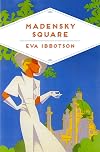
Eva Ibbotson is known for her charming tales of romance set in a simpler time and place and Madensky Square certainly seems to follow this format. Set in Vienna just before World War I, she details the daily life in and around the small Madensky Square. But if one looks a little closer you’ll find that her observations reveal the darker side of life as well.
The main character, Susanna Weber is known as the fashion designer and seamstress of choice as she produces elegant clothes for the show more women of Vienna. Her profession gives her open access to a number of lives and she becomes the matchmaker, comforter, confidante and lover. While we, the readers, are aware of the upcoming war that will change their lives forever, Susanna and her friends are more concerned with the daily events in the idyllic Madensky Square.
I actually found Madensky Square to be rather dark and depressing. The secret lives and hidden actions of Susanna and her neighbours were slightly distasteful. Many of Susanna’s friends and, indeed, Susanna herself, are the lovers of married men. Their wives are treated with disdain and mockery and beauty seems to be the goal. Beauty in appearance, clothing or surroundings were important but internal beauty was dismissed. While the writing was light and her descriptions were gorgeous, this story just didn’t have the charm I was expecting. show less
The main character, Susanna Weber is known as the fashion designer and seamstress of choice as she produces elegant clothes for the show more women of Vienna. Her profession gives her open access to a number of lives and she becomes the matchmaker, comforter, confidante and lover. While we, the readers, are aware of the upcoming war that will change their lives forever, Susanna and her friends are more concerned with the daily events in the idyllic Madensky Square.
I actually found Madensky Square to be rather dark and depressing. The secret lives and hidden actions of Susanna and her neighbours were slightly distasteful. Many of Susanna’s friends and, indeed, Susanna herself, are the lovers of married men. Their wives are treated with disdain and mockery and beauty seems to be the goal. Beauty in appearance, clothing or surroundings were important but internal beauty was dismissed. While the writing was light and her descriptions were gorgeous, this story just didn’t have the charm I was expecting. show less

The Secret of Platform 13 is my first Eva Ibbotson book, but it won't be my last. Every nine years, England's gump (or passageway) to magical Avalon, the Island, opens for nine days — and nine days only. During one such Opening, the Island's baby prince is kidnapped by the most unlikely person imaginable, a rich and selfish woman who then learns she is expecting a baby herself. Nine years later when a rescue mission can finally be mounted, the rescuers’ best-laid plans go awry when the show more prince turns out to be a spoiled and nasty boy who doesn’t want to be rescued.
Elements of this story will be very familiar to fans of J. K. Rowling's Harry Potter... two worlds coexisting in the heart of England, one ordinary, one magical and secret. A young boy unaware of his connections to the magical world, treated as a servant in a house where he is unwelcome (right down to the cupboard bedroom). Or the foolish mother who, with her spoiled, overweight son, goes into hiding once the emissaries of the magical world disrupt their predictable lives. An ordinary-world train station platform that serves as a portal to the magical place beyond. The thing is, Ibbotson was there first; The Secret of Platform 13 was published in 1994, three years before the first HP book appeared. Hmm.
Ibbotson's prose is more whimsical and artistic than Rowling's, which I've never been able to praise as more than serviceable. Her style is occasionally reminiscent of C. S. Lewis's familiar voice, adding just the inconsequential details and touch of humor that make the story come alive. The descriptions of the nastier fairy-tale characters (harpies and brollachans and such) reminded me forcibly of Caspian's shock at discovering such creatures still existed in Narnia. And there were many other nods of a Narnian character. I felt right at home.
It's too bad that this fun little tale cannot be read without comparisons to its more famous Potter relative. I use Lewis’s criteria for good children’s books — that the best ones can be enjoyed by adults as well — and The Secret of Platform 13 is certainly of that company. show less
Elements of this story will be very familiar to fans of J. K. Rowling's Harry Potter... two worlds coexisting in the heart of England, one ordinary, one magical and secret. A young boy unaware of his connections to the magical world, treated as a servant in a house where he is unwelcome (right down to the cupboard bedroom). Or the foolish mother who, with her spoiled, overweight son, goes into hiding once the emissaries of the magical world disrupt their predictable lives. An ordinary-world train station platform that serves as a portal to the magical place beyond. The thing is, Ibbotson was there first; The Secret of Platform 13 was published in 1994, three years before the first HP book appeared. Hmm.
Ibbotson's prose is more whimsical and artistic than Rowling's, which I've never been able to praise as more than serviceable. Her style is occasionally reminiscent of C. S. Lewis's familiar voice, adding just the inconsequential details and touch of humor that make the story come alive. The descriptions of the nastier fairy-tale characters (harpies and brollachans and such) reminded me forcibly of Caspian's shock at discovering such creatures still existed in Narnia. And there were many other nods of a Narnian character. I felt right at home.
It's too bad that this fun little tale cannot be read without comparisons to its more famous Potter relative. I use Lewis’s criteria for good children’s books — that the best ones can be enjoyed by adults as well — and The Secret of Platform 13 is certainly of that company. show less
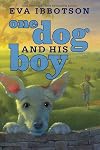
All Hal Fenton ever wanted was a dog. His rich parents are never around, and in any event don’t like messes, or spontaneity, or companionship – all things he knew he could get from a dog:
"Hal didn’t mind what it looked like; it would be alive, and it would belong to him, and it would be there when his father was in Dubai and his mother was out with her friends and he was alone in the house with the maid who changed every month and was always so homesick and so sad.”
Before his tenth show more birthday he virtually bombarded his parents with pleas and notes, and finally his father said okay, but not to what Hal thought. His father was going to take Hal to the Easy Pets Dog Agency where you could rent a dog for the weekend. He figured Hal would get tired of the dog very quickly, and would hardly notice when they returned it.
But Hal and the little mutt Fleck felt immediate and mutual devotion, and Hal’s mother had to trick Hal to get Fleck back to the Agency. Hal, desperate, prepared to rescue Fleck and run away. At the Agency, he won the assistance of the little girl Pippa who was helping to take care of the dogs. She not only went with him, but she freed all of Fleck’s other dog friends in Room A. All of them headed out to Hal’s grandparents, who Hal knew would be accepting. Along the way they were chased by greedy adults who were after the large monetary reward publicized for Hal, but the two children also made a number of helpful and wonderful new friends. The dogs too found “soul mates” along the way. Thus, Hal and Pippa and all the dogs learned what it meant to feel as if you were “home,” and even Hal’s parents started to learn as well.
Evaluation: How can you not love a book about dogs that don’t die? ….Only in this case, it was the author who died, days before seeing the page proofs for this book. She left lots of adoring fans behind, including me. This book is meant for middle grade readers, but will be endearing to readers of any age. show less
"Hal didn’t mind what it looked like; it would be alive, and it would belong to him, and it would be there when his father was in Dubai and his mother was out with her friends and he was alone in the house with the maid who changed every month and was always so homesick and so sad.”
Before his tenth show more birthday he virtually bombarded his parents with pleas and notes, and finally his father said okay, but not to what Hal thought. His father was going to take Hal to the Easy Pets Dog Agency where you could rent a dog for the weekend. He figured Hal would get tired of the dog very quickly, and would hardly notice when they returned it.
But Hal and the little mutt Fleck felt immediate and mutual devotion, and Hal’s mother had to trick Hal to get Fleck back to the Agency. Hal, desperate, prepared to rescue Fleck and run away. At the Agency, he won the assistance of the little girl Pippa who was helping to take care of the dogs. She not only went with him, but she freed all of Fleck’s other dog friends in Room A. All of them headed out to Hal’s grandparents, who Hal knew would be accepting. Along the way they were chased by greedy adults who were after the large monetary reward publicized for Hal, but the two children also made a number of helpful and wonderful new friends. The dogs too found “soul mates” along the way. Thus, Hal and Pippa and all the dogs learned what it meant to feel as if you were “home,” and even Hal’s parents started to learn as well.
Evaluation: How can you not love a book about dogs that don’t die? ….Only in this case, it was the author who died, days before seeing the page proofs for this book. She left lots of adoring fans behind, including me. This book is meant for middle grade readers, but will be endearing to readers of any age. show less
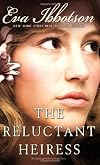
This book is virtually identical to Ibbotson's The Morning Gift in many ways, but I didn’t care. I always say, when you have a good story, stick with it! It was still enjoyable to me in the way all modern fairy tales are. Nevertheless, having just read The Morning Gift before this one, there were no surprises for me, except for the occasional change in syntax:
The Morning Gift: “What I’m going to do now, is kiss you.”
The Reluctant Heiress: “’I’m going to kiss you, you see,’ he show more explained.”
Yes, these books are seriously alike, but it’s a timeless tale. Guy meets girl. There is instant but bewildering attraction, because the guy and girl are each convinced he or she is in love with someone else. The Someone Elses turn out to be not who they seemed to be. And, well, I won’t spoil the timeless, inevitable ending, in case you haven’t figured it out, but those quotes above should give you a hint.
In this version of Ibbotson’s upside-down Cinderella plot, we are once again in pre-World War II Vienna, where we meet Tessa, a princess in disguise working as a gofer for an opera company. She is indispensable and indefatigable. She rescues babies and puppies and mice and everyone loves her. She even cuts off her own glorious hair when a suitable wig cannot be found for a production.
Enter Guy Farne, irrepressible, indomitable, honorable, and convinced he is in love with a vapid beauty named Nerine who rejected him once before because he wasn’t rich enough. He set out to win her by becoming as rich as he possibly could, even purchasing the magnificent but too-expensive-to-maintain castle of Pfaffenstein, now owned by two old women and their grand-niece, the Princess. “The Princess” of course is none other than Tessa, who everyone thinks should marry a very dumb faded nobleman she doesn’t love.
Guy meets Tessa at the opera, not knowing she is the Princess of Pfaffenstein. The usual false impressions, miscommunications, and misunderstandings ensue common to the playing out of this tale, until at last, all the parties concerned are with exactly who they are meant to be, according, some would say, to the stars.
Discussion: I love the male protagonist, Guy – Ibbotson is great with her males. Guy is an appealing mix of not-too-handsome but definitely attractive, talented, decisive, chivalrous, kind, but with a temper when his pride is hurt and prone to bitter self-condemnation over his own follies. That is, the men are good, but not so good as to be boring.
The female heroines are pretty much the same: a combination of perfection with a ditsy vulnerability, small and thin, long blonde hair, and a snub nose, beloved by everyone. Although one can’t help but root for the heroine in Ibbotson’s books, to me she is generally the least interesting of the characters. (While the ditsy vulnerability reinforces her “innocence” and serves to draw the “strong yet tender” male hero to her, such a protagonist can be very irritating to the reader.) Ibbotson is especially good, however, with her auxiliary cast, the members of which are drawn with precision and affection.
I do wish I could find out what it is with Ibbotson and the valorization of small, thin, blonde, and snub nose. She had said in an interview that she wrote for women, so she couldn’t really be pandering to a perceived predilection by men, could she? Is this possibly how she wanted to look because she suffered discrimination (from anti-Semites) if she didn’t? Is she perhaps just trying to fit her heroine within the traditional parameters of the fairy tale? Or, Heaven forfend, is she reflecting what she learned to be beautiful in the racist, pre-World War II buildup in the Germanic countries?
The author’s vitriolic commentary about the upper classes – particularly about those who gain their status by heredity rather than by working for it - is especially marked in this book. While amusing, I think she is more effective in her later books when she applies some nuance and subtlety to the matter.
Evaluation: I liked A Countess Below Stairs and The Morning Gift more than this one, but this is not to say I didn’t enjoy reading it. Like her other books, this one is full of love for Austria and music, and portrays nicely a slice of society in the time between the world wars. And of course it is a charming fairy tale-like love story.
Rating: 3.5/5 show less
The Morning Gift: “What I’m going to do now, is kiss you.”
The Reluctant Heiress: “’I’m going to kiss you, you see,’ he show more explained.”
Yes, these books are seriously alike, but it’s a timeless tale. Guy meets girl. There is instant but bewildering attraction, because the guy and girl are each convinced he or she is in love with someone else. The Someone Elses turn out to be not who they seemed to be. And, well, I won’t spoil the timeless, inevitable ending, in case you haven’t figured it out, but those quotes above should give you a hint.
In this version of Ibbotson’s upside-down Cinderella plot, we are once again in pre-World War II Vienna, where we meet Tessa, a princess in disguise working as a gofer for an opera company. She is indispensable and indefatigable. She rescues babies and puppies and mice and everyone loves her. She even cuts off her own glorious hair when a suitable wig cannot be found for a production.
Enter Guy Farne, irrepressible, indomitable, honorable, and convinced he is in love with a vapid beauty named Nerine who rejected him once before because he wasn’t rich enough. He set out to win her by becoming as rich as he possibly could, even purchasing the magnificent but too-expensive-to-maintain castle of Pfaffenstein, now owned by two old women and their grand-niece, the Princess. “The Princess” of course is none other than Tessa, who everyone thinks should marry a very dumb faded nobleman she doesn’t love.
Guy meets Tessa at the opera, not knowing she is the Princess of Pfaffenstein. The usual false impressions, miscommunications, and misunderstandings ensue common to the playing out of this tale, until at last, all the parties concerned are with exactly who they are meant to be, according, some would say, to the stars.
Discussion: I love the male protagonist, Guy – Ibbotson is great with her males. Guy is an appealing mix of not-too-handsome but definitely attractive, talented, decisive, chivalrous, kind, but with a temper when his pride is hurt and prone to bitter self-condemnation over his own follies. That is, the men are good, but not so good as to be boring.
The female heroines are pretty much the same: a combination of perfection with a ditsy vulnerability, small and thin, long blonde hair, and a snub nose, beloved by everyone. Although one can’t help but root for the heroine in Ibbotson’s books, to me she is generally the least interesting of the characters. (While the ditsy vulnerability reinforces her “innocence” and serves to draw the “strong yet tender” male hero to her, such a protagonist can be very irritating to the reader.) Ibbotson is especially good, however, with her auxiliary cast, the members of which are drawn with precision and affection.
I do wish I could find out what it is with Ibbotson and the valorization of small, thin, blonde, and snub nose. She had said in an interview that she wrote for women, so she couldn’t really be pandering to a perceived predilection by men, could she? Is this possibly how she wanted to look because she suffered discrimination (from anti-Semites) if she didn’t? Is she perhaps just trying to fit her heroine within the traditional parameters of the fairy tale? Or, Heaven forfend, is she reflecting what she learned to be beautiful in the racist, pre-World War II buildup in the Germanic countries?
The author’s vitriolic commentary about the upper classes – particularly about those who gain their status by heredity rather than by working for it - is especially marked in this book. While amusing, I think she is more effective in her later books when she applies some nuance and subtlety to the matter.
Evaluation: I liked A Countess Below Stairs and The Morning Gift more than this one, but this is not to say I didn’t enjoy reading it. Like her other books, this one is full of love for Austria and music, and portrays nicely a slice of society in the time between the world wars. And of course it is a charming fairy tale-like love story.
Rating: 3.5/5 show less
Lists
Women in War (1)
Favourite Books (1)
Best Young Adult (1)
A Novel Cure (1)
Guilty Pleasures (1)
Witchy Fiction (1)
4th Grade Books (2)
Ballet Books (1)
Comfort Reads (1)
Latin America (1)
Princess Tales (1)
Dance! (1)
Awards


You May Also Like


Associated Authors
Statistics
- Works
- 40
- Also by
- 8
- Members
- 22,436
- Popularity
- #948
- Rating
- 3.9
- Reviews
- 513
- ISBNs
- 794
- Languages
- 20
- Favorited
- 81