The Man Who Planted Trees
by Jean Giono
On This Page
Description
Discover this beloved masterpiece of nature writing that is a hymn to creation and the power of the individual to do their bit to change the world for the better.In 1910, while hiking through the wild lavender in a wind-swept, desolate valley in Provence, a man comes across a shepherd called Elzéard Bouffier. Staying with him, he watches Elzéard sorting and then planting hundreds of acorns as he walks through the wilderness.Ten years later, after surviving the First World War, he visits show more the shepherd again and sees the young forest he has created spreading slowly over the valley. Elzéard's solitary, silent work continues and the narrator returns year after year to see the miracle he is gradually creating: a verdant, green landscape that is a testament to one man's creative instinct.A beautiful story of hope, survival and selflessness, The Man Who Planted Trees resonates as strongly today as when it was first published.Translated by Peter Doyle. show lessTags
Recommendations





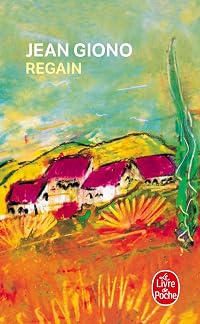





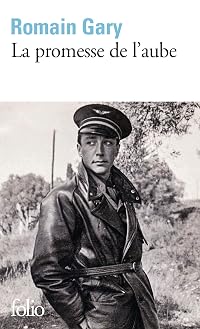




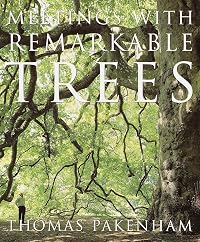











Member Recommendations

Book2Dragon Both of these books took my breath away in their depth and layered meanings. You will find Giono's book perhaps more adult, and McLerran's for all ages, but both are much needed for the world today.


Member Reviews
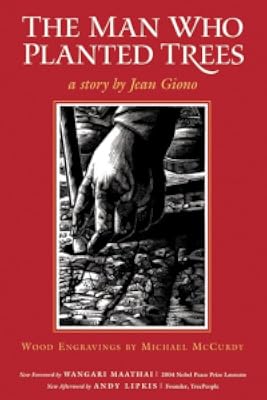
This book literally fell off of the bookshelf and landed at my feet, cover up, beckoning me to read it. The cover art, featuring a beautifully detailed hand planting an acorn into the soil, further locked my attention.
When our narrator first encounters him, while wandering in a barren, rural landscape, Elézard Bouffier is a shepherd who had given himself the duty of planting oak trees, a bucket of acorns at a time, every day. No motive is given except one of pure care for the world and perhaps an implied sense of humble duty.
Over the years and across two world wars that hardly occupy more than a few sentences, Bouffier's efforts continue and expand to birch and other trees. The effects are transformative. The land springs back to show more life. Streams are restored, the air is purified, other flora and fauna return. There are lessons in these efforts about ecology and naturalism but also about simple care and duty and their restorative effects on not just some of nature but all of it.
I might fancifully liken the book, in falling from the top of my bookshelf, to be an acorn planted into my awareness. In giving the book some quiet attention it returned to me a feeling of peaceful contemplation and a respect for the humble duty of caring. This is not a gripping story, necessarily, but it is arresting in the enticing worldview it offers. show less
When our narrator first encounters him, while wandering in a barren, rural landscape, Elézard Bouffier is a shepherd who had given himself the duty of planting oak trees, a bucket of acorns at a time, every day. No motive is given except one of pure care for the world and perhaps an implied sense of humble duty.
Over the years and across two world wars that hardly occupy more than a few sentences, Bouffier's efforts continue and expand to birch and other trees. The effects are transformative. The land springs back to show more life. Streams are restored, the air is purified, other flora and fauna return. There are lessons in these efforts about ecology and naturalism but also about simple care and duty and their restorative effects on not just some of nature but all of it.
I might fancifully liken the book, in falling from the top of my bookshelf, to be an acorn planted into my awareness. In giving the book some quiet attention it returned to me a feeling of peaceful contemplation and a respect for the humble duty of caring. This is not a gripping story, necessarily, but it is arresting in the enticing worldview it offers. show less
What a hopeful and encouraging story this is. It is about the difference that one person can make and how one positive action can release a chain reaction of ….Set from 1913 to 1949, it spans two world wars and, at a time when man is involved in so much destruction, here is a man who is building something.
When you remembered that all this had sprung from the hands and the soul of this one man, without technical resources, you understood that humans could be as effectual as God in other realms than that of destruction.
His efforts restore the forest, but that is the first step only...what happens after is that nature takes over and begins to replenish all the good things that have been lost. With the blossoming of nature, comes the show more restoration of the villages and the men.
Hunters, climbing into the wilderness in pursuit of hares or wild boar, had of course noticed the sudden growth of little trees, but had attributed it to some natural caprice of the earth. That is why no one meddled with Elzeard Bouffier’s work. If he had been detected he would have had opposition. He was indetectable. Who in the villages or in the administration could have dreamed of such perseverance in a magnificent generosity?
Seems sad, but accurate, to me that had he been “detected” he would have been stopped. It also seemed sad to me that he would never be appreciated or credited with what he had done. But, then, he did not do it for that reason. He was not seeking praise, he was seeking to restore the land, and he had done everything he set out, without any fanfare, to do. show less
When you remembered that all this had sprung from the hands and the soul of this one man, without technical resources, you understood that humans could be as effectual as God in other realms than that of destruction.
His efforts restore the forest, but that is the first step only...what happens after is that nature takes over and begins to replenish all the good things that have been lost. With the blossoming of nature, comes the show more restoration of the villages and the men.
Hunters, climbing into the wilderness in pursuit of hares or wild boar, had of course noticed the sudden growth of little trees, but had attributed it to some natural caprice of the earth. That is why no one meddled with Elzeard Bouffier’s work. If he had been detected he would have had opposition. He was indetectable. Who in the villages or in the administration could have dreamed of such perseverance in a magnificent generosity?
Seems sad, but accurate, to me that had he been “detected” he would have been stopped. It also seemed sad to me that he would never be appreciated or credited with what he had done. But, then, he did not do it for that reason. He was not seeking praise, he was seeking to restore the land, and he had done everything he set out, without any fanfare, to do. show less
"You may say I'm a dreamer
But I'm not the only one"
John Lennon, Imagine
The simple message of this short allegory is encouragement to imagine and then do something.
My copy included wood engravings by Harry Brockway. I hope your copy has them too. Notice how large the hands are? Right, that's an important point. I truly hope readers who were uplifted by this 1953 work take the message to heart. And to hand.
Planting oaks native to your area is among the most hopeful steps to begin restoration. Or any native trees, native shrubs, or native wildflowers of your area. You don't need access to acres upon acres like the man who planted trees did. If you have some yard (garden in the UK), replace some of that lawn with eco-rich native species. show more
Watch as you create something remarkable. And become part of something good.
Imagine!
Need more inspiration?
Read Oak and Company by Richard Mabey, 1983.
Need actionable advice?
Read The Nature of Oaks: The Rich Ecology of Our Most Essential Native Trees by Douglas W. Tallamy, 2021.
Google "Homegrown National Park"
Need perseverance?
前人栽樹,後人乘涼 a Chinese proverb, "One generation plants the trees, another gets the shade." show less
But I'm not the only one"
John Lennon, Imagine
The simple message of this short allegory is encouragement to imagine and then do something.
My copy included wood engravings by Harry Brockway. I hope your copy has them too. Notice how large the hands are? Right, that's an important point. I truly hope readers who were uplifted by this 1953 work take the message to heart. And to hand.
Planting oaks native to your area is among the most hopeful steps to begin restoration. Or any native trees, native shrubs, or native wildflowers of your area. You don't need access to acres upon acres like the man who planted trees did. If you have some yard (garden in the UK), replace some of that lawn with eco-rich native species. show more
Watch as you create something remarkable. And become part of something good.
Imagine!
Need more inspiration?
Read Oak and Company by Richard Mabey, 1983.
Need actionable advice?
Read The Nature of Oaks: The Rich Ecology of Our Most Essential Native Trees by Douglas W. Tallamy, 2021.
Google "Homegrown National Park"
Need perseverance?
前人栽樹,後人乘涼 a Chinese proverb, "One generation plants the trees, another gets the shade." show less
A quietly powerful fable about the ability of one man's ability to improve the world through consistent, unselfish devotion to a single task. The detailed wood engravings are a very welcome addition to the story.
This slender Provençal parable was – bizarrely – originally composed for a Reader's Digest competition which asked people to write about ‘The most unforgettable character I've met’. Giono's response was to produce this simple, bucolic tale about a lone shepherd who takes it upon himself to plant trees singlehandedly across vast swathes of the Provençal Alps.
The landscape which, at the start of the story in the 1910s, is desolate and bleak, has become by the end, in the late 1940s, a sort of rural paradise of lush woodland, running streams, and happy red-cheeked villagers. It's a narrative with obvious ecological appeal, as well as carrying a message of humanist hopefulness:
Quand on se souvenait que tout était sorti des mains show more et de l'âme de cet homme, sans moyens techniques, on comprenait que les hommes pourraient être aussi efficaces que Dieu dans d'autres domaines que la destruction.
The contrast with destruction is important, since the narrative is twice interrupted – significantly, if discreetly – by world wars. Giono himself fought at Verdun, and found naturally enough that the experience had made him a committed pacifist. (He took this position pretty far, famously asking in 1937, ‘What's the worst that could happen if Germany does invade France?’) The simple, easy prose style turns this stance into something that feels timeless, like a fable.
In contrast to the dark ambiguity of the classic pre-modern legends and fairytales, I find that modern myths often have a sort of clunking unsubtlety to them – Paolo Coelho, for example. This is nowhere near that bad, but I must admit I'm a little cautious about a story whose conclusion is that ‘malgré tout, la condition humaine est admirable’, which perhaps risks encouraging a little too much complacency in the reader. Then again, sometimes you need a bit of encouragement, and certainly this short story has a message to deliver and captures the landscape of Haute Provence with great sensitivity. show less
The landscape which, at the start of the story in the 1910s, is desolate and bleak, has become by the end, in the late 1940s, a sort of rural paradise of lush woodland, running streams, and happy red-cheeked villagers. It's a narrative with obvious ecological appeal, as well as carrying a message of humanist hopefulness:
Quand on se souvenait que tout était sorti des mains show more et de l'âme de cet homme, sans moyens techniques, on comprenait que les hommes pourraient être aussi efficaces que Dieu dans d'autres domaines que la destruction.
The contrast with destruction is important, since the narrative is twice interrupted – significantly, if discreetly – by world wars. Giono himself fought at Verdun, and found naturally enough that the experience had made him a committed pacifist. (He took this position pretty far, famously asking in 1937, ‘What's the worst that could happen if Germany does invade France?’) The simple, easy prose style turns this stance into something that feels timeless, like a fable.
In contrast to the dark ambiguity of the classic pre-modern legends and fairytales, I find that modern myths often have a sort of clunking unsubtlety to them – Paolo Coelho, for example. This is nowhere near that bad, but I must admit I'm a little cautious about a story whose conclusion is that ‘malgré tout, la condition humaine est admirable’, which perhaps risks encouraging a little too much complacency in the reader. Then again, sometimes you need a bit of encouragement, and certainly this short story has a message to deliver and captures the landscape of Haute Provence with great sensitivity. show less
This is a lovely little parable enhanced by its touches of reality that have led some to think that, like Sherlock Holmes, we are talking about a real character here. Its one flaw is the solitariness of Bouffier the shepherd, attractive as a literary device but not so good in reality. It is not good for the man to be alone. Beautifully produced with striking woodcuts inthis edition.
This short story is almost a fable. The unnamed narrator is traveling little-known mountain villages in France, and comes across a wasteland in 1913. He meets a shepherd, Elzéard Bouffier, who roams around planting trees, and this small act of kindness causes amazing rejuvenation.
I read the anniversary edition with lovely wood engraving illustrations by Michael McCurdy. It's a feel-good sort of story that the author himself hoped would inspire others to plant trees, and my town is reading it as a community read this month. If you enjoy stories about conservation, you may give this a try - and it is very short, so it will not take long - though it was a little preachy for my taste. The added content in this edition with information on show more planting/growing trees and national (and international) resources will be a bonus for anyone who is inspired to plant. show less
I read the anniversary edition with lovely wood engraving illustrations by Michael McCurdy. It's a feel-good sort of story that the author himself hoped would inspire others to plant trees, and my town is reading it as a community read this month. If you enjoy stories about conservation, you may give this a try - and it is very short, so it will not take long - though it was a little preachy for my taste. The added content in this edition with information on show more planting/growing trees and national (and international) resources will be a bonus for anyone who is inspired to plant. show less
Members
- Recently Added By
Lists

EU Fiction: 1950-2022
223 works; 68 members

Favorite Short Fiction
228 works; 99 members

A Novel Cure
742 works; 23 members

Books Read in 2018
4,360 works; 110 members

Books Read in 2019
4,052 works; 108 members

Fiction to Read for Earth Day
50 works; 8 members

Recommended Nature Writing
346 works; 180 members

Nature Writing
33 works; 3 members
Author Information

203+ Works 6,989 Members
Jean Giono was born in France on March 30, 1985. He was an author about whom Germaine Bree and M. Guiton have written, "When Giono's first novel, Colline (Hill of Destiny) appeared in 1929, it struck a fresh, new note. . . . After Proust and Gide, Duhamel and Romains, Cocteau and Giraudoux, what could be more restful than a world of wind and sun show more and simple men who apparently had never heard of psychological analysis, never confronted any social problems, never read any books. . ." (An Age of Fiction). Raised by his shoemaker father in a small town in the south of France, Giono's fiction has its roots in the peasant life of Provence. Horrified by his experiences in World War I, Giono returned to the world of his youth, which became the world of his imagination. After the shock of World War II, his novels seemed to gain in stature. One of his best is Horseman on the Roof (1951), his chronicle of the great cholera epidemic of 1838. Giono was honoured with the Prince Rainier of Monaco literary prize in 1953, awarded for his lifetime achievements, was elected to the Académie Goncourt in 1954, and became a member of the Conseil Littéraire of Monaco in 1963. Giono died of a heart attack in 1970. (Bowker Author Biography) show less
Some Editions
Awards and Honors
Series
Belongs to Publisher Series
Work Relationships
Common Knowledge
- Canonical title
- The Man Who Planted Trees
- Original title
- L'homme qui plantait des arbres
- Alternate titles
- The Man Who Planted Trees and Grew Happiness
- Original publication date
- 1953
- People/Characters
- Elzéard Bouffier
- Important places
- France; Provence-Alpes-Côte d'Azur, France
- Important events
- World War I; World War II
- First words
- For a human character to reveal truly exceptional qualities, one must have the good fortune to be able to observe its performance over many years.
Afterword: I mustered enough courage to call upon Jean Giono in Manosque, Provence, at 11:00 A.M., August 15, 1970. - Quotations
- You know, Giono said to me, there are also times in life when a person has to rush off in pursuit of hopefulness. [p. 51]
- Last words
- (Click to show. Warning: May contain spoilers.)Elzéard Bouffier died peacefully in 1947 at the hospice in Banon.
- Original language
- French
Classifications
Statistics
- Members
- 2,179
- Popularity
- 9,381
- Reviews
- 55
- Rating
- (4.07)
- Languages
- 19 — Catalan, Chinese, Czech, Danish, Dutch, English, Finnish, French, German, Irish, Galician, Hindi, Italian, Japanese, Portuguese, Slovak, Spanish, Swedish, Tamil
- Media
- Paper, Audiobook, Ebook
- ISBNs
- 140
- ASINs
- 31