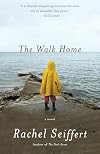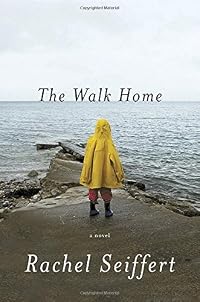
The Walk Home
by Rachel Seiffert
On This Page
Description
Stevie comes from a long line of people who have cut and run. Just like he has.Only he’s not so sure he was right to go. He’s been to London, taught himself to get by, and now he’s working as a laborer not so far from his childhood home in Glasgow. But Stevie hasn’t told his family—what’s left of them—that he’s back. Not yet.
He’s also not far from his uncle Eric, another one who left—for love this time. Stevie’s toughened himself up against that emotion. And as show more for his mother, Lindsey . . . well, she ran her whole life. From her father and Ireland, from her husband, and eventually from Stevie, too.
Moving between Stevie’s contemporary Glaswegian life and the story of his parents when they were young, The Walk Home is a powerful novel about the risk of love, and the madness and betrayals that can split a family. Without your past, who are you? Where does it leave you when you go against your family, turn your back on your home; when you defy the world you grew up in? If you cut your ties, will you cut yourself adrift? Yearning to belong exerts a powerful draw, and Stevie knows there are still people waiting for him to walk home.
An extraordinarily deft and humane writer, Rachel Seiffert tells us the truth about love and about hope.
This eBook edition includes a Reading Group Guide.
. show less
Tags
Recommendations



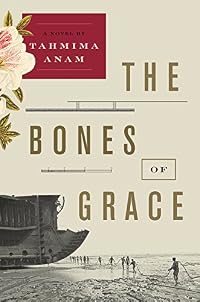
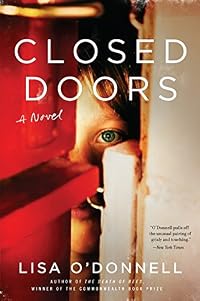
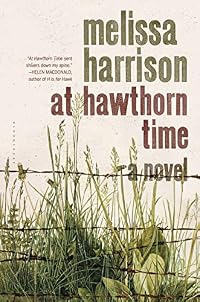
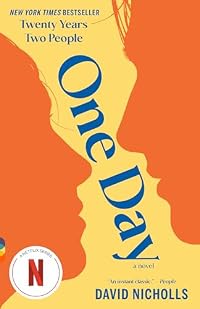
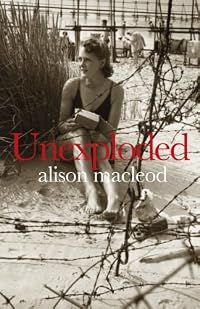

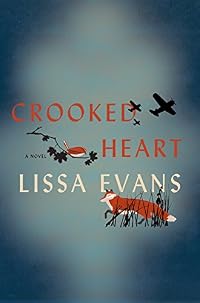


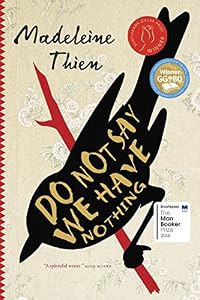


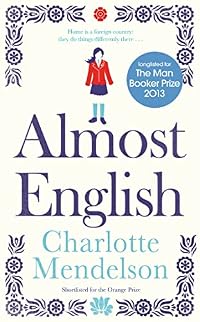









Member Recommendations
by charl08
Member Reviews
One of the most interesting elements of The Walk Home is its depiction of the ongoing clashes between the Protestants and the Catholics in Northern Ireland and Scotland. Actually, some readers may find this aspect of the story surprising for it garners little media attention these days. In fact, it is a safe bet to say that when discussing current religious conflicts, that part of the world never even crosses one’s mind. Yet, here is a modern-day story in which the animosity between the two religions continues to cause tension and provoke violence. This not only adds additional conflict to the story, it creates a timeless quality to it as well. Stevie’s story could really occur in any decade.
The rest of the story is equally fraught show more with tension but of the kind that occurs within families. There are strong themes of duty and love, as every character must reconcile that the two are not always related and/or compatible. Eric, Lindsey, and Stevie are each characters who are unable to do so, and so they run away. It is their lessons learned, the outcome of their flight from family conflict, which creates the heart of the story. As one might expect, it is an emotionally fragile story because family drama is always a highly sensitive area.
While The Walk Home ends on a hopeful note, the rest of the story is bleak and frustrating. Between the poverty of the scheme, the financial difficulties of his family, the financial difficulties of his boss, and the lasting regret displayed by the characters about fights gone wrong or decisions made, it is not the type of novel that allows one to escape one’s real-world problems. Rather, it is the type of novel to force readers to pause and reflect on one’s own choices and opinions, to recognize the truth behind the adage of blood being thicker than water. In this regard, The Walk Home is a quiet, reflective story, still enjoyable even though it was written not so much to entertain but rather to educate. show less
The rest of the story is equally fraught show more with tension but of the kind that occurs within families. There are strong themes of duty and love, as every character must reconcile that the two are not always related and/or compatible. Eric, Lindsey, and Stevie are each characters who are unable to do so, and so they run away. It is their lessons learned, the outcome of their flight from family conflict, which creates the heart of the story. As one might expect, it is an emotionally fragile story because family drama is always a highly sensitive area.
While The Walk Home ends on a hopeful note, the rest of the story is bleak and frustrating. Between the poverty of the scheme, the financial difficulties of his family, the financial difficulties of his boss, and the lasting regret displayed by the characters about fights gone wrong or decisions made, it is not the type of novel that allows one to escape one’s real-world problems. Rather, it is the type of novel to force readers to pause and reflect on one’s own choices and opinions, to recognize the truth behind the adage of blood being thicker than water. In this regard, The Walk Home is a quiet, reflective story, still enjoyable even though it was written not so much to entertain but rather to educate. show less
The Walk Home by Rachel Seiffert is a highly recommended novel set in Glasgow about conflict, loss, and the nature of what is a home.
Opening in the present day Glasgow with Polish construction foreman Jozef hoping to earn enough money to allow him to go back to Gdansk, Poland, and reunite with his estranged wife, we also meet Glasgow native Stevie, an enigmatic young man, who is now working on the Polish construction crew. The story then goes back in time and we meet Stevie's parents, Graham and Lindsey as well as his grandmother (Graham's mother) Brenda, and learn about the troubles with the family black sheep, her brother Eric.
The Walk Home follows three main narrative threads: Graham and Lindsey, his uncle Eric, and Polish Jozef. show more This is a novel of exiles, but also one of family tensions and troubles over the generations. Much of the tension is associated with the historic Irish Troubles as well as a familiar strain of brutality that runs through the family. There are topics that are off limits and never discussed. While all these family members need each other, their personal pain keeps them apart and there is no chance for healing.
The prose in this well written novel is simultaneously graceful, but also sparse and controlled, almost reflecting the dysfunctional inner life of her characters. Seiffert's use of the Glasgow dialect is both authentic and a monumental struggle (at times) for this American reader. While I'm highly recommending The Walk Home, the time it took for me to fully comprehend the written dialect should be noted.
Disclosure: My Kindle edition was courtesy of Knopf Doubleday for review purposes. show less
Opening in the present day Glasgow with Polish construction foreman Jozef hoping to earn enough money to allow him to go back to Gdansk, Poland, and reunite with his estranged wife, we also meet Glasgow native Stevie, an enigmatic young man, who is now working on the Polish construction crew. The story then goes back in time and we meet Stevie's parents, Graham and Lindsey as well as his grandmother (Graham's mother) Brenda, and learn about the troubles with the family black sheep, her brother Eric.
The Walk Home follows three main narrative threads: Graham and Lindsey, his uncle Eric, and Polish Jozef. show more This is a novel of exiles, but also one of family tensions and troubles over the generations. Much of the tension is associated with the historic Irish Troubles as well as a familiar strain of brutality that runs through the family. There are topics that are off limits and never discussed. While all these family members need each other, their personal pain keeps them apart and there is no chance for healing.
The prose in this well written novel is simultaneously graceful, but also sparse and controlled, almost reflecting the dysfunctional inner life of her characters. Seiffert's use of the Glasgow dialect is both authentic and a monumental struggle (at times) for this American reader. While I'm highly recommending The Walk Home, the time it took for me to fully comprehend the written dialect should be noted.
Disclosure: My Kindle edition was courtesy of Knopf Doubleday for review purposes. show less
I found this beautifully written novel an excellent read. Rachel Seiffert always manages to convey a lot in few words. The story starts with a young Glaswegian working with a group of Polish builders; Stevie ran away from his home in the city three years before and this is his first return. The novel moves backwards and forwards in time, taking the reader back to when Stevie's parents, Graham and Lindsey, met in Ireland. Lindsey moves to Drumchapel with Graham's family and live starts out idyllically. Rachel Seiffert writes about the poverty and the hardship in Drumchapel but doesn't preach or over-state. She writes about the July orange march and the tension between the communities but again doesn't over-work this. The narrative flits show more back and forth and we learn why Stevie's family life became difficult. A moving novel that celebrates family, despite the breakup of this family and provides some hope, despite the sadness of the novel. show less
Rachel Seiffert is not a prolific writer, but everything she has written is worth reading. This is a spare, austere and moving story of Glasgow, sectarianism, family conflict and the difficulties in attempting to heal old wounds.
I am a big fan of Rachel Seiffert's earlier books; this one--not so much. It's pretty much the story of a dysfunctional family, but the only thing that makes it dysfunctional is religion and the continuing quarrels between Protestant and Catholic Irish. Set in Glasgow, it's the story of an Irish family displaced by the Troubles. Brenda and Malky are happily married with three grown sons. When the youngest, Graham, brings home a pretty, pregnant girlfriend, they are readily taken in; Lindsey is well-loved by Brenda, who takes her along on her cleaning jobs and helps to care for young Stevie. She says little about the home she ran away from, aside from the fact that her father ranted from the bible. Surprisingly, Lindsey forms a close show more friendship with Eric, Brenda's brother, an aging widower who spends his days drawing strange pictures. Life seems pretty good, if a b it hardscrabble, but Lindsey is frustrated by Graham's reluctance to move far from the old neighborhood--and his continuing participation in an Orangeman's marching band the goes on The Walk each year.
The story alternates between past and present. The latter focuses on young Stevie, who has left home and works for a Polish contractor. The time shifts are confusing at first, but eventually they make sense.
I never really connected with these characters, except perhaps Brenda and Malky, who were doing their best to keep the family afloat. And I have to say that the Scottish dialogue was a little hard to follow. (Characters seem to end every sentence with the word "but," sometimes meaning "however," but sometimes simply arbitrary.) show less
The story alternates between past and present. The latter focuses on young Stevie, who has left home and works for a Polish contractor. The time shifts are confusing at first, but eventually they make sense.
I never really connected with these characters, except perhaps Brenda and Malky, who were doing their best to keep the family afloat. And I have to say that the Scottish dialogue was a little hard to follow. (Characters seem to end every sentence with the word "but," sometimes meaning "however," but sometimes simply arbitrary.) show less
Beautiful writing, but not much there there. The entire story could be summed up in a short paragraph.
Beautiful writing, but not much there there. The entire story could be summed up in a short paragraph.
Members
- Recently Added By
Published Reviews
ThingScore 50
Through the images, three strands of story emerge: that of Graham and his family; that of Eric, his art and his tragic marriage to a Catholic; and the anxieties of Jozef. Each is authentic and convincing, but they are told overwhelmingly through individual reminiscence, with a bare minimum of interaction between characters in the present. Often, in fact, the connections between the strands are show more so glancing that the tales seem to interrupt rather than supplement each other, to the point where you wonder if this book might not have been better arranged, like Seiffert's first novel, The Dark Room, as a triptych of novellas. show less
added by charl08
Lists

Your favorite books from the 2015 Baileys Women's Prize for Fiction
20 works; 13 members

Top Five Books of 2014
1,064 works; 398 members
Author Information

7+ Works 1,523 Members
Rachel Seiffert was born in England & now lives in Germany. This is her first novel. (Bowker Author Biography)
Awards and Honors
Awards
Common Knowledge
- Canonical title
- The Walk Home
- Original publication date
- 2014-01
Classifications
Statistics
- Members
- 62
- Popularity
- 497,527
- Reviews
- 7
- Rating
- (3.64)
- Languages
- English
- Media
- Paper, Ebook
- ISBNs
- 8
- ASINs
- 3