
On This Page
Description
Young Rachel Kalama, growing up in idyllic Honolulu in the 1890s, is part of a big, loving Hawaiian family, and dreams of seeing the far-off lands that her father, a merchant seaman, often visits. But at the age of seven, Rachel and her dreams are shattered by the discovery that she has leprosy. Forcibly removed from her family, she is sent to Kalaupapa, the isolated leper colony on the island of Moloka'i.In her exile she finds a family of friends to replace the family she's lost: a native show more healer, Haleola, who becomes her adopted "auntie" and makes Rachel aware of the rich culture and mythology of her people; Sister Mary Catherine Voorhies, one of the Franciscan sisters who care for young girls at Kalaupapa; and the beautiful, worldly Leilani, who harbors a surprising secret. At Kalaupapa she also meets the man she will one day marry.
True to historical accounts, Moloka'i is the story of an extraordinary human drama, the full scope and pathos of which has never been told before in fiction. But Rachel's life, though shadowed by disease, isolation, and tragedy, is also one of joy, courage, and dignity. This is a story about life, not death; hope, not despair. It is not about the failings of flesh, but the strength of the human spirit.
. show less
Tags
Recommendations
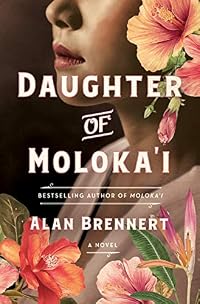


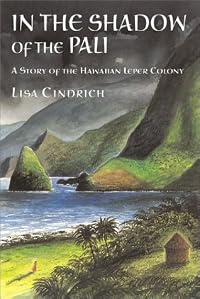































Member Recommendations
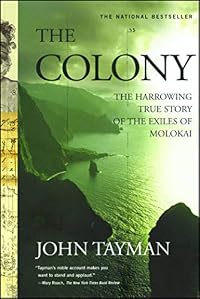
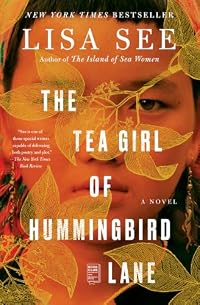
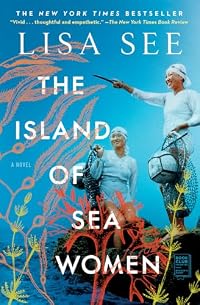
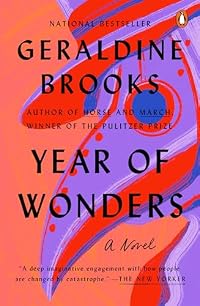
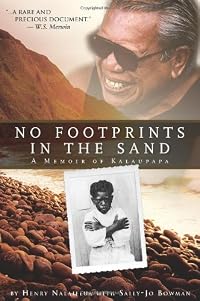
akblanchard Both books have exotic, isolated settings and characters who experience great love as well as great loss.
Member Reviews
One of the main reasons I love to read is to be transported to a different time and place. This historical fiction about experiences in a leper settlement at Kaluapapa on the island of Moloka’i, beginning in the 1890’s (and continuing into the twentieth century), accomplished this feat in fine fashion. The story begins with a young girl, Rachel Kalama, living with her family in Honolulu. When she contracts leprosy (now called Hansen’s Disease), she is removed from her family and sent to Moloka’i. The narrative follows the major events of Rachel’s life, focusing on close bonds she establishes. It is based on the experiences of real people with Hansen’s Disease and what happened to them historically. It highlights the fear, show more stigma, prejudice, and inhumane treatment they endured. There are obviously lessons to be learned in how we treat those with currently incurable contagious diseases today.
This book contains a satisfying mix of characters, plot, and originality. The author manages to make Rachel’s life of exile into a remarkable story. After all, she’s living in a small community on an island. What could possibly happen to fill an entire novel? Well, plenty can and does, and I found it both sad and thought-provoking. Rachel is a strong likeable character and it is easy to root for her. She faces an abundance of adversity and finds ways to avoid being defined by her condition.
It is obvious Brennert has done extensive research. He provides information on the background and treatment of the disease, following a historical progression, which I found extremely enlightening. He also includes a good amount of the history of Hawai’i and how it has changed over the years. It serves as touching tribute to people of the past that suffered greatly and have generally been overlooked. Content includes vivid descriptions of the ravages of Hansen’s Disease, one extremely violent scene, and a small amount of sex and profanity. I found it captivating, emotionally moving, and tragic but ultimately uplifting. Highly recommended! show less
This book contains a satisfying mix of characters, plot, and originality. The author manages to make Rachel’s life of exile into a remarkable story. After all, she’s living in a small community on an island. What could possibly happen to fill an entire novel? Well, plenty can and does, and I found it both sad and thought-provoking. Rachel is a strong likeable character and it is easy to root for her. She faces an abundance of adversity and finds ways to avoid being defined by her condition.
It is obvious Brennert has done extensive research. He provides information on the background and treatment of the disease, following a historical progression, which I found extremely enlightening. He also includes a good amount of the history of Hawai’i and how it has changed over the years. It serves as touching tribute to people of the past that suffered greatly and have generally been overlooked. Content includes vivid descriptions of the ravages of Hansen’s Disease, one extremely violent scene, and a small amount of sex and profanity. I found it captivating, emotionally moving, and tragic but ultimately uplifting. Highly recommended! show less
On one hand, Moloka'i is one of the most beautiful historical novels I've ever read, but on the other hand, it has treated a trans woman so poorly that I can't imagine myself ever reading it again . . .
Book content warnings:
- transphobia
- transmisogyny
- abuse
- lots and lots of (sometimes violent) ableism
In 1892, seven-year-old Rachel Kalama from Honolulu has a mark on her leg that won't go away. It's the first sign of leprosy, and when her sister accidentally spills her secret, Rachel's forced away from her family and sent to Moloka'i, a quarantined island. Her own mom won't even write to her anymore, and she thinks her life is over. But life on Moloka'i isn't the death sentence it seems to be, and her life--with all its heartache, show more joys, love, and everything in between--has just begun.
Rachel Kalama is the perfect main character for this book. She's spirited and full of life in a place that sometimes is painfully short of it. I never grow tired of hearing out her thoughts and dreams and hopes. It's also probably due to the book's emotionally gripping prose itself, even though at times it can be a bit stilted and pass over important parts of the narrative to later summarize over them (such asRachel's father passing away ).
I also loved learning about this part of history I'd never learned about before but really should have. It really wasn't that long ago that any of this happened. I even talked about this to one of my friends, and she was so surprised that any of this happened in the early 1900s because she'd been so sure that leprosy was one of those things that happened sooooo long ago! Again, the stuff in this book is something people like us really should have heard about before but didn't.
About halfway the book included a māhū, a third-gendered person in traditional Hawaii, and from what I understand . . . a trans woman by today's standards and to Hawaii today? In any case, I was thrilled for there to be a trans woman of color included in this important historical novel! Until . . . she was treated like shit. The way she was """revealed""" to be a māhū was by the all-contemptible shock factor method. AKA, have her genitals revealed to the main character before the trans person was allowed to "come out", so to say. And here, a violent reaction is combined! Leilani, the māhū, was beaten beforehand by a man who was "embarrassed" to have liked her, a trans woman.
All in all, yuck yuck yuck. If the author had done any research at all on trans people's feelings at all on the subject, he'd realize that wow! This is the most unfeeling way to go about introducing a trans person, especially a trans woman, who today are faced with the most violence and hate!
And then Rachel feels deceived and cheated. Later in the scene she comes around, to later refer to a group of girls and Leilani as "girls", whatever that means. And when Leilani dies about halfway through the book (her appearance in the novel as a whole is fleeting, unfortunately), Rachel makes a mention in her mind about she or Leilani not having revealed her "true gender" to everyone. ?? Again, whatever that means . . . except I know what it means. Alan Brennert doesn't consider trans women to be women.
There's a middle ground here, which is the māhū, the third gender of traditional Hawaii, but Leilani as a character always said she wanted to be a woman. Said she had always wanted to be a woman since she was a small girl! If you're an author, you need to remember who your audience is, and what many are going to take away from this is that "trans woman = 'not a girl' when Rachel says "girls" and 'not a girl' when Rachel says "true gender" ", which cannot be allowed.
I'm mad that this happened, because this novel is achingly beautiful, and I loved so much of it. As Rachel ages, Moloka'i and her community/town of Kalaupapa ages with her. And at the end, in 1970, a very important statement is made. One of the patients of Kalaupapa invites a tourist and others to the town, saying how the State of Hawaii is trying to turn Kalaupapa and Moloka'i into a resort because Moloka'i's land is too valuable. He says,
"To them it's just real estate, but to us it's a lot more. The government forced us to come here, and now that it's the only place we know, now that it's home, they want us to give it up? . . . We won't go without a fight, though. Not this time."
As of 2015, six patients still live in Kalaupapa. When they die, there's a plan to erect a monument dedicated to the 8,000 patients who lived there. The National Park Service currently has four proposals for the land:
1). Make no changes
2). Maintain the status quo, but develop a strategy to manage the area when the Department of Health operations end after the last patient dies
3). Open the park to visitors, allowing unrestricted access
4). Establish an entry-pass system and require orientation for anyone who travels to Kalaupapa. Under this proposal, which the NPS prefers, supervised visitation would also be expanded show less
Book content warnings:
- transphobia
- transmisogyny
- abuse
- lots and lots of (sometimes violent) ableism
In 1892, seven-year-old Rachel Kalama from Honolulu has a mark on her leg that won't go away. It's the first sign of leprosy, and when her sister accidentally spills her secret, Rachel's forced away from her family and sent to Moloka'i, a quarantined island. Her own mom won't even write to her anymore, and she thinks her life is over. But life on Moloka'i isn't the death sentence it seems to be, and her life--with all its heartache, show more joys, love, and everything in between--has just begun.
Rachel Kalama is the perfect main character for this book. She's spirited and full of life in a place that sometimes is painfully short of it. I never grow tired of hearing out her thoughts and dreams and hopes. It's also probably due to the book's emotionally gripping prose itself, even though at times it can be a bit stilted and pass over important parts of the narrative to later summarize over them (such as
I also loved learning about this part of history I'd never learned about before but really should have. It really wasn't that long ago that any of this happened. I even talked about this to one of my friends, and she was so surprised that any of this happened in the early 1900s because she'd been so sure that leprosy was one of those things that happened sooooo long ago! Again, the stuff in this book is something people like us really should have heard about before but didn't.
About halfway the book included a māhū, a third-gendered person in traditional Hawaii, and from what I understand . . . a trans woman by today's standards and to Hawaii today? In any case, I was thrilled for there to be a trans woman of color included in this important historical novel! Until . . . she was treated like shit. The way she was """revealed""" to be a māhū was by the all-contemptible shock factor method. AKA, have her genitals revealed to the main character before the trans person was allowed to "come out", so to say. And here, a violent reaction is combined! Leilani, the māhū, was beaten beforehand by a man who was "embarrassed" to have liked her, a trans woman.
All in all, yuck yuck yuck. If the author had done any research at all on trans people's feelings at all on the subject, he'd realize that wow! This is the most unfeeling way to go about introducing a trans person, especially a trans woman, who today are faced with the most violence and hate!
And then Rachel feels deceived and cheated. Later in the scene she comes around, to later refer to a group of girls and Leilani as "girls", whatever that means. And when Leilani dies about halfway through the book (her appearance in the novel as a whole is fleeting, unfortunately), Rachel makes a mention in her mind about she or Leilani not having revealed her "true gender" to everyone. ?? Again, whatever that means . . . except I know what it means. Alan Brennert doesn't consider trans women to be women.
There's a middle ground here, which is the māhū, the third gender of traditional Hawaii, but Leilani as a character always said she wanted to be a woman. Said she had always wanted to be a woman since she was a small girl! If you're an author, you need to remember who your audience is, and what many are going to take away from this is that "trans woman = 'not a girl' when Rachel says "girls" and 'not a girl' when Rachel says "true gender" ", which cannot be allowed.
I'm mad that this happened, because this novel is achingly beautiful, and I loved so much of it. As Rachel ages, Moloka'i and her community/town of Kalaupapa ages with her. And at the end, in 1970, a very important statement is made. One of the patients of Kalaupapa invites a tourist and others to the town, saying how the State of Hawaii is trying to turn Kalaupapa and Moloka'i into a resort because Moloka'i's land is too valuable. He says,
"To them it's just real estate, but to us it's a lot more. The government forced us to come here, and now that it's the only place we know, now that it's home, they want us to give it up? . . . We won't go without a fight, though. Not this time."
As of 2015, six patients still live in Kalaupapa. When they die, there's a plan to erect a monument dedicated to the 8,000 patients who lived there. The National Park Service currently has four proposals for the land:
1). Make no changes
2). Maintain the status quo, but develop a strategy to manage the area when the Department of Health operations end after the last patient dies
3). Open the park to visitors, allowing unrestricted access
4). Establish an entry-pass system and require orientation for anyone who travels to Kalaupapa. Under this proposal, which the NPS prefers, supervised visitation would also be expanded show less
I was born and grew up in Hawai'i. And now, decades later, even though I love living on the mainland and my life I have made here, I still have Hawai'i somewhere deep inside me. Sometimes I still deeply miss my paradise home: miss feeling warm, soft tradewinds scented of Plumeria, orchids and the smell of lush verdant growth that is distinct to Hawai'i. Sometime I long to feel the powdery sand beneath my bare feet or climb through deep mist-cloaked jungle of the Iao valley or look over a ciff into water so blue and clear that schools of fish swimming among the coral is visible. It was one of these poi-in-my-veins moments that made me buy Moloka'i.
I have to say, without a bit of hyperbole on my part, that this was one of the most show more enjoyable books that I have read in a long time. Aside from the comfortable feeling of being home again as I read through it, it was just a wonderfully crafted, story of the human experience that totally engrossed me and made me feel like I had lived another life.
It is a sad part of Hawai'i's history that leprosy was a disease that thrived in that paradise on the golden skin of the Hawai'ian people in the early years of the twentieth century. Long before the bombs fell on Pearl Harbor another enemy had landed on Hawai'i's beaches. It came with the arrival of the Haole from the United States and as the Hawai'ian native monarchy was overthrown many of Hawai'i's people paid the price with the creeping ulcerations and tumours which slowly ate away at their bodies and terrorized their minds.
The island of Moloka'i became a leper colony and people with leprosy were ripped away from their families and taken to this medical prison on this island of spiritual power for the Hawai'ian people. The verdant island where once Gods lived and played their games with humanity became where hapless victims of this scourge were banished and forced to live and die.
This is a story of a young girl named Rachel who comes down with a slow moving and slight case of leprosy and is sent to Moloka'i to live her life. This may sound like a horrible story, a tragedy... but somehow it becomes a story of what is best in life. Rachel grows up and learns about love and loss, learns to laugh and cry as a young woman. She finds a new, strong 'ohana (family) and eventually marries and has a child of her own (who is taken away to be adopted).
It is a terribly sad story... but it is also sweet and full of beauty. Rachel becomes not only a strong, unique individual but becomes an archetype of the strength and love available to humanity even in the harshest of situations. Like life there were moments of terrible sadness, but there soon followed moments of pure, unadulterated joy.
When I finished the last line tonight I realized that I was in love with Rachel. I was in love with a fictional character, but more than that I was in love with the life that I had lived as her. I miss the story already, I feel a little empty inside without Rachel in my life, but I also feel that I was granted a wonderful chance to live a life so different then my own that taught me a lot about what is important in the life that I find myself in after the book is closed. And really, that is the point of literature. Aloha wale, e Rachel, kaua, auwe. show less
I have to say, without a bit of hyperbole on my part, that this was one of the most show more enjoyable books that I have read in a long time. Aside from the comfortable feeling of being home again as I read through it, it was just a wonderfully crafted, story of the human experience that totally engrossed me and made me feel like I had lived another life.
It is a sad part of Hawai'i's history that leprosy was a disease that thrived in that paradise on the golden skin of the Hawai'ian people in the early years of the twentieth century. Long before the bombs fell on Pearl Harbor another enemy had landed on Hawai'i's beaches. It came with the arrival of the Haole from the United States and as the Hawai'ian native monarchy was overthrown many of Hawai'i's people paid the price with the creeping ulcerations and tumours which slowly ate away at their bodies and terrorized their minds.
The island of Moloka'i became a leper colony and people with leprosy were ripped away from their families and taken to this medical prison on this island of spiritual power for the Hawai'ian people. The verdant island where once Gods lived and played their games with humanity became where hapless victims of this scourge were banished and forced to live and die.
This is a story of a young girl named Rachel who comes down with a slow moving and slight case of leprosy and is sent to Moloka'i to live her life. This may sound like a horrible story, a tragedy... but somehow it becomes a story of what is best in life. Rachel grows up and learns about love and loss, learns to laugh and cry as a young woman. She finds a new, strong 'ohana (family) and eventually marries and has a child of her own (who is taken away to be adopted).
It is a terribly sad story... but it is also sweet and full of beauty. Rachel becomes not only a strong, unique individual but becomes an archetype of the strength and love available to humanity even in the harshest of situations. Like life there were moments of terrible sadness, but there soon followed moments of pure, unadulterated joy.
When I finished the last line tonight I realized that I was in love with Rachel. I was in love with a fictional character, but more than that I was in love with the life that I had lived as her. I miss the story already, I feel a little empty inside without Rachel in my life, but I also feel that I was granted a wonderful chance to live a life so different then my own that taught me a lot about what is important in the life that I find myself in after the book is closed. And really, that is the point of literature. Aloha wale, e Rachel, kaua, auwe. show less
One of the main reasons I love to read is to be transported to a different time and place. This historical fiction about experiences in a leper settlement at Kaluapapa on the island of Moloka’i, beginning in the 1890’s (and continuing into the twentieth century), accomplished this feat in fine fashion. The story begins with a young girl, Rachel Kalama, living with her family in Honolulu. When she contracts leprosy (now called Hansen’s Disease), she is removed from her family and sent to Moloka’i. The narrative follows the major events of Rachel’s life, focusing on close bonds she establishes. It is based on the experiences of real people with Hansen’s Disease and what happened to them historically. It highlights the fear, show more stigma, prejudice, and inhumane treatment they endured. There are obviously lessons to be learned in how we treat those with currently incurable contagious diseases today.
This book contains a satisfying mix of characters, plot, and originality. The author manages to make Rachel’s life of exile into a remarkable story. After all, she’s living in a small community on an island. What could possibly happen to fill an entire novel? Well, plenty can and does, and I found it both sad and thought-provoking. Rachel is a strong likeable character and it is easy to root for her. She faces an abundance of adversity and finds ways to avoid being defined by her condition.
It is obvious Brennert has done extensive research. He provides information on the background and treatment of the disease, following a historical progression, which I found extremely enlightening. He also includes a good amount of the history of Hawai’i and how it has changed over the years. It serves as touching tribute to people of the past that suffered greatly and have generally been overlooked. Content includes vivid descriptions of the ravages of Hansen’s Disease, one extremely violent scene, and a small amount of sex and profanity. I found it captivating, emotionally moving, and tragic but ultimately uplifting. Highly recommended! show less
This book contains a satisfying mix of characters, plot, and originality. The author manages to make Rachel’s life of exile into a remarkable story. After all, she’s living in a small community on an island. What could possibly happen to fill an entire novel? Well, plenty can and does, and I found it both sad and thought-provoking. Rachel is a strong likeable character and it is easy to root for her. She faces an abundance of adversity and finds ways to avoid being defined by her condition.
It is obvious Brennert has done extensive research. He provides information on the background and treatment of the disease, following a historical progression, which I found extremely enlightening. He also includes a good amount of the history of Hawai’i and how it has changed over the years. It serves as touching tribute to people of the past that suffered greatly and have generally been overlooked. Content includes vivid descriptions of the ravages of Hansen’s Disease, one extremely violent scene, and a small amount of sex and profanity. I found it captivating, emotionally moving, and tragic but ultimately uplifting. Highly recommended! show less
There is no doubt that Brennert loves the Hawaiian islands. His knowledge of customs and beliefs run deep. Woven throughout the story of Moloka'i are the contradictions of Christianity versus native Hawaiian religion, the spirit of ohana and stories of sacred mythology, and last but not least, the misunderstandings and stigma surrounding what was then known as leprosy.
Rachel Kalama experiences the harsh realities of life when at only seven years of age she contracts leprosy and finds herself a prisoner on the island of Moloka'i. With the innocence only a child can possess, she is able to adapt and make the best of her situation, despite experiencing abandonment, prejudice, and fear surrounding her leprosy badge of shame. She makes show more friends easily although family dynamics change radically once her infection is confirmed. Only her father and uncle stand by her while her mother and siblings seemingly abandon her to her fate. As Rachel comes of age she navigates relationships with men with the same courage and tenacity. She learns what it means to be feared for her diseased and loved despite it. show less
Rachel Kalama experiences the harsh realities of life when at only seven years of age she contracts leprosy and finds herself a prisoner on the island of Moloka'i. With the innocence only a child can possess, she is able to adapt and make the best of her situation, despite experiencing abandonment, prejudice, and fear surrounding her leprosy badge of shame. She makes show more friends easily although family dynamics change radically once her infection is confirmed. Only her father and uncle stand by her while her mother and siblings seemingly abandon her to her fate. As Rachel comes of age she navigates relationships with men with the same courage and tenacity. She learns what it means to be feared for her diseased and loved despite it. show less
Moloka’i by Alan Brennert is a deeply engaging story about Rachel Kalama who in the late 1800s, at the young age of six, is diagnosed with leprosy. She is torn from her family in Honolulu and shipped to the leper colony of Kalaupapa on the island of Moloka’i to be raised by nuns. The impact of this destroys her parents’ marriage and leaves this little girl alone in the world.
The isolation and fear that the lepers received was quite simply heartbreaking. Rachel’s world has becomes the leper colony and she could very well be spending the rest of her life there. She does eventually form a family comprised of friends although many of her ‘found family’ die from the disease. She also meets the man that she will marry but the show more disease and the rules that society place on it’s victims mean that true happiness is elusive. Rachel matures into a strong young woman who learns to overcome the challenges in her life. Her fascinating story is set against a backdrop of 20th century events.
Moloka’i is a well written and informative work of historical fiction. The author draws the reader into Rachel’s world and we easily learn to care for her and the people around her. He also shows a great respect for Hawaiian culture, religion and history. This is a rich, complex story that pulls on the emotions as it tells of Rachel’s personal strength and bravery. show less
The isolation and fear that the lepers received was quite simply heartbreaking. Rachel’s world has becomes the leper colony and she could very well be spending the rest of her life there. She does eventually form a family comprised of friends although many of her ‘found family’ die from the disease. She also meets the man that she will marry but the show more disease and the rules that society place on it’s victims mean that true happiness is elusive. Rachel matures into a strong young woman who learns to overcome the challenges in her life. Her fascinating story is set against a backdrop of 20th century events.
Moloka’i is a well written and informative work of historical fiction. The author draws the reader into Rachel’s world and we easily learn to care for her and the people around her. He also shows a great respect for Hawaiian culture, religion and history. This is a rich, complex story that pulls on the emotions as it tells of Rachel’s personal strength and bravery. show less
An excellent story, told with a voice that is simple and straightforward. In the late 19th Century, 7-year old Rachel develops leprosy and is sent to the leper colony on Moloka'I, suddenly and totally separated from her family and all that she knows. Rachel's leprosy is of a type that does not immediately rob her of her health and she lives out her life, marries, has friends, experiences great loss and profound tragedy--all without leaving the tiny island colony. Brennert's research is solid and his respect for the people about whom he writes permeates this fictional account. The author deserves credit for the dignity and restraint of this work. The story is so profoundly tragic that it would have been easy for it to become maudlin. show more Instead, Brennert has given it an uplifting, hopeful tone. show less
Members
- Recently Added By
Lists

Top Five Books of 2013
1,564 works; 716 members

Historical Fiction
889 works; 91 members

Best Historical Fiction
620 works; 261 members

Recommend the 20 best books you've read in the last five years
2,167 works; 606 members

Books Set in Hawaii
5 works; 3 members

Books Read in 2013
1,629 works; 51 members
Literary Travelogue of the United States Challenge
133 works; 6 members
Author Information

46+ Works 5,744 Members
Awards and Honors
Distinctions
Series

Common Knowledge
- Canonical title
- Moloka'i
- Original title
- Moloka‘i
- Original publication date
- 2003
- People/Characters
- Haleola; Rachel Kalama; Leilani Napana; Sister Mary Catherine Voorhies; Kapono Kalama; Francine (show all 13); Emily; Charles Kenji Utagawa; Ambrose Hutchinson; Father Damien; Ruth Watanabe; Sarah Kaahea; Lawrence McCully Judd
- Important places
- Honolulu, O'ahu, Hawaii, USA; Moloka'i, Hawaii, USA; Hawaii, USA; Kalaupapa, Moloka'i, Hawaii. USA
- Dedication
- For the people of Kalaupapa
and
For Edgar and Charlotte Wittmer
my 'ohana - First words
- Later, when memory was all she had to sustain her, she would come to cherish it: Old Honolulu as it was then, as it would never be again.
- Last words
- (Click to show. Warning: May contain spoilers.)For a long while they sat serenely in this most serene of places, gazing out at waves rolling in from afar to break gently on the peaceful shore.
- Blurbers
- McMurtry, Larry; Fergus, Jim
Classifications
Statistics
- Members
- 3,519
- Popularity
- 4,655
- Reviews
- 213
- Rating
- (4.08)
- Languages
- Chinese, English, French, Italian
- Media
- Paper, Audiobook, Ebook
- ISBNs
- 21
- ASINs
- 6