On This Page
Description
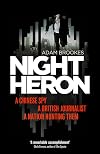
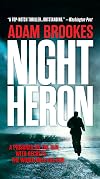
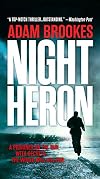
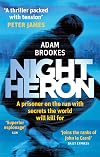
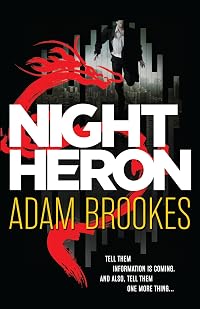
Set in China, and ripped from today's headlines, comes a pulse-pounding debut that reinvents the spy thriller for the 21st century. A lone man, Peanut, escapes a labor camp in the dead of night, fleeing across the winter desert of north-west China. Two decades earlier, he was a spy for the British; now Peanut must disappear on Beijing's surveillance-blanketed streets. Desperate and ruthless, he reaches out to his one-time MI6 paymasters via crusading journalist Philip Mangan, offering show more military secrets in return for extraction. But the secrets prove more valuable than Peanut or Mangan could ever have and not only to the British. show lessTags
Recommendations









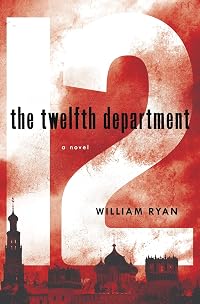

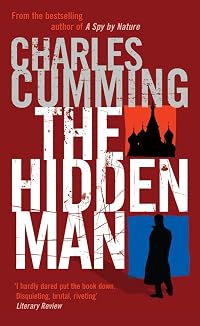



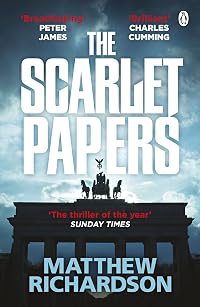
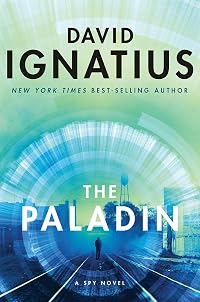

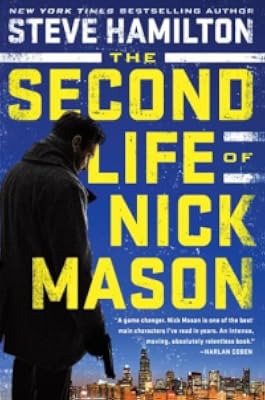
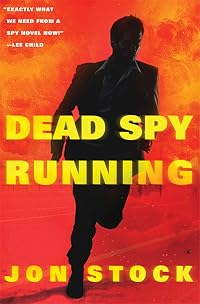
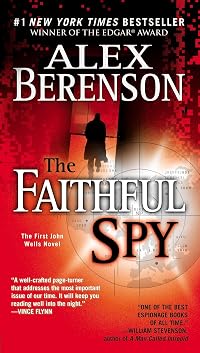
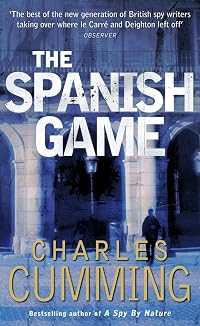

Member Recommendations
Member Reviews
So Mick Herron's Slough House series has me looking with guarded interest at the modern espionage genre again - I've been burned before, but this satisifies the need for spy novels that deal with sophisticated international relations, power plays behind closed doors, corporatisation, surveillance states, counter-espionage, and the wracking tensions and costs of the poor, compromised souls at the coal face. It's a fast-paced, wide-ranging book about a prisoner who escapes from a Chinese labour camp, making his way through a world of computers and cameras and mobile phones that he barely understands to make contact with his old British Intelligence handlers to sell them a one-off look deep inside Chinese networks in exchange for money and show more freedom. Picking a British journalist to be his go-between, he soon sets off alarm bells in the corridors of power across three continents. Brisk, exciting, with a general air of authenticity that I can only judge by the sense of reality it conveys, which is effective, it's certainly what you'd look for in a post-LeCarre spy thriller. show less
When I first began reading Night Heron, by Adam Brookes, I wasn’t at all sure that I would be very impressed with it. The first several pages abound with notes I made on misspellings and awkward wording. On page 5, the author writes, “The thunder crumpled the empty packet in his hand, turned, raised his arm, and hurled it into the shadows. It hit 5995 on the chin, causing him to jerk reflexively, as if he had been struck.” 'He was struck, was he not?' My note read. 'By the cigarette packet?'
The staccato sentence structure the author uses in the first several pages led me to muse, on the bottom of page 6, 'Terse, short sentences convey fear or edginess or urgency… for a time. Carry on with them for too long and it’s just trying show more too hard.'
Still, I carried on, in hopes that the entire book would not thus try my patience. My hopes were answered, in spades. I can only presume that the editors were a bit lackadaisical in the opening pages, or perhaps the author was overcoming first-book jitters. Whatever the case, he soon settled into writing a fast-paced, engrossing thriller that I am quite pleased to add to my library.
My one slight disappointment with the book, when it was all said and done, was that I found little to like in any of the characters. Our protagonist (called, in turns, prisoner 5995, Peanut, and Li Huasheng) is not very admirable. He seems to have begun as a passionate revolutionary, but is now nearly as brutal as those who imprisoned him. Hardly surprising; ideology would be hard to maintain under such circumstances. However, he does show kindness and even a degree of affection to the girl Yin, otherwise known as Beautiful Peony.
By the same measure, journalist Philip Mangan has some admirable characteristics, but also seems somewhat self-absorbed. Intelligence analyst Trish Patterson was perhaps the most commendable character in the book, but even she seemed somewhat ineffectual and, with one notable exception, averse to taking risks to do the proper thing. In short, Brookes manages to make his characters quite human and recognizable to each of us; after all, it is rare for any of the human race to be entirely heroic, or entirely evil. This strategy is uncommon, in my experience; often, in books, heroes are exclusively heroic, and villains exclusively villainous. Brookes’ characterization is multi-faceted and complex, which serves to make both heroes and villains quite fascinating.
Perhaps the only two truly and completely likeable characters in the book are Ting and Harvey, and both of them pay quite a price for their decency and loyalty; whether the irony of this is intentional is not quite clear, but I suspect that it is.
The only reason I did not finish this book in one day is that I feel asleep reading it, shortly past three AM, on the day it came in the mail (which, fortunately enough, was a Friday). I finished it the following day. I thoroughly enjoyed the book, and I look forward to Brookes’ further works. show less
The staccato sentence structure the author uses in the first several pages led me to muse, on the bottom of page 6, 'Terse, short sentences convey fear or edginess or urgency… for a time. Carry on with them for too long and it’s just trying show more too hard.'
Still, I carried on, in hopes that the entire book would not thus try my patience. My hopes were answered, in spades. I can only presume that the editors were a bit lackadaisical in the opening pages, or perhaps the author was overcoming first-book jitters. Whatever the case, he soon settled into writing a fast-paced, engrossing thriller that I am quite pleased to add to my library.
My one slight disappointment with the book, when it was all said and done, was that I found little to like in any of the characters. Our protagonist (called, in turns, prisoner 5995, Peanut, and Li Huasheng) is not very admirable. He seems to have begun as a passionate revolutionary, but is now nearly as brutal as those who imprisoned him. Hardly surprising; ideology would be hard to maintain under such circumstances. However, he does show kindness and even a degree of affection to the girl Yin, otherwise known as Beautiful Peony.
By the same measure, journalist Philip Mangan has some admirable characteristics, but also seems somewhat self-absorbed. Intelligence analyst Trish Patterson was perhaps the most commendable character in the book, but even she seemed somewhat ineffectual and, with one notable exception, averse to taking risks to do the proper thing. In short, Brookes manages to make his characters quite human and recognizable to each of us; after all, it is rare for any of the human race to be entirely heroic, or entirely evil. This strategy is uncommon, in my experience; often, in books, heroes are exclusively heroic, and villains exclusively villainous. Brookes’ characterization is multi-faceted and complex, which serves to make both heroes and villains quite fascinating.
Perhaps the only two truly and completely likeable characters in the book are Ting and Harvey, and both of them pay quite a price for their decency and loyalty; whether the irony of this is intentional is not quite clear, but I suspect that it is.
The only reason I did not finish this book in one day is that I feel asleep reading it, shortly past three AM, on the day it came in the mail (which, fortunately enough, was a Friday). I finished it the following day. I thoroughly enjoyed the book, and I look forward to Brookes’ further works. show less
 This review was written for LibraryThing Early Reviewers.
Phrases such as “taut writing,” “extreme tension,” “involved plot” seem to be in use for almost every book on the market today that concerns itself with spies and intelligence gathering. Perhaps even that hoary old cliche “torn from the headlines!” will rear up. But I have to tell you I found “Night Heron” by Adam Brookes to be all of those and more. I neglected chores, put off other delightful pastimes and generally abandoned myself to this book. The author is a journalist with experience in the East and Mid-east and he brings an authenticity to his writing that cannot be denied.
Prisoner 5995 escapes a Chinese Labor Reform camp after twenty years incarceration, and returns to Beijing. There he makes contact with a show more freelance journalist, Mangan, using him as a conduit to send a message to British Intelligence. The message comes to the desk of Trish Patterson, late of Army Intelligence but now newly in the civilian side. To her, a former intelligence source, named Peanut (an interesting play on the prisoner’s real name), has resurfaced after a twenty year hiatus. Mangan is terrified of the contact fearing the Chinese as he already walks a thin line because of his reporting on the “Fellowship.” And Peanut wants what is owed him by the British.
Proposing a one-off job Peanut promises more top secret information to come. But is this really Peanut making this offering? The Brits can’t be sure. Perhaps he is a “dangle” trying to set up either Mangan or even the British Intelligence Service. But the proposed information is important and after a series of high level meetings involving several Departments the decision to go ahead is made.
But in this age of digitized data espionage is no longer conducted by slipping into offices and photographing secret papers. A new approach is necessary and Patterson has it in the form of a “gadget” developed by one of their outside contractors. Sent to Peanut through Mangan the plot enters a new and even tenser section as the “gadget” is put to work and retrieves far more than the designers apparently intended. General jubilation all around. But a new force is felt lurking in the background, who or what cannot be determined.
Things go awry for both Peanut and Mangan when an American infatuated with a lovely Taiwanese girl inadvertently lets slip a piece of information that she reports to her Chinese masters and they must run for their lives. A hurried contact with Patterson and she sets up an extraction point but can they get there ahead of both the Chinese and the secretive lurkers?
If you are any kind of a spy, espionage, secret service type of fan, get this book. If you are not a fan read it anyway and find out how a well written spy thriller can keep you up all night! show less
Prisoner 5995 escapes a Chinese Labor Reform camp after twenty years incarceration, and returns to Beijing. There he makes contact with a show more freelance journalist, Mangan, using him as a conduit to send a message to British Intelligence. The message comes to the desk of Trish Patterson, late of Army Intelligence but now newly in the civilian side. To her, a former intelligence source, named Peanut (an interesting play on the prisoner’s real name), has resurfaced after a twenty year hiatus. Mangan is terrified of the contact fearing the Chinese as he already walks a thin line because of his reporting on the “Fellowship.” And Peanut wants what is owed him by the British.
Proposing a one-off job Peanut promises more top secret information to come. But is this really Peanut making this offering? The Brits can’t be sure. Perhaps he is a “dangle” trying to set up either Mangan or even the British Intelligence Service. But the proposed information is important and after a series of high level meetings involving several Departments the decision to go ahead is made.
But in this age of digitized data espionage is no longer conducted by slipping into offices and photographing secret papers. A new approach is necessary and Patterson has it in the form of a “gadget” developed by one of their outside contractors. Sent to Peanut through Mangan the plot enters a new and even tenser section as the “gadget” is put to work and retrieves far more than the designers apparently intended. General jubilation all around. But a new force is felt lurking in the background, who or what cannot be determined.
Things go awry for both Peanut and Mangan when an American infatuated with a lovely Taiwanese girl inadvertently lets slip a piece of information that she reports to her Chinese masters and they must run for their lives. A hurried contact with Patterson and she sets up an extraction point but can they get there ahead of both the Chinese and the secretive lurkers?
If you are any kind of a spy, espionage, secret service type of fan, get this book. If you are not a fan read it anyway and find out how a well written spy thriller can keep you up all night! show less
This review was written for LibraryThing Early Reviewers.Prisoner 5999 has escaped from an isolated labor re-education camp in Northern China. His real name is Li Husheng. In 1989 he was a graduate student in rocket engineering and he was arrested in Tiananmen Square for assaulting a soldier. He is also the Night Heron, but only his British handlers know he is a spy. They nicknamed him Peanut. Now 20 years later, Peanut has used all of his spycraft to evade capture and make his way back to Beijing. It is payback time. Peanut kept silent during his imprisonment; he did not betray his handlers or the other four spies in his network. All he wants now is to get out of China with a new identity to start a new life.
But China, and especially Beijing, has changed in 20 years. In 1990 the Internet was show more in its infancy, smart phones didn't exist, and there weren't surveillance cameras on every lamppost. In 2010, anyone could take his picture and put it on the internet in seconds. His only link to his past is a British newspaper office where his handlers had worked. They are long retired and running tea mornings in the Midlands. So he draws liberal journalist Philip Mangan into his escape plan with a sensational, and to Mangan, crazy scheme to prove his identity by passing on top secret Chinese reports about their rocket development program. Even though he has serious doubts about Peanut, Mangan contacts the British Embassy. In London, MI6 Agent Trish Patterson has to decide if Peanut is genuine or an elaborate Chinese plot to expose and humiliate their spy network.
As Patterson tries to persuade her superiors that Peanut is the real deal, Peanut is being watched by an old lady and her family. She is appalled at his antics. Doesn't he realize that ducking into buildings and doubling back on himself to evade a tail only draws attention? Those surveillance cameras are programmed to record behavioral patterns and anyone ducking and hiding, not walking in a straightforward manner, is flagged. But who is employing the old woman to watch Peanut? Why are Patterson's decisions being resisted in her own department? Who has tipped Chinese police to Mangan's visit to a camp of dissidents? Someone wants this mission to fail and it will take a combination of 20th century spycraft and 21st century technology to save Peanut, Mangan, and even Agent Patterson.
I enjoyed this fast-paced thiller with the somewhat good guys being pursued by an ambiguous enemy. Who really is pulling the strings on the global geopolitical stage? show less
But China, and especially Beijing, has changed in 20 years. In 1990 the Internet was show more in its infancy, smart phones didn't exist, and there weren't surveillance cameras on every lamppost. In 2010, anyone could take his picture and put it on the internet in seconds. His only link to his past is a British newspaper office where his handlers had worked. They are long retired and running tea mornings in the Midlands. So he draws liberal journalist Philip Mangan into his escape plan with a sensational, and to Mangan, crazy scheme to prove his identity by passing on top secret Chinese reports about their rocket development program. Even though he has serious doubts about Peanut, Mangan contacts the British Embassy. In London, MI6 Agent Trish Patterson has to decide if Peanut is genuine or an elaborate Chinese plot to expose and humiliate their spy network.
As Patterson tries to persuade her superiors that Peanut is the real deal, Peanut is being watched by an old lady and her family. She is appalled at his antics. Doesn't he realize that ducking into buildings and doubling back on himself to evade a tail only draws attention? Those surveillance cameras are programmed to record behavioral patterns and anyone ducking and hiding, not walking in a straightforward manner, is flagged. But who is employing the old woman to watch Peanut? Why are Patterson's decisions being resisted in her own department? Who has tipped Chinese police to Mangan's visit to a camp of dissidents? Someone wants this mission to fail and it will take a combination of 20th century spycraft and 21st century technology to save Peanut, Mangan, and even Agent Patterson.
I enjoyed this fast-paced thiller with the somewhat good guys being pursued by an ambiguous enemy. Who really is pulling the strings on the global geopolitical stage? show less
This review was written for LibraryThing Early Reviewers.Night Heron is a well-paced espionage thriller that displays Adam Brookes' writing and research skills and a deep knowledge of China. I was surprised at just how good this book is. The characters and plot are very well done and Brookes increases the tension at pretty much a perfect pace.
Brookes offers some commentary on how and why intelligence gathering is done these days and draws some conclusions that only a journalist or outsider might come up with.
Night Heron is comparable to some of the best contemporary espionage thrillers.
Brookes offers some commentary on how and why intelligence gathering is done these days and draws some conclusions that only a journalist or outsider might come up with.
Night Heron is comparable to some of the best contemporary espionage thrillers.
This review was written for LibraryThing Early Reviewers."Night Heron" had some positives but also a few serious negatives. But first, what's it about? Peanut, a very big but quick guy, escapes prison after 20 twenty years. Peanut had been passing information to the West when he got caught, and now that he is out he is anxious to re-establish his long ago contacts for one last big mission. Eventually word of his availability gets back to his former employer and Peanut is assigned a new contact, Mangan, a journalist based in Beijing. Peanut and Mang An's efforts produce unexpected results and soon after they are cut loose from their temporary employer, an incredible betrayal. The story has a good level of tension bu it's not exactly at the nail-biting level. Some shadowy characters are show more introduced late in the game and it was sometimes difficult to determine who was wearing a black hat and who was donning a white one. One disappointment for me was that there wasn't a clear protagonist. Peanut? Mang An ? their controller ? And the climax wasn't exactly great. Don't know who was shooting whom on the beach toward the end. I did like the China setting but I'm not particularly interested in reading about any of these characters in a sequel. show less
(Reviewing Audio Version) Night Heron is a nice, taut espionage thriller set in China. The author does an excellent job with setting the atmosphere, from the prison camp, to Beijing, to rural China. It moves at a good pace and keeps interest alive even with relatively little "action." The tradecraft is sharp and believable, keeping this in a more realistic espionage vein than James-Bondish super-spy action stories. I was engaged from beginning to end and would be interested in more from this author.
As for the audio, it was well-produced and read by Jason Isaacs, who did a good job throughout, even if his only American accent is "malibu surfer."
As for the audio, it was well-produced and read by Jason Isaacs, who did a good job throughout, even if his only American accent is "malibu surfer."
This review was written for LibraryThing Early Reviewers.Members
- Recently Added By
Lists

Kirkus Reviews Best Fiction of 2014
100 works; 7 members

Fiction Set Primarily in a Prison
52 works; 24 members
Author Information

4 Works 495 Members
Adam Brookes was born in Canada, but grew up in the UK, in a village in Oxfordshire. In the 1980s, he studied Chinese at the School of Oriental and African Studies in London, and went on to become a journalist, working briefly in magazines before landing a post as a 'copytaster' at the BBC, a job now extinct. Adam became a radio producer at the show more BBC World Service, and then a foreign correspondent, based first in Indonesia, then China and the United States. Along the way he has reported from some thirty countries including Iraq, Afghanistan, North Korea and Mongolia, for BBC television and radio. 'Night Heron' is his first novel, and draws on his life in journalism, his years in China, and his efforts to understand something of what goes on in the world of intelligence. Night Heron is published in May 2014 and made Hatchette Hot Summer Titles List. (Bowker Author Biography) show less
Awards and Honors
Series

Common Knowledge
- Original language
- English
Classifications
Statistics
- Members
- 259
- Popularity
- 125,196
- Reviews
- 40
- Rating
- (3.67)
- Languages
- English, Finnish, German
- Media
- Paper, Audiobook, Ebook
- ISBNs
- 19
- ASINs
- 4