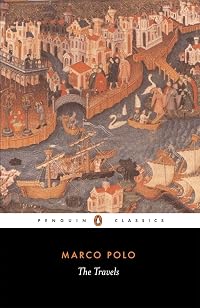
The Travels of Marco Polo
by Marco Polo
On This Page
Description
The Travels of Marco Polo is the classic account of Marco Polo's journey to China from Venice, and his discoveries as an emissary to the great Kublai Khan. Polo explores everywhere from Baghdad, Armenia and Russia to the Caspian Sea, the Gobi Desert and the small fishing villages of China, describing the geography, architecture and customs of these exotic places. He tells stories of assassins, cannibals, fantastical animals, feasts and battles, and gives a fascinating account of the show more multicultural empire of Kublai Khan. The Travels is said to have inspired the voyages of Magellan and Columbus, the latter having kept an annotated copy among his belongings. It remains one of the most entertaining travelogues in existence. show lessTags
Recommendations



















Member Recommendations

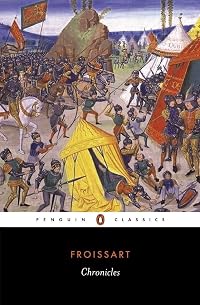
bookwoman247 Both men traveled extensively in Medeival times. It's interesting to compare the two; one from a Western perspective, and one from a Middle
Eastern /North African perspective.
50


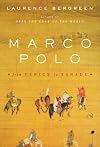
jsoos travel narratives of four others who visited the East. Marco Polo has the best publicity - but these are worth reading
Member Reviews
In 1271, at the tender age of 17, Marco Polo set off with his father on a 24-year tour of Asia. A few years later, while imprisoned, he related tales of these amazing travels to a fellow inmate who put pen to paper and published them.
One can't help while reading to imagine what it might have been like to be the first European visiting such exotic places! Despite its age, The Travels of Marco Polo is surprisingly accessible to 21st-century readers. The narrative is casual, almost conversational. Polo's observations about the many peoples and cultures he meets are often quite amusing, though occasionally repetitive. His commentary is also at times racist regarding a culture's inferiority and then alternately praiseworthy of another's show more superiority to that of Europeans. I was fortunate to get my hands on the library's last remaining copy of an illustrated edition, which included colorful maps and attractive photographs of places, artwork and artifacts. It's a shame that this edition is now out of print.
"They are idolaters and have a peculiar language." – pretty much every new Asian culture Polo encounters show less
One can't help while reading to imagine what it might have been like to be the first European visiting such exotic places! Despite its age, The Travels of Marco Polo is surprisingly accessible to 21st-century readers. The narrative is casual, almost conversational. Polo's observations about the many peoples and cultures he meets are often quite amusing, though occasionally repetitive. His commentary is also at times racist regarding a culture's inferiority and then alternately praiseworthy of another's show more superiority to that of Europeans. I was fortunate to get my hands on the library's last remaining copy of an illustrated edition, which included colorful maps and attractive photographs of places, artwork and artifacts. It's a shame that this edition is now out of print.
"They are idolaters and have a peculiar language." – pretty much every new Asian culture Polo encounters show less
I feel like my reading of this book has taken as long as Polo's travels! (Mostly, though, it was because I got sidetracked by the extensive footnotes & subsequent internet research on various topics found in Polo's book.)
Polo's tales are an eclectic mix of geography notes, merchant/business observations, descriptions of plants/animals/governments/cultural customs interspersed with strange & outrageous tales (many true) along with plenty of gossip & hearsay (plenty false). It's almost like a mix of a dry textbook, a National Geographic documentary, a royal edict, Twitter, & the National Enquirer stirred to create his unique story. The complete mish-mash of information & mix of the mundane with the extraordinary reminded me a bit of the show more structure & jumble of Poe's The Narrative of Arthur Gordon Pym of Nantucket. Even though some parts are repetitive or boring recitations of business/trading/government facts, there are a lot of gems & fantastic observations... enough to make me overlook the slower parts in favor of the rest of it. Five stars for Polo's sheer chutzpah in living his life large & telling about it so that, even today, we can still enjoy his amazing travels. show less
Polo's tales are an eclectic mix of geography notes, merchant/business observations, descriptions of plants/animals/governments/cultural customs interspersed with strange & outrageous tales (many true) along with plenty of gossip & hearsay (plenty false). It's almost like a mix of a dry textbook, a National Geographic documentary, a royal edict, Twitter, & the National Enquirer stirred to create his unique story. The complete mish-mash of information & mix of the mundane with the extraordinary reminded me a bit of the show more structure & jumble of Poe's The Narrative of Arthur Gordon Pym of Nantucket. Even though some parts are repetitive or boring recitations of business/trading/government facts, there are a lot of gems & fantastic observations... enough to make me overlook the slower parts in favor of the rest of it. Five stars for Polo's sheer chutzpah in living his life large & telling about it so that, even today, we can still enjoy his amazing travels. show less
This is one of the most famous travel narratives in history, and probably the most famous from Medieval Europe. Its significance in opening up educated European minds to countries and cultures way outside their experience can hardly be overstated ("what really seems to have shocked Marco’s audience was his detailed depiction of entire civilizations that were completely unknown to them. This was a world where express messengers sped letters by foot, horse and dog-sled across thousands of miles in a matter of days, and where banknotes were legal tender when paper was barely known in the West;") He re-opened up knowledge of Asia lost since before the rise of Islam and was the first Westerner to describe the existence of Japan. Of course, show more his account is also spiced with myths and legends about fabulous beasts such as gryphons and legendary figures such as the fabled eastern Christian ruler Prester John. Polo was inevitably affected by the assumptions of his time, for example in believing Christianity superior to all other belief systems, but nevertheless remains remarkably open to other cultures and experiences. I thought this was particularly evident in the chapter on India, one of his less well known journeys, which was less relatively less repetitive and censorious than some of the others. Despite the book's intrinsic significance and interest, it is very repetitive in places, with very similar or even near identical descriptions applied to numerous city states in what is now China, or the other territories in the vast and sprawling Mongol Empire (its founder Genghis Khan, the grandfather of Marco Polo's patron Kubhlai Khan, conquered more land than anyone else in history in founding the world's largest empire on a single land mass). He is very fond of stock phrases about idolators, paper money, subjects of the Great Khan, and cities having all the necessities of life in abundance. Rhetorical devices such as "What else shall I tell you?" and "Why make a long story of it?" pepper the narrative. All this said, we don't know exactly how much of this narrative was written by Polo himself, a combination of curious traveller and hard-headed businessman, or by his co-writer Rustichello of Pisa, a professional romance writer whom Polo met in prison in Genoa in the late 1290s, after Polo had been captured in the conflict between that city state and his home city of Venice. What we do know is that nearly all of the places Polo mentioned in his book have been identified and he undoubtedly undertook his travels as he said (some sceptics have occasionally doubted the fundamental truth of his account because of his errors or omissions). Rightly a landmark of European literature. show less
This was a lot of fun. Okay, okay, okay, okay - I’ll address the racist elephant in the room first: Yes, there are numerous digs at other religions, in particular the “Saracens” and “the idolaters” (the Buddhists don’t even get to be called by name), but even so he can’t disguise his wonder and marvel at the cultures he rubs shoulders with in his travels. Plus, these bits --could-- have been embellishments put in by his transcribers (he himself was illiterate) who weren’t nearly as worldly. Or they could have been his own words. Ultimately, what the reader has to remember is that he was just a dumb Venetian kid from the time of the Stupid Ages (as a European, he was blown away by the notions of paper money and regular show more baths), so ridiculous superstitions and idiot prejudices are to be expected. Not at all like our advanced and educated society of today ( show less
Fact or fiction? As once the most well-travelled man in the world, who would contradict Marco Polo? When, 750 years or so ago, he told the West of his travels through a thousand lands and cities between Venice and the farthest East. Of an Oriental city with 12000 bridges, where dogs are eaten, and paper used is money, of unicorns, enchanters, of Xanadu, and Kublai Khan who rules a third of the earth, exotic manners and customs, of deserts filled with spirits, and on an island in the Arabian sea colossal eagles that pick up elephants and dash them to the earth.
Part of the poetic license is excused by the nature of this work’s recording. While imprisoned, Marco Polo narrated his adventures to a famous travelling romance writer, show more Rusticello, who had the good fortune to be sharing the same prison, and jotted them down. So the stories were embellished along the way, and blame for any exaggeration can at least be shared.
As an historical record then it cannot all be taken at face value, however considering that there is no evidence of anyone from the West travelling as widely as Marco Polo did until about 100 years ago, this remains a unique document of considerable historical interest. Albeit one that must be interpreted with caution. For pure entertainment however, this is difficult to surpass as far as historical travel writings are concerned. There is also a lot of material of interest in terms of history, culture, anthropology, sociology, and politics. By reading this we see the many ways in which societies can be structured, and the many permutations, real or fictitious, that humans can create. show less
Part of the poetic license is excused by the nature of this work’s recording. While imprisoned, Marco Polo narrated his adventures to a famous travelling romance writer, show more Rusticello, who had the good fortune to be sharing the same prison, and jotted them down. So the stories were embellished along the way, and blame for any exaggeration can at least be shared.
As an historical record then it cannot all be taken at face value, however considering that there is no evidence of anyone from the West travelling as widely as Marco Polo did until about 100 years ago, this remains a unique document of considerable historical interest. Albeit one that must be interpreted with caution. For pure entertainment however, this is difficult to surpass as far as historical travel writings are concerned. There is also a lot of material of interest in terms of history, culture, anthropology, sociology, and politics. By reading this we see the many ways in which societies can be structured, and the many permutations, real or fictitious, that humans can create. show less
Interesting within some limits I’d say. As travelogue not all that interesting. As description of civilization and culture along the Silk Road, pretty interesting.
Going into this book, I brought some preconceptions that Marco Polo’s travels were susceptible to a degree of hyperbole and harmful ethnocentrism. But the early chapters traveling east to Cathay were fairly mild and more or less respectful. It’s when Polo travels through the South China Sea, into the Bay of Bengal, and the Arabian Sea (especially here) that you really see the ethnocentrism and outright revulsion at encountering peoples who are so culturally and racially different from Europeans. At times it gets downright direct in its prejudices and willingness to show more write off the unknown as evidence of weird barbarisms. I have no doubt that Polo encountered cannibalism … but that much? And people with the faces and tails of dogs … really? And unicorns (seriously!)? I don’t even want to repeat what Polo had to say when visiting Zanzibar.
And this is not to say that there wasn’t negativity in earlier travels across what is modern Turkey, Syria, Iraq, Pakistan, and western China. Prejudices that are present in modern times, whether for Kurds, Uighurs, Armenians, and others appear to have deep roots because they show up in Polo’s travels as well. It’s enlightening at the very least and puts some of modern politics into a more detailed historical context with accuracy and objectivity in quotation marks, of course.
The chapters on Kublai Khan, however, are just downright fascinating. But there does appear to be a bit of what looks like hero worship in these chapters with a lot of hyperbolic representations of the Great Khan’ power – everything is huge from the wealth to the number of troops. Surely the Great Khan’s empire was big, but these flourishes about proportions seem more sensationalist than anything.
If those claims do something, however, they underscore the civic and political infrastructure that the Great Khan needed to control his vast empire. That starts with religious tolerance so long as people paid their levies. But then there is communication issues for which Kublai Khan seems to have established a pony-express style postal system. There are travel challenges for which he seems to be responsible for a number of engineering marvels (bridges, canals, etc.). And in this light, I think I understand why wealth and troop numbers appear comically outsized – it is a way of metaphorically explaining the Khan’s reach. Otherwise, how could he feasibly control (for example) the amount of diamonds taken out of a mine somewhere in his kingdom or control the number of pearls harvested from a body of water?
At the very least these chapters about Kublai Khan showed 13th century network power and it’s pretty fascinating for the purpose.
As far as travelogue goes, it got a little repetitive and mired in trivial details. Perhaps Europeans of the time were into that, but I thought that part made for some pretty dull reading at times. show less
Going into this book, I brought some preconceptions that Marco Polo’s travels were susceptible to a degree of hyperbole and harmful ethnocentrism. But the early chapters traveling east to Cathay were fairly mild and more or less respectful. It’s when Polo travels through the South China Sea, into the Bay of Bengal, and the Arabian Sea (especially here) that you really see the ethnocentrism and outright revulsion at encountering peoples who are so culturally and racially different from Europeans. At times it gets downright direct in its prejudices and willingness to show more write off the unknown as evidence of weird barbarisms. I have no doubt that Polo encountered cannibalism … but that much? And people with the faces and tails of dogs … really? And unicorns (seriously!)? I don’t even want to repeat what Polo had to say when visiting Zanzibar.
And this is not to say that there wasn’t negativity in earlier travels across what is modern Turkey, Syria, Iraq, Pakistan, and western China. Prejudices that are present in modern times, whether for Kurds, Uighurs, Armenians, and others appear to have deep roots because they show up in Polo’s travels as well. It’s enlightening at the very least and puts some of modern politics into a more detailed historical context with accuracy and objectivity in quotation marks, of course.
The chapters on Kublai Khan, however, are just downright fascinating. But there does appear to be a bit of what looks like hero worship in these chapters with a lot of hyperbolic representations of the Great Khan’ power – everything is huge from the wealth to the number of troops. Surely the Great Khan’s empire was big, but these flourishes about proportions seem more sensationalist than anything.
If those claims do something, however, they underscore the civic and political infrastructure that the Great Khan needed to control his vast empire. That starts with religious tolerance so long as people paid their levies. But then there is communication issues for which Kublai Khan seems to have established a pony-express style postal system. There are travel challenges for which he seems to be responsible for a number of engineering marvels (bridges, canals, etc.). And in this light, I think I understand why wealth and troop numbers appear comically outsized – it is a way of metaphorically explaining the Khan’s reach. Otherwise, how could he feasibly control (for example) the amount of diamonds taken out of a mine somewhere in his kingdom or control the number of pearls harvested from a body of water?
At the very least these chapters about Kublai Khan showed 13th century network power and it’s pretty fascinating for the purpose.
As far as travelogue goes, it got a little repetitive and mired in trivial details. Perhaps Europeans of the time were into that, but I thought that part made for some pretty dull reading at times. show less
I guess the biggest surprise of this book is that it's not really a narrative. It's more a description of the world as seen by Marco Polo. This makes it dull in places, and I almost feel I can repeat verbatim the opening to many chapters. "The people here are idolaters. They are subject to the Grand Khan, whose paper money is current between them."
Marco rarely gets into his personal experiences. He doesn't talk about his feelings on seeing these fantastic places, or his difficulties, or even really of the people he meets. Sometimes he gets into some interesting cultural observations, mostly to do with marriage or sexual habits, but otherwise it's pretty dry.
Apparently he was charged with escorting a Mongol princess for part of his show more journey, and at one point he lost his fortune! At another he governed a town. But he mentions nothing of the first two points and only briefly references the third. I want to hear about the princess! Not 8 different cities, all populated by idolators who use paper money. Of course, if you were a medieval traveller, this information would be much more useful than any story about a princess, and I think therein lies the problem of this book for modern audiences. It's not written for us. It's not written for curiosity or entertainment or historic value, it's a description of the world as it was at the time, written for a medieval audience. show less
Marco rarely gets into his personal experiences. He doesn't talk about his feelings on seeing these fantastic places, or his difficulties, or even really of the people he meets. Sometimes he gets into some interesting cultural observations, mostly to do with marriage or sexual habits, but otherwise it's pretty dry.
Apparently he was charged with escorting a Mongol princess for part of his show more journey, and at one point he lost his fortune! At another he governed a town. But he mentions nothing of the first two points and only briefly references the third. I want to hear about the princess! Not 8 different cities, all populated by idolators who use paper money. Of course, if you were a medieval traveller, this information would be much more useful than any story about a princess, and I think therein lies the problem of this book for modern audiences. It's not written for us. It's not written for curiosity or entertainment or historic value, it's a description of the world as it was at the time, written for a medieval audience. show less
Members
- Recently Added By
Lists

100 Books to Read in a Lifetime (That Are Older Than 200 Years)
415 works; 174 members

Best Autobiographies and Memoirs
370 works; 67 members

501 Must-Read Books
529 works; 72 members

Philip Ward's Lifetime Reading Plan
592 works; 22 members

Folio Society
831 works; 48 members

Story Within a Story
65 works; 17 members

Books in The Club Dumas
72 works; 1 member

Mustich's 1000 Books to Read Before You Die: A Life Changing List
1,001 works; 20 members

Book Titles Mentioned In Newberry Medal And Honor Books
884 works; 3 members

Books and authors mentioned by Le Clézio in his Nobel Prize speech
87 works; 3 members

Trinity College Booklist (1951): Class Five, Travel and Geography
52 works; 2 members

Central Asia
59 works; 2 members

Books Read in 2016
4,666 works; 197 members

Unreliable Narrators
170 works; 43 members

CCE 1000 Good Books List
1,033 works; 12 members

Ambleside Books
459 works; 18 members

Italian Literature
558 works; 43 members

Best of World Literature
437 works; 52 members
In Our Time books
4,934 works; 2 members
Talk Discussions
Past Discussions
The Book of Ser Marco Polo, the Venetian, Concerning the Kingdoms and Marvels of the East 2-Vol DLE (Item#3717; $440) in Easton Press Collectors (August 2024)
Author Information

All Editions
Some Editions
Awards and Honors
Notable Lists
Series
Belongs to Publisher Series
Világjárók (Klasszikus Útleírások - III.)
Limited Editions Club (S:5.08)
Tus libros (27)
Letras Universales (400)
Penguin Clothbound Classics (2015)
Corticelli [Mursia] (6; 37; 147)
Everyman's Library (306)
Modern Library (196)
Penguin Classics (L057)
Work Relationships
Is contained in
Contains
Is retold in
Has the adaptation
Inspired
Common Knowledge
- Canonical title
- The Travels of Marco Polo
- Original title
- Il Milione
- Alternate titles
- Divisament dou monde (Description of the World) (Description of the World); Il Milione (The Million) (The Million); Oriente Poliano
- Original publication date
- 1298: "Livres des merveilles du monde" (in Franco-Venetian) (in Franco-Venetian); 1298; 1579: First English translation by John Frampton; 1903 (Yule-Cordier translation) (Yule-Cordier translation)
- People/Characters
- Marco Polo; Maffeo Polo; Niccolò Polo; Kublai Khan; Rustichello da Pisa
- Important places
- Venice, Veneto, Italy; Silk Road; Beijing, China (as Daidu, China); Central Asia; Italy; China
- Important events
- 13th century; Mongol Empire; Middle Ages
- Related movies
- Marco Polo: Haperek Ha'aharon (1997 | IMDb); The Marco Polo Mini series; Marco Polo (1982) (TV Mini-Series) | tt0083446 (1982 | TV Mini-Series); Marco Polo (2007) (TV) | tt0813789 (2007 | TV); The Adventures of Marco Polo (1938 | IMDb); The Incredible Adventures of Marco Polo (1998) | tt0126411 (1998)
- First words
- The Venetian Marco Polo is not only the most renowned traveler in world history, but he and his book have generated more speculation then almost any other person or volume in world literature.
- Blurbers
- Masefield, John
- Original language*
- Altfranzösisch
*Some information comes from Common Knowledge in other languages. Click "Edit" for more information.
Classifications
- Genres
- Travel, Nonfiction, General Nonfiction, Biography & Memoir
- DDC/MDS
- 915.042 — History & geography Geography & travel Geography of and travel in Asia subdivisions and modified standard subdivisions Travel; guidebooks 1162-1480; Mongol Empire
- LCC
- G370 .P72 — Geography, Anthropology and Recreation Geography (General) Special voyages and travels
- BISAC
Statistics
- Members
- 5,953
- Popularity
- 2,181
- Reviews
- 69
- Rating
- (3.62)
- Languages
- 23 — Catalan, Chinese, Dutch, English, Esperanto, Estonian, Finnish, French, German, Greek, Hungarian, Indonesian, Italian, Japanese, Latin, Norwegian (Bokmål), Norwegian, Polish, Russian, Spanish, Swedish, Uighur, Portuguese (Portugal)
- Media
- Paper, Audiobook, Ebook
- ISBNs
- 311
- UPCs
- 2
- ASINs
- 227