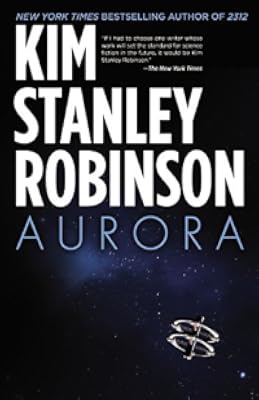
Aurora
by Kim Stanley Robinson
On This Page
Description
"Generations after leaving earth, a starship draws near to the planet that may serve as a new home world for those on board. But the journey has brought unexpected changes and their best laid plans may not be enough to survive. "--Tags
Recommendations

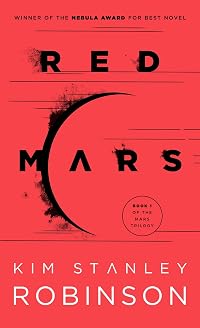
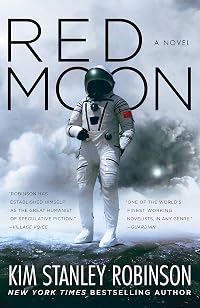
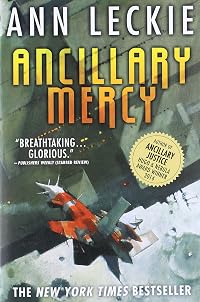
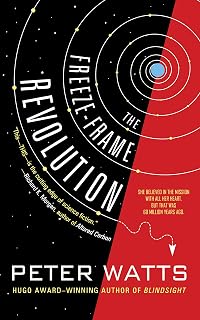
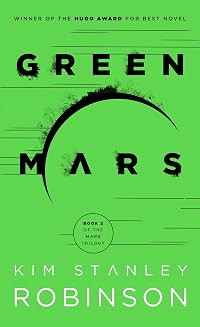
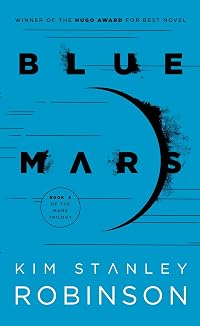

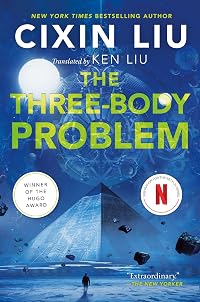
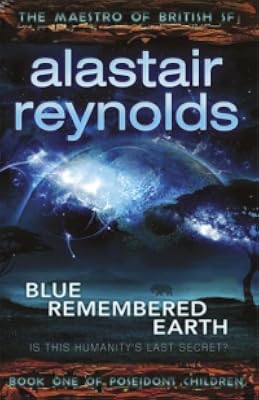


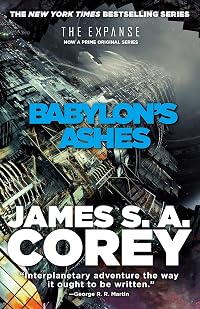
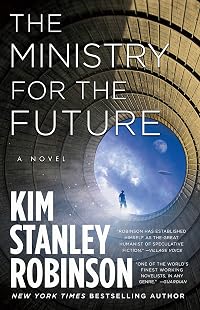
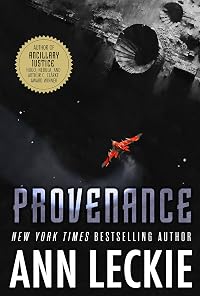
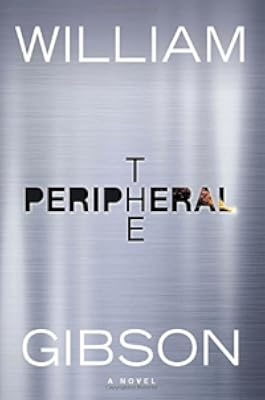
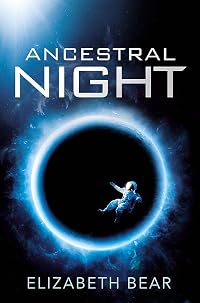
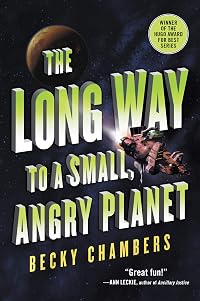
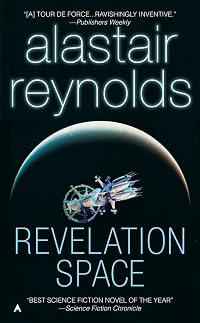
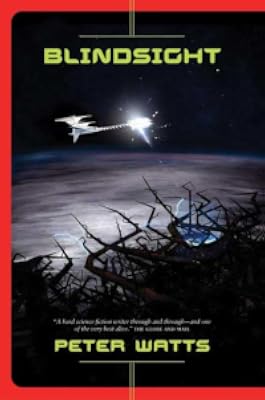



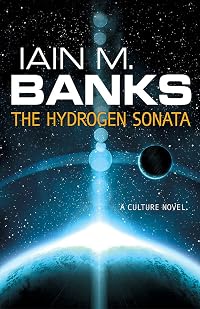
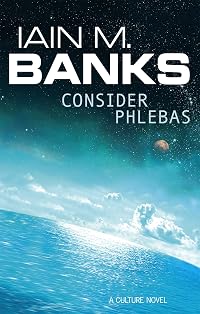
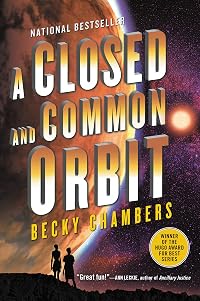
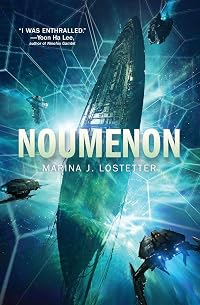
Member Recommendations
harmen Both have similar events happening, but they are still different stories. Telling how they match would spoil either too much :)
(I do think Tau Zero was the better of the two)
20

Member Reviews
This story is set in the second half of the Third Millennium CE, and it concerns the arrival of a pioneering interstellar expedition to the exoplanet Aurora in the Tau Ceti system via a generation starship, followed by the return of the ship to Earth with a portion of its descended population. It is in seven long chapters, of which the bracketing first and last are in a limited third person voice with a viewpoint character named Freya, the daughter of the ship's de facto captain (really chief engineer, without even that title) on its final approach to Aurora.
The middle five chapters are in the voice of the ship's artificial intelligence, a bundle of systems including a core quantum computer, briefly personified as "Pauline," but show more ultimately referring to itself as "we, the ship." This novel was written before the 2020s chatbot revolution powered by large language models, and author Kim Stanley Robinson considerably overestimated the scrupulousness of machines in fabricating narratives, as well as the novelty of asking one to tell a story. But the resulting speaker is interesting and humane, allowing Robinson to mix in his usual variety of scientific exposition and philosophical reflection in a new and elegant way.
The agency of this computer system and its involvement in the political difficulties among the ship's inhabitants reminded me distinctly of Mike in Heinlein's The Moon Is a Harsh Mistress. There were also clever shout-outs to Arthur C. Clarke's The City and the Stars (79) and Gene Wolfe's Book of the Long Sun (301) to position Aurora in a long science-fictional conversation.
I have read other reviewers who found the characterizations in this book lacking or unsympathetic, but my experience was to the contrary. As in Robinson's seminal Mars books or his Years of Rice and Salt, my reading discovered characters with real human inconsistencies, confused loyalties, and emotional depth.
Despite Robinson's care with scientific detail, he was in fact relatively sanguine about the terrestrial qualities of the Tau Ceti exoplanets, and he chose to disregard the dangers posed by the system's conspicuous debris disk in terms of meteoric impacts. But his conclusion about the habitability of exoplanets in general is extremely dire. He proposes an "answer to Fermi's Paradox" (191) that rests on the premise that biota from different stars are inherently toxic to one another, and he suggests that any species clever enough to travel between systems soon become too wise to do so.
This book is genuinely "hard" sf, both in the accustomed sense of attention to technical and scientific matters, and in the sense of difficulty of its message, which runs against the inertia of received sf metanarratives. It is pessimistic in many respects, and the middle of the book often gave me a feeling of dread about what must follow the difficulties described. But I was glad that I persevered, and I really enjoyed the final two chapters, which were both terrifically unconventional and in their own ways inspiring. show less
The middle five chapters are in the voice of the ship's artificial intelligence, a bundle of systems including a core quantum computer, briefly personified as "Pauline," but show more ultimately referring to itself as "we, the ship." This novel was written before the 2020s chatbot revolution powered by large language models, and author Kim Stanley Robinson considerably overestimated the scrupulousness of machines in fabricating narratives, as well as the novelty of asking one to tell a story. But the resulting speaker is interesting and humane, allowing Robinson to mix in his usual variety of scientific exposition and philosophical reflection in a new and elegant way.
The agency of this computer system and its involvement in the political difficulties among the ship's inhabitants reminded me distinctly of Mike in Heinlein's The Moon Is a Harsh Mistress. There were also clever shout-outs to Arthur C. Clarke's The City and the Stars (79) and Gene Wolfe's Book of the Long Sun (301) to position Aurora in a long science-fictional conversation.
I have read other reviewers who found the characterizations in this book lacking or unsympathetic, but my experience was to the contrary. As in Robinson's seminal Mars books or his Years of Rice and Salt, my reading discovered characters with real human inconsistencies, confused loyalties, and emotional depth.
Despite Robinson's care with scientific detail, he was in fact relatively sanguine about the terrestrial qualities of the Tau Ceti exoplanets, and he chose to disregard the dangers posed by the system's conspicuous debris disk in terms of meteoric impacts. But his conclusion about the habitability of exoplanets in general is extremely dire. He proposes an "answer to Fermi's Paradox" (191) that rests on the premise that biota from different stars are inherently toxic to one another, and he suggests that any species clever enough to travel between systems soon become too wise to do so.
This book is genuinely "hard" sf, both in the accustomed sense of attention to technical and scientific matters, and in the sense of difficulty of its message, which runs against the inertia of received sf metanarratives. It is pessimistic in many respects, and the middle of the book often gave me a feeling of dread about what must follow the difficulties described. But I was glad that I persevered, and I really enjoyed the final two chapters, which were both terrifically unconventional and in their own ways inspiring. show less
Probably I read it wrong.
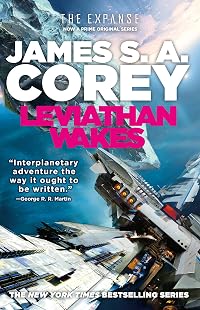
I don’t know how else to explain my reaction to a book so many enjoy. I was looking forward to some space-faring sci-fi: I recently read [b:Dune|234225|Dune (Dune Chronicles, #1)|Frank Herbert|https://d.gr-assets.com/books/1434908555s/234225.jpg|3634639], and with plenty of news about The Expanse, the sci-fi series based on [b:Leviathan Wakes|8855321|Leviathan Wakes (Expanse, #1)|James S.A. Corey|https://d.gr-assets.com/books/1411013134s/8855321.jpg|13730452], crossing my feed, I’ve been feeling nostalgic about space travel and unfamiliar planets. Unfortunately, this a disappointment and a chore to complete.
Aurora begins with Freya and her father sailing on Long Pond. It turns out Long Pond is in the Nova show more Scotia biome of a spaceship. Narration follows Freya, and the reader knows only as much as she does. It is a clever introduction to a complex scenario, allowing the reader to see the world through child’s eyes, and providing for–somewhat–suspension of disbelief. Freya’s mother, Devi, is the head engineer, and we learn about various problems the ship and its people face through Devi’s troubleshooting. I found myself alternately fascinated by ship logistics and bored by the simplistic structure of the narrative:
“Evenings at home are the best. Creche is over and done, her time with all the kids she lives with so much, spending more time with them than she does with her parents, if you don’t count sleeping, it gets so tiresome to make it through all the boring hours, talking, arguing, fighting, reading alone, napping. All the kids are smaller than she is now, it’s embarrassing. It’s gone on so long. They make fun of her, if they think she isn’t listening to them. They take care with that, because once she heard them making those jokes and she ran over roaring and knocked one of them to the ground and beat on his raised arms. She got in trouble for it, and since then they are cautious around her, and a lot of the time she keeps to herself.”
I tried to stay patient, though character and language are two components key to keeping me intrigued. I thought maybe KSR was attempting something interesting with narrative voice and plot–how does a limited colony integrate the cognitively disabled when everything is calculated, almost down to the last molecule? But no–the next section begins with Devi trying to teach the ship narration. Again, interesting device; a clever way to give the reader the technical background on a 159 year old ship that holds two thousand, one hundred twenty-two people. The ship gains a grasp of storytelling and goes back to Freya, now wandering the biomes in a rite of passage common to many residents. She works as a Good For Anything laborer, meeting many of the 3oo people in each biome. Again, fascinating way to show the reader the ship and the way of life, although I found myself starting to wonder about the agrarian way of life Freya was encountering.
Throughout the story, plot oriented narration is frequently interrupted by Ship’s philosophical musings. What is metaphor? What is consciousness? What is risk? Once again, ideas with the potential to be interesting, but they are so overt, so clearly interrupting the story as commentary that it’s the literary version of a public service announcement. We witness the situation and then the ship analyzes it in the narrative, as if the reader is twelve year-old Freya. When the ship started learning metaphor, I couldn’t help but feel frustrated, recalling the far more sophisticated story in China Miéville’s [b:Embassytown|9265453|Embassytown|China Miéville|https://d.gr-assets.com/books/1320470326s/9265453.jpg|14146240]. I remembered how much thought I had to put into reading it, and suddenly realized that KSR was spoon-feeding interpretation. He wasn’t content to create his art and let the viewer define meaning; he wants to control the reader’s conclusions. Does he not trust his story? His skill? The reader?
Section Three centers on arriving at their new home, and it is here that Freya takes a background role as we focus on Euan, one of her childhood friends that is planet-side. Descriptions of the planet are outstanding and lyrical, and I was once again caught in the story as the settlers attempted to create a home. Nostalgia set in as I remembered Anne McCaffrey’s Pern settlement books, but this section didn’t last nearly as long as I hoped.
Further section analysis would no doubt include spoilers, but I will say that Section Four displayed a dismal view of humanity, Section Five is when I hit my ceiling on suspension of disbelief, and Section Six would be better served by reading Wikapedia entries on language, AI and cognition. Colony structure and science that were so painstakingly explained earlier became almost irrelevant as people scurried around reacting like kindergartners during a fire drill. It became a chore to read, thematically and logically, with a character displaying TSTL traits in the final chapter worthy of the worst paranormal romances.
I find that I am irritated with almost everything about this book. The plot is picked up or discarded according to what KSR needs to happen to make particular points. Characterization is limited at best. When I first read reviews, I thought, “wow, that says something for the author’s skill if the most interesting character is a ship,” but I didn’t realized how ironic that would prove.
The scientific information underlying the story seems interesting and valid. However, like the plot, the science content is mostly there to create situations for humans to react and prove the author’s points. The “printers” are a giant creative crutch. I expect that great science fiction takes the world we know and throws it in the future, exploring the human experience through the unfamiliar, but this just took the amazing and gave it the same behavioral reactions I’d find in the local mall. I wanted the version of this book that explored the behavior of 2000 people isolated for six generations, or, failing that, the experience of colonizing a planet away from any renewable resources. Frankly, skip this–you’d be better off reading [b:The Martian|18007564|The Martian|Andy Weir|https://d.gr-assets.com/books/1413706054s/18007564.jpg|21825181]. show less
I don’t know how else to explain my reaction to a book so many enjoy. I was looking forward to some space-faring sci-fi: I recently read [b:Dune|234225|Dune (Dune Chronicles, #1)|Frank Herbert|https://d.gr-assets.com/books/1434908555s/234225.jpg|3634639], and with plenty of news about The Expanse, the sci-fi series based on [b:Leviathan Wakes|8855321|Leviathan Wakes (Expanse, #1)|James S.A. Corey|https://d.gr-assets.com/books/1411013134s/8855321.jpg|13730452], crossing my feed, I’ve been feeling nostalgic about space travel and unfamiliar planets. Unfortunately, this a disappointment and a chore to complete.
Aurora begins with Freya and her father sailing on Long Pond. It turns out Long Pond is in the Nova show more Scotia biome of a spaceship. Narration follows Freya, and the reader knows only as much as she does. It is a clever introduction to a complex scenario, allowing the reader to see the world through child’s eyes, and providing for–somewhat–suspension of disbelief. Freya’s mother, Devi, is the head engineer, and we learn about various problems the ship and its people face through Devi’s troubleshooting. I found myself alternately fascinated by ship logistics and bored by the simplistic structure of the narrative:
“Evenings at home are the best. Creche is over and done, her time with all the kids she lives with so much, spending more time with them than she does with her parents, if you don’t count sleeping, it gets so tiresome to make it through all the boring hours, talking, arguing, fighting, reading alone, napping. All the kids are smaller than she is now, it’s embarrassing. It’s gone on so long. They make fun of her, if they think she isn’t listening to them. They take care with that, because once she heard them making those jokes and she ran over roaring and knocked one of them to the ground and beat on his raised arms. She got in trouble for it, and since then they are cautious around her, and a lot of the time she keeps to herself.”
I tried to stay patient, though character and language are two components key to keeping me intrigued. I thought maybe KSR was attempting something interesting with narrative voice and plot–how does a limited colony integrate the cognitively disabled when everything is calculated, almost down to the last molecule? But no–the next section begins with Devi trying to teach the ship narration. Again, interesting device; a clever way to give the reader the technical background on a 159 year old ship that holds two thousand, one hundred twenty-two people. The ship gains a grasp of storytelling and goes back to Freya, now wandering the biomes in a rite of passage common to many residents. She works as a Good For Anything laborer, meeting many of the 3oo people in each biome. Again, fascinating way to show the reader the ship and the way of life, although I found myself starting to wonder about the agrarian way of life Freya was encountering.
Throughout the story, plot oriented narration is frequently interrupted by Ship’s philosophical musings. What is metaphor? What is consciousness? What is risk? Once again, ideas with the potential to be interesting, but they are so overt, so clearly interrupting the story as commentary that it’s the literary version of a public service announcement. We witness the situation and then the ship analyzes it in the narrative, as if the reader is twelve year-old Freya. When the ship started learning metaphor, I couldn’t help but feel frustrated, recalling the far more sophisticated story in China Miéville’s [b:Embassytown|9265453|Embassytown|China Miéville|https://d.gr-assets.com/books/1320470326s/9265453.jpg|14146240]. I remembered how much thought I had to put into reading it, and suddenly realized that KSR was spoon-feeding interpretation. He wasn’t content to create his art and let the viewer define meaning; he wants to control the reader’s conclusions. Does he not trust his story? His skill? The reader?
Section Three centers on arriving at their new home, and it is here that Freya takes a background role as we focus on Euan, one of her childhood friends that is planet-side. Descriptions of the planet are outstanding and lyrical, and I was once again caught in the story as the settlers attempted to create a home. Nostalgia set in as I remembered Anne McCaffrey’s Pern settlement books, but this section didn’t last nearly as long as I hoped.
Further section analysis would no doubt include spoilers, but I will say that Section Four displayed a dismal view of humanity, Section Five is when I hit my ceiling on suspension of disbelief, and Section Six would be better served by reading Wikapedia entries on language, AI and cognition. Colony structure and science that were so painstakingly explained earlier became almost irrelevant as people scurried around reacting like kindergartners during a fire drill. It became a chore to read, thematically and logically, with a character displaying TSTL traits in the final chapter worthy of the worst paranormal romances.
I find that I am irritated with almost everything about this book. The plot is picked up or discarded according to what KSR needs to happen to make particular points. Characterization is limited at best. When I first read reviews, I thought, “wow, that says something for the author’s skill if the most interesting character is a ship,” but I didn’t realized how ironic that would prove.
The scientific information underlying the story seems interesting and valid. However, like the plot, the science content is mostly there to create situations for humans to react and prove the author’s points. The “printers” are a giant creative crutch. I expect that great science fiction takes the world we know and throws it in the future, exploring the human experience through the unfamiliar, but this just took the amazing and gave it the same behavioral reactions I’d find in the local mall. I wanted the version of this book that explored the behavior of 2000 people isolated for six generations, or, failing that, the experience of colonizing a planet away from any renewable resources. Frankly, skip this–you’d be better off reading [b:The Martian|18007564|The Martian|Andy Weir|https://d.gr-assets.com/books/1413706054s/18007564.jpg|21825181]. show less
KSR made his reputation with the Mars trilogy, a hard scifi promethean exploration of the possibility of terraforming Mars. A lot of contemporary serious space exploration owes a deep dept to KSR. And in Aurora, he is repaying that debt with a simple message: Space will kill you DEAD, little ape!
The story takes place on a generation ship nearing the end of its voyage to Tau Ceti, roughly 12 light years from Earth. The ships environmental balance is slowly collapsing, from metabolic rifts, loss of elements to corrosion, and the ways in which the microbiome is out-evolving the 2000 odd humans that sail on the ship. Chief engineer Devi is a Moses-figure, holding the ship together for its last decade of approach, even as cancer ravages her show more body. For unknown reasons, every higher animal on the ship is declining, including humans: children are suffering developmental delays, everyone is smaller, everyone is dying sooner. Only the destination provides salvation.
But Tau Ceti is a poisoned chalice. The best candidate for colonization, named Aurora, is a windy water-world with some aluminosilicates and little else. The first settlement begins to fall to an unknown planetary disease, something like a prion that triggers a fatal allergic reaction. The ship splits into factions, roughly half wanting to continue the mission, the other half wanting to return to Earth. There's a brief and bloody civil war, and the ship physically splits.
The journey back is even more harrowing, a famine that the crew only survives thanks to experimental suspended animation technology. They come into Sol hot, at over 3% light speed, and have to desperately carom through the sun and gas giants to bleed off speed. Finally, battered survivors arrive on Earth in 2900 or so, lost children from the stars.
The story focuses on Freya, daughter of Devi. Freya becomes as close as the ship has to a captain, thanks to a youth wanderjahr through the 20 biome sections of the ship and an attempt to meet everyone. The narrator is the ship itself, a quantum computer that develops superintelligence. Neither are particularly emotionally sophisticated, but the sociology of the generation ship is fascinating, especially in what it conceals from itself. There's the usual KSR rhapsody about space, rocks, surfing, but the tension of the plot makes this my favorite book of his since the Mars trilogy. show less
The story takes place on a generation ship nearing the end of its voyage to Tau Ceti, roughly 12 light years from Earth. The ships environmental balance is slowly collapsing, from metabolic rifts, loss of elements to corrosion, and the ways in which the microbiome is out-evolving the 2000 odd humans that sail on the ship. Chief engineer Devi is a Moses-figure, holding the ship together for its last decade of approach, even as cancer ravages her show more body. For unknown reasons, every higher animal on the ship is declining, including humans: children are suffering developmental delays, everyone is smaller, everyone is dying sooner. Only the destination provides salvation.
But Tau Ceti is a poisoned chalice. The best candidate for colonization, named Aurora, is a windy water-world with some aluminosilicates and little else. The first settlement begins to fall to an unknown planetary disease, something like a prion that triggers a fatal allergic reaction. The ship splits into factions, roughly half wanting to continue the mission, the other half wanting to return to Earth. There's a brief and bloody civil war, and the ship physically splits.
The journey back is even more harrowing, a famine that the crew only survives thanks to experimental suspended animation technology. They come into Sol hot, at over 3% light speed, and have to desperately carom through the sun and gas giants to bleed off speed. Finally, battered survivors arrive on Earth in 2900 or so, lost children from the stars.
The story focuses on Freya, daughter of Devi. Freya becomes as close as the ship has to a captain, thanks to a youth wanderjahr through the 20 biome sections of the ship and an attempt to meet everyone. The narrator is the ship itself, a quantum computer that develops superintelligence. Neither are particularly emotionally sophisticated, but the sociology of the generation ship is fascinating, especially in what it conceals from itself. There's the usual KSR rhapsody about space, rocks, surfing, but the tension of the plot makes this my favorite book of his since the Mars trilogy. show less
A spaceship containing around two thousand humans is engaged in multi-generational interstellar travel, a journey of 160 years, from Saturn to the Tau Ceti system. As the story opens, it is approaching its destination. The engineer, Devi, is trying to keep the ship running properly. She is fixing problems occurring due to the length of the trip, deficiencies in design, entropy, and mechanical stresses. Consumables are running low, and destabilizing forces (such as devolution and mutations) inhibit the ship’s ability to maintain a healthy balance of all compounds, nutrients, and lifeforms in the biomes. The deceleration and increased gravitational pull add to the stresses on both people and spaceship. Eventually, a landing party show more reaches Aurora, a moon in the Tau Ceti system. After this point, any further plot points would be spoilers.
The protagonists are Freya, Devi's daughter, and Ship, the spaceship’s Artificial Intelligence. Devi asks Ship to create a narrative about the trip. The spaceship’s computer is an emerging AI that needs specific instructions (has not yet learned everything it needs to create the narrative, almost like a human child). Ship gets only barebones guidance from Devi, since she has her hands full keeping the spaceship running.
Ship requests permission to focus the narrative on Freya, and Devi agrees, so the initial phases of the story are straight-forward, following Freya’s actions. Freya goes on an authorized “wander” to visit each of the twelve biomes. This construct has the benefit of giving the reader the needed details on the contents, environment, and structure of the spaceship. Ship occasionally inserts observations on its creation of the narrative. Over time, Ship assumes a unique personality of its own, and the narrative gets more complex. I particularly enjoyed the development of Ship.
Robinson examines themes such as the transferability of evolutionary advantages and the ability to terraform rapidly enough to support a colony. It is not a book about characters – they exist in service to the themes. It is more about the larger concept of social adaptation. It also covers psychological stresses, conflict resolution (and lack thereof), flawed human decision-making, and much more. If you enjoy lots of science in your science fiction (as I do), this is a great example. I will definitely be pondering the questions explored in this book for quite a while.
4.5 show less
The protagonists are Freya, Devi's daughter, and Ship, the spaceship’s Artificial Intelligence. Devi asks Ship to create a narrative about the trip. The spaceship’s computer is an emerging AI that needs specific instructions (has not yet learned everything it needs to create the narrative, almost like a human child). Ship gets only barebones guidance from Devi, since she has her hands full keeping the spaceship running.
Ship requests permission to focus the narrative on Freya, and Devi agrees, so the initial phases of the story are straight-forward, following Freya’s actions. Freya goes on an authorized “wander” to visit each of the twelve biomes. This construct has the benefit of giving the reader the needed details on the contents, environment, and structure of the spaceship. Ship occasionally inserts observations on its creation of the narrative. Over time, Ship assumes a unique personality of its own, and the narrative gets more complex. I particularly enjoyed the development of Ship.
Robinson examines themes such as the transferability of evolutionary advantages and the ability to terraform rapidly enough to support a colony. It is not a book about characters – they exist in service to the themes. It is more about the larger concept of social adaptation. It also covers psychological stresses, conflict resolution (and lack thereof), flawed human decision-making, and much more. If you enjoy lots of science in your science fiction (as I do), this is a great example. I will definitely be pondering the questions explored in this book for quite a while.
4.5 show less
This is about the last two generations of people aboard a 160-year space flight to an Earthlike world. Problems arise, divisions happen. Most of the familiar plot devices of other "generation ship" stories are absent: no one's forgotten what the mission is, no one's deceived about the nature of the ship (*), there haven't been any catastrophes back home, there aren't any advanced aliens. That doesn't make this a better or worse or more "realistic" story, but it lets Robinson focus on the kinds of things he is very good at.
I got incredibly sick of reading arguments about whether the book is too pessimistic toward space travel long before I read it, so I'm not really going to get into that. To me it's a story about people, and a study of show more all those moments when you reach some limit you didn't know you had, or didn't want to have— technological, social, emotional— and fail to get past it, and you'll never be sure if that outcome was changeable or not, but you still have to decide what to do next. Any suspicion that the author is stacking the deck in favor of a preferred objective truth (and I'm aware that Robinson does have his own opinions about the premise) is undercut by repeated reminders that no one really knows— not what's happened, not why it happened, not what's going to happen, and often not even why they feel the way they feel about it. But this fog of subjectivity isn't featureless or thin, it's teeming with energy: love, fear, the frustration of trying to change people's minds, the joy of discovery (even of discovering terrible problems, because they're interesting).
The computer narrator is a good fit for this story: it's got a semi-omniscient and compassionate point of view, but it's never entirely sure of the nature of its own thought process, and it has strong personal loyalties; there's a very moving moment where its ongoing critique of human language becomes extremely dark and cynical, and the strong but never-acknowledged implication is that this is because it's mourning a death.
Oh yeah, also it is a gorgeously written book.
(* Well, almost no one. One of many beautiful little ideas that the narrator refuses to offer a judgment on: there's a small subculture on the ship that's chosen to raise their kids with no knowledge of the universe outside of their home, till they reveal this to the kids to a certain age, which of course freaks them the hell out— and then they grow up and do the same to their kids. They have a sort of paleo-purity rationale for this, but I think there's a fairly self-aware joke there too about our attraction to these narratives: in effect, these people chose to structure their lives around the dramatic reveal that would occur in a certain familiar type of science fiction story, which offers a kind of epiphany that's not otherwise available from the story they're actually in. Another writer might either make those characters a total joke, or make their thing the basis of the whole society and only let a few brave rebels question it, but Robinson characteristically makes them just one of many groups who have to work together.) show less
I got incredibly sick of reading arguments about whether the book is too pessimistic toward space travel long before I read it, so I'm not really going to get into that. To me it's a story about people, and a study of show more all those moments when you reach some limit you didn't know you had, or didn't want to have— technological, social, emotional— and fail to get past it, and you'll never be sure if that outcome was changeable or not, but you still have to decide what to do next. Any suspicion that the author is stacking the deck in favor of a preferred objective truth (and I'm aware that Robinson does have his own opinions about the premise) is undercut by repeated reminders that no one really knows— not what's happened, not why it happened, not what's going to happen, and often not even why they feel the way they feel about it. But this fog of subjectivity isn't featureless or thin, it's teeming with energy: love, fear, the frustration of trying to change people's minds, the joy of discovery (even of discovering terrible problems, because they're interesting).
The computer narrator is a good fit for this story: it's got a semi-omniscient and compassionate point of view, but it's never entirely sure of the nature of its own thought process, and it has strong personal loyalties; there's a very moving moment where its ongoing critique of human language becomes extremely dark and cynical, and the strong but never-acknowledged implication is that this is because it's mourning a death.
Oh yeah, also it is a gorgeously written book.
(* Well, almost no one. One of many beautiful little ideas that the narrator refuses to offer a judgment on: there's a small subculture on the ship that's chosen to raise their kids with no knowledge of the universe outside of their home, till they reveal this to the kids to a certain age, which of course freaks them the hell out— and then they grow up and do the same to their kids. They have a sort of paleo-purity rationale for this, but I think there's a fairly self-aware joke there too about our attraction to these narratives: in effect, these people chose to structure their lives around the dramatic reveal that would occur in a certain familiar type of science fiction story, which offers a kind of epiphany that's not otherwise available from the story they're actually in. Another writer might either make those characters a total joke, or make their thing the basis of the whole society and only let a few brave rebels question it, but Robinson characteristically makes them just one of many groups who have to work together.) show less
Kim Stanley Robinson has written some gems of science fiction. He is probably best known for his Mars trilogy and I did love that but his Science in the Capital trilogy is probably my favourite because it is so close to reality. In Aurora KSR takes us into space again, this time as far as Tau Ceti which humans have dreams of colonizing. This really does seem like fiction because space exploration doesn't seem to be proceeding at a very fast pace now.
Mostly this book is set aboard an interstellar spaceship which has about 2000 humans living in it. Several generations have been born on board since it left the solar system so no-one has now lived on a planet. The designers of the ship included all the different land types on earth from show more tropical forest to polar taiga and the inhabitants are split about equally between the different biomes. But a biome is not a planet and it is hard to keep the small space functioning properly. Devi is a whiz at trouble-shooting and she has solved many problems but she knows she won't live forever so she has been trying to get the ship's quantum computer to develop a workable artificial intelligence. One of the ways she has suggested is to get the ship to do a narrative account of the journey. Its first attempts are pretty lame but when it decides to use Devi's daughter, Freya, as the focus of the narrative it starts being more successful. So we see what occurs on board through Freya's actions as interpreted by the ship. The eventual landing on a moon in the Tau Ceti system is not successful and the humans have to decide what to do instead. There is no consensus and ship becomes involved by necessity fulfilling the destiny that Devi foresaw.
If you just want a good space-faring tale then this book will satisfy that desire but if you want to challenge yourself there is much to delve into. The science is beyond my understanding at times but it seems right to me. I'm in awe, again, of Robinson's prowess as a writer and a scientist. show less
Mostly this book is set aboard an interstellar spaceship which has about 2000 humans living in it. Several generations have been born on board since it left the solar system so no-one has now lived on a planet. The designers of the ship included all the different land types on earth from show more tropical forest to polar taiga and the inhabitants are split about equally between the different biomes. But a biome is not a planet and it is hard to keep the small space functioning properly. Devi is a whiz at trouble-shooting and she has solved many problems but she knows she won't live forever so she has been trying to get the ship's quantum computer to develop a workable artificial intelligence. One of the ways she has suggested is to get the ship to do a narrative account of the journey. Its first attempts are pretty lame but when it decides to use Devi's daughter, Freya, as the focus of the narrative it starts being more successful. So we see what occurs on board through Freya's actions as interpreted by the ship. The eventual landing on a moon in the Tau Ceti system is not successful and the humans have to decide what to do instead. There is no consensus and ship becomes involved by necessity fulfilling the destiny that Devi foresaw.
If you just want a good space-faring tale then this book will satisfy that desire but if you want to challenge yourself there is much to delve into. The science is beyond my understanding at times but it seems right to me. I'm in awe, again, of Robinson's prowess as a writer and a scientist. show less
It's going to be pretty hard to take some of those "look at us we had a great time on that generational ship and then we got there and the planet's natural biology agreed perfectly with us how great is that Earth is a cradle let's go to all the planets it's no problem at all yay for people!!!" books seriously after reading Aurora.
Members
- Recently Added By
Lists

Best Science Fiction Novels
816 works; 426 members

Science fiction novels with a female protagonist
105 works; 30 members

2016 Hugo Eligible Novels
90 works; 30 members

Generation Ship
28 works; 7 members

Top Five Books of 2015
811 works; 240 members

Top Five Books of 2016
795 works; 228 members

Isaac Arthur’s Book Recommendations
98 works; 3 members

Kirkus Starred Fiction Reviews of Books Published in 2015
310 works; 6 members

io9 Book Club
70 works; 4 members

infjsarah's wishlist
408 works; 2 members
Books Read in 2015
3,299 works; 127 members

Kirkus Reviews Best Fiction of 2015
98 works; 6 members

The Joe Rogan Experience Library
254 works; 3 members

Hachette Book Group
152 works; 6 members

Recommended - Get back into reading
17 works; 1 member
Author Information

146+ Works 49,412 Members
Kim Stanley Robinson was born in Orange County, California on March 23, 1952. He received a B. A. and Ph. D. from the University of California at San Diego and an M. A. from Boston University. His first trilogy of books, Orange County, collectively won a Nebula Award and two Hugo Awards. His other works include the Mars trilogy, 2312, and Aurora. show more He has won an Asimov Award, a World Fantasy Award, a Locus Reader's Poll Award, and a John W. Campbell Award. (Bowker Author Biography) show less
Some Editions
Awards and Honors
Awards
Distinctions
Notable Lists
Work Relationships
Has as a commentary on the text
Common Knowledge
- Canonical title*
- Aurora
- Original publication date
- 2015-07
- People/Characters
- Freya; Devi; Badim; Euan; Ship
- Important places
- Tau Ceti E
- Epigraph*
- Aurora es una obra magnífica. Sin duda la mejor novela de Robinson desde su impresionante Trilogía de Marte y quizá la mejor de su carrera.
Adam Roberts, The Guardian - First words
- Freya and her father go sailing.
- Last words
- (Click to show. Warning: May contain spoilers.)She lets her head down and kisses the sand.
- Publisher's editor
- Holman, Tim
- Original language
- English
*Some information comes from Common Knowledge in other languages. Click "Edit" for more information.
Classifications
Statistics
- Members
- 2,055
- Popularity
- 10,113
- Reviews
- 134
- Rating
- (3.70)
- Languages
- 5 — English, French, German, Italian, Spanish
- Media
- Paper, Audiobook, Ebook
- ISBNs
- 29
- ASINs
- 12