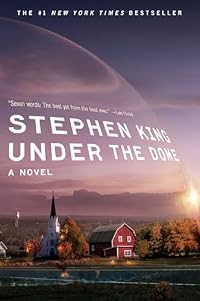
Under the Dome
by Stephen King
On This Page
Description
The small town of Chester's Mill, Maine, is faced with a big dilemma when it is mysteriously sealed off by an invisible and completely impenetrable force field. With cars and airplanes exploding on contact, the force field has completely isolated the townspeople from the outside world. Now, Iraq war vet Dale Barbara and a group of the town's more sensible citizens must overcome the tyrannical rule of Big Jim Rennie, a politician bent on controlling everything within the Dome.Tags
Recommendations

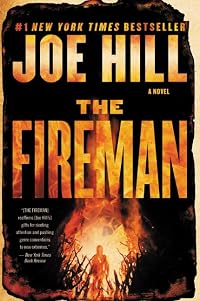
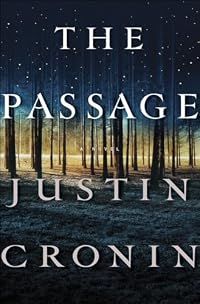
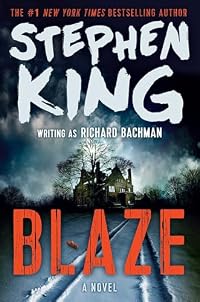
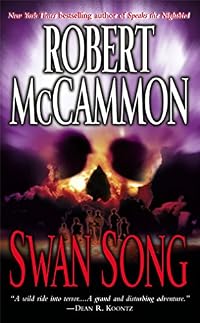








Member Recommendations

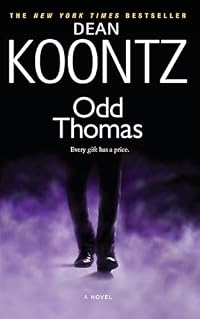
jlparent Actually, the whole Dark Tower series - both are epic in scale, each concerns itself with the interaction between the people caught in the crosshairs.
131
sturlington Undert the Dome is an adult version of Lord of the Flies.
82

soyleyenda El estilo de Víctor Blázquez bebe mucho de Stephen King, y además, El cuarto jinete es una obra tan coral como La Cúpula y la acción transcurre en un pequeño pueblo americano muy similar al de la novela de King.
04
Member Reviews
A small New England town is suddenly, inexplicably cut off from the rest of the world, trapping a large cast of characters inside (or outside) a huge, clear dome. As the emergency escalates, various heroes (and villains) emerge to play a part in the drama. What is the dome? Why is it there? Will the town survive? This is the premise of Stephen King's big, long, (aren't they all?) thoroughly fascinating new novel.
I've been reading Stephen King for 35 years now--I read his first 3 novels in college--and I've always been impressed by his work. But "Under the Dome" is in a small group of King stories that go far beyond merely being entertaining fiction. This novel will inevitably be compared to The Stand because it deals with the horrors of show more the world around us. Forget ghosts and vampires and space aliens--there's nothing as horrifying as what humans are capable of doing to one another. show less
I've been reading Stephen King for 35 years now--I read his first 3 novels in college--and I've always been impressed by his work. But "Under the Dome" is in a small group of King stories that go far beyond merely being entertaining fiction. This novel will inevitably be compared to The Stand because it deals with the horrors of show more the world around us. Forget ghosts and vampires and space aliens--there's nothing as horrifying as what humans are capable of doing to one another. show less
The scary thing about small towns is that what little power exists is both petty and absolute. I grew up in a small town, and it was a great place to be a kid — but no way would I want to be at the whim of whatever tinpot tyrant might arise in such a place to meet a crisis.
This is the bind in which Chester’s Mill finds itself when an impenetrable force field slams shut around the town, kicking off Stephen King’s rendering of “Lord of the Flies.” This is not a tale of eldritch abominations, but about a far more unnerving nightmare: the human savagery that pulses beneath the polite skin of civilization.
Those unfamiliar with King assume his otherworldly monsters are the big bads, but those acquainted with the master of horror show more know better: King’s scariest monsters are men and women loosed from all restraint, and “Under the Dome” might be the finest example of his work with this theme.
What I love about this story is that it also presents the flip side: men and women trapped in the deepening shadow of vile men, outnumbered and outgunned and afraid, but prepared to sacrifice everything for truth and goodness and decency rather than surrender their souls to barbarism.
I found this novel equal parts disquieting and inspiring, but I’m a sucker for heroes who would rather go down fighting than let evil run rampant. Heroism, after all, is stepping up even when you stand alone and no cavalry can save you, when the pink stars are falling and Halloween is coming. show less
This is the bind in which Chester’s Mill finds itself when an impenetrable force field slams shut around the town, kicking off Stephen King’s rendering of “Lord of the Flies.” This is not a tale of eldritch abominations, but about a far more unnerving nightmare: the human savagery that pulses beneath the polite skin of civilization.
Those unfamiliar with King assume his otherworldly monsters are the big bads, but those acquainted with the master of horror show more know better: King’s scariest monsters are men and women loosed from all restraint, and “Under the Dome” might be the finest example of his work with this theme.
What I love about this story is that it also presents the flip side: men and women trapped in the deepening shadow of vile men, outnumbered and outgunned and afraid, but prepared to sacrifice everything for truth and goodness and decency rather than surrender their souls to barbarism.
I found this novel equal parts disquieting and inspiring, but I’m a sucker for heroes who would rather go down fighting than let evil run rampant. Heroism, after all, is stepping up even when you stand alone and no cavalry can save you, when the pink stars are falling and Halloween is coming. show less
And then we come to the book I'd truly been dreading in my Great Stephen King Re-Read...
The last time I'd read this was within days of it coming out, so...almost fifteen years ago. And I don't recall being overly chuffed with it back then, and I do remember truly despising the ending of this one (no, I'm not one of those that prescribe to the "King can't write good endings" because he really can).
And, of course, between that reading and now, there was also the truly awful television show that I remember better than the book.
So, when I started this just over a week ago, I felt (and still do) that King kind of went on and on and on with the opening. Yes, I know he had to start giving a sense of all the players in this novel...and there's show more a LOT of players...as well as the impact the dome has on everyone, but it did outstay its welcome.
That being said, once the story actually began moving a bit, maybe around 250 pages in, when most books are starting to wrap up, I found I was actually somewhat enjoying it.
I will say, I did find that, maybe due to the sheer volume of characters, the ones in this novel felt a little more one-dimensional than I'm used to with King. The good guys were very good. And the bad guys were very bad, and there was very little gray in between. Though, as an avatar of the current political system, you probably couldn't find a better stand-in for the Orange One than Big Jim Rennie.
Still, a little more nuance, a little more gray would have been appreciated, but it also likely would have pushed the book out to 1400 pages, so...
The other thing that really got to me in a negative way was the way King slid into a very top-level omniscient view of the town and its characters for a single chapter around 760 pages in. He made a very weird stylistic choice for one chapter here (and revisited it briefly around page 950) and never used it again. It's things like this that do support the argument that King needs a more forceful editor.
Still, on the whole, while there was a lot going on here, I have to say, King locked almost all of it together really well and made it into a far more enjoyable story...with a more satisfying ending than I originally thought...than I remembered. I'm honestly starting to think much of the stink I believed this book to have came from the television show.
I doubt I'll ever read this again, but I will say I did enjoy it far more on the re-read. show less
The last time I'd read this was within days of it coming out, so...almost fifteen years ago. And I don't recall being overly chuffed with it back then, and I do remember truly despising the ending of this one (no, I'm not one of those that prescribe to the "King can't write good endings" because he really can).
And, of course, between that reading and now, there was also the truly awful television show that I remember better than the book.
So, when I started this just over a week ago, I felt (and still do) that King kind of went on and on and on with the opening. Yes, I know he had to start giving a sense of all the players in this novel...and there's show more a LOT of players...as well as the impact the dome has on everyone, but it did outstay its welcome.
That being said, once the story actually began moving a bit, maybe around 250 pages in, when most books are starting to wrap up, I found I was actually somewhat enjoying it.
I will say, I did find that, maybe due to the sheer volume of characters, the ones in this novel felt a little more one-dimensional than I'm used to with King. The good guys were very good. And the bad guys were very bad, and there was very little gray in between. Though, as an avatar of the current political system, you probably couldn't find a better stand-in for the Orange One than Big Jim Rennie.
Still, a little more nuance, a little more gray would have been appreciated, but it also likely would have pushed the book out to 1400 pages, so...
The other thing that really got to me in a negative way was the way King slid into a very top-level omniscient view of the town and its characters for a single chapter around 760 pages in. He made a very weird stylistic choice for one chapter here (and revisited it briefly around page 950) and never used it again. It's things like this that do support the argument that King needs a more forceful editor.
Still, on the whole, while there was a lot going on here, I have to say, King locked almost all of it together really well and made it into a far more enjoyable story...with a more satisfying ending than I originally thought...than I remembered. I'm honestly starting to think much of the stink I believed this book to have came from the television show.
I doubt I'll ever read this again, but I will say I did enjoy it far more on the re-read. show less
Out of the clear blue sky, an inexplicable invisible dome falls over the small town of Chester's Mill, Maine. No one can get in or out of the town, and those who strike up against the dome's walls too hard are injured or worst. Meanwhile, air supply is limited and power is gone. How will the town's people deal with this catastrophe?
In this sweeping epic, Stephen King presents a Shakespearean-like tragedy. Almost as soon as the town is closed off from the outside world, there are those who use the circumstances to further their own goals, notably used car salesman and town selectman "Big Jim" Rennie, who immediately starts machinating to garner more power for himself. As folks start getting manipulated, additional tragedies ensue and show more it's almost more than the town can bear very quickly. But there's a select group of heroes (or as close to heroes as real life can get) who are trying to keep it all together.
I loved that this book didn't really have a supernatural villain per se; the worse of what happens is purely from human foibles. That being said, it's still not a book for the faint of heart. King describes in gruesome details the natural and unnatural deaths -- accidents, murders, and suicides -- as well as physical and sexual assaults that occur under the dome.
But throughout it all is always the human element. There is a broad cast of characters and it's a bit much to keep track of them all at first (especially as King keeps killing them off), but once you do, you start feeling strongly and deeply about them -- whether rooting for their safety or their demise, depending on which side of the good/evil line they stand.
King constantly foreshadows and drops hints of what will come under the dome, leaving the reader always tense for what will happen next. Despite these warnings, the big finale had me near tears with its heartbreak.
Raul Esparza was an excellent audiobook narrator who gave a distinct voice to each character, bringing everyone that much more to life.
Recommended for those who like character dramas and don't mind some grisly bits. show less
In this sweeping epic, Stephen King presents a Shakespearean-like tragedy. Almost as soon as the town is closed off from the outside world, there are those who use the circumstances to further their own goals, notably used car salesman and town selectman "Big Jim" Rennie, who immediately starts machinating to garner more power for himself. As folks start getting manipulated, additional tragedies ensue and show more it's almost more than the town can bear very quickly. But there's a select group of heroes (or as close to heroes as real life can get) who are trying to keep it all together.
I loved that this book didn't really have a supernatural villain per se; the worse of what happens is purely from human foibles. That being said, it's still not a book for the faint of heart. King describes in gruesome details the natural and unnatural deaths -- accidents, murders, and suicides -- as well as physical and sexual assaults that occur under the dome.
But throughout it all is always the human element. There is a broad cast of characters and it's a bit much to keep track of them all at first (especially as King keeps killing them off), but once you do, you start feeling strongly and deeply about them -- whether rooting for their safety or their demise, depending on which side of the good/evil line they stand.
King constantly foreshadows and drops hints of what will come under the dome, leaving the reader always tense for what will happen next. Despite these warnings, the big finale had me near tears with its heartbreak.
Raul Esparza was an excellent audiobook narrator who gave a distinct voice to each character, bringing everyone that much more to life.
Recommended for those who like character dramas and don't mind some grisly bits. show less
On October 21st, an invisible dome goes down around the town of Chester's Mill, Maine. The immediate result is many animal deaths and several human deaths, as individuals crash into the barrier or, if they're unfortunate enough to be in the way, are cut in two by it.
Outside the Dome, the US military and the best and brightest scientists try to figure out what they're dealing with. Inside the Dome, theoretically, people are doing their best to figure out what's going on and not panic. Theoretically.
Unfortunately, Big Jim Rennie is Chester's Mill's Second Selectman. He's used to being the town's true power behind the good-natured and easily manipulated First Selectman, Andy Sanders, and in the Dome he sees an opportunity to truly solidify show more his grip on the town. By the time the Dome is finally breached, Big Jim figures that everyone will be grateful for his leadership, so grateful that certain issues might not even be noticed. And surely he can find a handy scapegoat for everything else.
At the time the Dome went down, Dale Barbara, known as Barbie to his friends, was on his way out of town, hoping to escape the wrath of Big Jim's son, Junior. The Dome trapped him in Chester's Mill, same as everyone else. Although he's currently a cook and a drifter, he was once an Army lieutenant. He has the skills necessary to keep things calm and well-organized within Chester's Mill, but he knows enough about how the town operates to realize that Big Jim's more likely to work against him than with him.
This book follows a huge cast of characters and multiple POVs (including, briefly, a woodchuck). Thankfully, King is a skilled enough writer to ensure that all of those characters are relatively distinct, and it was rare that I found myself wondering who a particular character was when they appeared on-page. I found myself emotionally invested in a bunch of them, hoping that they would somehow make it through this.
I also learned to hate Big Jim, his son Junior, and several of Junior's friends. I was very much looking forward to the moment when Big Jim and Junior finally died. Both of them had issues (Big Jim's heart, Junior's undiagnosed brain tumor) that made it obvious that their deaths were a question of when, not if. But man, King sure made me wait, and their final moments were, unfortunately, much shorter than their periods of awfulness. My one comfort was that Junior's experiences with necrophilia were never described in detail (although the same could not be said for one character's rape by several of Junior's horrible friends).
I had to keep reminding myself that this was written well before Trump's first presidency and the pandemic, because this very much felt like commentary about both.
Although King did a great job with the characters, and I enjoyed rooting for the decent ones and hoping the awful ones would die terribly, all of the characters and POVs dragged things out tremendously. The entire book takes place over the course of only a few days, but it felt like weeks at least. On the one hand, I was impressed at the way King made me feel like I was genuinely keeping tabs on an entire town's worth of people. On the other hand, surely it could've been tightened up a bit?
And ugh, the ending.It didn't surprise me in the slightest that the Dome was alien-generated. But the whole thing about everyone realizing they were alien children and getting them to lift the Dome just by begging and hoping for a shred of empathy? Surely King could have come up with something better than that.
(Original review posted on A Library Girl's Familiar Diversions.) show less
Outside the Dome, the US military and the best and brightest scientists try to figure out what they're dealing with. Inside the Dome, theoretically, people are doing their best to figure out what's going on and not panic. Theoretically.
Unfortunately, Big Jim Rennie is Chester's Mill's Second Selectman. He's used to being the town's true power behind the good-natured and easily manipulated First Selectman, Andy Sanders, and in the Dome he sees an opportunity to truly solidify show more his grip on the town. By the time the Dome is finally breached, Big Jim figures that everyone will be grateful for his leadership, so grateful that certain issues might not even be noticed. And surely he can find a handy scapegoat for everything else.
At the time the Dome went down, Dale Barbara, known as Barbie to his friends, was on his way out of town, hoping to escape the wrath of Big Jim's son, Junior. The Dome trapped him in Chester's Mill, same as everyone else. Although he's currently a cook and a drifter, he was once an Army lieutenant. He has the skills necessary to keep things calm and well-organized within Chester's Mill, but he knows enough about how the town operates to realize that Big Jim's more likely to work against him than with him.
This book follows a huge cast of characters and multiple POVs (including, briefly, a woodchuck). Thankfully, King is a skilled enough writer to ensure that all of those characters are relatively distinct, and it was rare that I found myself wondering who a particular character was when they appeared on-page. I found myself emotionally invested in a bunch of them, hoping that they would somehow make it through this.
I also learned to hate Big Jim, his son Junior, and several of Junior's friends. I was very much looking forward to the moment when Big Jim and Junior finally died. Both of them had issues (Big Jim's heart, Junior's undiagnosed brain tumor) that made it obvious that their deaths were a question of when, not if. But man, King sure made me wait, and their final moments were, unfortunately, much shorter than their periods of awfulness. My one comfort was that Junior's experiences with necrophilia were never described in detail (although the same could not be said for one character's rape by several of Junior's horrible friends).
I had to keep reminding myself that this was written well before Trump's first presidency and the pandemic, because this very much felt like commentary about both.
Although King did a great job with the characters, and I enjoyed rooting for the decent ones and hoping the awful ones would die terribly, all of the characters and POVs dragged things out tremendously. The entire book takes place over the course of only a few days, but it felt like weeks at least. On the one hand, I was impressed at the way King made me feel like I was genuinely keeping tabs on an entire town's worth of people. On the other hand, surely it could've been tightened up a bit?
And ugh, the ending.
(Original review posted on A Library Girl's Familiar Diversions.) show less
"Under the Dome" is more a novel of human behavior, relationships, and depravity than a supernatural horror. People are surprised to see how quickly characters turn in the novel, but their behavior was already there, it just took a dome to bring it to others' attention and amplify it. Chester's Mill is a microcosm of modern American politics, climate change, and human behavior.
The comparisons of "Under the Dome" to "Lord of the Flies" and "The Monsters are Due on Maple Street" are appropriate. "Under the Dome" is a cautionary tale of what it means to be human, how we treat one another, and how we regard the consequences of our actions (be they political or environmental). King continues to write with an easy, affable style with folksy show more protagonists and psychotic antagonists, but despite their sometimes exaggerated nature, they remain very much human.
Fast-paced, often graphic, with an unusual ending. The last 100 pages reminded me of "From a Buick 8" where King reminds us there will always be things we don't understand... apathy, perhaps, being one of them? show less
The comparisons of "Under the Dome" to "Lord of the Flies" and "The Monsters are Due on Maple Street" are appropriate. "Under the Dome" is a cautionary tale of what it means to be human, how we treat one another, and how we regard the consequences of our actions (be they political or environmental). King continues to write with an easy, affable style with folksy show more protagonists and psychotic antagonists, but despite their sometimes exaggerated nature, they remain very much human.
Fast-paced, often graphic, with an unusual ending. The last 100 pages reminded me of "From a Buick 8" where King reminds us there will always be things we don't understand... apathy, perhaps, being one of them? show less
With his new novel, [Under the Dome], Stephen King confirms himself as the modern day Charles Dickens. I know that my declaration will turn derisive noses skyward and furrow many a sourpuss brow in the stolid and hushed halls of the intelligentsia. After all, how can I compare such a purveyor of pulp to one of the lions of literature? So, let me defend my position.
No other contemporary novelist populates their fiction with such a Dickensian multitude of characters, all distinct and teeming with life. The fair to middling book typically features a handful of people to follow through a couple hundred pages, a few wholly dimensional and others mostly cardboard. Good solid literary efforts offer several dozen well-drawn characters, ranging show more from the one-time mention to the core players. And then, there’s King, who has imagined and translated enough characters to populate the moons of Jupiter. More than that, if the people of King’s works were to all be relocated to a common planet, the resulting civilization would be immediately viable, with all manner of social, political, racial, and religious strata represented.
That King has so well documented the people of a particular region and social class, the far-Northeast blue-collar, also compares well with Dickens’ facility for the English underclass. Their stories throb with rich, believable detail that is the product of an instinctive eye for human nature.
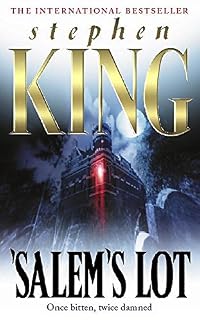
[Under the Dome] show-cases King’s talent for character driven story-telling, capturing an entire town under a mysterious, invisible globe, evident only when humans or the forces of nature run into it. It’s not the first time that King’s afflicted a town, or the world, and watched, as from above, while they dealt with some plague – think [The Stand] or [Salem’s Lot] or [Needful Things], some of his best in the type. In the end, the cause of the town’s affliction or its solution is not as important as how the town meets the curse, how they behave under the most extreme of circumstances. Some find nobility while others find only rock-bottom selfishness.
One of the other similarities between King and Dickens is their interest in faith and religion. Though it might surprise many, King has always struck me as deeply spiritual. While his books tend toward the graphic, and he often lampoons religious zealotry, a bright thread of good vs. evil always runs through these books. And the good, which is almost always informed by common-sense, Golden Rule values, usually wins out in the end. I often wonder if King isn’t constantly working out his own ideas about faith and God in writing these stories.
In full disclosure, I am one of King’s faithful Constant Readers. But I challenge those who would pigeon-hole him as a horror hack to read some of his better work, like [Under the Dome]. A surprise lurks, if you would take the challenge.
4 ½ bones!!!! show less
No other contemporary novelist populates their fiction with such a Dickensian multitude of characters, all distinct and teeming with life. The fair to middling book typically features a handful of people to follow through a couple hundred pages, a few wholly dimensional and others mostly cardboard. Good solid literary efforts offer several dozen well-drawn characters, ranging show more from the one-time mention to the core players. And then, there’s King, who has imagined and translated enough characters to populate the moons of Jupiter. More than that, if the people of King’s works were to all be relocated to a common planet, the resulting civilization would be immediately viable, with all manner of social, political, racial, and religious strata represented.
That King has so well documented the people of a particular region and social class, the far-Northeast blue-collar, also compares well with Dickens’ facility for the English underclass. Their stories throb with rich, believable detail that is the product of an instinctive eye for human nature.
[Under the Dome] show-cases King’s talent for character driven story-telling, capturing an entire town under a mysterious, invisible globe, evident only when humans or the forces of nature run into it. It’s not the first time that King’s afflicted a town, or the world, and watched, as from above, while they dealt with some plague – think [The Stand] or [Salem’s Lot] or [Needful Things], some of his best in the type. In the end, the cause of the town’s affliction or its solution is not as important as how the town meets the curse, how they behave under the most extreme of circumstances. Some find nobility while others find only rock-bottom selfishness.
One of the other similarities between King and Dickens is their interest in faith and religion. Though it might surprise many, King has always struck me as deeply spiritual. While his books tend toward the graphic, and he often lampoons religious zealotry, a bright thread of good vs. evil always runs through these books. And the good, which is almost always informed by common-sense, Golden Rule values, usually wins out in the end. I often wonder if King isn’t constantly working out his own ideas about faith and God in writing these stories.
In full disclosure, I am one of King’s faithful Constant Readers. But I challenge those who would pigeon-hole him as a horror hack to read some of his better work, like [Under the Dome]. A surprise lurks, if you would take the challenge.
4 ½ bones!!!! show less
Members
- Recently Added By
Published Reviews
ThingScore 92
Though his scenarios aren’t always plausible in strictest terms, King’s imagination, as always, yields a most satisfying yarn.
added by Christa_Josh
It’s a fun and clear-headed fury, though. This is King humming at the height of his powers, cackling at human folly, taking childish glee in the gross-out and all the while spinning a modern fable that asks some serious questions without sounding preachy. If the fury left a few excessive typos and a dog’s name that mistakenly changes on occasion, well, these are (mostly) forgivable sins. show more After all, few of us can resist such nightmares and dreamscapes. show less
added by ty1997
King says he started "Under the Dome" in 1976 but then "crept away from it with my tail between my legs. . . . I was terrified of screwing it up." Fortunately, he found the confidence to return to this daunting story because the result is one of his most powerful novels ever.
added by SqueakyChu
Lists

Best Horror Books
281 works; 85 members

Best Post-Apocalyptic Stories
143 works; 88 members

Read the book and saw the movie
1,170 works; 192 members

Recommended Apocalyptic Novels
53 works; 24 members

Top Five Books of 2013
1,564 works; 716 members

Dystopian and Apocalyptic Literature
350 works; 74 members

Recommend the 20 best books you've read in the last five years
2,167 works; 600 members

To Read - Horror
137 works; 13 members

Summer Reads 2014
207 works; 70 members

Best Books With Aliens
67 works; 10 members

Indie Next Picks
196 works; 4 members

I Can't Finish This Book
189 works; 22 members

Books Tagged Small Town
58 works; 1 member

Books You Couldn't Finish
202 works; 30 members

Florida
366 works; 3 members

Novels/Poems/Short Stories/Anything Storytelling Related
112 works; 2 members

Eerie eTales
192 works; 3 members

Books Read in 2010
631 works; 11 members

Stephen King books
81 works; 1 member
Small Town Fiction
66 works; 13 members

Books Read in 2015
3,298 works; 129 members
Favourite Books
1,817 works; 316 members

Jarett's Books
86 works; 1 member
Books Set in Maine
42 works; 6 members
Books Set in Small Towns and Villages
278 works; 16 members

2000s (the decade, not the century)
184 works; 11 members

Strange Towns
49 works; 7 members
Stephen King Bibliography
77 works; 3 members

New England Books
101 works; 10 members

Best Science Fiction Novels
816 works; 430 members
Author Information

Stephen King was born in Portland, Maine, on September 21, 1947. After graduating with a Bachelor's degree in English from the University of Maine at Orono in 1970, he became a teacher. His spare time was spent writing short stories and novels. King's first novel would never have been published if not for his wife. She removed the first few show more chapters from the garbage after King had thrown them away in frustration. Three months later, he received a $2,500 advance from Doubleday Publishing for the book that went on to sell a modest 13,000 hardcover copies. That book, Carrie, was about a girl with telekinetic powers who is tormented by bullies at school. She uses her power, in turn, to torment and eventually destroy her mean-spirited classmates. When United Artists released the film version in 1976, it was a critical and commercial success. The paperback version of the book, released after the movie, went on to sell more than two-and-a-half million copies. Many of King's other horror novels have been adapted into movies, including The Shining, Firestarter, Pet Semetary, Cujo, Misery, The Stand, and The Tommyknockers. Under the pseudonym Richard Bachman, King has written the books The Running Man, The Regulators, Thinner, The Long Walk, Roadwork, Rage, and It. He is number 2 on the Hollywood Reporter's '25 Most Powerful Authors' 2016 list. King is one of the world's most successful writers, with more than 100 million copies of his works in print. Many of his books have been translated into foreign languages, and he writes new books at a rate of about one per year. In 2003, he received the National Book Foundation Medal for Distinguished Contribution to American Letters. In 2012 his title, The Wind Through the Keyhole made The New York Times Best Seller List. King's title's Mr. Mercedes and Revival made The New York Times Best Seller List in 2014. He won the Edgar Allan Poe Award in 2015 for Best Novel with Mr. Mercedes. King's title Finders Keepers made the New York Times bestseller list in 2015. Sleeping Beauties is his latest 2017 New York Times bestseller. (Bowker Author Biography) Stephen King is the author of more than thirty books, all of them worldwide bestsellers. Among his most recent are "Hearts in Atlantis", "The Girl Who Loved Tom Gordon", "Bag of Bones", & "The Green Mile". "On Writing" is his first book of nonfiction since "Danse Macabre", published in 1981. He served as a judge for Prize Stories: The Best of 1999, The O. Henry Awards. He lives in Bangor, Maine with his wife, novelist Tabitha King. King's book, The Bazaar of Bad Dreams: Stories, made the 2015 New York Times bestseller list. (Publisher Provided) show less
Awards and Honors
Awards
Distinctions
Notable Lists
Series
Belongs to Publisher Series
Work Relationships
Contains
Common Knowledge
- Canonical title
- Under the Dome
- Original title
- Under the Dome
- Alternate titles*
- De laatste grens; Een zware nacht; Feestnacht; Eigenzinnig kind; Wie geeft wat hij heeft...; Gestalten in de nacht (show all 10); Het grijpt je aan; Munt, salie, rozemarijn en tijm; De erfenis; Het aapje
- Original publication date
- 2009-11-10
- People/Characters
- Dale Barbara; Jim Rennie Sr.; Jim Rennie Jr.; Joseph McClatchey; Julia Shumway; Rose Twitchell (show all 77); Norrie Calvert; Horace Greeley; Andy Sanders; Andrea Grinnell; Anson Wheeler; Angie McCain; Dodee Sanders; Howard Perkins; Peter Randolph; Marty Arsenault; Freddy Denton; George Frederick; Rupert Libby; Toby Whelan; Jackie Wettington; Linda Everett; Stacy Moggin; Georgia Roux; Frank DeLesseps; Melvin Searles; Carter Thibidoux; Reverend Lester Coggins; Reverend Piper Libby; Ron Haskell; Rusty Everett; Ginny Tomlinson; Dougie Twitchell; Gina Buffalino; Harriet Bigelow; Walter Bushey; Benny Drake; Judy Everett; Janelle Everett; Ollie Dinsmore; Rory Dinsmore; Tommy Anderson; Willow Anderson; Stewart Bowie; Fernald Bowie; Joe Boxer; Romeo Burpee; Paul Bushey; Samantha Bushey; Jack Cale; Ernie Calvert; Johnny Carver; Alden Dinsmore; Roger Killian; Lissa Jamieson; Clare McClatchey; Alva Drake; Stubby Norman; Brenda Perkins; Tony Guay; Pete Freeman; Sam Verdreaux; Alice Appleton; Aidan Appleton; Thurston Marshall; Carolyn Sturges; Claudette Sanders; Chuck Thompson; Bob Roux; Jack Evans; Myra Evans; Billly Debec; Wanda Debec; Nora Robichaud; Elsa Andrews; Paul Gendron; Jack Reacher
- Important places
- Chester's Mill, Maine, USA
- Important events*
- The Dome Appears
- Related movies
- Under the Dome (2013 | IMDb)
- Epigraph
- Who you lookin for
What was his name
you can prob'ly find him
at the football game
it's a small town
you know what I mean
it's a small town, son
and we all support the team.
—James McMurtry - Dedication
- In memory of Surendra Dahyabhai Patel. We miss you, my friend.
- First words
- From two thousand feet, where Claudette Sanders was taking a flying lesson, the town of Chester's Mill gleamed in the morning light like something freshly made and just set down.
- Last words
- (Click to show. Warning: May contain spoilers.)Pity was not love, Barbie reflected...but if you were a child, giving clothes to someone who was naked had to be a step in the right direction. November 22, 2007 - March 14, 2009
- Publisher's editor
- Graham, Nan
- Blurbers
- Child, Lee
- Original language
- English
- Canonical DDC/MDS
- 813.54
- Canonical LCC
- PS3561.I483
*Some information comes from Common Knowledge in other languages. Click "Edit" for more information.
Classifications
Statistics
- Members
- 13,544
- Popularity
- 556
- Reviews
- 484
- Rating
- (3.81)
- Languages
- 21 — Chinese, Czech, Danish, Dutch, English, Finnish, French, German, Hungarian, Italian, Japanese, Korean, Polish, Portuguese, Russian, Serbian, Slovak, Spanish, Swedish, Turkish, Ukrainian
- Media
- Paper, Audiobook, Ebook
- ISBNs
- 98
- ASINs
- 46