
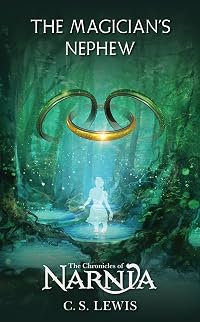
The Magician's Nephew
by C. S. Lewis
The Chronicles of Narnia-Chronological (1), The Chronicles of Narnia: Publication order (6)
On This Page
Description
When Digory and Polly try to return the wicked witch Jadis to her own world, the magic gets mixed up and they all land in Narnia where they witness Aslan blessing the animals with human speech.Tags
Recommendations
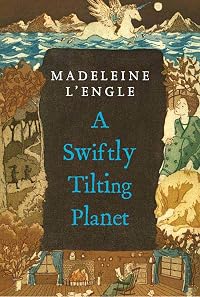

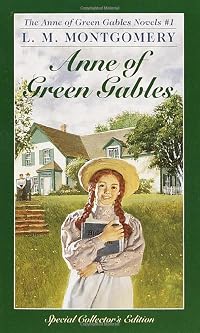
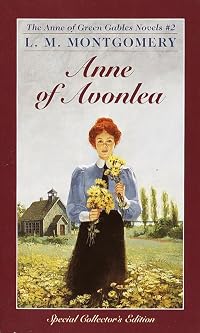
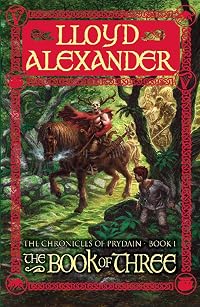
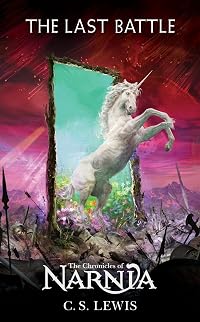

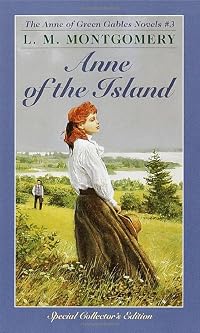
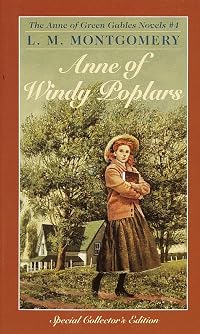
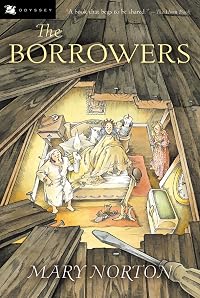
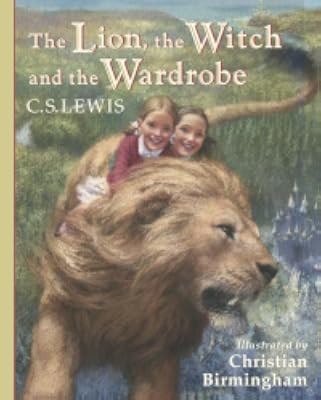
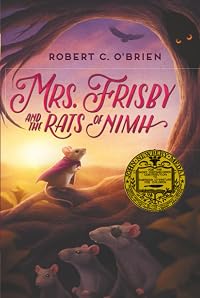
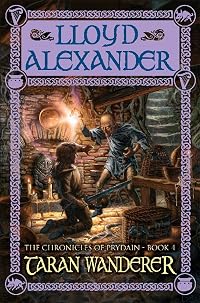
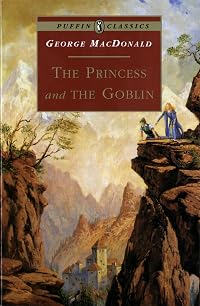
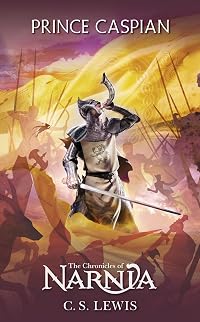
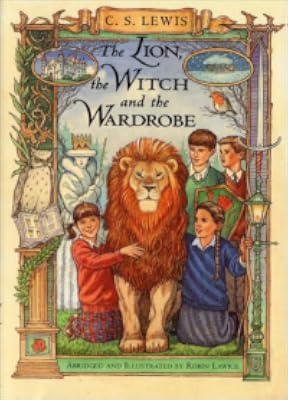
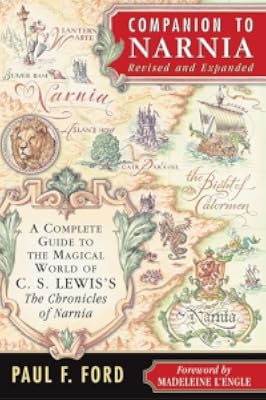
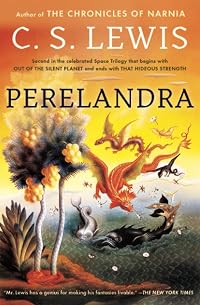
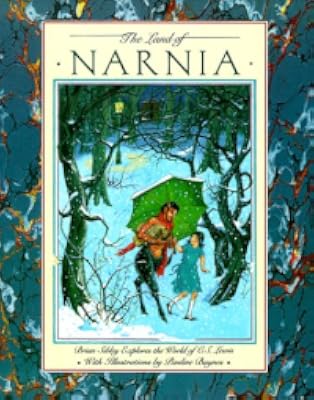
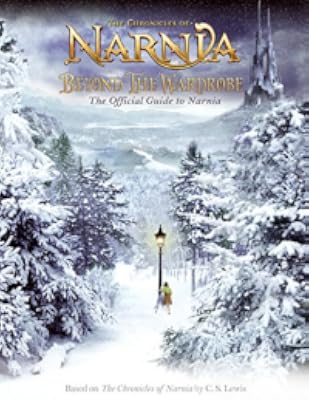
Member Recommendations


MyriadBooks For the idea of myriad worlds.
Member Reviews
The sixth of the seven Chronicles of Narnia that C. S. Lewis wrote, The Magician’s Nephew is actually set several years before The Lion, the Witch and the Wardrobe, and acts as a sort of prequel for the series. Whether it should be read first or sixth is a matter of debate—I’ve argued both sides over the course of my life, but currently favor the latter, as it makes the climax of this book that much more surprising, and the aura of mystery that surrounds LWW that much more appealing.
We open in London, which Lewis paints with colors both nostalgic and fantastical, as he merges the city as it might have been during his childhood with its literary history, invoking such names as Sherlock Holmes and the Bastables in the opening show more paragraphs. In this setting a young boy and a young girl from neighboring houses meet and start to become acquainted. She is Polly Plummer, a plucky thing who has lived all her life in London. He is Digory Kirke, who used to live in the country, thinks London is absolutely miserable, misses his father (who’s away in India), worries about his ill mother, loves the aunt with whom they are staying, and is absolutely terrified of her brother Uncle Andrew, whom Digory thinks mad. While the children are exploring one day, they happen upon Uncle Andrew’s study, and he tricks them into putting on some magic rings that send them “right out of the world.” But Uncle Andrew underestimated both his rings and the extent of the realms they have access to: Polly and Digory find that, by alternating between their yellow and green rings, they can jump between various worlds. Over the course of the story, they awaken an evil witch, put their own world in danger, and get to see an empty world brought into being.
This was my favorite of the Chronicles as a child, mostly because of all the magic—rings of power, jumping between worlds, halls of images, words of power, dying worlds, others being created, even vague references to Atlantis and Morgana le Fay; you've got to admit that it's pretty cool stuff. And there is something very nostalgic and delightful about the tone of this book, something that has nothing to do with my early love of it. At times it reads very much like a fairy tale.
What really gets me now are the scenes between Aslan and Digory, particularly those that involve the subject of his mother. This was a very personal book for Lewis to write, as he was very close to his own mother and had to watch her slowly decline and die when he was a child. He imbues the scenes I mentioned with rare and memorable emotion. I definitely teared up while reading them, just as I did near the end of The Silver Chair.
As I hinted in my first paragraph, the book is particularly satisfying when read after The Lion, the Witch and the Wardrobe, especially the first time around. I had the great pleasure of reading it aloud to my little sister on her first trip through Narnia, and it was a joy to see her start making the connections between this and the first book as we neared the grand finale.
Though it is no longer my favorite of the seven, The Magician’s Nephew is a book I love and cherish. I really cannot say enough good things about The Chronicles as a whole: if you have not read them yet, you simply must! show less
We open in London, which Lewis paints with colors both nostalgic and fantastical, as he merges the city as it might have been during his childhood with its literary history, invoking such names as Sherlock Holmes and the Bastables in the opening show more paragraphs. In this setting a young boy and a young girl from neighboring houses meet and start to become acquainted. She is Polly Plummer, a plucky thing who has lived all her life in London. He is Digory Kirke, who used to live in the country, thinks London is absolutely miserable, misses his father (who’s away in India), worries about his ill mother, loves the aunt with whom they are staying, and is absolutely terrified of her brother Uncle Andrew, whom Digory thinks mad. While the children are exploring one day, they happen upon Uncle Andrew’s study, and he tricks them into putting on some magic rings that send them “right out of the world.” But Uncle Andrew underestimated both his rings and the extent of the realms they have access to: Polly and Digory find that, by alternating between their yellow and green rings, they can jump between various worlds. Over the course of the story, they awaken an evil witch, put their own world in danger, and get to see an empty world brought into being.
This was my favorite of the Chronicles as a child, mostly because of all the magic—rings of power, jumping between worlds, halls of images, words of power, dying worlds, others being created, even vague references to Atlantis and Morgana le Fay; you've got to admit that it's pretty cool stuff. And there is something very nostalgic and delightful about the tone of this book, something that has nothing to do with my early love of it. At times it reads very much like a fairy tale.
What really gets me now are the scenes between Aslan and Digory, particularly those that involve the subject of his mother. This was a very personal book for Lewis to write, as he was very close to his own mother and had to watch her slowly decline and die when he was a child. He imbues the scenes I mentioned with rare and memorable emotion. I definitely teared up while reading them, just as I did near the end of The Silver Chair.
As I hinted in my first paragraph, the book is particularly satisfying when read after The Lion, the Witch and the Wardrobe, especially the first time around. I had the great pleasure of reading it aloud to my little sister on her first trip through Narnia, and it was a joy to see her start making the connections between this and the first book as we neared the grand finale.
Though it is no longer my favorite of the seven, The Magician’s Nephew is a book I love and cherish. I really cannot say enough good things about The Chronicles as a whole: if you have not read them yet, you simply must! show less
In nineteenth century London, Digory and his dying mother come to live with his aunt and uncle... an uncle who Digory at first believes to be mad, but who he soon discovers to be a magician (of sorts), and a very unscrupulous one at that. When his friend Polly is sent out of this World into an unknown place by his uncle’s experiments, Digory has no choice but to follow to bring her back. But Digory and Polly bring back far more than they bargained for: the evil Queen Jadis who had destroyed her own world of Charn, and who quickly causes chaos on the streets of London. And the children’s attempt to return her to Charn does not quite go according to plan ...
When I was a child I loved C.S. Lewis’s Narnia books above pretty much all show more others, and of all those books probably my favourite was The Magician’s Nephew. The story tells what is effectively a creation myth for the land of Narnia, but it’s more than half way through before Narnia is even thought of, and the sections in Charn and London in the first half are equally enjoyable. It’s quite dark at times (there is no doubt that the Queen Jadis is truly evil and will sacrifice everything and everyone to get her own way) and it also has very amusing sections:
The talking animals of Narnia, led by the Elephant try to decide whether Uncle Andrew is an animal or a tree:
On rereading this I would have to give it five stars, if only to reflect the pleasure that it gave me as a child. But really it was absolutely a joy to reread now, so the rating is fully justified. show less
When I was a child I loved C.S. Lewis’s Narnia books above pretty much all show more others, and of all those books probably my favourite was The Magician’s Nephew. The story tells what is effectively a creation myth for the land of Narnia, but it’s more than half way through before Narnia is even thought of, and the sections in Charn and London in the first half are equally enjoyable. It’s quite dark at times (there is no doubt that the Queen Jadis is truly evil and will sacrifice everything and everyone to get her own way) and it also has very amusing sections:
The talking animals of Narnia, led by the Elephant try to decide whether Uncle Andrew is an animal or a tree:
“What do most of us think? Is it an animal or something of the tree kind?”
“Tree! Tree!” said a dozen voices.
“Very Well,” said the Elephant. “Then, if it’s a tree it wants to be planted. We must dig a hole.”
The two Moles settled that part of the business pretty quickly. There was some dispute as to which way up Uncle Andrew ought to be put into the hole, and he had a very narrow escape from being put in head foremost. Several animals said his legs must be his branches and therefore the grey, fluffy thing (they meant his head) must be his root. But then others said that the forked end of him was muddier and that it spread out more as roots ought to do. So finally he was planted right way up. When they had patted down the earth it came above his knees.
“It looks dreadfully withered,” said the Donkey.
“Of course it wants some watering, “ said the Elephant.
On rereading this I would have to give it five stars, if only to reflect the pleasure that it gave me as a child. But really it was absolutely a joy to reread now, so the rating is fully justified. show less
If you were a dreamy sort of child, as I was, this book would quite possibly be down your alley. I realized, when reading this story, that I hadn’t read any children’s books in quite a while—and I kind of miss that. Especially with well-written ones.
Apparently, this isn’t as good as the sequels to it (or the others in the series…this may have been published later?). Anyway, I enjoyed it, even though it’s hard to know what to remark on!
The magic in here didn’t bother me for the most part—and the story would not work without it. I loved the idea of discovering new worlds, and I think one thing that makes us like magical stories like this is that we know, deep within us, that there is a perfect new world that will come one show more day, and like dreaming about what may be possible then. So that part delighted me.
I also loved the description of creation—I thought that was a very imaginative, but well-done chapter.
The only thing I struggled with was the water-gods and nymph-gods that Aslan called around him—as a Christian allegory, that was a little disconcerting to me.
But overall, it was a lovely, imaginative story with a fast-paced plot that didn’t go on for ages! I enjoyed it! show less
Apparently, this isn’t as good as the sequels to it (or the others in the series…this may have been published later?). Anyway, I enjoyed it, even though it’s hard to know what to remark on!
The magic in here didn’t bother me for the most part—and the story would not work without it. I loved the idea of discovering new worlds, and I think one thing that makes us like magical stories like this is that we know, deep within us, that there is a perfect new world that will come one show more day, and like dreaming about what may be possible then. So that part delighted me.
I also loved the description of creation—I thought that was a very imaginative, but well-done chapter.
The only thing I struggled with was the water-gods and nymph-gods that Aslan called around him—as a Christian allegory, that was a little disconcerting to me.
But overall, it was a lovely, imaginative story with a fast-paced plot that didn’t go on for ages! I enjoyed it! show less
This is by far my favorite on the series. I loved rereading it and watching Diggory discover the consequences of his actions and the joys of helping others. I love the story, start to finish, and it was so fun to read with my daughter.
“Oh, Adam’s sons, how cleverly you defend yourselves against all that might do you good!”
“Oh, Adam’s sons, how cleverly you defend yourselves against all that might do you good!”
This book tells the origin story of Narnia. Digory and his friend Polly are sent to a mysterious land by Digory’s Uncle Andrew, a magician motivated by greed and power. It is a loose retelling of the Biblical creation story and the Garden of Eden. Religious symbolism is more prominent than in some of the previous books in the series. It explains why some of the animals in Narnia can talk, while others cannot. It also explains the White Witch. I am reading through the entire Chronicles of Narnia series, which except for the first book, I somehow missed as a child. It is the sixth in publication order but set in a time prior to the first book. It can be read as a standalone. I did not care as much for this one. It contains more overt show more moralizing than the others. show less
Reading this as an adult is weird. Now the allegory is clear and overwhelming. The creation of Narnia, the lands and the animals and the plants, feels just as improbable and poorly-thought out as the creation in Genesis. No bugs at all, which is nice from a picnic perspective, but really wreaks havoc on decomposition. Where does Aslan come from? Does he have a ring in his pocket? Hours in to the creation of this new world, the talking animals have the idea to plant Uncle Andrew. But nothing has ever been planted before. How does Aslan decide what kinds of trees and animals he wants? While the elephant is necessary from a plot perspective, it seems an unlikely creature for a temperate forested climate much like England's.
I was really show more enjoying it up until Narnia. I still love the idea of the attic spaces and cisterns. And I'm okay with a witch queen who has the power to destroy all forms of life on her planet, because who doesn't want that kind of power sometimes? Weirdly, I'm even okay with the idea that there are all these different universes which exist only as pretty backdrops to a single planet in each. But if Lewis was going to take only large mammals from earth, why didn't he just go ahead and fill up an ark at the London Zoo? It would have been more plausible as a way to get one male and one female each of those particular species. And where are all those monsters that appear in The Lion, the Witch and the Wardrobe going to come from? Is Aslan going to start singing death metal?
***
Finished last night. It's not a great book, I don't think. How came these dwarves to arise from a song, fully informed with their mining and goldsmithing skills? did Aslan sing up the anvil, too? All the religious stuff just bugs me now, because it seems to raise more questions than it answers. But, wow, does Lewis tell his story well. He had us laughing at all the right points. He's a charming snake oil salesman, so charming that you don't notice all the trickery, until the next morning when your pocket is empty. show less
I was really show more enjoying it up until Narnia. I still love the idea of the attic spaces and cisterns. And I'm okay with a witch queen who has the power to destroy all forms of life on her planet, because who doesn't want that kind of power sometimes? Weirdly, I'm even okay with the idea that there are all these different universes which exist only as pretty backdrops to a single planet in each. But if Lewis was going to take only large mammals from earth, why didn't he just go ahead and fill up an ark at the London Zoo? It would have been more plausible as a way to get one male and one female each of those particular species. And where are all those monsters that appear in The Lion, the Witch and the Wardrobe going to come from? Is Aslan going to start singing death metal?
***
Finished last night. It's not a great book, I don't think. How came these dwarves to arise from a song, fully informed with their mining and goldsmithing skills? did Aslan sing up the anvil, too? All the religious stuff just bugs me now, because it seems to raise more questions than it answers. But, wow, does Lewis tell his story well. He had us laughing at all the right points. He's a charming snake oil salesman, so charming that you don't notice all the trickery, until the next morning when your pocket is empty. show less
9/10 (excellent): As a child I wasn't able to see just how good The Magician's Nephew was. Reading it as the penultimate book of the series (it was originally published after all the other books except [b:The Last Battle|84369|The Last Battle (Chronicles of Narnia, #7)|C.S. Lewis|https://images.gr-assets.com/books/1308814830s/84369.jpg|1059917]) helps, I think. Despite being neither an allegory or a parable, somehow it captures the essence of creation and the fall in a way that works perfectly within the Narniad.
Members
- Recently Added By
Lists

Favorite Childhood Books
1,646 works; 514 members

Best Fantasy Novels
821 works; 361 members
Favourite High Fantasy Books
113 works; 23 members

Best Young Adult
399 works; 101 members

Books I've Read More Than Once
602 works; 49 members
NPRs Ultimate Backseat Bookshelf: 100 Must-Reads for kids 9-14
222 works; 30 members
1001 Children's Books You Must Read Before You Grow Up
774 works; 100 members

20th Century Literature
1,161 works; 54 members
Mensa for Kids Excellence in Reading Award Program (Grades 4-6)
64 works; 9 members

1950s
340 works; 22 members

Christianity Books You've Read
179 works; 19 members

Childhood Favorites
427 works; 24 members

Best Friendship Stories
205 works; 16 members

Survey of Fantasy Classics
111 works; 23 members

Books tagged favorites
390 works; 30 members

Books Read in 2023
5,547 works; 145 members
Mind Expanding Books by hackerkid
581 works; 8 members
Speculative Fiction to Read
706 works; 32 members
One Book, Many Authors
441 works; 40 members
Generation Joshua
115 works; 3 members
Travel from real to fantasy world -- children's/young adult fiction
125 works; 11 members

Books about the ordinary family members of interesting sounding people.
20 works; 2 members

CCE 1000 Good Books List
1,033 works; 12 members

Recommended Reading : 600 Classics Reviewed, Editors of Salem Press, 2015
634 works; 6 members

Unread books
1,063 works; 87 members

Read in 1999
62 works; 1 member

Witchy Fiction
253 works; 126 members
Books Read in 2011
684 works; 20 members

Books recommended by Calgary Public Library staff
1,588 works; 4 members
'Books You Can't Live Without: The Top 100', The Guardian, 2007
156 works; 7 members

Books Read in 2024
4,623 works; 126 members

Books Read in 2016
4,666 works; 197 members

Books I Read Before The Invention Of The Internet.
144 works; 1 member

Read in 2023
44 works; 1 member

Read in 2020
33 works; 1 member

Read in 2011
81 works; 1 member

Books Read in 2025
4,091 works; 97 members

Read Aloud Revival
108 works; 4 members

Books Read in 2010
631 works; 11 members
Classical Conversations Challenge A Exposition
10 works; 1 member

KayStJ's to-read list
1,616 works; 11 members

Mind-Benders: Fiction that Hurts Your Head
34 works; 8 members

Penultimate Books
5 works; 1 member

Books Read in 2014
2,343 works; 89 members
LOPC Children's Library Wishlist
62 works; 2 members
Honey For a Child's Heart
1,152 works; 25 members
Ambleside Books
459 works; 18 members

Genesis in literature
47 works; 7 members

Books Read in 2017
4,249 works; 129 members
Science Fiction and Fantasy
63 works; 4 members

Books on my Kindle
162 works; 3 members
Flying horses and unicorns -- children's/young adult fiction
26 works; 3 members

Books Read in 2020
4,379 works; 124 members

Books Read in 2021
5,361 works; 114 members

Nifty Fifties
129 works; 13 members

um actually
76 works; 3 members

Books With Family Relationships in the Title
44 works; 4 members
Author Information

528+ Works 523,099 Members
C. S. (Clive Staples) Lewis, "Jack" to his intimates, was born on November 29, 1898 in Belfast, Ireland. His mother died when he was 10 years old and his lawyer father allowed Lewis and his brother Warren extensive freedom. The pair were extremely close and they took full advantage of this freedom, learning on their own and frequently enjoying show more games of make-believe. These early activities led to Lewis's lifelong attraction to fantasy and mythology, often reflected in his writing. He enjoyed writing about, and reading, literature of the past, publishing such works as the award-winning The Allegory of Love (1936), about the period of history known as the Middle Ages. Although at one time Lewis considered himself an atheist, he soon became fascinated with religion. He is probably best known for his books for young adults, such as his Chronicles of Narnia series. This fantasy series, as well as such works as The Screwtape Letters (a collection of letters written by the devil), is typical of the author's interest in mixing religion and mythology, evident in both his fictional works and nonfiction articles. Lewis served with the Somerset Light Infantry in World War I; for nearly 30 years he served as Fellow and tutor of Magdalen College at Oxford University. Later, he became Professor of Medieval and Renaissance English at Cambridge University. C.S. Lewis married late in life, in 1957, and his wife, writer Joy Davidman, died of cancer in 1960. He remained at Cambridge until his death on November 22, 1963. (Bowker Author Biography) show less
Some Editions
Awards and Honors
Awards
Notable Lists
Series


Work Relationships
Is contained in
The Complete Works: Fantasy & Sci-Fi Novels, Religious Studies, Poetry & Autobiography: Enriched edition. The Chronicles of Narnia, The Space Trilogy, The Screwtape Letters by C. S. Lewis (indirect)
The Magician's Nephew / The Lion, the Witch, and the Wardrobe / The Horse and His Boy by C. S. Lewis
Has the adaptation
Is abridged in
Has as a commentary on the text
Has as a student's study guide
Common Knowledge
- Canonical title
- The Magician's Nephew
- Original title
- The Chronicles Of Narnia - The Magicians Nephew
- Alternate titles*
- The magician's nephew; 魔術家的外甥; 納尼亞傳奇 6 :魔術家的外甥
- Original publication date
- 1955
- People/Characters
- Digory Kirke; Polly Plummer; Andrew Ketterley; Jadis (Narnia); Aslan; King Frank (show all 10); Fledge (Strawberry); Queen Helen; Letty Ketterley; Mabel Kirke
- Important places
- London, England, UK; Charn; The Wood Between the Worlds; Narnia; England, UK
- Important events
- Creation of Narnia
- Dedication
- To the Kilmer family
- First words
- This is a story about something that happened long ago when your grandfather was a child.
- Quotations
- A terrible thirst and hunger came over him and a longing to taste that fruit. He put it hastily into his pocket; but there were plenty of others. Could it be wrong to taste one? After all, he thought, the notice on the gate m... (show all)ight not have been exactly an order; it might have been only a piece of advice - and who cares about advice?
Now the trouble about trying to make yourself stupider than you really are is that you very often succeed.
For what you see and hear depends a good deal on where you are standing: it also depends on what sort of person you are. - Last words
- (Click to show. Warning: May contain spoilers.)"But she was a dem fine woman, sir, a dem fine woman."
- Original language
- English
- Canonical DDC/MDS
- 823.087661
- Disambiguation notice
- Please do NOT combine "The Magician's Nephew" with "The Chronicles of Narnia".
Unabridged - please do NOT combine with any abridged edition.
*Some information comes from Common Knowledge in other languages. Click "Edit" for more information.
Classifications
- Genres
- Fantasy, Fiction and Literature, Christian Fiction, Kids
- DDC/MDS
- 823.087661 — Literature & rhetoric English & Old English literatures English fiction By type Genre fiction Adventure fiction Speculative fiction Fantasy fiction High fantasy
- LCC
- PZ7 .L58474 .M — Language and Literature Fiction and juvenile belles lettres Fiction and juvenile belles lettres Juvenile belles lettres
- BISAC
Statistics
- Members
- 34,549
- Popularity
- 90
- Reviews
- 410
- Rating
- (3.93)
- Languages
- 34 — Arabic, Armenian, Bulgarian, Catalan, Chinese, Czech, Danish, Dutch, English, Estonian, Finnish, French, German, Greek, Hungarian, Icelandic, Indonesian, Italian, Japanese, Korean, Latvian, Norwegian (Bokmål), Norwegian, Farsi/Persian, Polish, Romanian, Russian, Serbian, Spanish, Swedish, Thai, Turkish, Portuguese (Portugal), Portuguese (Brazil)
- Media
- Paper, Audiobook, Ebook
- ISBNs
- 302
- UPCs
- 18
- ASINs
- 164