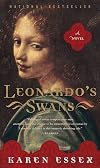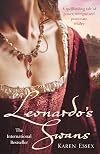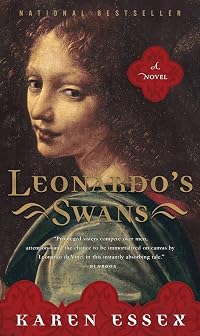
Leonardo's Swans
by Karen Essex 
On This Page
Description
The story of the powerful Este sisters, Beatrice, Duchess of Milan, and Isabella, Marchesa of Mantua, as they compete for the affections of Italy's most influential prince, the Duke of Milan, and for the larger prize, to be immortalized in oil by his court painter and engineer, Leonardo da Vinci. Sexy, inspiring, and intelligent, her story of love, intrigue, and art is truly unforgettable.Tags
Recommendations




Member Recommendations
elleeldritch If you want fiction surrounding art, artists, and 15th century Italy, pick this up instead. More detail surrounding the time period and characters. It leaves you with an emotion, feeling something, unlike Leonardo's Swans (which was, "Okay, next book!")
Member Reviews
Read this review on my blog: http://histficchick.blogspot.com/2009/08/read-synopsis-of-this-book-here.html
Steeped in the excitement and dangers of 15th Century Renaissance Italy, Leonardo’s Swans was a fascinating book. It covered a vast array of historical events, from the rising tensions amongst the unstable Italian city-states, to the French invasion of Italy by Charles VIII, to the election of the corrupt Borgia Pope to the Vatican. The book had its occasional anachronism, but as a whole, I think fans of historical fiction who like a well researched book will really appreciate this intricate novel.
Leonardo da Vinci, the quintessential “Renaissance man,” is a side character in this book, and I enjoyed learning the secrets and show more stories behind some of his most famous works, especially The Lady with an Ermine. His “swans” refers to the noble d’Este sisters: Isabella, who marries the future Duke of Mantua, and Beatrice, who marries “Il Moro,” the legendary Duke of Milan, Ludovico Sforza. Ludovico is also one of Leonardo’s greatest patrons, and his wife and her sister engage in a rivalry to be immortalized in oils by the great Maestro.
The only problem is that the fickle Leonardo begins many projects, yet finishes very few of them, as he is easily distracted by ideas of grandeur. Every time he begins one commission, another, more intriguing project manifests itself in his mind. One can see why Leonardo was so easily distracted, for he was not only a painter, but also Ludovico’s weapons mastermind, a scientist, an engineer, an inventor, a mathematician, an anatomist, a botanist...the list goes on. I really liked reading the excerpts from Leonardo’s notebooks on the first page of every chapter; little touches like these make this book special.
The d’Este sisters were both strong, opinionated females living in times when women were meant to be meek and appeasing. I could respect Isabella for her knowledge and love of the arts, but I felt like I kept waiting for one of these two women to emerge as my protagonist, and neither one of the d’Este sisters was truly likeable as a person. There was also a certain point through the book when I sensed a major disconnect in the relationship between Isabella and Beatrice that seemed inconsistent to me. Isabella goes from being Beatrice’s arch nemesis to her champion all too quickly; we don’t really see a strong impetus for this change of heart. I loved this book in the beginning, the storyline in the middle section got monotonous at points, but overall it is a very good read, and the book’s many strengths more than make up for the slower middle bits. If you like your hist-fic books heavy on the "hist," (I do!) then this book is for you! show less
Steeped in the excitement and dangers of 15th Century Renaissance Italy, Leonardo’s Swans was a fascinating book. It covered a vast array of historical events, from the rising tensions amongst the unstable Italian city-states, to the French invasion of Italy by Charles VIII, to the election of the corrupt Borgia Pope to the Vatican. The book had its occasional anachronism, but as a whole, I think fans of historical fiction who like a well researched book will really appreciate this intricate novel.
Leonardo da Vinci, the quintessential “Renaissance man,” is a side character in this book, and I enjoyed learning the secrets and show more stories behind some of his most famous works, especially The Lady with an Ermine. His “swans” refers to the noble d’Este sisters: Isabella, who marries the future Duke of Mantua, and Beatrice, who marries “Il Moro,” the legendary Duke of Milan, Ludovico Sforza. Ludovico is also one of Leonardo’s greatest patrons, and his wife and her sister engage in a rivalry to be immortalized in oils by the great Maestro.
The only problem is that the fickle Leonardo begins many projects, yet finishes very few of them, as he is easily distracted by ideas of grandeur. Every time he begins one commission, another, more intriguing project manifests itself in his mind. One can see why Leonardo was so easily distracted, for he was not only a painter, but also Ludovico’s weapons mastermind, a scientist, an engineer, an inventor, a mathematician, an anatomist, a botanist...the list goes on. I really liked reading the excerpts from Leonardo’s notebooks on the first page of every chapter; little touches like these make this book special.
The d’Este sisters were both strong, opinionated females living in times when women were meant to be meek and appeasing. I could respect Isabella for her knowledge and love of the arts, but I felt like I kept waiting for one of these two women to emerge as my protagonist, and neither one of the d’Este sisters was truly likeable as a person. There was also a certain point through the book when I sensed a major disconnect in the relationship between Isabella and Beatrice that seemed inconsistent to me. Isabella goes from being Beatrice’s arch nemesis to her champion all too quickly; we don’t really see a strong impetus for this change of heart. I loved this book in the beginning, the storyline in the middle section got monotonous at points, but overall it is a very good read, and the book’s many strengths more than make up for the slower middle bits. If you like your hist-fic books heavy on the "hist," (I do!) then this book is for you! show less
Reading this recent historical fiction novel was a very strange experience – it's based on the same historical facts as another book, ‘Duchess of Milan' by Michael Ennis – which I love. So reading this book was almost like re-reading ‘Duchess'... but feeling that everything, has, somehow, changed... Although, I believe, factually accurate, Essex's book is much less flattering to her characters, I believe. Both focus on the two sisters, Beatrice and Isabella d'Este, who were prominent players in the Renaissance courts of Italy's late 15th century (and were patrons to Leonardo Da Vinci and many other artists of the day.) But while Ennis portrays these women as the well-educated, powerful, and savvy politicians that they likely show more were (without sacrificing a strong element of personal drama), Essex has the women be much more motivated by personal jealousy and vanity – their connivings are shown as more petty games than far-sighted political moves. They are constantly worrying about who is more beautiful than whom, who their husbands are sleeping with, and even Isabella's main goal of being painted by Da Vinci is equal parts vanity and desire to ‘get one over' on her sister. Isabella came across as shallow and irritating – which, I'm fairly sure, historically, she was not.
The other annoying thing about this book is that Essex obviously did some of the research for this book by looking at existing portraits and carvings of her characters, an she spends a great deal of time in the book describing in great detail her personal interpretations of these artworks. OK, so she got me to do a Google image search for some of the works she described, so I guess she succeeded in getting me to want to look at them. But it got to the point where at times I felt like I was reading a museum didactic, not a novel.
Overall, this wasn't bad – but I would definitely recommend ‘Duchess of Milan' over this book any day! show less
The other annoying thing about this book is that Essex obviously did some of the research for this book by looking at existing portraits and carvings of her characters, an she spends a great deal of time in the book describing in great detail her personal interpretations of these artworks. OK, so she got me to do a Google image search for some of the works she described, so I guess she succeeded in getting me to want to look at them. But it got to the point where at times I felt like I was reading a museum didactic, not a novel.
Overall, this wasn't bad – but I would definitely recommend ‘Duchess of Milan' over this book any day! show less
A thrilling political story about court life, arranged marriages, and the quest for immortality.
Two Italian sisters are wed to two different leaders. Neither will be long happy in their marriages, devoting themselves instead to ruling, entertaining, and birthing children. Though at first the two sisters jockey for position and prestige, the soon learn to value each other as fellow travelers on the same sad road. Though they each rule in their own right, they have been born into a man's world and ultimately, their destiny is tied to that of their husbands.
At the center of the story is Leonardo da Vinci a creative genius who is making his name an international reputation. This is vibrant and evocative novel seamlessly weaves together the show more fate of nations and the fate of marriages. show less
Two Italian sisters are wed to two different leaders. Neither will be long happy in their marriages, devoting themselves instead to ruling, entertaining, and birthing children. Though at first the two sisters jockey for position and prestige, the soon learn to value each other as fellow travelers on the same sad road. Though they each rule in their own right, they have been born into a man's world and ultimately, their destiny is tied to that of their husbands.
At the center of the story is Leonardo da Vinci a creative genius who is making his name an international reputation. This is vibrant and evocative novel seamlessly weaves together the show more fate of nations and the fate of marriages. show less
My favorite thing about this book is that it exposed me to some very interesting people who lived in 15th century Italy. Without it I may have never heard about the incredible Isabella d'Este, may have never looked up the paintings mentioned in this book, may have never thought about Leonardo da Vinci as a man outside of his work.
Ms. Essex did a great job of getting into the women's heads and showing us what they thought and felt at the most important times of their lives. I preferred Isabella not because her character was easier to relate to but because her sections were deeper, more intimate. She was a woman of great intellect, an art connoisseur, a formidable opponent for any man in the political arena as well as a woman of great show more beauty, grace and charm. It was fascinating to learn about her and I intend to read more about her in the future.
Leonardo da Vinci is a prominent character in this book but we never get to hear about the events from him. He is always talked about by either Esabella or Beatrice and while their descriptions paint an interesting portrait (no pun intended) it would've been very interesting to get his take on the events of the time and the people with whom he was in such close contact. Throughout the book there are excerpts from Leonardo's notes that are both his reflections about the subjects of his studies and to-do lists that give us a glimpse into the mundane part of his life. These excerpts are not invention of the author, they are actually taken from da Vinci's notebooks and effectively bring the reader closer to the time and the characters of the book.
As impressed as I was by the characters this book fell a bit flat for me because of the writing. The narrative went from lively scenes that were very engaging to sections that read more like a chronicle and back. Because of this the novel didn't hold my interest as much as it could have and I had no trouble setting it down and sometimes even found myself zoning out during the accounts of who invaded whom and who was suspected of whose death. The fact that the narrative often changed between past and present tense from one paragraph to the next didn't help eather and even though eventually I managed to ignore the back and forth between the "is" and the "was" the challenge of having to do it detracted from the enjoyment of the book.
I would recommend this novel to those readers who are interested in learning about Italy at that tumultuous time in history, enjoy fascinating characters and feel they'll be able to ignore the inconsistencies in tense and less than stellar bridges between the scenes that actually had some life to them. show less
Ms. Essex did a great job of getting into the women's heads and showing us what they thought and felt at the most important times of their lives. I preferred Isabella not because her character was easier to relate to but because her sections were deeper, more intimate. She was a woman of great intellect, an art connoisseur, a formidable opponent for any man in the political arena as well as a woman of great show more beauty, grace and charm. It was fascinating to learn about her and I intend to read more about her in the future.
Leonardo da Vinci is a prominent character in this book but we never get to hear about the events from him. He is always talked about by either Esabella or Beatrice and while their descriptions paint an interesting portrait (no pun intended) it would've been very interesting to get his take on the events of the time and the people with whom he was in such close contact. Throughout the book there are excerpts from Leonardo's notes that are both his reflections about the subjects of his studies and to-do lists that give us a glimpse into the mundane part of his life. These excerpts are not invention of the author, they are actually taken from da Vinci's notebooks and effectively bring the reader closer to the time and the characters of the book.
As impressed as I was by the characters this book fell a bit flat for me because of the writing. The narrative went from lively scenes that were very engaging to sections that read more like a chronicle and back. Because of this the novel didn't hold my interest as much as it could have and I had no trouble setting it down and sometimes even found myself zoning out during the accounts of who invaded whom and who was suspected of whose death. The fact that the narrative often changed between past and present tense from one paragraph to the next didn't help eather and even though eventually I managed to ignore the back and forth between the "is" and the "was" the challenge of having to do it detracted from the enjoyment of the book.
I would recommend this novel to those readers who are interested in learning about Italy at that tumultuous time in history, enjoy fascinating characters and feel they'll be able to ignore the inconsistencies in tense and less than stellar bridges between the scenes that actually had some life to them. show less
Thought I was going to hate it but ended up loving it. A story of two sisters. A story of Leonardo da Vinci. Check it out.
Synopsis:
The story revolves around two sisters, Isabella and Beatrice d'Este. Isabella is the typical blond gorgeous beauty. And Beatrice is the younger, more wild and less traditionally beautiful sister. At first Isabella is ecstatic that she is engaged to handsome young Marquess of Mantua. And they are actually in love with each other. And poor Beatrice. She is engaged to the OLD Duke of Milan, Ludovico "Il Moro" Sforza,. I mean, hey, he's a Duke, but he's so old!
The Duke is known for being wealthy, having mistresses, and being a patron to Leonardo da Vinci. He's also known for having Leonardo paint portraits of show more his mistresses. A famous example is the portrait of his favorite mistress, Cecilia Gallerani entitled "Lady with an Ermine."
But against all odds, when Beatrice marries The Duke, this wild, dark-haired, lover of horses gets her husband to fall in love with her. And she become a great Duchess.
And Isabella is at odds. Now she is slightly jealous. She's not a Duchess and she's never going to be immortalized by Leonardo da Vinci...like Beatrice will be. Not that Beatrice cares.
So I thought I wasn't going to like this book because I thought Isabella was going to be a scheming evil sister and poor Beatrice was going to get trampled over by The Duke. But that's not what happened.
Even though the sisters are separated, through their letters and life circumstances, they actually become fairly close and bond. I loved watching that unfold.
And Beatrice became my favorite. She became such a strong capable Duchess able to woo and win her husband while becoming a fairly apt ruler herself.
While this would have been an interesting story on it's own, folded in is the story of Leonardo's time under the patronage of The Duke. So we get to see tidbits of his life and art during this period and how and why he made them. show less
Synopsis:
The story revolves around two sisters, Isabella and Beatrice d'Este. Isabella is the typical blond gorgeous beauty. And Beatrice is the younger, more wild and less traditionally beautiful sister. At first Isabella is ecstatic that she is engaged to handsome young Marquess of Mantua. And they are actually in love with each other. And poor Beatrice. She is engaged to the OLD Duke of Milan, Ludovico "Il Moro" Sforza,. I mean, hey, he's a Duke, but he's so old!
The Duke is known for being wealthy, having mistresses, and being a patron to Leonardo da Vinci. He's also known for having Leonardo paint portraits of show more his mistresses. A famous example is the portrait of his favorite mistress, Cecilia Gallerani entitled "Lady with an Ermine."
But against all odds, when Beatrice marries The Duke, this wild, dark-haired, lover of horses gets her husband to fall in love with her. And she become a great Duchess.
And Isabella is at odds. Now she is slightly jealous. She's not a Duchess and she's never going to be immortalized by Leonardo da Vinci...like Beatrice will be. Not that Beatrice cares.
So I thought I wasn't going to like this book because I thought Isabella was going to be a scheming evil sister and poor Beatrice was going to get trampled over by The Duke. But that's not what happened.
Even though the sisters are separated, through their letters and life circumstances, they actually become fairly close and bond. I loved watching that unfold.
And Beatrice became my favorite. She became such a strong capable Duchess able to woo and win her husband while becoming a fairly apt ruler herself.
While this would have been an interesting story on it's own, folded in is the story of Leonardo's time under the patronage of The Duke. So we get to see tidbits of his life and art during this period and how and why he made them. show less
'Cisnes de Leonardo' é a história das poderosas irmãs d'Este - Beatrice, duquesa de Milão, e Isabella, marquesa de Mântua - e de sua competição pelo amor de um dos príncipes mais influentes da Itália, Ludovico Sforza, e pelo prêmio maior - ser imortalizada em um quadro a óleo pelo pintor e engenheiro da corte de Milão, Leonardo da Vinci. No livro, Leonardo da Vinci aparece como homem de carne e osso que, a despeito de sua inegável genialidade, precisa lutar para pagar as contas e sustentar a família. Cada capítulo começa com um diferente trecho do diário que o mestre italiano escreveu ao longo da vida.
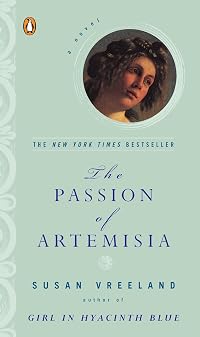
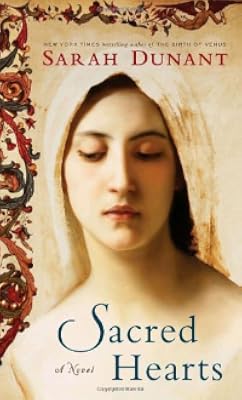
I picked this up in the hopes of reading a fictional story about Leonardo da Vinci and people that surrounded him. While it is true that he plays a role in this novel, he takes a back seat to the d'Este sisters. The story surrounding the sisters was interesting and intriguing, enough to make me finish the book, however I was unsatisfied overall. When I started to read this, I was hoping for a book similar to Sarah Dunant's The Birth of Venus or Susan Vreeland's The Passion of Artemisia, something that expounded on the life of the artist. This is worth a read if you have never heard of these people (excluding Leonardo, as you won't get much information here other than a brief overview of his personality) and are interested in the time show more period, including the natural intrigue that comes along with a royal-like court. show less
Members
- Recently Added By
Lists

Historical Fiction
889 works; 91 members
Author Information

8 Works 1,987 Members
Karen Essex lives in Beverly Hills, California. (Bowker Author Biography)
Karen Essex is a LibraryThing Author, an author who lists their personal library on LibraryThing.
Awards and Honors
Distinctions
Common Knowledge
- Canonical title
- Leonardo's Swans
- Original publication date
- 2006
- People/Characters
- Beatrice d'Este, duchess of Milan; Isabella d'Este, marchesa of Mantua; Leonardo da Vinci; Ludovico Sforza, Duke of Milan; Cecilia Gallerani; Francesco II Gonzaga
- Important places
- Milan, Lombardy, Italy; Mantua, Lombardy, Italy
- First words
- In the year 1506; in French-occupied Milan
Isabella spreads her arms like angels' wings over her sister's cold marble form, running her fingers down the exquisitely carved folds of her burial gown and tracing the delic... (show all)ate veins in her arms. - Last words
- (Click to show. Warning: May contain spoilers.)"I don't know what I shall do Galeazz. I suppose I'll just have to invent something new."
- Original language
- English
Classifications
Statistics
- Members
- 727
- Popularity
- 38,881
- Reviews
- 18
- Rating
- (3.33)
- Languages
- 8 — Dutch, English, French, German, Italian, Polish, Portuguese, Spanish
- Media
- Paper, Audiobook, Ebook
- ISBNs
- 27
- ASINs
- 5