On This Page
Description
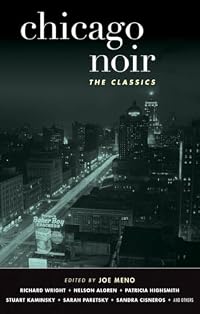
"In this superior entry in Akashic''s noir series, Meno offers nearly a century of Chicago crime fiction....Familiar bylines abound: Max Allan Collins, Richard Wright, Nelson Algren, Sherwood Anderson, Fredric Brown, Patricia Highsmith (with an excerpt from her novelThe Price of Salt), Stewart M. Kaminsky, Sara Paretsky. Others may be less familiar to mystery specialists, but all turn in impressive performances." --Publishers Weekly, Starred review "Richard Wright, Nelson Algren, and Sandra show more Cisneros are not crime-fiction writers, and yet their Chicago certainly embodies the individual-crushing ethos endemic to noir. Meno also includes stories from writers who could easily have been overlooked (Percy Spurlark Parker, Hugh Holton) to ensure that diverse voices, and neighborhoods, are represented. Add in smart and essential choices from Fredric Brown, Sara Paretsky, and Stuart Kaminsky, and you have not an anthology not for crime-fictionpurists, perhaps, but a thought-provoking document all the same." --Booklist "The fifteen short stories comprisingChicago Noir: The Classics, which are knowledgeably compiled and deftly edited by Joe Meno, are true gems of the noir literary tradition....Chicago Noir: The Classics is a consistently entertaining and will prove to be an enduringly popular addition to community library Mystery/Suspense collections." --Midwest Book Review "I''ve always enjoyed reading noir. Dark, ironic mysteries are a good read to me. Since this collection includes old classics as well as some new stories, I knew it would be good....I wasn''t disappointed." --Journey of a Bookseller "Chicago Noir The Classics does everything anthologies and noir are supposed to, but this title achieves an unheralded goal that deserves notice....This is wonderful diversity, coming both unexpected and unhearalded. Anthologies are supposed to convey a sense of having covered the territory, Joe Meno has. Ethnically diverse city, ethnically diverse plots. Better,Chicago Noir The Classics showcases diversity as normal, everyday. This adds inescapable satisfaction to a sense of the editor''s having covered the territory." --La Bloga "A worthy addition to the Akashic Books noir series." --Book Chase Although Los Angeles may be considered the most quintessentially "noir" American city, this volume reveals that pound-for-pound, Chicago has historically been able to stand up to any other metropolis in the noir arena. Classic reprints from: Harry Stephen Keeler, Sherwood Anderson, Max Allan Collins, Richard Wright, Nelson Algren, Fredric Brown, Patricia Highsmith, Barry Gifford, Stuart M. Kaminsky, Libby Fischer Hellmann, Sara Paretsky, Percy Spurlark Parker, Sandra Cisneros, Hugh Holton, and Stuart Dybek. From the introduction byJoe Meno: "More corrupt than New York, less glamorous than LA, Chicago has more murders per capita than any other city its size. With its sleek skyscrapers bisecting the fading sky like an unspoken threat, Chicago is the closest metropolis to the mythical city of shadows as first described in the work of Chandler, Hammett, and Cain. Only in Chicago do instituted color lines offer generation after generation of poverty and violence, only in Chicago do the majority of governors do prison time, only in Chicago do the dead actually vote twice. "Chicago--more than the metropolis that gave the world Al Capone, the Saint Valentine''s Day Massacre, the death of John Dillinger, the crimes of Leopold and Loeb, the horrors of John Wayne Gacy, the unprecedented institutional corruption of so many recent public officials, more than the birthplace of Raymond Chandler--is a city of darkness. This darkness is not an act of over-imagination. It''s the unadulterated truth. It''s a pointed though necessary reminder of the grave tragedies of the past and the failed possibilities of the present. Fifty years in the future, I hope these stories are read only as fiction, as somewhat distant fantasy. Here''s hoping for some light." show lessTags
Recommendations




Member Reviews
Chicago is the perfect host for a collection of classic noir tales — a city with as much character as New York or LA, with twice the crime. Gangsters, con men, corrupt politicos and lost souls on a final bender congregated on its wind-swept streets and late night dives.
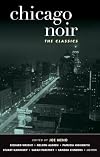
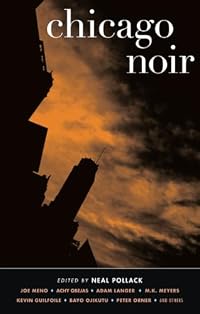
Chicago Noir: The Classics, from Akashic Press, edited by Joe Meno, is a wonderful collection in the best noir tradition.
The fun starts with a Raffles-like tale from 1916 by Harry Stephen Keeler about a couple of crazy jazz age layabouts planning the perfect heist. There’s a classic hard-nosed shamus in Max Allan Collins “Kaddish for the Kid”. Nelsen Algren dishes up a beautiful sad tale of a proto-Rocky — a tired old boxer who won’t take a fall.
A highlight show more for me is a beautiful excerpt from a 1945 Richard Wright tale called The Man Who Went to Chicago — illustrating with a powerful lyric beauty, the vast chasm between blacks and whites in mid-century America. Fredric Brown is represented in a masterful story from 1948 about a mentally damaged jazz musician who can no longer play. Patricia Highsmith, Barry Gifford, Sara Paretsky and Stuart Dybek all bring great stories to the party.
Chicago Noir is one of the more successful volumes in this huge (and growing) series, brilliantly edited by Joe Meno and well worth a look. show less
Chicago Noir: The Classics, from Akashic Press, edited by Joe Meno, is a wonderful collection in the best noir tradition.
The fun starts with a Raffles-like tale from 1916 by Harry Stephen Keeler about a couple of crazy jazz age layabouts planning the perfect heist. There’s a classic hard-nosed shamus in Max Allan Collins “Kaddish for the Kid”. Nelsen Algren dishes up a beautiful sad tale of a proto-Rocky — a tired old boxer who won’t take a fall.
A highlight show more for me is a beautiful excerpt from a 1945 Richard Wright tale called The Man Who Went to Chicago — illustrating with a powerful lyric beauty, the vast chasm between blacks and whites in mid-century America. Fredric Brown is represented in a masterful story from 1948 about a mentally damaged jazz musician who can no longer play. Patricia Highsmith, Barry Gifford, Sara Paretsky and Stuart Dybek all bring great stories to the party.
Chicago Noir is one of the more successful volumes in this huge (and growing) series, brilliantly edited by Joe Meno and well worth a look. show less
 This review was written for LibraryThing Early Reviewers.
A very good collection of 15 short stories set in various times and in various locations around Chicago. Most of these stories give the reader a real feel for Chicago and its many neighborhoods.
My only gripe is that, while most of the stories focus on the city, some barely have a connection.
Even so, this is the first of the "city noir" book collections I've read and it certainly won' be my last. The hard part might be trying to figure out which one to read next.
Recommended to fans of mystery short stories.
My only gripe is that, while most of the stories focus on the city, some barely have a connection.
Even so, this is the first of the "city noir" book collections I've read and it certainly won' be my last. The hard part might be trying to figure out which one to read next.
Recommended to fans of mystery short stories.
This review was written for LibraryThing Early Reviewers.Ostensibly these are supposed to all be noir stories. They are not. In some cases, they read as excerpts or first chapters... Some are really well written and, as usual, a collection of short stories is a great way to sample new and new-to-you authors.
I am puzzled by 1) why they said these were noir stories, and 2) why they said they were "classics" of that sub-genre.
Noirs are about people who realize that following the program will never get them what they crave. So they cross the line, commit a crime and reap the consequences. Or, they’re tales about seemingly innocent people tortured by paranoia and ass-kicked by Fate. Either way, they depict a world that’s merciless and unforgiving.
If the guy gets the girl at the end? Not noir. show more If you are telling me a slice-of-life, or hard-times story? Not noir. show less
I am puzzled by 1) why they said these were noir stories, and 2) why they said they were "classics" of that sub-genre.
Noirs are about people who realize that following the program will never get them what they crave. So they cross the line, commit a crime and reap the consequences. Or, they’re tales about seemingly innocent people tortured by paranoia and ass-kicked by Fate. Either way, they depict a world that’s merciless and unforgiving.
If the guy gets the girl at the end? Not noir. show more If you are telling me a slice-of-life, or hard-times story? Not noir. show less
Chicago Noir: The Classics is my ninth experience with the wonderful Akashic Books series of noir short stories since I discovered them a while back. In addition to this Chicago collection, I have enjoyed the books set in Manila, Belfast, Long Island, Boston, Mexico City, the Lone Star state of Texas, Providence, and one set entirely inside prisons. I was particularly interested in getting my hands on Chicago Noir because that city’s reputation for political corruptness is the first thing that many people think when they hear the word “Chicago.” Even the book’s editor, Joe Meno, stressed that reputation in his introductory comments:
“Only in Chicago do instituted color lines offer generation after generation of poverty and show more violence, only in Chicago do the majority of recent governors do prison time, only in Chicago do the dead actually vote twice. With its public record of bribery, cronyism, and fraud, this is a metropolis so deeply divided – by race, ethnicity, and class – that sociologists had to develop a new term to describe this unfortunate bifurcation. As Nelson Algren best put it, Chicago is and has always been a ‘city on the make.”’
But all that said, the stories in Chicago Noir seem to stretch the definition of “noir” to a greater degree than any of the other collections I’m familiar with. Granted, these stories are labeled as “The Classics,” and some of them are decades old, but I found myself wondering several times whether they really fit in this particular collection.
There is, for instance, a wonderful story from 1945 by Richard Wright called “The Man Who Went to Chicago.” While this is one of my two favorite stories from the entire collection, I struggle to fit it within the confines of my personal definition of the term “noir.” It takes place entirely within a Chicago Medical District research lab, and the only crimes committed are an aborted knife fight that causes damage to the lab and the workers’ decision to cover up the fact that the resulting damage ruined the research studies being conducted there. It is “dark” only in the sense that it exposes the horrible racial discrimination so common to those times.
Now, my other favorite story from Chicago Noir: The Classics leaves no room to doubt that it belongs in any collection of noir fiction. This one is called “I’ll Cut Your Throat Again, Kathleen,” and it was written by Fredric Brown way back in 1948. The story is brutal, has a couple of unforgettably duplicitous characters in it, and the most shocking ending of any story in the entire collection. It is only the second time I have read Fredric Brown and it is enough to make me search for more of his work.
As in most short story collections, the stories in Chicago Noir: The Classics are a bit uneven. Perhaps that is purposeful and done in hopes that there is something in the collection that will appeal to everyone who picks it up. If so, that might be a legitimate reason for packaging them together. But a couple of stories were so formulaic that I wished I had not bothered with them at all. It’s as if they were written to “spec” even though they were from 1995 and 2009. But overall, this is a worthy addition to the Akashic Books noir series, and I am happy to add it to my collection. show less
“Only in Chicago do instituted color lines offer generation after generation of poverty and show more violence, only in Chicago do the majority of recent governors do prison time, only in Chicago do the dead actually vote twice. With its public record of bribery, cronyism, and fraud, this is a metropolis so deeply divided – by race, ethnicity, and class – that sociologists had to develop a new term to describe this unfortunate bifurcation. As Nelson Algren best put it, Chicago is and has always been a ‘city on the make.”’
But all that said, the stories in Chicago Noir seem to stretch the definition of “noir” to a greater degree than any of the other collections I’m familiar with. Granted, these stories are labeled as “The Classics,” and some of them are decades old, but I found myself wondering several times whether they really fit in this particular collection.
There is, for instance, a wonderful story from 1945 by Richard Wright called “The Man Who Went to Chicago.” While this is one of my two favorite stories from the entire collection, I struggle to fit it within the confines of my personal definition of the term “noir.” It takes place entirely within a Chicago Medical District research lab, and the only crimes committed are an aborted knife fight that causes damage to the lab and the workers’ decision to cover up the fact that the resulting damage ruined the research studies being conducted there. It is “dark” only in the sense that it exposes the horrible racial discrimination so common to those times.
Now, my other favorite story from Chicago Noir: The Classics leaves no room to doubt that it belongs in any collection of noir fiction. This one is called “I’ll Cut Your Throat Again, Kathleen,” and it was written by Fredric Brown way back in 1948. The story is brutal, has a couple of unforgettably duplicitous characters in it, and the most shocking ending of any story in the entire collection. It is only the second time I have read Fredric Brown and it is enough to make me search for more of his work.
As in most short story collections, the stories in Chicago Noir: The Classics are a bit uneven. Perhaps that is purposeful and done in hopes that there is something in the collection that will appeal to everyone who picks it up. If so, that might be a legitimate reason for packaging them together. But a couple of stories were so formulaic that I wished I had not bothered with them at all. It’s as if they were written to “spec” even though they were from 1995 and 2009. But overall, this is a worthy addition to the Akashic Books noir series, and I am happy to add it to my collection. show less
This review was written for LibraryThing Early Reviewers.Although "noir" is apparently intended only in the broadest and generalized sense imaginable, and I don't know what qualifies every story as "classic"--the 15 stories here are divided into three chapters: Jazz Age; Noir & Neo-Noir; and Modern Crime, so maybe they weren't intended to be genre exclusive--this is a mostly excellent collection of Chicago or Chicagophile writers from the last 100 years. While the true "classic" stories, by Sherwood Anderson, Richard Wright, and Fredric Brown, were my favorites, I enjoyed reading all of them.
Reading the liner notes, it appears Akashic Books intends to eventually publish "Noir" stories specific to every major metropolis in the world! I'll likely be looking to read many more of them after show more finishing Chicago. show less
Reading the liner notes, it appears Akashic Books intends to eventually publish "Noir" stories specific to every major metropolis in the world! I'll likely be looking to read many more of them after show more finishing Chicago. show less
This review was written for LibraryThing Early Reviewers.It is really difficult to know how to rate this book. On a story-by-story basis, it averages out at about ***1/2 stars. But I'd like to give the editor zero stars and maybe a knock on the head. What on earth was he thinking? This is no more a collection of noir stories than it is a Harlequin Romance. I'm just dumbfounded. The definition of noir can be stretched a bit, but this idiot of an editor has just decided, apparently, to pick a few stories he likes that have some (often tenuous) connection with the city of Chicago. There is a good deal of nice writing here, and one or two dashes of noir, but overall I feel like I bought a Ferrari and went home and found a Toyota under the hood--a good car, but not what I expected. If I had paid show more for this book, rather than getting it as a LibraryThing reviewer, I would have asked for my money back on principle.
Story by story review:
30 Seconds of Darkness by Harry Stephen Keeler ***1/2 - Keeler was one of the most reliable pulp writers and this is a good tale of the theft of a necklace at a dinner party. However, although well told, the ending is no surprise, so the enjoyment is in the telling and not the mystery. It is also not even remotely a noir story. I have no idea why the editors included it.
Brothers by Sherwood Anderson **** - This is an atmospheric, eerie story that pretty much defies description, but it will leave you uneasy. It will also leave you wanting to read more of Anderson's short stories. I read parts of Winesburg, Ohio a long time ago, and I remember it having the same sort of effect on me. This story is a little too poetic (rather than hardboiled) to be true noir, but it is definitely noirish.
Kaddish for the Kid by Max Allan Collins **** - As could be expected from Collins, who is a pro if there ever was one, this is a nice, dark Nathan Heller story with murder and a crooked union at the center. A bit telescoped to fit into 29 pages, but satisfying, nevertheless.
The Man Who Went to Chicago (excerpt) by Richard Wright **** - Wright's tale of working in a hospital basement in the midst of laboratory animals reads like non-fiction. It is great writing, but again I can't figure out how the editors thought it fit in this collection. If they just left "Noir" out of the title, it wouldn't matter.
He Swung and He Missed by Nelson Algren **** - Nice story about a fading boxer with one last fight in him, with an O. Henry twist and a grasp on what's really important.
I'll Cut Your Throat Again, Kathleen by Fredric Brown ***** - Finally, a story that truly fits the title Chicago Noir. This is one of Brown's most perfect creations, a story about a jazz musician being released from an asylum and returning the the wife whose throat he tried to cut 11 months before. There have been few American writers as good as Brown, and though he seems to be mostly remembered for his science fiction, it is his noir novels and short stories that should form the most important part of his legacy.
The Price of Salt (excerpt) by Patricia Highsmith ***1/2 - Nicely written erotic story - nothing in the least having to do with the supposed theme of this book, but what the hey....
The Starving Dogs of Little Croatia by Barry Gifford ***1/2 - Nice atmosphere of a Chicago snowstorm - but again, this isn't a noir story.
Blue Note by Stuart M. Kaminsky ****1/2 - Gambler plays high stakes poker with something pretty important at stake. A nicely told story with a jazz background.
The Whole World is Watching by Libby Fischer Hellman **1/2 - Policeman has to make a choice during the Chicago riots of 1968. Too didactic to be very enjoyable, although Hellman is a pretty good writer.
Skin Deep by Sarah Paretsky ***1/2 - Salon worker is falsely accused of murder and a private detective has only a few hours to clear her. This is a good, well-written story, but relies too much on a hard-to-believe coincidence for its resolution.
Death and the Point Spread by Percy Spurlock Parker **1/2 - Hit and run deaths may be linked to the fix being in on a college bowl game. Enjoyable, but never believable.
One Holy Night by Sandra Cisneros *** - Young girl meets a strange older man. Different, and weird, but what it's doing here, I have no idea.
The Thirtieth Amendment by Hugh Holton * - Interesting idea, but also just plain stupid. This belongs in a book of (bad) dystopian science fiction.
We Didn't by Stuart Dybek **** - Nice story about sexual longing and the fumblings of young lovers, interrupted by a gruesome sight on a Chicago beach. show less
Story by story review:
30 Seconds of Darkness by Harry Stephen Keeler ***1/2 - Keeler was one of the most reliable pulp writers and this is a good tale of the theft of a necklace at a dinner party. However, although well told, the ending is no surprise, so the enjoyment is in the telling and not the mystery. It is also not even remotely a noir story. I have no idea why the editors included it.
Brothers by Sherwood Anderson **** - This is an atmospheric, eerie story that pretty much defies description, but it will leave you uneasy. It will also leave you wanting to read more of Anderson's short stories. I read parts of Winesburg, Ohio a long time ago, and I remember it having the same sort of effect on me. This story is a little too poetic (rather than hardboiled) to be true noir, but it is definitely noirish.
Kaddish for the Kid by Max Allan Collins **** - As could be expected from Collins, who is a pro if there ever was one, this is a nice, dark Nathan Heller story with murder and a crooked union at the center. A bit telescoped to fit into 29 pages, but satisfying, nevertheless.
The Man Who Went to Chicago (excerpt) by Richard Wright **** - Wright's tale of working in a hospital basement in the midst of laboratory animals reads like non-fiction. It is great writing, but again I can't figure out how the editors thought it fit in this collection. If they just left "Noir" out of the title, it wouldn't matter.
He Swung and He Missed by Nelson Algren **** - Nice story about a fading boxer with one last fight in him, with an O. Henry twist and a grasp on what's really important.
I'll Cut Your Throat Again, Kathleen by Fredric Brown ***** - Finally, a story that truly fits the title Chicago Noir. This is one of Brown's most perfect creations, a story about a jazz musician being released from an asylum and returning the the wife whose throat he tried to cut 11 months before. There have been few American writers as good as Brown, and though he seems to be mostly remembered for his science fiction, it is his noir novels and short stories that should form the most important part of his legacy.
The Price of Salt (excerpt) by Patricia Highsmith ***1/2 - Nicely written erotic story - nothing in the least having to do with the supposed theme of this book, but what the hey....
The Starving Dogs of Little Croatia by Barry Gifford ***1/2 - Nice atmosphere of a Chicago snowstorm - but again, this isn't a noir story.
Blue Note by Stuart M. Kaminsky ****1/2 - Gambler plays high stakes poker with something pretty important at stake. A nicely told story with a jazz background.
The Whole World is Watching by Libby Fischer Hellman **1/2 - Policeman has to make a choice during the Chicago riots of 1968. Too didactic to be very enjoyable, although Hellman is a pretty good writer.
Skin Deep by Sarah Paretsky ***1/2 - Salon worker is falsely accused of murder and a private detective has only a few hours to clear her. This is a good, well-written story, but relies too much on a hard-to-believe coincidence for its resolution.
Death and the Point Spread by Percy Spurlock Parker **1/2 - Hit and run deaths may be linked to the fix being in on a college bowl game. Enjoyable, but never believable.
One Holy Night by Sandra Cisneros *** - Young girl meets a strange older man. Different, and weird, but what it's doing here, I have no idea.
The Thirtieth Amendment by Hugh Holton * - Interesting idea, but also just plain stupid. This belongs in a book of (bad) dystopian science fiction.
We Didn't by Stuart Dybek **** - Nice story about sexual longing and the fumblings of young lovers, interrupted by a gruesome sight on a Chicago beach. show less
This review was written for LibraryThing Early Reviewers.An engaging and diverse collection of noir literature, though almost none of it is of the hard-boiled detective variety I'd been expecting. I do wish, however, that Chicago had a greater presence in some of these.
And for my own future reference, some authors introduced that I'd like to explore in future: Harry Stephen Keeler, Sherwood Anderson, Richard Wright, Nelson Algren, Stuart M. Kaminsky, Hugh Holton.
And for my own future reference, some authors introduced that I'd like to explore in future: Harry Stephen Keeler, Sherwood Anderson, Richard Wright, Nelson Algren, Stuart M. Kaminsky, Hugh Holton.
Members
- Recently Added By
Author Information

All Editions
Series

Common Knowledge
- Canonical title
- Chicago Noir: The Classics
- Important places
- Chicago, Illinois, USA
Classifications
- Genres
- Fiction and Literature, Mystery
- DDC/MDS
- 813.087208 — Literature & rhetoric American literature in English American fiction in English By type Genre fiction Adventure fiction Mystery fiction Collections
- LCC
- PS285 .C47 .C494 — Language and Literature American literature American literature Special regions, states, etc. West and Central
- BISAC
Statistics
- Members
- 62
- Popularity
- 497,471
- Reviews
- 14
- Rating
- (3.56)
- Languages
- English
- Media
- Paper, Ebook
- ISBNs
- 3
- ASINs
- 2