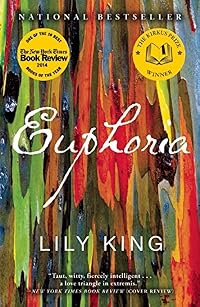
Euphoria
by Lily King
On This Page
Description
"English anthropologist Andrew Banson has been alone in the field for several years, studying the Kiona river tribe in the Territory of New Guinea. Haunted by the memory of his brothers' deaths and increasingly frustrated and isolated by his research, Bankson is on the verge of suicide when a chance encounter with colleagues, the controversial Nell Stone and her wry and mercurial Australian husband, Fen, pulls him back from the brink. Nell and Fen have just fled the bloodthirsty Mumbanyo show more and, in spite of Nell's poor health, are hungry for a new discovery. When Bankson finds them a new tribe nearby, the artistic, female-dominated Tam, he ignites an intellectual and romantic firestorm between the three of them that burns out of anyone's control" -- show lessTags
Recommendations

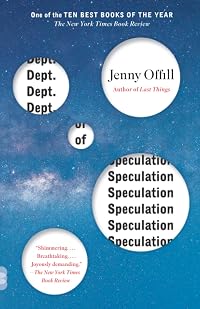
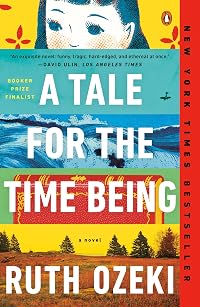
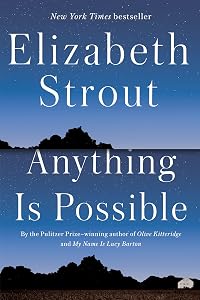
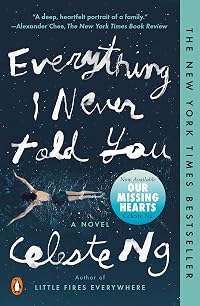
Member Recommendations
JuliaMaria Anthropologen
Also recommended by sturlington
41

JuliaMaria Autobiografie bzw. Memoiren der bekannten Anthropologin Margaret Mead
20
JuliaMaria Wie die Tochter von Margaret Mead und Gregory Bateson es sah
20
bjappleg8 One is about anthropologists and the other about missionaries, but both brilliantly depict "civilized" westerners in a primitive setting and the devastating results.
20
JuliaMaria Empirische Forscher, Sexualität bzw. Bedeutung von Sexualität als wichtiges zu erforschendes Thema
JuliaMaria biografische Romane großer Forscher
Member Reviews
Lily King takes an incident from the life of Margaret Mead - a time when she worked in New Guinea with her first husband and the man who would become her second husband. Lily basically takes the personalities of these three people, the situation surrounding their meeting, and creates an entirely fictionalized account that ends very differently from what happened in real life.
The book is compulsively readable - Lily's writing is engaging, the characters feel very real, and there's just a hint of foreshadowing. It manages to very subtly handle some really major issues while still keeping them tangential to the story. Nell (the character based on Margaret Mead) must suppress some of her brilliance in deference to her jealous husband. The show more whole field of anthropology is fraught with problems of colonialism, and King doesn't shy away from both presenting the excitement of working in the field to understand another culture, and how the ideas of anthropologists have been used to justify eugenics and genocide. It would be easy for these issues to over-ride the narrative, but Lily keeps them in the background. show less
The book is compulsively readable - Lily's writing is engaging, the characters feel very real, and there's just a hint of foreshadowing. It manages to very subtly handle some really major issues while still keeping them tangential to the story. Nell (the character based on Margaret Mead) must suppress some of her brilliance in deference to her jealous husband. The show more whole field of anthropology is fraught with problems of colonialism, and King doesn't shy away from both presenting the excitement of working in the field to understand another culture, and how the ideas of anthropologists have been used to justify eugenics and genocide. It would be easy for these issues to over-ride the narrative, but Lily keeps them in the background. show less
It doesn't take big events or historical movements for individuals to feel they don't understand the rest of the human race. People are rather curious creatures, after all, prone to actions that seem counter-intuitive, endeavors that seem hopeless or cruel, emotions that appear more at home in left field than in the heart.
These things happen every day, from the normally cheerful person at work who scowls at everyone to the oddball actions drivers take on the road.
And they happen to all sorts of people. That's one of the graces of Lily King's Euphoria. It's a novel inspired by Margaret Mead, her second husband Reo Fortune and her future husband Gregory Bateson, all anthropologists who were involved in a love triangle and professional show more collaboration while researching in Papua New Guinea. These highly intelligent people who are trained to observe others do some of the damnedest things. (For photographs of the trio and some of their work, see the archived material available at the Library of Congress.)
The characters in King's novel, which was short-listed for the National Book Award, resemble what is easily found via Google search about the real people. Reo Fortune, Mead's husband when the three met, appears jealous of his wife. (He tried to discredit his wife's work after their divorce; see "Arapesh Warfare:" Reo Fortune's Veiled Critique of Margaret Mead's Sex and Temperament in American Anthropologist. Nell, like Mead, makes a name for herself writing her observations of the gender and sexual roles of women and children.
It's easy to see that the characters Bankson and Nell are going to fall for each other. And it's easy to see that Fen both feels jealous and yet wants to keep an unsteady equilibrium going. The physical and emotional aspects of the novel are probably paramount to most readers. And boy, does King ever deliver.
Despite the somewhat clumsy set-up to the romantic climax, the emotions are genuinely conveyed and bittersweet is the prominent tone. That there is delicate storytelling woven into a narrative fascinated with graphic examples of swapping of traditional Western culture sexual and gender roles is all the more powerful for its context.
Nell describes the moment when an anthropologist gets the feeling that she is at the right place doing the right thing. What she says applies to a relationship between two people as well:
"It's that moment two months in, when you think you've finally got a handle on the place. Suddenly it feels within your grasp. It's a delusion -- you've only been there eight weeks -- and it's followed by the complete despair of ever understanding anything. But at that moment the place feels entirely yours. It's the briefest, purest euphoria."
I usually steer clear of novels that take real people as their subject. But King did something different here. Her Nell and Fen, married anthropologists who run into Bankson, another professional in their fairly new field, don't have the same outcome as the real people.
It's their feelings, professional ideas and aspirations, and, by implication, as the work of all literary writers is, the wider ramifications of what these things tell us about human beings, that are more important to King's work than to salacious rehashing old scandalous acts.
In the respect of looking at individuals to reach a conclusion about a group, the work of a novelist and an anthropologist are similar. King noted this in an interview with Vogue. It's something I noticed when first reading Barbara Pym; many of the characters in her novels are involved with anthropology or fascinated by anthropologists. They study each other and it's quite obvious many times that they belong to different tribes, just as Nell, Fen and Bankson belong to different tribes. Their professional work is an attempt to differentiate people and subsets of people into larger groupings.
"We tell ourselves stories in order to live," wrote Joan Didion. We also tell ourselves stories to make sense of the world and, often, to try to bring order to it. Putting people into categories or tribes is one way to do that.
That word "tribes" in and of itself can provoke a squeamish reaction. Just who are any of us to be studying others as if they were inferior? In King's novel, Fen obviously regards the peoples he studies as inferior. Bankson, the character who narrates most of the novel, doesn't feel he is superior but is like Fen in some ways. Nell is the character who acts most like someone who believes in equality, and yet as a woman in 1930s Western culture she is not treated with equality. Early on, she says that "For me, other people are the point." She lives as she thinks.
Today many people believe other people are inferior to them. When Michael Brown is reduced to an animal and a cartoon figure by the man who killed him, when police call protestors animals, when Tamir Rice's parents' names are smeared as if that justified gunning down a 12-year-old child, when rich people and their corporations aren't worried about individual lives because there are enough of us to replace their workers, it's hard to believe we've progressed as a species. These people are difficult for me to understand.
Reading a particular novel, or any number of novels, may not make them any more understandable. But the reading gives me a chance to think beyond the headlines, to think past the individual events that show me a little more about how people fit together. Like an anthropologist, I'm an observer. With novels such as Euphoria as a reminder, I know I am not better than those I observe. Understanding others won't make them better or worse, but it might make me from becoming worse.
This thinking is echoed in some respect by Nell's writing in her journal:
"Who are we and where are we going? Why are we, with all our 'progress,' so limited in understanding & sympathy & the ability to give each other real freedom? ...
I think above all else it is freedom I search for in my work, in these far-flung places, to find a group of people who give each other the room to _be_ in whatever way they need to be. And maybe I will never find it all in one culture but maybe I can find parts of it in several cultures, maybe I can piece it together like a mosaic and unveil it to the world." show less
These things happen every day, from the normally cheerful person at work who scowls at everyone to the oddball actions drivers take on the road.
And they happen to all sorts of people. That's one of the graces of Lily King's Euphoria. It's a novel inspired by Margaret Mead, her second husband Reo Fortune and her future husband Gregory Bateson, all anthropologists who were involved in a love triangle and professional show more collaboration while researching in Papua New Guinea. These highly intelligent people who are trained to observe others do some of the damnedest things. (For photographs of the trio and some of their work, see the archived material available at the Library of Congress.)
The characters in King's novel, which was short-listed for the National Book Award, resemble what is easily found via Google search about the real people. Reo Fortune, Mead's husband when the three met, appears jealous of his wife. (He tried to discredit his wife's work after their divorce; see "Arapesh Warfare:" Reo Fortune's Veiled Critique of Margaret Mead's Sex and Temperament in American Anthropologist. Nell, like Mead, makes a name for herself writing her observations of the gender and sexual roles of women and children.
It's easy to see that the characters Bankson and Nell are going to fall for each other. And it's easy to see that Fen both feels jealous and yet wants to keep an unsteady equilibrium going. The physical and emotional aspects of the novel are probably paramount to most readers. And boy, does King ever deliver.
Despite the somewhat clumsy set-up to the romantic climax, the emotions are genuinely conveyed and bittersweet is the prominent tone. That there is delicate storytelling woven into a narrative fascinated with graphic examples of swapping of traditional Western culture sexual and gender roles is all the more powerful for its context.
Nell describes the moment when an anthropologist gets the feeling that she is at the right place doing the right thing. What she says applies to a relationship between two people as well:
"It's that moment two months in, when you think you've finally got a handle on the place. Suddenly it feels within your grasp. It's a delusion -- you've only been there eight weeks -- and it's followed by the complete despair of ever understanding anything. But at that moment the place feels entirely yours. It's the briefest, purest euphoria."
I usually steer clear of novels that take real people as their subject. But King did something different here. Her Nell and Fen, married anthropologists who run into Bankson, another professional in their fairly new field, don't have the same outcome as the real people.
It's their feelings, professional ideas and aspirations, and, by implication, as the work of all literary writers is, the wider ramifications of what these things tell us about human beings, that are more important to King's work than to salacious rehashing old scandalous acts.
In the respect of looking at individuals to reach a conclusion about a group, the work of a novelist and an anthropologist are similar. King noted this in an interview with Vogue. It's something I noticed when first reading Barbara Pym; many of the characters in her novels are involved with anthropology or fascinated by anthropologists. They study each other and it's quite obvious many times that they belong to different tribes, just as Nell, Fen and Bankson belong to different tribes. Their professional work is an attempt to differentiate people and subsets of people into larger groupings.
"We tell ourselves stories in order to live," wrote Joan Didion. We also tell ourselves stories to make sense of the world and, often, to try to bring order to it. Putting people into categories or tribes is one way to do that.
That word "tribes" in and of itself can provoke a squeamish reaction. Just who are any of us to be studying others as if they were inferior? In King's novel, Fen obviously regards the peoples he studies as inferior. Bankson, the character who narrates most of the novel, doesn't feel he is superior but is like Fen in some ways. Nell is the character who acts most like someone who believes in equality, and yet as a woman in 1930s Western culture she is not treated with equality. Early on, she says that "For me, other people are the point." She lives as she thinks.
Today many people believe other people are inferior to them. When Michael Brown is reduced to an animal and a cartoon figure by the man who killed him, when police call protestors animals, when Tamir Rice's parents' names are smeared as if that justified gunning down a 12-year-old child, when rich people and their corporations aren't worried about individual lives because there are enough of us to replace their workers, it's hard to believe we've progressed as a species. These people are difficult for me to understand.
Reading a particular novel, or any number of novels, may not make them any more understandable. But the reading gives me a chance to think beyond the headlines, to think past the individual events that show me a little more about how people fit together. Like an anthropologist, I'm an observer. With novels such as Euphoria as a reminder, I know I am not better than those I observe. Understanding others won't make them better or worse, but it might make me from becoming worse.
This thinking is echoed in some respect by Nell's writing in her journal:
"Who are we and where are we going? Why are we, with all our 'progress,' so limited in understanding & sympathy & the ability to give each other real freedom? ...
I think above all else it is freedom I search for in my work, in these far-flung places, to find a group of people who give each other the room to _be_ in whatever way they need to be. And maybe I will never find it all in one culture but maybe I can find parts of it in several cultures, maybe I can piece it together like a mosaic and unveil it to the world." show less
Fascinating look at the world of anthropology in the 1930s when there were still some few places in the world where untouched cultures existed. Fictional account of married couple Nell Stone (American) and her husband Schuyler Fenwick (Fen --Australian) who are both anthropologists studying and living with various tribes in New Guinea. The story opens with them fleeing the Mumbanyo tribe with hints about their barbarism and the couple's discontent with the course of their work and with their marriage. Nell is really the brilliant one and their work is dependent upon her recently published book and her grant money. Fen is adept at languages and the physicality of the work they do together. Enter into the mix Andrew Bankson, a British show more anthropologist who is studying in the same vicinity. The three settle among a new tribe, the Tam, which is a female-dominated society and begin to collaborate on work there. The empowerment of women begins to expose serious flaws in Nell and Fen's marriage as does the presence of Bankson as third wheel and effectively wedge. Fen's obsession with the Mumbanyo they left behind and a valuable artifact he witnessed there further erodes the trust of his marriage and his work with the Tam. Everything ultimately blows up in a spectacular way with some surprises mixed in. Great look at how contact with untouched cultures ultimately pollutes them despite the best intentions, as well as the between-the-wars uncivilized behavior of the so-called civilized world. show less
Euphoria casts a fevered spell, and then begins to feel like a story told about interesting cousins you haven’t seen or heard from in a few years; they are familiar, and the bare outlines of their lives are known to you. Even the most rudimentary students of anthropological theory and history will recognize the re-imagined Mead (Nell), Benedict (Helen), Boas, and the sexual subtext running like the Sepik River through its entirety. King’s book is redolent of anthropology’s historical and modern themes and has the close tropical scent of a sweet flower that blooms, fades, and folds into itself, satisfyingly natural.
Euphoria - Lily King
Audio performance by Simon Vance and Xe Sands
4 stars
“Perhaps all science is merely self-investigation.”
Perhaps all novel writing is also self-investigation. The characters in this book are, as the author clearly intended, modeled on three well known 20th century anthropologists. But, this is not a fictional biography. Lily King does not even use the famous names. These are fictional characters. The names have been changed not so much to protect the innocent, but to allow the author to tell a story with the personal and professional conflicts of her choosing.
“Anthropology at that time was in transition, moving from the study of men dead and gone to the study of living people, and slowly letting go of the show more rigid belief that the natural and inevitable culmination of every society is the Western model.”
Most of this book is set in New Guinea in 1933. It is told alternately in the voices of Nell Stone and Andrew Bankson. The third anthropologist is Nell’s husband Schuyler ‘Fen’ Fenwick. All three of these scientists are studying the tribal people with varying degrees of commitment and professional ethics. There’s cooperation, collaboration, and significant competition between the anthropologists.
As I read this book I felt that I was one observer in a nested set of observers. While the scientists are conducting interviews and collecting data, Lily King is pursuing a psychological study of a classic love triangle. The depth of character development is intense for a book that has less than 300 pages. Nell’s perspective is related through intimate journal entries that brought me into the story as it happened. Bankson is recalling events from a distance of time, lending some ominous foreshadowing of crisis and tragedy. The book is a tense percolator of human and scientific conflict. An explosion is inevitable.
This book raised so many questions on so many issues. It was unsettling and disturbing. I think that’s as the author intended. I wanted more, but I also think it is as it should be. The characters in this book grapple with difficult issues; gender roles and sexual orientation, misogyny, colonialism, and cultural appropriation. Close to 100 years after the original work of Margaret Mead and her cohorts, we’re still struggling with these issues.
(This is an excellent audiobook. It needed these two performers. I needed the text to absorb the rapid build up to the final crisis, and to help me think about it afterward.) show less
Audio performance by Simon Vance and Xe Sands
4 stars
“Perhaps all science is merely self-investigation.”
Perhaps all novel writing is also self-investigation. The characters in this book are, as the author clearly intended, modeled on three well known 20th century anthropologists. But, this is not a fictional biography. Lily King does not even use the famous names. These are fictional characters. The names have been changed not so much to protect the innocent, but to allow the author to tell a story with the personal and professional conflicts of her choosing.
“Anthropology at that time was in transition, moving from the study of men dead and gone to the study of living people, and slowly letting go of the show more rigid belief that the natural and inevitable culmination of every society is the Western model.”
Most of this book is set in New Guinea in 1933. It is told alternately in the voices of Nell Stone and Andrew Bankson. The third anthropologist is Nell’s husband Schuyler ‘Fen’ Fenwick. All three of these scientists are studying the tribal people with varying degrees of commitment and professional ethics. There’s cooperation, collaboration, and significant competition between the anthropologists.
As I read this book I felt that I was one observer in a nested set of observers. While the scientists are conducting interviews and collecting data, Lily King is pursuing a psychological study of a classic love triangle. The depth of character development is intense for a book that has less than 300 pages. Nell’s perspective is related through intimate journal entries that brought me into the story as it happened. Bankson is recalling events from a distance of time, lending some ominous foreshadowing of crisis and tragedy. The book is a tense percolator of human and scientific conflict. An explosion is inevitable.
This book raised so many questions on so many issues. It was unsettling and disturbing. I think that’s as the author intended. I wanted more, but I also think it is as it should be. The characters in this book grapple with difficult issues; gender roles and sexual orientation, misogyny, colonialism, and cultural appropriation. Close to 100 years after the original work of Margaret Mead and her cohorts, we’re still struggling with these issues.
(This is an excellent audiobook. It needed these two performers. I needed the text to absorb the rapid build up to the final crisis, and to help me think about it afterward.) show less
Since getting engaged, I've had a fascination with books about bad marriages. Not so much cliched mid-life crisis "fall out of love then fall back in love" romances but destructive, mismatched marriages between people who should never have wed. People who are wrong for each other for external reasons are my favorite.
(Interestingly, I also love any novel or movie with evil, murderous children. So I may be pathological.)
Euphoria is a story about a love triangle but the more interesting element to me is the marriage between Nell and Fen. Specifically, how do two people in the same field cope when one becomes much more successful than the other? Naturally because of the time period in which this is set, we find it unsurprising that Fen show more cannot handle Nell's success, that it cuts his ego in pieces because he is the man and she is just a woman. It's as though his entire sense of self, of masculinity, has been destroyed by her success. (Well, that and the fact that she hasn't even taken his last name!) But I do not expect the same novel, taking place in the 21st century, would be any different. Fen would still be insecure and jealous. And if the roles were reversed -- if Fen were the famous author and Nell still seeking out the tribe to make her name -- I imagine it would be the same way, exactly, but hidden the way that women of that time period had to hide behind their husbands in constant, silent support. Her jealousy would not be socially acceptable but it would be real.
Is there an emotion more human than jealousy?
I enjoyed this book so thoroughly because of issues like this, which Lily King hints at without delving into. There are a number of topics that fall into this category. For instance, Margaret Mead has come under a lot of scrutiny in the last couple of decades around the accuracy of her works. This is hinted at but not explored thoroughly, allowing the reader to think about it external to the novel (especially if, after reading, you spend an hour finding out what was accurate and what was creative liberty, which I definitely did). The colonialist aspect of white strangers assigning meaning to the tribes' actions -- how accurate it is even possible for these anthropologists to be -- isn't something that hits you on the head but it's always there, under the surface, for you to think about. This novel does a fascinating balancing act of showing how problematic this type of anthropology was but also romanticizing the novelty and beauty of this period of culture.
I like novels that remind us about how fallible humans are, how many destructive things we do. But I particularly like novels that do this in the midst of a fascinating time period, location, or plot. show less
(Interestingly, I also love any novel or movie with evil, murderous children. So I may be pathological.)
Euphoria is a story about a love triangle but the more interesting element to me is the marriage between Nell and Fen. Specifically, how do two people in the same field cope when one becomes much more successful than the other? Naturally because of the time period in which this is set, we find it unsurprising that Fen show more cannot handle Nell's success, that it cuts his ego in pieces because he is the man and she is just a woman. It's as though his entire sense of self, of masculinity, has been destroyed by her success. (Well, that and the fact that she hasn't even taken his last name!) But I do not expect the same novel, taking place in the 21st century, would be any different. Fen would still be insecure and jealous. And if the roles were reversed -- if Fen were the famous author and Nell still seeking out the tribe to make her name -- I imagine it would be the same way, exactly, but hidden the way that women of that time period had to hide behind their husbands in constant, silent support. Her jealousy would not be socially acceptable but it would be real.
Is there an emotion more human than jealousy?
I enjoyed this book so thoroughly because of issues like this, which Lily King hints at without delving into. There are a number of topics that fall into this category. For instance, Margaret Mead has come under a lot of scrutiny in the last couple of decades around the accuracy of her works. This is hinted at but not explored thoroughly, allowing the reader to think about it external to the novel (especially if, after reading, you spend an hour finding out what was accurate and what was creative liberty, which I definitely did). The colonialist aspect of white strangers assigning meaning to the tribes' actions -- how accurate it is even possible for these anthropologists to be -- isn't something that hits you on the head but it's always there, under the surface, for you to think about. This novel does a fascinating balancing act of showing how problematic this type of anthropology was but also romanticizing the novelty and beauty of this period of culture.
I like novels that remind us about how fallible humans are, how many destructive things we do. But I particularly like novels that do this in the midst of a fascinating time period, location, or plot. show less
Honestly, I will die mad about this book.
I remember all the buzz around this book when it first came out. A fictionalized story of an anthropological love triangle inspired by the life of Margaret Mead, a woman I had always meant to learn more about. Eventually, I bought a used copy somewhere and finally I picked it up for pride month because the cover claims an actual love triangle and it is sometimes tagged lgbtqia+.
I was deeply into this. The writing is so atmospheric and the ideas about the subjectivity of anthropology interesting and the acute differences in cultures in such a tiny region fascinating. There were a few little things that annoyed me along the way, but it was easy to sweep them aside as I devoured this story.
I stayed show more all in until the last ten pages, and then I wanted to throw the book across the room and burn it in a fire.
Listen. I could go on and on about this book, but my main objection is this:Why? Why kill off Nell? And in such an ambiguous way that could have either been pregnancy complications or domestic violence, both heavily implied, because HER DEATH DOESN'T EVEN HAPPEN ONSCREEN. It is no longer the story of Nell/Margaret, genius anthropologist, it is the story of broody Bankson and his melancholy after losing her. Why make that choice? If this is "inspired by events in the life of Margaret Mead," why rob her of her long career, becoming a legend in her field? Her remarriage and raising a child? Why turn it all into another story of man being threatened by a woman's success and then LET THAT MAN WIN?
As a smaller aside, I am also annoyed that there is this throwaway comment that Nell had to learn words for 16 genders, then this is never referred to again and the rest of the observations of that culture are all "men this, women that."
I know so many people have loved this book, and up until the end I understood. So your mileage may certainly vary. But I am still mad. Big mad. show less
I remember all the buzz around this book when it first came out. A fictionalized story of an anthropological love triangle inspired by the life of Margaret Mead, a woman I had always meant to learn more about. Eventually, I bought a used copy somewhere and finally I picked it up for pride month because the cover claims an actual love triangle and it is sometimes tagged lgbtqia+.
I was deeply into this. The writing is so atmospheric and the ideas about the subjectivity of anthropology interesting and the acute differences in cultures in such a tiny region fascinating. There were a few little things that annoyed me along the way, but it was easy to sweep them aside as I devoured this story.
I stayed show more all in until the last ten pages, and then I wanted to throw the book across the room and burn it in a fire.
Listen. I could go on and on about this book, but my main objection is this:
As a smaller aside, I am also annoyed that there is this throwaway comment that Nell had to learn words for 16 genders, then this is never referred to again and the rest of the observations of that culture are all "men this, women that."
I know so many people have loved this book, and up until the end I understood. So your mileage may certainly vary. But I am still mad. Big mad. show less
Members
- Recently Added By
Lists

Best Contemporary Literary Fiction (Around the Last 30 Years)
388 works; 124 members

Top Five Books of 2015
811 works; 240 members

Female Protagonist
1,056 works; 57 members

Folio Prize 2015 Longlist
79 works; 2 members

Top Five Books of 2014
1,064 works; 398 members

Contemporary Fiction
109 works; 7 members

Books Read in 2014
2,343 works; 86 members

Literature About Women and Girls
394 works; 39 members

Writers as Characters in Fiction
120 works; 19 members

Dublin Literary Award Longlist 2016
148 works; 4 members

Books Read in 2015
3,299 works; 129 members

Books Set on Islands
190 works; 24 members

Books Featured on Readers' Review of the Diane Rehm Show
161 works; 8 members

BingoDOG 2015 Challenge
49 works; 3 members
Books Read in 2016
4,666 works; 198 members

Reading Group 2015 Summer
4 works; 1 member

Summer Books
82 works; 9 members
NYTimes 10 Best of 2014
10 works; 3 members

Books recommended by Calgary Public Library staff
1,588 works; 4 members

Kirkus Reviews Best Fiction of 2014
100 works; 7 members

Top Five Books of 2023
767 works; 317 members

Australia, Oceania, Antarctica
51 works; 5 members

BingoDOG - Scientists in Fiction
111 works; 17 members

2025 Christmas Gifts
70 works; 19 members
Author Information

8 Works 7,885 Members
Some Editions
Awards and Honors
Awards
Distinctions
Common Knowledge
- Canonical title
- Euphoria
- Original title
- Euphoria
- Original publication date
- 2014
- People/Characters
- Nell Stone; Andrew Bankson; Schuyler Fenwick (Fen)
- Important places
- Papua New Guinea
- Epigraph
- Quarrels over women are the keynote of the New Guinea primitive world. -- Margaret Mead
Experience, contrary to common belief, is mostly imagination. -- Ruth Benedict - Dedication
- For my mother, Wendy, with all my love
- First words
- As they were leaving the Mumbanyo, someone threw something at them.
- Quotations
- She felt sleep, the old heavy kind, the kind of her childhood, come for her.
Perhaps all suicides are happy in the end. Perhaps it is at that moment that one feels the real point of it all, which, after you get yourself born, is to die.
History hung suspended for months. I took solace in the not knowing.
Sometimes at night it seemed to me that my boat was not being pushed by the engine but that boat and engine both were being pulled by the river itself, the ripples of wake just a design, like a stage set moving along with us.
I can feel the relationships, the likes & dislikes in the room in a way I never could if I could speak. You didn't realize how language actually interferes with communication until you don't have it, how it gets in the wa... (show all)y like an overdominant sense. You have to pay much more attention to everything else when you can't understand the words. Once comprehension comes, so much else falls away. You then rely on their words, and words aren't always the most reliable thing.
The world—and really I mean the West—has no interest in change or self-improvement and my role it seems to me on a dark day like today is merely to document these oddball cultures in the nick of time, just before Western ... (show all)mining and agriculture annihilate them.
She stopped to take a breath. She looked like she had about forty-five other ideas for me.
She was a chameleon, with a way of not imitating them but reflecting them.
I've always been able to see the savageness beneath the veneer of society. It's not so very far beneath the surface, no matter where you go.
'Tragedy is based on this sense that there's been a terrible mistake, isn't it?'
Alone was not something you saw among tribes she'd studied. From an early age children were warned against it. Alone was how your soul got stolen by spirits, or your body kidnapped by enemies. Alone was when your thinking tur... (show all)ned to evil.
Fen claims that if you just let go of your brain you find another brain, the group brain, the collective brain, and that it is an exhilarating form of human connection that we have lost in our embrace of the individual except... (show all) when we go to war. Which is my point exactly.
It was over by the time I got there. I cut my engine and heard no celebrating from any quarter of the village. On the beach crows and buzzards fought for position on the ribs of a wild boar and flies marauded taro skins and f... (show all)ruit rinds nearby. The fire pits were cold, beads and feathers lay half buried in the pounded sand, and the air itself felt exhausted.
Nell was in full health. From what I could see her lesions had healed, her limp was less pronounced. Her lips were the deep red of a child's. The Tam diet clearly suited her; she was rounder, and her skin looked smooth as soa... (show all)p. The impulse to touch her and all the life in her was something I had to check regularly.
'How are your warriors?' Fen asked as we went back up into the house. I recognized it as an idle question, a question posed by someone who was thinking of something else, the way my father might have asked me about school whe... (show all)n I came home for a holiday, his mind on a set of cells or tail feathers.
Inside the box was a slim manuscript, not more than three hundred pages. Its pages were flat, its edges perfectly aligned. We stood in slight awe of it, as if it might speak or burst into flames.
I couldn't help questioning the research. When only one person is the expert on a particular people, do we learn more about the people or the anthropologist when we read the analysis?
She claimed that because of the emphasis in the West on private property, our freedom was restricted much more than in many primitive societies. She said that it was often taboo in a culture to have a real discussion of the d... (show all)ominant traits; in our culture, for example, a real discussion of capitalism or war was not permitted, suggesting that these dominant traits had become compulsive and overgrown. Homosexuality and trance were considered abnormalities now, while in the Middle Ages people had been made saints for their trances, which were considered the highest state of being, and in Ancient Greece, as Plato makes clear, homosexuality was 'a major means to the good life.' She claimed that conformity created maladjustment and tradition could turn psychopathic. Her last sentences urged acceptance of cultural relativism and tolerance of differences.
I went off to my my in their study feeling a bit like the family pet who'd been put outside for the night.
Orientation.
'The idea that cultures have a strong pull in one direction, at the expense of other directions.'
I felt the world had finally carved out a little place for me.
'Personality depends on context, just like culture,' she said. 'Certain people bring out certain traits in each other. Don't you think?'
The water was warmer than the air and felt like the first bath I'd had in two years. I sank in up to my neck and let my feet float to the surface as the rain hammered the water as if it were a sheet of silver.
I try not to return to those moments very often, for I end up lacerating my young self for not simply kissing the girl. I thought we had time. Despite everything, I believed somehow there was time. Love's first mistake. Perha... (show all)ps love's only mistake.
She hollered and shook Xambun, tears, spit, and sweat coming off her as she moved, as if she believed that with enough force she could bend back the universe. - Last words
- (Click to show. Warning: May contain spoilers.)Caught in the holes of the button were tufts of pale blue thread. I forced myself on to the next display. It was only a button. It was only a bit of thread. From a wrinkled blue dress I had once undone.
- Blurbers
- Emma Donoghue; Andre Dubus III; Paula McLain; Karl Marlantes; Ann Beattie; Andrea Barrett (show all 7); Alice Greenway
Classifications
Statistics
- Members
- 3,113
- Popularity
- 5,636
- Reviews
- 174
- Rating
- (3.89)
- Languages
- 7 — Dutch, English, French, German, Italian, Polish, Spanish
- Media
- Paper, Audiobook, Ebook
- ISBNs
- 40
- UPCs
- 1
- ASINs
- 14