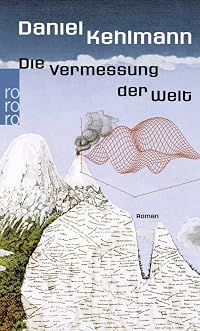
Measuring the World
by Daniel Kehlmann
On This Page
Description
Scientist-explorer Alexander von Humboldt summons the great mathematician Carl Gauss to Berlin before embarking on an ambitious expedition across Russia, determined to measure the world. The story tells of Von Humboldt's focused and robust adventures - as he negotiates savannah and jungle, climbs the highest mountain, counts head lice on native's heads, and explores every hole in the ground - and Gauss, a man born in poverty who will be recognized as the greatest mathematician since Newton show more and whose greatest trials in life are his wife and that everyone else thinks too slowly. show lessTags
Recommendations


























Member Recommendations
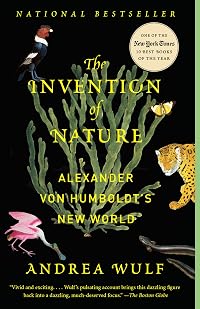
The Invention of Nature: The Adventures of Alexander von Humboldt, the Lost Hero of Science by Andrea Wulf
thorold Kehlmann's ironic fictional view casts a rather different light on Humboldt from Wulf's, and possibly a slightly unfair one, but both are interesting.
30

by HL84
by anonymous user

JuliaMaria biografische Romane großer Forscher
DeusXMachina Another collaboration between two very different scientists.

Member Reviews
This historical novel received both critical and popular acclaim when it appeared. It is set in the late eighteenth and early nineteenth centuries, the Romantic era. A time of creative ferment in literature and music, it was also a period of tremendous advance in natural science and mathematics. Kehlmann tells the parallel lives of two of its giants, Alexander von Humboldt and Carl Friedrich Gauss. One—inspired by the recent voyages of Captain Cook and others, but also by the mad sixteenth-century conquistador Lope de Aguirre’s expedition up the Amazon—traveled to South and Central America to discover, measure, and catalog everything to be seen there. The other, loathe to leave his house, was a child prodigy who plunged the depths show more of mathematics. Both are depicted as monomaniacs with limited social skills. The German word “kauzig” comes to mind (its English translation, “odd,” fails to give a full picture of what this conveys).
Their story is told in alternating chapters but framed by their one meeting, late in life. It is narrated in the third person, but much of what is recounted is from the inner life of these two and others—what they thought and felt. As the novel draws to a close, both reconsider their careers. Though many miles separate them, it is as if they are, in their minds, in dialog.
The title, Die Vermessung der Welt, refers to the land surveying that both engaged in, resulting in precise measurement. They shared the idea that places assumed a greater reality when their position had been accurately fixed latitudinally and longitudinally. However, there is a possible second meaning: the related adjective, “vermessen,” describes one who is presumptuous or overconfident. This suggests possible limits to the scientific approach—that aspects of the world can’t be measured. This thought remains relevant in our time, with its mania for digitalization.
Fitting for a twenty-first-century novel, there are postmodern touches. Many scenes set in Latin America, for example, evoke magical realism. More than one character utters a complaint about historical novels. One describes them as “Romane, die sich in Lügenmärchen verlören, weil der Verfasser seine Flausen an die Namen geschichtlicher Personen binde” (novels that lose themselves in lying fairy tales because the author attaches his own nonsense to the names of historical personalities). This criticism is particularly apt since Kehlmann makes free with established facts to create his portrait, unlike other practitioners of the genre, such as Vidal and Mantel, whose inventions, while imaginative, remain consistent with what is known.
Apart from this aspect, which might bother some readers more than others, the book is enjoyable. It is humorously written. The first chapter alone, in which Gauss, after grudgingly accepting Humboldt’s invitation, arrives in Berlin, demonstrates Kehlmann’s talent for setting up a scene reminiscent of the Marx Brothers at their best. Cameo appearances by Goethe, Kant, and others add to the enjoyment, as do the many pointed observations about what it means to be German (ranging from standing and sitting up straight at all times to the consciousness of existential Angst). This, at a time when Germany was an idea but not yet a unified nation. show less
Their story is told in alternating chapters but framed by their one meeting, late in life. It is narrated in the third person, but much of what is recounted is from the inner life of these two and others—what they thought and felt. As the novel draws to a close, both reconsider their careers. Though many miles separate them, it is as if they are, in their minds, in dialog.
The title, Die Vermessung der Welt, refers to the land surveying that both engaged in, resulting in precise measurement. They shared the idea that places assumed a greater reality when their position had been accurately fixed latitudinally and longitudinally. However, there is a possible second meaning: the related adjective, “vermessen,” describes one who is presumptuous or overconfident. This suggests possible limits to the scientific approach—that aspects of the world can’t be measured. This thought remains relevant in our time, with its mania for digitalization.
Fitting for a twenty-first-century novel, there are postmodern touches. Many scenes set in Latin America, for example, evoke magical realism. More than one character utters a complaint about historical novels. One describes them as “Romane, die sich in Lügenmärchen verlören, weil der Verfasser seine Flausen an die Namen geschichtlicher Personen binde” (novels that lose themselves in lying fairy tales because the author attaches his own nonsense to the names of historical personalities). This criticism is particularly apt since Kehlmann makes free with established facts to create his portrait, unlike other practitioners of the genre, such as Vidal and Mantel, whose inventions, while imaginative, remain consistent with what is known.
Apart from this aspect, which might bother some readers more than others, the book is enjoyable. It is humorously written. The first chapter alone, in which Gauss, after grudgingly accepting Humboldt’s invitation, arrives in Berlin, demonstrates Kehlmann’s talent for setting up a scene reminiscent of the Marx Brothers at their best. Cameo appearances by Goethe, Kant, and others add to the enjoyment, as do the many pointed observations about what it means to be German (ranging from standing and sitting up straight at all times to the consciousness of existential Angst). This, at a time when Germany was an idea but not yet a unified nation. show less
I don’t understand all the fuss. Which is pretty much how I feel about most of Kehlmann’s novels. Kehlmann can write quite well and yet I often find something always off-putting. Measuring the World is a dual biography (sort of) of two 18th-century German scientists: Alexander von Humboldt, an exceptional naturalist, explorer, and geographer, and Carl Friedrich Gauss, an astronomer and mathematician, said to be the most brilliant mathematical mind since Newton. Each man’s accomplishments were extraordinary, even measured by modern standards. Each one’s discoveries and innovations, creativity and imagination, spanned a wide variety of disciplines and each one accomplished nearly incomprehensible things. They met one time, in old show more age, and Kehlmann’s chapters alternate lives, leading to that meeting. Sadly, Kehlmann has chosen to focus on personality, family and social relationships, quirks and ambitions. If Measuring the World is a reliable guide—and there is no reason not to think so—both Humboldt’s and Gauss’s world-changing achievements were possible because each man was obsessed. But obsession is not an attractive trait and Kehlmann’s decision to focus on personal qualities makes uncomfortable and wearisome reading. Neither man is likeable and Kehlmann’s focus produces largely superficial portraits focusing on unattractive qualities while offering very little to appreciate about their actual achievements. Worse still, he describes; he doesn’t make the effort to explain. So between obnoxious personalities and Kehlmann’s refusal to make them sympathetic, readers get little explanation or understanding of why their achievements are still considered world-shakingly significant. In the end, it’s hard to care. A true missed opportunity. show less
It's 1828. (No it isn't!) No, but for the purpose of this novel, it is. Sort of. Well, that's where it starts. Or ends.
I'll start over. So it's a more-or-less fictionalised story of these two German scientists from the 18th century:
Alexander von Humboldt, geographer and explorer
Carl Friedrich Gauss, mathematician and physicist
The novel starts with the two of them meeting as old men in 1828 and then follows two parallel lines: that meeting and what happens to them afterwards forms the backdrop against which we're shown how they got there, from childhood to old age, from unusually intelligent kids to scientists who would revolutionise the way we see the world – each in their own way. Because obviously, this was one of the big turning show more points in history, the rise of the modern age where the world gets not only measured but also where those measures themselves are invented, where we came up with brand-new systems for learning (von Humboldt's brother Wilhelm invented the modern university), politics (the founding fathers of the US, Napoleon and others make cameo appearances) and ideas. I recently read Reinhard Koselleck's On the Semantics of Historical Time, where he notes that the late 18th century and early 19th century was the time where individual steps forward became progress, where freedoms became freedom, where revolutions – as in ever-repeating cycles – became the revolution, the thing after which (supposedly) you can never go back to the way things were; it was the time where mankind (ahem) started pulling in one direction.
But I digress, back to the novel. For starters, it becomes obvious rather quickly that Humboldt and Gauss may admire each other but they don't like each other very much. They're completely different, not only as persons; Humboldt is a cold fish, with seemingly almost no emotions or life outside his own research, yet very much an empirist: he's the guy who'll climb a mountain or drink poison to see what happens. Gauss, on the other hand, is a theorist when it comes to science – hates fieldwork, publishes his greatest work at 21 years old based only on working it out with a pen and paper – yet a bitter old man who can't not live in the world with its women and politicians and (disappointing) children. (Of course, I have no idea exactly how historically correct their characterisations are.)
Likewise, there are two sides to this novel. One (more or less) learnéd historical discourse on, on the one hand, how we construct an image of the world, how we understand it, how science works, and on the other what fame and monomania can do to a person. The other side of the novel is a rather wacky comedy about two scientists, where the humour doesn't work nearly as often as Kehlmann thinks. Now, this is really a genre I like, but compare it to a book like Pynchon's Mason & Dixon, which takes a very similar story (to the point where Mason & Dixon show up in this book) and spins it into something much bigger (some might say crazier). Or Umberto Eco's Island of the Day Before which, sure, has an even flatter plot (not one of Eco's best works) but instead runs rings around Kehlmann when it comes to the historical and scientific and how it makes us what we are/were/will be. Kehlmann parks somewhere between the two and ends up... lukewarm.
While there's a lot of interesting themes here and some of the chapters are quite excellent (the final chapters of Humboldt being toured across Russia like some ageing rock star, in particular, and anything involving his frustrated assistant Bonpland), I can't help feel that this is a much better novel in theory than in practice; like it could have used one more edit to piece it all together – I can see where he wants it to go, but he doesn't quite manage to incorporate BOTH the characters and their achievements. Lizzy quoted one of the best passages in the novel, Gauss' view of the world. But at the same time, that's sort of the problem. Apart from making them into clowns, Kehlmann doesn't quite seem what to do with these characters. He relates their story but doesn't tell a story of his own. Kehlmann stays superficial, mentions inventions and names and disoveries but that's about it, and in the process polarizes tht two characters to the point where it almost seems like Humboldt's entire character is "the guy who's not Gauss" and the other way around.
Maybe I just expected too much of it. It's not a bad novel, not at all; it's quite enjoyable, it's an easy read, you'll laugh and you might just learn something along the way. But much like human progress wasn't finished by Napoleon, there's a lot more to be found in the world than this. show less
I'll start over. So it's a more-or-less fictionalised story of these two German scientists from the 18th century:
Alexander von Humboldt, geographer and explorer
Carl Friedrich Gauss, mathematician and physicist
The novel starts with the two of them meeting as old men in 1828 and then follows two parallel lines: that meeting and what happens to them afterwards forms the backdrop against which we're shown how they got there, from childhood to old age, from unusually intelligent kids to scientists who would revolutionise the way we see the world – each in their own way. Because obviously, this was one of the big turning show more points in history, the rise of the modern age where the world gets not only measured but also where those measures themselves are invented, where we came up with brand-new systems for learning (von Humboldt's brother Wilhelm invented the modern university), politics (the founding fathers of the US, Napoleon and others make cameo appearances) and ideas. I recently read Reinhard Koselleck's On the Semantics of Historical Time, where he notes that the late 18th century and early 19th century was the time where individual steps forward became progress, where freedoms became freedom, where revolutions – as in ever-repeating cycles – became the revolution, the thing after which (supposedly) you can never go back to the way things were; it was the time where mankind (ahem) started pulling in one direction.
But I digress, back to the novel. For starters, it becomes obvious rather quickly that Humboldt and Gauss may admire each other but they don't like each other very much. They're completely different, not only as persons; Humboldt is a cold fish, with seemingly almost no emotions or life outside his own research, yet very much an empirist: he's the guy who'll climb a mountain or drink poison to see what happens. Gauss, on the other hand, is a theorist when it comes to science – hates fieldwork, publishes his greatest work at 21 years old based only on working it out with a pen and paper – yet a bitter old man who can't not live in the world with its women and politicians and (disappointing) children. (Of course, I have no idea exactly how historically correct their characterisations are.)
Likewise, there are two sides to this novel. One (more or less) learnéd historical discourse on, on the one hand, how we construct an image of the world, how we understand it, how science works, and on the other what fame and monomania can do to a person. The other side of the novel is a rather wacky comedy about two scientists, where the humour doesn't work nearly as often as Kehlmann thinks. Now, this is really a genre I like, but compare it to a book like Pynchon's Mason & Dixon, which takes a very similar story (to the point where Mason & Dixon show up in this book) and spins it into something much bigger (some might say crazier). Or Umberto Eco's Island of the Day Before which, sure, has an even flatter plot (not one of Eco's best works) but instead runs rings around Kehlmann when it comes to the historical and scientific and how it makes us what we are/were/will be. Kehlmann parks somewhere between the two and ends up... lukewarm.
While there's a lot of interesting themes here and some of the chapters are quite excellent (the final chapters of Humboldt being toured across Russia like some ageing rock star, in particular, and anything involving his frustrated assistant Bonpland), I can't help feel that this is a much better novel in theory than in practice; like it could have used one more edit to piece it all together – I can see where he wants it to go, but he doesn't quite manage to incorporate BOTH the characters and their achievements. Lizzy quoted one of the best passages in the novel, Gauss' view of the world. But at the same time, that's sort of the problem. Apart from making them into clowns, Kehlmann doesn't quite seem what to do with these characters. He relates their story but doesn't tell a story of his own. Kehlmann stays superficial, mentions inventions and names and disoveries but that's about it, and in the process polarizes tht two characters to the point where it almost seems like Humboldt's entire character is "the guy who's not Gauss" and the other way around.
Maybe I just expected too much of it. It's not a bad novel, not at all; it's quite enjoyable, it's an easy read, you'll laugh and you might just learn something along the way. But much like human progress wasn't finished by Napoleon, there's a lot more to be found in the world than this. show less
The depth, breadth, and humor of this factually-based adventure story, encompassing the lives of two brilliant scientists, Carl Gauss and Alexander von Humboldt, is incredible for such a short volume. Shamefully, I had never heard of either man, nor of Humboldt's faithful and droll explorer companion, Bonpland. The narrative of Humboldt's adventures, with its untold miseries and dangers, and of Gauss' seemingly effortless mathematical mastery, are told as if Candide were the storyteller, dry and factual, yet reciting the most ridiculous incidents with incredible wit. Humboldt's travels down the Orinoco and in South America are astounding, as are the encounters with and references to such figures as Aguirre and Goethe and an entire show more academy of famous historical and scientific notables, as he makes his appearances, Zelig-like. A most singular novel and a complete joy.
Quotes: "It was a real example of the pitiful arbitrariness of existence, that you were born into a particular time and held prisoner there whether you wanted it or not. It gave you an indecent advantage over the past and made you a clown vis-a-vis the future." show less
Quotes: "It was a real example of the pitiful arbitrariness of existence, that you were born into a particular time and held prisoner there whether you wanted it or not. It gave you an indecent advantage over the past and made you a clown vis-a-vis the future." show less
While I was reading the excellent [The Invention of Nature: Alexander von Humboldt’s New World] by Andrea Wulf, I thought it would be a good idea to reread Daniel Kehlmann’s fictional take on Humboldt and Carl Friedrich Gauss, [Measuring the World], which was one of my top books of 2009. So, as soon as I had finished Wulf’s book, I dove in.
This was a mistake.
[Measuring the World] took as its genesis a meeting between the great scientist and explorer Humboldt and the great mathematician Gauss at a convention in Berlin, and then looks back at their early years of genius and discovery and forward at their supposed interactions from that point. Humboldt travels the world to take its measure, while Gauss’s measurements are all done show more from the tight radius of his homeland. The first time I read it, I was completely taken with both the dreamlike style and the entertaining take on the work of these two geniuses.
This time, however, having just read about Humboldt, I could not recognize him or those near and dear to him in this book. Kehlmann’s Humboldt has terrible relationships that in real life were close and loving. His Humboldt encourages “the settlement of colonies,” “the conquest of nature,” and “an orderly exploitation of the earth’s deep treasures,” laments the “selfish interests of the workers,” insults natives by desecrating burial sites and stealing bodies, and mocks the idea of evolution. He is the anti-Humboldt, and I couldn’t get over my disappointment.
It’s likely that this was all deliberate. At one point, Kehlmann has Humboldt say, in a discussion of literature and theater:
However, since Humboldt is not well known today, at least outside of Germany (in large part because of anti-German sentiment after WWI), his character is sure to be taken at face value.
So, if you’re going to read this book, please look at the characters as fictional, and not as real historical personages. show less
This was a mistake.
[Measuring the World] took as its genesis a meeting between the great scientist and explorer Humboldt and the great mathematician Gauss at a convention in Berlin, and then looks back at their early years of genius and discovery and forward at their supposed interactions from that point. Humboldt travels the world to take its measure, while Gauss’s measurements are all done show more from the tight radius of his homeland. The first time I read it, I was completely taken with both the dreamlike style and the entertaining take on the work of these two geniuses.
This time, however, having just read about Humboldt, I could not recognize him or those near and dear to him in this book. Kehlmann’s Humboldt has terrible relationships that in real life were close and loving. His Humboldt encourages “the settlement of colonies,” “the conquest of nature,” and “an orderly exploitation of the earth’s deep treasures,” laments the “selfish interests of the workers,” insults natives by desecrating burial sites and stealing bodies, and mocks the idea of evolution. He is the anti-Humboldt, and I couldn’t get over my disappointment.
It’s likely that this was all deliberate. At one point, Kehlmann has Humboldt say, in a discussion of literature and theater:
Artists were too quick to forget their task, which was to depict reality. Artists held deviation to be a strength, but invention confused people, stylization falsified the world. Take stage sets, which didn’t even try to disguise the fact that they were made of cardboard, English paintings, with backgrounds swimming in an oily soup, novels that wandered off into lying fables because the author tied his fake inventions to the names of real historical personages.
However, since Humboldt is not well known today, at least outside of Germany (in large part because of anti-German sentiment after WWI), his character is sure to be taken at face value.
So, if you’re going to read this book, please look at the characters as fictional, and not as real historical personages. show less
Skemmti mér konunglega yfir þessari bók. Hún fjallar um tvo þýska sérvitringa sem hvor um sig er snillingur og báðir keppast við að mæla heiminn með öllum mögulegum leiðum. Annar með því að sitja og reikna en hinn með því að ferðast sem víðast og mæla allt sem fyrir augu ber.
Fyrst hélt ég að sagan væri háðsádeila á þýsku nákvæmnisáráttuna og varð því hissa þegar ég las viðtal við Kehlmann þegar hann var hérlendis þar sem fram kom að söguhetjurnar höfðu verið til og meira að segja hist.
Þetta er snilldarvel skrifuð bók og þaulúthugsuð. Mæli hiklaust með henni.
Fyrst hélt ég að sagan væri háðsádeila á þýsku nákvæmnisáráttuna og varð því hissa þegar ég las viðtal við Kehlmann þegar hann var hérlendis þar sem fram kom að söguhetjurnar höfðu verið til og meira að segja hist.
Þetta er snilldarvel skrifuð bók og þaulúthugsuð. Mæli hiklaust með henni.
This book was a bestseller in Germany and I can see why. It's fun. Kehlmann has a delightfully irreverent and at the same time affectionate attitude towards his protagonists. Part of the particular humor of the novel derives, in the original, from the author's use of indirect speech throughout. I've been curious how the translator deals with this issue since English doesn't make this distinction quite the same way.
The style is anecdotal rather than factual-biographical. As the title implies, Kehlmann is interested in a common theme -- the two protagonists' desire to measure and calculate the world around them. The story jumps back and forth between Humboldt and Gauss; the ever curious scientist whose spontaneous pursuit of knowledge show more often gets in the way of common sense (he places raw frogs' legs on his back to test electroconductivity and delays a trip across Europe by stopping to measure every hill along the way) and the hypochondriac mathematician who can't manage without a woman in his life and travels far from his residence only with great reluctance. Because of the episodic style of the novel I found the frequent shifts in place and time unproblematic, although this is something I often find distracting.
Kehlmann chooses his subjects well and crafts an enjoyable novel out of the lives of a pair of historical figures whom most readers are probably familiar with only as little more than names, although Humboldt in particular has been getting attention in Germany lately on the occasion of the 200 year anniversary of his South-America trip. show less
The style is anecdotal rather than factual-biographical. As the title implies, Kehlmann is interested in a common theme -- the two protagonists' desire to measure and calculate the world around them. The story jumps back and forth between Humboldt and Gauss; the ever curious scientist whose spontaneous pursuit of knowledge show more often gets in the way of common sense (he places raw frogs' legs on his back to test electroconductivity and delays a trip across Europe by stopping to measure every hill along the way) and the hypochondriac mathematician who can't manage without a woman in his life and travels far from his residence only with great reluctance. Because of the episodic style of the novel I found the frequent shifts in place and time unproblematic, although this is something I often find distracting.
Kehlmann chooses his subjects well and crafts an enjoyable novel out of the lives of a pair of historical figures whom most readers are probably familiar with only as little more than names, although Humboldt in particular has been getting attention in Germany lately on the occasion of the 200 year anniversary of his South-America trip. show less
Members
- Recently Added By
Published Reviews
En mesterlig bog om videnskabens begrænsninger og et must for alle, der vil underholdes på højt niveau.
added by 2810michael
Han er som sine romanfigurer selv en lille smule genial, hvad kritikken i Tyskland for længst har bemærket. Man overgiver sig til denne romans makrokosmiske kortlægning med dens generøse blanding af løsagtighed og præcision. Og er mere end godt underholdt.
added by 2810michael
En million tyskere kan sagtens tage fejl. Men det gjorde de ikke, da de købte Daniel Kehlmanns drilske geniroman Opmålingen af verden (...) Kehlmann gør det fermt, sjovt og afsindig lærd.
added by 2810michael
Lists

1001 Books You Must Read Before You Die
1,448 works; 1,133 members

Best Historical Fiction
620 works; 261 members

Best Contemporary Literary Fiction (Around the Last 30 Years)
388 works; 124 members

German Literature
518 works; 56 members

Read the book and saw the movie
1,170 works; 193 members

Recommend the 20 best books you've read in the last five years
2,168 works; 602 members

Magic Realism
371 works; 52 members

EU Fiction: 1950-2022
223 works; 70 members
Global Reads: Books Set South and Central America
40 works; 7 members

Top Five Books of 2016
795 works; 229 members

Explorers in fiction
31 works; 3 members

My list of 100 books to read next
100 works; 4 members

Books set in Berlin
46 works; 4 members

Llibres que he llegit el 2021
54 works; 1 member

In Our Time books
4,934 works; 2 members

Favorite Books in Translation
320 works; 133 members

BBC World Book Club
265 works; 5 members

Books Read in 2019
4,052 works; 110 members

Books I Want to Read
36 works; 1 member

Books available on Open Library
171 works; 4 members

Books Read in 2018
4,360 works; 110 members

BingoDOG - Scientists in Fiction
111 works; 17 members

Fiction for Readers Who Love Science and Math
57 works; 15 members

World Book Club (BBC World Service)
212 works; 1 member
Author Information

Daniel Kehlmann was born on January 13, 1975 in Munich. He is a German language author. His work Die Vermessung der Welt (translated into English by Carol Brown Janeway as Measuring the World, 2006) is the best selling novel in the German language since Patrick Süskind's Perfume was released in 1985. In 1997 Kehlmann completed his first novel, show more Beerholms Vorstellung, while still a student. He also wrote numerous reviews and essays while at university. In 2001, Kehlmann held the guest lectureship of poetics at the Johannes Gutenberg University of Mainz. In the winter term of 2005/6 Kehlmann held the lectureship of poetics at the FH Wiesbaden, and in 2006/7 he held the lectureship for poetics at the university of Göttingen. Daniel Kehlmann is a member of the Mainzer Akademie der Wissenschaften und der Literatur. In 2015 he made the Independent Foreign Fiction Prize shortlist with his title, F. (Bowker Author Biography) show less
Some Editions
Awards and Honors
Awards
Distinctions
Series
Belongs to Publisher Series
Work Relationships
Is contained in
Has the adaptation
Has as a reference guide/companion
Common Knowledge
- Canonical title
- Measuring the World
- Original title
- Die Vermessung der Welt
- Original publication date
- 2005
- People/Characters
- Alexander von Humboldt; Carl Friedrich Gauss; Wilhelm von Humboldt; Aimé Bonpland
- Important places
- Amazon River; Berlin, Germany; Göttingen, Lower Saxony, Germany; Orinoco River; Lower Saxony, Germany; Germany (show all 10); Russia; Brazil; Venezuela; Holy Roman Empire
- First words
- Im September 1828 verließ der größte Mathematiker des Landes zum ersten Mal seit Jahren seine Heimatstadt, um am Deutschen Naturforscherkongreß in Berlin teilzunehmen.
In September, 1828, the greatest mathematician in the country left his hometown for the first time in years, to attend the German Scientific Congress in Berlin. - Quotations
- Ein Hügel, von dem man nicht wisse, wie hoch er sei, beleidige die Vernunft und mache ihn unruhig. Ohne stetig die eigene Position zu bestimmen, könne ein Mensch sich nicht fortbewegen. Ein Rätsel, wie klein auch immer, la... (show all)sse man nicht am Wegesrand.
Der Pastor Blickte ihn streng an. Stolz sei eine Todsünde!
(...)
Warum?
Der Pastor bat um Verzeihung. Er habe wohl falsch verstanden.
(...)Er meine es rein teologisch, sagte Gauß. Gott habe einen geschaffen, wie... (show all) man sei, dann aber solle man sich ständig bei ihm dafür entschuldigen. Logisch sei das nicht.
Der Pastor äußerte die Vermutung, daß etwas mit seinen Ohren nicht stimme.
Gefragt, was er hier tue, erklärte er nervös die Technik der Triangulation.
(...)
Ein Dreieck, sagte sie, habe nur auf einer Fläche hundertachzig Grad Winkelsumme, auf einer Kugel aber nicht. Damit stehe und falle do... (show all)ch alles.
Er musterte sie, als sähe sie erst jetzt. Mit hochgezogenen Brauen erwiderte sie seinen Blick. Ja, sagte er. So. Um das auszugleichen, müsse man Dreiecke gewissermassen nach der Messung zu unendlich kleiner Größe schrumpfen lassen. Grundsätzlich eine einfache Differentialoperation. Allerdings in dieser Form .... (...) In dieser Form , murmelte er, whärend er zu notieren begann, habe das noch keiner durchgeführt. Als er aufsah, war er allein.
Als Humboldt kurz darauf seine Instrumente einpackte, wußte er, daß die Sonne am Tag des Solstitiums von der Chaussee aus gesehen genau über ser Spitze der größten Pyramide auf- und durch die Spitze der zweitgrößten un... (show all)terging. Diese ganze Stadt war ein Kalender! Wer hatte das erdacht? Wie gut hatten die Menschen die Sterne gekannt, und was hatten sie mitteilen wollen? Seit über tausend Jahren war er der erste, der ihre Botschaft lesen konnte.
Writing a novel, said Humboldt, seemed to him the perfect way to capture the most fleeting essence of the present for the future. (pg 20) - Last words
- (Click to show. Warning: May contain spoilers.)Er stopfte den letzten Tabak in seine Pfeife, ging zum Bug und stand dort so lange mit vom Wind tränenden Augen, bis sich etwas im Abenddunst abezichnete, durchscheinend zunächst und noch nicht ganz wirklich, aber dann immer deutlicher, und der Kapitän lachend antwortete, nein, diesmal sei es keine Chimäre und auch kein Wetterleuchten, das sei Amerika.
(Click to show. Warning: May contain spoilers.)It was America. - Blurbers*
- Zeeman, Michaël
- Original language
- German
*Some information comes from Common Knowledge in other languages. Click "Edit" for more information.
Classifications
- Genres
- General Fiction, Fiction and Literature, Historical Fiction
- DDC/MDS
- 833.914 — Literature & rhetoric German & related literatures German fiction 1900- 1900-1990 1945-1990
- LCC
- PT2671 .E32 .V4713 — Language and Literature German, Dutch and Scandinavian literatures German literature Individual authors or works 1961-2000
- BISAC
Statistics
- Members
- 3,484
- Popularity
- 4,772
- Reviews
- 112
- Rating
- (3.74)
- Languages
- 24 — Catalan, Chinese, Czech, Danish, Dutch, English, Estonian, Finnish, French, German, Greek, Hungarian, Icelandic, Italian, Lithuanian, Norwegian (Bokmål), Polish, Portuguese, Romanian, Russian, Croatian, Spanish, Swedish, Turkish
- Media
- Paper, Audiobook, Ebook
- ISBNs
- 92
- UPCs
- 1
- ASINs
- 15