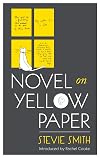
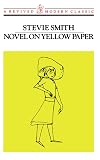
Novel on Yellow Paper
by Stevie Smith
On This Page
Description
Stevie's alter ego Pompey is young, in love and working as a secretary for the magnificent Sir Phoebus Ullwater. In between making coffee and typing letters for Sir Phoebus, Pompey scribbles down - on yellow office paper - her quirky thoughts. Her flights of imagination take in Euripedes, sex education, Nazi Germany and the Catholic Church, shattering conventions in their wake.Tags
Recommendations















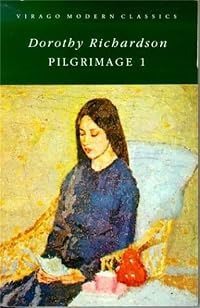


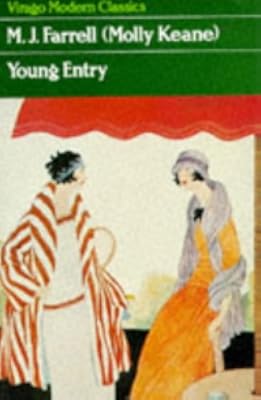





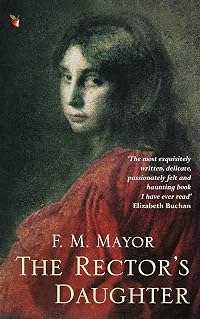


Member Recommendations
bmlg Both books are the musings and observations of witty, whimsical women on their societies and on relationships.
Member Reviews
This book is definitely not for those who love straight-forward plots and prose. The book reads like a poem. It takes time to read, too, re-reading passages to figure out what she means, much like one of the more dense Joyce novels. I thoroughly enjoyed it, and thought the character of Pompey had amazing insights and was an especially forward thinker for the time (20th century in the years immediately leading up to WWII). She questions and struggles with the unity of marriage, the church, love, lust, suicide, people with more down-to-earth goals in life and those with more of a free spirit who don't want to be tied down by commonalities and mundane day-to-day things, etc.
Pompey also is suffering a sort of break down from a failed show more relationship, and it is lovely to see her reveal this throughout the book. It's more stream of consciousness but with a very defined purpose. Stevie Smith, in all her writing, is full of intent, full of deeper meanings. I so much adore the character of Pompey. Novel on Yellow Paper is for those who like JD Salinger's short stories, e.e. cummings poetry, and the insight of Graham Greene (very specifically, if you loved the diary part of The End of the Affair like I did, you'll enjoy this book). show less
Pompey also is suffering a sort of break down from a failed show more relationship, and it is lovely to see her reveal this throughout the book. It's more stream of consciousness but with a very defined purpose. Stevie Smith, in all her writing, is full of intent, full of deeper meanings. I so much adore the character of Pompey. Novel on Yellow Paper is for those who like JD Salinger's short stories, e.e. cummings poetry, and the insight of Graham Greene (very specifically, if you loved the diary part of The End of the Affair like I did, you'll enjoy this book). show less
The voice of Pompey Casmilus is one of the most unique narrative voices I’ve read in a long time. A personal secretary working for Sir Phoebus Ullwater, Pompey throws her thoughts down on yellow paper “because often sometimes I am typing it in my room at my office, and the paper I use for Sir Phoebus’s letters is blue paper with his name across the the corner ‘Sir Phoebus Ullwater, Bt.’ and those letters of Sir Phoebus’s go out to all over the world.” So behind the stream of consciousness babble and flow that is Pompey’s voice, we divine that there is a very smart and sensible young woman at work. And indeed, there is.
Pompey writes, one suspects, much as she thinks. She will pivot on an interjected “oh” and take off show more in what seems another direction altogether but will pivot again to take us right back to her original thought (and original they are), finishing the subject off neatly. She talks with a fake German accent when in Germany, throws in frequent interjections in German, French and Latin without translations (sink or swim, reader).
But the pure delight of the novel is what Pompey thinks about and how she thinks about whatever it is, whether Jews, Nazis, her friends, her aunt, sex, her love(s), her acquaintances. Whether she is defending the English to her German lover, Karl, or talking about a play she has seen or the drawing rooms of the upper crust or a Pomeranian named Fifi with broken knees, Pompey had me enchanted from start to finish. She is pure delight talking about her aunt “the Lion” and just extraordinary talking about her broken heart after her dear Freddy broke it off with her. She is a “feet off the ground person” and yet one with a broad streak of self awareness, knowing her own needs and limitations. A typical Pompeyism, summing up the conversation of a Frau K.:
“There you are you see, quite simple. If you cannot have your dear husband for a comfort and a delight, for a breadwinner and a cross patch, for a sofa, a chair or a hot-water bottle, one can use him as a Cross to be Borne.”
A loamish read, as Pompey herself would say. show less
Pompey writes, one suspects, much as she thinks. She will pivot on an interjected “oh” and take off show more in what seems another direction altogether but will pivot again to take us right back to her original thought (and original they are), finishing the subject off neatly. She talks with a fake German accent when in Germany, throws in frequent interjections in German, French and Latin without translations (sink or swim, reader).
But the pure delight of the novel is what Pompey thinks about and how she thinks about whatever it is, whether Jews, Nazis, her friends, her aunt, sex, her love(s), her acquaintances. Whether she is defending the English to her German lover, Karl, or talking about a play she has seen or the drawing rooms of the upper crust or a Pomeranian named Fifi with broken knees, Pompey had me enchanted from start to finish. She is pure delight talking about her aunt “the Lion” and just extraordinary talking about her broken heart after her dear Freddy broke it off with her. She is a “feet off the ground person” and yet one with a broad streak of self awareness, knowing her own needs and limitations. A typical Pompeyism, summing up the conversation of a Frau K.:
“There you are you see, quite simple. If you cannot have your dear husband for a comfort and a delight, for a breadwinner and a cross patch, for a sofa, a chair or a hot-water bottle, one can use him as a Cross to be Borne.”
A loamish read, as Pompey herself would say. show less
Bought this for the cover picture - on my copy detail from 'Woman in Yellow' by Tamara de Lempicka. This is Catherine Carrington by Dora Carrington - and just as enticing! Well done Virago. Neither Stevie Smith nor Pompey Casmilus is to be summed up by the likes of me. Finishing it sent me to the poetry books and I can find only one book in the house with any of her poems - British Poetry since 1945 - so these three poems are possibly the only I have ever read. Easy to read but hard hitting on the heart and brain - no book at bedtime as I had to take up another book before I could sleep.....
Not as much a novel as extended musings, from a young woman's point of view, on life death and relationships. Interesting if somewhat breathless use of language that managed to keep me engaged, even without a plot, up to the last few pages.
Good but just a tad too long.
Good but just a tad too long.
aimless not really a novel about young woman going about English society between wars. I read this because Jane Duncan mentioned that a publisher's reader had compared her work to it.
Novel on Yellow Paper, Or, Work It Out for Yourself (Revived Modern Classic #0778) Smith, Stevie ( Author ) Jun-01-1994 Paperback
Ratings
Members
- Recently Added By
Published Reviews
ThingScore 75
added by booksaplenty1949
Lists

The Guardian's 1000 Novels Everyone Must Read
1,005 works; 551 members

wilfully eccentric little england (cosy read novels, england)
45 works; 15 members

Favourite Virago Modern Classics
183 works; 38 members

In or About the 1930s
198 works; 27 members

Women's Stories
88 works; 13 members

Hidden Classics
73 works; 15 members

Top Five Books of 2017
757 works; 230 members

stories at work
43 works; 7 members

Books Read in 2017
4,249 works; 130 members

Books With the Most Memorable Titles
478 works; 158 members
In Our Time books
4,934 works; 2 members
Author Information

37+ Works 2,111 Members
Florence Margaret Smith was born in Kingston upon Hull on September 20, 1902. After her parents' separation she moved with her mother, aunt, and sister to a house in the London suburb of Palmers Green, where she lived for the rest of her life. After graduating from North London Collegiate School for Girls, she worked as a private secretary with show more the London magazine publishing firm George Newnes. She adopted her nickname, Stevie, as a nom de plume after a friend's joking comparison of her petite stature to that of the jockey Steve Donoghue. Her first book, Novel on Yellow Paper, was published in 1936. She began writing poetry in her twenties and her first collection of verse, A Good Time Was Had by All, was published in 1937. She retired from George Newnes in 1953 due to ill health and to focus on her writing and BBC broadcasts. She came to wider public attention after the publication of her Selected Poems in Britain in 1962 and the United States in 1964. Her other works include The Holiday, Scorpion and Other Poems, and Me Again: Uncollected Writings of Stevie Smith. She was awarded the Chomondeley Award for Poetry in 1966 and the Queen's Gold Medal for Poetry in 1969. She died of a brain tumor on March 7, 1971. In 1981, a film based on her life entitled Stevie was released. (Bowker Author Biography) show less
Some Editions
Awards and Honors
Series
Belongs to Publisher Series
Work Relationships
Has the (non-series) sequel
Is abridged in
Common Knowledge
- Original title
- Novel on Yellow Paper
- Original publication date
- 1936
- People/Characters
- Pompey Casmilus
- Important places
- London, England, UK; Berlin Zoological Garden, Berlin, Germany
- Epigraph
- Casmilus, whose great name I steal,
Whose name a greater doth conceal,
Indulgence, pray,
And, if I may,
The winged tuft from either heel. - First words
- Beginning this book (not as they say 'book' in our trade - they mean magazine), beginning this book, I should like if I may, I should like, if I may, (that is the way Sir Phoebus writes), I should like then to say: Good-bye t... (show all)o all my friends, my beautiful and lovely friends.
- Quotations
- Now I suspect that for me Hertfordshire is the operative word... Oh lovely Hertfordshire, so quiet and unassuming, so much of the real countryside, so little of beastly over-rated bungaloid Surrey-Sussex with all of its uproa... (show all)r of weekend traffic to and from Bloomsbury, Hertfordshire is my love and always has been, it is so unexciting, so quiet, its woods so thick and abominably drained, so pashy underneath, if you do not know the lie of the land you had better keep out. Yes, I think anyway you had better keep out.
All up and down Hertfordshire from Hertford to Bayford through Monks Green Woods over the estates of the Marquis of Salisbury, over Sir Lionel Faudel Phillip's fields, through the woods of Smith-Bosanquet, we fought and raged... (show all) and also we laughed a lot and kissed and sang. - Last words
- (Click to show. Warning: May contain spoilers.)She looked, she lurched, and sensing some last, unnameable, not wholly apprehended, final outrage, she fell, she whimpered, clawed in vain, and died.
Classifications
Statistics
- Members
- 556
- Popularity
- 53,447
- Reviews
- 6
- Rating
- (3.80)
- Languages
- English
- Media
- Paper, Ebook
- ISBNs
- 10
- ASINs
- 12