
On This Page
Description
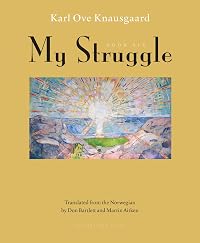
My Struggle: Book One introduces American readers to the audacious, addictive, and profoundly surprising international literary sensation that is the provocative and brilliant six-volume autobiographical novel by Karl Ove Knausgaard. It has already been anointed a Proustian masterpiece and is the rare work of dazzling literary originality that is intensely, irresistibly readable. Unafraid of the big issues-death, love, art, fear-and yet committed to the intimate details of life as it is show more lived, My Struggle is an essential work of contemporary literature. show lessTags
Recommendations









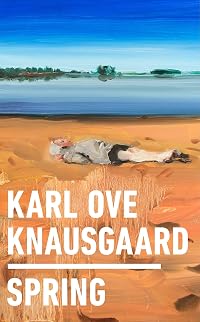
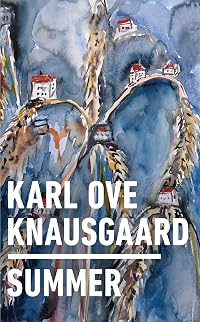




Member Recommendations




Member Reviews
This book was sitting on my shelf for a while before I got around to it, for two reasons. One was the fact that it is over 400 pages and I was nervous about my ADD kicking in at some point, and the other is because of the title. There was another book with the same or very similar title that ranks among the most disgusting books ever written. But I ended up picking it up anyway, mainly because I'm trying to clear the mess that my “to read” pile has become.
I ended up really liking this book. It's long, and it's the first of six volumes of Knausgaard's autobiography, which seems absolutely bonkers. The story keeps bouncing around between the present, when he was a small child, and everywhere in between; but somehow it makes sense and show more flows exactly how it should. It also makes sense that it is so long because he makes sure to share every single detail—every facial expression, thought, sound, smell, and descriptions of everything around him all the time. Normally this would annoy the pants off of me and feel like filler, but there's something about his style that not only makes it ok, but an actual pleasure to read. And his memory is beyond comprehension; he remembers songs that were playing and what clothing people we were wearing seemingly at every moment of his entire 40+ year life. He must be inventing at least some of it.
He talks about his childhood and his distant and verbally abusive relationship with his dad, the general closed-offness of his family and consequently himself, his struggle to become an artist, and a lot about the death of a family member (no spoiler here). Although his ego shines through here and there, it mostly feels like an open, honest account of a regular dude's life, and I appreciate that.
I had never heard of Knausgaard, though apparently he's won a lot of awards and is a pretty big deal in Norway or wherever he's from. I don't know if I'll ever get around to any of the other five volumes, but I thoroughly enjoyed the time I spent reading this one. If what he writes is true, he's not really someone I'd want to hang around or be friends with, but if a future therapist sends me the second volume I'll definitely check it out at some point. show less
I ended up really liking this book. It's long, and it's the first of six volumes of Knausgaard's autobiography, which seems absolutely bonkers. The story keeps bouncing around between the present, when he was a small child, and everywhere in between; but somehow it makes sense and show more flows exactly how it should. It also makes sense that it is so long because he makes sure to share every single detail—every facial expression, thought, sound, smell, and descriptions of everything around him all the time. Normally this would annoy the pants off of me and feel like filler, but there's something about his style that not only makes it ok, but an actual pleasure to read. And his memory is beyond comprehension; he remembers songs that were playing and what clothing people we were wearing seemingly at every moment of his entire 40+ year life. He must be inventing at least some of it.
He talks about his childhood and his distant and verbally abusive relationship with his dad, the general closed-offness of his family and consequently himself, his struggle to become an artist, and a lot about the death of a family member (no spoiler here). Although his ego shines through here and there, it mostly feels like an open, honest account of a regular dude's life, and I appreciate that.
I had never heard of Knausgaard, though apparently he's won a lot of awards and is a pretty big deal in Norway or wherever he's from. I don't know if I'll ever get around to any of the other five volumes, but I thoroughly enjoyed the time I spent reading this one. If what he writes is true, he's not really someone I'd want to hang around or be friends with, but if a future therapist sends me the second volume I'll definitely check it out at some point. show less
I never thought I could be so gripped by so little as I was reading this gloriously Proustian autobiography by literary sensation Karl Ove Knausgaard (kuh-NOWSS-guard, allegedly).
Knausgaard's sentences pour across the page like a thick current of warm cream, punctuated rather unobtrusively by sobering moments of philosophical erudition.
To read this book means getting lost within the truthful minutiae of someone else's daily life. Maybe it's because I am close to the age of the author during the events of this first volume, but I found his descriptions of the most boring experiences and how he related to them and catalogued them, and used them as a springboard for internal excursions and, yes, struggles, to be absolutely riveting. I'm show more not sure why, but this is a supremely addictive read.
Karl Ove puts the frankfurter in the Frankfurt school. He is immediately relatable, quick with well drawn examples, and, although there are lines that leap off the page, for the most part he is no prose stylist. It makes for a generous, ballpark read of a subject that should, in every way, be of interest to very few.
I highly recommend this first volume. I'll write what I think of the other 5 volumes as soon as they are all translated and I have read them... there's no question I will be reading them all. show less
Knausgaard's sentences pour across the page like a thick current of warm cream, punctuated rather unobtrusively by sobering moments of philosophical erudition.
To read this book means getting lost within the truthful minutiae of someone else's daily life. Maybe it's because I am close to the age of the author during the events of this first volume, but I found his descriptions of the most boring experiences and how he related to them and catalogued them, and used them as a springboard for internal excursions and, yes, struggles, to be absolutely riveting. I'm show more not sure why, but this is a supremely addictive read.
Karl Ove puts the frankfurter in the Frankfurt school. He is immediately relatable, quick with well drawn examples, and, although there are lines that leap off the page, for the most part he is no prose stylist. It makes for a generous, ballpark read of a subject that should, in every way, be of interest to very few.
I highly recommend this first volume. I'll write what I think of the other 5 volumes as soon as they are all translated and I have read them... there's no question I will be reading them all. show less
Raw and unapologetic, My Struggle embraces tenderness tightly until it nearly suffocates. Whilst it also holds you within its arms, it gives off a certain warmth that pricks the skin the longer it goes on and basks you in moments both memorable and mundane. Marred by regrets and sentiments, this does not limit itself as a coming-of-age memoir. It permeates familial relationships that mostly deal with the complications of a son-and-father dynamic: the good, the bad, and the ugly (but mostly the ugly). Sometimes it is too honest and personal that it is almost uncomfortable and intrusive. Ethics and discretion be damned whilst it echoes Larkin’s This Be The Verse loud and clear.
As it goes through the years of childhood / adolescence it show more slowly shreds off its innocence then intersperses this past befittingly with the present. What comes after are the horrors of adulthood, the fervent reverie of solitude, and a contemplation on the briefness of life. Against these seemingly bleak realisations, the worth of living patiently surmounts grief, heartache, and loneliness. It labours to clasp acceptance and lets itself weep wholeheartedly too. It continues to live. In the simple beauty of Knausgård’s prose rests his truth that undeniably awakens a resonating profundity and poignancy of our seemingly purposeless existence. show less
As it goes through the years of childhood / adolescence it show more slowly shreds off its innocence then intersperses this past befittingly with the present. What comes after are the horrors of adulthood, the fervent reverie of solitude, and a contemplation on the briefness of life. Against these seemingly bleak realisations, the worth of living patiently surmounts grief, heartache, and loneliness. It labours to clasp acceptance and lets itself weep wholeheartedly too. It continues to live. In the simple beauty of Knausgård’s prose rests his truth that undeniably awakens a resonating profundity and poignancy of our seemingly purposeless existence. show less
He had been her first born.
Children were not supposed to pre-decease their parents, they weren't supposed to. That was not the idea.
And to me, what had Dad been to me?
Someone I wished dead.
So why all these tears?
This almost indescribably rich and unputdownable memoir begins with a riff on death, as a physiological process, a phenomenon that simultaneously inspires reverence and horror, and a profoundly transformational event for those who are affected by the passing of the deceased person:
For the heart, life is simple: it beats for as long as it can. Sooner or later, one day, this pounding action will cease of its own accord, and the blood will begin to run toward the body’s lowest point, where it will collect in a small pool, show more visible from outside as a dark, soft patch on ever whitening skin, as the temperature sinks, the limbs stiffen and the intestines drain.
The moment life departs the body, it belongs to death…None of this is alien to us. We are constantly surrounded by objects and phenomena from the realm of the death. Nonetheless, there are few things that arouse in us greater distaste than to see a human being caught up in it, at least if we are to judge by the efforts we make to keep corpses out of sight.
It seemed to me as though a New Orleans brass band should have accompanied and played alongside Knausgaard during his haunting opening trumpet blast. However, unlike a typical Crescent City jazz funeral march, there will be no posthumous celebration of the life of the dearly departed, in this case Karl Ove’s father. Instead, he gives us an exploration of the man and his slow, downward spiral from a respected teacher, husband and father to a shell of a man, ravaged by alcoholism, poor health and self loathing, who suffers a grotesque and premature death in his childhood home at the side of his demented mother.
Karl Ove began this memoir as a young man, as he struggled to write a new novel and was invigorated but challenged by the demands of being a father to a young child, and the husband of a woman who loves him unconditionally but does not fully satisfy his wants and needs. He reflects on and describes, in great detail, his seemingly ordinary childhood as a sensitive and intelligent boy who seeks acceptance from his distant and judgmental father as validation of his own worth. He develops a taste for alcohol as a teenager, has a series of superficial relationships with girls, and stumbles his way toward a career as a writer.
When his brother informs him of his father’s death, the two young men drop everything and go to their grandmother’s house, to prepare for the funeral and provide support to their father’s ailing mother. Although Karl Ove never gained the love and respect he so desperately sought, he is profoundly affected by his father’s death, and he grapples to understand why it has caused him so much anguish.
My Struggle: Book One could rightfully be described as a navel gazing memoir, similar to others that have been recently written. However, it is much more than that: Knausgaard draws the reader into his story, as it reads like a rich novel with superb dialogue and a compelling story line, and I devoured this book far more quickly than I expected to.
Ultimately, no review, at least not this one, can do justice to this book. I urge you to read this book because it’s one of the best memoirs that I’ve ever read. Read it because it is a fascinating look at the life of a young man, and the troubled relationship between a father and a son. Read it because it is as good as any contemporary historical novel. Most importantly, as many others have said, just read it, despite my insufficient comments about it. You’ll be glad that you did. show less
Children were not supposed to pre-decease their parents, they weren't supposed to. That was not the idea.
And to me, what had Dad been to me?
Someone I wished dead.
So why all these tears?
This almost indescribably rich and unputdownable memoir begins with a riff on death, as a physiological process, a phenomenon that simultaneously inspires reverence and horror, and a profoundly transformational event for those who are affected by the passing of the deceased person:
For the heart, life is simple: it beats for as long as it can. Sooner or later, one day, this pounding action will cease of its own accord, and the blood will begin to run toward the body’s lowest point, where it will collect in a small pool, show more visible from outside as a dark, soft patch on ever whitening skin, as the temperature sinks, the limbs stiffen and the intestines drain.
The moment life departs the body, it belongs to death…None of this is alien to us. We are constantly surrounded by objects and phenomena from the realm of the death. Nonetheless, there are few things that arouse in us greater distaste than to see a human being caught up in it, at least if we are to judge by the efforts we make to keep corpses out of sight.
It seemed to me as though a New Orleans brass band should have accompanied and played alongside Knausgaard during his haunting opening trumpet blast. However, unlike a typical Crescent City jazz funeral march, there will be no posthumous celebration of the life of the dearly departed, in this case Karl Ove’s father. Instead, he gives us an exploration of the man and his slow, downward spiral from a respected teacher, husband and father to a shell of a man, ravaged by alcoholism, poor health and self loathing, who suffers a grotesque and premature death in his childhood home at the side of his demented mother.
Karl Ove began this memoir as a young man, as he struggled to write a new novel and was invigorated but challenged by the demands of being a father to a young child, and the husband of a woman who loves him unconditionally but does not fully satisfy his wants and needs. He reflects on and describes, in great detail, his seemingly ordinary childhood as a sensitive and intelligent boy who seeks acceptance from his distant and judgmental father as validation of his own worth. He develops a taste for alcohol as a teenager, has a series of superficial relationships with girls, and stumbles his way toward a career as a writer.
When his brother informs him of his father’s death, the two young men drop everything and go to their grandmother’s house, to prepare for the funeral and provide support to their father’s ailing mother. Although Karl Ove never gained the love and respect he so desperately sought, he is profoundly affected by his father’s death, and he grapples to understand why it has caused him so much anguish.
My Struggle: Book One could rightfully be described as a navel gazing memoir, similar to others that have been recently written. However, it is much more than that: Knausgaard draws the reader into his story, as it reads like a rich novel with superb dialogue and a compelling story line, and I devoured this book far more quickly than I expected to.
Ultimately, no review, at least not this one, can do justice to this book. I urge you to read this book because it’s one of the best memoirs that I’ve ever read. Read it because it is a fascinating look at the life of a young man, and the troubled relationship between a father and a son. Read it because it is as good as any contemporary historical novel. Most importantly, as many others have said, just read it, despite my insufficient comments about it. You’ll be glad that you did. show less
3.5 stars rounded down. Uneven, like life itself. No plot, like life itself.
I must say, though, I really hated his father. I understand that people are complicated and that his father wasn't all bad, but considering the outsize effect he had on Karl Ove's life . . . Yes, I know that ambivalent parents have a greater influence than the good or evil parent, but still . . .
Yes, it's personal. About my own father. Live with it.
I must say, though, I really hated his father. I understand that people are complicated and that his father wasn't all bad, but considering the outsize effect he had on Karl Ove's life . . . Yes, I know that ambivalent parents have a greater influence than the good or evil parent, but still . . .
Yes, it's personal. About my own father. Live with it.
Romaan, mis on lummavalt aus ja lajatab otse hinge. Sellest romaanist või õigemini loost on keeruline kirjutada, seda peab ise lugema. Mitmed lõigud ja leheküljed, laused selles raamatus on mitmetahuliselt sügavad - ühte nurka kukkudes, leiad ennast kord seal peatumas ja mõtlemas ja järgneval hetkel taas vabalt langemas. Autori oskuslik liikumine teadvuse nendel kihtidel, mida sageli ei oska endale seletada ja mida ainult tunneme, on meisterlik ja sõnaliselt äärmiselt nauditav. Ühelt poolt juba mainitud ausus, teiselt poolt tõlgendatud mälu. Mitmes kohas tekkis küsimus, kuidas on võimalik luua nii täiuslik pilt kogemusest ja tundmustest, mis äratab selle ka lugejas.
Mingi hetk avastasin ka, et traditsioonilise show more järjehoidja asemel, on mul raamatu vahel pliiats - selleks, et märkida neid kohti, mis tekitavad sees hingevärina ja raputavad meeli. Tekkis soov ja tahtmine, et leiaksin need kiiresti üles, kui neid taas ja taas lugeda on vaja.
Võitlusest oma sisemises heitluses on jutustatud kaasahaaravalt ja lugejana tabasin mitmel korral ennast olukorrast, kus nii haaravalt alanud seik jõudes üsnagi mitte üldse nii haaravasse lõpppunkti, ei heidutanud mind. Mul tekkis veel suurem vajadus edasi lugeda, teada saada ja kogeda. Selle loo haaravus on ilmselt suuresti sõnaline meistrelikkus ja tundmuste (taas)loomine, kehaline raputus.
Soovitan kõigile, kes tunnevad enda sees mingit kipitust, soovi teada saada, arusaada, mõista või kogeda, kuidas eluloolisus ja ilukirjandus omavahel põimuvad, kuidas elu saab ilukirjanduseks või siis vastupidi. Seda vastust te sealt küll ei leia, kogete aga sõnadesse kirjutatud elu. show less
Mingi hetk avastasin ka, et traditsioonilise show more järjehoidja asemel, on mul raamatu vahel pliiats - selleks, et märkida neid kohti, mis tekitavad sees hingevärina ja raputavad meeli. Tekkis soov ja tahtmine, et leiaksin need kiiresti üles, kui neid taas ja taas lugeda on vaja.
Võitlusest oma sisemises heitluses on jutustatud kaasahaaravalt ja lugejana tabasin mitmel korral ennast olukorrast, kus nii haaravalt alanud seik jõudes üsnagi mitte üldse nii haaravasse lõpppunkti, ei heidutanud mind. Mul tekkis veel suurem vajadus edasi lugeda, teada saada ja kogeda. Selle loo haaravus on ilmselt suuresti sõnaline meistrelikkus ja tundmuste (taas)loomine, kehaline raputus.
Soovitan kõigile, kes tunnevad enda sees mingit kipitust, soovi teada saada, arusaada, mõista või kogeda, kuidas eluloolisus ja ilukirjandus omavahel põimuvad, kuidas elu saab ilukirjanduseks või siis vastupidi. Seda vastust te sealt küll ei leia, kogete aga sõnadesse kirjutatud elu. show less
Well, as usual I didn't know a thing about the book going in. Still, it was easy to quickly make a connection between this book of semi-fiction (autobiographical fiction? fictionalized memoir? barely-fiction? more-fiction-than-you-might-think?) and Proust's In Search of Lost Time, and not just because Knausgaard's effort is apparently stretched out over six volumes as well. There's the same sort of details of place and action that make it like watching the scene unfold, the same digressions and jumps in time and circumstance, only to come back to the original story pages later (or not at all). We spend the first half of the book following along with scenes from Karl Ove's childhood, mostly in adolescence, and the second half with the show more adult Karl Ove in the aftermath of his father's death. But the adult creeps into the childhood narrative as well - we're never left to completely immerse ourselves in that period of his life because grown-up Karl Ove is there as well, a writer who has left Norway and lives in Sweden, is on his second marriage, has small children, and inserts his musings on both his young self and his current life. And then in the second part, we are completely present with the adult as he finds out his father has died and goes with his brother to arrange the funeral and find out what he can do for his grandmother.
This part was harrowing for me personally - the descriptions are so detailed of what it's like to be in the house of an alcoholic who has drunk himself to death that if you've had that experience (or just the experience of being in the house of a family member who has long given in to their alcoholism), you may feel claustrophobic and not be able to help reliving it. And that's not a negative comment in any way; I can't say I "enjoyed" this feeling of recognition, but I was a bit in awe of it.
It's not for everyone, I can tell that. Much like Proust, Knausgaard describes *everything*. For example, making dinner: "Yngve folded up the two grocery bags and put them in the bottom drawer. The margarine was sizzling in the pan. The jet from the tap was broken by the potatoes I was holding beneath it, and the water that ran down the sides of the sink was not powerful enough to remove all the soil from the tubers and so formed a layer of mud around the plughole until the potatoes were clean and I removed them from the jet, which then swept everything with it in a second, to reveal once again the spotless, gleaming metal base." Okay, so that's actually just the preparing to make dinner - you get the idea.
Anyway, I loved it, and I'm looking forward to reading the rest. I can already tell that Karl Ove is not going to be the kind of guy I would want to hang out with, not least because he is the type of guy to name his book(s) My Struggle, or Min Kamp in Norwegian - which is Mein Kampf in German (and not the title the German translation has used). But hey, I don't have to want to physically hang out with the guy to want to hang out in his head for the duration of these books. show less
This part was harrowing for me personally - the descriptions are so detailed of what it's like to be in the house of an alcoholic who has drunk himself to death that if you've had that experience (or just the experience of being in the house of a family member who has long given in to their alcoholism), you may feel claustrophobic and not be able to help reliving it. And that's not a negative comment in any way; I can't say I "enjoyed" this feeling of recognition, but I was a bit in awe of it.
It's not for everyone, I can tell that. Much like Proust, Knausgaard describes *everything*. For example, making dinner: "Yngve folded up the two grocery bags and put them in the bottom drawer. The margarine was sizzling in the pan. The jet from the tap was broken by the potatoes I was holding beneath it, and the water that ran down the sides of the sink was not powerful enough to remove all the soil from the tubers and so formed a layer of mud around the plughole until the potatoes were clean and I removed them from the jet, which then swept everything with it in a second, to reveal once again the spotless, gleaming metal base." Okay, so that's actually just the preparing to make dinner - you get the idea.
Anyway, I loved it, and I'm looking forward to reading the rest. I can already tell that Karl Ove is not going to be the kind of guy I would want to hang out with, not least because he is the type of guy to name his book(s) My Struggle, or Min Kamp in Norwegian - which is Mein Kampf in German (and not the title the German translation has used). But hey, I don't have to want to physically hang out with the guy to want to hang out in his head for the duration of these books. show less
Members
- Recently Added By
Published Reviews
ThingScore 75
“My Struggle” is not really a novel but the first book of a six-volume autobiography that is now notorious in Knausgaard’s native country. The Hitlerian title (“Min Kamp,” in Norwegian) refers not only to the usual stations of the bildungsroman but also to two fierce battles. One is with the author’s father, a morose and distant schoolteacher who left the family when Knausgaard was show more a teen-ager, and then drank himself to death. The more pervasive struggle is with death itself, in which writing is both weapon and battlefield.
. . .
There is a flatness and a prolixity to the prose; the long sentences have about them an almost careless avant-gardism, with their conversational additions and splayed run-ons. The writer seems not to be selecting or shaping anything, or even pausing to draw breath. Cliché is not spurned—time is falling through Knausgaard’s hands “like sand”; elsewhere in the book, the author tells us that falling in love was like being struck by lightning, that he was head over heels in love, that he was as hungry as a wolf. There is, perhaps, something a little gauche in his confessional volubility. But there is also a simplicity, an openness, and an innocence in his relation to life, and thus in his relation to the reader. Where many contemporary writers would reflexively turn to irony, Knausgaard is intense and utterly honest, unafraid to voice universal anxieties, unafraid to appear naïve or awkward. Although his sentences are long and loose, they are not cutely or aimlessly digressive: truth is repeatedly being struck at, not chatted up. show less
. . .
There is a flatness and a prolixity to the prose; the long sentences have about them an almost careless avant-gardism, with their conversational additions and splayed run-ons. The writer seems not to be selecting or shaping anything, or even pausing to draw breath. Cliché is not spurned—time is falling through Knausgaard’s hands “like sand”; elsewhere in the book, the author tells us that falling in love was like being struck by lightning, that he was head over heels in love, that he was as hungry as a wolf. There is, perhaps, something a little gauche in his confessional volubility. But there is also a simplicity, an openness, and an innocence in his relation to life, and thus in his relation to the reader. Where many contemporary writers would reflexively turn to irony, Knausgaard is intense and utterly honest, unafraid to voice universal anxieties, unafraid to appear naïve or awkward. Although his sentences are long and loose, they are not cutely or aimlessly digressive: truth is repeatedly being struck at, not chatted up. show less
added by aileverte
Knausgård går lige i mellemgulvet...Karl Ove Knausgårds ambitiøse romaprjekt MIN KAMP er en sejr for romankunsten.
added by 2810michael
Min kamp. Første bok
Knausgård, Karl Ove
| ISBN 9788249506866
Karl Ove Knausgårds tredje roman innebærer en enorm litterær satsning, og er en stor bok i mer enn én forstand: Min kamp blir utgitt som seks romaner. Første, andre og tredje bok er utkommet, og fjerde, femte og sjette bok utkommer våren 2010.
Romanen åpner med en svimlende beskrivelse av døden. Derfra fortelles det om show more forfatteren Karl Ove Knausgårds kamp for å mestre livet og seg selv og sine egne ambisjoner på skrivingens vegne, i møte med de menneskene han har rundt seg. Min kamp. Første bok utforsker det å vokse opp og være overgitt en verden som ser ut til å være komplett, avsluttet, lukket. Romanen beskriver det unge blikkets varhet og usikkerhet, der det registrerer andre menneskers tilstedeværelse og vurderinger med en åpenhet som er voldsom og nesten selvutslettende i sin konsekvens.
I en borende prosa som oppsøker det sårbare, det pinlige og det eksistensielt betydningsbærende, blir dette en dypt personlig roman, selvutprøvende og kontroversiell. Et eksistensielt omdreiningspunkt er farens død, et annet er kanskje hovedpersonens debut som forfatter.
I 2009 ble Min kamp. Første bok kåret til en av de ti beste romanene siste tiår av VG. For denne boken mottok Karl Ove Knausgård Brageprisen, og han ble nominert til Nordisk Råds litteraturpris. show less
Knausgård, Karl Ove
| ISBN 9788249506866
Karl Ove Knausgårds tredje roman innebærer en enorm litterær satsning, og er en stor bok i mer enn én forstand: Min kamp blir utgitt som seks romaner. Første, andre og tredje bok er utkommet, og fjerde, femte og sjette bok utkommer våren 2010.
Romanen åpner med en svimlende beskrivelse av døden. Derfra fortelles det om show more forfatteren Karl Ove Knausgårds kamp for å mestre livet og seg selv og sine egne ambisjoner på skrivingens vegne, i møte med de menneskene han har rundt seg. Min kamp. Første bok utforsker det å vokse opp og være overgitt en verden som ser ut til å være komplett, avsluttet, lukket. Romanen beskriver det unge blikkets varhet og usikkerhet, der det registrerer andre menneskers tilstedeværelse og vurderinger med en åpenhet som er voldsom og nesten selvutslettende i sin konsekvens.
I en borende prosa som oppsøker det sårbare, det pinlige og det eksistensielt betydningsbærende, blir dette en dypt personlig roman, selvutprøvende og kontroversiell. Et eksistensielt omdreiningspunkt er farens død, et annet er kanskje hovedpersonens debut som forfatter.
I 2009 ble Min kamp. Første bok kåret til en av de ti beste romanene siste tiår av VG. For denne boken mottok Karl Ove Knausgård Brageprisen, og han ble nominert til Nordisk Råds litteraturpris. show less
added by kirstenlund
Lists

Recommend the 20 best books you've read in the last five years
2,168 works; 606 members

Best 21st Century Books (So Far)
670 works; 85 members

Best Autobiographies and Memoirs
370 works; 67 members

The Guardian's 100 best books of the 21st century
100 works; 21 members

Top Five Books of 2015
811 works; 241 members

Books featuring alcoholics
103 works; 18 members

Top Five Books of 2016
795 works; 229 members
Top Five Books of 2014
1,064 works; 397 members
International IMPAC Dublin Literary Award
179 works; 6 members

Five star books
1,755 works; 108 members

Books Read in 2014
2,343 works; 89 members

50 Books from the Past 50 Years
50 works; 8 members

BBC Radio 4 Bookclub
340 works; 13 members

Books Read in 2016
4,666 works; 199 members

Books Read in 2022
5,166 works; 114 members

Books I've read
87 works; 2 members

Llibres que he llegit el 2015
34 works; 1 member

IMPAC Dublin Literary Award 2014 longlist
150 works; 3 members

Read in 2016
107 works; 7 members

Books We'd Want on a Desert Island
203 works; 131 members

BBC World Book Club
265 works; 5 members

The Complete Rory Gilmore Reading List
506 works; 5 members

.
184 works; 1 member

contemporary literary fiction list to check out
47 works; 1 member

Books cited in Progress by Samuel McDonald
160 works; 1 member
Author Information

64+ Works 12,580 Members
Karl Ove Knausgaard is a Norwegian author known for his six autobiographical novels called "My Struggle". His debut novel Out of This World won the Norwegian Critics Prize and his A Time for Everything was a finalist for the Nordic Council Prize. My Struggle: Book One was a New Yorker Book of the Year and Book Two was listed among the Wall Street show more Journal's 2013 Books of the Year. In 2014, Book Three was named a New York Times Notable Book of the Year. His new autobiographical quartet is based on the four seasons. Autumn was relased in August 2017. (Bowker Author Biography) show less
Some Editions
Awards and Honors
Awards
Distinctions
Series

Belongs to Publisher Series
Work Relationships
Is contained in
Common Knowledge
- Canonical title
- My Struggle, Book 1: A Death in the Family; My Struggle, Book 1
- Original title
- Min kamp. Første bok
- Original publication date
- 2009
- People/Characters
- Karl Ove Knausgård; Yngve Knausgård
- Important places
- Kristiansand, Norway; Bergen, Norway; Stockholm, Sweden
- First words
- For the heart, life is simple: it beats for as long as it can.
- Quotations
- He had been her first born.
Children were not supposed to pre-decease their parents, they weren't supposed to. That was not the idea.
And to me, what had Dad been to me?
Someone I wished dead.
So why all these tea... (show all)rs? - Last words*
- (Click to show. Warning: May contain spoilers.)En de dood, die ik altijd als de belangrijkste grootheid in het leven had beschouwd, donker, verlokkend, was niet meer dan een leiding die lek springt, een tak die breekt in de wind, een jas die van een kleerhanger glijdt en op de grond valt.
- Blurbers
- Lethem, Jonathan; Rohter, Larry
- Original language
- Norwegian
- Disambiguation notice
- In the US the title was literally translated as "My Struggle Book One", whereas in the UK and Canada it has been issued under the title "A Death in the Family".
*Some information comes from Common Knowledge in other languages. Click "Edit" for more information.
Classifications
- Genres
- Biography & Memoir, General Fiction, Fiction and Literature
- DDC/MDS
- 839.82 — Literature & rhetoric German & related literatures Other Germanic literatures Danish and Norwegian literatures Norwegian literature
- LCC
- PT8951.21 .N38 .M5613 — Language and Literature German, Dutch and Scandinavian literatures Norwegian literature Individual authors or works 1961-2000
- BISAC
Statistics
- Members
- 3,426
- Popularity
- 4,869
- Reviews
- 124
- Rating
- (3.94)
- Languages
- 23 — Bulgarian, Catalan, Czech, Danish, Dutch, English, Estonian, Finnish, French, German, Greek, Hungarian, Italian, Korean, Norwegian (Bokmål), Norwegian, Polish, Romanian, Croatian, Spanish, Swedish, Turkish, Portuguese (Portugal)
- Media
- Paper, Audiobook, Ebook
- ISBNs
- 87
- ASINs
- 21
