On This Page
Description
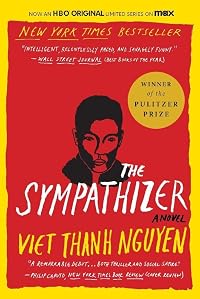
Follows a Viet Cong agent as he spies on a South Vietnamese army general and his compatriots as they start a new life in 1975 Los Angeles.Tags
Recommendations
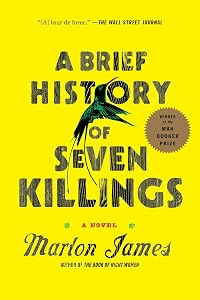
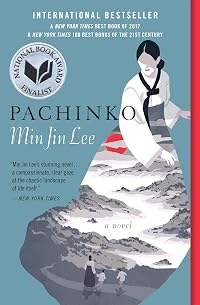
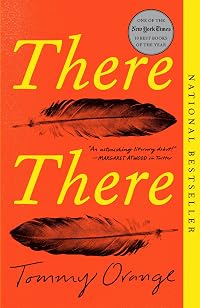
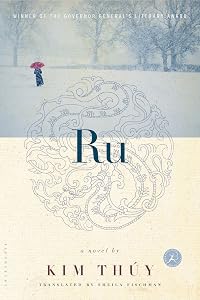

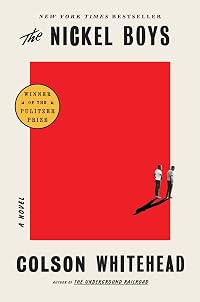
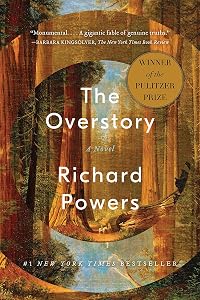
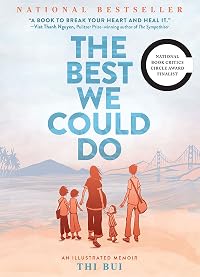
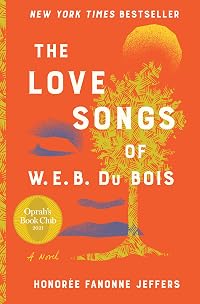

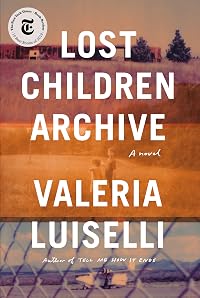
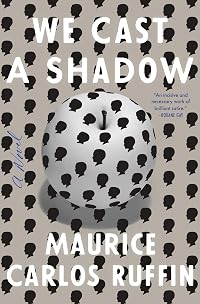
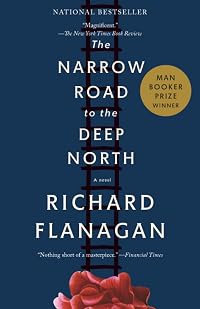
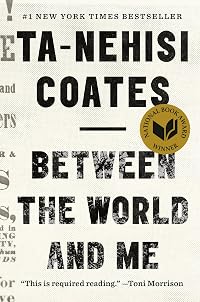







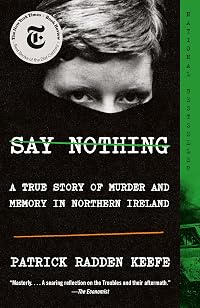
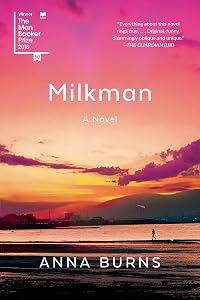
Member Recommendations
thorold Literary accounts of wars of decolonisation as seen from the side of the colonised.
10
Member Reviews
The first paragraph is worth quoting extensively: "I am a spy, a sleeper, a spook, a man of two faces. Perhaps not surprisingly, I am also a man of two minds. I am not some misunderstood mutant from a comic book or a horror movie, although some have treated me as such. I am simply able to see any issue from both sides."
The narrator starts out with a split identity as the son of a French priest and his young Vietnamese housekeeper ("not half of anything, twice of everything!" she tells him). His talent for divided sympathies serves him well in his career as a spy, first in the household of the (South Vietnamese) General, then in the exile community in California. The capsule review I read in the New Yorker calls this a comedy, focusing show more on the episode in which the captain serves as a consultant to a loathsome, thinly veiled Francis Ford Coppola as he makes his war movie in the Philippines, but the satire didn't impress me: too broad, too predictable. What I loved was the tragic narrator himself, wry and cynical with a stubborn idealistic streak, like the creation of some Vietnamese Graham Greene with Nabokovian insight into American culture and language. show less
The narrator starts out with a split identity as the son of a French priest and his young Vietnamese housekeeper ("not half of anything, twice of everything!" she tells him). His talent for divided sympathies serves him well in his career as a spy, first in the household of the (South Vietnamese) General, then in the exile community in California. The capsule review I read in the New Yorker calls this a comedy, focusing show more on the episode in which the captain serves as a consultant to a loathsome, thinly veiled Francis Ford Coppola as he makes his war movie in the Philippines, but the satire didn't impress me: too broad, too predictable. What I loved was the tragic narrator himself, wry and cynical with a stubborn idealistic streak, like the creation of some Vietnamese Graham Greene with Nabokovian insight into American culture and language. show less
Loved it. Took me a while to get into it, but oh so worth it. This is the story of the Viet Nam war from a perspective we never get. The protagonist is a communist spy within the South Vietnamese/US alliance. Early in the book, Saigon falls and he escapes to the US where his work continues.
This is a powerful novel as it is a study in the complex divisions within one individual, mirroring those in the world more generally. Our protagonist has a Vietnamese mother and a French father (a priest no less) and, despite his mother telling him he isn't "half" of anything...he is "twice" as much, he has trouble fitting in. He was educated in the US, where he was seen as Vietnamese. In Viet Nam, he is similarly perceived as foreign. He is trained show more by the CIA to interrogate and "break" the very revolutionaries he is working for. He has two childhood friends, his blood brothers: Man, his handler as an agent; and Bon, a strong anticommunist. The story progresses as the narrator details his confession of his actions and inactions during the war.
This book is so well written, with dark humour and profound insights. There is a sequel, which I'll be reading very soon. show less
This is a powerful novel as it is a study in the complex divisions within one individual, mirroring those in the world more generally. Our protagonist has a Vietnamese mother and a French father (a priest no less) and, despite his mother telling him he isn't "half" of anything...he is "twice" as much, he has trouble fitting in. He was educated in the US, where he was seen as Vietnamese. In Viet Nam, he is similarly perceived as foreign. He is trained show more by the CIA to interrogate and "break" the very revolutionaries he is working for. He has two childhood friends, his blood brothers: Man, his handler as an agent; and Bon, a strong anticommunist. The story progresses as the narrator details his confession of his actions and inactions during the war.
This book is so well written, with dark humour and profound insights. There is a sequel, which I'll be reading very soon. show less
″They cannot represent themselves, they must be represented.″ Marx spoke of the oppressed class that was not politically conscious enough to see itself as a class, but was anything ever more true of the dead…?
Much has been written about the Vietnam War, but the vast majority of the voices heard in America are American. Nguyen′s novel is an attempt to give another perspective, yet that perspective is of someone who came to the states as a child and lost no family in the war. So although his name is Vietnamese, his approach is academic, not biographical.
The entire novel′s tension rests on the dichotomies of a character who is half-French and half-Vietnamese, a Viet Cong soldier in a ARVN uniform, American-educated but show more Vietnamese-born, trained by the CIA to interrogate the very revolutionaries he is trying to save.
I am a spy, a sleeper, a spook, a man of two faces. Perhaps not surprisingly, I am also a man of two minds.
Thus begins the novel and the protagonist′s confession. He is in an isolation cell writing for an unknown commandant—not an auspicious beginning. His story begins with the fall of Saigon and his escape with his commanding officer, a general in the South Vietnamese secret police. Although he has been serving the general for years and is a trusted aide, he is actually a mole for the North Vietnamese communist army. His handler orders him to leave the country with the general and continue reporting on the general′s activities, and any attempts to rekindle the war, from America. The plot bogs down a bit in the middle, but picks up again for an intense, page-turning ending.
Nguyen′s writing is clever and darkly humorous. I often stopped and reread a sentence simply for the pleasure of the construction. The book has elements of metafiction: a self-conscious novel that is written as a confession by a narrator whose life is a lie. The war is being recast as a movie starring American heroes and nameless, unspeaking Vietnamese extras, on the one hand, and as a communist victory for the people by political commissars in the reeducation camps, on the other. Readers of [Invisible Man] and [The Quiet American] will find echoes throughout, as will watchers of Apocalypse Now. Nguyen tackles issues of identity, race, representation, and both individual and societal culpability head on, sparing no one—American, South Vietnamese, or communist—from his glare. show less
Much has been written about the Vietnam War, but the vast majority of the voices heard in America are American. Nguyen′s novel is an attempt to give another perspective, yet that perspective is of someone who came to the states as a child and lost no family in the war. So although his name is Vietnamese, his approach is academic, not biographical.
The entire novel′s tension rests on the dichotomies of a character who is half-French and half-Vietnamese, a Viet Cong soldier in a ARVN uniform, American-educated but show more Vietnamese-born, trained by the CIA to interrogate the very revolutionaries he is trying to save.
I am a spy, a sleeper, a spook, a man of two faces. Perhaps not surprisingly, I am also a man of two minds.
Thus begins the novel and the protagonist′s confession. He is in an isolation cell writing for an unknown commandant—not an auspicious beginning. His story begins with the fall of Saigon and his escape with his commanding officer, a general in the South Vietnamese secret police. Although he has been serving the general for years and is a trusted aide, he is actually a mole for the North Vietnamese communist army. His handler orders him to leave the country with the general and continue reporting on the general′s activities, and any attempts to rekindle the war, from America. The plot bogs down a bit in the middle, but picks up again for an intense, page-turning ending.
Nguyen′s writing is clever and darkly humorous. I often stopped and reread a sentence simply for the pleasure of the construction. The book has elements of metafiction: a self-conscious novel that is written as a confession by a narrator whose life is a lie. The war is being recast as a movie starring American heroes and nameless, unspeaking Vietnamese extras, on the one hand, and as a communist victory for the people by political commissars in the reeducation camps, on the other. Readers of [Invisible Man] and [The Quiet American] will find echoes throughout, as will watchers of Apocalypse Now. Nguyen tackles issues of identity, race, representation, and both individual and societal culpability head on, sparing no one—American, South Vietnamese, or communist—from his glare. show less
Our unnamed narrator begins with the fall of Saigon and the escape of South Vietnamese refugees to America, where he lives and works while working as a spy for the Viet Cong.
This is a book in which no single word is wasted, its meaning important and often double, beginning with the title itself. The narrator is a sympathizer both as a spy but also in his self - he is the son of a French priest and a Vietnamese woman, and is not one or the other. The unique perspective of an outsider allows him to sympathize with both sides, leaving you unsure exactly how much to trust his narration, a confession he is making to the Commandant. Equally brilliantly executed and brutal in its descriptions of war and the aftermath, this Pulitzer show more Prize-winning title is deserving a careful, slow read. Would I reread it? No. But I'm in awe of the author's way with words, and would definitely recommend it for book clubs or read another by him. show less
This is a book in which no single word is wasted, its meaning important and often double, beginning with the title itself. The narrator is a sympathizer both as a spy but also in his self - he is the son of a French priest and a Vietnamese woman, and is not one or the other. The unique perspective of an outsider allows him to sympathize with both sides, leaving you unsure exactly how much to trust his narration, a confession he is making to the Commandant. Equally brilliantly executed and brutal in its descriptions of war and the aftermath, this Pulitzer show more Prize-winning title is deserving a careful, slow read. Would I reread it? No. But I'm in awe of the author's way with words, and would definitely recommend it for book clubs or read another by him. show less
Loved this! A twisty-turny spy thriller about a Vietnamese double agent that also explores the American immigration experience. Also, reading the gruesomely graphic torture scene at the end of the book whilst sitting in a peaceful public park admiring the sunset on a mild spring evening is one of my favourite incongruous reading memories!
This book will sit with me for a long time. As someone who studies the Cold War—that “experiment they call, with a straight face, the Cold War” (344)—I responded to this book both academically and personally.
Viet Thanh Nguyen’s nuance is masterful—his pro-antagonist, if you will, is one of the more interesting characterizations I’ve come across in recent literature. While there are brief moments of heavy-handedness, most of the book is filled with stunning language, vivid imagery, and beautifully-crafted moments of sardonic humor.
This is the hero’s journey with a twist. As Nguyen said recently at a talk at Radcliffe, revolutions often lead to disillusionment, but that doesn’t mean they fail and can’t continue show more (paraphrase). In some sense, Nguyen highlights the sense of the word “revolution” as it appears in physics and makes a compelling case that we are often our own axis for that revolution—something I think the main character comes to understand.
This is an important book to read for multiple reasons, but specifically to understand, at least in some way, the many angles of being a refugee. While a spy, the nameless narrator is also a refugee, and Nguyen peels back the multiple layers of that relationship. show less
Viet Thanh Nguyen’s nuance is masterful—his pro-antagonist, if you will, is one of the more interesting characterizations I’ve come across in recent literature. While there are brief moments of heavy-handedness, most of the book is filled with stunning language, vivid imagery, and beautifully-crafted moments of sardonic humor.
This is the hero’s journey with a twist. As Nguyen said recently at a talk at Radcliffe, revolutions often lead to disillusionment, but that doesn’t mean they fail and can’t continue show more (paraphrase). In some sense, Nguyen highlights the sense of the word “revolution” as it appears in physics and makes a compelling case that we are often our own axis for that revolution—something I think the main character comes to understand.
This is an important book to read for multiple reasons, but specifically to understand, at least in some way, the many angles of being a refugee. While a spy, the nameless narrator is also a refugee, and Nguyen peels back the multiple layers of that relationship. show less
Nothing!
I so wanted that word, perhaps repeated a few times, to be my whole review--the word that torture enlightens us to because when faced with it we just want everything to go away. Still, consciousness is the problem and nothingness the solution and a sympathizer, especially one who is educated and intelligent has way too much consciousness, suffering not only for himself but for others, the objects of his sympathy. Instead he is repeatedly forced to choose sides and sometimes kill those he sympathizes with, or at the very least doing nothing to stop those on his side from doing so.
The secret of fighting a war is to be unsympathetic. Ideology needs to replace sympathy; the ideology of people who are like you. Unfortunately, no show more one is like the Captain, the confessor, the bastard, the unnamed narrator. He fits in nowhere, he is accepted by no one. This time of identity politics when it's all about being part of some group, is also a time of polarization and dividedness. The ultimate aim of belonging is to wage war against those who do not belong.
There are no good guys in this novel, the closest to one being Sonny, whom he is ordered to kill, but that's part of the point. There is always some crime to confess.
In the end, our sympathizer remains a revolutionary, but one in search of a revolution. If it's not too paradoxical, perhaps that will be an uprising of sympathizers who will defeat the ideologues. show less
I so wanted that word, perhaps repeated a few times, to be my whole review--the word that torture enlightens us to because when faced with it we just want everything to go away. Still, consciousness is the problem and nothingness the solution and a sympathizer, especially one who is educated and intelligent has way too much consciousness, suffering not only for himself but for others, the objects of his sympathy. Instead he is repeatedly forced to choose sides and sometimes kill those he sympathizes with, or at the very least doing nothing to stop those on his side from doing so.
The secret of fighting a war is to be unsympathetic. Ideology needs to replace sympathy; the ideology of people who are like you. Unfortunately, no show more one is like the Captain, the confessor, the bastard, the unnamed narrator. He fits in nowhere, he is accepted by no one. This time of identity politics when it's all about being part of some group, is also a time of polarization and dividedness. The ultimate aim of belonging is to wage war against those who do not belong.
There are no good guys in this novel, the closest to one being Sonny, whom he is ordered to kill, but that's part of the point. There is always some crime to confess.
In the end, our sympathizer remains a revolutionary, but one in search of a revolution. If it's not too paradoxical, perhaps that will be an uprising of sympathizers who will defeat the ideologues. show less
Members
- Recently Added By
Published Reviews
ThingScore 75
“Their lives also embody the dizzying nature of the refugee experience, which involves leaving your homeland not in pursuit of abstract ideas about a better life but because one day you find yourself on the wrong end of a war and it’s time to run.”
added by Lemeritus
...The Sympathizer is an excellent literary novel, and one that ends, with unsettling present-day resonance, in a refugee boat where opposing ideas about intentions, actions and their consequences take stark and resilient human form.
added by thorold
The more powerful a country is, the more disposed its people will be to see it as the lead actor in the sometimes farcical, often tragic pageant of history. So it is that we, citizens of a superpower, have viewed the Vietnam War as a solely American drama in which the febrile land of tigers and elephants was mere backdrop and the Vietnamese mere extras.
added by krazy4katz
Lists

Pulitzer Prize Winners for Fiction
102 works; 54 members

2016 Tournament of Books
17 works; 20 members

Best Historical Fiction
620 works; 261 members

Recommend the 20 best books you've read in the last five years
2,168 works; 601 members

Best Contemporary Literary Fiction (Around the Last 30 Years)
388 works; 123 members

Best Spy Fiction
153 works; 102 members

Top Five Books of 2020
982 works; 348 members

Vulture's 100 Best Books of the 21st Century (So Far)
98 works; 9 members

2016 Notable Books for Adults
26 works; 7 members

50 Books from the Past 50 Years
50 works; 8 members

Top Five Books of 2017
757 works; 231 members

Books Read in 2017
4,249 works; 129 members

Phi Beta Kappa reading list
260 works; 8 members

Contemporary Fiction
109 works; 7 members

Asia
178 works; 7 members
Book Club 2017
8 works; 2 members

Kirkus Starred Fiction Reviews of Books Published in 2015
310 works; 6 members
Books Read in 2016
4,666 works; 199 members

NYT: Notable Books of 2015 (Fiction & Poetry)
20 works; 1 member

Books Read in 2022
5,166 works; 112 members
International Dublin Literary Award Longlist 2017
147 works; 3 members

Reading Group 2017
4 works; 1 member

Revolutions
72 works; 5 members

Dublin Literary Award Longlist 2017
147 works; 2 members

Traveling the world in books
24 works; 1 member
Books Read in 2015
3,299 works; 126 members
First Novels
373 works; 17 members

Kirkus Reviews Best Fiction of 2015
98 works; 6 members
NYT 100 best books of 21st C
100 works; 31 members

.
184 works; 1 member
Best Books of the 2010s
20 works; 1 member

Retrospective of 20th- and 21st-century literature
154 works; 1 member

Books recommended by Calgary Public Library staff
1,588 works; 4 members

NYT Readers best of 21st C
100 works; 8 members

To Read
617 works; 7 members

The Atlantic's The Great American Novel
136 works; 12 members
LitHub's Best Novels of the Decade 2010-2019
39 works; 1 member

Novels without quotation marks
25 works; 1 member

Books Read in 2021
5,361 works; 114 members

Global Reads: Books Set in East Asia
139 works; 12 members

Around the World in 80 Books
79 works; 4 members

Edgar Award
418 works; 15 members

100 Best Thrillers of All Time
100 works; 6 members

Books Read in 2026
1,929 works; 66 members
Author Information

18+ Works 7,844 Members
Viet Thanh Nguyen was born in Ban Me Thuot, Viet Nam. In 1975, he came to the United States as a refugee with his family. He received degrees in English and ethnic studies from the University of California Berkeley. After receiving a Ph.D. in English from Berkeley, he began teaching at the University of Southern California and has been there ever show more since. He is an associate professor of English and American studies and ethnicity. He is the author of Race and Resistance: Literature and Politics in Asian America and Nothing Ever Dies: Vietnam and the Memory of War. The novel The Sympathizer won the First Novel Prize from the Center for Fiction, the 2016 Andrew Carnegie Medal for Excellence in Fiction, the Asian/Pacific American Award for Literature in Fiction, and the 2016 Pulitzer Prize for fiction. His latsest novel is The Refugees. He co-edited Transpacific Studies: Framing an Emerging Field with Janet Hoskins. (Bowker Author Biography) show less
Some Editions
Awards and Honors
Series

Work Relationships
Is contained in
Has as a student's study guide
Common Knowledge
- Canonical title
- The Sympathizer
- Original title
- The Sympathizer
- Original publication date
- 2015
- People/Characters
- The Captain (narrator | Half French, half Vietnamese Communist sleeper agent); Bon (South Vietnamese soldier); Man; Linh; Duc; The General (show all 31); Madame (The General's wife); Claude (CIA agent); Mimi; Ti Ti; Phi Phi; Avery Wright Hammer; Sofia Mori; Son "Sonny" Do; The Crapulent Major; The Auteur (Francis Ford Coppola satire); Francis Ford Coppola; Lan "Lana"; James Yoon; Asia Soo; Richard Hedd; Jay Bellamy (The Idol); King Cong; Will Shamus (The Thespian); The Thespian; The Idol; Binh "Benny"; Mai; Danny Boy; The Commandant; The Commissar (Man)
- Important places
- Saigon, Vietnam; Glendale, California, USA; Occidental College, Los Angeles, California, USA; Los Angeles, California, USA; Hollywood, Los Angeles, California, USA; Guam (show all 9); Camp Pendleton, California, USA; Camp Asan, Guam; The Philippines
- Important events
- Vietnam War; Fall of Saigon
- Related movies
- The Sympathizer (2024 | IMDb)
- Epigraph
- Let us not become gloomy as soon as we hear the word "torture": in this particular case there is plenty to offset and mitigate that word--even something to laugh at.
-Friedrich Nietzsche, On the genealogy of morals<... (show all)/i> - Dedication
- For Lan and Ellison
- First words
- I am a spy, a sleeper, a spook, a man of two faces.
- Last words
- (Click to show. Warning: May contain spoilers.)We will live!
- Blurbers
- Boyle, T.C.; Marlantes, Karl; Kingston, Maxine Hong; Messud, Claire
- Original language
- English
Classifications
Statistics
- Members
- 5,139
- Popularity
- 2,677
- Reviews
- 179
- Rating
- (3.93)
- Languages
- 15 — Czech, Dutch, English, French, German, Hungarian, Italian, Polish, Portuguese, Romanian, Russian, Spanish, Swedish, Turkish, Ukrainian
- Media
- Paper, Audiobook, Ebook
- ISBNs
- 58
- ASINs
- 16