On This Page
Description
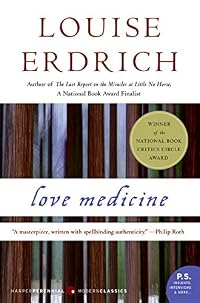
The lives and destinies of the Kashpaws and the Lamartines intertwine on and around a North Dakota Indian reservation from 1934 to 1984, in an authentic tale of survival, tenacity, tradition, injustice, and love.Tags
Recommendations
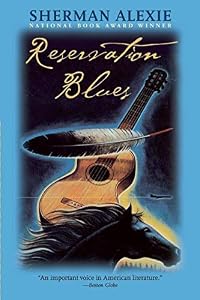
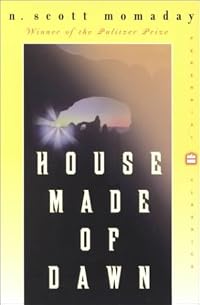
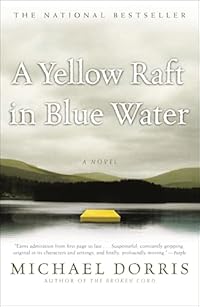
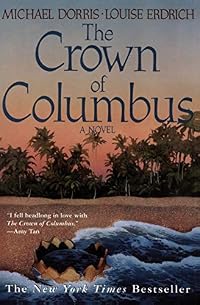



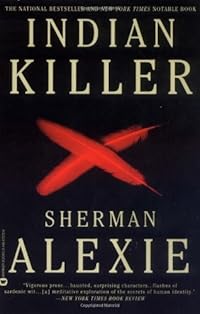
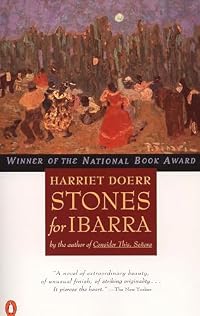
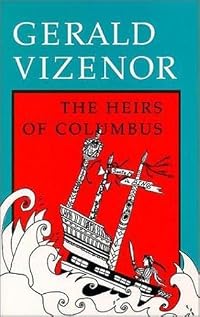


Member Recommendations
Member Reviews
In Love Medicine we meet people whose ancestors and descendants will populate so many of Erdrich's novels--the intertwined families of Nanapush, Pillager, Kashpaw and Lamartine, among others, including the nuns from the convent "up the hill". It's a story lover's dream, and a genealogist's Rubik's cube. It hits all my Faulkner buttons, too. The stories in this book are just pieces of the saga, and the big picture will never come clear until all the rest of the parts have been revealed, and shuffled around by one character and then another. I suppose this puts some readers off, but it’s the kind of thing that I just love. I give it 4 stars and a hug.
Nowhere on my edition of the book is it called a novel except in a blurb from a review. These are loosely connected stories that had a feeling of oral story-telling to them, passed down from one to another, with sharply drawn but not fully-developed characters and implications one only realizes later on. Erdrich is unsentimental but always compassionate toward life on the Indian reservation and its inhabitants. It's hard and brutal and there is not much joy or hope to be found. I did not, however, find this a bleak read, due in large part to Erdrich's eye for the absurd and her empathetic portrayal of these men and women. Some of the stories made me laugh and some brought tears to my eyes, but throughout, I reveled in the powerful prose.
Louise Erdrich writes truthfully but brilliantly about the native American lifestyle. This is the second book of hers that I have read (the Beet Queen being the other) and I am even more impressed by her abilities.
Some of this book was published previously as short stories in magazines such as Mother Jones and The Atlantic Monthly. I thought this novel would seem like patched together short stories but it doesn't. In fact, I have trouble imagining being satisfied by reading one segment alone. Each chapter seemed so intricately woven with the others that I can only presume that Erdrich conceived the whole story at one time.
The first story tells about June Kashpaw dying in a snowstorm after walking away from a man's car in the country. show more June was raised on a reserve in North Dakota and the rest of the book deals with all the other people who live or used to live on the reserve. The Kashpaws, the Morrisseys, the Lamartines and the Nanapushes mix and mingle. At times I found it hard to remember who was related to whom and how they were related. And I suspect that was deliberate because even they weren't always sure who fathered which child. But the urge to know one's family history is powerful and the children do figure it out.
I particularly liked the stories which dealt with an occurrence from several different angles. For instance, the story of Lulu Lamartine's home burning down is told from the perspective of Nector Kashpaw who was in love with Lulu (although married to Marie) and then from the point of view of Marie and finally discussed by Lulu. Each person has a different insight and remembers events slightly differently. Erdrich captures all the nuances expertly. show less
Some of this book was published previously as short stories in magazines such as Mother Jones and The Atlantic Monthly. I thought this novel would seem like patched together short stories but it doesn't. In fact, I have trouble imagining being satisfied by reading one segment alone. Each chapter seemed so intricately woven with the others that I can only presume that Erdrich conceived the whole story at one time.
The first story tells about June Kashpaw dying in a snowstorm after walking away from a man's car in the country. show more June was raised on a reserve in North Dakota and the rest of the book deals with all the other people who live or used to live on the reserve. The Kashpaws, the Morrisseys, the Lamartines and the Nanapushes mix and mingle. At times I found it hard to remember who was related to whom and how they were related. And I suspect that was deliberate because even they weren't always sure who fathered which child. But the urge to know one's family history is powerful and the children do figure it out.
I particularly liked the stories which dealt with an occurrence from several different angles. For instance, the story of Lulu Lamartine's home burning down is told from the perspective of Nector Kashpaw who was in love with Lulu (although married to Marie) and then from the point of view of Marie and finally discussed by Lulu. Each person has a different insight and remembers events slightly differently. Erdrich captures all the nuances expertly. show less
Love Medicine, first published in 1984, was Louise Erdrich’s debut novel. And what an amazing debut it was, winning the National Book Critics Circle Award and, over the years, becoming one of those books that repeatedly appears on school syllabi and book club reading lists. Despite all of this, I have only recently “discovered” Louise Erdrich, and after reading two of her later novels, decided to go back to the beginning.
Love Medicine is ostensibly the first in a series of loosely-connected novels set in a Chippewa community in the Dakotas. The book opens in 1981 with the untimely death of a woman in the community. We get a glimpse of the wildly dysfunctional family gathered together to remember her. And then the narrative goes show more back nearly 50 years, slowly introducing readers to nearly every name on the family tree provided in the novel’s opening pages. Every person bears emotional or physical scars, and sometimes both. Government interference in Native land management dramatically altered their way of life. Most have a bare minimum education level which affects their economic prospects. Some served in Vietnam and returned with PTSD. And alcohol use had an impact on nearly everyone. It’s an often bleak yet compelling novel, with moments of humor and and ending that offers hope,
What I enjoyed most about this book was connecting each character’s story to those in Erdrich’s other novels. In some cases, I already knew something about the character’s life either before or after the events in Love Medicine. I came away with a better understanding of one character, who was frequently mentioned, but mostly “off camera,” in another book. In the 25th anniversary edition of the novel, Erdrich wrote, “Since writing Love Medicine, I have understood that I am writing one long book in which the main chapters are also books … If you read on in the other books, you will find that the people in Love Medicine live out destinies invisible to me as I wrote this first book … That they keep returning, insistent and surprising, is a strange gift. Indeed, they have not finished with me yet.”
It’s these connections that will keep me coming back to Erdrich’s books. show less
Love Medicine is ostensibly the first in a series of loosely-connected novels set in a Chippewa community in the Dakotas. The book opens in 1981 with the untimely death of a woman in the community. We get a glimpse of the wildly dysfunctional family gathered together to remember her. And then the narrative goes show more back nearly 50 years, slowly introducing readers to nearly every name on the family tree provided in the novel’s opening pages. Every person bears emotional or physical scars, and sometimes both. Government interference in Native land management dramatically altered their way of life. Most have a bare minimum education level which affects their economic prospects. Some served in Vietnam and returned with PTSD. And alcohol use had an impact on nearly everyone. It’s an often bleak yet compelling novel, with moments of humor and and ending that offers hope,
What I enjoyed most about this book was connecting each character’s story to those in Erdrich’s other novels. In some cases, I already knew something about the character’s life either before or after the events in Love Medicine. I came away with a better understanding of one character, who was frequently mentioned, but mostly “off camera,” in another book. In the 25th anniversary edition of the novel, Erdrich wrote, “Since writing Love Medicine, I have understood that I am writing one long book in which the main chapters are also books … If you read on in the other books, you will find that the people in Love Medicine live out destinies invisible to me as I wrote this first book … That they keep returning, insistent and surprising, is a strange gift. Indeed, they have not finished with me yet.”
It’s these connections that will keep me coming back to Erdrich’s books. show less
What a lovely book. Erdrich follows intertwined families in the Chippewa Nation through three generations (at least), giving each character his or her own individuality, telling their own stories from their own points of view. Native American hardship is real, of course, as is community, competition and quarrels. Mix into that the Viet Nam war and its damages, alcohol and poverty, crime and incarceration - he pain wears on everyone. Each person's story echoes and modifies other stories, fills in the generational narrative, follows the thread of love. I can't believe this was her first published novel. A terrific book.
Enjoyed this a lot; a great first novel. It's a generational novel that's really a series of short stories, so not a page-turner - but each chapter had a pleasing shape and moments that touch the heart.
Despite the setting and bleak opening, there was a lot of warmth in this book. Characters are outrageous but not caricatures; they hurt each other and themselves, but they feel human and relatable.
The narrator that steals the show, of course, is Lipsha. A wise and witty young autodidact, his voice is totally unexpected and beautifully written. He's the spiritual heart of the book, yet his moments of insight are complex - he's definitely not a trope-y magical Indian.
Will read (and recommend) more Erdrich!
Despite the setting and bleak opening, there was a lot of warmth in this book. Characters are outrageous but not caricatures; they hurt each other and themselves, but they feel human and relatable.
The narrator that steals the show, of course, is Lipsha. A wise and witty young autodidact, his voice is totally unexpected and beautifully written. He's the spiritual heart of the book, yet his moments of insight are complex - he's definitely not a trope-y magical Indian.
Will read (and recommend) more Erdrich!
This is one of those works that sits just on the dividing line between "novel" and "collection of linked short stories." It gives us a series of glimpses into the complicated lives of members of several related families on a Chippewa Indian reservation, their stories intricately intertwined and told in multiple perspectives that skip back and forth through time. Which can be a little hard to keep track of, especially towards the beginning when you're still learning who all the characters are, but it turns out to be very much worth the effort.
This was Erdrich's first novel, and I do think maybe it shows, just a little bit. The only other novels of hers I've read are The Plague of Doves and Shadow Tag, but I remember finding both of those show more to be effortlessly beautiful reads that pulled me along compulsively. Whereas this one, in places, perhaps feels like it's working a little harder at to achieve its effect. But when the writing is at its best, wow is it good. show less
This was Erdrich's first novel, and I do think maybe it shows, just a little bit. The only other novels of hers I've read are The Plague of Doves and Shadow Tag, but I remember finding both of those show more to be effortlessly beautiful reads that pulled me along compulsively. Whereas this one, in places, perhaps feels like it's working a little harder at to achieve its effect. But when the writing is at its best, wow is it good. show less
Members
- Recently Added By
Published Reviews
ThingScore 88
''Love Medicine'' is an engrossing book. With this impressive debut Louise Erdrich enters the company of America's better novelists, and I'm certain readers will want to see more from this imaginative and accomplished young writer
added by Shortride
There are at least a dozen of the many vividly drawn people in this first novel who will not leave the mind once they are let in. Their power comes from Louise Erdrich's mastery of words. Nobody really talks the way they do, but the language of each convinces you you have heard them speaking all your life, and that illusion draws you quickly into their world, a place of poor shacks stuck amid show more the wrecks of old cars and other junk made beautiful in Miss Erdrich's evocation. show less
added by Shortride
Lists

1001 Books You Must Read Before You Die
1,448 works; 1,132 members

Best Contemporary Literary Fiction (Around the Last 30 Years)
388 works; 124 members

Native American / Indigenous Literature
172 works; 100 members

The Top Ten: Writers Pick Their Favorite Books
240 works; 31 members

100 books to read in a lifetime
102 works; 37 members

Dishonourable Mentions of 2013
189 works; 62 members

20th Century Literature
1,161 works; 55 members

50 Books by Women Authors
50 works; 10 members

Best of Native American Literature
11 works; 2 members

Best family sagas
244 works; 33 members
Blue Pyramid 1,276 Best Books of All Time
1,248 works; 32 members

Five star books
1,755 works; 108 members
Books Set in North Dakota
8 works; 4 members

Literary Travelogue of the United States Challenge
133 works; 6 members

The American novels that should have won the Booker prize
16 works; 3 members

Carole's List
445 works; 13 members
First Novels
373 works; 17 members

At the Library
217 works; 1 member

AP Lit
363 works; 6 members

Literary Works Read in College
316 works; 15 members

Indigenous America Reader
145 works; 12 members

My TBR
371 works; 3 members

Indigenous Peoples: Nonfiction & Fiction
50 works; 1 member

Literature by People of Color
81 works; 9 members
Talk Discussions
Past Discussions
Group Read, June 2020: Love Medicine in 1001 Books to read before you die (June 2020)
Author Information

69+ Works 45,154 Members
Karen Louise Erdrich was born on June 7, 1954 in Little Falls, Minnesota. Erdrich grew up in Wahpeton, North Dakota, where both of her parents were employed by the Bureau of Indian Affairs. She is a member of the Turtle Mountain Band of Chippewa. Erdrich graduated from Dartmouth College in 1976 with an AB degree, and she received a Master of Arts show more in creative writing from Johns Hopkins University in 1979. Erdrich published a number of poems and short stories from 1978 to 1982. In 1981 she married author and anthropologist Michael Dorris, and together they published The World's Greatest Fisherman, which won the Nelson Algren Award in 1982. In 1984 she won the National Book Critics Circle Award for Love Medicine, which is an expansion of a story that she had co-written with Dorris. Love Medicine was also awarded the Virginia McCormick Scully Prize (1984), the Sue Kaufman Prize (1985) and the Los Angeles Times Award for best novel (1985). In addition to her prose, Erdrich has written several volumes of poetry, a textbook, children's books, and short stories and essays for popular magazines. She has been the recipient of numerous awards for professional excellence, including the National Magazine Fiction Award in 1983 and a first-prize O. Henry Award in 1987. Erdrich has also received the Pushcart Prize in Poetry, the Western Literacy Association Award, the 1999 World Fantasy Award, and the Scott O'Dell Award for Historical Fiction in 2006. In 2007 she refused to accept an honorary doctorate from the University of North Dakota in protest of its use of the "Fighting Sioux" name and logo. Erdrich's novel The Round House made the New York Times bestseller list in 2013. Her other New York Times bestsellers include Future Home of the Living God (2017). (Bowker Author Biography) show less
Awards and Honors
Awards
Distinctions
Notable Lists
Series

Belongs to Publisher Series
Work Relationships
Is contained in
Contains
Has as a commentary on the text
Has as a student's study guide
Common Knowledge
- Canonical title*
- Medicina d'amore
- Original title
- Love Medicine
- Original publication date
- 1984
- People/Characters
- Lulu Nanpush Lamartine; June Kashpaw; Lipsha Morrissey; Nector Kashpaw; Albertine Johnson; Eli Kashpaw (show all 7); Marie Lazarre Kashpaw
- Important places
- North Dakota, USA
- Dedication
- Grandma Mary Gourneau, Gertrude Crow Dog and my brothers Mark, Louis, Terry (Amikoos), and Raoul, and my friend Earl Livermore were some people especially in my thoughts as I wrote this book. I could not have written it this... (show all) way without Michael Dorris, who gave his own ideas, experiences, and devoted attention to the writing. This book is dedicated to him because he is so much a part of it.
- First words
- The morning before Easter Sunday, June Kapshaw was walking down the clogged main street of oil boomtown Williston, North Dakota, killing time before the noon bus arrived that would take her home.
- Quotations
- Right and wrong were shades of meaning, not sides of a coin.
They gave you worthless land to start with and then they chopped it out from under your feet. They took your kids away and stuffed the English language in their mouth. They sent your brother to hell, they shipped him back fri... (show all)ed. They sold you booze for furs and then told you not to drink. - Last words
- (Click to show. Warning: May contain spoilers.)So there was nothing to do but cross the water, and bring her home.
- Blurbers
- Yardley, Jonathan; Morrison, Toni
- Original language
- English
*Some information comes from Common Knowledge in other languages. Click "Edit" for more information.
Classifications
Statistics
- Members
- 4,382
- Popularity
- 3,387
- Reviews
- 82
- Rating
- (3.91)
- Languages
- 12 — Catalan, Danish, Dutch, English, Finnish, French, German, Italian, Norwegian (Bokmål), Portuguese, Spanish, Swedish
- Media
- Paper, Audiobook, Ebook
- ISBNs
- 60
- ASINs
- 26