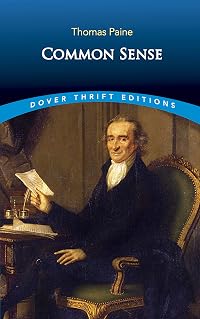
Common Sense
by Thomas Paine
On This Page
Description
When Thomas Paine first anonymously published his series of pamphlets titles Common Sense they became an overnight success. First released in 1776 at the height of the American Revolution the treatise denounced British rule and is thought to have been so popular as to have influenced the path of the revolution itself. In the words of Historian Gordon S. Wood Common Sense was, "the most incendiary and popular pamphlet of the entire revolutionary era.".
Tags
Recommendations
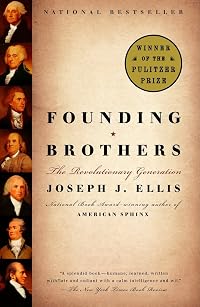
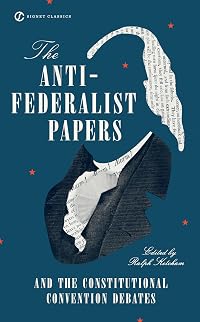
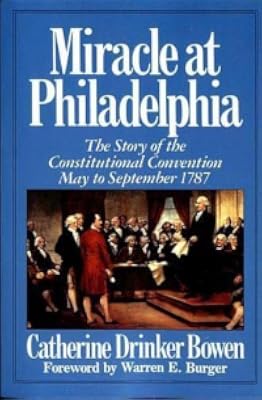
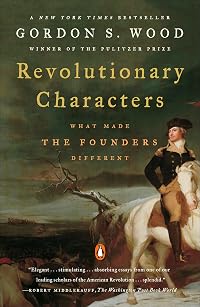



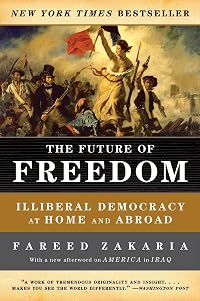
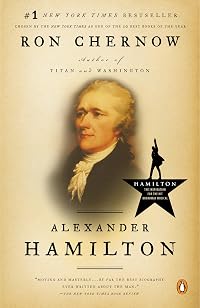

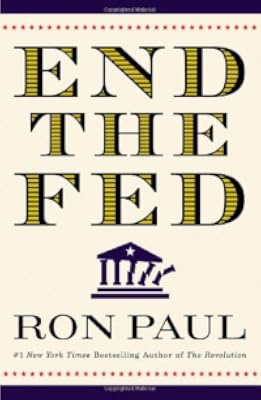
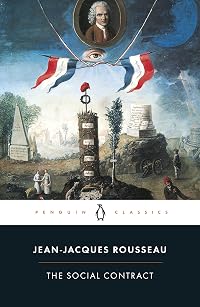

Member Recommendations
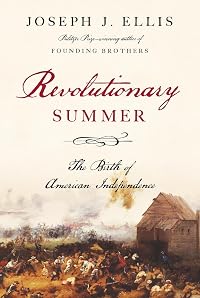
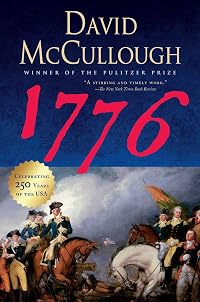
Teresa_Pelka Paths by Benjamin Franklin and Thomas Paine parted, in their living experience. The names continue together in history, for the role both men had in American independence.
Member Reviews
Stirring and persuasive, Thomas Paine's short polemic Common Sense retains the passion and immediacy of the moment in which it was written: 1776, with Paine's fellow Americans in rebellion against their British parent. On one level, it is an argument against monarchy in general, but from this angle it is quite limited. Excitable and populist, using naked rhetoric to appeal to the emotions of its intended audience, it lacks the rigour such an argument requires – though it is still fun to read. Paine's appeals to Scripture to validate his case seem cynical given the atheism – or at least anti-theism – he espoused.
However, the argument against monarchy is merely the platform on which Paine pursues his true cause. Common Sense is show more primarily a plea for Paine's fellow Americans to seize their moment and establish their independence, for "no nation under heaven hath such an advantage as this" (pg. 54). He is right – America at that moment possessed strategic and commercial advantages, raw materials, reasonable military power, favourable political circumstances and politicians with the calibre to exploit them. It had momentum, and it's fascinating to detect the note of desperation, or at least unease, in Paine's writing here, that that momentum may be squandered.
We might look back now and see the United States as inevitable, given those advantages and circumstances, but might forget that it was Paine, among others, working frantically at the bellows. In this slight pamphlet, intended for a general audience, we can find the seeds of much of the United States' perception of itself; its political exceptionalism, its libertarian sensibility and its appeal to noble ideals. (We might also, perhaps a bit uncharitably, detect America's selective pursuit of those ideals, such as in Paine's off-hand dismissal of the "Indians and Negroes" who the British "hath stirred up… to destroy us" (pg. 45).)
A stable society, Paine writes in one of his more sober and analytical moments, involves a healthy and mutually-supportive relationship between government and governed; "this frequent interchange will establish a common interest… on this (and not on the unmeaning name of king) depends the strength of government, and the happiness of the governed" (pg. 8). 'Common sense', then, has a double meaning as Paine's title. It is not just Paine proposing that his argument is the only one that makes sense, the only one that discards of the nonsense of kings. The polemic, in its passion for an American republic borne out of revolution, provided for Americans a common sense, a shared vision or idea, of what they should seek to be. show less
However, the argument against monarchy is merely the platform on which Paine pursues his true cause. Common Sense is show more primarily a plea for Paine's fellow Americans to seize their moment and establish their independence, for "no nation under heaven hath such an advantage as this" (pg. 54). He is right – America at that moment possessed strategic and commercial advantages, raw materials, reasonable military power, favourable political circumstances and politicians with the calibre to exploit them. It had momentum, and it's fascinating to detect the note of desperation, or at least unease, in Paine's writing here, that that momentum may be squandered.
We might look back now and see the United States as inevitable, given those advantages and circumstances, but might forget that it was Paine, among others, working frantically at the bellows. In this slight pamphlet, intended for a general audience, we can find the seeds of much of the United States' perception of itself; its political exceptionalism, its libertarian sensibility and its appeal to noble ideals. (We might also, perhaps a bit uncharitably, detect America's selective pursuit of those ideals, such as in Paine's off-hand dismissal of the "Indians and Negroes" who the British "hath stirred up… to destroy us" (pg. 45).)
A stable society, Paine writes in one of his more sober and analytical moments, involves a healthy and mutually-supportive relationship between government and governed; "this frequent interchange will establish a common interest… on this (and not on the unmeaning name of king) depends the strength of government, and the happiness of the governed" (pg. 8). 'Common sense', then, has a double meaning as Paine's title. It is not just Paine proposing that his argument is the only one that makes sense, the only one that discards of the nonsense of kings. The polemic, in its passion for an American republic borne out of revolution, provided for Americans a common sense, a shared vision or idea, of what they should seek to be. show less
4 / 5
just some light weekend reading lmao.
COMMON SENSE is one of the stronger foundational texts that influenced the declaration of independence - i found it 1) optimistic (naive?), 2) ironic considering the current state of american politics, and 3) suspiciously absent of discussion about native americans, enslaved peoples, and women.
basically, PAINE says in the very beginning that government is a necessary evil, which i found interesting. he lauds the natural rights of every man (cough cough what about women what about black people cough cough) to own property and be free, BUT!! the whole religious freedom thing is really not about total religious freedom at all - instead it’s about relative elasticity within the christian faith.
i show more thought the emphasis on convenience in government was a shrewd observation, and i think it’s paRTICULARLY portentous now. PAINE also emphasizes that the elected shall never form interests or attachments separate from the electors (the members of society), which… lmao.
it’s fascinating to read this with adult eyes and an adult brain, because i see so many places where the conceit of american independence is seen through rosy lenses. having the context of the last 250 years… im not so sure PAINE knew what he was talking about.
here are some of my favorite tidbits from COMMON SENSE:
“society is produced by our wants and government by our wickedness… the first is a patron, the last a punisher.”
“society in every state is a blessing, but government even in its best state is but a necessary evil; in its worst state an intolerable one…”
“the palaces of kings are built on the ruins of the bowers of paradise.” show less
just some light weekend reading lmao.
COMMON SENSE is one of the stronger foundational texts that influenced the declaration of independence - i found it 1) optimistic (naive?), 2) ironic considering the current state of american politics, and 3) suspiciously absent of discussion about native americans, enslaved peoples, and women.
basically, PAINE says in the very beginning that government is a necessary evil, which i found interesting. he lauds the natural rights of every man (cough cough what about women what about black people cough cough) to own property and be free, BUT!! the whole religious freedom thing is really not about total religious freedom at all - instead it’s about relative elasticity within the christian faith.
i show more thought the emphasis on convenience in government was a shrewd observation, and i think it’s paRTICULARLY portentous now. PAINE also emphasizes that the elected shall never form interests or attachments separate from the electors (the members of society), which… lmao.
it’s fascinating to read this with adult eyes and an adult brain, because i see so many places where the conceit of american independence is seen through rosy lenses. having the context of the last 250 years… im not so sure PAINE knew what he was talking about.
here are some of my favorite tidbits from COMMON SENSE:
“society is produced by our wants and government by our wickedness… the first is a patron, the last a punisher.”
“society in every state is a blessing, but government even in its best state is but a necessary evil; in its worst state an intolerable one…”
“the palaces of kings are built on the ruins of the bowers of paradise.” show less
I'm sure I read excerpts from this in school many years ago. I'd forgotten most of the specifics but the general idea (yay independence, boo monarchy) is pretty plain. I was a little surprised by how similar the eventual US government became to the British system, given how much time Paine spends complaining about it. (Granted, he spends even more time complaining about the idea of hereditary power.) I was also struck by how "religious freedom" only included Christians. Freedom of religion is one of the basic rights in the Constitution, and yet here we have one of the biggest advocates completely ignoring most of the religions of the world (including the Deism of many of his contemporaries, though it's not explicitly stated). In short, show more it was a very important and influential book, well worth reading by any American who wishes to learn more about the early days of their own country. It also really stretches today's definition of "pamphlet". show less
"The more men have to lose, the less willing are they to venture. The rich are in general slaves to fear, and submit to courtly power with the trembling duplicity of a spaniel."
As I see corporations capitulate to the wannabe king's nonsense in 2025 I realize that nothing has changed since Paine's time.
As I see corporations capitulate to the wannabe king's nonsense in 2025 I realize that nothing has changed since Paine's time.
I feel a bit ashamed that this is the first time that I have read Common Sense in its entirety. It is a piece of American history that deserves our attention and respect. It is easy to see why it affected people of its time in the way that it did, as it is clearly and simply written and sets forth in undeniable logic the issues in question at the time.
Masterfully titled, Paine’s points do indeed seem to be common sense. I was particularly struck by his deft destruction of the divine right of kings and the portion of the pamphlet that dealt with the construction of a navy. I cannot believe that, had I been a citizen of this time, I would have hesitated to grasp his logic and embrace the ideas he put forth.
He is often credited with show more having a huge influence on the decision that was taken by many to risk everything in order to sever ties with George III and win independence from English rule. While his writing was passionate, his thoughts were solid and did not smack of any unbridled dislike of the English as much as a thoughtful study of the problem and an almost unavoidable conclusion.
One fact that I was surprised by, and did not remember ever having come across in any history class, was that he had only been in America for two years prior to writing this treatise extolling separation. I wonder what the more established “founding fathers” thought of that, since many had already been here for generations.
I think you have to give this 5✯'s for its historical value, its impact, and its writing style. show less
Masterfully titled, Paine’s points do indeed seem to be common sense. I was particularly struck by his deft destruction of the divine right of kings and the portion of the pamphlet that dealt with the construction of a navy. I cannot believe that, had I been a citizen of this time, I would have hesitated to grasp his logic and embrace the ideas he put forth.
He is often credited with show more having a huge influence on the decision that was taken by many to risk everything in order to sever ties with George III and win independence from English rule. While his writing was passionate, his thoughts were solid and did not smack of any unbridled dislike of the English as much as a thoughtful study of the problem and an almost unavoidable conclusion.
One fact that I was surprised by, and did not remember ever having come across in any history class, was that he had only been in America for two years prior to writing this treatise extolling separation. I wonder what the more established “founding fathers” thought of that, since many had already been here for generations.
I think you have to give this 5✯'s for its historical value, its impact, and its writing style. show less
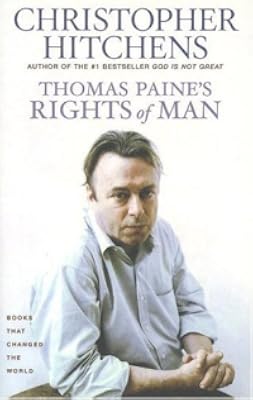
Thomas Paine is my favorite writer's (the late Christopher Hitchens) favorite writer, and therefore my responsibility to experience. Upon reading, I quickly understood the admiration. Paine, like Hitchens, is an enviously eloquent silver-tongued wordplayer who holds immoral sycophants to account for their cowardice. For shame that this was not part of my curriculum. How could a work like this be buried in general, purportedly as a result of future quasi-antitheistic work? This writing should be judged upon its own merits. History should have been kinder, as it is a masterpiece of reasoning and rationalism and a supreme galvanizer of men.
Thomas Paine's seminal 1776 publication arguing in favor of independence for the American colonies, and against further attempts at reconciliation with England.
As important historical documents go, this one has the benefit of being short, accessible, and still surprisingly readable nearly 250 years later. Some of Paine's arguments are better than others, and his opinions about the function of government look very simplistic from my 21st century perspective, although there is no doubt there are still plenty of people who think much the same way even now. But he does a great rant about why the whole concept of hereditary monarchies is irrational and morally bankrupt, and you can certainly see why he got people fired up and ready to get show more their rebellion on.
It also provides a fascinating sense of perspective to watch an important figure from the past thinking about the legacy the actions of his own time are going to leave for posterity, when you yourself are that posterity.
Rating: I'm giving this one a 4/5, as an interesting and painless-to-read window into history. (No pun intended.) show less
As important historical documents go, this one has the benefit of being short, accessible, and still surprisingly readable nearly 250 years later. Some of Paine's arguments are better than others, and his opinions about the function of government look very simplistic from my 21st century perspective, although there is no doubt there are still plenty of people who think much the same way even now. But he does a great rant about why the whole concept of hereditary monarchies is irrational and morally bankrupt, and you can certainly see why he got people fired up and ready to get show more their rebellion on.
It also provides a fascinating sense of perspective to watch an important figure from the past thinking about the legacy the actions of his own time are going to leave for posterity, when you yourself are that posterity.
Rating: I'm giving this one a 4/5, as an interesting and painless-to-read window into history. (No pun intended.) show less
Members
- Recently Added By
Lists

Books that changed the world
67 works; 64 members

Libertarian Books
102 works; 19 members

Well-Educated Mind
150 works; 3 members

Alan Kay's Reading List
103 works; 3 members

GreatBooks Worldview Academy Lists
133 works; 4 members

CCE 100 Great Books List
145 works; 8 members

Books Read in 2015
3,299 works; 129 members

Blue Pyramid 1,276 Best Books of All Time
1,248 works; 32 members
Books Read in 2016
4,666 works; 199 members

Robert B. Downs's Books that Changed the World
16 works; 1 member

Robert B. Downs's Books that Changed America
15 works; 1 member

The Well-Educated Mind, Susan Wise Bauer, 2016
179 works; 3 members

Book Titles Mentioned In Newberry Medal And Honor Books
884 works; 3 members

Works Cited in The Life and Death of Democracy by John Keane
278 works; 1 member

The Playful Pioneers
166 works; 1 member

LT picks: Blue Books
197 works; 44 members
Talk Discussions
Past Discussions
Thomas Paine and Common Sense in American History (January 2007)
Author Information

208+ Works 17,405 Members
Born to parents with Quaker leanings, Thomas Paine grew up amid modest circumstances in the rural environs of Thetford, England. As the recipient of what he termed "a good moral education and a tolerable stock of useful learning," little in Paine's early years seemed to suggest that he would one day rise to a stunning defense of American show more independence in such passionate and compelling works as Common Sense (1776) and The American Crisis essays (1776-83). Paine's early years were characterized by a constant struggle to remain financially solvent while pursuing a number of nonintellectual activities. Nevertheless, the young Paine read such Enlightenment theorists as Isaac Newton and John Locke and remained dedicated to the idea that education was a lifelong commitment. From 1753 to 1759, Paine worked alternately as a sailor, a staymaker, and a customs officer. Between 1759 and 1772, he married twice. His first wife died within a year of their marriage, and Paine separated amicably from his second wife after a shop they operated together went bankrupt. While these circumstances seemed gloomy, Paine fortuitously made the acquaintance of Benjamin Franklin in London in 1773. Impressed by Paine's self-education, Franklin encouraged the young man to venture to America where he might prosper. Arriving in Philadelphia in 1774, Paine quickly found himself energized by the volatile nature of Revolutionary politics. Working as an editor of Pennsylvania Magazine, Paine found a forum for his passionate radical views. In the years that followed, Paine became increasingly committed to American independence, and to his conviction that the elitist and corrupt government that had ruled over him in England had little business extending its corrosive colonial power to the States. Moved by these beliefs, Paine published Common Sense (1776), a test that proved invaluable in unifying American sentiment against British rule. Later, after joining the fray as a soldier, Paine penned the familiar lines in "The American Crisis": "These are the times that try men's souls." Fifteen years later, Paine wrote his other famous work, Rights of Man (1791). Drawing on his eclectic experiences as a laborer, an international radical politician, and a revolutionary soldier, Paine asserted his Lockeian belief that since God created humans in "one degree only," then rights should be equal for every individual. (Bowker Author Biography) show less
Some Editions
Awards and Honors
Notable Lists
Series
Belongs to Publisher Series
Work Relationships
Is contained in
Was inspired by
Inspired
Has as a reference guide/companion
Has as a student's study guide
Common Knowledge
- Canonical title
- Common Sense
- Original title
- Common sense
- Alternate titles
- Common sense : addressed to the inhabitants of America, on the following interesting subjects : I. of the origin and design of government in general, with concise remarks on the English constitution : II. of monarchy and hereditary succession : III. thoughts on the present state of American affairs : IV. of the present ability of America, with some miscellaneous reflections : to which is added an appendix, together with an address to the people called Quakers
- Original publication date
- 1776-01; 1776-01-10
- Important places
- Colonial America
- Important events
- American Revolution (1775 | 1783)
- Epigraph
- Man knows no Mafbr fave creating HEAVEN,
Or thofe whom choice and common good ordain.
Thomson - First words
- Perhaps the sentiments contained in the following pages are not sufficiently fashionable to procure them general favor; a long habit of not thinking a thing wrong, gives it a superficial appearance of being right... (show all)>, and raises at first a formidable outcry in defense of custom.
Some writers have so confounded society with government, as to leave little or no distinction between them; whereas they are not only different, but have different origins. - Quotations
- Immediate necessity makes many things convenient, which if continued would grow into oppressions. Expedience and right are different things.
- Last words
- (Click to show. Warning: May contain spoilers.)Sincerely wishing, that as men and christians, ye may always fully and uninterruptedly enjoy every civil and religious right; and be, in your turn, the means of securing it to others; but that the example which ye have unwisely set, of mingling religion with politics, may be disavowed and reprobated by every inhabitant of AMERICA.
- Original language
- English
Classifications
Statistics
- Members
- 6,074
- Popularity
- 2,091
- Reviews
- 71
- Rating
- (3.95)
- Languages
- 14 — Catalan, Chinese, Danish, Dutch, English, French, German, Italian, Polish, Romanian, Spanish, Swedish, Turkish, Portuguese (Portugal)
- Media
- Paper, Audiobook, Ebook
- ISBNs
- 263
- UPCs
- 1
- ASINs
- 93