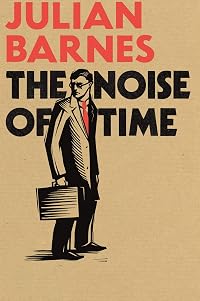
The Noise of Time
by Julian Barnes
On This Page
Description
A compact masterpiece dedicated to the Russian composer Dmitri Shostakovich--Julian Barnes's first novel since his best-selling, Booker Prize-winning The Sense of an Ending. 1936: Shostakovich, just thirty, fears for his livelihood and his life. Stalin, hitherto a distant figure, has taken a sudden interest in his work and denounced his latest opera. Now, certain he will be exiled to Siberia (or, more likely, shot dead on the spot), he reflects on his predicament, his personal history, his show more parents, various women and wives, his children all of those hanging in the balance of his fate. And though a stroke of luck prevents him from becoming yet another casualty of the Great Terror, for years to come he will be held fast under the thumb of despotism: made to represent Soviet values at a cultural conference in New York City, forced into joining the Party, and compelled, constantly, to weigh appeasing those in power against the integrity of his music. Barnes elegantly guides us through the trajectory of Shostakovich's career, at the same time illuminating the tumultuous evolution of the Soviet Union. The result is both a stunning portrait of a relentlessly fascinating man and a brilliant meditation on the meaning of art and its place in society. show lessTags
Recommendations










































Member Recommendations

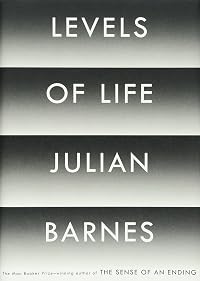
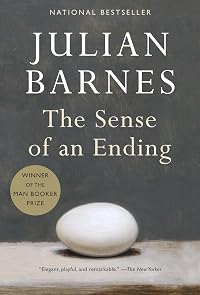
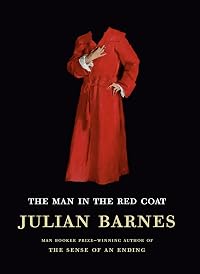
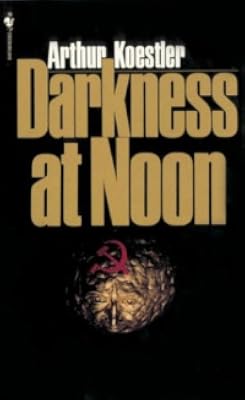
charl08 Linked by the experience of 'the terror'.
aileverte Barnes's book (not so secretly) dialogues with Mandelstam.
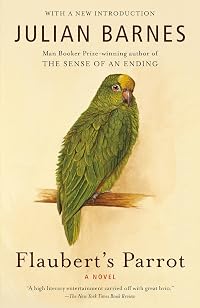
aileverte Barnes subtly alludes to Grossman's work on many occasions.

aileverte Miłosz delves into different types of comportments of artists living in a totalitarian regime.

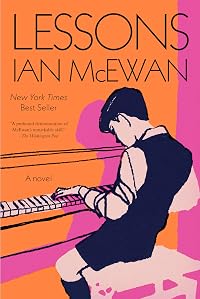
shaunie Barnes is a huge fan of Fitzgerald and her influence is clear in The Noise of Time.
Member Reviews
Although it's framed as a biographical fiction about Shostakovich, that's almost a pretext: what Barnes is really interested in here is clearly the relationship between the creative artist and power. The artist may be a genius in his field, but he's still a human being, and not necessarily an exceptionally brave or reckless one. What does it do to him if he's confronted by threats and demands he doesn't have it in him to resist?
Shostakovich got a major ponck from Stalin after the opening of The Lady Macbeth of the Mtsensk District: after that he slowly worked his way out of official disfavour by compromising left, right and centre (or by ironically pretending to compromise: no-one quite knows, although plenty of people are still show more arguing about it), until he found himself being drawn uncomfortably close to power in the Khrushchev era.
Barnes tries to imagine what it might have been like to be inside Shostakovich's mind at those points. He doesn't really have any more evidence for that than we do, however, and he ends up with a character who is endearingly human and is undergoing the same kinds of fears and doubts that we might, but who somehow doesn't seem to have whatever it is about him that makes Shostakovich Shostakovich. We never get a real sense of him as someone whose life is built around music. In fact there's very little music in the book: most of the time, all that we hear is how other people have reacted to Shostakovich's music.
Interesting, but the effort Barnes must have put into researching this somehow seems disproportionate to the result. show less
Shostakovich got a major ponck from Stalin after the opening of The Lady Macbeth of the Mtsensk District: after that he slowly worked his way out of official disfavour by compromising left, right and centre (or by ironically pretending to compromise: no-one quite knows, although plenty of people are still show more arguing about it), until he found himself being drawn uncomfortably close to power in the Khrushchev era.
Barnes tries to imagine what it might have been like to be inside Shostakovich's mind at those points. He doesn't really have any more evidence for that than we do, however, and he ends up with a character who is endearingly human and is undergoing the same kinds of fears and doubts that we might, but who somehow doesn't seem to have whatever it is about him that makes Shostakovich Shostakovich. We never get a real sense of him as someone whose life is built around music. In fact there's very little music in the book: most of the time, all that we hear is how other people have reacted to Shostakovich's music.
Interesting, but the effort Barnes must have put into researching this somehow seems disproportionate to the result. show less
Although I have enjoyed Julian Barnes's books in the past (his Flaubert's Parrot remains a masterpiece, surpassing some of his later production; but I did not dislike The Sense of an Ending, for instance), I approached this volume with some skepticism: what insight, I thought, could a Western writer, who has not experienced fear under a totalitarian regime, have into a tortured Russian soul? Some book reviews also gave me the impression that the book was written as a first-person narrative, which alone seemed to doom it to failure. So it was without high hopes that I picked the book off the recent-arrivals shelf at the local public library. Not only was the book not bad, I found it rather engaging and, if not exactly revelatory, show more well-researched and insightful. It is clearly informed by readings of Solzhenitsyn, whose One Day in the Life of Ivan Denisovich is mentioned at one point and whose work as a whole contains the best analysis to date of the oppressive individual and collective paranoia generated by an interminable reign of terror.
Julian Barnes composed his book in short fragments, giving it a rather "airy" appearance. The second-person narration helps put a bit of distance between the speaking voice and the subject whose thoughts and recollections it ventriloquizes, and the paragraph spacing allows the story to move seamlessly between the present, concentrated in distinct moments of awkwardness (waiting on a fifth-floor landing for an ill-fated lift; a return flight from NY; a chauffeured car ride to the composer's dacha) and the past. As a result, the simple past of storytelling is heavily studded with past perfect, which generates the dizzying effect of spiraling into the workings of another's conscience.
The novel made me think of Czesław Miłosz's Captive Mind which traces four different positions vis-à-vis totalitarian authority and subtly shows how, in a mind captive to latent idealism of the regime, lines between freedom and slavery, courage and cowardice, right and wrong, become blurred and unrecognizable. Julian Barnes's dissection of Shostakovich's half-captive psyche comes quite close to Miłosz's. show less
Julian Barnes composed his book in short fragments, giving it a rather "airy" appearance. The second-person narration helps put a bit of distance between the speaking voice and the subject whose thoughts and recollections it ventriloquizes, and the paragraph spacing allows the story to move seamlessly between the present, concentrated in distinct moments of awkwardness (waiting on a fifth-floor landing for an ill-fated lift; a return flight from NY; a chauffeured car ride to the composer's dacha) and the past. As a result, the simple past of storytelling is heavily studded with past perfect, which generates the dizzying effect of spiraling into the workings of another's conscience.
The novel made me think of Czesław Miłosz's Captive Mind which traces four different positions vis-à-vis totalitarian authority and subtly shows how, in a mind captive to latent idealism of the regime, lines between freedom and slavery, courage and cowardice, right and wrong, become blurred and unrecognizable. Julian Barnes's dissection of Shostakovich's half-captive psyche comes quite close to Miłosz's. show less
Dating back to graduate school, I have admired Julian Barnes for his quirky novels. In most of his works, he does not use anything resembling the conventional structure of the novel. However, as a Booker Prize winner, he has the sort of position which allows him to be as unconventional as he wishes. His latest novel, The Noise of Time, is certainly no exception.
This interesting historical account of the career of Dmitri Shostakovich has some flavor of historical fiction, but at the end of the novel, he has profusely thanked Elizabeth Wilson, who “supplied [him] with material I would never have come across, corrected many misapprehensions, and read the typescript” (201). He continues this adulation with, “this is my book not hers; show more and if you haven’t liked mine, then read hers” (201). Thanks for the offer Dmitri Dmitrievich, but I liked your book a lot.
I have been fascinated by Russian history for decades, and I also have a fondness for Russian music – particularly Prokofiev, Tchaikovsky, and Shostakovich. When I learned of the relationship between Dmitri and Josef Stalin, I was perplexed. I always thought music was a bridge over any troubled waters on the planet. The composers refusal to join the Communist Party caused him much trouble. At one point in his life, he so feared the Russian secret police, he slept in his clothes with a small handbag on the floor. He did not want to be dragged away in his pajamas.
Eventually, Stalin died, and Nikita Khrushchev became the First Secretary of the Party. While Stalin abhorred Dmitri’s talent, and the official party line was that Dimitri’s music was “Muddle and Muck.” Most of his work was banned for years. When Nikita took over, he was rehabilitated after joining the party. He refused as best he could, but the pressure was intense. Many of his fellow composers and musicians turned their backs on him for giving it to Khrushchev
Barnes spent a lot of time on Dmitri’s introspection. In 1949 when the pressure under Stalin was at its greatest, Shostakovich mused, “If music is tragic, those with asses’ ears accuse it of being cynical. But when a composer is bitter, or in despair, or pessimistic, that still means he believes in something. // What could be put up against the noise of time? Only that music which is inside ourselves – the music of our being – which is transformed by some into real music. Which, over the decades, if it is strong and true and pure enough to drown out the noise of time, is transformed into the whisper of history” (135). Wow. This requires some serious thought to digest this – especially for a non musician.
Towards the end of his life, Shostakovich feared his memories. Barnes writes, “he could not stop hearing; and worst of all, he could not stop remembering. He so wished that the memory could be disengaged at will, like putting a car into neutral. That was what chauffeurs used to do, either at the top of a hill, or when they had reached maximum speed; they would coast to save petrol” (182-183).
What troubled me the most was the politicization of music. Music should join people together not drive them apart. Music should soothe, refresh, invigorate, and raise ones sensibilities. It should not be a political tool manipulated for the accumulation of power. Music has power of its own, and that should be the end. Julian Barnes’ 21st book, The Noise of Time is an absorbing and thought-provoking exploration of the clash between art and power. Whether you are a composer, a musician, or merely a listener like me, this novel should move you to a better place. 5 stars
--Jim, 10/26/16 show less
This interesting historical account of the career of Dmitri Shostakovich has some flavor of historical fiction, but at the end of the novel, he has profusely thanked Elizabeth Wilson, who “supplied [him] with material I would never have come across, corrected many misapprehensions, and read the typescript” (201). He continues this adulation with, “this is my book not hers; show more and if you haven’t liked mine, then read hers” (201). Thanks for the offer Dmitri Dmitrievich, but I liked your book a lot.
I have been fascinated by Russian history for decades, and I also have a fondness for Russian music – particularly Prokofiev, Tchaikovsky, and Shostakovich. When I learned of the relationship between Dmitri and Josef Stalin, I was perplexed. I always thought music was a bridge over any troubled waters on the planet. The composers refusal to join the Communist Party caused him much trouble. At one point in his life, he so feared the Russian secret police, he slept in his clothes with a small handbag on the floor. He did not want to be dragged away in his pajamas.
Eventually, Stalin died, and Nikita Khrushchev became the First Secretary of the Party. While Stalin abhorred Dmitri’s talent, and the official party line was that Dimitri’s music was “Muddle and Muck.” Most of his work was banned for years. When Nikita took over, he was rehabilitated after joining the party. He refused as best he could, but the pressure was intense. Many of his fellow composers and musicians turned their backs on him for giving it to Khrushchev
Barnes spent a lot of time on Dmitri’s introspection. In 1949 when the pressure under Stalin was at its greatest, Shostakovich mused, “If music is tragic, those with asses’ ears accuse it of being cynical. But when a composer is bitter, or in despair, or pessimistic, that still means he believes in something. // What could be put up against the noise of time? Only that music which is inside ourselves – the music of our being – which is transformed by some into real music. Which, over the decades, if it is strong and true and pure enough to drown out the noise of time, is transformed into the whisper of history” (135). Wow. This requires some serious thought to digest this – especially for a non musician.
Towards the end of his life, Shostakovich feared his memories. Barnes writes, “he could not stop hearing; and worst of all, he could not stop remembering. He so wished that the memory could be disengaged at will, like putting a car into neutral. That was what chauffeurs used to do, either at the top of a hill, or when they had reached maximum speed; they would coast to save petrol” (182-183).
What troubled me the most was the politicization of music. Music should join people together not drive them apart. Music should soothe, refresh, invigorate, and raise ones sensibilities. It should not be a political tool manipulated for the accumulation of power. Music has power of its own, and that should be the end. Julian Barnes’ 21st book, The Noise of Time is an absorbing and thought-provoking exploration of the clash between art and power. Whether you are a composer, a musician, or merely a listener like me, this novel should move you to a better place. 5 stars
--Jim, 10/26/16 show less
This short novel is a deep, insightful and brilliant analysis of how the Communist Soviet regimen destroyed individuals and, in particular, how it prevented artists to create authentic art, with a main character, Dmitri Shostakovich, who fell from favor during Stalin’s rule, as a perfect example of all this.
The novel consists entirely of the interior monologue of Shostakovich in three important moments of his life. With an elegant prose, this monologue shows how he lived in utter terror under the Stalin’s rule and how, through compromise, irony and sometimes even betrayal, he learned to survive through the manipulative “softer” regime that came after Stalin’s death. A monologue that is sad and moving, but also full of irony, show more and absorbing at all times, which shows Shostakovich as a complex and brave person who did his best to fight repression and terror while trying at the same time to protect his family and friends, an impossible and exhausting task under the repression of the Communist dictatorship.
A quick, insightful and fascinating novel. A must read. show less
The novel consists entirely of the interior monologue of Shostakovich in three important moments of his life. With an elegant prose, this monologue shows how he lived in utter terror under the Stalin’s rule and how, through compromise, irony and sometimes even betrayal, he learned to survive through the manipulative “softer” regime that came after Stalin’s death. A monologue that is sad and moving, but also full of irony, show more and absorbing at all times, which shows Shostakovich as a complex and brave person who did his best to fight repression and terror while trying at the same time to protect his family and friends, an impossible and exhausting task under the repression of the Communist dictatorship.
A quick, insightful and fascinating novel. A must read. show less
“Art belongs to everybody and nobody. Art belongs to all time and no time. Art belongs to those who create it and those who savour it.” – Julian Barnes, The Noise of Time
In this fictional presentation of episodes from the life of Dmitri Shostakovich, Barnes explores how tyranny reduces artistic creativity in a society. The story is told in three vignettes: one set in 1936 at Shostakovich’s apartment during Stalin’s reign of terror, one in 1949 during his trip to the US to represent the Soviet Union at the Cultural and Scientific Congress for World Peace, and a third years later during Khrushchev’s tenure. It shows the composer being subjected to official disapproval of his opera, Lady Macbeth of the Mtsensk, and his show more corresponding fear of being arrested and killed at Stalin’s whim.
As one of the most noted Soviet composers of the time, Shostakovich endured immense political pressure by the state, and this book provides sympathetic portrait of how those pressures impacted his creative output. It challenges Lenin’s declaration that “art belongs to the people.” It is hard enough to create music without having to worry how it will be perceived by the state, and what might happen if it doesn’t please the despot in charge.
Barnes’ prose elicits a sense of Shostakovich’s inner turmoil. He wants to act courageously but feels like a coward. He wants to maintain his integrity but worries about his and his family’s safety. These complexities are teased out as the story unfolds. I was impressed by Barnes’ ability to relate numerous personal insights into Shostakovich’s character in a succinct way (just over 200 pages). One can only wonder what musical works Shostakovich may have produced in a more open and accepting environment.
This is the second of Barnes’ novels I have read this year. I also enjoyed The Sense of An Ending (My Review). I will definitely be reading more of his works in the future. show less
In this fictional presentation of episodes from the life of Dmitri Shostakovich, Barnes explores how tyranny reduces artistic creativity in a society. The story is told in three vignettes: one set in 1936 at Shostakovich’s apartment during Stalin’s reign of terror, one in 1949 during his trip to the US to represent the Soviet Union at the Cultural and Scientific Congress for World Peace, and a third years later during Khrushchev’s tenure. It shows the composer being subjected to official disapproval of his opera, Lady Macbeth of the Mtsensk, and his show more corresponding fear of being arrested and killed at Stalin’s whim.
As one of the most noted Soviet composers of the time, Shostakovich endured immense political pressure by the state, and this book provides sympathetic portrait of how those pressures impacted his creative output. It challenges Lenin’s declaration that “art belongs to the people.” It is hard enough to create music without having to worry how it will be perceived by the state, and what might happen if it doesn’t please the despot in charge.
Barnes’ prose elicits a sense of Shostakovich’s inner turmoil. He wants to act courageously but feels like a coward. He wants to maintain his integrity but worries about his and his family’s safety. These complexities are teased out as the story unfolds. I was impressed by Barnes’ ability to relate numerous personal insights into Shostakovich’s character in a succinct way (just over 200 pages). One can only wonder what musical works Shostakovich may have produced in a more open and accepting environment.
This is the second of Barnes’ novels I have read this year. I also enjoyed The Sense of An Ending (My Review). I will definitely be reading more of his works in the future. show less
“One to hear, one to remember, and one to drink” lays out the structure of the novel, inspired by the creative life of Dmitri Shostakovich under a randomly repressive regime. The refrain ‘he lies like an eyewitness’ is threaded throughout the novel, illustrating the failure of memory. How an artist survives and how he dies a hundred deaths is examined by imagining the composer’s inner monologue at three main events in his life. Art may be immortal but artists are not — they bleed like the rest, and that blood can be spilt by friends & family. POV restricted to this character and the brief dialogs serve as catechisms and summaries. Barnes does a good job of depicting neither a victim nor a supplicant and doesn’t try to show more write a biography or a commentary on the nature of music: Shostakovich is a tool used to ponder the role of the artist in a political arena and the residue of politics on our personal choices.
Shostakovich is a perfect choice: less is known about him than many other composers and music is harder to pin down than literature. Barnes incorporates information not just for filler but to show how the composer tried to walk a thin, ever changing line: the postcard of Titian’s ‘The Tribute Money’ kept by his bedside re rendering unto Caesar what is Caesar’s as a survival tool. There are elements of both The Porcupine (what is our responsibility under authoritarianism, when should the individual be preferenced over the society) and Arthur & George (nature of fame, personal honour). Content 3 stars, gave it 4 stars because of the approach and structure; not many other writers could pull this off as elegantly. The book is fairly short, enjoyable to immediately re-read to really appreciate some of the structuring. show less
Shostakovich is a perfect choice: less is known about him than many other composers and music is harder to pin down than literature. Barnes incorporates information not just for filler but to show how the composer tried to walk a thin, ever changing line: the postcard of Titian’s ‘The Tribute Money’ kept by his bedside re rendering unto Caesar what is Caesar’s as a survival tool. There are elements of both The Porcupine (what is our responsibility under authoritarianism, when should the individual be preferenced over the society) and Arthur & George (nature of fame, personal honour). Content 3 stars, gave it 4 stars because of the approach and structure; not many other writers could pull this off as elegantly. The book is fairly short, enjoyable to immediately re-read to really appreciate some of the structuring. show less
Dopo un inizio faticoso, Barnes mi ha totalmente catturata. Il rumore del tempo è un romanzo storico e come tale l'ho letto, con il gruppo di lettura dell'ornitorinco. Ci viene raccontata la vita di Shostakovich, un musicista che ha lottato con il regime totalitario di Stalin per quasi tutta la vita.
Letot in un momento storico adatto, tante cose sono diverse eppure uguali.
Struggente, ironico, irritante: un uomo che per paura e per inseguire il suo essere artista passa sopra a tanto. E' in balia del suo tempo (e del rumore del tempo), a volte schiacciato, a volte usato come strumento di propaganda. Mi ha molto colpito il suo viaggio negli USA e il suo dialogo con Nabokov, uno che può permettersi di parlare e di attaccare in un certo show more modo perché con Stalin non ci deve più convivere.
Una lettura piena di spunti interessanti su tanti aspetti, a partire dal rapporto tra arte e potere e tra artista e potere. Consigliatissimo. show less
Letot in un momento storico adatto, tante cose sono diverse eppure uguali.
Struggente, ironico, irritante: un uomo che per paura e per inseguire il suo essere artista passa sopra a tanto. E' in balia del suo tempo (e del rumore del tempo), a volte schiacciato, a volte usato come strumento di propaganda. Mi ha molto colpito il suo viaggio negli USA e il suo dialogo con Nabokov, uno che può permettersi di parlare e di attaccare in un certo show more modo perché con Stalin non ci deve più convivere.
Una lettura piena di spunti interessanti su tanti aspetti, a partire dal rapporto tra arte e potere e tra artista e potere. Consigliatissimo. show less
Members
- Recently Added By
Published Reviews
ThingScore 75
In 1979, a book purporting to be Shostakovich’s memoir, entitled “Testimony,” appeared in the West, depicting a frustrated composer who despised Communism and hid veiled critiques of the Soviet regime in his music. . . . Barnes, who acknowledges “Testimony” as one of his major sources, gives us a mournfully sarcastic, frustrated Shostakovich, at once mocking of his Soviet patrons and show more stymied by his inability to break with them fully. In a sort of third-person monologue of impressions, vignettes, and diaristic reflections, he comes off as neither heroic nor craven, though he exhibits both traits on occasion. ...
... [W]ith this drily self-chastising, depressed, and exhausted composer, Barnes is also shielding himself from other Shostakoviches, such as the one who fiercely criticized an avant-garde young composer, whose work he had hitherto supported, when he discovered the deputy culture minister sitting in the audience and became frightened. show less
... [W]ith this drily self-chastising, depressed, and exhausted composer, Barnes is also shielding himself from other Shostakoviches, such as the one who fiercely criticized an avant-garde young composer, whose work he had hitherto supported, when he discovered the deputy culture minister sitting in the audience and became frightened. show less
added by aileverte
Music was what Shostakovich "put up against the noise of time." Barnes' stirring novel about what is lost when tyrants try to control artistic expression leaves us wondering what, besides more operas, this tormented, compromised musical prodigy might have composed had he been free.
added by aileverte
Using this third-person “Shostakovich,” but often switching into an unlocatable voice, like a biographer behind a literary veil, Barnes deftly covers three big episodes in the composer’s life: denunciation in Pravda and subsequent implication in an assassination plot; his trip to America, where he is humiliated as a Soviet stooge; and lastly, being forced to join the Communist Party. show more This story is truly amazing, as Barnes knows, an arc of human degradation without violence (the threat of violence, of course, everywhere). . . .
. . .
It’s a powerful portrait, and readers will have to decide whether they think this is “really” Shostakovich. I felt that he emerged as a (strangled) hero, but wished that Barnes would explain a little less, and show a bit more. show less
. . .
It’s a powerful portrait, and readers will have to decide whether they think this is “really” Shostakovich. I felt that he emerged as a (strangled) hero, but wished that Barnes would explain a little less, and show a bit more. show less
added by aileverte
Lists

1001 Books You Must Read Before You Die
1,448 works; 1,134 members

International Dublin Literary Award Longlist 2018
22 works; 2 members

Five star books
1,755 works; 108 members

Books Read in 2017
4,249 works; 129 members

Books set in Moscow
16 works; 1 member

Books Read in 2016
4,666 works; 199 members

2024 Reads
31 works; 1 member
Author Information

89+ Works 43,053 Members
Julian Barnes was born in Leicester, England, on January 19, 1946. He received a degree in modern languages from Magdalen College, Oxford University in 1968. He has held jobs as a lexicographer for the Oxford English Dictionary, a reviewer and literary editor for the New Statesmen and the New Review, and a television critic. He has written show more numerous works of fiction including Arthur and George, Pulse: Stories, The Noise of Time, and England, England. He received the Somerset Maugham Award in 1980 for Metroland, the Geoffrey Faber Memorial Prize in 1985 and a Prix Medicis in 1986 for Flaubert's Parrot, and the Man Booker Prize in 2011 for The Sense of an Ending. He also writes non-fiction works including Letters from London, The Pedant in the Kitchen, and Nothing to Be Frightened Of. He received the Shakespeare Prize by the FVS Foundation in 1993, the Austrian State Prize for European Literature in 2004, and the David Cohen Prize for Literature in 2011. He writes detective novels under the pseudonym Dan Kavanaugh. His works under this name include Duffy, Fiddle City, Putting the Boot In, and Going to the Dogs. (Bowker Author Biography) show less
Some Editions
Awards and Honors
Awards
Series
Belongs to Publisher Series
Gallimard, Folio (6426)
Common Knowledge
- Canonical title
- The Noise of Time
- Original title
- The Noise of Time
- Original publication date
- 2016
- People/Characters
- Dmitri Shostakovich
- Important places
- Leningrad, USSR
- Epigraph
- One to hear
One to remember
And one to drink.
traditional - Dedication
- for Pat
- First words
- It happened in the middle of wartime, on a station platform as flat and dusty as the endless plain surrounding it.
- Quotations
- He liked to think that he wasn't afraid of death. It was life he was afraid of, not death. He believed that people should think about death more often, and accustom themselves o the notion of it. Just letting it creep up on y... (show all)ou unnoticed was not the best way to live. You should make yourself familiar with it. You should write about it: either in words or, in his case, music. It was his belief that if we thought about death earlier in our lives, we would make fewer mistakes. (p. 156)
Art is the whisper of history heard above the noise of time. - Last words
- (Click to show. Warning: May contain spoilers.)En misschien was dat, uiteindelijk, het enige wat ertoe deed.
(Click to show. Warning: May contain spoilers.)And yet a triad put together by three not very clean vodka glasses and their contents was a sound that rang clear of the noise of time, and would outlive everyone and everything. And perhaps, finally, this was all that mattered. - Original language
- English
Classifications
Statistics
- Members
- 1,732
- Popularity
- 12,745
- Reviews
- 83
- Rating
- (3.78)
- Languages
- 17 — Chinese, Danish, Dutch, English, Estonian, French, German, Galician, Greek, Italian, Lithuanian, Polish, Russian, Spanish, Swedish, Turkish, Portuguese (Portugal)
- Media
- Paper, Audiobook, Ebook
- ISBNs
- 56
- ASINs
- 17