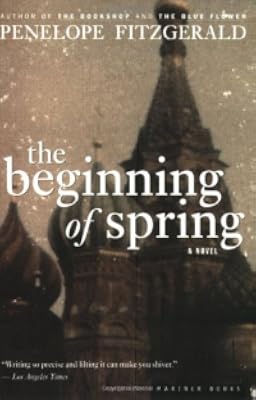
The Beginning of Spring
by Penelope Fitzgerald
On This Page
Description
March 1913. Moscow is stirring herself to meet the beginning of spring. English painter Frank Reid returns from work one night to find that his wife has gone away; no one knows where or why, or whether she'll ever come back. All Frank knows for sure is that he is now alone and must find someone to care for his three young children. Into Frank's life comes Lisa Ivanovna, a quiet, calming beauty from the country, untroubled to the point of seeming simple. But is she? And why has Frank's show more bookkeeper, Selwyn Crane, gone to such lengths to bring these two together? This new edition features an introduction by Andrew Miller, author of Pure, along with new cover art. show lessTags
Recommendations
























Member Recommendations
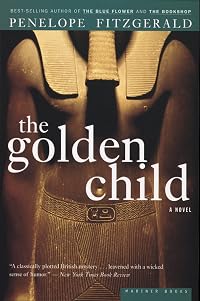
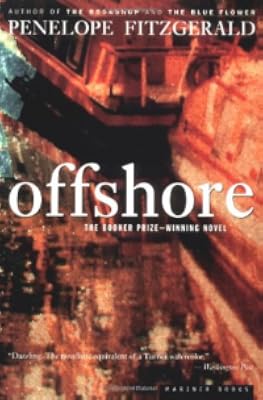
shaunie Barnes is a huge fan of Fitzgerald and her influence is clear in The Noise of Time.
10

Member Reviews
Penelope Fitzgerald has a way. She can pin characters down in a line. And then change them in another line. She toys with the absurd and it always seems to be quietly funny and sad.
Here she takes us to Frank Reid's bad marriage in 1913 Moscow. There's not much plot, but because Fitzgerald writes with a quick, efficient, quietly witty and absurd style, the reader is whisked along. We might be charmed, we should be. But when we finish, it's not unusual to ask ourselves, how did she do that?
Frank Ried - our Moscow born Englishman, inheritor of a printing press from his English father. Tolerant to fault, or is this just Russia? In the opening scene Frank comes home to a message from his wife, she has left with the three kids. His first show more response to is to ask Toma, his servant, where the messenger is. Toma tells him, "He's gone about his business. He belongs to the Guild of Messengers, he's not allowed to take a rest anywhere." Frank walks about past Toma into the kitchen where the messenger is sitting with Frank's home staff drinking tea. The messenger hasn't actually done anything except come to pick up the message, which he was supposed to bring to Frank's office. Abandoned by his wife, lied to by his servant, and failed by the messenger, Frank makes sure the messenger is properly tipped. It's not that long till he's contacted and told his three children are stranded at a train station, having been abandoned by their mother there, and sent back home.
That hopefully gives you a flavor for Frank's unnatural tolerance, and acceptance of the absurd world of 1913 Moscow. Frank has no illusions. He's prepared to leave Russia at a moment's notice, expecting bad news. But he's attached. This Moscow is a kind of absurd he can move along with. He silently accepts all sorts of wild ridiculous, and corrupt behavior as normal - bribery, lies and violently rebellious students are just part of being in Moscow. Frank's manager at his press is also an Englishman, Selwyn Crane. Crane has taken to Tolstoy, the late-years Tolstoy who tried to live as a peasant and preached a kind of anti-materialist faith. Selwyn dresses like the late Tolstoy, is vegetarian, and tries to live this life ideal.
This is all too wordy because Fitgerald is master of efficiency, and also a master of novels where not much happens. She doesn't dwell on internal meanders. She builds characters and worlds, with quite wit wonderfully memorable lines.
When Toma wishes Frank God's help, Frank reminds him, "Toma, when you first came here three years ago...you told me you were an unbeliever." Toma responds, "Not an unbeliever, sir, a free thinker. Perhaps you never thought about the difference. As a free thinker, I can believe what I like when I like. I can commit you, and your situation, to the protection of God this evening, even though tomorrow morning I shan't believe he exists. As an unbeliever I should be obliged not to believe, and that's a restriction on my thoughts."
These lines aren't always funny. As Frank nears his breakdown, he remembers, "His father had always held that the human mind is indefinitely elastic, and that by the very nature of things we were never called upon to undertake more than we could bear."
Another character notes "...on the whole I think religion is of more use to a woman than a man, as it leads to content with ones lot."
Selwyn makes for interesting character. He has a written a book of bad English poetry that Frank is printing (in Moscow) and that he is so nervous about, that Frank must hire more help. He purposely lives on a boundary between a good and derelict part of Moscow so he can find people to help. At one we are looking at a restless Selwyn, and Fitzgerald notes: "With the terrible aimlessness of a benevolent, he was casting around for a new misfortune."
When a serious Russian trader tells Selwyn Crane he knows he hates him. Crane responds, "No, no, you're wrong. I don't criticize what you're doing. How can I criticize a life I don't understand? And surely you are happy."
And I haven't even touched on Frank's daughter, Dotty, who tells her younger sister she is superfluous.
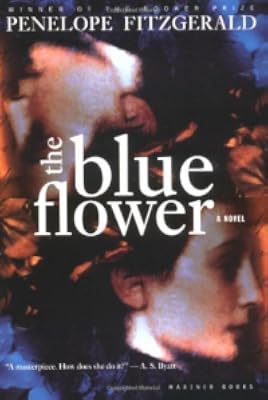
I adore Fitzgerald. This is my 3rd novel by her in less than a year, and I've thoroughly enjoyed them all. While everyone should read her last novel, [The Blue Flower], and I also happily recommend this one.
2025
https://www.librarything.com/topic/369129#8784296 show less
Here she takes us to Frank Reid's bad marriage in 1913 Moscow. There's not much plot, but because Fitzgerald writes with a quick, efficient, quietly witty and absurd style, the reader is whisked along. We might be charmed, we should be. But when we finish, it's not unusual to ask ourselves, how did she do that?
Frank Ried - our Moscow born Englishman, inheritor of a printing press from his English father. Tolerant to fault, or is this just Russia? In the opening scene Frank comes home to a message from his wife, she has left with the three kids. His first show more response to is to ask Toma, his servant, where the messenger is. Toma tells him, "He's gone about his business. He belongs to the Guild of Messengers, he's not allowed to take a rest anywhere." Frank walks about past Toma into the kitchen where the messenger is sitting with Frank's home staff drinking tea. The messenger hasn't actually done anything except come to pick up the message, which he was supposed to bring to Frank's office. Abandoned by his wife, lied to by his servant, and failed by the messenger, Frank makes sure the messenger is properly tipped. It's not that long till he's contacted and told his three children are stranded at a train station, having been abandoned by their mother there, and sent back home.
That hopefully gives you a flavor for Frank's unnatural tolerance, and acceptance of the absurd world of 1913 Moscow. Frank has no illusions. He's prepared to leave Russia at a moment's notice, expecting bad news. But he's attached. This Moscow is a kind of absurd he can move along with. He silently accepts all sorts of wild ridiculous, and corrupt behavior as normal - bribery, lies and violently rebellious students are just part of being in Moscow. Frank's manager at his press is also an Englishman, Selwyn Crane. Crane has taken to Tolstoy, the late-years Tolstoy who tried to live as a peasant and preached a kind of anti-materialist faith. Selwyn dresses like the late Tolstoy, is vegetarian, and tries to live this life ideal.
This is all too wordy because Fitgerald is master of efficiency, and also a master of novels where not much happens. She doesn't dwell on internal meanders. She builds characters and worlds, with quite wit wonderfully memorable lines.
When Toma wishes Frank God's help, Frank reminds him, "Toma, when you first came here three years ago...you told me you were an unbeliever." Toma responds, "Not an unbeliever, sir, a free thinker. Perhaps you never thought about the difference. As a free thinker, I can believe what I like when I like. I can commit you, and your situation, to the protection of God this evening, even though tomorrow morning I shan't believe he exists. As an unbeliever I should be obliged not to believe, and that's a restriction on my thoughts."
These lines aren't always funny. As Frank nears his breakdown, he remembers, "His father had always held that the human mind is indefinitely elastic, and that by the very nature of things we were never called upon to undertake more than we could bear."
Another character notes "...on the whole I think religion is of more use to a woman than a man, as it leads to content with ones lot."
Selwyn makes for interesting character. He has a written a book of bad English poetry that Frank is printing (in Moscow) and that he is so nervous about, that Frank must hire more help. He purposely lives on a boundary between a good and derelict part of Moscow so he can find people to help. At one we are looking at a restless Selwyn, and Fitzgerald notes: "With the terrible aimlessness of a benevolent, he was casting around for a new misfortune."
When a serious Russian trader tells Selwyn Crane he knows he hates him. Crane responds, "No, no, you're wrong. I don't criticize what you're doing. How can I criticize a life I don't understand? And surely you are happy."
And I haven't even touched on Frank's daughter, Dotty, who tells her younger sister she is superfluous.
I adore Fitzgerald. This is my 3rd novel by her in less than a year, and I've thoroughly enjoyed them all. While everyone should read her last novel, [The Blue Flower], and I also happily recommend this one.
2025
https://www.librarything.com/topic/369129#8784296 show less
Typical Fitzgerald style: lean, space for the reader, restrained comedic insight, ambiguity. In the spring of 1913, Moscow born and bred Frank Reid has been abandoned by his wife (for a return to England) momentarily by his friend Selwyn (for Frank’s wife) by his midlife crisis love interest (for the temper of the time) and perhaps by his heritage, as an Englishman who considers Moscow his home. Frank has one foot in English outlook and one foot in Russian reality at the dawn of the Russian Revolution. The book has a Checkovian tone but retains a half-English perspective. On the one hand, the English people living in Moscow are shown to be affected by a more Russian outlook, but on the other hand there is a deft comparison show more illustrating areas of similarities between cultures, alongside their differences.
Fitzgerald’s books are humorous in their gentle, sly comedy and irritating in their withholding of information, meandering in slight plots and potent in evoking time and place for mere mortals trying to get by as best they can, with the little amount of knowledge they have to go on.
Trigger warning - there is a scene very early in the book of animal cruelty, regarding a bear cub. I skipped over this part and it did not impact any understanding of the book. It was the only section where I thought Fitzgerald was being heavy-handed with metaphor and imagery. show less
Fitzgerald’s books are humorous in their gentle, sly comedy and irritating in their withholding of information, meandering in slight plots and potent in evoking time and place for mere mortals trying to get by as best they can, with the little amount of knowledge they have to go on.
Trigger warning - there is a scene very early in the book of animal cruelty, regarding a bear cub. I skipped over this part and it did not impact any understanding of the book. It was the only section where I thought Fitzgerald was being heavy-handed with metaphor and imagery. show less
There are really two stories in this book - the story of the Reid family, a father and three children whose mother has left without warning or explanation, and the story of pre-revolutionary Moscow in the early twentieth century, with its political fervour, traditional customs and complex social relations. The two stories are brought together in the person of Frank Reid, a Russian-born British printer, who seems always slightly out of place whether people are treating him as English or Russian. The contrast between England and Russia is one of the subtle themes of the book, as is the difficulty of two people ever really understanding each other. Perhaps these two themes go some way to explaining Frank's wife's mysterious show more disappearance.
Frank walked past the coal tips and the lock-up depositories through the cavernous back entrance of the station. Inside the domes of glass a gray light filtered from a great height. Not many people here, and some of them quite clearly the lost souls who haunt stations and hospitals in the hope of acquiring some purpose of their own in the presence of so much urgent business, other people's partings, reunions, sickness and death.
The most immediate pleasure of the book comes from the depiction of Moscow. Fitzgerald must have done lots of research but sneaks it into the pages almost in asides, so you feel that it's assumed you know as much as she does. "Like all merchants, and all peasants, Kuriatin was obsessed with the chance to cut down trees." At one time we see Frank looking for a sledge "with a driver who was starting work, and not returning from the night's work drunk, half-drunk, stale drunk, or podvipevchye - with just a dear little touch of drunkenness."
There is also a certain social comedy, especially seen in Frank's habit of floating disconnectedly through complicated social situations. "In the confusion, which rapidly became the monotony, of loss it was something to have a fixed point when things must change or be changed, if only by the arrival of Charlie, That was not quite the same thing as wanting him to come, but it meant that Frank had to make arrangements and give instructions, two ways of bringing time to order." My favourite character is Frank's precocious daughter, whose matter-of-fact approach to life can be seen as a reaction to her father's passivity.
It was only in the last few chapters that the book became fully-formed for me, as they reveal all the unseen threads which Frank has been ignorant of. I was most struck by one amazing chapter which is mainly a description of the family's tumbledown dacha, but at the same time (it seems to me) a description of Russia. It ends with a rather surreal scene which is perhaps the pivot of the book, loaded with political, symbolic and poetic weight which suddenly makes everything make sense. show less
Frank walked past the coal tips and the lock-up depositories through the cavernous back entrance of the station. Inside the domes of glass a gray light filtered from a great height. Not many people here, and some of them quite clearly the lost souls who haunt stations and hospitals in the hope of acquiring some purpose of their own in the presence of so much urgent business, other people's partings, reunions, sickness and death.
The most immediate pleasure of the book comes from the depiction of Moscow. Fitzgerald must have done lots of research but sneaks it into the pages almost in asides, so you feel that it's assumed you know as much as she does. "Like all merchants, and all peasants, Kuriatin was obsessed with the chance to cut down trees." At one time we see Frank looking for a sledge "with a driver who was starting work, and not returning from the night's work drunk, half-drunk, stale drunk, or podvipevchye - with just a dear little touch of drunkenness."
There is also a certain social comedy, especially seen in Frank's habit of floating disconnectedly through complicated social situations. "In the confusion, which rapidly became the monotony, of loss it was something to have a fixed point when things must change or be changed, if only by the arrival of Charlie, That was not quite the same thing as wanting him to come, but it meant that Frank had to make arrangements and give instructions, two ways of bringing time to order." My favourite character is Frank's precocious daughter, whose matter-of-fact approach to life can be seen as a reaction to her father's passivity.
It was only in the last few chapters that the book became fully-formed for me, as they reveal all the unseen threads which Frank has been ignorant of. I was most struck by one amazing chapter which is mainly a description of the family's tumbledown dacha, but at the same time (it seems to me) a description of Russia. It ends with a rather surreal scene which is perhaps the pivot of the book, loaded with political, symbolic and poetic weight which suddenly makes everything make sense. show less
This book about an Englishman in Moscow in 1913 is a wonderful read, for many reasons. The setting is amazingly convincing, recalling the Russia we know from the great novelists, but entirely satisfying in and of itself. The story is compelling -- why did the Englishman's wife leave him, and how will he deal with his single state -- and keeps the pages turning. The characters are unfailingly interesting (even the dull ones) and are convincing (except perhaps when a touch of what might be the supernatural creeps in). What I loved most was the atmosphere, of a city trembling on the brink of spring. One's knowledge of what happened after 1913 casts an enormous unspoken shadow, but doesn't interfere with one's enjoyment of the world of show more Moscow in the spring of 1913. And the book is funny. Quite wonderful. show less
It is 1913, and Frank Reid is an Englishman who was born and raised in Moscow, and now runs his family's printing business. His English wife has suddenly up and left him and he is left to raise their three children. He also has to negotiate the capricious business and social world of per-revolutionary Russia.
Fitzgerald is an amazing writer in both her gift at crafting beautiful sentences, capturing bits of humour, and in creating an astounding world. How does an Englishwoman writing in the 1980s know this level of detail about Russian life at the beginning of the century? This is my first encounter with her, but I own a few others and want to read them right away.
The Beginning of Spring is one of those books that require reading show more between the lines to figure out what is going on, and where it often feels like there is a bit missing that the reader must puzzle out. But for the reader who enjoys that type of reading experience, it's a rewarding novel. And this is what historical fiction should look like.
Recommended for: readers who love rich detail, gorgeous writing, and nuance in their novels. Not recommended for those who like a straight-forward story with no complexity. show less
Fitzgerald is an amazing writer in both her gift at crafting beautiful sentences, capturing bits of humour, and in creating an astounding world. How does an Englishwoman writing in the 1980s know this level of detail about Russian life at the beginning of the century? This is my first encounter with her, but I own a few others and want to read them right away.
The Beginning of Spring is one of those books that require reading show more between the lines to figure out what is going on, and where it often feels like there is a bit missing that the reader must puzzle out. But for the reader who enjoys that type of reading experience, it's a rewarding novel. And this is what historical fiction should look like.
Recommended for: readers who love rich detail, gorgeous writing, and nuance in their novels. Not recommended for those who like a straight-forward story with no complexity. show less
I loved this book when I first read it decades ago; on rereading it in 2023, I found myself increasingly irritated by the ridiculous characters and insufficient understanding of what Russia and Russians are like (apart from what could be gleaned from Baedeker, and even there the street names and geography are often confused). I still like her style, but I consider this another in a long series of novels that use Russia as a handy source of exoticism.
Penelope Fitzgerald has influential family connections, although from the book, she can certainly stand on her own. The Beginning of Spring is set in Moscow, 1913, just before the Russian Revolution. It tells of the family and work troubles of a British printer who is born and raised in Russia.
I like how Fitzgerald incorporates the literal into the metaphorical (or is it the other way round?): everything extraneous and illicit is dumped into the river; in Russia, there are only white birch trees. I also like how the characters are never in sync with one another as if we, the readers, are missing parts of the conversation.
But don't ask me what the metaphors mean, and don't ask me what the philosophy of the book is because I really don't show more know. show less
I like how Fitzgerald incorporates the literal into the metaphorical (or is it the other way round?): everything extraneous and illicit is dumped into the river; in Russia, there are only white birch trees. I also like how the characters are never in sync with one another as if we, the readers, are missing parts of the conversation.
But don't ask me what the metaphors mean, and don't ask me what the philosophy of the book is because I really don't show more know. show less
Members
- Recently Added By
Published Reviews
ThingScore 100
To me the book is the essence of why I love novels and wanted to be a writer. I am drawn deep into another world and emerge stronger, happier, surer that humankind is full of wonder and mystery as well as despair, treachery and foolishness. Which reminds me – the last page quite simply takes my breath away.
added by Nickelini
I hope I'm not giving the impression that Ms. Fitzgerald is merely a clever imitator of the masters. She and her characters have their own agenda; its priorities are the timelessness of human nature and the possibility of love. She is that refreshing rarity, a writer who is very modern but not the least bit hip. Ms. Fitzgerald looks into the past, both human and literary, and finds all sorts show more of things that are surprisingly up to date. Yet as ''The Beginning of Spring'' reaches its triumphant conclusion, you realize that its greatest virtue is perhaps the most old-fashioned of all. It is a lovely novel. show less
added by Nickelini
Lists

Female Author
1,234 works; 67 members

Booker Prize
491 works; 62 members
Booker Prize Shortlist: Titles Read
103 works; 10 members

The Guardian's 100 Best Novels Written in English
105 works; 13 members

Man Booker Prize Longlist 1988
6 works; 1 member

Canon de la narrativa universal del s. XX (cicutadry)
499 works; 3 members

Slightly Foxed 1
22 works; 1 member
Author Information

24+ Works 12,108 Members
In 1997 Penelope Fitzgerald's novel The Blue Flower was named one of the New York Times Book Review's eleven Best Books of the Year. Winner of the 1979 Booker Prize for Offshore, Fitzgerald was also short-listed for the Booker for The Bookshop. The Beginning of Spring, and The Gate of Angels. Penelope Fitzgerald lives in England. (Bowker Author show more Biography) Penelope Fitzgerald, one of England's most-celebrated contemporary writers, is the author of "The Blue Flower," which won the National Book Critics Circle Award. Winner of the 1979 Booker Prize for "Offshore," she was also shortlisted for the Booker for "The Bookshop," "The Beginning of Spring," & "The Gate of Angels." She lives in London. (Bowker Author Biography) Admired by many as one of the leading English novelists of her day, Penelope Fitzgerald (1916-2000) wrote some twelve books of fiction and nonfiction over the course of her writing career; which began at the age of sixty. She won the National Book Critics Circle Award for "The Blue Flower" and the Booker Prize for "Offshore". She died on April 28, 2000, at the age of eighty-three. (Bowker Author Biography) show less
Some Editions
Awards and Honors
Awards
Series
Belongs to Publisher Series
insel taschenbuch (4626)
Gallimard, Folio (4969)
Work Relationships
Is contained in
Common Knowledge
- Canonical title
- The Beginning of Spring
- Original title
- The Beginning of Spring
- Original publication date
- 1988
- Important places
- Moscow, Russia
- First words
- In 1913 the journey from Moscow to Charing Cross, changing at Warsaw, cost fourteen pounds, six shillings and threepence and took two and a half days.
- Last words
- (Click to show. Warning: May contain spoilers.)He opened the door, and Nellie walked into the house.
Classifications
Statistics
- Members
- 924
- Popularity
- 29,066
- Reviews
- 25
- Rating
- (3.78)
- Languages
- 6 — Dutch, English, French, German, Italian, Spanish
- Media
- Paper, Ebook
- ISBNs
- 22
- UPCs
- 1
- ASINs
- 6