
The Riddle of the Sands
by Erskine Childers
On This Page
Description
While on a sailing trip in the Baltic Sea, two young adventurers-turned-spies uncover a secret German plot to invade England. Written by Childers-- who served in the Royal Navy during World War I-- as a wake-up call to the British government to attend to its North Sea defenses, "The Riddle of the Sands" accomplished that task and has been considered a classic of espionage literature ever since, praised as much for its nautical action as for its suspenseful spycraft.Tags
Recommendations








































Member Recommendations

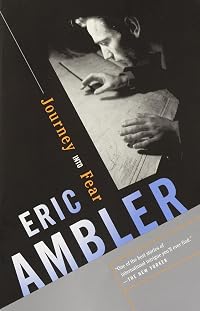
simon_carr Similar in many ways: plucky Englishman chances upon a dastardly German plot. Thoroughly enjoyable.
70

John_Vaughan The actual sailing logs and articles of Childer's real cruises, and smuggling!
40

John_Vaughan To know the man even better, read his now famous novel - the other riddle.


Cynfelyn The Dulcibella sails the same waters the Falcon had sailed less than twenty years earlier. Some things have changed, for example the Kiel Canal has replaced the Eider Canal, but the weather, the sailing and the sense of place are the same.

simon_carr Espionage and dastardly Germans aplenty in both.
02

Member Reviews
"Germany's a thundering great nation....I wonder if we shall ever fight her."
Erskine Childers’s novel was first published in 1903 and was set against the Anglo-German Great Naval Race, it has been widely regarded as the first modern spy story. It opens during the first week of September, presumably a year or two before 1903, with Carruthers working for the Foreign Office. He’s been stuck all summer in London whilst his friends have gone off to the country on their holidays and is feeling somewhat left out. He is unsure where to go for his own holiday when he unexpectedly receives a letter from a former university acquaintance, Davies, who invites him to go sailing around the Baltic. After some dithering, he decides to go.
Carruthers show more has done some sailing previously and arrives expecting a pleasure cruise on a crewed yacht and so has naturally brought along proper yachting clothes. What he discovers is a cramped thirty-foot flat-bottomed boat, the Dulcibella. Davies admits that he can actually sail her alone, though finds life more pleasant with a companion.
Childers initially pokes fun at Carruthers’s early days aboard the Dulcibella but gradually as his seamanship improves so the reader is introduced to the intricacies of sailing a small vessel in tidal estuaries, amid shifting sand bars.By modern standards "The Riddle of the Sands" develops very slowly. The first third in fact seems to be mainly an account of in-shore sailing, with an odd storm to spice things up but through shared experiences the two young men's friendship grows.
One day, when they are confined to port due of fog, they are visited by a German barge captain who casually recounts how he saved Davies's life during a gale when the Dulcibella had run aground.Davies finally opens up about this incident to Carruthers and reveals that he got in to this perilous position whilst being guided by a more powerful yacht captained by an Englishman masquerading as a German. Davies believes that this was deliberate attempt on his life but why? As the two young men try to find out, so the action quickens.
As I stated at the beginning of this review this book was written against the backdrop of great a naval build up by both Britain and Germany so this book cannot be seen simply as a spy story. In fact despite its almost instant popularity this was the only novel that Childers ever wrote, instead he spent his career writing naval manuals. What Childers wanted to do was to bring the book’s warning message to a far wider audience, he believed that the British Government was either ignoring or reacting far too slowly to the threat of invasion that Germany posed. As Carruthers ominously says: “She grows, and strengthens, and waits.”
In this regard, "The Riddle of the Sands" may be viewed as an example of contemporary novels that imagined a great war in the near future. It is almost disconcerting, then, that Davies frequently expresses his admiration for the Germans as a people and even praises the kaiser. Yet despite this by the end, both he and Carruthers will risk their lives to alert the Admiralty to a realistic threat.
As I stated earlier this is a slow burner by modern standards but has many of the ingredients found in modern spy stories, a daring journey by night, having to decipher a few enigmatic clues, unmask a traitor and rescue a beautiful young woman all whilst trying to shake off enemy agents, all written at a time when hardened professionals are no match for plucky amateurs. Even today this book still has an immense influence on the genre and for that reason alone deserves to be read. show less
Erskine Childers’s novel was first published in 1903 and was set against the Anglo-German Great Naval Race, it has been widely regarded as the first modern spy story. It opens during the first week of September, presumably a year or two before 1903, with Carruthers working for the Foreign Office. He’s been stuck all summer in London whilst his friends have gone off to the country on their holidays and is feeling somewhat left out. He is unsure where to go for his own holiday when he unexpectedly receives a letter from a former university acquaintance, Davies, who invites him to go sailing around the Baltic. After some dithering, he decides to go.
Carruthers show more has done some sailing previously and arrives expecting a pleasure cruise on a crewed yacht and so has naturally brought along proper yachting clothes. What he discovers is a cramped thirty-foot flat-bottomed boat, the Dulcibella. Davies admits that he can actually sail her alone, though finds life more pleasant with a companion.
Childers initially pokes fun at Carruthers’s early days aboard the Dulcibella but gradually as his seamanship improves so the reader is introduced to the intricacies of sailing a small vessel in tidal estuaries, amid shifting sand bars.By modern standards "The Riddle of the Sands" develops very slowly. The first third in fact seems to be mainly an account of in-shore sailing, with an odd storm to spice things up but through shared experiences the two young men's friendship grows.
One day, when they are confined to port due of fog, they are visited by a German barge captain who casually recounts how he saved Davies's life during a gale when the Dulcibella had run aground.Davies finally opens up about this incident to Carruthers and reveals that he got in to this perilous position whilst being guided by a more powerful yacht captained by an Englishman masquerading as a German. Davies believes that this was deliberate attempt on his life but why? As the two young men try to find out, so the action quickens.
As I stated at the beginning of this review this book was written against the backdrop of great a naval build up by both Britain and Germany so this book cannot be seen simply as a spy story. In fact despite its almost instant popularity this was the only novel that Childers ever wrote, instead he spent his career writing naval manuals. What Childers wanted to do was to bring the book’s warning message to a far wider audience, he believed that the British Government was either ignoring or reacting far too slowly to the threat of invasion that Germany posed. As Carruthers ominously says: “She grows, and strengthens, and waits.”
In this regard, "The Riddle of the Sands" may be viewed as an example of contemporary novels that imagined a great war in the near future. It is almost disconcerting, then, that Davies frequently expresses his admiration for the Germans as a people and even praises the kaiser. Yet despite this by the end, both he and Carruthers will risk their lives to alert the Admiralty to a realistic threat.
As I stated earlier this is a slow burner by modern standards but has many of the ingredients found in modern spy stories, a daring journey by night, having to decipher a few enigmatic clues, unmask a traitor and rescue a beautiful young woman all whilst trying to shake off enemy agents, all written at a time when hardened professionals are no match for plucky amateurs. Even today this book still has an immense influence on the genre and for that reason alone deserves to be read. show less
I'm always surprised that I like this book as I'm not at all interested in boats, sailing or espionage, but I do enjoy a good Ripping Yarn from time to time and the reading, by Anton Lesser, is excellent. It is of its time - early 20th century - and class, but, if you can set that aside, it's an enjoyable read.
This book, Childers’s only novel, is said to be the model for all later thrillers from Eric Ambler to John Le Carre. Davies, an oddball friend from university, invites Carruthers to join him cruising on a yacht with perhaps a little duck hunting. The first portion of the book is dedicated to that cruise in language that reeks of upper-crust England. The reader begins to wonder exactly where the story is going when Davies explains that he is searching for someone who nearly killed him and whom he believes is a traitor. Thus begins a cat-and-mouse game packed to the gills with nautical minutiae and terms (many of which were incomprehensible to me). It is a tribute to Childers’s abilities that I kept reading, despite the frequency with show more which the detailed nautical words and sentences appeared. The story itself, published in 1903, imagines a possible German invasion of England by sea and some of the writing dealing with contemporary politics and contemplating this is fascinating. (Fascinating postscript: Childers, born an Englishman, became involved in Irish politics before and during World War One, eventually using his yacht to bring arms and ammunition to the Irish, arms later later used in the Easter Rising in 1916. He was caught and executed by a firing squad. Said Winston Churchill: "No man has done more harm or done more genuine malice or endeavoured to bring a greater curse upon the common people of Ireland than this strange being, actuated by a deadly and malignant hatred for the land of his birth." In 1973 Erskine Hamilton Childers Jr. was elected the fourth president of Ireland.) show less
I read this book while travelling to the Eaton Collection to read science fiction from 1890-1910 during with future war/revolution. This turned out to be something of a coincidence, as The Riddle of the Sands is pretty much a member of the same genre-- except that it's not science fiction. It's about a planned German invasion of Britain, but the invasion is thwarted during the trial stages, meaning there's no counterfactual or future history proposed. Yet the book is clearly responding to the same concerns that drive contemporary science fiction novels like The Three Days' Terror and The Stolen Submarine: Britain's supremacy is under threat, but Your Humble Author knows how to rectify that, both in reality (some policy changes) and in show more fiction (plucky amateurism, which is the supreme skill of the fin-de-siècle Englishman).
If ever you wanted to know how difficult yachting in sandy waters was, this is the book for you. I mean that both facetiously and seriously: I never even thought about it before, but Childers really makes you the reader feel as though you're lost in an unnavigable fog. Hard going sometimes, but fun, and worth it. (The film adaptation is decent, too, though I think my wife mostly liked it for Michael York in tight trousers.) show less
If ever you wanted to know how difficult yachting in sandy waters was, this is the book for you. I mean that both facetiously and seriously: I never even thought about it before, but Childers really makes you the reader feel as though you're lost in an unnavigable fog. Hard going sometimes, but fun, and worth it. (The film adaptation is decent, too, though I think my wife mostly liked it for Michael York in tight trousers.) show less
Carruthers, a young fop in the employ of the British Foreign Office, is feeling very sorry for himself, since he's missed the holidays by reason of being stuck at work. Suddenly, though, a friend from university invites him for a yachting cruise off the Frisian islands of Holland and Germany. After some comic misadventures in learning how to really work a boat, Carruthers and his friend Davies start to stumble upon a secret -- the Germans are up to no good in the fog-bound, sandy, shallow waters of the North Sea. But what? This very early, and highly successful, effort at thriller/espionage fiction rolls along quite briskly, and even the minutiae of sailing passes over quickly -- a lesson that probably could have been imparted to the show more late Tom Clancy and his ilk. There is a definite sense of time and place in the book; the only complaint I have is that Childers constantly sends the reader back to the maps at the front of the book, which in some cases aren't terribly helpful. The only minor point that prevents this from being a five-star recommendation. show less
First, a word on the edition. Pengin, 1950s green and white cover and a design classic. Why Penguin ever decided to stop doing their book covers like this is a mystery worthy of a green and white (‘mystery and crime’) cover itself. Recently, Penguin have returned to this format but, for the longest time, their covers were adorned by details from forgettable paintings, usually dour virgins in bonnets looking constipated. This edition I picked up second hand for a couple of quid and, to be frank, it is falling apart but it has obviously served time riding in the jacket pocket of chaps and blokes who have, at various times, waited in train stations, outside the headmaster’s office, outside the maternity ward and sat on beaches and in show more pubs, in foreign bars and lonely hotel rooms. If I were in a tight spot, this is the book I would choose to have with me.
It’s a story about chaps. And boats. And rotters. And mud, lots of mud. By Christ there’s a lot of mud. Riddle of the mud would be closer to the truth, but finishing it I wanted to jump in a small boat and lose myself in a big sea.
Originally published over 100 years ago, it’s a story that has certain aspects absolutely fixed in the Victorian age, and others that are as fresh as rockpool whelk. The opening is a splendid description of a chap left behind in London when all of his friends have gone on holiday, it’s sort of a ’28 days later’ for the upper classes; London is inhabited only by chaps like our hero, held behind on business, and the servants who cater for their every whim. Hellish. During August, one understands, one is expected to be busy depopulating grouse moors rather than attending to the business of Government.
All this changes with the arrival of a telegram summoning our chap abroad. I won’t rehash the plot but it involves sailing, the discovery of a fiendish plot, and the thwarting of same. There’s even a love interest.
The love interest I really, really enjoyed. While today it is quite the done thing to post compromising images of one’s lady friends on the internet, back then chaps did not talk about their feelings, even with their wives. Such ‘artistic’ behaviour was the preserve of beastly types and foreigners. The chaps in the novel smoke cigars but, I swear to God, every time one or the other mentions the object of affection, the effect of the prose is to convey that the other bites down on his pipe stem hard enough to bite off a chunk. And he’s not even smoking a pipe!
Other aspects of the novel are bang up to date. Truth is, man’s elemental struggle with the sea hasn’t changed much over the millennia. At the end of the day, all the gizmo’s in the world will not help you when the seas are mountainous, the wind and unforgiving shriek and dry land is a long, long way off. While the talented sailor of our two chaps never really admits to it, one senses that during the passage where he is in a bit of tight spot, his reaction would probably not be to blub into his diary cam; no, instead he swears revenge on the rotter who nearly led him to his doom.
The great thing about the book is that you ostensibly have a couple of talented amateurs who crack a vile plot. However, throughout the novel I could not help but think that there was more to them than was revealed. Would you really just telegram a chum you had not seen in years to come on a sailing holiday with you? The sailing chap of the novel seems very, very well equipped, intellectually and morally. One cannot but feel that he is secret service, exploiting his foreign office chum.
Such suspicions are left unanswered. What is apparent is that this is a novel that strongly conveys a sense of place; from the almost Woosterish atmosphere of the opening pages to the bleak mud (sorry, sand) flats of the German coast. All this and skulduggery too! show less
It’s a story about chaps. And boats. And rotters. And mud, lots of mud. By Christ there’s a lot of mud. Riddle of the mud would be closer to the truth, but finishing it I wanted to jump in a small boat and lose myself in a big sea.
Originally published over 100 years ago, it’s a story that has certain aspects absolutely fixed in the Victorian age, and others that are as fresh as rockpool whelk. The opening is a splendid description of a chap left behind in London when all of his friends have gone on holiday, it’s sort of a ’28 days later’ for the upper classes; London is inhabited only by chaps like our hero, held behind on business, and the servants who cater for their every whim. Hellish. During August, one understands, one is expected to be busy depopulating grouse moors rather than attending to the business of Government.
All this changes with the arrival of a telegram summoning our chap abroad. I won’t rehash the plot but it involves sailing, the discovery of a fiendish plot, and the thwarting of same. There’s even a love interest.
The love interest I really, really enjoyed. While today it is quite the done thing to post compromising images of one’s lady friends on the internet, back then chaps did not talk about their feelings, even with their wives. Such ‘artistic’ behaviour was the preserve of beastly types and foreigners. The chaps in the novel smoke cigars but, I swear to God, every time one or the other mentions the object of affection, the effect of the prose is to convey that the other bites down on his pipe stem hard enough to bite off a chunk. And he’s not even smoking a pipe!
Other aspects of the novel are bang up to date. Truth is, man’s elemental struggle with the sea hasn’t changed much over the millennia. At the end of the day, all the gizmo’s in the world will not help you when the seas are mountainous, the wind and unforgiving shriek and dry land is a long, long way off. While the talented sailor of our two chaps never really admits to it, one senses that during the passage where he is in a bit of tight spot, his reaction would probably not be to blub into his diary cam; no, instead he swears revenge on the rotter who nearly led him to his doom.
The great thing about the book is that you ostensibly have a couple of talented amateurs who crack a vile plot. However, throughout the novel I could not help but think that there was more to them than was revealed. Would you really just telegram a chum you had not seen in years to come on a sailing holiday with you? The sailing chap of the novel seems very, very well equipped, intellectually and morally. One cannot but feel that he is secret service, exploiting his foreign office chum.
Such suspicions are left unanswered. What is apparent is that this is a novel that strongly conveys a sense of place; from the almost Woosterish atmosphere of the opening pages to the bleak mud (sorry, sand) flats of the German coast. All this and skulduggery too! show less
I have always felt the draw of the sea, the mystery that it encompasses, the excitement, and the spirit of indivual adventure. Childers' book is the perfect example of this, and maintains a great pace despite dedicating a lot of time to technical discussions of tides and yachting. But that's also part of the fascination. Like the best 'fish out of water' stories, we follow Carruthers as he becomes an able yachtsman, whilst Davies, the expert, guides him; if we had had two Davies the story would have been lacking.
And what a story! A full ten years before war broke out in Europe, and here Childers warns of it. He wasn't alone amongst novelists of the time, but his arguments and reasoning are so well constructed that this simple espionage show more thriller becomes truly terrifying. Imagine the effect it would have had, if one had read it a century ago!
https://youtu.be/6SuvsQbDlkc show less
And what a story! A full ten years before war broke out in Europe, and here Childers warns of it. He wasn't alone amongst novelists of the time, but his arguments and reasoning are so well constructed that this simple espionage show more thriller becomes truly terrifying. Imagine the effect it would have had, if one had read it a century ago!
https://youtu.be/6SuvsQbDlkc show less
Members
- Recently Added By
Published Reviews
Forfatter: Erskine Childers
Boken beskriver to engelskmenns seilas i en knøttliten båt for vel 100 år siden. Området de seiler i er grunt og fullt av sandbanker, og to ganger i døgnet fylles og tømmes det av tidevannet. De gjør noen spennende oppdagelser om mulig invasjon av England... Boken har vært utgitt utallige ganger verden over og er også blitt filmatisert to ganger. På tross show more av at den ble skrevet for over hundre år siden, kan den leses som en moderne spenningsroman. Forfatteren og boken representerer hver for seg to meget interessante historier. Childers var ire, men kjempet for engelskmennene under Boerkrigen. Deretter ble han engasjert i IRA, der han drev med våpensmugling med sin 60 fot Colin Archer. Under første verdenskrig var han igjen å finne på britisk side. Boken fikk stor betydning for britenes forsvarstenkning.
Denne utgaven inneholder en epilog av forfatteren som ikke har vært publisert på norsk tidligere. Boken er glimrende oversatt av Jon Winge. show less
Boken beskriver to engelskmenns seilas i en knøttliten båt for vel 100 år siden. Området de seiler i er grunt og fullt av sandbanker, og to ganger i døgnet fylles og tømmes det av tidevannet. De gjør noen spennende oppdagelser om mulig invasjon av England... Boken har vært utgitt utallige ganger verden over og er også blitt filmatisert to ganger. På tross show more av at den ble skrevet for over hundre år siden, kan den leses som en moderne spenningsroman. Forfatteren og boken representerer hver for seg to meget interessante historier. Childers var ire, men kjempet for engelskmennene under Boerkrigen. Deretter ble han engasjert i IRA, der han drev med våpensmugling med sin 60 fot Colin Archer. Under første verdenskrig var han igjen å finne på britisk side. Boken fikk stor betydning for britenes forsvarstenkning.
Denne utgaven inneholder en epilog av forfatteren som ikke har vært publisert på norsk tidligere. Boken er glimrende oversatt av Jon Winge. show less
added by KystbiblioteketOslo
Apart from the political significance of the book, "The Riddle of the Sands" is fiction of a high quality. Its style and its permeating atmosphere of the sea suggest Conrad; and, like Conrad, the author takes us so thoroughly with him that our hearts beat with those of the perplexed voyagers, and we even share the smells and flavors of their cramped little yacht.
added by Shortride
Lists

1001 Books You Must Read Before You Die
1,448 works; 1,134 members

The Guardian's 1000 Novels Everyone Must Read
1,005 works; 550 members

Best Spy Fiction
153 works; 102 members

Folio Society
831 works; 53 members

The Guardian's 100 greatest novels of all time
100 works; 16 members
Best Espionage (Fiction)
55 works; 20 members

water on the brain: maritime fiction
74 works; 18 members

Best Beach Reads
99 works; 61 members

Backlisted
109 works; 9 members

Best Sea Stories
33 works; 5 members

1,001 BYMRBYD Concensus
723 works; 27 members

The Top 100 Crime Novels of All Time
100 works; 15 members

Books Read in 2017
4,249 works; 130 members
Books mentioned in Julian Symons’ Bloody Murder
438 works; 6 members

Mustich's 1000 Books to Read Before You Die: A Life Changing List
1,001 works; 19 members

My TBR
371 works; 3 members

Read in 2013
28 works; 2 members
Backlisted Podcast
65 works; 3 members

Toy's Adventures afloat
24 works; 1 member

Best Early Sail Cruising
19 works; 2 members

Generation Joshua
115 works; 3 members

Haycraft Queen Cornerstones
181 works; 3 members

Out of Copyright
244 works; 14 members
Favourite Books
1,819 works; 316 members
1900s (Decade, not century)
73 works; 17 members
20th Century Literature
1,161 works; 54 members
Author Information

10+ Works 2,911 Members
Some Editions
Awards and Honors
Notable Lists
Series
Belongs to Publisher Series
Imprint Society (1971)
The Mariners Library (29)
Penguin Crime (905)
Pocket Books (84)
detebe (20211)
Zephyr Books (161)
Penguin Books (905)
Work Relationships
Is contained in
Has the (non-series) sequel
Has the adaptation
Is abridged in
Common Knowledge
- Canonical title
- The Riddle of the Sands
- Original title
- The Riddle of the Sands
- Original publication date
- 1903
- People/Characters
- Charles Carruthers; Arthur Davies (aka Arthur H. Davies, skipper, Dulcibella); Schiffer Bartels (skipper, Johannes); Herr Dollmann (skipper of the Medusa, and ex-Lieut, RN); Clara Dollman (daughter); Commander von Brüning (captain, Blitz) (show all 13); Herr Böhme (German canal engineer); Herr Grimm (skipper, Kormoran); Dulcibella; Kormoran (galliot); Medusa (barge-yacht); Blitz (German gunboat); Johannes (galliot)
- Important places
- London, England, UK; Flensburg, Schleswig-Holstein, Germany; Sønderborg, Denmark; Schlei, Schleswig-Holstein, Germany (as Schlei Fiord); Baltic Sea (Ostsee); Bay of Kiel, Germany (show all 16); Kiel Canal, Schleswig-Holstein, Germany (as Kaiser Wilhelm Canal); Wadden Sea, Germany; East Frisian Islands, Lower Saxony, Germany; Norderney, East Friesland, Germany; Memmert, East Friesland, Germany; East Friesland, Lower Saxony, Germany (Ostfriesland); Bensersiel, Lower Saxony, Germany; Esens, Lower Saxony, Gemany; Norden, Lower Saxony, Germany; North Sea
- Related movies
- The Riddle of the Sands (1979 | IMDb); The Riddle of the Sands [TV movie] (1987 | IMDb)
- Epigraph
- [None]
- Dedication
- [None]
- First words
- I have read of men who, when forced by their calling to live for long periods in utter solitude - save for a few black faces - have made it a rule to dress regularly for dinner in order to maintain their self-respect and prev... (show all)ent a relapse into barbarism. It was in some such spirit, with an added touch of self-consciousness, that, at seven o'clock in the evening of 23rd September in a recent year, I was making my evening toilet in my chambers in Pall Mall.
- Quotations
- But I did know something of Germany... I described her marvellous awakening in the last generation under the strength and wisdom of her rulers; her intense patriotic ardour; her seething industrial activity, and, most potent ... (show all)of all, the forces that are moulding modern Europe, her dream of a colonial empire, entailing her transformation from a land-power to a sea-power.
- Last words
- (Click to show. Warning: May contain spoilers.)Is it not becoming patent that the time has come for training for all Englishmen systematically either for the sea or for the rifle?
- Original language
- English
Classifications
Statistics
- Members
- 2,885
- Popularity
- 6,248
- Reviews
- 73
- Rating
- (3.59)
- Languages
- 11 — Czech, Danish, Dutch, English, French, German, Italian, Korean, Norwegian (Bokmål), Spanish, Swedish
- Media
- Paper, Audiobook, Ebook
- ISBNs
- 225
- UPCs
- 3
- ASINs
- 99