On This Page
Description
A young girl becomes possessed by the devil and causes several violent deaths before she can be cured.Tags
Recommendations






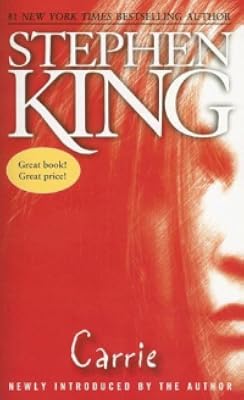
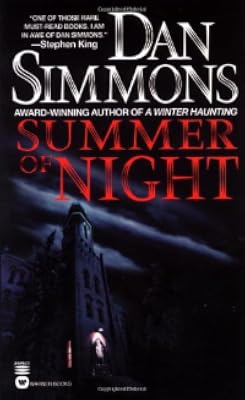
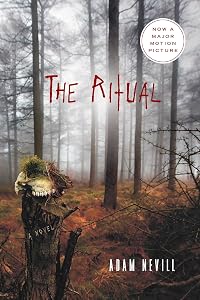
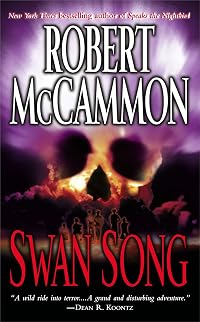

Member Recommendations

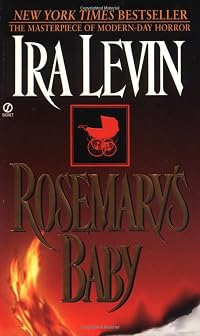
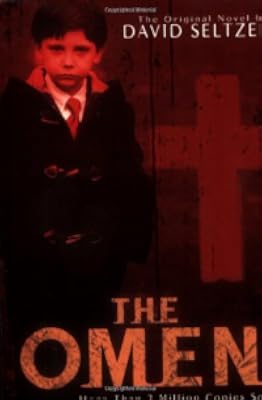
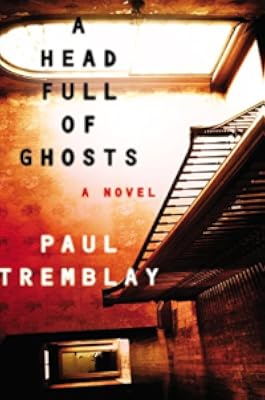
JonTheTerrible I quite enjoyed the characters in The Exorcist and felt that Legion gives you a bit more of the enjoyable Kinderman as well as the darkness of the demon. While Legion is not nearly as good as its predecessor it is still an essential read if you enjoyed the mood and pace of The Exorcist.
41
Member Reviews
I hadn’t read this since I dared checking it out of the public library in seventh grade, when I took it to the desk fearing that the librarian would look at me in horror at wanting to read such a thing. I don’t remember if I finished it; all I remember is the feeling of bringing it into my house like I was bringing a suitcase filled stolen diamonds onto a plane. This was spiritual contraband.
Sine then I had, like everyone else, seen the movie. I picked up the novel a few weeks ago because of my reading William Friedkin’s memoir earlier this year and because of an academic project I hope to begin. The good news is that the novel is readable and not embarrassing. Blatty clearly knew how to tell this story, and I am confident that show more he worked with an editor who shaped the manuscript into a narrative by cutting longer conversations between the characters. I say this because each character is a type: the priest wavering in his vocation, the Jewish Colombo-like detective, the movie-star mother, the dutiful German servants, the older, wise, and strong title character, the innocent girl, and, of course, the demon possessing her. On can imagine the temptation Blatty must have had to have them engage in longer conversations about the challenges of faith or the nature of evil. Hence my suspicion that an editor advised Blatty to keep everything moving, which he does. For all the talk in academic circles about the merits of Dracula, The Exorcist reads like The Ambassadors by comparison.
Also interesting is that all of the scenes we remember from the film—indeed, all of the business with Regan tied to the bed—doesn’t really begin until well over 200 pages into the novel. Regan throwing up is like Huck and Jim on the river: a moment that has survived in the collective imagination that serves as shorthand for the whole experience of the book.
(A note regarding the title: it’s interesting in its inexactitude. The novel should properly be titled The Exorcism, especially since Father Merrin doesn’t really enter the plot until the last eighty pages or so, but Blatty or his editors knew that The Exorcist just sounds better.)
The novel raises many questions about the logistics of demonic possession. (Minor spoilers follow.) For example, we learn that the blasphemous Latin description of the Virgin Mary that was inserted into a local church’s missal was typed on Regan’s mother’s typewriter with a “strong hand.” But why would a demon want to do this? To humiliate the three or four Jesuits in Georgetown who could translate the thing? The same goes for the desecration of that same church. Yes, this brings Kinderman into the plot, since he assumes that the person who desecrated the church also murdered one of the characters, but the demon doesn’t want to bring people together for the sake of a plotline. Here’s another: did Father Merrin’s excavation in Iraq unearth the demon Pazuzu? If so, do demons come from the earth like the genie from the lamp? If that’s the case, there should be a Papal ban on Mesopotamian archeology. And, in the novel’s climactic moment, the demonic algebra might not stand up to proof: if the demon can move quickly from one body to another, why not move back the instant before its host flies out of a window?
For that matter, why would the demon take all of his time in possessing Regan—beginning with the Captain Howdy business, then the noises in the attic, the shaking bed, the cold room, the contortions, and then all of the terrible business everyone remembers from the film: the whites of the eyes, the blasphemes, the vomiting, the levitating? Why not zap! enter “the piglet’s” body and throw her out the window onto those famous steps?
The answer to all of these questions is that Blatty knew to make the demon obey the rules of good storytelling, just as Friedkin had the imagination to turn long passages of dialogue between Karras and the demon into terrifying moviemaking. And all the snotty objections I can make about the plotting proved to be moot when, at 4:00 the other morning, I heard one of my kids talking in his sleep or when—a few minutes ago—one of them silently walked in the room in which I was writing this and scared the hell out of me. show less
Sine then I had, like everyone else, seen the movie. I picked up the novel a few weeks ago because of my reading William Friedkin’s memoir earlier this year and because of an academic project I hope to begin. The good news is that the novel is readable and not embarrassing. Blatty clearly knew how to tell this story, and I am confident that show more he worked with an editor who shaped the manuscript into a narrative by cutting longer conversations between the characters. I say this because each character is a type: the priest wavering in his vocation, the Jewish Colombo-like detective, the movie-star mother, the dutiful German servants, the older, wise, and strong title character, the innocent girl, and, of course, the demon possessing her. On can imagine the temptation Blatty must have had to have them engage in longer conversations about the challenges of faith or the nature of evil. Hence my suspicion that an editor advised Blatty to keep everything moving, which he does. For all the talk in academic circles about the merits of Dracula, The Exorcist reads like The Ambassadors by comparison.
Also interesting is that all of the scenes we remember from the film—indeed, all of the business with Regan tied to the bed—doesn’t really begin until well over 200 pages into the novel. Regan throwing up is like Huck and Jim on the river: a moment that has survived in the collective imagination that serves as shorthand for the whole experience of the book.
(A note regarding the title: it’s interesting in its inexactitude. The novel should properly be titled The Exorcism, especially since Father Merrin doesn’t really enter the plot until the last eighty pages or so, but Blatty or his editors knew that The Exorcist just sounds better.)
The novel raises many questions about the logistics of demonic possession. (Minor spoilers follow.) For example, we learn that the blasphemous Latin description of the Virgin Mary that was inserted into a local church’s missal was typed on Regan’s mother’s typewriter with a “strong hand.” But why would a demon want to do this? To humiliate the three or four Jesuits in Georgetown who could translate the thing? The same goes for the desecration of that same church. Yes, this brings Kinderman into the plot, since he assumes that the person who desecrated the church also murdered one of the characters, but the demon doesn’t want to bring people together for the sake of a plotline. Here’s another: did Father Merrin’s excavation in Iraq unearth the demon Pazuzu? If so, do demons come from the earth like the genie from the lamp? If that’s the case, there should be a Papal ban on Mesopotamian archeology. And, in the novel’s climactic moment, the demonic algebra might not stand up to proof: if the demon can move quickly from one body to another, why not move back the instant before its host flies out of a window?
For that matter, why would the demon take all of his time in possessing Regan—beginning with the Captain Howdy business, then the noises in the attic, the shaking bed, the cold room, the contortions, and then all of the terrible business everyone remembers from the film: the whites of the eyes, the blasphemes, the vomiting, the levitating? Why not zap! enter “the piglet’s” body and throw her out the window onto those famous steps?
The answer to all of these questions is that Blatty knew to make the demon obey the rules of good storytelling, just as Friedkin had the imagination to turn long passages of dialogue between Karras and the demon into terrifying moviemaking. And all the snotty objections I can make about the plotting proved to be moot when, at 4:00 the other morning, I heard one of my kids talking in his sleep or when—a few minutes ago—one of them silently walked in the room in which I was writing this and scared the hell out of me. show less
I picked up this Harper Perennial edition of Blatty's classic horror novel with the perfectly creepy cover at the Barnes and Noble in Sioux Falls, South Dakota early last month, thinking it would make for some good Halloween reading. Little did I realize, it would also become a chilling meditation on the state of America in late 2024.
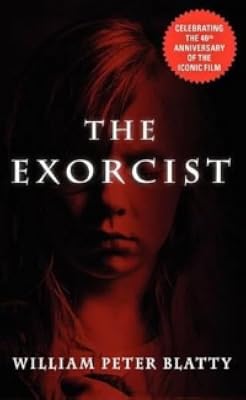
Frankly, I might not have picked up the book if it weren’t for the grab-you-by-the-(eye)balls cover design by Milan Bozic. The pea-soup green, the high-contrast eyes and mouth, the font configuration into a cross: it’s the visual equivalent of icy fingers down a spine. “Buy me, Pathetic Mortal!”
I have an interesting history with The Exorcist (the novel), dating back to 1979 when I picked up the show more original classic purple cover with a blurry photo of what looked like a tormented woman. I think I plucked it from the free paperback books rack at my local library. I was 16 and on the edge of teenage rebellion; in fact, this may have been my shining Rebel with a Cause moment. As a shy preacher's kid in my small Wyoming town, reading The Exorcist was my middle finger to conformity. I didn’t drink or swear, but I could read subversive adult books. In fact, I very purposefully read The Exorcist in public, holding it in front of my face like a billboard advertisement for depravity.
And that's when things went south for me.
Read the rest of the story at The Quivering Pen: https://davidabrams.substack.com/p/what-im-reading-the-exorcist show less
Frankly, I might not have picked up the book if it weren’t for the grab-you-by-the-(eye)balls cover design by Milan Bozic. The pea-soup green, the high-contrast eyes and mouth, the font configuration into a cross: it’s the visual equivalent of icy fingers down a spine. “Buy me, Pathetic Mortal!”
I have an interesting history with The Exorcist (the novel), dating back to 1979 when I picked up the show more original classic purple cover with a blurry photo of what looked like a tormented woman. I think I plucked it from the free paperback books rack at my local library. I was 16 and on the edge of teenage rebellion; in fact, this may have been my shining Rebel with a Cause moment. As a shy preacher's kid in my small Wyoming town, reading The Exorcist was my middle finger to conformity. I didn’t drink or swear, but I could read subversive adult books. In fact, I very purposefully read The Exorcist in public, holding it in front of my face like a billboard advertisement for depravity.
And that's when things went south for me.
Read the rest of the story at The Quivering Pen: https://davidabrams.substack.com/p/what-im-reading-the-exorcist show less
This book, in my opinion, is a "slow descent into hell," with a steady tempo that creates fear through scientific and clinical research before the supernatural aspects take over. One of the main strengths is the characters. Chris MacNeil is a compelling, desperate mother, and Father Karras shows a relatable struggle between faith and science. The philosophical queries raised in the book concerning the existence of God and the nature of evil are terrifying. Many readers may find the novel's graphic depictions upsetting and offensive, and it is intentionally raw and profane. Detective Kinderman offers a much-needed respite from the stress. Overall, I liked the novel's theological and philosophical elements as well as the tension that show more underpins the plot's development. show less
I wasn’t sure what to expect of this one. I’ve seen the movie a lot of times. A LOT of times. Despite its poor quality special effects and overzealous acting, it’s a seriously creepy movie that goes to some very ugly places. Rest assured, the book does, too.
I was pretty surprised to see that the movie is nearly word-for-word like the book. That threw me off at first, because it all seemed so anticlimactic. With as many times as I’ve seen the movie, how could anything in this book surprise me? But, though the plot was extremely familiar, the writing really grabbed me. Even with knowing how certain scenes would play out, the author’s perfect wording put a like-new sheen on everything. Made the two experiences unique, despite show more their being very little differences between the paper and reel versions.
Blatty can induce a cringe like it’s nobody’s business. He was also fantastic at setting the perfectly creepy mood. No details are spared here and it all works beautifully to both intrigue and repel you. There were a lot of perfectly-placed words and abrupt phrases that made big impacts. I am, though, left wondering how I would have pictured this, had I not already had a brain full of imagery. That's just curiosity speaking.
The one negative is that it’s wordy. I wouldn’t say it’s Stephen King-level wordy, but still. It’s pretty wordy. Especially because a lot more focus is put on diagnosing Regan’s condition. In the movie, a lot of that is glossed over and condensed, but here, you have to read through Father Karras’ inner musings and a couple of doctors’ testings and findings. This didn’t detract too much from the story, but it did create lulls in between the real action and what we all came for – REGAN’S CREEPY ASS. The scenes with possessed Regan are scary and disconcerting as expected. I just wish there were more.
All in all, The Exorcist is definitely one of the better horror books I’ve read, if only because of its uniqueness and the author’s ability to go to CREEPY-ASS places.
Buddy read with Shandra and Athena.
show less
I was pretty surprised to see that the movie is nearly word-for-word like the book. That threw me off at first, because it all seemed so anticlimactic. With as many times as I’ve seen the movie, how could anything in this book surprise me? But, though the plot was extremely familiar, the writing really grabbed me. Even with knowing how certain scenes would play out, the author’s perfect wording put a like-new sheen on everything. Made the two experiences unique, despite show more their being very little differences between the paper and reel versions.
Blatty can induce a cringe like it’s nobody’s business. He was also fantastic at setting the perfectly creepy mood. No details are spared here and it all works beautifully to both intrigue and repel you. There were a lot of perfectly-placed words and abrupt phrases that made big impacts. I am, though, left wondering how I would have pictured this, had I not already had a brain full of imagery. That's just curiosity speaking.
The one negative is that it’s wordy. I wouldn’t say it’s Stephen King-level wordy, but still. It’s pretty wordy. Especially because a lot more focus is put on diagnosing Regan’s condition. In the movie, a lot of that is glossed over and condensed, but here, you have to read through Father Karras’ inner musings and a couple of doctors’ testings and findings. This didn’t detract too much from the story, but it did create lulls in between the real action and what we all came for – REGAN’S CREEPY ASS. The scenes with possessed Regan are scary and disconcerting as expected. I just wish there were more.
All in all, The Exorcist is definitely one of the better horror books I’ve read, if only because of its uniqueness and the author’s ability to go to CREEPY-ASS places.
Buddy read with Shandra and Athena.
show less
Well read by the author. Definitely better than the film. Still, I’ve never been sure why people find the story so frightening. The only scary elements are the suffering of a child, or the demon’s strength. I also shake my head when characters react so strongly to something said. I can’t help thinking that the scares don’t work as well as they should because it’s a different society now, but I saw the film in my teens and still think of it as one of the funniest movies ever made. Would Regan’s insults and torments really bother a modern adversary so much? Despite these wonderings, this remains the quintessential possession story. Well worth the time spent with it, even though I don’t find it frightening.
The Exorcist is an incredibly atmospheric read, and what really surprised me was just how strong the character drama is. The dialogue has a wit to it that’s a real treat, and the detective subplot adds this extra layer that I really enjoyed. The tension throughout is excellent, though the pacing can feel a bit slow in places before it ramps up. Honestly, the possessed Regan doesn’t land for me quite as well as in the film — the book’s version comes off a bit too chatty — but the ending hits in a way that feels both familiar and superior to the movie. At its core, the novel is the same story, just more of it, and for me, the Kinderman/Karras moments are the absolute highlight.
Strange as it may seem, I hadn't watched the film version of ''The Exorcist'' until last summer. I know, shame on me, but you see, I thought I wouldn't be able to take it seriously. I don't believe in possessions or devils or any of these things, although I love to read about them. Of course, I knew of Blatty's novel and I was aware of the cutie little green Pazuzu-face of young Regan, but since I don't believe in the main theme of the story, I knew I wouldn't be able to appreciate the film, right? Wrong! I admit I should have watched it sooner. I wasn't scared, however, only a little bit disgusted, but it was unsettling and full of interesting underlying information about psychology and the mentality behind the cases where exorcisms show more sounded as the best solution. Not to mention Max Von Sydow's formidable presence. Therefore, I eagerly searched for the novel and stared reading to appreciate the story under a new light.
So, just as I believed, the novel is very, very good. Better than the film, its impact was felt immediately, and I must confess that I avoided reading it when I was alone in my house. I don't know why, but it made me nervous in a way the movie never did. To watch Regan's trip down to Hell, to anticipate the beginning of the child's ordeal was trully, trully agonizing. Naturally, this was possible due to the power of the author's writing. Blatty uses short sentences and everyday speech and the narration becomes much more immediate and the images more powerful. Certain infamous scenes of the film are a lot more graphic and highly disturbing in the book.
As in the film, my favourite character was Father Karras. I have a soft spot for him- partly due to him being Greek- but I feel that he represents the heart of the story. The struggle to seek the answers to his questions, the doubts over his faith and the agony to help in the name of God, the insecurity and lack of faith to himself and his abilities as a priest and as a doctor, are issues that are daily relevant to a significant number of people. On the other hand, I never warmed to the character of Chris, Regan's mother. I admired the fact that she was down to earth and close to her daughter as much as possible, given her demanding profession, but for some reason, I consider her rather naive and a bit stupid, to be honest. Perhaps I am a little harsher than I should, but her interactions with Regan's doctors and with Karras didn't exactly make her look like the sharpest knife in the drawer.
So, a great book that would have been a success even if the film had never come to pass. A loud applause to the producers who allowed Blatty to handle his own book and transfer it to the big screen, and the results are obvious in a well-made film that opened new paths to the Horror genre, Of course, on a personal note, it still can't hold a candle to ''The Omen''. Oh, and that sceneYes, the spider-walk...It's in the book, obviously, and may I say, it is even creepier than in the film. I had nightmares with this... show less
So, just as I believed, the novel is very, very good. Better than the film, its impact was felt immediately, and I must confess that I avoided reading it when I was alone in my house. I don't know why, but it made me nervous in a way the movie never did. To watch Regan's trip down to Hell, to anticipate the beginning of the child's ordeal was trully, trully agonizing. Naturally, this was possible due to the power of the author's writing. Blatty uses short sentences and everyday speech and the narration becomes much more immediate and the images more powerful. Certain infamous scenes of the film are a lot more graphic and highly disturbing in the book.
As in the film, my favourite character was Father Karras. I have a soft spot for him- partly due to him being Greek- but I feel that he represents the heart of the story. The struggle to seek the answers to his questions, the doubts over his faith and the agony to help in the name of God, the insecurity and lack of faith to himself and his abilities as a priest and as a doctor, are issues that are daily relevant to a significant number of people. On the other hand, I never warmed to the character of Chris, Regan's mother. I admired the fact that she was down to earth and close to her daughter as much as possible, given her demanding profession, but for some reason, I consider her rather naive and a bit stupid, to be honest. Perhaps I am a little harsher than I should, but her interactions with Regan's doctors and with Karras didn't exactly make her look like the sharpest knife in the drawer.
So, a great book that would have been a success even if the film had never come to pass. A loud applause to the producers who allowed Blatty to handle his own book and transfer it to the big screen, and the results are obvious in a well-made film that opened new paths to the Horror genre, Of course, on a personal note, it still can't hold a candle to ''The Omen''. Oh, and that scene
Members
- Recently Added By
Lists

Best Horror Books
281 works; 85 members

Read the book and saw the movie
1,170 works; 195 members

Classics you know you should have read but probably haven't
421 works; 406 members

Scary Stories for the Season
160 works; 94 members

20th Century Literature
1,161 works; 54 members

NPR Reader Poll: 100 Best Horror Novels and Stories
100 works; 20 members

Favourite Books
1,819 works; 309 members

Reader's Digest 50 Best Horror Books to Read
50 works; 3 members

Most Disturbing Books
124 works; 27 members

Jones and Newman's Horror: The 100 Best Books
100 works; 4 members
Paste's 50 Best Horror Novels of All time
50 works; 6 members

A Novel Cure
742 works; 23 members
Nightmare Magazine's Top 100 Horror Books
100 works; 7 members

1970s
657 works; 23 members
Stephen King's Biggest Influences
46 works; 3 members

Read This Twice's Best Horror Books
94 works; 2 members

Kayla
11 works; 1 member
Page Turners
185 works; 11 members
Horror: Top 10
10 works; 2 members
1970s Horror
28 works; 8 members

Books Set in Washington DC
34 works; 7 members
mstrust's scary list
34 works; 1 member
Best Horror Mega-List
342 works; 6 members

Publisher's Weekly Bestsellers - Part II - 1940 - 1979
355 works; 5 members

Books Read in 2016
4,666 works; 197 members
Overdue Podcast
806 works; 9 members

Books That Go Bump in the Night
42 works; 6 members
Reedsydiscovery 100 Best Horror Books of All Time
100 works; 5 members

Top Five Books of 2025
954 works; 303 members
Books I Read Before The Invention Of The Internet.
144 works; 1 member

Horror: Page & Screen
27 works; 3 members

Gen X Library
245 works; 4 members
Horror Writers Association Reading List (1996)
40 works; 3 members

Eerie eTales
192 works; 3 members
BlackDog's Complete Paperbacks From Hell List
639 works; 3 members

top 100
39 works; 1 member
Urban Horror
2 works; 2 members
Kate & Cheyanne's Horror Extravaganza
144 works; 6 members

Great Films Based on Books
319 works; 140 members

Books Read in 2013
1,630 works; 51 members

Devilish Books
15 works; 3 members

Crime-Solving Clerics
57 works; 3 members

Paperbacks from Hell
382 works; 9 members

Nonordinary States of Consciousness
184 works; 7 members

Movies/Shows
617 works; 7 members

Books Read in 2026
1,929 works; 66 members
Author Information

46+ Works 9,786 Members
William Peter Blatty was born in Manhattan, New York on January 7, 1928. He graduated from Georgetown University in 1950. After serving in the Air Force, he worked for the United States Information Agency in Beirut. He returned to the United States for a public relations job in Los Angeles, where he hoped to begin his career as a writer. In 1961, show more he appeared as a contestant on You Bet Your Life. He and a fellow contestant won $10,000. He quit his day job and become a full-time writer. He collaborated with the director Blake Edwards on the screenplays for several films including A Shot in the Dark, What Did You Do in the War, Daddy?, Darling Lili, and Gunn. He wrote several horror fiction books including The Exorcist, The Ninth Configuration, and Legion. All of the books were adapted into movies with the screenplays written by Blatty. He won an Academy Award for The Exorcist screenplay. He also adapted his novel John Goldfarb, Please Come Home! for the screen. He wrote several memoirs including Which Way to Mecca, Jack?, I'll Tell Them I Remember You, and Finding Peter. He died from multiple myeloma on January 12, 2017 at the age of 89. (Bowker Author Biography) show less
Some Editions
Awards and Honors
Awards
Distinctions
Notable Lists
Series

Belongs to Publisher Series
Orpheuse Raamatukogu (55)
Work Relationships
Is contained in
Has the (non-series) prequel
Has the adaptation
Inspired
Has as a reference guide/companion
Common Knowledge
- Canonical title
- The Exorcist
- Original title
- The Exorcist
- Original publication date
- 1971
- People/Characters
- Regan MacNeil; Chris MacNeil; Damien Karras; Lankester Merrin; Pazuzu; Lt. William F. Kinderman
- Important places
- Georgetown, Washington, D.C., USA; Washington, D.C., USA
- Related movies
- The Exorcist (1973 | IMDb)
- Epigraph*
- Era appena sceso a terra, quando gli venne incontro un uomo della città posseduto dai demoni. [...] Molte volte infatti s'era impossessato di lui; allora lo legavano con catene e lo custodivano in ceppi, ma egli spezzava ... (show all)i legami e veniva spinto dal demonio in luoghi deserti. Gesù gli domandò: «Qual è il tuo nome?». Rispose: «Legione», perché molti demoni erano entrati in lui.
Vangelo secondo Luca 8,27-30
James Torello: Jackson era appeso a un gancio da macellaio. Era così pesante che il gancio si è piegato. È rimasto lì appeso tre giorni prima di morire.
Frank Buccieri (tra le risa): Jackie, avresti dovuto ve... (show all)dere quel tipo. Sembrava un elefante, lì appeso, poi quando Jimmy ha preso a pungerlo con il manganello elettrico…
Torello (eccitatissimo): Appeso al gancio, Jackie, ondeggiava di qua e di là. Gli gettavamo addosso dell'acqua per dare più forza alle scosse, e quello gridava…
Estratto di un'intercettazione telefonica dell'FBI tra membri di Cosa Nostra.
Si riferisce all'omicidio di William Jackson
Non ci sono altre spiegazioni per alcune delle azioni commesse dai comunisti. Come quel prete che aveva dodici chiodi piantati nel cranio… Poi quei dodici bambini con il loro maestro. Stavano pregando nostro Signore quan... (show all)do i soldati gli sono saltati addosso. Un soldato ha estratto la baionetta e ha mozzato la lingua al maestro. Un altro ha preso dei bastoncini di avorio e li ha piantati nelle orecchie di sette di quei bambini. Ditemi, come si possono considerare casi simili?
DOTTOR TOM DOOLEY
Dachau
Auschwitz
Buchenwald - Dedication
- To my brothers and sisters, Maurice, Edward and Alyce, and in loving memory of my parents.
- First words
- Like the brief doomed flare of exploding suns that registers dimly on blind men's eyes, the beginning of the horror passed almost unnoticed; in the shriek of what followed, in fact, was forgotten and perhaps not connected to ... (show all)the horror at all.
- Quotations*
- Toen Hij aan land ging, kwam Hem een man uit de stad tegemoet, die was bezeten door boze geesten...... Menigmaal hadden de geesten hem meegesleurd, en hadden de mensen hem met ketenen en voetboeien geboeid; maar iedere keer b... (show all)rak hij de boeien stuk.... Jezus vroeg hem: "Hoe is uw naam?" "Legioen" antwoordde hij.... (Lucas 8 : 27-30).
Hij , die in liefde leeft, leeft in God, en God in hem... (Paulus) - Last words
- (Click to show. Warning: May contain spoilers.)In forgetting, they were trying to remember.
- Original language
- English
- Canonical DDC/MDS
- 813.54
- Canonical LCC
- PS3552.L392
*Some information comes from Common Knowledge in other languages. Click "Edit" for more information.
Classifications
Statistics
- Members
- 6,800
- Popularity
- 1,774
- Reviews
- 174
- Rating
- (3.95)
- Languages
- 17 — Catalan, Czech, Danish, Dutch, English, Finnish, French, German, Hungarian, Italian, Norwegian (Bokmål), Polish, Russian, Spanish, Swedish, Turkish, Portuguese (Portugal)
- Media
- Paper, Audiobook, Ebook
- ISBNs
- 139
- ASINs
- 91