
The Good Soldier
by Ford Madox Ford
On This Page
Description
Set in the turbulent time right before World War I, this novel chronicles the tragedy of Edward Ashburnham, his seemingly perfect marriage, and his two American friends. Told through disjointed flashbacks, lies, infidelity, and acts of betrayal are revealed that eviscerate the ties that pull the friends and couples together. As events unfold, each individual must face their misgivings and bend to their own judgement. Originally titled The Saddest Story, The Good Solider is considered one of show more the best English-language novels of the twentieth century and continues to vex audiences with its use of literary devices such as the unreliable narrator. show lessTags
Recommendations


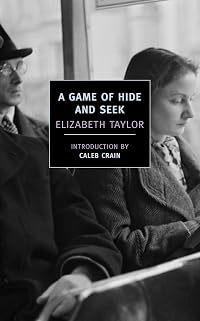
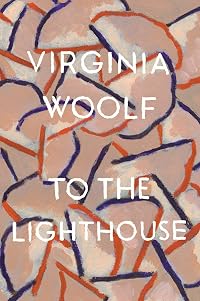
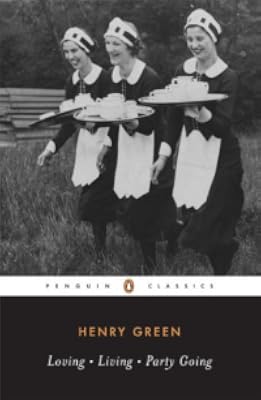
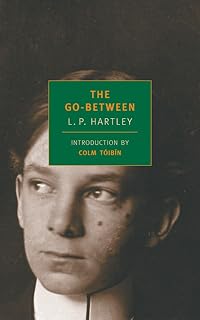



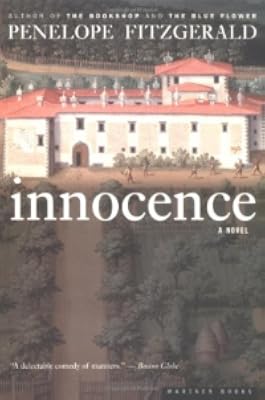


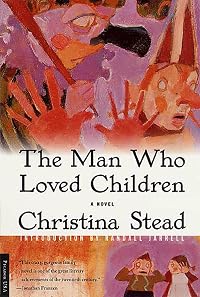
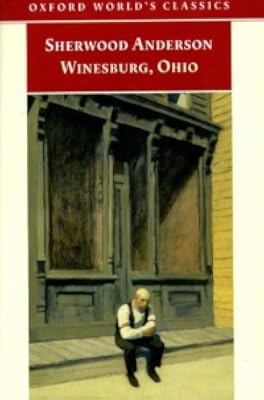
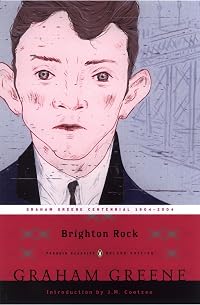
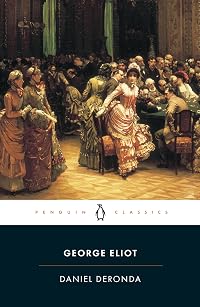
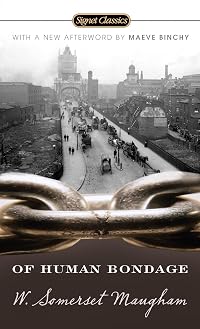
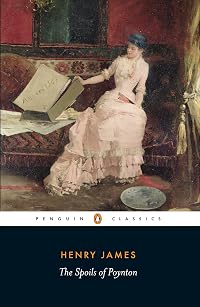

Member Recommendations
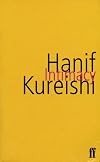
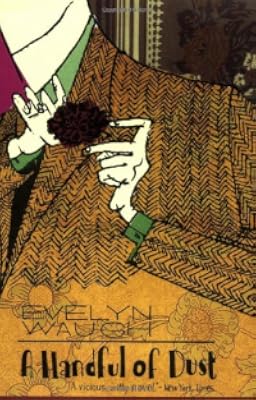
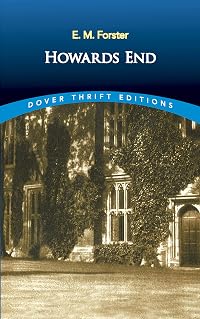
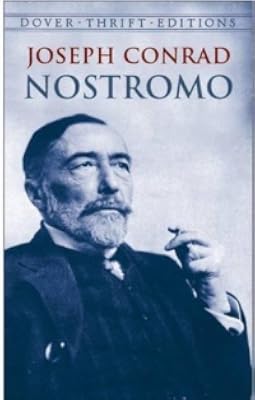
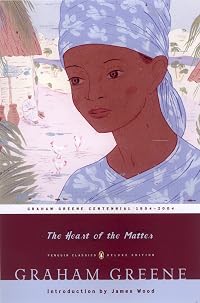
susanbooks Note the first lines of each -- Kureishi does such a cool job playing w/Ford
Also recommended by LynnB
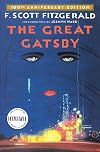

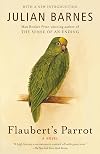
KayCliff Both novels have self-deluded narrators using strategies of deferral and digression.
Member Reviews
Victorian literature might often hint at extramarital affairs and hijinx, but always under the guise of pursuing or seeking true love. Ford Madox Ford bravely struck a new chord in this 1915 novel with his statement that sometimes - if not often - it's just a fling, based on loneliness or the sexual desire. This stripping away of the curtains around the issue didn't land him in censorship waters like James Joyce a few years later, but his novel was branded as "unpleasant" and "dangerous". This for addressing an everyday occurrence in plainer language so that it might be explored on the page.
This novel is also an early example of literary impressionism, a style that we take for granted today. Ford takes a roundabout path to telling his show more story, providing us with an after-the-fact narrator John Dowell who tends to ramble and gets things out of order. Immediately we know who dies, so that's the hook to exploring why. John contradicts himself on occasion, or says something offhand that startles but then he doesn't address it immediately, and some of his adjectives take on a fresh meeting later. Rather than frustrating, however, it creates a layer of mystery and need-to-know that keeps the pages turning.
John is a significant example of an unreliable narrator, his judgements and feelings about what transpired shifting in several directions. Only the concluding pages provide confirmation where his true sympathy lies, when his actions speak louder than his words. Ford is suggesting through John that sometimes our passions are too much for the artificial constructs of society to contain - our religious moralities, our marriage contracts, our collective sense of decency. That someone who is destroyed when they run counter to these may be too well understood to be considered a villain, given the base desires most of us share; except that this characterization too must to be done, so the rest of us can go on with our orderliness and stability to win whatever happiness remains. show less
This novel is also an early example of literary impressionism, a style that we take for granted today. Ford takes a roundabout path to telling his show more story, providing us with an after-the-fact narrator John Dowell who tends to ramble and gets things out of order. Immediately we know who dies, so that's the hook to exploring why. John contradicts himself on occasion, or says something offhand that startles but then he doesn't address it immediately, and some of his adjectives take on a fresh meeting later. Rather than frustrating, however, it creates a layer of mystery and need-to-know that keeps the pages turning.
John is a significant example of an unreliable narrator, his judgements and feelings about what transpired shifting in several directions. Only the concluding pages provide confirmation where his true sympathy lies, when his actions speak louder than his words. Ford is suggesting through John that sometimes our passions are too much for the artificial constructs of society to contain - our religious moralities, our marriage contracts, our collective sense of decency. That someone who is destroyed when they run counter to these may be too well understood to be considered a villain, given the base desires most of us share; except that this characterization too must to be done, so the rest of us can go on with our orderliness and stability to win whatever happiness remains. show less
I can't believe this novel is 100 years old. It feels more contemporary than novels we now call "modern" or "post-modern;" it's more like a midlist literary novel that could have been written yesterday. I especially enjoyed the way I was led into the story thinking this man was suffocating his wife with over-care, then learned she was a more than equal foil to him.
The only thing that marred my enjoyment somewhat is having read "The End of the Affair" before this novel. Greene's style in The End of the Affair so clearly owes a debt to Ford. But Greene failed to mimic the cunning and un-pindownable nature of Ford's narrator, replacing Ford's possible sociopath/double murderer with a humorless and petty narrator that I had to banish from show more my head before I could fully engage with The Good Soldier. show less
The only thing that marred my enjoyment somewhat is having read "The End of the Affair" before this novel. Greene's style in The End of the Affair so clearly owes a debt to Ford. But Greene failed to mimic the cunning and un-pindownable nature of Ford's narrator, replacing Ford's possible sociopath/double murderer with a humorless and petty narrator that I had to banish from show more my head before I could fully engage with The Good Soldier. show less
Was there ever such an oblivious man in literature as the narrator of this book? I realize it is set in a far different time from ours i.e. the early 20th century but I was incredulous that a man would not be in the least suspicious of a wife who kept him out of her bedroom while not one, but at times two, other men were in the same abode. Even when other people hinted that his wife was cuckolding him he apparently didn't suspect a thing.
Ford Maddox Ford wrote this book before World War I but it didn't come out until 1915. He wanted to call it The Saddest Story but his publisher told him that title would turn people off the book so he tossed off the suggestion of The Good Soldier. The Saddest Story makes more sense but that's water show more under the bridge now.
The narrator of the story is an American called Dowell. He is well-to-do and therefore sees no need for employment. When he meets Florence Hurlbird, a younger beautiful woman living with two maiden aunts in New England, he decides he must marry her. She accepts his proposal when she ascertains that he will take her to Europe for the honeymoon and the wedding is completed just before they set sail. On board the ship Florence has an attack of some kind and is thereafter an invalid taken care of by her husband. Although it is not explicitly stated it doesn't appear that the marriage was ever consummated. At the spa town of Nauheim where Florence is "taking the waters" they meet the British couple Edward and Leonora Ashburnham. Edward is on sick leave from the British army in India although we will learn later that this was a pretext to follow a young married woman who really was ill. Soon Edward has turned his roving eye to Florence and she reciprocated. Leonora knows all about her husband's proclivities and has already paid off a number of people who threatened to publicize previous affairs. The affair went on for years as the Dowells and the Ashburnhams met up at numerous places in Europe. Throughout all this time Dowell himself was unaware of the affair. It was only after Florence's death (suicide) that he learned the truth. It was Edward Ashburnham who told him in order to clear his conscience. He then killed himself. Dowell thought that he could then marry the Ashburnham's young ward, Nancy, but that plan fell through although he did end up looking after Nancy much as he looked after Florence. So, yes, it's a very sad story but one that I felt Dowell caused by his own naivety and inattention.
The introduction to this book tells me that it was autobiographical in many ways with Edward Ashburnham standing in for Ford. If so, then I'm quite glad he was safely in his grave before I ever graced this earth. Far from being "good" Ashburnham is portrayed as entirely without conscience where women are concerned. show less
Ford Maddox Ford wrote this book before World War I but it didn't come out until 1915. He wanted to call it The Saddest Story but his publisher told him that title would turn people off the book so he tossed off the suggestion of The Good Soldier. The Saddest Story makes more sense but that's water show more under the bridge now.
The narrator of the story is an American called Dowell. He is well-to-do and therefore sees no need for employment. When he meets Florence Hurlbird, a younger beautiful woman living with two maiden aunts in New England, he decides he must marry her. She accepts his proposal when she ascertains that he will take her to Europe for the honeymoon and the wedding is completed just before they set sail. On board the ship Florence has an attack of some kind and is thereafter an invalid taken care of by her husband. Although it is not explicitly stated it doesn't appear that the marriage was ever consummated. At the spa town of Nauheim where Florence is "taking the waters" they meet the British couple Edward and Leonora Ashburnham. Edward is on sick leave from the British army in India although we will learn later that this was a pretext to follow a young married woman who really was ill. Soon Edward has turned his roving eye to Florence and she reciprocated. Leonora knows all about her husband's proclivities and has already paid off a number of people who threatened to publicize previous affairs. The affair went on for years as the Dowells and the Ashburnhams met up at numerous places in Europe. Throughout all this time Dowell himself was unaware of the affair. It was only after Florence's death (suicide) that he learned the truth. It was Edward Ashburnham who told him in order to clear his conscience. He then killed himself. Dowell thought that he could then marry the Ashburnham's young ward, Nancy, but that plan fell through although he did end up looking after Nancy much as he looked after Florence. So, yes, it's a very sad story but one that I felt Dowell caused by his own naivety and inattention.
The introduction to this book tells me that it was autobiographical in many ways with Edward Ashburnham standing in for Ford. If so, then I'm quite glad he was safely in his grave before I ever graced this earth. Far from being "good" Ashburnham is portrayed as entirely without conscience where women are concerned. show less
Picked this up knowing nothing about the author or the book, without much optimism, as I expected a load of prudish Victorian/Edwardian sentimentality. Absolutely not what I got. Probably deserves fives stars but it's horrible, shocking and mawkish. The rot that came much much later, in the 1960s, is evident here some 45 years earlier. And it's written much better here. The Good Solider is the sign of a society that had already exhausted itself, even before the Great War. Perhaps the Great War was simply the excuse. Wonderfully crafted and like many such novels is somehow greater than the sum of its parts. You suspect that this is partly because there is more of the author in it than the author understood, certainly this was Graham show more Green's view, because it was his favourite book (Greene and Ford were both fairly hopeless as men, and I think they viewed literature, as written by men, as a kind of coda of personal failure - I did too, once). Personally, my favourite book is probably Heart of Darkness. It so happens that Ford and Conrad were close friends, and Heart of Darkness is referenced in this work. But whereas Heart of Darkness pits civilisation against savagery, and man against nature, in a largely external way, The Good Soldier deals with internalities, with sex and love and God in Hampshire and abroad. A hopeless and confused book but bloody brilliant as a kind of horror story of quiet, "decent" lives masking agonising spiritual confusion and shocking inhumanity. And naturally everybody's got loads of money, so what the hell are they on about, really. Somewhat less but still interesting because of its treatment of "Anglo" Catholicism as something distinct from its continental equivalent, and its implicit suggestion that it represents some sort of noble maladjustment, an intellectual conceit that was popular amongst British intellectuals of the time - Greene himself as a somewhat later example. A horror story with no supernatural elements. show less
"The Good Soldier" follows two well-to-do couples, John (the narrator) and Florence Dowell and Edward and Leonora Ashburnham through the course of their relationships, especially Edward's endless philandering with any woman who will submit to his relentless sexual advances. The story, told long after the events have actually transpired, details Dowell's conversion from innocent onlooker in the four-way friendship into a man whose world has been turned upside down by the discovery that his wife has tried to seduce his best friend. Even then, Dowell chalks up Ashburnham's dalliances to mere "sentimentalism," a need to paternalistically place himself in a situation where he is seen as the selfless hero, as the "good soldier." While Dowell show more is sometimes more than fair with Ashburnham, at times he relentlessly mocks him, commenting on his stupid expressions and his petit bourgeois concern with "keeping up appearances," even in the face of a sham of a marriage. Ford seems to be looking for answers to explain such behavior, but doesn't even seem convinced by his own dubious explanations.
Marked by a radical break with the earlier, traditional Victorian novel, "The Good Soldier" is highly evocative of the society novels of Henry James, Edith Wharton, and even some D. H. Lawrence. Adultery is discussed frankly and directly, and instead of the morally certain, honest, objective narration that we see in work before it, Ford's narrator is bereft when he finds his search for meaning and simplicity an empty one, finding in its place an ambiguous and unreliable world. This is a hard pill to swallow for those who have been weaned on Dickens, Thackeray, and Trollope. Its subtlety and sensitive psychological representations mirror the complexities of people, not stock characters.
One of the most fascinating aspects of the story is how utterly conflicted Dowell remains throughout the novel. The authority of his narrative voice waxes and wanes (mostly wanes) through the entire story, which might be frustrating for some readers, but was a welcome relief for me. Concomitant with this voice is an overall ambiance of moral turpitude and decadence, and not simply as a result of Florence and Ashburnham's affair. Dowell is never slow to remind the reader that he knows little, that he might be wrong, that this was only the way things seemed to him. It is hardly a surprise that Ford, who considered himself an "impressionist," has very much up to the name and written a novel of fleeting impressions and reminiscences which always fall short of cohering into a unified story whose characters motivations are convincingly delineated.
One of the results of Ford's technique is that it breaks with one's usual response after having completed a novel: since Aristotle, we have come to find some sort of intellectual catharsis from tragedy, but this is a story that complicates that expectation, even if we are afforded some sort of edification in human moral psychology. The novel was written in 1915, no doubt a perilous time in European history. At the risk of committing an egregious post hoc ergo propter hoc, it may be that Ford's narrative is indicative of a world on the precipice of the Great War, whose social and cultural orders have shifted from firmly hierarchical to nebulous in less than a generation.
Even if you do not care for the novel itself, it would be difficult to deny its important place in a canon of works that need to be carefully and thoughtfully read to have a fuller and more appreciative knowledge of twentieth-century English literature. I cherished it, and its characters seemed like some of the most artfully drawn I've ever read. Weeks after having finished the novel, the various tête-à-têtes and interrelationships continue to dance through my head while I imagine sitting down next to Dowell while he tells me his story. show less
Marked by a radical break with the earlier, traditional Victorian novel, "The Good Soldier" is highly evocative of the society novels of Henry James, Edith Wharton, and even some D. H. Lawrence. Adultery is discussed frankly and directly, and instead of the morally certain, honest, objective narration that we see in work before it, Ford's narrator is bereft when he finds his search for meaning and simplicity an empty one, finding in its place an ambiguous and unreliable world. This is a hard pill to swallow for those who have been weaned on Dickens, Thackeray, and Trollope. Its subtlety and sensitive psychological representations mirror the complexities of people, not stock characters.
One of the most fascinating aspects of the story is how utterly conflicted Dowell remains throughout the novel. The authority of his narrative voice waxes and wanes (mostly wanes) through the entire story, which might be frustrating for some readers, but was a welcome relief for me. Concomitant with this voice is an overall ambiance of moral turpitude and decadence, and not simply as a result of Florence and Ashburnham's affair. Dowell is never slow to remind the reader that he knows little, that he might be wrong, that this was only the way things seemed to him. It is hardly a surprise that Ford, who considered himself an "impressionist," has very much up to the name and written a novel of fleeting impressions and reminiscences which always fall short of cohering into a unified story whose characters motivations are convincingly delineated.
One of the results of Ford's technique is that it breaks with one's usual response after having completed a novel: since Aristotle, we have come to find some sort of intellectual catharsis from tragedy, but this is a story that complicates that expectation, even if we are afforded some sort of edification in human moral psychology. The novel was written in 1915, no doubt a perilous time in European history. At the risk of committing an egregious post hoc ergo propter hoc, it may be that Ford's narrative is indicative of a world on the precipice of the Great War, whose social and cultural orders have shifted from firmly hierarchical to nebulous in less than a generation.
Even if you do not care for the novel itself, it would be difficult to deny its important place in a canon of works that need to be carefully and thoughtfully read to have a fuller and more appreciative knowledge of twentieth-century English literature. I cherished it, and its characters seemed like some of the most artfully drawn I've ever read. Weeks after having finished the novel, the various tête-à-têtes and interrelationships continue to dance through my head while I imagine sitting down next to Dowell while he tells me his story. show less
The narrator sits down to relate the saddest story he's ever heard. It quickly becomes apparent that he was right at the core of the story, and the reader becomes a little uneasy as to the accuracy of the telling. The story is told in portions that we are told were written many months apart, which provides an air of authenticity as we are caught up on intervening events. When you get right down to it, the narrative perspective, the disjointed chronology, and the somewhat ambiguous participation of the narrator in the events are what make this book interesting (to me at least). The tale itself is one of serial adultery and various lowdown shenanigans of British gentry and American gentry-equivalents in pre-World War I England (though show more much of the action is set in Germany and even in British India), which reinforces the notion that people who don't have enough to do will eventually get themselves in trouble. The novel also adopts an anti-Catholic bias that provides a lot of the tension. The couple at the center of the action includes a Catholic woman who can't escape the problematic marriage that causes all or most of the trouble by simply divorcing and going her merry way. Of course, the lack of a no-fault divorce procedure in England at the time also contributed to the problem. The couple stays together and ends up destroying their own lives (or at least one of them) as well as those of several innocent (or maybe not) bystanders. All this while the rich American narrator looks back in astonishment at what all was happening under his very nose. show less
I think that Ford Madox Ford should have fought the publishers and stuck with his original title, The Saddest Story. It is a much better descriptor of this intense and depressing short novel. This is the story of the twisted lives of two unhappily married couples and the various affairs they involve themselves in. It's narrated by one of the husbands, John Dowell, whose wife Florence has at least two affairs, one with the husband of the other married couple, Edward, who is the title character. Leonora, Edward's wife, is aware of everything going on and trying to control events as much as possible by managing her husband's affairs - both in love and money. John, the narrator, insists that he never knew that his wife was having affairs. show more He tells the story of Edward and Leonora through a series of flashbacks after Florence and Edward have both committed suicide, Edward several years after Florence.
If the above description was confusing, I'll say I'm just following the layout of Ford's book. The unreliable memories and misunderstanding of events by the narrator and the rambling, out-of-chronological-order retelling make the novel complex and interesting. The writing style is amazing, especially considering this was written in 1915. The characters in this book are all pretty despicable, mostly being either totally passive, like the narrator, or passive aggressive, like Leonora. Usually I can't stand a book where I don't like at least one of the characters, but this book is good enough to overcome that. show less
If the above description was confusing, I'll say I'm just following the layout of Ford's book. The unreliable memories and misunderstanding of events by the narrator and the rambling, out-of-chronological-order retelling make the novel complex and interesting. The writing style is amazing, especially considering this was written in 1915. The characters in this book are all pretty despicable, mostly being either totally passive, like the narrator, or passive aggressive, like Leonora. Usually I can't stand a book where I don't like at least one of the characters, but this book is good enough to overcome that. show less
Members
- Recently Added By
Lists

The Guardian's 1000 Novels Everyone Must Read
1,005 works; 551 members

1001 Books You Must Read Before You Die
1,448 works; 1,134 members
501 Must-Read Books
529 works; 72 members

The Top Ten: Writers Pick Their Favorite Books
240 works; 31 members
20th Century Literature
1,161 works; 55 members

1910s
90 works; 16 members

Unread books
1,063 works; 84 members

The Guardian's 100 greatest novels of all time
100 works; 16 members

Recommend the 20 best books you've read in the last five years
2,168 works; 602 members

Favorite Literary Love Stories
182 works; 101 members

Unreliable Narrators
170 works; 43 members
Best of British Literature
226 works; 41 members

Best Friendship Stories
205 works; 16 members

Canon de la narrativa universal del siglo XX
254 works; 6 members

Folio Society
831 works; 53 members
Harold Bloom - The Western Canon: D. The Chaotic Age
833 works; 24 members

Western World's Greatest Books - Project Gutenberg
295 works; 15 members

Books Featured on Gilmore Girls
307 works; 21 members
Fiction For Men
142 works; 11 members
1,001 BYMRBYD Concensus
723 works; 27 members
Best First Lines
133 works; 8 members
Out of Copyright
244 works; 14 members

did I say that I didn't mean that (unreliable narrators)
34 works; 7 members

A Novel Cure
742 works; 23 members

Religious Fiction
58 works; 13 members
Readable Classics
110 works; 15 members

Love Triangles in Literature
108 works; 15 members

The Guardian's 100 Best Novels Written in English
105 works; 13 members
LibraryThingers' 1001 Books You Must Read Before You Die
442 works; 30 members

Top Five Books of 2015
811 works; 241 members

Short and Sweet
246 works; 24 members
The Modern Library's 100 Best Novels: The Board's List
85 works; 6 members

First published in 1915
87 works; 11 members
The College Board: 101 Great Books Recommended for College-Bound Readers
111 works; 7 members

2022 Christmas Gifts
60 works; 13 members

Modernism
140 works; 8 members

Best War Fiction Books
41 works; 4 members
The Greatest Books
99 works; 5 members

Books Read in 2015
3,299 works; 129 members
Books on my Kindle
162 works; 3 members

Books Read in 2022
5,226 works; 115 members

Undiscovered Classics to Read
70 works; 15 members

The 150 Greatest Novels of All Time
150 works; 6 members
Modern Library's 100 Best Novels
100 works; 2 members

.
194 works; 2 members
.
396 works; 1 member
The Complete Rory Gilmore Reading List
506 works; 5 members

DigitalDreamDoor top 300
300 works; 4 members
Retrospective of 20th- and 21st-century literature
154 works; 1 member
Canon de la narrativa universal del s. XX (cicutadry)
499 works; 3 members

Mustich's 1000 Books to Read Before You Die: A Life Changing List
1,001 works; 20 members

Recommended Reading : 600 Classics Reviewed, Editors of Salem Press, 2015
634 works; 6 members

Books Read in 2024
4,727 works; 128 members

THE WAR ROOM
813 works; 24 members
Franklit
95 works; 1 member
Books With Our Favorite First Lines
168 works; 104 members

AP Lit
363 works; 6 members

My TBR
371 works; 3 members

Books Read in 2018
4,360 works; 110 members

Books Read in 2026
2,036 works; 68 members
Author Information

109+ Works 10,393 Members
Born Ford Hermann Madox Hueffer in England in 1873, Ford Madox Ford came from a family of artists and writers that included his grandfather, the pre-Raphaelite painter Ford Madox Brown, and his uncles Gabriel Dante Rossetti and William Michael Rossetti. Ford's early works were published under the name Ford Madox Hueffer, but in 1919 he legally show more changed his name to Ford Madox Ford due to legal complications that arose when he left his wife, Elsie Martindale, and their two daughters. He also used the pen names Daniel Chaucer and Fenil Haig. Ford's early works include The Brown Owl, a fairy tale, children's stories, romances, and The Fifth Queen, a historical trilogy about Katherine Howard, the fifth wife of Henry VIII. He also collaborated with Joseph Conrad, whom he first met in 1898, on three novels: The Nature of Crime, The Inheritors, and Romance. Ford is best known for his novels The Good Soldier, which he considered both his first serious effort at a novel and his best work, and Parade's End, a tetralogy set during World War I. Both of these books explore a theme that appears often in Ford's writing, that of a good man whose old-fashioned, gentlemanly code is in conflict with modern industrial society. Ford also published several volumes of autobiography and reminiscences, including Return to Yesterday and It Was the Nightengale, as well as numerous works of biography, history, poetry, essays, travel writing, and criticism of literature and art. Although Ford and Martindale never divorced, Ford had significant, long-term relationships with three other women, all of whom took his name; he had another daughter by one of them. He died in Deauville, France, in 1939. (Bowker Author Biography) show less
Some Editions
Awards and Honors
Awards
Notable Lists
Daniel S. Burt's Novel 100 (062 – 62)
Series
Belongs to Publisher Series
Aldina (7)
Mirmanda (30)
Oneworld Classics (108)
Penguin Books (536)
Penguin Modern Classics (536)
Die Andere Bibliothek (181)
Work Relationships
Is contained in
Has as a commentary on the text
Has as a student's study guide
Common Knowledge
- Canonical title
- The Good Soldier
- Original title
- The Good Soldier: A Tale of Passion
- Original publication date
- 1915
- People/Characters
- Echtpaar A (de man ervan is de verteller | Amerikaans | Engels); John Dowell; Florence Dowell (nee Hurlbird); Edward Ashburnham; Leonora Ashburnham (nee Powys); Nancy Rufford
- Important places
- Bad Nauheim, Hesse, Germany; Antwerp, Antwerp, Belgium
- Related movies
- The Good Soldier (1981 | IMDb)
- Epigraph
- Beati Immaculati
Psalm 119:1 - Dedication
- Dedicated to Stella Ford (Stella Bowen) in a letter addressed to her dated January 9th 1927 and published in both the second American edition (1927) and the second British edition (1928).
- First words
- This is the saddest story I have ever heard.
- Quotations
- I have, I am aware, told this story in a very rambling way so that it may be difficult for anyone to find his path through what may be a sort of maze. I cannot help it. I have stuck to my idea of being in a country cottage wi... (show all)th a silent listener, hearing between the gusts of the wind and amidst the noises of the distant sea the story as it comes. And, when one discusses an affair--a long, sad affair--one goes back, one goes forward. One remembers points that one has forgotten and one explains them all the more minutely since one recognizes that one has forgotten to mention them in their proper places and that one may have given, by omitting them, a false impression. I console myself with thinking that this is a real story and that, after all, real stories are probably told best in the way a person telling a story would tell them. They will then seem most real.
In all matrimonial associations there is, I believe, one constant factor - a desire to deceive the person with whom one lives as to some weak spot in one's character or in one's career. For it is intolerable to live constantl... (show all)y with one human being who perceives one's small meannesses.
Florence was a personality of paper - she represented a real human being with a heart, with feelings, with sympathies and with emotions only as a bank note represents a certain quantity of gold. - Last words
- (Click to show. Warning: May contain spoilers.)She was quite pleased with it.
- Blurbers
- Ackroyd, Peter; Greene, Graham; Barnes, Julian
- Original language
- English UK
Classifications
Statistics
- Members
- 5,324
- Popularity
- 2,549
- Reviews
- 121
- Rating
- (3.79)
- Languages
- 16 — Catalan, Danish, Dutch, English, Finnish, French, German, Greek, Hungarian, Italian, Norwegian (Bokmål), Portuguese, Romanian, Spanish, Swedish, Turkish
- Media
- Paper, Audiobook, Ebook
- ISBNs
- 281
- UPCs
- 2
- ASINs
- 99