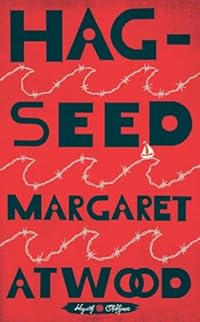
On This Page
Description
Felix is at the top of his game as artistic director of the Makeshiweg Theatre Festival. His productions have amazed and confounded. Now he's staging a Tempest like no other: not only will it boost his reputation, it will heal emotional wounds. Or that was the plan. Instead, after an act of unforeseen treachery, Felix is living in exile in a backwoods hovel, haunted by memories of his beloved lost daughter, Miranda. And brewing revenge. After 12 years revenge finally arrives in the shape of show more a theatre course at a nearby prison. Here Felix and his inmate actors will put on his Tempest and snare the traitors who destroyed him. It's magic! But will it remake Felix as his enemies fall? show lessTags
Recommendations

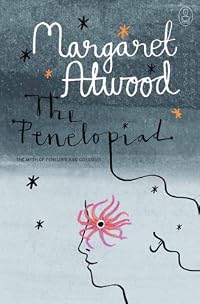

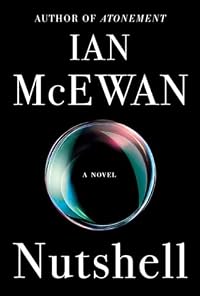


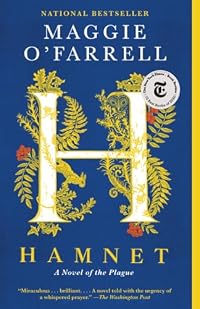






















Member Recommendations
krazy4katz A real life inspiring example of teaching Shakespeare to convicts.
40


JuliaMaria Kanadische Literatur, Schauspieler*innen und Shakespeare spielen eine wichtige Rolle
Member Reviews
Margaret Atwood makes Shakespeare better. Margaret Atwood makes everything better.
(Full disclosure: I received a free electronic ARC for review through NetGalley. Trigger warning for rape.)
He’s been chewing over his revenge for twelve years – it’s been in the background, a constant undercurrent like an ache. Though he’s been tracking Tony and Sal on the Net, they’ve always been out of his reach. But now they’ll be entering his space, his sphere. How to grasp them, how to enclose them, how to ambush them? Suddenly revenge is so close he can actually taste it. It tastes like steak, rare. Oh, to watch their two faces! Oh, to twist the wire! He wants to see pain. “We’re doing The Tempest,” he said.
Felix Phillips's life - show more or at least his life thus far - is like something out of a Greek tragedy. As the Artistic Director (and sometimes-director/actor/star) of the Makeshiweg Theatre Festival, he pushes the envelope, rides his actors hard, and produces some pretty edgy fare - which often puts him in the crosshairs of the Board. Like many of the creative types he works with, Felix is more or less married to his job. That is, until he meets Nadia and is sucked into a late(r)-in-life romance. In the span of just four years, Felix got married; had a child; lost Nadia to a staph infection after childbirth; lost his daughter Miranda to meningitis; and lost his job at the Makeshiweg Festival.
Felix blames his assistant Tony Price for that last. According to Felix's line of reasoning, Tony waited until Felix was vulnerable - distracted by grief - to swoop in and steal his job. A scheme made easier by Felix himself: too caught up in the magic of the theater, Felix was more than happy to hand over the more mundane tasks - boozing and schmoozing the donors and patrons, for example - to his assistant. Much like Prospero - the protagonist of The Tempest, which Felix was producing when he was unceremoniously canned - he paved the way for his own betrayal.
Devastated, in more ways than one - for the now-cancelled The Tempest was to be staged in his late daughter's honor - Felix assumes an alias (F. Duke), moves to a hovel in the middle of nowhere, and becomes a recluse. A recluse visited by the apparition of his dead daughter, who mysteriously ages alongside Felix.
After nine years, he takes a part-time job teaching literature to medium-security inmates at the nearby Fletcher County Correctional Institute. They study Shakespeare, of course, writing, staging, performing, filming, editing, and screening one play a year: Julius Caesar, Richard III, Macbeth. His courses are fun, challenging, innovative, and wildly popular: "To his credit there’s always a waiting list."
The guys love Felix: He encourages them to swear, but only using terms pulled from the current year's text. He cultivates and celebrates their unique talents, from singing and acting to writing and costume design. The course is nothing if not dynamic: participants are allowed to rewrite the play to make it more contemporary (the only rule being that the plot must stay intact) and, at the end of the course, each team must give a presentation about their character's life after the play. They compete and amass points, which translate into illicit cigarettes at the end of the semester. There's even a cast party and a prison-wide screening. Felix's students get to be stars, if only for a time. Felix still pushes the envelope, but in a much healthier way.
Now it's Year Four, and Felix has just learned that Tony - excuse me, "Heritage Minister Anthony Price" - will be visiting the screening at the prison this year, along with Justice Minster Sal O’Nally, who Felix believes facilitated his downfall. What better play to form the backdrop to his revenge than The Tempest?
The island is many things, but among them is something he hasn’t mentioned: the island is a theatre. Prospero is a director. He’s putting on a play, within which there’s another play. If his magic holds and his play is successful, he’ll get his heart’s desire. But if he fails …
I really had no idea what to expect of Hag-Seed, other than it's Margaret Atwood and she can do no wrong. (Okay, almost: the casual animal abuse in Moral Disorder was THE WORST. I can't even with Tig and Nell, okay.) If I had to summarize Hag-Seed short and sweet, it would be this: Margaret Atwood makes Shakespeare better. Margaret Atwood makes everything better.
Even though you know the plot, it's hella trickier than it first appears. It's not entirely clear whether Felix is a reliable narrator: he's mad with grief and having visual and auditory hallucinations of his dead daughter Miranda. Who, serendipitously, is named after a main character in a play that's proven central to his life. (But I digress.) But even before this, something seems not-quite-right. Felix is self-centered - narcissistic, even - and paranoid. Is Tony a back-stabbing opportunist, or is the plot to get Felix all in his head? Some of the theater folks seem nice enough; maybe Tony's right, and the Board's just had it with Felix's flair for drama and danger. Paper-pushers and controversy don't make for the coziest bedfellows.
The exact form that Felix's revenge will take also remains a mystery for most of the book. The way he's talking - raving, really - you picture something rather bloody and gory. Lure Tony and Sal to the inmate screening room and let them have at it? Blackmail? Assault? Murder? But what will become of Felix? Does he even care? And how will he manipulate the inmates into doing his bidding? After all, as he points out to his Miranda - the actress/former child gymnast, Anne-Marie Greenland, who was similarly cast in the original production - these are not violent criminals.
The parallels between Hag-Seed and The Tempest are both compelling and skillfully crafted as well. I guess this is where it helps to have already read The Tempest or, better yet, actually studied it in some depth. Atwood provides a handy little summary in the back matter, which I wish I knew beforehand (I consulted Wikipedia instead). The play in the book mirrors the play the players are playing, with Felix assuming the role of Prospero both in the Fletcher County Correctional Institute's production of The Tempest - and in real life itself. Initially meant to give new life to Miranda, The Tempest does just that, chaining her spirit to that of her grieving father. She cannot rest until Felix has seen the play - and his revenge - through to the bitter end.
And what of Caliban? I feel like there's a message buried somewhere in here about him - after all, the book bears his name - but I'm not entirely sure what it is: that Caliban was maligned and misunderstood? A product of his environment? A representation of the monstrous present in us all?
We're presented with so many different interpretations of Hag-Seed - of all the MCs, really - that I don't know which we're meant to assume. All of them, at various points in time, perhaps? (Maybe the same goes for Felix and his compatriots?) Like I said, this is probably where advance knowledge would come in handy. Handy but not necessary: I loved the story just the same.
With a compelling plot; complex and nuanced characters; a really innovative inmate education program (seriously, someone should take Atwood's curriculum and run with it!); and a peek inside a prison that humanizes those imprisoned out of sight and out of mind, Hag-Seed is a must read: for fans of Margaret Atwood, fans of Shakespeare, and fans of inspired storytelling.
http://www.easyvegan.info/2016/11/02/hag-seed-by-margaret-atwood/ show less
(Full disclosure: I received a free electronic ARC for review through NetGalley. Trigger warning for rape.)
He’s been chewing over his revenge for twelve years – it’s been in the background, a constant undercurrent like an ache. Though he’s been tracking Tony and Sal on the Net, they’ve always been out of his reach. But now they’ll be entering his space, his sphere. How to grasp them, how to enclose them, how to ambush them? Suddenly revenge is so close he can actually taste it. It tastes like steak, rare. Oh, to watch their two faces! Oh, to twist the wire! He wants to see pain. “We’re doing The Tempest,” he said.
Felix Phillips's life - show more or at least his life thus far - is like something out of a Greek tragedy. As the Artistic Director (and sometimes-director/actor/star) of the Makeshiweg Theatre Festival, he pushes the envelope, rides his actors hard, and produces some pretty edgy fare - which often puts him in the crosshairs of the Board. Like many of the creative types he works with, Felix is more or less married to his job. That is, until he meets Nadia and is sucked into a late(r)-in-life romance. In the span of just four years, Felix got married; had a child; lost Nadia to a staph infection after childbirth; lost his daughter Miranda to meningitis; and lost his job at the Makeshiweg Festival.
Felix blames his assistant Tony Price for that last. According to Felix's line of reasoning, Tony waited until Felix was vulnerable - distracted by grief - to swoop in and steal his job. A scheme made easier by Felix himself: too caught up in the magic of the theater, Felix was more than happy to hand over the more mundane tasks - boozing and schmoozing the donors and patrons, for example - to his assistant. Much like Prospero - the protagonist of The Tempest, which Felix was producing when he was unceremoniously canned - he paved the way for his own betrayal.
Devastated, in more ways than one - for the now-cancelled The Tempest was to be staged in his late daughter's honor - Felix assumes an alias (F. Duke), moves to a hovel in the middle of nowhere, and becomes a recluse. A recluse visited by the apparition of his dead daughter, who mysteriously ages alongside Felix.
After nine years, he takes a part-time job teaching literature to medium-security inmates at the nearby Fletcher County Correctional Institute. They study Shakespeare, of course, writing, staging, performing, filming, editing, and screening one play a year: Julius Caesar, Richard III, Macbeth. His courses are fun, challenging, innovative, and wildly popular: "To his credit there’s always a waiting list."
The guys love Felix: He encourages them to swear, but only using terms pulled from the current year's text. He cultivates and celebrates their unique talents, from singing and acting to writing and costume design. The course is nothing if not dynamic: participants are allowed to rewrite the play to make it more contemporary (the only rule being that the plot must stay intact) and, at the end of the course, each team must give a presentation about their character's life after the play. They compete and amass points, which translate into illicit cigarettes at the end of the semester. There's even a cast party and a prison-wide screening. Felix's students get to be stars, if only for a time. Felix still pushes the envelope, but in a much healthier way.
Now it's Year Four, and Felix has just learned that Tony - excuse me, "Heritage Minister Anthony Price" - will be visiting the screening at the prison this year, along with Justice Minster Sal O’Nally, who Felix believes facilitated his downfall. What better play to form the backdrop to his revenge than The Tempest?
The island is many things, but among them is something he hasn’t mentioned: the island is a theatre. Prospero is a director. He’s putting on a play, within which there’s another play. If his magic holds and his play is successful, he’ll get his heart’s desire. But if he fails …
I really had no idea what to expect of Hag-Seed, other than it's Margaret Atwood and she can do no wrong. (Okay, almost: the casual animal abuse in Moral Disorder was THE WORST. I can't even with Tig and Nell, okay.) If I had to summarize Hag-Seed short and sweet, it would be this: Margaret Atwood makes Shakespeare better. Margaret Atwood makes everything better.
Even though you know the plot, it's hella trickier than it first appears. It's not entirely clear whether Felix is a reliable narrator: he's mad with grief and having visual and auditory hallucinations of his dead daughter Miranda. Who, serendipitously, is named after a main character in a play that's proven central to his life. (But I digress.) But even before this, something seems not-quite-right. Felix is self-centered - narcissistic, even - and paranoid. Is Tony a back-stabbing opportunist, or is the plot to get Felix all in his head? Some of the theater folks seem nice enough; maybe Tony's right, and the Board's just had it with Felix's flair for drama and danger. Paper-pushers and controversy don't make for the coziest bedfellows.
The exact form that Felix's revenge will take also remains a mystery for most of the book. The way he's talking - raving, really - you picture something rather bloody and gory. Lure Tony and Sal to the inmate screening room and let them have at it? Blackmail? Assault? Murder? But what will become of Felix? Does he even care? And how will he manipulate the inmates into doing his bidding? After all, as he points out to his Miranda - the actress/former child gymnast, Anne-Marie Greenland, who was similarly cast in the original production - these are not violent criminals.
The parallels between Hag-Seed and The Tempest are both compelling and skillfully crafted as well. I guess this is where it helps to have already read The Tempest or, better yet, actually studied it in some depth. Atwood provides a handy little summary in the back matter, which I wish I knew beforehand (I consulted Wikipedia instead). The play in the book mirrors the play the players are playing, with Felix assuming the role of Prospero both in the Fletcher County Correctional Institute's production of The Tempest - and in real life itself. Initially meant to give new life to Miranda, The Tempest does just that, chaining her spirit to that of her grieving father. She cannot rest until Felix has seen the play - and his revenge - through to the bitter end.
And what of Caliban? I feel like there's a message buried somewhere in here about him - after all, the book bears his name - but I'm not entirely sure what it is: that Caliban was maligned and misunderstood? A product of his environment? A representation of the monstrous present in us all?
We're presented with so many different interpretations of Hag-Seed - of all the MCs, really - that I don't know which we're meant to assume. All of them, at various points in time, perhaps? (Maybe the same goes for Felix and his compatriots?) Like I said, this is probably where advance knowledge would come in handy. Handy but not necessary: I loved the story just the same.
With a compelling plot; complex and nuanced characters; a really innovative inmate education program (seriously, someone should take Atwood's curriculum and run with it!); and a peek inside a prison that humanizes those imprisoned out of sight and out of mind, Hag-Seed is a must read: for fans of Margaret Atwood, fans of Shakespeare, and fans of inspired storytelling.
http://www.easyvegan.info/2016/11/02/hag-seed-by-margaret-atwood/ show less
Twelve years after Felix Phillips was relieved of his role as Artistic Director of the Makeshiweg Festival, he has an opportunity for revenge. Felix is teaching theater to medium security prison inmates. This year they'll be producing Shakespeare's Tempest, the same play that Felix was preparing for the Makeshiweg Festival a dozen years ago. Felix's life uncannily mirrors the plot of The Tempest.
Margaret Atwood's modern retelling of The Tempest doesn't feel constrained by Shakespeare's plot. It's imaginative and suspenseful, with just a touch of the supernatural that leaves readers wondering if it's real or imagined. Readers unfamiliar with Shakespeare's original will learn the basic plot along with the Fletcher Correctional Players. show more The epilogue provides a summary of the play. Atwood's skill as a literary critic infuses the story as Felix and the cast think about and discuss the characters and their motives, make staging decisions, and adapt the script for their audience and setting. This novel will please both Atwood fans and Shakespeare fans. Enthusiastically recommended.
This review is based on an electronic advance reading copy provided by the publisher through NetGalley. show less
Margaret Atwood's modern retelling of The Tempest doesn't feel constrained by Shakespeare's plot. It's imaginative and suspenseful, with just a touch of the supernatural that leaves readers wondering if it's real or imagined. Readers unfamiliar with Shakespeare's original will learn the basic plot along with the Fletcher Correctional Players. show more The epilogue provides a summary of the play. Atwood's skill as a literary critic infuses the story as Felix and the cast think about and discuss the characters and their motives, make staging decisions, and adapt the script for their audience and setting. This novel will please both Atwood fans and Shakespeare fans. Enthusiastically recommended.
This review is based on an electronic advance reading copy provided by the publisher through NetGalley. show less
Absolutely delightful in every way, the novel follows the follies and foibles of Felix Phillips, the ousted artistic director of the Makeshiweg Festival who has been removed from his position as top dog by some conniving manipulation. Going into his own form of exile, he reappears some years later as a teacher in a prison where certain inmates are allowed to attend a literacy course where they study different types of literature. Felix decides to not only teach them Shakespeare, but also to allow the inmates to put on plays based on the Bard's work. This time around it's The Tempest, the production he was going to do when he got booted out of the festival, realizing that it would be a great vehicle through which he can have his revenge show more on all of the people who had worked behind his back to depose him.
Everyone else here seems to have offered a long synopsis, so I won't go any further than that little appetite whetter. What I will say is that while I loved the central thematic idea of different types of prisons, other things crop us here as well: loss and grief, forgiveness and redemption, and the healing power of art, to name only a few. It's a lovely book, funny and tragic at the same time, and a joy to read from beginning to end. I suppose it might have Shakespearean purists foaming at the mouth with indignance, but pish-posh on that. I loved it.
It's a fine book and you don't even need to be familiar with the play prior to reading the novel, since Atwood includes a lovely summary at the end. Highly, highly recommended. show less
Everyone else here seems to have offered a long synopsis, so I won't go any further than that little appetite whetter. What I will say is that while I loved the central thematic idea of different types of prisons, other things crop us here as well: loss and grief, forgiveness and redemption, and the healing power of art, to name only a few. It's a lovely book, funny and tragic at the same time, and a joy to read from beginning to end. I suppose it might have Shakespearean purists foaming at the mouth with indignance, but pish-posh on that. I loved it.
It's a fine book and you don't even need to be familiar with the play prior to reading the novel, since Atwood includes a lovely summary at the end. Highly, highly recommended. show less
 This review was written for LibraryThing Early Reviewers.
4.5 stars.
Ideal companion book for anyone studying The Tempest. Good for a discussion of rape culture going back to Shakespeare, as "The Caliban Problem" always is anyway (and here the title is itself a Caliban reference), but it's particularly accessible here. Far more engaging and fun than I expected. Points also for feminism, characters of color, rap, indictment of colonialism. I wish she'd been a little more explicit about why the guys universally refused to play Ariel as a queer male, although maybe she assumed the discussion of rape culture vis-à-vis Miranda was obvious enough? IDK.
Docking half a star because I wanted just a skoosh more depth from Felix's characterization.
Ideal companion book for anyone studying The Tempest. Good for a discussion of rape culture going back to Shakespeare, as "The Caliban Problem" always is anyway (and here the title is itself a Caliban reference), but it's particularly accessible here. Far more engaging and fun than I expected. Points also for feminism, characters of color, rap, indictment of colonialism. I wish she'd been a little more explicit about why the guys universally refused to play Ariel as a queer male, although maybe she assumed the discussion of rape culture vis-à-vis Miranda was obvious enough? IDK.
Docking half a star because I wanted just a skoosh more depth from Felix's characterization.
Atwood creates a delightfully book of literary legerdemain in this novel rewrite of Shakespeare’s “Tempest.” Felix Phillips, the protagonist is cunningly portrayed as just manic enough in his thought process to turn his sudden and unexpected dismissal director of the Makeshiweg Theatre Festival in Ontario from shock to depression into a crafty plot for revenge on those who deposed him. He plays Prospero in the novel putting on the play he’d originally planned a dozen years ago, served cold of course, to capture the conscience of his betrayers. But the real magician is the novel’s author who writes her spells in words that conjur up fast paced plotting with metatheater, ambiguity, and word play to make the whole rewrite of the show more play both believable and pleasing to her audience.
Ambiguity is a significant part of the stagecraft of this book. The Makeshiweg Theatre Festival is a recognizable stand in for the Stratford Ontario Shakespeare Festival. But what kind of a word is Makeshiweg? Some have speculated that it’s an indigenous Canadian word for fox, but could it also just be a rushed verbalization of Make a Wish? It’s hard to say for sure. Is Felix mourning the death of his young daughter Miranda so much that he actually thinks her ghost is present, or is he aware that it’s a just an imaginary symptom of grief, even when he thinks she’s whispering in his ear? Is it just the stuff that dreams are made of? Again, the answer is maybe. Would it really be possible to isolate some Canadian Cabinet Ministers away from the rest of play’s audience to work vengeance and blackmail upon them? Whatever you might think about those questions, the response to the book should truly be sustained clapping, a standing ovation, and a cry of “Author!” show less
Ambiguity is a significant part of the stagecraft of this book. The Makeshiweg Theatre Festival is a recognizable stand in for the Stratford Ontario Shakespeare Festival. But what kind of a word is Makeshiweg? Some have speculated that it’s an indigenous Canadian word for fox, but could it also just be a rushed verbalization of Make a Wish? It’s hard to say for sure. Is Felix mourning the death of his young daughter Miranda so much that he actually thinks her ghost is present, or is he aware that it’s a just an imaginary symptom of grief, even when he thinks she’s whispering in his ear? Is it just the stuff that dreams are made of? Again, the answer is maybe. Would it really be possible to isolate some Canadian Cabinet Ministers away from the rest of play’s audience to work vengeance and blackmail upon them? Whatever you might think about those questions, the response to the book should truly be sustained clapping, a standing ovation, and a cry of “Author!” show less
Felix is the artistic director for the Makeshiweg Festival where he constantly pushes boundaries while he allows his associate, Tony, deal with the realities of finances and the Board. In the wake of the death of Felix's young daughter, Miranda, Felix throws himself into preparations for his production of The Tempest only to find himself betrayed by Tony and removed from his position. Twelve years later, Felix has become rather reclusive as he plots how to avenge himself on those who prevented him from staging his masterpiece and have since ascended the rungs of power in the federal government. Felix's one significant contact with the outside world is teaching a literacy class at the local correctional facility where they study and then show more film a production of a Shakespeare play. When it's announced that Tony and several others who participated in Felix's downfall will be visiting the prison to watch the current production, Felix knows this is finally the chance to both stage his production of The Tempest and get his revenge.
When I saw that Margaret Atwood would be doing a reinterpretation of The Tempest for the Hogarth Shakespeare series I was excited. [Hag-Seed] does not disappoint. The levels of meta are almost off the scale as we get an actual production of the play within this modern re-imagining of it and yet it works. Felix is just as fascinating as Prospero and has the same qualities of being a genuinely terrible person at times and yet still gaining the reader's sympathy. The discussions Felix has with the prison inmates about the play as part of the prep for their production also add a whole new level of metatext to the play as they discuss themes and pick apart characters that are being explored and exploded within the novel. A dream for any Can Lit professor and a delight to read if you're a fan of Atwood and have even a tangential knowledge of the play. show less
When I saw that Margaret Atwood would be doing a reinterpretation of The Tempest for the Hogarth Shakespeare series I was excited. [Hag-Seed] does not disappoint. The levels of meta are almost off the scale as we get an actual production of the play within this modern re-imagining of it and yet it works. Felix is just as fascinating as Prospero and has the same qualities of being a genuinely terrible person at times and yet still gaining the reader's sympathy. The discussions Felix has with the prison inmates about the play as part of the prep for their production also add a whole new level of metatext to the play as they discuss themes and pick apart characters that are being explored and exploded within the novel. A dream for any Can Lit professor and a delight to read if you're a fan of Atwood and have even a tangential knowledge of the play. show less
Margaret Atwood has done a bang-up job of turning The Tempest into a novel, complete with a Shakespearean “play within the play”, which works amazingly well in her hands. In fact, I like her version of The Tempest much better than the Bard’s, all around. I studied the play in college, and have seen it performed live. It is not my favorite Shakespeare, by far. But Atwood brought me closer to an appreciation of the original with this modern re-telling, in which an arts festival director gets the back-stabbing treatment from his protégé, and determines to pull off the biggest and best “gotcha” anyone has ever seen.
Felix Phillips is already operating under the weight of loss as he throws himself into the production of his show more concept of The Tempest for the upcoming Makeshiweg Festival. His wife left him shortly after the birth of their daughter, Miranda, leaving Felix to care for, and fall hopelessly in love with, the newborn. Then, at age 3, Miranda died. The Tempest suddenly becomes his obsession, and he is oblivious to the plotting going on behind the scenes until he is abruptly handed his walking papers, his highly annotated script, the slightly bizarre Prospero costume he’s devised for himself, and told “Beat it, Felix; the Board has decided you’re not the man for us anymore”. The Festival will henceforth be directed by Tony, Felix’s treacherous and deceitful assistant. The Tempest production will be scrapped…in fact, Shakespeare will be abandoned in favor of musicals and comedies.
After disappearing from public view, living a marginal existence under an assumed name, and keeping company with the ghost of his daughter as she grows up in his mind, Felix at last gets the chance to set up the ultimate revenge. He has become involved in a drama program for inmates at Fletcher Correctional Facility, establishing himself as a fixture at the prison over the course of a dozen years, until he learns that one of the bastards who brought about his downfall (now the Justice Minister) has taken an unhealthy interest in the program, probably with an eye to eliminating it as part of his “tough on crime” agenda. And whadddya know, good old Tony is also in politics these days, and both men will attend the inmates’ annual production. Time to mount The Tempest, with a vengeful twist. It’s a lot of fun to watch Felix make Shakespeare relevant and appealing to hard cases with names like SnakeEye and HotWire. It’s even more fun to follow his brilliant plotting to kidnap government Ministers inside the walls of a maximum security prison, make them “see reason”, and turn them loose again, all under cover of darkness and drama, with no one else the wiser. show less
Felix Phillips is already operating under the weight of loss as he throws himself into the production of his show more concept of The Tempest for the upcoming Makeshiweg Festival. His wife left him shortly after the birth of their daughter, Miranda, leaving Felix to care for, and fall hopelessly in love with, the newborn. Then, at age 3, Miranda died. The Tempest suddenly becomes his obsession, and he is oblivious to the plotting going on behind the scenes until he is abruptly handed his walking papers, his highly annotated script, the slightly bizarre Prospero costume he’s devised for himself, and told “Beat it, Felix; the Board has decided you’re not the man for us anymore”. The Festival will henceforth be directed by Tony, Felix’s treacherous and deceitful assistant. The Tempest production will be scrapped…in fact, Shakespeare will be abandoned in favor of musicals and comedies.
After disappearing from public view, living a marginal existence under an assumed name, and keeping company with the ghost of his daughter as she grows up in his mind, Felix at last gets the chance to set up the ultimate revenge. He has become involved in a drama program for inmates at Fletcher Correctional Facility, establishing himself as a fixture at the prison over the course of a dozen years, until he learns that one of the bastards who brought about his downfall (now the Justice Minister) has taken an unhealthy interest in the program, probably with an eye to eliminating it as part of his “tough on crime” agenda. And whadddya know, good old Tony is also in politics these days, and both men will attend the inmates’ annual production. Time to mount The Tempest, with a vengeful twist. It’s a lot of fun to watch Felix make Shakespeare relevant and appealing to hard cases with names like SnakeEye and HotWire. It’s even more fun to follow his brilliant plotting to kidnap government Ministers inside the walls of a maximum security prison, make them “see reason”, and turn them loose again, all under cover of darkness and drama, with no one else the wiser. show less
This review was written for LibraryThing Early Reviewers.Members
- Recently Added By
Published Reviews
ThingScore 25
While “Hag-Seed” is a book that’s great for a quick read, it doesn’t deliver the punches that the premises promise, making it an all-around mediocre book.
added by DouglasAtEik
Lists

Favourite Women's Prize for Fiction, Orange & Bailey's Prize contenders
132 works; 52 members

The Best of Canadian Literature
235 works; 32 members
Best Contemporary Literary Fiction (Around the Last 30 Years)
388 works; 124 members

Female Author
1,235 works; 67 members

Books Set in Canada
80 works; 16 members

2017 Baileys Women's Prize for Fiction
16 works; 7 members

Top Five Books of 2017
757 works; 231 members

Books Read in 2017
4,249 works; 129 members

Top Five Books of 2016
795 works; 229 members

Stories Inspired by Other Fiction
127 works; 24 members

Five star books
1,755 works; 108 members

Retellings of Shakespeare Plays
42 works; 12 members

living room bookshelf
150 works; 1 member

Florida
366 works; 3 members

Books Read in 2021
5,361 works; 114 members

Books Read in 2018
4,360 works; 110 members

Books With Trees and Plants in the Title
27 works; 2 members

Canada
42 works; 3 members

Novels Featuring Actors and the Theater
4 works; 1 member

Best Audiobooks
240 works; 114 members
Author Information

282+ Works 198,270 Members
Margaret Atwood was born on November 18, 1939 in Ottawa, Canada. She received a B.A. from Victoria College, University of Toronto in 1961 and an M.A. from Radcliff College in 1962. Her first book of verse, Double Persephone, was published in 1961 and was awarded the E. J. Pratt Medal. She has published numerous books of poetry, novels, story show more collections, critical work, juvenile work, and radio and teleplays. Her works include The Journals of Susanna Moodie, Power Politics, Cat's Eye, The Robber Bride, Morning in the Buried House, the MaddAdam trilogy, and The Heart Goes Last. She has won numerous awards including the Prince of Asturias Award for Literature, the Booker Prize in 2000 for The Blind Assassin, the Giller Prize and the Premio Mondello for Alias Grace, and the Governor General's Award in 1966 for The Circle Game and in 1986 for The Handmaid's Tale, which also won the very first Arthur C. Clarke Award in 1987. She won the PEN Pinter prize in 2016 for her political activism. She was awarded the 2016 PEN Pinter Prize for the outstanding literary merit of her body of work. (Bowker Author Biography) show less
Some Editions
Awards and Honors
Awards
Distinctions
Series

Work Relationships
Was inspired by
Common Knowledge
- Canonical title
- Hag-Seed
- Original title
- Hag-Seed
- Original publication date
- 2016-10-11
- People/Characters
- Felix Phillips; Miranda Phillips; Sal O'Nally; Freddie O'Nally; Anne-Marie Greenland; Tony Price
- Important places
- Ontario, Canada
- Epigraph
- “This is certain, that a man that studieth revenge
keeps his own wounds green, which otherwise
would heal, and do well.”
— Sir Francis Bacon, "On Revenge."
“. . . although there are nice people on the stage, there are some who would make your hair stand on end.”
— Charles Dickens.
“Other flowering isles must be
In the sea of Life and Agony:
Other spirits float and flee
O’er that gulf . . .”
— Percy Bysse Shelly, "Lines
Written Among the Euganean Hills." - Dedication
- Richard Bradshaw, 1944-2007
Gwendolyn MacEwen, 1941-1987
Enchanters - First words
- The house lights dim. The audience quiets.
- Quotations
- "But Shakespeare is such a classic."
Too good for them, was what she meant. "He had no intention of being a classic!" Felix said, adding a tinge of indignation to his voice. "For him, the classics were, well, Virgil, and H... (show all)erodotus, and...He was simply an actor-manager trying to keep afloat. It's only due to luck that we have Shakespeare at all! Nothing was even published till he was gone!"
The prisoners loved the fight scenes. Why not? Everyone loved the fight scenes: that's why Shakespeare put them in.
A cruise ship filled with old people, people even older than himself, snoozing in deck chairs and doing line-dancing—that was his idea, if not of hell exactly, then at least of limbo. A state of suspension somewhere on the ... (show all)road to death. But on second thought, what did he have to lose? The road to death is after all the road he's on, so why not eat well during the journey?
Idiot, he tells himself. How long will you keep yourself on this intravenous drip? Just enough illusion to keep you alive. Pull the plug, why don't you? Give up your tinsel stickers, your paper cutouts, your colored crayons. ... (show all)Face the plain, unvarnished grime of real life.
But real life is brilliantly colored, says another part of his brain. It's made up of every possible hue, including those we can't see. All nature is a fire: everything forms, everything blossoms, everything fades. We are slow clouds…
The rest of his life. How long that time had once felt to him. How quickly it has sped by. How much of it has been wasted. How soon it will be over. - Last words
- (Click to show. Warning: May contain spoilers.)"To the elements be free," he says to her.
And, finally, she is. - Original language
- English
Classifications
- Genres
- Poetry, Fiction and Literature, General Fiction, Fantasy
- DDC/MDS
- 813.54 — Literature & rhetoric American literature in English American fiction in English 1900-1999 1945-1999
- LCC
- PR9199.3 .A8 .H27 — Language and Literature English English Literature English literature: Provincial, local, etc.
- BISAC
Statistics
- Members
- 2,647
- Popularity
- 6,994
- Reviews
- 237
- Rating
- (3.97)
- Languages
- 17 — Chinese, Czech, Danish, Dutch, English, Estonian, Finnish, French, German, Italian, Norwegian (Bokmål), Polish, Serbian, Spanish, Swedish, Turkish, Portuguese (Portugal)
- Media
- Paper, Audiobook, Ebook
- ISBNs
- 55
- ASINs
- 12
