Superman and Common Men: Freedom, Anarchy and the Revolution
by Benjamin R. Barber
On This Page
Tags
Recommendations







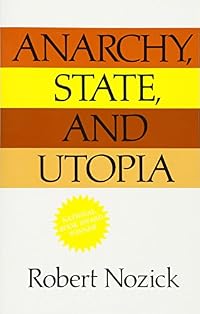
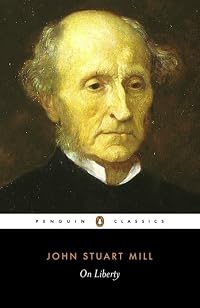





















Member Recommendations
P_S_Patrick Social and political criticism, tending toward libertarianism, promotion of individual responsibility, and against of materialist or political homogeneity.

P_S_Patrick Common themes of Freedom, Tolerance, political and social criticism.
Member Reviews
This is a set of four vaguely linked essays on social criticism, linked by the themes of freedom and social change. The first essay is a criticism of Anarchy, detailing its stupidity and vacuity – how it doesn’t really deliver anything specific that anyone really wants. It accuses it of being more of an aesthetic position, an empty posture, which does not take into account any social realities. This is all fine, but it seems a bit redundant as no serious people consider anarchy to be a valid option anyway. Maybe they did when this book was written.
The second essay gets more interesting, as it looks further into the concept of freedom. It discusses the almost paradoxical question of whether you can force someone to be free. This is show more interesting from a philosophical viewpoint – whether it can be done, as well as from a moral point -whether it should be done, and from a social viewpoint – what would happen to society if it was done. What it comes down to is whether you can you make people take more responsibility for their actions. Are you letting them have more freedom by allowing them to relapse into outwardly conditioned behavior (the state most people are currently in, seemingly by choice), where their actions are subject to co-ercive forces, prompted by governmental and corporate nudges, advertising, and socially ingrained behaviours (See Vance Packard’s The Hidden Pursuaders). Or whether they can awaken from this and determine their own course. This is where the difficulty lies in the idea of forcing people to be free- it requires an individual acquisition of consciousness of a person’s own situation, an effort at self education, where we learn to understand the consequences of our behavior and improve our ability to make decisions so we can work toward our own personal goals (not the default ones given to us). Without this, we are not necessarily particularly free as agents, we just follow what everyone else is doing. This is the sort of thing that other books such as Marcuse’s One Dimensional man are about, however this essay is somewhat more succinct and coherent.
The third essay is also quite good, and particularly relevant to current times. It talks about the tolerance of intolerance. It makes the astute point that there can never be absolute tolerance. Tolerance of any one given thing is usually intolerance of something else which is counter to it, or mutually exclusive to it. So we must decide upon a set of moral values in order to determine what is given preference in the dishing out of tolerance. For example, there are some mild forms of intolerance that we are better allowing in society, than forcing everyone to be tolerant of everything, which is linked to current trends in political correctness. This ties in quite well with JS Mill’s On Liberty. That it is necessary for a healthy society to contain people who disagree with each other and have opposite values, to avoid the group-think mind police state that we end up with in 1984 and the whole current “no-platforming” trend. It might sometimes be better to allow people to voice their own wrong and potentially offensive views (within reason), for the sake of preserving our own ability to think critically, than to have everyone’s views decided top down and fed to them, Communist style (with any dissenters imprisoned). Where you draw the boundary is the question.
Essay four is about what is wrong with democracy in America. It makes some very valid points about people not having a real mental involvement in it, but rather being passive consumers of the whole game show. Where the spoils go to the team with the biggest marketing budget that can afford the most effective brainwashing operation. It makes that point that this society is stable because people perceive that they are in a democracy, and that a rebellion would be therefore against themselves. That the current situation where those with money rule the country, is kept in place because the remaining majority of the country is split into groups that have opposite objectives to one another (left/right; race divisions etc), and therefore don’t perceive the real oppressors.
In all, a good thought-provoking book that deals with some politically and socially important issues, but you can probably skip the first and last essays and just read the ones on freedom and tolerance. show less
The second essay gets more interesting, as it looks further into the concept of freedom. It discusses the almost paradoxical question of whether you can force someone to be free. This is show more interesting from a philosophical viewpoint – whether it can be done, as well as from a moral point -whether it should be done, and from a social viewpoint – what would happen to society if it was done. What it comes down to is whether you can you make people take more responsibility for their actions. Are you letting them have more freedom by allowing them to relapse into outwardly conditioned behavior (the state most people are currently in, seemingly by choice), where their actions are subject to co-ercive forces, prompted by governmental and corporate nudges, advertising, and socially ingrained behaviours (See Vance Packard’s The Hidden Pursuaders). Or whether they can awaken from this and determine their own course. This is where the difficulty lies in the idea of forcing people to be free- it requires an individual acquisition of consciousness of a person’s own situation, an effort at self education, where we learn to understand the consequences of our behavior and improve our ability to make decisions so we can work toward our own personal goals (not the default ones given to us). Without this, we are not necessarily particularly free as agents, we just follow what everyone else is doing. This is the sort of thing that other books such as Marcuse’s One Dimensional man are about, however this essay is somewhat more succinct and coherent.
The third essay is also quite good, and particularly relevant to current times. It talks about the tolerance of intolerance. It makes the astute point that there can never be absolute tolerance. Tolerance of any one given thing is usually intolerance of something else which is counter to it, or mutually exclusive to it. So we must decide upon a set of moral values in order to determine what is given preference in the dishing out of tolerance. For example, there are some mild forms of intolerance that we are better allowing in society, than forcing everyone to be tolerant of everything, which is linked to current trends in political correctness. This ties in quite well with JS Mill’s On Liberty. That it is necessary for a healthy society to contain people who disagree with each other and have opposite values, to avoid the group-think mind police state that we end up with in 1984 and the whole current “no-platforming” trend. It might sometimes be better to allow people to voice their own wrong and potentially offensive views (within reason), for the sake of preserving our own ability to think critically, than to have everyone’s views decided top down and fed to them, Communist style (with any dissenters imprisoned). Where you draw the boundary is the question.
Essay four is about what is wrong with democracy in America. It makes some very valid points about people not having a real mental involvement in it, but rather being passive consumers of the whole game show. Where the spoils go to the team with the biggest marketing budget that can afford the most effective brainwashing operation. It makes that point that this society is stable because people perceive that they are in a democracy, and that a rebellion would be therefore against themselves. That the current situation where those with money rule the country, is kept in place because the remaining majority of the country is split into groups that have opposite objectives to one another (left/right; race divisions etc), and therefore don’t perceive the real oppressors.
In all, a good thought-provoking book that deals with some politically and socially important issues, but you can probably skip the first and last essays and just read the ones on freedom and tolerance. show less
Members
- Recently Added By
Author Information

37+ Works 2,328 Members
Benjamin Reynolds Barber was born in Manhattan, New York on August 2, 1939. He received a bachelor's degree in political science from Grinnell College in 1960 and a master's degree in government in 1963 and a doctorate in 1966 from Harvard University. In 1969, he began teaching political science at Rutgers University, where he was the director of show more the Walt Whitman Center for the Culture and Politics of Democracy for many years. In 2001, he joined the University of Maryland as the Kekst Professor of Civil Society. He was a political theorist and author. His books included Strong Democracy: Participatory Politics for a New Age, The Conquest of Politics: Liberal Philosophy in Democratic Times, Jihad vs. McWorld: How Globalism and Tribalism Are Reshaping the World, The Truth of Power: Intellectual Affairs in the Clinton White House, Fear's Empire: War, Terrorism and Democracy, If Mayors Ruled the World: Dysfunctional Nations, Rising Cities, and Cool Cities: Urban Sovereignty and the Fix for Global Warming. In addition to his books, Barber was a frequent contributor to several magazines including The Atlantic, Harper's Magazine, and The New York Times. In 1974, he helped found the journal Political Theory, which he edited for the next decade. He coauthored the prize-winning, ten-part PBS/CBC television series The Struggle for Democracy. He died from pancreatic cancer on April 24, 2017 at the age of 77. (Bowker Author Biography) show less
Classifications
- Genres
- Nonfiction, Philosophy, Politics and Government, Sociology
- DDC/MDS
- 320.01 — Social sciences Political science Political science (Politics and government) Political Science Philosophy and Theory
- LCC
- JC571 .B355 — Political Science Political theory Political theory. The state. Theories of the state Purpose, functions, and relations of the state
Statistics
- Members
- 22
- Popularity
- 1,184,729
- Reviews
- 1
- Rating
- (4.00)
- Languages
- English
- Media
- Paper
- ISBNs
- 1
- ASINs
- 2