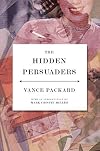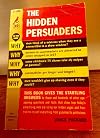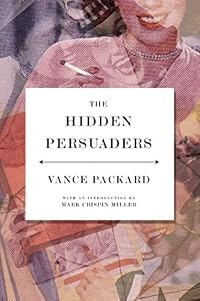
The Hidden Persuaders
by Vance Packard
On This Page
Description
The Hidden Persuaders is Vance Packard's pioneering and prescient work revealing how advertisers use psychological methods to tap into our unconscious desires in order to "persuade" us to buy the products they are selling.A classic examination of how our thoughts and feelings are manipulated by business, media and politicians, The Hidden Persuaders was the first book to expose the hidden world of "motivation research," the psychological technique that advertisers use to probe our minds in show more order to control our actions as consumers. Through analysis of products, political campaigns and television programs of the 1950s, Packard shows how the insidious manipulation practices that have come to dominate today's corporate-driven world began. Featuring an introduction by Mark Crispin Miller, The Hidden Persuaders has sold over one million copies, and forever changed the way we look at the world of advertising.Vance Packard (1914-1996) was an American journalist, social critic, and best-selling author. Among his other books were The Status Seekers, which described American social stratification and behavior, The Waste Makers, which criticizes planned obsolescence, and The Naked Society, about the threats to privacy posed by new technologies. show lessTags
Recommendations






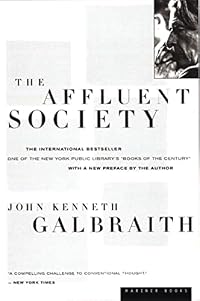



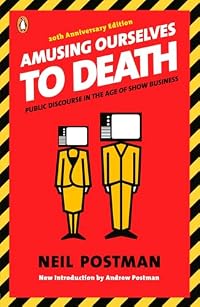
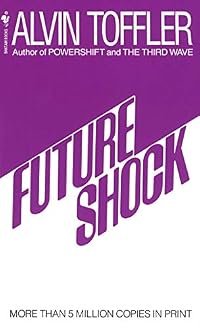

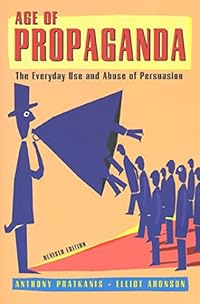














Member Recommendations


supersidvicious Il libro di Vance Packard è un classico imperdibile che dovrebbe essere reso testo obbligatorio nelle scuole.
Il libro di Altamore racconta la situazione in Italia negli alla fine degli anni 90 del secolo scorso e nei primi anni 2000.
Member Reviews
Now it is somewhat dated. The original was, after all, published in 1957; the edition I read had an epilogue and introduction from 1981, updating things slightly. Still a lot of the general comments and the large picture rings a lot of warning bells in my skull. I actually found it more chilling than any horror book I've read.
This looks at how we are sold things, how things are packaged to attract and to encourage us to enter into a unthinking mode of living. Allowing the advertising to wash us up on the aisles of shops reaching for foods and goods that we will later bin. You can see how the advertising machine both misjudges and adapts to other societies.
It warns us that we need to stop accepting and be active consumers, thinking show more about the products we're sold and whether or not we need them or if they are of any real use to us nutritionally or otherwise. However as this book is over 50 years old and we're still behaving in the same ways we also need to ask if the general public really want to learn the lessons in this book, but that's where it gets scary. show less
This looks at how we are sold things, how things are packaged to attract and to encourage us to enter into a unthinking mode of living. Allowing the advertising to wash us up on the aisles of shops reaching for foods and goods that we will later bin. You can see how the advertising machine both misjudges and adapts to other societies.
It warns us that we need to stop accepting and be active consumers, thinking show more about the products we're sold and whether or not we need them or if they are of any real use to us nutritionally or otherwise. However as this book is over 50 years old and we're still behaving in the same ways we also need to ask if the general public really want to learn the lessons in this book, but that's where it gets scary. show less
Vance Packard’s “The Hidden Persuaders” presents an overview of the psychological research done by the advertising industry, which it uses to influence us, often subconsciously, to think we want their products.
This trend for in-depth psychological research, as opposed to more traditional market research and statistical analysis, has been growing since the 1940s. It has influenced the bulk of society to a vast degree in creating false wants and has expanded the economy so that products are not merely sold to fulfil demands, but demands are created to sell products. It has done this in a way that traditional marketing based on the assumption that the consumer was a rational entity could not, by leveraging the subconscious. Much of show more the research that has gone into this is quite clever and interesting to read about.
This is a fascinating volume not merely from the point of view of understanding human nature and the unexpected psychological factors behind common purchasing decisions, but also because of the prevalence of advertising and consumerism and the need to be on guard against the ubiquitous manipulations of companies trying to gain the upper hand. Recommended reading for anyone with an interest in psychology, business, or society. show less
This trend for in-depth psychological research, as opposed to more traditional market research and statistical analysis, has been growing since the 1940s. It has influenced the bulk of society to a vast degree in creating false wants and has expanded the economy so that products are not merely sold to fulfil demands, but demands are created to sell products. It has done this in a way that traditional marketing based on the assumption that the consumer was a rational entity could not, by leveraging the subconscious. Much of show more the research that has gone into this is quite clever and interesting to read about.
This is a fascinating volume not merely from the point of view of understanding human nature and the unexpected psychological factors behind common purchasing decisions, but also because of the prevalence of advertising and consumerism and the need to be on guard against the ubiquitous manipulations of companies trying to gain the upper hand. Recommended reading for anyone with an interest in psychology, business, or society. show less
Although I read this book many years ago, it stuck inside my head like an old familiar tune that you can’t quite place and are not sure of the words. Time and again the book’s message has resurfaced in terms like “Planned Obsolescence,” while watching the movie, “Mom & Dad – staring Nickolas Cage” and whenever I found myself using a disposable item.
Recently, I’ve begun speaking out against companies that would rather toss their unsold goods into landfills, rather than selling them at reduced prices or donating them to worthy charities/causes. Many “Big-Name” stores are notorious for this practice and consumers are just becoming aware of the effects: Food, Clothing, Books, Appliances, Electronics and more – all show more thrown away when they go unsold – as new models are unpacked for the shelves and racks.
I have forgone the “Rat Race,” choosing a simple life of working from my home-office, here, on my farm – where very little is ever thrown away and we are continuously learning new ways to recycle, re-purpose and reuse.
But my question remains – what can I do to change this wasteful practice when I see it taking place? How can I help others understand the brainwashing efforts of marketers without sounding fanatical? show less
Recently, I’ve begun speaking out against companies that would rather toss their unsold goods into landfills, rather than selling them at reduced prices or donating them to worthy charities/causes. Many “Big-Name” stores are notorious for this practice and consumers are just becoming aware of the effects: Food, Clothing, Books, Appliances, Electronics and more – all show more thrown away when they go unsold – as new models are unpacked for the shelves and racks.
I have forgone the “Rat Race,” choosing a simple life of working from my home-office, here, on my farm – where very little is ever thrown away and we are continuously learning new ways to recycle, re-purpose and reuse.
But my question remains – what can I do to change this wasteful practice when I see it taking place? How can I help others understand the brainwashing efforts of marketers without sounding fanatical? show less
An essay I read inspired me to read this 50-year old expose of the uses of psychology to sell consumer items and political candidates. I vaguely remember the author, Vance Packard, had a string of best-sellers in the fifties and early sixties, all of them slightly sensationalized discussions of social science issues. "[b:The Hidden Persuaders|3730|The Hidden Persuaders|Vance Packard|http://ecx.images-amazon.com/images/I/51eFXFxBLPL._SL75_.jpg|40]" is mostly a historical document by now, Packard's concern about the manipulation of public opinions old hat, but it is sometimes prescient and at least once raises a basic question about the viability of an economy based on more and more production and consumption of products no one needs.
This book gave me a very useful understanding of, and also a very useful distrust of, all sorts of advertising.
Un libro degli anni '50-'60 in cui vengono presentati e spiegati le tecniche pubblicitarie di condizionamento della massa.Incredibilmente attuale!
Everything old is new again...I highly recommend this book to anyone who believes that "you are your own man"(as it were).
Members
- Recently Added By
Lists

David Bowie's Top 100
97 works; 23 members

David Bowie's List of Top 100 Books
94 works; 6 members

Shaykh Hamza's Book Recommendations
439 works; 3 members

My List
302 works; 1 member
David Bowie’s Top 100 Favourite Reads
100 works; 3 members
Author Information

Some Editions
Awards and Honors
Awards
Distinctions
Notable Lists
Series
Belongs to Publisher Series
Work Relationships
Is contained in
Common Knowledge
- Original publication date
- 1957
- Epigraph
- A society in which consumption has to be artificially stimulated in order to keep production going is a society founded on trash and waste, and such a society is a house built upon sand.
--Dorothy L. Sayers in Creed... (show all) or Chaos - Dedication
- To my Mother and Father who have never confused the posession of goods with the good life.
- First words
- What will the world of tomorrow be like?
This book is an attempt to explore a strange and rather exotic new area of modern life. (1980s edition) - Last words*
- (Click to show. Warning: May contain spoilers.)Il sopruso più grave che molti manipolatori commettono, è a mio avviso, il tentativo di insinuarsi nell'intimità della mente umana. È questo diritto all'intimità della mente - il diritto di essere, a piacere, razionali o irrazionali - che, io credo, abbiamo il dovere di difendere.
*Some information comes from Common Knowledge in other languages. Click "Edit" for more information.
Classifications
Statistics
- Members
- 966
- Popularity
- 27,137
- Reviews
- 16
- Rating
- (3.84)
- Languages
- 6 — Dutch, English, French, German, Italian, Spanish
- Media
- Paper, Ebook
- ISBNs
- 25
- ASINs
- 47