
On This Page
Description
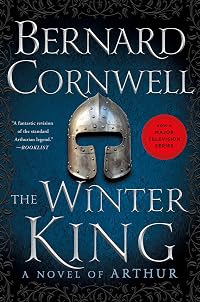
It takes a remarkable writer to make an old story as fresh and compelling as the first time we heard it. With The Winter King, the first volume of his magnificent Warlord Chronicles, Bernard Cornwell finally turns to the story he was born to write: the mythic saga of King Arthur. The tale begins in Dark Age Britain, a land where Arthur has been banished and Merlin has disappeared, where a child-king sits unprotected on the throne, where religion vies with magic for the souls of the people. show more It is to this desperate land that Arthur returns, a man at once utterly human and truly heroic: a man of honor, loyalty, and amazing valor; a man who loves Guinevere more passionately than he should; a man whose life is at once tragic and triumphant. As Arthur fights to keep a flicker of civilization alive in a barbaric world, Bernard Cornwell makes a familiar tale into a legend all over again. show lessTags
Recommendations
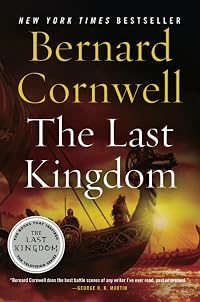


Member Recommendations
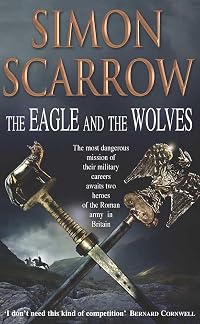
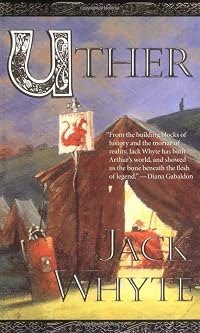
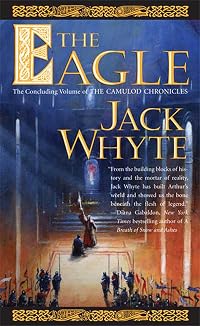
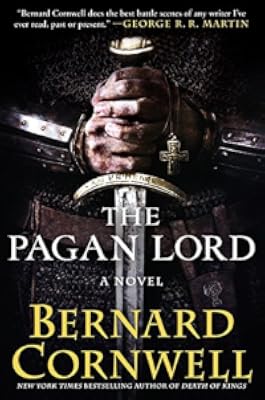
Donogh As you rooted for the British against the Saxons in Cornwell's 'The Winter King', so shall you root for the Saxons agains the Danes in Cornwell's 'The Last Kingdom'
Member Reviews
Yet another spin on the King Arthur legend but one refreshingly devoid of enchantments as Cornwell downplays the magic in favour of a grittier sense of reality in which Guinevere, Lancelot, Merlin, and Arthur himself get their idealized reputations tarnished while the early Christian church gets a few well deserved black eyes. Yet it's still a stirring, romantic campfire tale despite all the blood and guts and if this first book is any indication it also promises to be a sweeping quasi-historical epic. I also appreciated the maps and dramatis personae at the front of the book, I just wish it had also come with a pronunciation key because some of those Celtic names look like a dozen consonants in search of a vowel.
The Winter King by Bernard Cornwell follows Derfel, one of Arthur's sworn men, as he writes a history of Arthur's reign many years later. By this point he is a Christian brother, persuaded by the current queen to set it down. The first in a trilogy, Derfel covers how Arthur becomes protector to the baby Mordred after High King Uther dies, the way he strives for peace, and how his relationship with Guinevere contributes to conflict with other British kingdoms, while his men also fight Saxons at home and Franks abroad. Nimue, Merlin and others appear throughout.
I came to this through the audiobook. It had been on my to read pile since a childhood friend gave it to me, but I had not realised from the title what it was about. It was not show more quite what I expected, though that may reflect the distance between when it was written and when I read it.
Given the narrative device, there is often a sense of distance, since everything is filtered through Derfel's recollection. It aims for a textured sense of the period, with detail on armour, food, weapons and customs. Because Derfel is recounting events less than a century after they take place, there is a complete belief in oaths, spells, witches and druids. At the same time, the book gestures toward how histories are shaped by those who tell them. This comes through in Derfel being challenged on his portrayal of Guinevere as unlikeable, and his insistence that she was in fact often kind, as well as in the reframing of Lancelot as a figure who has carefully constructed his own legend. Derfel also notes that his account may be altered again through translation.
The different ways Arthurian legend are woven into the novel make for interesting reading. As someone more familiar with retellings than the originals, it felt distinct, particularly in its refusal to position Arthur as a once and future king, and in presenting Merlin in a more unpredictable role rather than as a steady advisor.
Between its historical setting and the period in which it was written, the book includes a great deal of violence, and often treats sexual violence toward women in an offhand way. From the opening scenes, and especially through Nimue's arc, femininity is frequently framed as weakness, or as something to be rejected. The repeated insults aimed at Guinevere, and by extension Arthur, began to wear thin for me, even allowing for the framing of Derfel and Arthur as separate from those contemporary voices that Derfel recalls. The range of roles available to women felt narrow, with Nimue as the witch, or variations on princess.
There are also moments that stayed with me, particularly in the exchanges between Arthur and Derfel around the purpose of a soldier, and Arthur's desire to create peace while holding power in a single place. The tension between wanting to do good and the reliance on violence to achieve it comes through clearly.
Overall, it is a book that grew on me, largely because of the connection I formed with Derfel as a narrator and observer of Arthur. That said, extended battle scenes and sustained violence are not something I tend to enjoy, so I will not be continuing the trilogy. Even so, I found myself moving from a firm no after the opening to something closer to tempted by the end, which speaks to how compelling the telling is. There are also many threads Derfel has yet to return to by the close. show less
I came to this through the audiobook. It had been on my to read pile since a childhood friend gave it to me, but I had not realised from the title what it was about. It was not show more quite what I expected, though that may reflect the distance between when it was written and when I read it.
Given the narrative device, there is often a sense of distance, since everything is filtered through Derfel's recollection. It aims for a textured sense of the period, with detail on armour, food, weapons and customs. Because Derfel is recounting events less than a century after they take place, there is a complete belief in oaths, spells, witches and druids. At the same time, the book gestures toward how histories are shaped by those who tell them. This comes through in Derfel being challenged on his portrayal of Guinevere as unlikeable, and his insistence that she was in fact often kind, as well as in the reframing of Lancelot as a figure who has carefully constructed his own legend. Derfel also notes that his account may be altered again through translation.
The different ways Arthurian legend are woven into the novel make for interesting reading. As someone more familiar with retellings than the originals, it felt distinct, particularly in its refusal to position Arthur as a once and future king, and in presenting Merlin in a more unpredictable role rather than as a steady advisor.
Between its historical setting and the period in which it was written, the book includes a great deal of violence, and often treats sexual violence toward women in an offhand way. From the opening scenes, and especially through Nimue's arc, femininity is frequently framed as weakness, or as something to be rejected. The repeated insults aimed at Guinevere, and by extension Arthur, began to wear thin for me, even allowing for the framing of Derfel and Arthur as separate from those contemporary voices that Derfel recalls. The range of roles available to women felt narrow, with Nimue as the witch, or variations on princess.
There are also moments that stayed with me, particularly in the exchanges between Arthur and Derfel around the purpose of a soldier, and Arthur's desire to create peace while holding power in a single place. The tension between wanting to do good and the reliance on violence to achieve it comes through clearly.
Overall, it is a book that grew on me, largely because of the connection I formed with Derfel as a narrator and observer of Arthur. That said, extended battle scenes and sustained violence are not something I tend to enjoy, so I will not be continuing the trilogy. Even so, I found myself moving from a firm no after the opening to something closer to tempted by the end, which speaks to how compelling the telling is. There are also many threads Derfel has yet to return to by the close. show less
“Our whole line surged forward and scarred swords hammered at the enemy with a new energy. The silver horn, so pure and clear, called again and again, a hunting call to the slaughter, and each time it sounded our men pressed forward into the branches of the felled trees to cut and stab and scream at the enemy who, suspecting some trickery, glanced nervously around the vale as they defended themselves.”
This is one of the best books I have read on Arthurian legend. It is epic in scope, and contains a wonderful mixture of history, strategy, battles, political intrigues, alliances, and relationships. All the key players are here, including Guinevere, Mordred, Galahad, Lancelot, and Merlin, though some are not in their traditional show more roles. It envisions them as real people living in a real time, without employing elements of fantasy or magic.
It is told from the perspective of Derfel, looking back on his life as one of Arthur’s commander-warriors. Derfel was a Saxon slave brought up by Merlin in the Celtic traditions. In his later years, Derfel converted to Christianity, but at the time of his service to Arthur, he was a pagan and Mithraist. Many religions are colliding at this time, particularly various pagans, Druids, and Christians. Thus, Derfel is in a position to shed light on many aspects of medieval life – rituals, superstitions, and celebrations.
Cornwell attempts to peel away the layers of myth, resulting in a tale that conveys a feeling of authenticity. If Arthur existed, he is easily envisioned as acting as he does in this tale. For example: “Arthur confuses morality with power, and he worsens the mix by always believing that people are inherently good, even the worst of them, and that is why, mark my words, he will never have peace. He longs for peace, he talks of peace, but his own trusting soul is the reason he will always have enemies.”
The author has come up with a historical approach to a period of scant documentation – it has been lost to time. He uses genuine names of regions, leaders, and warring factions. Of course, warfare is almost constant, so alpha males are in the forefront, but this book is not lacking in strong female characters. I felt engrossed in the story from beginning to end.
Cornwell identifies historical fact versus fictional portrayals in the Author’s Notes at the end. Published in 1995, this is the first book in a trilogy, but has an independently satisfying ending. I do not normally read sequels, but I will make an exception for this set. show less
This is one of the best books I have read on Arthurian legend. It is epic in scope, and contains a wonderful mixture of history, strategy, battles, political intrigues, alliances, and relationships. All the key players are here, including Guinevere, Mordred, Galahad, Lancelot, and Merlin, though some are not in their traditional show more roles. It envisions them as real people living in a real time, without employing elements of fantasy or magic.
It is told from the perspective of Derfel, looking back on his life as one of Arthur’s commander-warriors. Derfel was a Saxon slave brought up by Merlin in the Celtic traditions. In his later years, Derfel converted to Christianity, but at the time of his service to Arthur, he was a pagan and Mithraist. Many religions are colliding at this time, particularly various pagans, Druids, and Christians. Thus, Derfel is in a position to shed light on many aspects of medieval life – rituals, superstitions, and celebrations.
Cornwell attempts to peel away the layers of myth, resulting in a tale that conveys a feeling of authenticity. If Arthur existed, he is easily envisioned as acting as he does in this tale. For example: “Arthur confuses morality with power, and he worsens the mix by always believing that people are inherently good, even the worst of them, and that is why, mark my words, he will never have peace. He longs for peace, he talks of peace, but his own trusting soul is the reason he will always have enemies.”
The author has come up with a historical approach to a period of scant documentation – it has been lost to time. He uses genuine names of regions, leaders, and warring factions. Of course, warfare is almost constant, so alpha males are in the forefront, but this book is not lacking in strong female characters. I felt engrossed in the story from beginning to end.
Cornwell identifies historical fact versus fictional portrayals in the Author’s Notes at the end. Published in 1995, this is the first book in a trilogy, but has an independently satisfying ending. I do not normally read sequels, but I will make an exception for this set. show less
“Our whole line surged forward and scarred swords hammered at the enemy with a new energy. The silver horn, so pure and clear, called again and again, a hunting call to the slaughter, and each time it sounded our men pressed forward into the branches of the felled trees to cut and stab and scream at the enemy who, suspecting some trickery, glanced nervously around the vale as they defended themselves.”
This is one of the best books I have read on Arthurian legend. It is epic in scope, and contains a wonderful mixture of history, strategy, battles, political intrigues, alliances, and relationships. All the key players are here, including Guinevere, Mordred, Galahad, Lancelot, and Merlin, though some are not in their traditional show more roles. It envisions them as real people living in a real time, without employing elements of fantasy or magic.
It is told from the perspective of Derfel, looking back on his life as one of Arthur’s commander-warriors. Derfel was a Saxon slave brought up by Merlin in the Celtic traditions. In his later years, Derfel converted to Christianity, but at the time of his service to Arthur, he was a pagan and Mithraist. Many religions are colliding at this time, particularly various pagans, Druids, and Christians. Thus, Derfel is in a position to shed light on many aspects of medieval life – rituals, superstitions, and celebrations.
Cornwell attempts to peel away the layers of myth, resulting in a tale that conveys a feeling of authenticity. If Arthur existed, he is easily envisioned as acting as he does in this tale. For example: “Arthur confuses morality with power, and he worsens the mix by always believing that people are inherently good, even the worst of them, and that is why, mark my words, he will never have peace. He longs for peace, he talks of peace, but his own trusting soul is the reason he will always have enemies.”
The author has come up with a historical approach to a period of scant documentation – it has been lost to time. He uses genuine names of regions, leaders, and warring factions. Of course, warfare is almost constant, so alpha males are in the forefront, but this book is not lacking in strong female characters. I felt engrossed in the story from beginning to end.
Cornwell identifies historical fact versus fictional portrayals in the Author’s Notes at the end. Published in 1995, this is the first book in a trilogy, but has an independently satisfying ending. I do not normally read sequels, but I will make an exception for this set. show less
This is one of the best books I have read on Arthurian legend. It is epic in scope, and contains a wonderful mixture of history, strategy, battles, political intrigues, alliances, and relationships. All the key players are here, including Guinevere, Mordred, Galahad, Lancelot, and Merlin, though some are not in their traditional show more roles. It envisions them as real people living in a real time, without employing elements of fantasy or magic.
It is told from the perspective of Derfel, looking back on his life as one of Arthur’s commander-warriors. Derfel was a Saxon slave brought up by Merlin in the Celtic traditions. In his later years, Derfel converted to Christianity, but at the time of his service to Arthur, he was a pagan and Mithraist. Many religions are colliding at this time, particularly various pagans, Druids, and Christians. Thus, Derfel is in a position to shed light on many aspects of medieval life – rituals, superstitions, and celebrations.
Cornwell attempts to peel away the layers of myth, resulting in a tale that conveys a feeling of authenticity. If Arthur existed, he is easily envisioned as acting as he does in this tale. For example: “Arthur confuses morality with power, and he worsens the mix by always believing that people are inherently good, even the worst of them, and that is why, mark my words, he will never have peace. He longs for peace, he talks of peace, but his own trusting soul is the reason he will always have enemies.”
The author has come up with a historical approach to a period of scant documentation – it has been lost to time. He uses genuine names of regions, leaders, and warring factions. Of course, warfare is almost constant, so alpha males are in the forefront, but this book is not lacking in strong female characters. I felt engrossed in the story from beginning to end.
Cornwell identifies historical fact versus fictional portrayals in the Author’s Notes at the end. Published in 1995, this is the first book in a trilogy, but has an independently satisfying ending. I do not normally read sequels, but I will make an exception for this set. show less
I enjoyed this more realistic take on the legend of Arthur. Here he is not presented as a King, but as a Warlord who is trying(and many times failing) to unite Britons against the invading Saxons, but just as often, he is battling other Britons who are vying for more power. This was first published in 1996 and I think, even though this is more definitely historical fiction (less fantasy), this influenced a lot of the grimdark fiction that came after this in the fantasy genre. It is dark, violent, gory, ruthless, and at times hard to read, especially the sexual assault scenes. The author was trying to accurately portray the violence of daily life that was inescapable during this time, and in that regard he was successful. As far as the show more story goes, the plot meandered a bit before an overarching story revealed itself. A lot of time was spent establishing the characters and this world. The characters are well-rounded and interesting. Arthur is a flawed, tragic human whose nature has him fighting himself as much as his enemies. Merlin is a crazed, single-minded asshole who is only looking to reestablish Britain's "natural gods" and to kick out any invaders. Our narrator is very sympathetic, and at the beginning of this story, has a bit of hero-worship for Arthur going on. As the story progresses, and as he matures, our narrator learns that Arthur is still a hero, but he's also just a man, not some God-like being. And that's what I find interesting about this novel, it reimagines a legend and mythic character as a real person, with ambitions, flaws, and weaknesses. I'm looking forward to seeing how this story plays out, even though I know if it follows the legend, it won't end well for Arthur... show less
Cornwell attempts to construct the life of Arthur-the-man rather than the legend. After the time of the Romans, Britain is besieged by Saxon invaders and by squabbles among themselves. Arthur just might be the man to unite them, but he is all too often all too human. The battle scenes are good, but the druids have an annoying habit of hopping about and spitting and there are far too many references to rape - this is Cornwell’s lazy shorthand for evoking muddy, early Christian Britain. Finally, while he succeeded in humanizing Arthur he did not make him a sympathetic character. Course, after reading The Mists of Avalon, maybe I just don’t like Arthur all that much : )
Before reading this “revised” adaptation of the Arthur legend I imagined it would be along the lines of the 2004 “King Arthur” film. In a sense it is, but on the other hand this is a very different approach.
This novel and the aforementioned film are more realistic in that they avoid the sorcery aspects that are evident in every other Arthurian book or film I’ve ever read/seen.
Thus, here we have a tale that uses little of the well-known legends, such as a magnificent Camelot, the Lady of the Lake, and the round table. The famous characters of Guinevere, Merlin, Galahad, and Lancelot all appear, yet they are even further removed from their legends than they are in the “King Arthur” film.
Merlin is a famous druid here, thus in show more some respects he does fit in with the wizard character that he’s best known for, though he has no magical powers. It’s clever how he and other druids make themselves powerful by playing on people’s superstitions. It’s often quite amusing too, as on several occasions I laughed aloud, such as when one druid starts hopping alongside a ditch as part of his casting spells, while on another occasion a female with “the power” retaliates by hissing and throwing two handfuls of soil in the air. It comes across funnier because the narrating character recalls these events in all seriousness.
Regarding the narrating character: here we have Derfel, one of Arthur’s most trusted warlords, though to begin with he’s a young lad – a Saxon, in fact, who’s grown up with the Britons. He makes a good lead character. He effectively replaces the role usually occupied by Lancelot.
One of the biggest changes in this compared to other Arthurian retellings is Lancelot’s character. He’s rightly branded by Derfel as a coward, not as an infallible hero.
But despite this new take on something old, I must admit to being a little disappointed. This is partly through many sections dragging on for too long, but mainly because – as with all Bernard Cornwell novels I’ve read to date – the style lets the narrative down.
Three style aspects in particular let this otherwise talented author down. One is the amount of long-winded sentences. Most of these could’ve been reduced in length. Why Mr Cornwell feels the need to keep a sentence running with superfluous “ands”, other conjunctions, and commas I don’t know.
Below is a typical example of an over-long sentence:
>The enemy was six paces away now and still coming, and all around us the greenwood lay warm and breathless and I could smell the two men, smell their leather and the lingering scent of their horses as sweat dripped into my eyes and I almost whimpered aloud in terror, but then Gwlyddyn leaped out of his ambush and screamed a war cry as he ran forward.“If anyone,” he called after the man, “has any authority in this country.”“The best way,” I said, “of making Nimue do anything is to forbid her to do it.”“And so long as you carry the scar, Derfel,” she said, “your life is mine, and so long as I carry the scar, my life is yours. Do you understand that?"
“Yes,” I said.
“One day, Derfel,” Nimue said, “I will call on you, and if you do not come then the scar will mark you to the Gods for a false friend, a traitor and an enemy.”
“Yes,” I said. show less
This novel and the aforementioned film are more realistic in that they avoid the sorcery aspects that are evident in every other Arthurian book or film I’ve ever read/seen.
Thus, here we have a tale that uses little of the well-known legends, such as a magnificent Camelot, the Lady of the Lake, and the round table. The famous characters of Guinevere, Merlin, Galahad, and Lancelot all appear, yet they are even further removed from their legends than they are in the “King Arthur” film.
Merlin is a famous druid here, thus in show more some respects he does fit in with the wizard character that he’s best known for, though he has no magical powers. It’s clever how he and other druids make themselves powerful by playing on people’s superstitions. It’s often quite amusing too, as on several occasions I laughed aloud, such as when one druid starts hopping alongside a ditch as part of his casting spells, while on another occasion a female with “the power” retaliates by hissing and throwing two handfuls of soil in the air. It comes across funnier because the narrating character recalls these events in all seriousness.
Regarding the narrating character: here we have Derfel, one of Arthur’s most trusted warlords, though to begin with he’s a young lad – a Saxon, in fact, who’s grown up with the Britons. He makes a good lead character. He effectively replaces the role usually occupied by Lancelot.
One of the biggest changes in this compared to other Arthurian retellings is Lancelot’s character. He’s rightly branded by Derfel as a coward, not as an infallible hero.
But despite this new take on something old, I must admit to being a little disappointed. This is partly through many sections dragging on for too long, but mainly because – as with all Bernard Cornwell novels I’ve read to date – the style lets the narrative down.
Three style aspects in particular let this otherwise talented author down. One is the amount of long-winded sentences. Most of these could’ve been reduced in length. Why Mr Cornwell feels the need to keep a sentence running with superfluous “ands”, other conjunctions, and commas I don’t know.
Below is a typical example of an over-long sentence:
>The enemy was six paces away now and still coming, and all around us the greenwood lay warm and breathless and I could smell the two men, smell their leather and the lingering scent of their horses as sweat dripped into my eyes and I almost whimpered aloud in terror, but then Gwlyddyn leaped out of his ambush and screamed a war cry as he ran forward.“If anyone,” he called after the man, “has any authority in this country.”“The best way,” I said, “of making Nimue do anything is to forbid her to do it.”“And so long as you carry the scar, Derfel,” she said, “your life is mine, and so long as I carry the scar, my life is yours. Do you understand that?"
“Yes,” I said.
“One day, Derfel,” Nimue said, “I will call on you, and if you do not come then the scar will mark you to the Gods for a false friend, a traitor and an enemy.”
“Yes,” I said. show less
Members
- Recently Added By
Published Reviews
ThingScore 100
The Winter King is perfect for fans of Arthurian lore, particularly those who are acquainted with the original source material by Geoffrey of Monmouth. Cornwell's latest is historic storytelling at its best.
added by Nevov
Lists

Best Historical Fiction
620 works; 261 members

Best Arthurian Fiction
104 works; 33 members

Historical Fiction
889 works; 91 members

aborted books in 2021
7 works; 1 member
Modern Arthurian Fiction
237 works; 16 members

KayStJ's to-read list
1,616 works; 11 members

Books Read in 2018
4,360 works; 110 members

al.vick-series
381 works; 2 members

Books Read in 2021
5,361 works; 114 members
Talk Discussions
Past Discussions
Arthurian Theme read w/**SPOILERS** in The Green Dragon (March 2008)
Author Information

167+ Works 93,367 Members
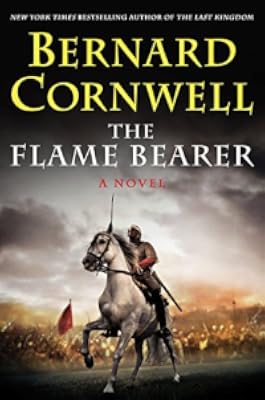
Bernard Cornwell was born in London, England, on February 23, 1944, and came to the United States in 1980. He received a B.A. from the University of London in 1967. Cornwell served as producer of the British Broadcasting Corporation from 1969-1976. After this he was head of current affairs for BBC-TV in Belfast, Northern Ireland. In 1979 he became show more editor of television news for Thames Television of London. Since 1980 he has been a freelance writer. he lives with his wife on Cape Cod. Cornwell's Sharpe series, adventure stories about a British soldier set in the Peninsula War of 1808-1814, are built on the author's interest in the Duke of Wellington's army. Titles include Sharpe's Rifles, Sharpe's Revenge, Sharpe's Siege, Sharpe's Regiment, and Sharpe's Waterloo. The Last Kingdom series has ten books. Book ten, The Flame Bearer is on the bestsellers list. He has also written other works including Wildtrack, Killer's Wake, Sea Lord, Stormchild, Rebel, Copperhead, and Battle Flag. His title Death of Kings made The New York Times Best Seller List in 2012 and In 2014 his title The Pagan Lord made the list again. (Bowker Author Biography) show less
Some Editions
Awards and Honors
Notable Lists
Series

Work Relationships
Is contained in
Has as a student's study guide
Common Knowledge
- Canonical title
- The Winter King
- Original title
- The Winter King
- Original publication date
- 1995
- People/Characters
- Arthur; Ceinwyn; Derfel Cadarn; Galahad; Guinevere; Lancelot du Lac (show all 13); Merlin; Mordred; Morgan le Fay (as Morgan); Nimue; Tewdric; Uther Pendragon; Cei
- Important places
- England, UK (as England)
- Related movies
- The Winter King (2023 | IMDb)
- Dedication
- The Winter King is for Judy, with love
- First words
- Once upon a time, in a land that was called Britain, these things happened.
- Last words
- (Click to show. Warning: May contain spoilers.)And perhaps, in the Otherworld, Norwenna heard that scream and knew that her son, her little winter-born son, was still the King.
- Original language
- English
Classifications
Statistics
- Members
- 4,426
- Popularity
- 3,343
- Reviews
- 115
- Rating
- (4.03)
- Languages
- 13 — Danish, Dutch, English, Finnish, French, German, Hungarian, Italian, Polish, Spanish, Swedish, Turkish, Portuguese (Brazil)
- Media
- Paper, Audiobook, Ebook
- ISBNs
- 77
- ASINs
- 30