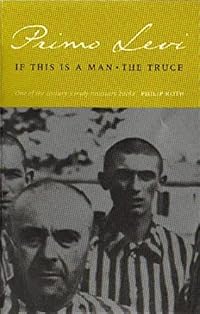
If This Is a Man / The Truce
by Primo Levi
On This Page
Description
Two works of autobiography. "If this is a man" tells of Levi's experiences as a victim of the Holocaust, from his arrest by the Fascists in 1943 to the liberation of Auschwitz by the Russians. "The Truce" is the story of his eight-month journey back to Italy after he was liberated.Tags
Recommendations















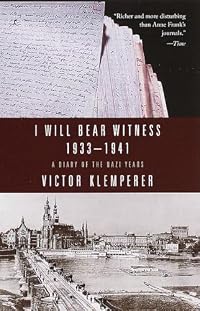
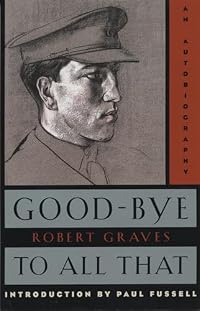
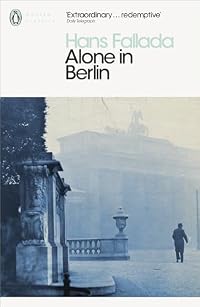



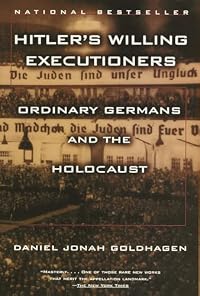
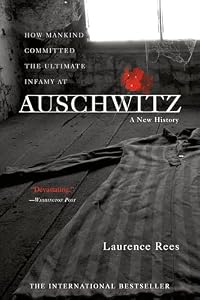

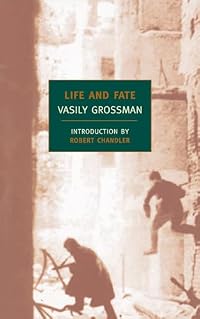
Member Recommendations




WendyRobyn Both personal accounts by Holocaust survivors. I feel the tone is similar. Frankl's book goes on to explore psychological implications of his experiences.
jigarpatel Ann Goldstein's translation of "The Truce" in The Complete Works is arguably more readable. Of course, in addition, you will have access to all of Levi's writings in this volume.
Member Reviews
If This Is a Man
If This Is a Man is a memoir by an Italian Jew betrayed, arrested and imprisoned for a year in an Auschwitz concentration camp in 1944. It is on par with Solzhenitsyn in its rawness, but lacks the invectiveness found in the Russian's works. We find accounts of the camp hierarchy, comprising criminals, politicals and Jews; the juxtaposition of cultures and languages; the "relief" of suffering just the right kind of malady; a market economy whose currency is bread rations; trade in goods obtained by means ingenious or nefarious; the dehumanising treatment of a group plagued by cold, hunger and sickness; and the horrors of an arbitrary "selection". Precious acts of kindness are highlighted as vestiges of humanity. A chemist show more by trade, one of Levi's few respites was working in a synthetic rubber factory, an initiative which, characteristic of output from slave labour, never reached fruition.
Stuart Woolf's translation is likely true to the original as it was made under Levi's close supervision, but it is clunky and requires patience. There is little philosophy, the prose is factual and measured. Without fail, read "The Author's Answers to His Readers' Questions", where Levi describes his motivations and post-Auschwitz life, as well as a short history of anti-Semitism. Most interesting is Levi's explanation of why hatred of the Jews has been so constant throughout history (animalistic mistrust of difference untempered by positive societal influences), and why If This Is a Man barely mentions or criticizes the German oppressors (intentional absence of contact with officialdom; lack of transparency to the German population on what happened inside camps).
Recommended by Jared Diamond in a podcast, the sole reason I found this gem.
The Truce
The Truce charts Levi's circuitous journey with around 1,400 other prisoners from Auschwitz to Turin. The novel begins where If This Is a Man ends, with the sick left to die and healthy taken on a death march away from the Russians. When they are finally found by the Russians, they are given basic assistance and eventually led on a route through Ukraine, Russia, Romania, Hungary, Slovakia, Germany and Austria, before finally reaching the Italian border at Brenner. Apart from the death toll in Auschwitz, the frail condition of the survivors together with the gruelling nature of the return trip meant that, of the 650 Italian Jews who were taken with Levi to Auschwitz only 3 returned home.
The account focuses on the scale and helplessness of displaced peoples across Eastern Europe after the German collapse. There is precious little organisation: provisions are unreliable and the travellers are often left to their own resources for fuel and water. Language barriers abound: local Russians cannot abide the non-Russian speaking ex-prisoners. There are also some lighter moments of theatre and film when encamped. An unstable environment breeds unlikely friendships, such as Levi's one with the Greek who has the knack of making a market in anything from shirts to people.
Characters from all sides are brought to life. Many, especially in the earlier chapters, are psychologically scarred, as they are unable to believe or appreciate the war is over. Several incidents in the later chapters are memorable. A disillusioned group abandons the train to hitchhike their way to an intermediary camp. Half a dozen plates are exchanged for a chicken in a desperate search for nutritious food. An enterprising Italian sells a bronze ring as gold to a local peasant just before the train departs a station.
I found Ann Goldstein's translation, found in The Complete Works of Primo Levi (2015), more readable than Stuart Woolf's translation of If This Is a Man. However, while worthwhile reading, The Truce for me does not have the same emotional draw as If This Is a Man. show less
If This Is a Man is a memoir by an Italian Jew betrayed, arrested and imprisoned for a year in an Auschwitz concentration camp in 1944. It is on par with Solzhenitsyn in its rawness, but lacks the invectiveness found in the Russian's works. We find accounts of the camp hierarchy, comprising criminals, politicals and Jews; the juxtaposition of cultures and languages; the "relief" of suffering just the right kind of malady; a market economy whose currency is bread rations; trade in goods obtained by means ingenious or nefarious; the dehumanising treatment of a group plagued by cold, hunger and sickness; and the horrors of an arbitrary "selection". Precious acts of kindness are highlighted as vestiges of humanity. A chemist show more by trade, one of Levi's few respites was working in a synthetic rubber factory, an initiative which, characteristic of output from slave labour, never reached fruition.
Stuart Woolf's translation is likely true to the original as it was made under Levi's close supervision, but it is clunky and requires patience. There is little philosophy, the prose is factual and measured. Without fail, read "The Author's Answers to His Readers' Questions", where Levi describes his motivations and post-Auschwitz life, as well as a short history of anti-Semitism. Most interesting is Levi's explanation of why hatred of the Jews has been so constant throughout history (animalistic mistrust of difference untempered by positive societal influences), and why If This Is a Man barely mentions or criticizes the German oppressors (intentional absence of contact with officialdom; lack of transparency to the German population on what happened inside camps).
Recommended by Jared Diamond in a podcast, the sole reason I found this gem.
The Truce
The Truce charts Levi's circuitous journey with around 1,400 other prisoners from Auschwitz to Turin. The novel begins where If This Is a Man ends, with the sick left to die and healthy taken on a death march away from the Russians. When they are finally found by the Russians, they are given basic assistance and eventually led on a route through Ukraine, Russia, Romania, Hungary, Slovakia, Germany and Austria, before finally reaching the Italian border at Brenner. Apart from the death toll in Auschwitz, the frail condition of the survivors together with the gruelling nature of the return trip meant that, of the 650 Italian Jews who were taken with Levi to Auschwitz only 3 returned home.
The account focuses on the scale and helplessness of displaced peoples across Eastern Europe after the German collapse. There is precious little organisation: provisions are unreliable and the travellers are often left to their own resources for fuel and water. Language barriers abound: local Russians cannot abide the non-Russian speaking ex-prisoners. There are also some lighter moments of theatre and film when encamped. An unstable environment breeds unlikely friendships, such as Levi's one with the Greek who has the knack of making a market in anything from shirts to people.
Characters from all sides are brought to life. Many, especially in the earlier chapters, are psychologically scarred, as they are unable to believe or appreciate the war is over. Several incidents in the later chapters are memorable. A disillusioned group abandons the train to hitchhike their way to an intermediary camp. Half a dozen plates are exchanged for a chicken in a desperate search for nutritious food. An enterprising Italian sells a bronze ring as gold to a local peasant just before the train departs a station.
I found Ann Goldstein's translation, found in The Complete Works of Primo Levi (2015), more readable than Stuart Woolf's translation of If This Is a Man. However, while worthwhile reading, The Truce for me does not have the same emotional draw as If This Is a Man. show less
In commemoration of the 75th anniversary of the liberation of Auschwitz, I have read what is probably the most famous memoir from a survivor. If This is a Man is, however, rather different from other such memoirs I have read, as its theme is not so much the detail of his lived experiences, or particular atrocities (though these are of course covered), but what Auschwitz and the Holocaust represented - in the author's words, "the demolition of man": "Imagine now a man who is deprived of everyone he loves, and at the same time of his house, his habits, his clothes, in short, of everything he possesses: he will be a hollow man, reduced to suffering and needs, forgetful of dignity and restraint, for he who loses all often easily loses show more himself."; and "if I could enclose all the evil of our time in one image, I would choose this image which is familiar to me: an emaciated man, with head dropped and shoulders curved, on whose face and in whose eyes not a trace of a thought is to be seen." Notwithstanding these bleak quotes, I did not find this memoir bleak, as throughout his year at Auschwitz, Levi survives by never losing an ultimate belief in human dignity and hope, though, paradoxically, "our wisdom lay in ‘not trying to understand’, not imagining the future, not tormenting ourselves as to how and when it would all be over; not asking others or ourselves any questions." The book ends with the Nazi abandonment of Auschwitz and the notorious death march (which Levi avoided only by virtue of being ill with scarlet fever at the time) culminating, after a ten day period of further struggling with the forces of cold, hunger and disease, with the Red Army liberating the camp on 27 January 1945.
My edition was paired with its sequel the somewhat longer The Truce, which details the author's lengthy enforced peregrinations across eastern and central Europe to eventually get home well into the autumn of 1945. This is less immediately memorable as a read, but does contain descriptions of the many colourful characters of different nationalities with whom he makes his itinerant life. Finally, the book ends with the author providing lengthy answers to some of the most common questions he was asked in the post-war period by audiences to whom he spoke about his books and his experiences, to ensure the events of the Holocaust remained alive in the minds of succeeding generations as: "Strong though the words of If This is a Man are, they are still weak before the will to deny or forget." show less
My edition was paired with its sequel the somewhat longer The Truce, which details the author's lengthy enforced peregrinations across eastern and central Europe to eventually get home well into the autumn of 1945. This is less immediately memorable as a read, but does contain descriptions of the many colourful characters of different nationalities with whom he makes his itinerant life. Finally, the book ends with the author providing lengthy answers to some of the most common questions he was asked in the post-war period by audiences to whom he spoke about his books and his experiences, to ensure the events of the Holocaust remained alive in the minds of succeeding generations as: "Strong though the words of If This is a Man are, they are still weak before the will to deny or forget." show less
This book. It is sad and beautiful, tragic and uplifting. Levi has the admirable ability to transcend malice, and with this work simply seeks understanding of the people and the circumstances that led him to be incarcerated in an Auschwitz work camp. The first book (this edition is two books in one) outlines camp life, the chilling morning wake up call that remains nightmare-fodder for years to come, the selections, the tormenting hunger and the emotional depths that are reached when faced with such depravity and violence on a day to day basis, the cold, the tenuous relationship they all have with life itself. Also, the friendships, and small mercies that keep him going.
Then in book 2, The Truce, his long and wayward journey from camp show more liberation back to Turin, Italy. Although free, he and his fellow refugees are at the mercy of the liberators and locals for food, shelter, and transport home. His observations are so detailed, and reported with a non-judgemental eye. When travelling through Germany, he writes:
I felt that everybody should interrogate us, read in our faces who we were, and listen to our tale in humility. But no one looked us in the eyes, no one accepted the challenge; they were deaf, blind and dumb, imprisoned in their ruins, as in a fortress of wilful ignorance, still strong, still capable of hatred and contempt, still prisoners of their old tangle of pride and guilt.
Levi credits his ability to move on from his experiences, such as it is even possible for one to do that, to the cathartic effect that writing about them had. This edition ends with a series of questions Levi has been asked at various speaking events, where he so eloquently and reasonably tackles the big political questions surrounding the Holocaust. So many of which are scarily relatable to today's leadership of the US. If for this reason alone, people should read this book. show less
Then in book 2, The Truce, his long and wayward journey from camp show more liberation back to Turin, Italy. Although free, he and his fellow refugees are at the mercy of the liberators and locals for food, shelter, and transport home. His observations are so detailed, and reported with a non-judgemental eye. When travelling through Germany, he writes:
I felt that everybody should interrogate us, read in our faces who we were, and listen to our tale in humility. But no one looked us in the eyes, no one accepted the challenge; they were deaf, blind and dumb, imprisoned in their ruins, as in a fortress of wilful ignorance, still strong, still capable of hatred and contempt, still prisoners of their old tangle of pride and guilt.
Levi credits his ability to move on from his experiences, such as it is even possible for one to do that, to the cathartic effect that writing about them had. This edition ends with a series of questions Levi has been asked at various speaking events, where he so eloquently and reasonably tackles the big political questions surrounding the Holocaust. So many of which are scarily relatable to today's leadership of the US. If for this reason alone, people should read this book. show less
A combination of 3 books: Survival in Auschwitz, the Reawakening, Moments of Reprieve. No self-pity, a story of survival in a world where the rules are capricious and vicious. Survival was a matter of will and sheer luck. Even after the end of Auschwitz, the rules were no less capricious, but this time through the indifference of the powers that be. Getting home was a matter of refusing to quit. A story of how people stayed human in spite of life's trying to take their humanity from them.
Wstawać.
Why did the last page of Truce shatter me? Years after Levi died, many decades after he survived Auschwitz, I read it and still felt the enormous haunt of what the Nazis did. After what seemed like an entire book that rejected the idea that the Holocaust represented something inherently wicked in human nature -- hundreds of pages celebrating the triumph over Auschwitz, the escape, community and chutzpah and character over the gray decimation of persons -- Levi writes in the last pages of a "truce". A truce -- it is unclear really what it is a truce of -- seemingly between the survivors of the Holocaust and the perpetrators of it, or perhaps the memory of their actions. Quite the reversal.
Everything we do as humans is show more tarnished by the Nazis; we live in a dream that is corrupt in its core, that is drained from its color when you look at it close enough. Esther Perel says that the "erotic is the antidote to death", and perhaps Levi says here that eroticism has been ruined, wasted, invalidated. That there is no redemption. show less
Why did the last page of Truce shatter me? Years after Levi died, many decades after he survived Auschwitz, I read it and still felt the enormous haunt of what the Nazis did. After what seemed like an entire book that rejected the idea that the Holocaust represented something inherently wicked in human nature -- hundreds of pages celebrating the triumph over Auschwitz, the escape, community and chutzpah and character over the gray decimation of persons -- Levi writes in the last pages of a "truce". A truce -- it is unclear really what it is a truce of -- seemingly between the survivors of the Holocaust and the perpetrators of it, or perhaps the memory of their actions. Quite the reversal.
Everything we do as humans is show more tarnished by the Nazis; we live in a dream that is corrupt in its core, that is drained from its color when you look at it close enough. Esther Perel says that the "erotic is the antidote to death", and perhaps Levi says here that eroticism has been ruined, wasted, invalidated. That there is no redemption. show less
If This is a Man strikes you with the amount of details. I have read a number of books about concentration camps, but this is the first one detailing the function of the various buildings in the camp. Similarly, the level of detail in The Truce is astounding, some of it somewhat gratuitous. In the concentration camp, Primo would have given anything to stop working. But in the aftermath of war, as he and his fellow mates wandered around Europe trying to get home, idleness itself became a bane as they had too much time to think of family and home. How ironic it is.
Primo Levi was a 24 year old Italian Jew when he was sent to Auschwitz in February of 1944, with 650 other Italian Jews. He survived there for almost a year: in January of 1945, the camp was abandoned by the Germans, and shortly thereafter the Red Army liberated the camp. Only 20 others in his group survived with him. This book records his experiences in Auschwitz in clear, measured, and horrifyingly evocative prose. The camp was designed to grind all self-respect, all morality, all honor and all love out of its inmates. Amazingly, given the constant cruelty and deprivation to which the inmates were subjected, it did not always succeed. Levi survived because another man brought him soup every day, without thought of gain: Levi says of show more him "This was a man". So too was Levi, who retained the ability to think of others throughout his ordeal. This is a very hard book to read, but it should be read. It shows vividly what is worst about humanity, and also shows how goodness can -- occasionally -- survive that worst. show less
Members
- Recently Added By
Lists

1001 Books You Must Read Before You Die
1,448 works; 1,131 members

Books About World War II
102 works; 29 members

Holocaust
100 works; 13 members

Jewish Books
367 works; 24 members

Fiction Set Primarily in a Prison
52 works; 24 members

20th Century Literature
1,161 works; 55 members

War Literature
101 works; 19 members

Ten Books That Have Stayed With Me
160 works; 30 members

infjsarah's wishlist
408 works; 2 members

Italian Literature
556 works; 41 members

Books Read in 2020
4,379 works; 123 members

Wishlist
99 works; 1 member
Author Information

167+ Works 25,276 Members
Primo Levi was born on July 31, 1919 in Turin, Italy. He pursued a career in chemistry, and spent the early years World War II as a research chemist in Milan. Upon the German invasion of northern Italy, Levi, an Italian Jew, joined an anti-fascist group and was captured and sent to the Auschwitz concentration camp in Poland. He was able to survive show more the camp, due in part to his value to the Nazis as a chemist. After the war ended, Levi did chemistry work in a Turin paint factory while beginning his writing career. His first book, If This Is a Man (title later was changed to Survival in Auschwitz) was published in 1947 and its sequel, The Truce (later retitled The Reawakening) came out in 1958. These two books recount Levi's story of surviving concentration camp life. Levi also published poetry, short stories, and novels, some under the pen name Damianos Malabaila. His 1985, largely autobiographical work, The Periodic Table, cemented his world fame. Awards in tribute to his writing included the Kenneth B. Smilen fiction award, presented by the Jewish Museum in New York. Ironically, despite his surviving Auschwitz, Primo Levi appears to have died by suicide, in Turin on April 11, 1987. (Bowker Author Biography) show less
Some Editions
Awards and Honors
Series
Belongs to Publisher Series
Work Relationships
Contains
Common Knowledge
- Canonical title
- If This Is a Man / The Truce
- Original title
- Se questo è un uomo; La tregua
- Original publication date
- 1947 (Se questo è un uomo) (Se questo è | un uomo); 1963 (La tregua) (La tregua)
- People/Characters
- Primo Levi
- Important places
- Piedmont, Italy; Auschwitz-Birkenau concentration and extermination camps, Oświęcim, Lesser Poland, Poland; Auschwitz concentration camp, Oświęcim, Lesser Poland, Poland; Poland
- Important events
- Holocaust
- Epigraph
- You who live safe
In your warm houses,
You who find, returning in the evening,
Hot food and friendly faces:
Consider if this is a man
Who works in the mud
Who does not know peace
Who fights for a scra... (show all)p of bread
Who dies because of a yes or a no.
Consider if this is a woman,
Without hair and without name
With no more strength to remember,
Her eyes empty and her womb cold
Like a frog in winter.
Meditate that this came about:
I commend these words to you.
Carve them in your hearts
At home, in the street,
Going to bed, rising;
Repeat them to your children,
Or may your house fall apart,
May illness impede you,
May your children turn their faces from you. - First words
- I was captured by the Fascist Militia on 13 December 1943. (If This Is a Man)
In the first days of January 1945, hard pressed by the Red Army, the Germans hastily evacuated the Silesian mining region. (The Truce)
The danger, as time goes by, is that we will tire of hearing about the Holocaust, grow not only weary but disbelieving, and that out of fatigue and ignorance more than cynicism, we will belittle and by stages finally deny - a... (show all)ctively or by default - the horror of the extermination camps and the witness, by then so many fading memories, of those who experienced them. (Introduction)
It was my good fortune to be deported to Auschwitz only in 1944, that is, after the German Government had decided, owing to the growing scarcity of labour, to lengthen the average lifespan of the prisoners destined for elimin... (show all)ation; it conceded noticeable improvements in the camp routine and temporarily suspended killings at the whim of individuals. (Preface)
Someone a long time ago wrote that books too, like human beings, have their destiny: unpredictable, different from what is desired and expected. (Postscript)
In 1943 Primo Levi, a young chemist from Turin, helped to form a partisan band which he and his comrades hoped would eventually be affiliated with the Resistance movement 'Justice and Liberty'. (Afterword) - Last words
- (Click to show. Warning: May contain spoilers.)Arthur has reached his family happily and Charles has taken up his teacher's profession again; we have exchanged long letters and I hope to see him again one day. (If This Is a Man)
(Click to show. Warning: May contain spoilers.)It is the dawn command of Auschwitz, a foreign word, feared and expected: get up, 'Wstawàch'. (The Truce)
(Click to show. Warning: May contain spoilers.)Strong though the words of If This Is a Man are, they are still weak before the will to deny or forget. (Introduction)
(Click to show. Warning: May contain spoilers.)It seems to me unnecessary to add that none of the facts are invented. (Preface)
(Click to show. Warning: May contain spoilers.)And, finally, I was also helped by the determination, which I stubbornly preserved, to recognize always, even in the darkest days, in my companions and in myself, men, not things, and thus to avoid that total humiliation and demoralization which led so many to spiritual shipwreck. (Postscript)
(Click to show. Warning: May contain spoilers.)But I was younger then and he was vibrantly alive, yet one thing remains constant - the fact that If This Is a Man (its rightful, sceptical title, not the simplistic Survival in Auschwitz, as it's known in America) is destined to live for ever. (Afterword) - Original language
- Italian
- Disambiguation notice
- Includes two works: If This Is a Man (US: Survival in Auschwitz) and The Truce (US: The Reawakening).
Please distinguish between this anthology, If This Is a Man: Remembering Auschwitz and the single Work, If This Is a Man, a/k/a Survival in Auschwitz (1947). The anthology also contains The Truce, ... (show all)a/k/a The Reawakening (1963), and Moments of Reprieve.
Classifications
Statistics
- Members
- 2,694
- Popularity
- 6,852
- Reviews
- 35
- Rating
- (4.48)
- Languages
- 7 — Chinese, Dutch, English, Estonian, French, German, Italian
- Media
- Paper, Audiobook, Ebook
- ISBNs
- 22
- UPCs
- 1
- ASINs
- 18