
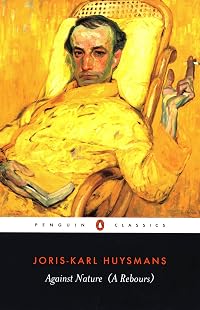
Against Nature
by Joris-Karl Huysmans
On This Page
Description
Against Nature by Joris-Karl Huysmans is a novel in which very little happens; its narrative concentrates almost entirely on its principal character, and is mostly a catalogue of the tastes and inner life of Jean Des Esseintes, an eccentric, reclusive aesthete and antihero, who loathes 19th century bourgeois society and tries to retreat into an ideal artistic world of his own creation. Against Nature contains many themes which became associated with the Symbolist aesthetic. In doing so, it show more broke from naturalism and became the ultimate example of decadent literature. Jean Des Esseintes is the last member of a powerful and once proud noble family. He has lived an extremely decadent life in Paris which has left him disgusted with human society. Without telling anyone, he absconds to a house in the countryside. He fills the house with his eclectic art collection and decides to spend the rest of his life in intellectual and aesthetic contemplation. Throughout his intellectual experiments, he recalls various debauched events and love affairs of his past in Paris. show lessTags
Recommendations




















Member Recommendations

JuliaMaria Wie in Wikipedia zu 'Gegen den Strich' beschrieben: "Ein französischer Roman, der den Protagonisten in Oscar Wildes Roman Das Bildnis des Dorian Gray zu dekadenten Ausschweifungen inspiriert, wird häufig als Anspielung auf À rebours gedeutet. Wilde war - wie auch Stéphane Mallarmé - ein Bewunderer des Romans."
90
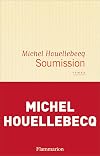
JuliaMaria In "Unterwerfung" geht es um einen Professor der Literaturwissenschaften mit Schwerpunkt "Huysman". Entsprechend wird auch viel über Huysman gesprochen.

uncultured Firbank is the bridge between Oscar Wilde and Evelyn Waugh. Huysmans would approve.
Member Reviews
In English the title was translated as either 'Against Nature' or 'Against the Grain', which to me are two very different titles. It occurred to me that this tension within the meaning of the title itself is a good indication of the contents of the novel. We are introduced to a French aristocrat by the name of Des Esseintes who is of feeble stamina and who might be called a dandy in British terms. We follow the young man as he slowly retreats out of everyday life into a decadent seclusion of his own design. At times opulent in its descriptions of Des Esseintes' mansion, at times excruciatingly detailed and accurate in Des Esseintes' analysis of his tastes, desires and repulsions, the novel lures the reader into an artificial world of show more what seems to be luxury. Page after page Des Esseintes delves deeper into his own mind. He collects rare specimens of everything and if there does not exist a rarity he believes he should have, he has it created from his own detailed drawings and directions. As a side note, most of the objects and interiors the young man envisions were based on actual examples of dandyish extravaganza.
The reader is slowly included into the artificial world of Des Esseintes and slowly the alternative reality appears more and more sold. Instead the young man's health deteriorates and his mind attempts to grapple with his own choices. Inevitably he wavers between stepping back into Beau Monde or forever lock himself away into an imaginary world. He goes back and forth and makes several attempts to take either extreme leaps. In one famous scene Des Esseintes is well on his way to visit London when after thinking over the plan in his mind he decides that in his mind he has already read and imagined so much of Britain's capital that he can only be disappointed by traveling there. Instead he returns to his mansion. Ultimately his private physician offers him the choice: go back into the world and regain your physical health, or retreat into your own mind and suffer.
The author, Joris-Karl Huysmans, wrote the novel in a time when literature's standard was realism devoid of symbolism or misplaced fantasy. Huysmans received both high acclaim from writers such as Oscar Wilde, but also derision from esteemed authors like Zola, who was Huysmans' mentor and inspiration. Perhaps this book can be seen as the ultimate anti-novel in the sense that it does not feature any trappings of a book designed to entertain. If you want to convey a point or principle then you either write it with great entertainment value but your meaningful message might not be remembered, or you write the work in a serious tone, in which case it will be remembered but not widely read. Huysmans took the extreme side of those polar opposites and goes beyond somber writing and confronts the reader head on by presenting the world of Des Esseintes from a solipsistic standpoint in which as a reader you have no other safety net than your own experiences and opinions. Instead of taking the Disney approach of embedding a clear takeaway moral message, the novel's aim is to have the reader make decisions on how to travel through life and in that sense it is the paragon of letting the reader take away whatever usefulness can be derived, even if this means rejecting the novel. show less
The reader is slowly included into the artificial world of Des Esseintes and slowly the alternative reality appears more and more sold. Instead the young man's health deteriorates and his mind attempts to grapple with his own choices. Inevitably he wavers between stepping back into Beau Monde or forever lock himself away into an imaginary world. He goes back and forth and makes several attempts to take either extreme leaps. In one famous scene Des Esseintes is well on his way to visit London when after thinking over the plan in his mind he decides that in his mind he has already read and imagined so much of Britain's capital that he can only be disappointed by traveling there. Instead he returns to his mansion. Ultimately his private physician offers him the choice: go back into the world and regain your physical health, or retreat into your own mind and suffer.
The author, Joris-Karl Huysmans, wrote the novel in a time when literature's standard was realism devoid of symbolism or misplaced fantasy. Huysmans received both high acclaim from writers such as Oscar Wilde, but also derision from esteemed authors like Zola, who was Huysmans' mentor and inspiration. Perhaps this book can be seen as the ultimate anti-novel in the sense that it does not feature any trappings of a book designed to entertain. If you want to convey a point or principle then you either write it with great entertainment value but your meaningful message might not be remembered, or you write the work in a serious tone, in which case it will be remembered but not widely read. Huysmans took the extreme side of those polar opposites and goes beyond somber writing and confronts the reader head on by presenting the world of Des Esseintes from a solipsistic standpoint in which as a reader you have no other safety net than your own experiences and opinions. Instead of taking the Disney approach of embedding a clear takeaway moral message, the novel's aim is to have the reader make decisions on how to travel through life and in that sense it is the paragon of letting the reader take away whatever usefulness can be derived, even if this means rejecting the novel. show less
I think you'll either love this book or hate it. I loved it. But to do so, I had to immerse myself in the details. So, when Huysmans starts talking about a plant, or a scent, or a painter, or an author, I have to go off to Google or Wikipedia to explore it further. I spent probably more time on that than I did on reading the book, but I can't imagine enjoying the book so much otherwise. The plants and the artwork alone make it worthwhile. If you haven't taken time to look at the works on Gustave Moreau, you are missing a world of color and patterns that just has to be seen to be believed.
Yes, this has no plot. The only real story elements are reminiscences of past events. Whole chapters are basically literary criticism, and the authors show more discussed are largely obscure to an American reader (and probably to most modern French readers as well.) There is an awful lot about Catholicism--that alone would seem to make the book totally irrelevant, for what could be more irrelevant than Catholicism? Actually, I guess as long as some people take it seriously, that makes it relevant, whether I like it or not....
Still, the experience of reading this is a deep, intellectual journey. The central character, the very wealthy Des Esseintes, has withdrawn from Paris society to a remote estate, furnished in an inimitable manner with colors, perfumes, books, paintings, and plants of his own eccentric choosing. Much of the book is a description of these, until it comes to a turning point, when even this private world he has created leaves him empty and sick. True, it was published in 1884, but there is so much here to identify with for any intelligent person who is almost overwhelmed by the stupidity of the world we live in and wishes to just turn off the news and live in a more perfect world of books and music. (I can't begin to keep up with Huysmans on the colors or scents!) But, of course, it isn't that easy.
This is a core work of "decadent" literature, but it is important to understand "decadent" as meaning a time when things are falling apart, when old things, such as language (very important in this book, both in reference to Latin and French) are losing their vigor. "Decadent" doesn't mean debased, although a few of the central character's experiences would fit that category. I could go on, but this is really a book you should read, taking your time to soak in the details. I read a translation from 1931 by John Howard. I thought it was quite good, but more modern ones are available and may better capture some of the book's more extreme elements. It is also important to read Huysmans' own preface to the 1904 edition, where he reflects on the book 20 years later. These days, it is difficult to see what all the fuss was about, but in France at least, literature was taken very seriously and it involved taking sides in the struggle between the church and the state or of naturalism (e.g., Zola) vs. more non-realistic forms of writing (e.g., decadence, symbolism). But you don't really have to understand all of that to get a lot of pleasure from spending time with Des Esseintes and his creator, J.K. Huysmans. It will also point you toward other things you may wish to read--Baudelaire, above all. show less
Yes, this has no plot. The only real story elements are reminiscences of past events. Whole chapters are basically literary criticism, and the authors show more discussed are largely obscure to an American reader (and probably to most modern French readers as well.) There is an awful lot about Catholicism--that alone would seem to make the book totally irrelevant, for what could be more irrelevant than Catholicism? Actually, I guess as long as some people take it seriously, that makes it relevant, whether I like it or not....
Still, the experience of reading this is a deep, intellectual journey. The central character, the very wealthy Des Esseintes, has withdrawn from Paris society to a remote estate, furnished in an inimitable manner with colors, perfumes, books, paintings, and plants of his own eccentric choosing. Much of the book is a description of these, until it comes to a turning point, when even this private world he has created leaves him empty and sick. True, it was published in 1884, but there is so much here to identify with for any intelligent person who is almost overwhelmed by the stupidity of the world we live in and wishes to just turn off the news and live in a more perfect world of books and music. (I can't begin to keep up with Huysmans on the colors or scents!) But, of course, it isn't that easy.
This is a core work of "decadent" literature, but it is important to understand "decadent" as meaning a time when things are falling apart, when old things, such as language (very important in this book, both in reference to Latin and French) are losing their vigor. "Decadent" doesn't mean debased, although a few of the central character's experiences would fit that category. I could go on, but this is really a book you should read, taking your time to soak in the details. I read a translation from 1931 by John Howard. I thought it was quite good, but more modern ones are available and may better capture some of the book's more extreme elements. It is also important to read Huysmans' own preface to the 1904 edition, where he reflects on the book 20 years later. These days, it is difficult to see what all the fuss was about, but in France at least, literature was taken very seriously and it involved taking sides in the struggle between the church and the state or of naturalism (e.g., Zola) vs. more non-realistic forms of writing (e.g., decadence, symbolism). But you don't really have to understand all of that to get a lot of pleasure from spending time with Des Esseintes and his creator, J.K. Huysmans. It will also point you toward other things you may wish to read--Baudelaire, above all. show less
I remain firmly on the fence about this particular book. (And partially, I question myself because, once again, I'm not that enamored of a French writer. I just seem to have a hard time connecting with French writers... other than Alexandre Dumas. Maybe Huysmans gets a partial pass -- me being on the fence -- because he's half Dutch???) I wanted to like it more than I actually did like it.
While I appreciate that Huysmans' writing/style/subjects were unorthodox for his time & some of the passages are truly lovely &/or amazingly descriptive, I found other parts to be overly tedious & excessive to the point that I felt like I was plodding though an unwanted school assignment.
Ironically, a passage within À Rebours itself summed up this show more particular book for me. Des Esseintes (the main character) is going through his bookshelves...
While I appreciate that Huysmans' writing/style/subjects were unorthodox for his time & some of the passages are truly lovely &/or amazingly descriptive, I found other parts to be overly tedious & excessive to the point that I felt like I was plodding though an unwanted school assignment.
Ironically, a passage within À Rebours itself summed up this show more particular book for me. Des Esseintes (the main character) is going through his bookshelves...
"Of course, Des Esseintes still appreciated the works of these two poets, in the same way that he appreciated rare jewels or precious substances; but none of the variations of these brilliant instrumentalists could now enrapture any more, for none possessed the makings of a dream, none opened up, at least for him, one of those lively vistas that enabled him to speed the weary flight of the hours."show less
“Their imperfections pleased him, provided they were neither parasitic nor servile, and perhaps there was a grain of truth in his theory that the inferior and decadent writer, who is more subjective, though unfinished, distills a more irritating aperient and acid balm than the artist of the same period who is truly great. In his opinion, it was in their turbulent sketches that one perceived the exaltations of the most excitable sensibilities, the caprices of the most morbid psychological states, the most extravagant depravities of language charged, in spite of its rebelliousness, with the difficult task of containing the effervescent salts of sensations and ideas.”
—Against Nature by Joris-Karl Huysmans
Amen!
À rebours. Against the show more grain. Against nature. No matter the translation or language it all comes out right. Decadence never seemed so austere; retreat never seemed so opulent. No wonder this had such an impact on Oscar Wilde’s “The Picture of Dorian Gray”. I’d discovered an odd painter from that time during research for my own psychological horror story of a painter, “Cripplegate”, who first gained prominence within the dark, detailed and deluded pages of Huysmans’ classic. What could seemingly be mistaken for a catalogue of grotesquery or litany of extravagance by those without imagination is really an exploration of a wasted human soul sealing himself within a self-made ivory tower and failing desperately at rebuilding some kind of kinship with humanity.
Odilon Redon! That inimitable painter of surrealistic nightmares, hanging in that eccentric’s house, a unique voice within a unique voice of its era. Was Huysmans just being reactionary? Or was he dreadfully bored? Maybe he had a hyperthymic temperament like me. He’d taken as much as he could from his world, or at least his antihero had, immersed himself in oddities, wallpapered his existence with the outré and offensive, only to be broken by the expectation of it all. Alas, des Esseintes.
So now what? Back to society? Back to another book? Back to another project to fool the brain into believing that this current existence is the one you were always meant for because it was the only one in which you could fashion it yourself? Except this book was written in 1884, sounds a hundred years older, and feels as modern as middle-aged angst aswim in seas technologically deeper than one can plumb with rusty anchor and busted chain.
Hellfire Club! Sir Francis Dashwood bashing his head against the gothic walls of Strawberry Hill. Great splintered Horace Walpole! The first gothic novel. A break against tradition. Cutting against the grain. Embracing tradition, history, and throwing it aside to paint or write or forge something singular from within and have it trampled in the grass and full mocking glare of the sun. Pearls before swine. Maybe some things are better kept hidden. Locked in a treasure room and toasted over and over into dissipation. I have cried out to you! De Profundis. It’s only fitting it took one-hundred and thirty Psalms to hear that wail from the depths and make castle walls ring.
Did any of these fucks feel any kind of affinity for their time? ‘Cause I sure as hell don’t. I’m just grateful that Huysmans had the guts to take a chance and lay it all out, vomit in the short grass, for the few of us who’ve been there to nod before turning politely away. show less
—Against Nature by Joris-Karl Huysmans
Amen!
À rebours. Against the show more grain. Against nature. No matter the translation or language it all comes out right. Decadence never seemed so austere; retreat never seemed so opulent. No wonder this had such an impact on Oscar Wilde’s “The Picture of Dorian Gray”. I’d discovered an odd painter from that time during research for my own psychological horror story of a painter, “Cripplegate”, who first gained prominence within the dark, detailed and deluded pages of Huysmans’ classic. What could seemingly be mistaken for a catalogue of grotesquery or litany of extravagance by those without imagination is really an exploration of a wasted human soul sealing himself within a self-made ivory tower and failing desperately at rebuilding some kind of kinship with humanity.
Odilon Redon! That inimitable painter of surrealistic nightmares, hanging in that eccentric’s house, a unique voice within a unique voice of its era. Was Huysmans just being reactionary? Or was he dreadfully bored? Maybe he had a hyperthymic temperament like me. He’d taken as much as he could from his world, or at least his antihero had, immersed himself in oddities, wallpapered his existence with the outré and offensive, only to be broken by the expectation of it all. Alas, des Esseintes.
So now what? Back to society? Back to another book? Back to another project to fool the brain into believing that this current existence is the one you were always meant for because it was the only one in which you could fashion it yourself? Except this book was written in 1884, sounds a hundred years older, and feels as modern as middle-aged angst aswim in seas technologically deeper than one can plumb with rusty anchor and busted chain.
Hellfire Club! Sir Francis Dashwood bashing his head against the gothic walls of Strawberry Hill. Great splintered Horace Walpole! The first gothic novel. A break against tradition. Cutting against the grain. Embracing tradition, history, and throwing it aside to paint or write or forge something singular from within and have it trampled in the grass and full mocking glare of the sun. Pearls before swine. Maybe some things are better kept hidden. Locked in a treasure room and toasted over and over into dissipation. I have cried out to you! De Profundis. It’s only fitting it took one-hundred and thirty Psalms to hear that wail from the depths and make castle walls ring.
Did any of these fucks feel any kind of affinity for their time? ‘Cause I sure as hell don’t. I’m just grateful that Huysmans had the guts to take a chance and lay it all out, vomit in the short grass, for the few of us who’ve been there to nod before turning politely away. show less
‘Do unto others as you would not have them do unto you.’
A gloriously decadent piece of literature that spreads its rancour across all five senses. However, it certainly isn’t as evil as Wilde made it out to be - Des Esseintes is just a feeble misanthrope clinging onto antiquity. This work kind of struck me as a 19th century version of Ellis’ American Psycho to the extent that there are pages upon pages of vacuous minutiae concerning exotic plants, meticulous lighting, various perfumes etc. - I will be the first to admit that that is a crude analogy, but it works.
The exaggerated advocacy for the artificial over Nature found in here was also appreciated, serving as a spit in the face against the exsanguinated prose of Naturalism show more that was all the rage at the time of the book’s inception. It’s difficult to know whether to take it as Huysman’s own bitter condemnation of the Naturalist school of thought he had just left or as a fully fledged, detached satire. Either way it’s worth the price of admission just for the literary criticism of Baudelaire, Mallarmé and Poe that is strewn throughout. On top of these three figures there are also a whole litany of forgotten Christian and secular authors, giving ample material to the prospective reader to create a reading list that’s well off of the beaten path. show less
A gloriously decadent piece of literature that spreads its rancour across all five senses. However, it certainly isn’t as evil as Wilde made it out to be - Des Esseintes is just a feeble misanthrope clinging onto antiquity. This work kind of struck me as a 19th century version of Ellis’ American Psycho to the extent that there are pages upon pages of vacuous minutiae concerning exotic plants, meticulous lighting, various perfumes etc. - I will be the first to admit that that is a crude analogy, but it works.
The exaggerated advocacy for the artificial over Nature found in here was also appreciated, serving as a spit in the face against the exsanguinated prose of Naturalism show more that was all the rage at the time of the book’s inception. It’s difficult to know whether to take it as Huysman’s own bitter condemnation of the Naturalist school of thought he had just left or as a fully fledged, detached satire. Either way it’s worth the price of admission just for the literary criticism of Baudelaire, Mallarmé and Poe that is strewn throughout. On top of these three figures there are also a whole litany of forgotten Christian and secular authors, giving ample material to the prospective reader to create a reading list that’s well off of the beaten path. show less
This may shock you, but locking yourself in your house and attempting to never leave again typically leads to negative health outcomes.
Jean des Esseintes, the only character of any significance in Against Nature, decides that people, places, and things all suck so badly that he will never deal with them again. He buys a house a decent ways away from Paris and shuts himself in with books, rugs, paintings, and a whole lot of free time, but you don't make it through half a chapter before you pick up on an immediate problem with his plan: he's read all the books and seen all the paintings before.
Des Esseintes considers all the people he used to surround himself with in Paris to be dumb, and that's fine. But occasionally, dumbness confronts show more you in a way that will at least force you to use your brain in a way you normally don't. If all you do is read the same stuff, look at the same stuff, and think about the same stuff over and over again, even if you consider the ideas held within to be good ones, your brain will turn to mush.
Des Esseintes' brain is no different than ours, so you might think we'd get a book about a fun mental breakdown or some wacky antics springing forth from the guy's cabin fever, but we get nothing at all. All we get the entire book is a long list of the guy's opinions on French literature. None of them ever change at any point during the story. None of them are ever particularly interesting. This goes on for 200 pages.
I don't have any problem with the writing style or anything like that, but Against Nature is the equivalent of me squishing my grumpiest 25 Goodreads reviews together and pretending I made a novel. Joris-Karl Huysmans didn't write a novel here. He wrote an op-ed.
That's not why it's bad, though. There are good op-eds (occasionally), and using a character that may or may not exist can be a useful tool for making whatever point you want to make. That being said, I am 100% sure that there aren't any good op-eds that go on for 200 pages. None of Huysman's arguments here are complicated, and he should have had this baby wrapped up by around page 50.
Obviously, there's nothing wrong with long books. Don't forget though, this isn't really a book. Imagine the Washington Post just being one 200-page George Will column every week.
Now if you've read about the book before, you might be saying to yourself, "Wait! I thought this Des Esseintes guy was supposed to be all naughty and stuff. Isn't that usually interesting?"
Let me rain on your parade really quickly. Here's a description of the kinds of parties Des Esseintes used to attend. Read it several times and let it wash over you.
Don't worry. He still does some pretty debauched stuff like... like... putting pretty jewelry on top of a turtle. That qualifies, right?
At the end of the book, Des Esseintes gets a tummy ache and is told by his doctor to start doing stuff besides having a narrator tell the reader what books he likes. He whines, and then that's it. Book over. It's all been a pointlessly negative waste of time.
I don't mind ennui and pessimism in literature, but I really get frustrated when they get posed as enlightened viewpoints or concepts worthy of being the center of one's existence. That's obviously the wrong way to look at it, and I don't even think obviously is a strong enough word. Yes, compassion, empathy, love, generosity, synonyms of all those words, etc. won't always make a person happy, but it's the only thing that's ever worked, and I'll say it again, that's obvious. The problem is consistently transforming that knowledge into action, dealing with the potential consequences of doing the right thing when it isn't popular, blah blah blah all the Sunday School stuff you already know. Making a case for this weird autistic hedonism of Des Esseintes is insane, yet Huysmans tries it here anyway. It isn't a particularly valiant effort.
If you're going to buy Against Nature anyway, get the Penguin Classics edition. It's got an Appendix full of contemporary reviews (Emile Zola's is particularly fun), and I think the last line of Emile Goudeau's reflections on the book is a good place to finish.
Jean des Esseintes, the only character of any significance in Against Nature, decides that people, places, and things all suck so badly that he will never deal with them again. He buys a house a decent ways away from Paris and shuts himself in with books, rugs, paintings, and a whole lot of free time, but you don't make it through half a chapter before you pick up on an immediate problem with his plan: he's read all the books and seen all the paintings before.
Des Esseintes considers all the people he used to surround himself with in Paris to be dumb, and that's fine. But occasionally, dumbness confronts show more you in a way that will at least force you to use your brain in a way you normally don't. If all you do is read the same stuff, look at the same stuff, and think about the same stuff over and over again, even if you consider the ideas held within to be good ones, your brain will turn to mush.
Des Esseintes' brain is no different than ours, so you might think we'd get a book about a fun mental breakdown or some wacky antics springing forth from the guy's cabin fever, but we get nothing at all. All we get the entire book is a long list of the guy's opinions on French literature. None of them ever change at any point during the story. None of them are ever particularly interesting. This goes on for 200 pages.
I don't have any problem with the writing style or anything like that, but Against Nature is the equivalent of me squishing my grumpiest 25 Goodreads reviews together and pretending I made a novel. Joris-Karl Huysmans didn't write a novel here. He wrote an op-ed.
That's not why it's bad, though. There are good op-eds (occasionally), and using a character that may or may not exist can be a useful tool for making whatever point you want to make. That being said, I am 100% sure that there aren't any good op-eds that go on for 200 pages. None of Huysman's arguments here are complicated, and he should have had this baby wrapped up by around page 50.
Obviously, there's nothing wrong with long books. Don't forget though, this isn't really a book. Imagine the Washington Post just being one 200-page George Will column every week.
Now if you've read about the book before, you might be saying to yourself, "Wait! I thought this Des Esseintes guy was supposed to be all naughty and stuff. Isn't that usually interesting?"
Let me rain on your parade really quickly. Here's a description of the kinds of parties Des Esseintes used to attend. Read it several times and let it wash over you.
In the days when he had belonged to a set of young men-about-town, he had gone to those unconventional supper-parties where drunken women loosen their dresses at dessert and beat the table with their heads.Loose dresses and massive head wounds? My dick just shot straight to the moon. I'd love to go to that kind of party, or at least read about one, but at the start of this thing, Des Esseintes decides that he doesn't want to do any of that stuff anymore.
Don't worry. He still does some pretty debauched stuff like... like... putting pretty jewelry on top of a turtle. That qualifies, right?
At the end of the book, Des Esseintes gets a tummy ache and is told by his doctor to start doing stuff besides having a narrator tell the reader what books he likes. He whines, and then that's it. Book over. It's all been a pointlessly negative waste of time.
I don't mind ennui and pessimism in literature, but I really get frustrated when they get posed as enlightened viewpoints or concepts worthy of being the center of one's existence. That's obviously the wrong way to look at it, and I don't even think obviously is a strong enough word. Yes, compassion, empathy, love, generosity, synonyms of all those words, etc. won't always make a person happy, but it's the only thing that's ever worked, and I'll say it again, that's obvious. The problem is consistently transforming that knowledge into action, dealing with the potential consequences of doing the right thing when it isn't popular, blah blah blah all the Sunday School stuff you already know. Making a case for this weird autistic hedonism of Des Esseintes is insane, yet Huysmans tries it here anyway. It isn't a particularly valiant effort.
If you're going to buy Against Nature anyway, get the Penguin Classics edition. It's got an Appendix full of contemporary reviews (Emile Zola's is particularly fun), and I think the last line of Emile Goudeau's reflections on the book is a good place to finish.
Read this majestically hopeless book, then bury your impossible illusions, drink fresh water, and start loving - anything, even a dog.show less
Hmmm, not at all what I expected. This is a writer who has no qualms about bringing you into the intricate particulars of his own (or the narrator's) world; no worries about whether you choose to stay or not. Much of it reads like essay or artistic/literary criticism, except that it is pushed along by the story of this man who desperately wishes (and fails) to retreat from society and everything it represents. Dream-like (or nightmarish) in places; cynically observant in others (even a little Celine-like?); it is an unapologetic, gritty meditation on the intersection of nature and spirit; of the urge toward peaceful isolation and the call to be in relationship. And I have a distinct feeling that the author would consider this show more mini-review a load of crap...ah, well. show less
Members
- Recently Added By
Lists

1001 Books You Must Read Before You Die
1,448 works; 1,131 members

Best of French Literature
138 works; 27 members

Philosophical Fiction
97 works; 27 members

Favourite 19th century fiction
257 works; 62 members

Backlisted
109 works; 9 members

French Books
102 works; 15 members

19th Century
190 works; 16 members

Western World's Greatest Books - Project Gutenberg
295 works; 15 members

Best Antiheroes and Antiheroines
119 works; 7 members
Out of Copyright
244 works; 14 members

1,001 BYMRBYD Concensus
723 works; 27 members

wishlist
1 work; 1 member

Victorian Period
113 works; 10 members

1880s
14 works; 2 members

Funny Classics
20 works; 2 members

Books Read in 2022
5,166 works; 114 members

Catalog
41 works; 2 members

Romans
49 works; 1 member

Books
85 works; 1 member
Backlisted Podcast
65 works; 3 members

Global Reads: Books Set in Western Europe
186 works; 10 members

Favorite Books in Translation
320 works; 133 members

In Our Time books
4,934 works; 2 members
Author Information

Some Editions
Awards and Honors
Notable Lists
Series
Belongs to Publisher Series
Orlando Syrg Taschenbuch (132023)
Work Relationships
Is contained in
Common Knowledge
- Canonical title
- Against Nature
- Original title
- À rebours
- Alternate titles
- Against the Grain
- Original publication date
- 1884
- People/Characters
- Duc Jean Floressas des Esseintes
- Important places
- Paris, France; Fontenay-aux-Roses, Île-de-France, France
- First words
- Over two months elapsed before Des Esseintes could immerse himself in the peaceful silence of his house at Fontenay, for purchases of all sorts still kept him perambulating the streets and ransacking the shops from one end of... (show all) Paris to the other.
Judging by the few portraits that have been preserved in the Chateau de Lourps, the line of the Floressas des Esseintes consisted, in bygone days, of muscular warriors and grim-looking mercenaries. (Prologue) - Quotations*
- Wie er sagte, hat die Natur ausgedient: sie hat durch die abstoßende Eintönigkeit ihrer Landschaften und ihrer Himmel die aufmerksame Geduld der Kenner endgültig erschöpft.
- Last words
- (Click to show. Warning: May contain spoilers.)Lord, take pity on the Christian who doubts, on the unbeliever who longs to believe, on the gallery-slave of life who is setting sail alone, at night, under a sky no longer lit, now, by the consoling beacons of the ancient hope.
(Click to show. Warning: May contain spoilers.)He set masons to work on the house he had acquired, and suddenly, one day, without telling anyone of his plans, sold off his old furniture, dismissed his servants, and disappeared, leaving no address with the concierge. (Prologue) - Original language
- French
*Some information comes from Common Knowledge in other languages. Click "Edit" for more information.
Classifications
Statistics
- Members
- 3,993
- Popularity
- 3,905
- Reviews
- 80
- Rating
- (3.77)
- Languages
- 21 — Catalan, Dutch, English, Estonian, Finnish, French, German, Greek, Hungarian, Italian, Japanese, Lithuanian, Norwegian (Bokmål), Polish, Portuguese, Russian, Serbian, Croatian, Slovenian, Spanish, Swedish
- Media
- Paper, Audiobook, Ebook
- ISBNs
- 184
- UPCs
- 2
- ASINs
- 81