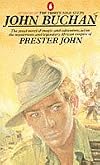
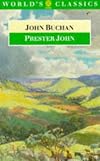
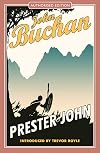
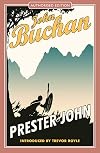
Prester John
by John Buchan
On This Page
Description
Fans of H. Rider Haggard's action-adventure novels will be swept away by John Buchan's Prester John, a thrill-a-minute tale set in colonial Africa. Young David Crawfurd travels to Africa to make a quick buck as a merchant, but the ambitious entrepreneur soon finds himself caught in the middle of an uprising—and under the sway of a charismatic rebel leader with a mysterious past..
Tags
Recommendations




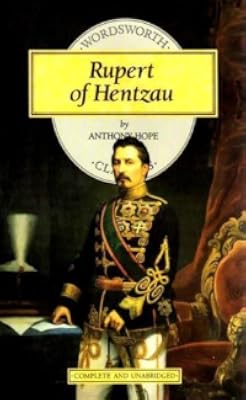


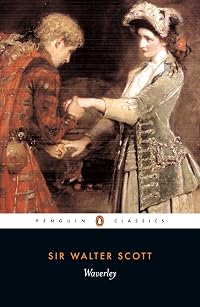


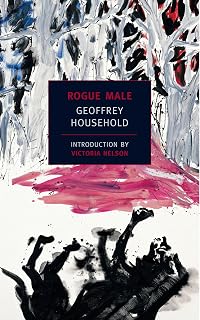


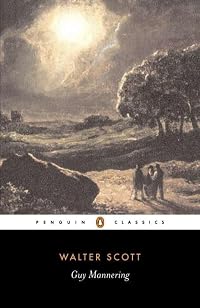






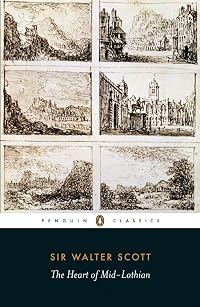


Member Recommendations
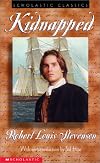
themulhern The two Davids, both Scots, undergo extreme physical trials as they flee from their pursuers.
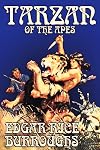
themulhern "Tarzan of the Apes" was published just two years after "Prester John" and there is a strong connection, even though Tarzan is a far more fantastic character than David.

Victorian Minds: A Study of Intellectuals in Crisis and Ideologies in Transition by Gertrude Himmelfarb
themulhern "Victorian Minds" contains an essay on John Buchan which intrigued me enough to make me want to read a novel of his, something I had not done since a very long time ago.
Member Reviews
Six-word review: Well-crafted but dated adventure yarn.
Extended review:
Despite my convictions about not judging older literature by today's standards, I find that a century of social change imposes a heavy moral burden on this work. Colonialism and racism in South Africa are impossible to overlook in this action tale involving a Zulu rebellion, Boer settlers, British troops, treasure, revenge, loss, and heroism.
The main character is a young Scottish man who sets out to be an ordinary storekeeper in a remote outpost of South Africa. His interactions with a charismatic Zulu leader and several treacherous gem traders lead to a quest fraught with violence and daring escape. It's exactly the sort of story that might have been made into a show more luridly colorful B movie in the 1950s (and maybe it was, I don't know).
It held my attention like a well-made comic book--pardon me, graphic novel--and afforded some absorbing escapism. But a part of my mind could not let go of 21st-century sensibilities, and for that reason my enjoyment was alloyed with discomfort and collective guilt. I tried to look at it as a mirror of social history, even if it's also an improbable thriller of time and place, and learn something from it. show less
Extended review:
Despite my convictions about not judging older literature by today's standards, I find that a century of social change imposes a heavy moral burden on this work. Colonialism and racism in South Africa are impossible to overlook in this action tale involving a Zulu rebellion, Boer settlers, British troops, treasure, revenge, loss, and heroism.
The main character is a young Scottish man who sets out to be an ordinary storekeeper in a remote outpost of South Africa. His interactions with a charismatic Zulu leader and several treacherous gem traders lead to a quest fraught with violence and daring escape. It's exactly the sort of story that might have been made into a show more luridly colorful B movie in the 1950s (and maybe it was, I don't know).
It held my attention like a well-made comic book--pardon me, graphic novel--and afforded some absorbing escapism. But a part of my mind could not let go of 21st-century sensibilities, and for that reason my enjoyment was alloyed with discomfort and collective guilt. I tried to look at it as a mirror of social history, even if it's also an improbable thriller of time and place, and learn something from it. show less
A classic ripping yarn. Like all Buchan, well-turned, with occasional lyrical and memorable descriptions of the natural world. And as always Buchan proves surprisingly generous towards the antagonist, and willing to endow the adversary with real grandeur and nobility.
That said (and as other reviewers have commented), native self-governance is assumed by the protagonist (and everyone) as a non-starter, and while flat-out racism does not abound, it gets very close, very often. I found it stunning on the re-read.
It is easy for me to say that it's a great yarn and one can enjoy it by abstracting from the views a man like Buchan would inevitably have in 1910. And to a degree, I think that's true. But I'm not sure it's an argument I'd feel show more comfortable making to a Botsawanan 13 year old who picked it up looking for an escapist. show less
That said (and as other reviewers have commented), native self-governance is assumed by the protagonist (and everyone) as a non-starter, and while flat-out racism does not abound, it gets very close, very often. I found it stunning on the re-read.
It is easy for me to say that it's a great yarn and one can enjoy it by abstracting from the views a man like Buchan would inevitably have in 1910. And to a degree, I think that's true. But I'm not sure it's an argument I'd feel show more comfortable making to a Botsawanan 13 year old who picked it up looking for an escapist. show less
As fine a yarn of adventure as can be expected when Buchan is the storyteller.
Action, dialogue (scottish, africaan) and a keen grasp on facts (political, geographical, engineering, the art of climbing etc. etc. which is never idly put in for lecture or showmanship or simply to flesh out the story) firmly set the pace and mood of adventure. Buchan keeps the reader wanting to follow his yarn as well as Scott or Stevenson could have done.
"The White Man´s Burden" has (thankfully) become politically incorrect - when read literally - that is.
Buchan is at some level trapped to his time´s political correctedness where whole cultures could be diagnosed and labelled as far as treats go. But when Buchan writes "We (who have the "gift of show more responsibility" i.e.) will rule wherever there are dark men who live only for the day and their own bellies", the importance of his agenda is not the color of the skin. It still holds water that the color of our common future is dark if men (whatever their color of skin) lack responsibility for society and do not have the will or ability to look beyond their own time and bellies.
It is wonderful to read an uncomplicated story from time to time, where belief in the difference of right and wrong still lives, even better still since both villain and hero comes across neither black nor white, but rather greyish. It is medicine against the crumpling of all values and standards. Why is it that political correctness so easily become the kind of value relativism that functions as a shield for pure individual opportunism? show less
Action, dialogue (scottish, africaan) and a keen grasp on facts (political, geographical, engineering, the art of climbing etc. etc. which is never idly put in for lecture or showmanship or simply to flesh out the story) firmly set the pace and mood of adventure. Buchan keeps the reader wanting to follow his yarn as well as Scott or Stevenson could have done.
"The White Man´s Burden" has (thankfully) become politically incorrect - when read literally - that is.
Buchan is at some level trapped to his time´s political correctedness where whole cultures could be diagnosed and labelled as far as treats go. But when Buchan writes "We (who have the "gift of show more responsibility" i.e.) will rule wherever there are dark men who live only for the day and their own bellies", the importance of his agenda is not the color of the skin. It still holds water that the color of our common future is dark if men (whatever their color of skin) lack responsibility for society and do not have the will or ability to look beyond their own time and bellies.
It is wonderful to read an uncomplicated story from time to time, where belief in the difference of right and wrong still lives, even better still since both villain and hero comes across neither black nor white, but rather greyish. It is medicine against the crumpling of all values and standards. Why is it that political correctness so easily become the kind of value relativism that functions as a shield for pure individual opportunism? show less
A ripping yarn. The protagonist endures a great deal of physical hardship as well as the loss of his dog and describes his suffering and his emotional state in an analytical manner. He rates himself not highly as a leader. He is able to return with some accumulated wealth and thereby keep his widowed mother from financial difficulties.
I read this because I had recently read an essay on John Buchan by Gertrude Himmelfarb.
I read this because I had recently read an essay on John Buchan by Gertrude Himmelfarb.
This novel doesn't hold up as well as his Greenmantle or The 39 Steps. It seemed very dated and his British Colonial biases were very evident. The African Black native is there to be taken care of and exploited by the white man. According to the hero, they will never be able to manage their resources without the assistance of the white colonial masters.
The story covers the exploits of a 19 year old David Crawfurd sent to the Traansvaal to manage a company store that is not doing well. He becomes involved with a charismatic Black leader is planning a revolution to force the white exploiters out. Through efforts almost to extraordinary to believe, he foils the revolution and becomes very rich by finding the gold and diamonds that were to show more fund the revolution. Other than being too long, the narrative does move along and is very entertaining during the chase scenes. This is definitely not one of Buchan's better efforts. show less
The story covers the exploits of a 19 year old David Crawfurd sent to the Traansvaal to manage a company store that is not doing well. He becomes involved with a charismatic Black leader is planning a revolution to force the white exploiters out. Through efforts almost to extraordinary to believe, he foils the revolution and becomes very rich by finding the gold and diamonds that were to show more fund the revolution. Other than being too long, the narrative does move along and is very entertaining during the chase scenes. This is definitely not one of Buchan's better efforts. show less
I do enjoy John Buchan's novels, and Prester John was no exception. I found, however, that the level of racism and stereotyping in this novel exceeded that in any of the Richard Hannay novels, and this affected my enjoyment of it, because I didn't really have sympathy with the position of the main characters.
If you're looking to read Buchan for the first time, this wouldn't be my recommendation - better to go with The Free Fishers, or any of the Hannay novels in my opinion.
If you're looking to read Buchan for the first time, this wouldn't be my recommendation - better to go with The Free Fishers, or any of the Hannay novels in my opinion.
i read this in my early teens, which I think was the right time -- I can still visualize it on the shelf in the Bowling Green Junior High School library, and I own the same edition I read there. It involves an young Englishman who gets caught up in an African rebellion against British colonial rule led by a mission-educated African who ultimately dies to protect the boy, if I recall rightly. Nowadays, it would probably be considered racist. since Buchan clearly thought British rule was better than independence for the Africans, and the "happy" ending includes setting up a vocational school so the African will learn more ":useful" trades. However, when I was young I just enjoyed it as an adventure on the level of Allen Quartermain. IT show more may have been based on a real rebellion that was led by a religiously educated African during World War 1. show less
Members
- Recently Added By
Author Information

280+ Works 17,557 Members
John Buchan was born in Perth on 26th August, 1875. Educated at Glasgow University and Brasenose College, Oxford, in 1898 Buchan won the Newdigate Prize for poetry. Although trained as a lawyer, Buchan became private secretary to Lord Alfred Milner, high commissioner for South Africa. In 1903 he returned to England where he became a director of show more the publishing company, Thomas Nelson & Sons. In 1910 Buchan had his first novel, Prester John, published. In July 1914, Blackwood's Magazine began serializing Buchan's The Thirty-Nine Steps. With Britain on the verge of war, the nation was obsessed with German spy fever and its subject matter made it an immediate success. When it was published in book form, it sold over 25,000 copies in three months. Charles Masterman, the journalist, was appointed head of the government's War Propaganda Bureau. Masterman recruited Buchan and asked him to organise the publication of a history of the war in the form of a monthly magazine. Published by his own company, the first installment of the Nelson's History of the War appeared in February, 1915. A further twenty-three appeared at regular intervals throughout the war. In the spring of 1915, Buchan agreed to become one of the five journalists attached to the British Army. He was given responsibility for providing articles for The Times and the Daily News. In June 1916, Buchan was recruited by the British Army to draft communiqués for Sir Douglas Haig and other members of the General Headquarters Staff. Given the rank of Second Lieutenant in the Intelligence Corps, Buchan was also provided with the documents needed to write the Nelson's History of the War. Buchan's History of the War provided the public with a completely false impression of what was going on the Western Front. Buchan also wrote a series of propoganda pamphlets published by Oxford University Press. In February, 1917, the government established a Department of Information. Given the rank Lieutenant Colonel, Buchan was put in charge on the department on an annual salary of £1,000 a year. After the war Buchan continued to write adventures stories such as Huntingtower, The Three Hostages, and Witch Wood (1927). He also became involved in politics and in 1927 was elected Conservative MP for the Scottish Universities. Buchan held the seat until granted the title Baron Tweedsmuir in 1935. Buchan was president of the Scottish History Society from 1929 to 1932, and wrote biographies of Montrose and Sir Walter Scott. Buchan also served as governor-general of Canada from 1935 to 1937 and chancellor of Edinburgh University from 1937 to 1940. John Buchan died on 12th February, 1940. (Bowker Author Biography) show less
Some Editions
Series
Belongs to Publisher Series
Punainen sulka (20)
Penguin Books (1138)
Work Relationships
Is contained in
Is abridged in
Has as a reference guide/companion
Common Knowledge
- Canonical title
- Prester John
- Alternate titles
- The Great Diamond Pipe
- Original publication date
- 1910
- People/Characters
- David Crawfurd; Laputa; Jim Arcoll
- Important places
- Blaauwildebeestefontein, South Africa (fictional); Kirkcaple, Scotland, UK (fictional)
- Related movies
- Prester John (1920 | IMDb)
- Dedication
- To Lionel Phillips
- First words
- I mind as if it were yesterday my first sight of the man.
- Last words
- (Click to show. Warning: May contain spoilers.)I am thinking seriously of taking Wardlaw's advice.
Classifications
Statistics
- Members
- 645
- Popularity
- 44,862
- Reviews
- 9
- Rating
- (3.51)
- Languages
- English, French, Italian
- Media
- Paper, Audiobook, Ebook
- ISBNs
- 106
- ASINs
- 63