The Tipping Point: How Little Things Can Make a Big Difference
by Malcolm Gladwell
On This Page
Description
From the bestselling author of The Bomber Mafia: discover Malcolm Gladwell's breakthrough debut and explore the science behind viral trends in business, marketing, and human behavior.The tipping point is that magic moment when an idea, trend, or social behavior crosses a threshold, tips, and spreads like wildfire. Just as a single sick person can start an epidemic of the flu, so too can a small but precisely targeted push cause a fashion trend, the popularity of a new product, or a drop in show more the crime rate. This widely acclaimed bestseller, in which Malcolm Gladwell explores and brilliantly illuminates the tipping point phenomenon, is already changing the way people throughout the world think about selling products and disseminating ideas.
"A wonderful page-turner about a fascinating idea that should affect the way every thinking person looks at the world." â??Michael Lewis/ show less
Tags
Recommendations




Member Recommendations


starboard Although on a different topic, Zebrowski's writing style of linking threads of different sciences into an overarching topic is similar.
07
Member Reviews
A rare and genuinely eye-opening read about the phenomena of social epidemics and how fixing things with smaller, "Band-Aid" solutions sometimes is better and more efficient than more sweeping changes. Gladwell cites tons of sources and interviews, but is also a brainy writer in his own right, with a very lucid style. Using real-world examples of social epidemics, (Paul Revere's ride, the effects of "Sesame Street" and "Blue's Clues" on children, crime in New York) he demonstrates how information travels through people, media, groups, places, and contexts, and why some messages fail where others rally. Fresh insight not only for executives and educators, but also for people keen on changing the way they think about change.
A colleague recommended this book to me many years ago but you know how it goes - it was ages before I spotted it one day in a secondhand bookshop and bought it, and even longer before I decided to dust it off the TBR shelf. It's now 20 years old, which makes me wish I'd picked it up earlier so the content would have felt a little more 'now', but nonetheless it makes for a very interesting read.
In this book Gladwell investigates why small things can hit tipping points which have a big impact, and he determines that at least one of three rules must apply: The Law of the Few, The Stickiness Factor and the Power of Context.
The Law of the Few focuses on connectors and the notion that a small percentage of people who are serial connectors show more are pivotal in creating change and tipping points. If Gladwell was writing this book today there's no doubt that his example mavens would include social media influencers, but back in 2000 Instagram and Facebook were yet to be thought up so Gladwell's examples includes the good old days of street trends when a handful of cool kids in East Village and Soho were responsible for transforming the almost dead Hush Puppies brand into the new must have footwear of choice with annual sales of over 1 million pairs. I liked that example - it made me feel nostalgic for my youth when we were influenced by the cool kids rather than some Botoxed tanorexic off some crap reality TV show.
The Stickiness Factor says that there are specific ways of making a contagious message memorable through relatively small changes in presentation and structuring of information. This chapter focused on what made Sesame Street work a game-changer in the world of children's education via TV in its day, and also the new learnings from child psychology that eventually made it redundant. This chapter I found less engaging than the others - there's only so much Sesame Street talk I can handle before I glaze over.
Finally, the Power of Context looks at how people's behaviour is a lot more sensitive to their environment that most of us realise. An example given is the murder of Kitty Genovese when 38 people watched her being attacked from their windows yet not a single one called the police. The argument of the Power of Context is that it is because 38 people were watching that no one called the police. Everyone assumed that someone else would, and ironically if only 1 or 2 people had witnessed her attack the chances of the police being called would have been much higher.
Another fascinating example was the sharp decrease in crime in New York in the 1990s, which resulted from a number of small changes. One theory which resulted in a massive drop in crime was the law of broken windows, which states that if one broken window is left unreplaced this will create an environment that makes it more acceptable to break further windows. The New York subway was transformed by implementing policies on the back of this theory, replacing graffiti covered cars with new carriages which were inspected each time they reached the end of the line and taken out of service until every piece of new graffiti had been removed. Other changes were implemented in the subway as well (such as cracking down on fare dodgers), and collectively a new message of zero tolerance resulted in a rapid decrease in subway crime.
I really enjoyed this book; it was interesting to read about why new ideas do or don't become contagious (and relevant for my work). Although Gladwell's examples are not current, the principles behind them are still sound, and his case studies were still hugely interesting.
4 stars - informative and thought-provoking analysis that is well researched and thought out. show less
In this book Gladwell investigates why small things can hit tipping points which have a big impact, and he determines that at least one of three rules must apply: The Law of the Few, The Stickiness Factor and the Power of Context.
The Law of the Few focuses on connectors and the notion that a small percentage of people who are serial connectors show more are pivotal in creating change and tipping points. If Gladwell was writing this book today there's no doubt that his example mavens would include social media influencers, but back in 2000 Instagram and Facebook were yet to be thought up so Gladwell's examples includes the good old days of street trends when a handful of cool kids in East Village and Soho were responsible for transforming the almost dead Hush Puppies brand into the new must have footwear of choice with annual sales of over 1 million pairs. I liked that example - it made me feel nostalgic for my youth when we were influenced by the cool kids rather than some Botoxed tanorexic off some crap reality TV show.
The Stickiness Factor says that there are specific ways of making a contagious message memorable through relatively small changes in presentation and structuring of information. This chapter focused on what made Sesame Street work a game-changer in the world of children's education via TV in its day, and also the new learnings from child psychology that eventually made it redundant. This chapter I found less engaging than the others - there's only so much Sesame Street talk I can handle before I glaze over.
Finally, the Power of Context looks at how people's behaviour is a lot more sensitive to their environment that most of us realise. An example given is the murder of Kitty Genovese when 38 people watched her being attacked from their windows yet not a single one called the police. The argument of the Power of Context is that it is because 38 people were watching that no one called the police. Everyone assumed that someone else would, and ironically if only 1 or 2 people had witnessed her attack the chances of the police being called would have been much higher.
Another fascinating example was the sharp decrease in crime in New York in the 1990s, which resulted from a number of small changes. One theory which resulted in a massive drop in crime was the law of broken windows, which states that if one broken window is left unreplaced this will create an environment that makes it more acceptable to break further windows. The New York subway was transformed by implementing policies on the back of this theory, replacing graffiti covered cars with new carriages which were inspected each time they reached the end of the line and taken out of service until every piece of new graffiti had been removed. Other changes were implemented in the subway as well (such as cracking down on fare dodgers), and collectively a new message of zero tolerance resulted in a rapid decrease in subway crime.
I really enjoyed this book; it was interesting to read about why new ideas do or don't become contagious (and relevant for my work). Although Gladwell's examples are not current, the principles behind them are still sound, and his case studies were still hugely interesting.
4 stars - informative and thought-provoking analysis that is well researched and thought out. show less
My new boss has a passion for reading and he likes to recommend books. Which makes the knowledge that I only have about six weeks left in his employ bittersweet. He also shares my affinity for very dark chocolate, which just bites all the more. So, Mr New Boss recommended that we all read The Tipping Point and I agreed to, mainly because no boss had ever asked me to read a book before.
Wow! I don't know if I can describe just how much this book knocked my socks off. I listened to the audiobook, read by Gladwell himself. I don't know if the subject is just that intriguing or if part of it was Gladwell's natural enthusiasm for his own material. I was fascinated! About Hushpuppies and Airwalks, graffiti on NY subway cars and Big Bird and show more teenage smoking. Just spellbound by it all. And busy. Not so much applying it to my job here, as I'm on my way out the door, but maybe the next job. Definitely my home life. My health. My hobbies. I have to get my hands on more Gladwell books! show less
Wow! I don't know if I can describe just how much this book knocked my socks off. I listened to the audiobook, read by Gladwell himself. I don't know if the subject is just that intriguing or if part of it was Gladwell's natural enthusiasm for his own material. I was fascinated! About Hushpuppies and Airwalks, graffiti on NY subway cars and Big Bird and show more teenage smoking. Just spellbound by it all. And busy. Not so much applying it to my job here, as I'm on my way out the door, but maybe the next job. Definitely my home life. My health. My hobbies. I have to get my hands on more Gladwell books! show less
In "The Tipping Point," Malcolm Gladwell embarks on an intriguing journey to decipher the mechanics of what makes an idea or product go viral, drawing an innovative analogy to the way epidemics spread. Gladwell meticulously researches and presents the core elements that constitute the virality power of these phenomena.
Central to his thesis are three archetypal personalities that play pivotal roles in the diffusion of ideas: The Connector, The Maven, and The Salesman. These characters are not just theoretical constructs; Gladwell brings them to life by associating them with a mix of historical figures and everyday individuals, some of whom are personal acquaintances or subjects of his interviews. This approach adds a tangible, relatable show more dimension to his theory.
Gladwell doesn't stop at just the personalities; he delves deeper into the nuances of message transmission by dissecting the content and context of the messages themselves. This exploration provides a comprehensive understanding of the factors that enhance or hinder the spread of ideas.
The book culminates with an insightful discussion on the concepts of Isolation and Immunity, highlighting how the saturation of communication channels can impact the efficacy of viral ideas. Gladwell's observations here are particularly poignant in our increasingly connected world.
For readers familiar with Geoffrey Moore's "Crossing the Chasm," "The Tipping Point" offers a complementary perspective that is both enlightening and thought-provoking. Gladwell's work is not just a theoretical exploration; it's a revelation that sheds light on the subtle mechanics of social epidemics. It's a must-read for anyone interested in understanding the forces that shape trends and ideas in our society. show less
Central to his thesis are three archetypal personalities that play pivotal roles in the diffusion of ideas: The Connector, The Maven, and The Salesman. These characters are not just theoretical constructs; Gladwell brings them to life by associating them with a mix of historical figures and everyday individuals, some of whom are personal acquaintances or subjects of his interviews. This approach adds a tangible, relatable show more dimension to his theory.
Gladwell doesn't stop at just the personalities; he delves deeper into the nuances of message transmission by dissecting the content and context of the messages themselves. This exploration provides a comprehensive understanding of the factors that enhance or hinder the spread of ideas.
The book culminates with an insightful discussion on the concepts of Isolation and Immunity, highlighting how the saturation of communication channels can impact the efficacy of viral ideas. Gladwell's observations here are particularly poignant in our increasingly connected world.
For readers familiar with Geoffrey Moore's "Crossing the Chasm," "The Tipping Point" offers a complementary perspective that is both enlightening and thought-provoking. Gladwell's work is not just a theoretical exploration; it's a revelation that sheds light on the subtle mechanics of social epidemics. It's a must-read for anyone interested in understanding the forces that shape trends and ideas in our society. show less
Sheesh, I so enjoy Malcolm Gladwell's books, and this might be my favorite yet. Maybe in just a few small ways, he makes this mysterious thing called life a little bit more understandable.
If you're new to Gladwell, he has a particular style. Specifically he weaves the most captivating stories together to come to important sociological conclusions. It's so much fun!
In The Tipping Point Gladwell explores the "the moment of critical mass, the threshold, the boiling point" where big changes occur. In other words, why things become viral. And he explains why. (Wikipedia has a pretty good summary actually.)
In short there are three rules:
1. The Law of the Few: where he looks at connectors (super well connected folks), mavens (informed show more specialists), and salespersons (charismatic persuaders).
2. The Stickiness Factor - how impactful a particular message is. In particular he explored Seasame Street and Blue's Clues for being sticky for children.
3. The Power of Context - here he looks at how context influences behavior, namely the "bystander effect," group influences (John Wesley and the Ya-ya sisterhood), and the "rule of 150."
The particular things from the book that stand out are his theory for why New York City had such drastic reduction in crime. Basically, the city spent billions to make the subways cleaner, which makes people less likely to commit crimes. It sounds oversimplified, actually my description is wildly inadequate. (Search for "the broken windows theory" for more.) That said, the idea that beauty begets beauty sticks for me.
Second - he looked at the epidemic of teen suicides in micronesia, and in the afterward compares it to school shootings in the US. Definitely the most compelling theory for mass violence I've heard.
All-in-all, a wonderful, enlightening read that I may read again. His books aren't ones that I'd buy though, partly because every library in world has one, but they feel like a novel almost or maybe a compilation of short stories that are strung together to form big ideas. show less
If you're new to Gladwell, he has a particular style. Specifically he weaves the most captivating stories together to come to important sociological conclusions. It's so much fun!
In The Tipping Point Gladwell explores the "the moment of critical mass, the threshold, the boiling point" where big changes occur. In other words, why things become viral. And he explains why. (Wikipedia has a pretty good summary actually.)
In short there are three rules:
1. The Law of the Few: where he looks at connectors (super well connected folks), mavens (informed show more specialists), and salespersons (charismatic persuaders).
2. The Stickiness Factor - how impactful a particular message is. In particular he explored Seasame Street and Blue's Clues for being sticky for children.
3. The Power of Context - here he looks at how context influences behavior, namely the "bystander effect," group influences (John Wesley and the Ya-ya sisterhood), and the "rule of 150."
The particular things from the book that stand out are his theory for why New York City had such drastic reduction in crime. Basically, the city spent billions to make the subways cleaner, which makes people less likely to commit crimes. It sounds oversimplified, actually my description is wildly inadequate. (Search for "the broken windows theory" for more.) That said, the idea that beauty begets beauty sticks for me.
Second - he looked at the epidemic of teen suicides in micronesia, and in the afterward compares it to school shootings in the US. Definitely the most compelling theory for mass violence I've heard.
All-in-all, a wonderful, enlightening read that I may read again. His books aren't ones that I'd buy though, partly because every library in world has one, but they feel like a novel almost or maybe a compilation of short stories that are strung together to form big ideas. show less
Another book I’ve danced around by being online a lot. I had a general idea before of what he’s getting at, but I learned a lot about how information acts in a social context, and about marketing and the exploitation of human psychological bugs to spread memes, for better and worse. Probably good things to know, whichever side of the battle for the commons you are on.
My big beef with this and with most of his work is that he’s far too credulous, reductive, and deterministic about the findings of psychology, sociology, cogsci, neurology, etc. He constantly makes the mistake of conflating statistical trends and correlations with ironclad physical laws that apply directly and inviolably to you the reader and everyone else. It makes show more for a nice just-so-story and has the added benefit for him of telling lots of pseudo-intellectual business/marketing types exactly what they want to hear and making them feel really smart for knowing the same truths he has just interviewed a bunch of them to “discover.”
This approach may be lucrative and even somewhat diverting in his able hands, but it does a disservice to the richness and implications of the material and to the curiosity of the reader.Basically, his approach boils down to: “I’ve interviewed a few scienticians and marketing flacks about X, and found that this is the way things are, so you had better get used to it.” and, by implication: “Those who are enlightened enough to detect and accept these inevitabilities can turn them to their own advantage and win big!”
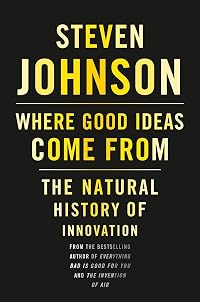
Compare that with someone else who writes on similar topics for an overlapping audience, Steven Johnson, whose approach is: “I got really interested in X, so I went out and learned as much as I could about it, and this is what I found. Isn’t that cool?! And here’s how it relates to Y and Z. And, finally, here are some possible implications, but what actually develops depends on how we decide to act on this knowledge and these connections.”
In a quintessentially Gladwellian fashion, I’ll leave it to you to divine who I think has the better approach. show less
My big beef with this and with most of his work is that he’s far too credulous, reductive, and deterministic about the findings of psychology, sociology, cogsci, neurology, etc. He constantly makes the mistake of conflating statistical trends and correlations with ironclad physical laws that apply directly and inviolably to you the reader and everyone else. It makes show more for a nice just-so-story and has the added benefit for him of telling lots of pseudo-intellectual business/marketing types exactly what they want to hear and making them feel really smart for knowing the same truths he has just interviewed a bunch of them to “discover.”
This approach may be lucrative and even somewhat diverting in his able hands, but it does a disservice to the richness and implications of the material and to the curiosity of the reader.Basically, his approach boils down to: “I’ve interviewed a few scienticians and marketing flacks about X, and found that this is the way things are, so you had better get used to it.” and, by implication: “Those who are enlightened enough to detect and accept these inevitabilities can turn them to their own advantage and win big!”
Compare that with someone else who writes on similar topics for an overlapping audience, Steven Johnson, whose approach is: “I got really interested in X, so I went out and learned as much as I could about it, and this is what I found. Isn’t that cool?! And here’s how it relates to Y and Z. And, finally, here are some possible implications, but what actually develops depends on how we decide to act on this knowledge and these connections.”
In a quintessentially Gladwellian fashion, I’ll leave it to you to divine who I think has the better approach. show less
This was a best-seller so long ago that it doesn't use the word "epicentre" anywhere, and it even comes with a blurb from Bill Clinton (remember him?) on the back. Oddly, the quoted comment doesn't give any direct indication that Clinton has ever read the book — or encourages us to do so: He describes it as "that now-famous book that everybody is reading". Maybe the publisher is taking Gladwell's arguments literally, and considers Clinton as the kind of influencer who could nudge us into a purchase simply by telling us that everyone else is reading it...?
What Gladwell describes, at a very superficial level and without any kind of scientific analysis, is how outcomes in fields like marketing, public health, and social behaviour can be show more determined by rather small-scale inputs, as long as they are applied in exactly the right place. Which is probably something we all knew already. It's all presented quite charmingly, in the form of case-studies written in the best New Yorker style (frame the chapter with your big story, interrupting it with subsidiary pieces of evidence, identify an engaging representative person for each bit of the story, scatter in a few subjective elements...). So it's very readable, but it all leaves you with that vaguely unsatisfied feeling that you always get from books on pop psychology or business. A good disposable book for a shortish train journey. show less
What Gladwell describes, at a very superficial level and without any kind of scientific analysis, is how outcomes in fields like marketing, public health, and social behaviour can be show more determined by rather small-scale inputs, as long as they are applied in exactly the right place. Which is probably something we all knew already. It's all presented quite charmingly, in the form of case-studies written in the best New Yorker style (frame the chapter with your big story, interrupting it with subsidiary pieces of evidence, identify an engaging representative person for each bit of the story, scatter in a few subjective elements...). So it's very readable, but it all leaves you with that vaguely unsatisfied feeling that you always get from books on pop psychology or business. A good disposable book for a shortish train journey. show less
Members
- Recently Added By
Published Reviews
ThingScore 60
I wish Malcolm Gladwell had chosen to use his considerable skills as a journalist to describe more examples of actual tipping points. In reaching instead for theory, he reaches well beyond where he, or anyone else, can safely travel.
added by Shortride
What Mr. Gladwell has to say is instructive. If he hasn't got all the answers, he certainly offers a fresh way of looking at the problems.
added by Shortride
Gladwell's narrative voice is so chummy and seductive, it's easy to get drawn into his worldview.
added by stephmo
Lists

The Guardian's 100 best books of the 21st century
100 works; 21 members

CBC's 100 True Stories
100 works; 6 members

Non-Fiction Worth Reading
1,016 works; 262 members

Unread books
1,063 works; 87 members

100 New Classics
101 works; 13 members
Big tags
15 works; 1 member

Julie's Read in 2020
18 works; 1 member

My List
302 works; 1 member

Favorite Books from the 2000s
35 works; 3 members

Shaykh Hamza's Book Recommendations
439 works; 3 members

Mind Expanding Books by hackerkid
581 works; 8 members

Adult Books for YA Readers
194 works; 6 members

Carole's List
445 works; 13 members

Blue Pyramid 1,276 Best Books of All Time
1,248 works; 32 members

Unshelved Book Clubs
579 works; 5 members

BitLife
212 works; 4 members

The Telegraph's 110 Best Books: The Perfect Library
101 works; 18 members
Author Information

56+ Works 83,674 Members
In 2005, Time named Malcolm Gladwell one of its 100 most influential people. He is the author of three books, each of which reached number one on the New York Times Best Seller list. They are: The Tipping Point, Blink, and Outliers. His fourth book, What the Dog Saw and Other Adventures was published in 2009. He is a is a British-born Canadian show more journalist and author. Gladwell was a reporter for the Washington Post from 1987 to 1996, working first as a science writer and then as New York City bureau chief. Since 1996, he has been a staff writer for The New Yorker. He graduated with a degree in history from the University of Toronto's Trinity College in 1984. (Publisher Provided) show less
Some Editions
Awards and Honors
Distinctions
Notable Lists
Series
Belongs to Publisher Series
Work Relationships
Is contained in
Is abridged in
Has as a supplement
Common Knowledge
- Canonical title
- The Tipping Point: How Little Things Can Make a Big Difference
- Original title
- The tipping point
- Original publication date
- 2000
- Dedication
- To my parents,
Joyce and Graham Gladwell - First words
- For Hush Puppies -- the classic American brushed-suede shoes with lightweight crepe sole -- the Tipping Point came somewhere between late 1994 and early 1995.
- Last words
- (Click to show. Warning: May contain spoilers.)In a world dominated by isolation and immunity, understanding these principles of word of mouth is more important than ever.
- Blurbers
- Dederer, Claire; Gell, Aaron; Hawthorne, Christopher; Donahue, Deidre; Toobin, Jeffrey; Glassner, Barry (show all 22); Brady, Diane; Riley, Phil; Garelick, Jon; Seymour, Liz; Geyh, Paula; Andrews, Marcellus; Ciuraru, Carmela; Newmark, Blake Elizabeth; Duryea, Bill; Kenton, Gary; Worcester, Robert; Greenfield, Casey; Lewis, Michael; Lacayo, Richard; Noah, Timothy; Stephanopoulos, George
- Original language
- English
- Canonical DDC/MDS
- 302
- Canonical LCC
- HM1033
Classifications
Statistics
- Members
- 23,713
- Popularity
- 208
- Reviews
- 345
- Rating
- (3.83)
- Languages
- 22 — Catalan, Chinese, Czech, Danish, Dutch, English, Estonian, Finnish, French, German, Hungarian, Indonesian, Italian, Lithuanian, Norwegian (Bokmål), Russian, Croatian, Slovenian, Spanish, Swedish, Thai, Portuguese (Portugal)
- Media
- Paper, Audiobook, Ebook
- ISBNs
- 101
- UPCs
- 2
- ASINs
- 44